

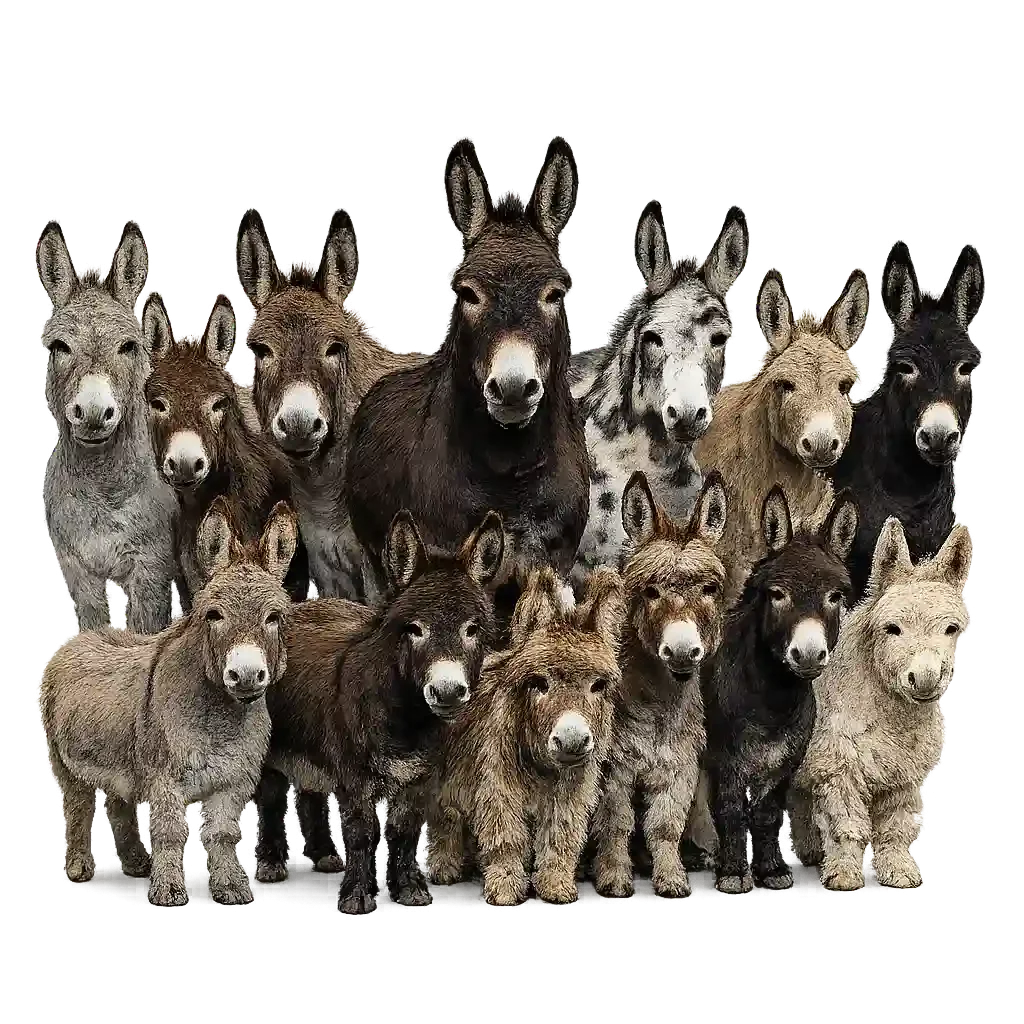
Why Donkeys Are One of the Best Farm Guardians and Work Partners
Donkeys have a natural, no-nonsense instinct around canines-coyotes, foxes, and stray dogs. While many animals rely on flight when something feels off, donkeys often do the opposite: they plant their feet, face the threat, and hold the line.
Long known as the backbone of agriculture, donkeys are still valued today for their durability and impressive strength for their size. They can work hard, stay steady, and keep going in conditions that wear other animals down.
They’re also highly social and intelligent - and often calmer than horses - which makes them dependable, grounded partners in everyday farm life.
The "best" donkey for a modern farm depends entirely on the job you need it to do. Most donkeys in North America are classified by
size rather than strict pedigree, as many are descended from interbred stock.
1. Best for Guarding Livestock: Standard or Mammoth Donkeys
For protecting sheep, goats, or calves, size is the most critical factor.
Standard Donkeys (36-54 inches): These are the industry standard for guarding. They are large enough to intimidate and fight off coyotes or stray dogs but small enough to be easily managed.
American Mammoth Jackstock: At over 54-56 inches, these "gentle giants" provide maximum intimidation and physical power. They are ideal for guarding larger animals like cattle.
Note: Miniature donkeys should never be used as guardians; their small size makes them vulnerable to the same predators they are meant to deter.
2. Best for Farm Work and Riding: American Mammoth Jackstock
If you need a donkey for actual labor or trail riding, the American Mammoth Jackstock is the premier choice.
Draft Ability: They were specifically bred for strength and endurance to pull carts, plow fields, and produce high-quality working mules.
Riding: Due to their height and robust build, they can comfortably carry adult riders and are known for being sure-footed on rugged terrain.
3. Best for Small Homesteads: Miniature Mediterranean Donkeys
For small-acreage farms (as little as 1 acre) where the goal is companionship or light utility, the Miniature Mediterranean Donkey is highly recommended.
Temperament: Known as the friendliest and most affectionate donkey breed, they are exceptionally docile and easy for first-time owners to handle.
Utility: While too small for heavy guarding, they can pull small carts and are excellent for weed control in tight spaces.
4. Best for Hardiness: BLM Burros
For a low-cost, extremely hardy option, many ranchers adopt Wild Burros through the Bureau of Land Management (BLM).
Adaptability: These donkeys are "fresh off the range" and have evolved to survive in harsh environments with minimal resources.
Training: They require significant handling and training compared to domestic-bred donkeys but make excellent, long-lasting companions once gentled.