
Poppies
Quick Overview
Common Name: Poppies, Iceland Poppy, Oriental Poppy, Shirley Poppy
Scientific Name: Papaver spp.
Plant Type: Annual, biennial, and perennial varieties available
USDA Zones: 3 to 9 depending on species
Sun Requirement: Full Sun
Soil Type: Well-drained, average to moderately fertile
Bloom Season: Late Winter through Late Spring for cool season types, Summer for perennial types
Height: 12 to 36 inches depending on species and variety
Pollinator Friendly: Yes
Edible: No, most species are toxic if ingested
Why Grow Poppies on a Homestead
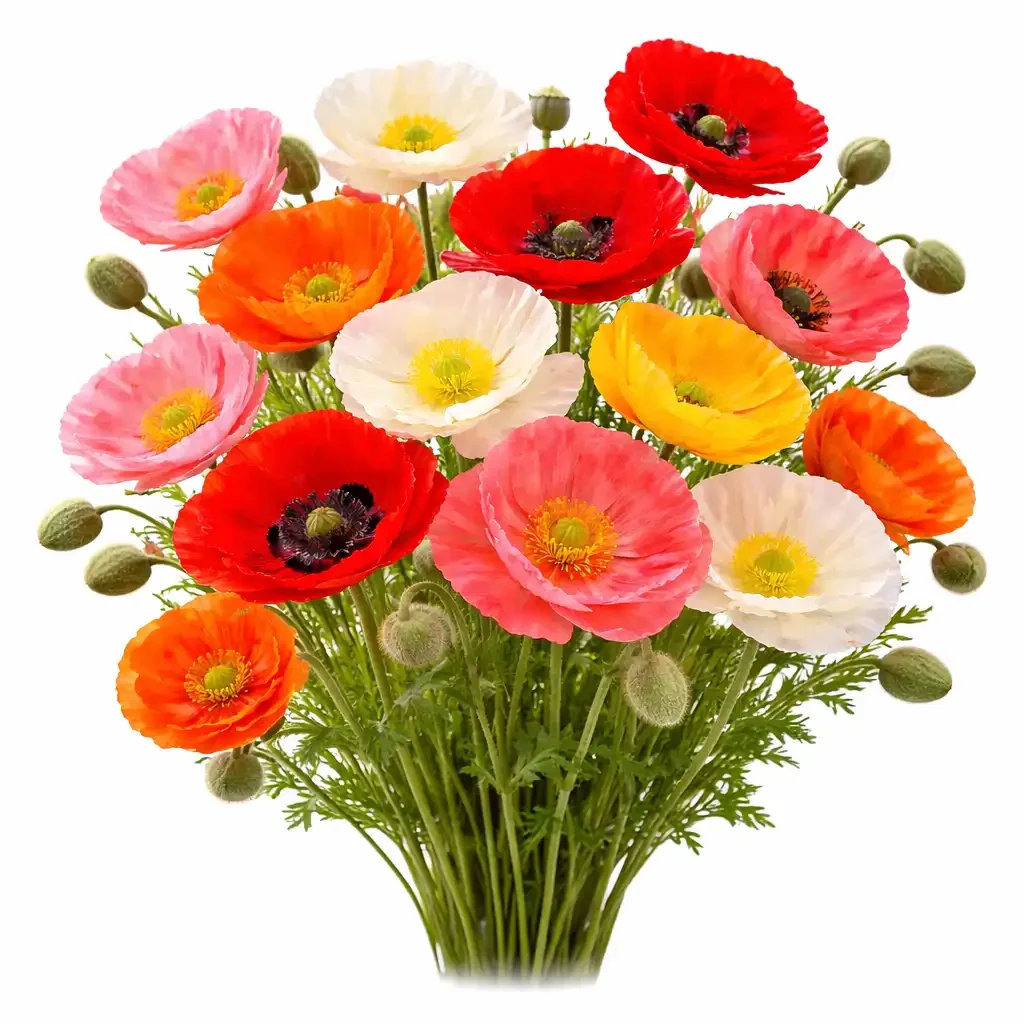
Poppies are among the most ethereally beautiful flowers in the entire cut flower world. Their large, tissue-thin, crepe-paper petals in shades of pure white, cream, soft peach, coral, orange, red, deep burgundy, lavender, and near-black have a delicate, transient quality that is unlike any other flower. They flutter in the slightest breeze, catch light in a way that makes them glow from within, and open from tightly nodding buds in a gesture of such graceful beauty that watching a poppy bloom unfurl is one of the most quietly spectacular events in the spring cutting garden.
For homestead growers, poppies offer a unique combination of commercial value and ecological richness. Iceland Poppies grown as a cool season crop in mild winter climates within USDA zones 8 to 11 bloom prolifically from late winter through late spring, exactly when the wedding season is building and the demand for delicate, romantic flowers is at its highest. Shirley Poppies sown directly in the garden produce an abundance of silky blooms and the ornamental seed pods that follow are among the most sought after dried flower products available. Perennial Oriental Poppies establish permanent clumps that return year after year with dramatic large blooms in the early summer garden.
Here is why Poppies deserve a prominent spot on your homestead:
They are among the most photographically beautiful flowers available. The tissue-thin petals and graceful, nodding buds of poppies photograph magnificently. In an era where customers discover flowers through social media, poppies are among the most compelling and share-worthy flowers you can grow.
Iceland Poppies provide premium cool season income. In mild winter climates within USDA zones 8 to 11, Iceland Poppies bloom from late winter through late spring during the peak spring wedding season, commanding premium prices at a time when cool season flowers are in the highest demand.
Poppy seed pods are a valuable dried flower crop. The large, round, ornamental seed pods of Papaver somniferum are among the most popular dried flower products available, selling well at craft markets, online shops, and through florists for use in dried arrangements and wreaths.
They attract important pollinators. Poppies are particularly valuable for bees. Their large, open blooms provide easy access to abundant pollen and their early season blooming provides an important food source for bees at a time when relatively few other flowers are available.
They have a dramatic, memorable quality that customers love. Poppies are not a flower that customers walk past without noticing. Their extraordinary beauty, delicate texture, and fleeting seasonal availability create a sense of excitement and urgency at the farmers market that drives strong sales.
Growing Conditions
Sunlight
Poppies require full sun to perform their best. They need at least 6 hours of direct sunlight per day for strong stem production and abundant flowering. In partial shade stems become weak and elongated and flower production is significantly reduced. Full sun combined with cool temperatures produces the ideal growing conditions for the longest stems and most fully developed blooms in cool season types.
Soil
Poppies prefer well-drained, average to moderately fertile soil. They do not perform well in waterlogged conditions and are prone to root rot in poorly drained soil. Overly rich soil produces lush, floppy foliage at the expense of flower stem production. A loose, well-drained soil with a pH between 6.0 and 7.0 is ideal. Iceland Poppies in particular prefer slightly alkaline conditions and perform well in soil with a pH at the higher end of this range.
Water
Water consistently throughout the growing season to maintain even soil moisture. Poppies need regular moisture during active growth and blooming but do not tolerate waterlogged conditions. Water deeply at the base of plants rather than overhead to reduce the risk of fungal diseases on the delicate foliage. Consistent irrigation throughout the cool season growing period is important for maintaining stem length and bloom quality regardless of your climate.
Temperature
Cool season poppies including Iceland Poppies and Shirley Poppies perform best in temperatures between 45 and 65 degrees Fahrenheit. They decline rapidly when temperatures consistently exceed 75 to 80 degrees Fahrenheit. In mild winter climates within USDA zones 8 to 11, cool season poppies are best grown from fall through spring, taking advantage of the cool growing season for an exceptionally long and productive blooming period. In cold winter climates within USDA zones 3 to 7, cool season poppies are grown as early spring through early summer annuals, sown as soon as soil can be worked and harvested before summer heat arrives. Perennial Oriental Poppies are cold hardy and bloom in early summer, thriving in a different seasonal window from the cool season types.
Planting Guide
Different poppy species require different planting approaches. Iceland Poppies are best started from transplants in mild winter climates. Shirley Poppies and other annual types direct sow most successfully. Perennial Oriental Poppies are best planted from nursery transplants or divisions.
Iceland Poppies
Step 1: In mild winter climates within USDA zones 8 to 11, start Iceland Poppy seeds indoors in late summer to early fall, typically August through September, for fall transplanting. This timing produces well-established plants that bloom from late fall through spring. In cold winter climates, start seeds indoors in late winter 8 to 10 weeks before the last frost date for early spring transplanting.
Step 2: Iceland Poppy seeds are extremely tiny and need light to germinate. Press seeds onto the surface of moist seed starting mix without covering them. Keep seed trays at 55 to 65 degrees Fahrenheit. Germination typically occurs within 10 to 21 days.
Step 3: Once seedlings are large enough to handle, carefully prick out into individual small cells or pots. Iceland Poppy seedlings are fragile and resent root disturbance. Handle with great care.
Step 4: Grow on in a cool, bright location until plants are robust enough for outdoor transplanting.
Step 5: Transplant to a location with full sun and well-drained soil, spacing plants 6 to 9 inches apart.
Shirley Poppies and Annual Types
Step 1: Direct sow Shirley Poppies and other annual types in early spring in cold winter climates as soon as the soil can be worked. In mild winter climates within USDA zones 8 to 11, sow in fall for winter and spring blooming.
Step 2: Prepare a fine, well-drained seedbed. Press seeds onto the soil surface without covering them as poppy seeds need light to germinate. Mix seeds with fine sand before sowing to help distribute them evenly.
Step 3: Water gently with a fine mist after sowing and keep the soil surface lightly moist until germination occurs.
Step 4: Thin seedlings to 6 to 9 inches apart once they are a few inches tall. Thinning is important for cut flower production as crowded plants produce shorter, weaker stems.
Seed vs Transplant: Iceland Poppies perform best when started indoors and transplanted as seedlings. Annual Shirley Poppies perform best when direct sown as they resent root disturbance.
Spacing: 6 to 9 inches apart for cut flower production.
Planting Season: Fall in mild winter climates within USDA zones 8 to 11 for cool season types. Early spring in cold winter climates.
Maintenance
Deadheading
Regular deadheading of spent blooms is essential for keeping cool season poppies productive throughout their season. Poppies that are allowed to set seed stop producing new stems quickly. Remove spent blooms by cutting the stem back to just above a basal leaf. For seed pod production, allow selected stems to go to seed after the main blooming period.
Fertilizing
Poppies are moderate feeders. Apply a balanced fertilizer at planting and a light application every four to six weeks throughout the growing season. Avoid excessive nitrogen which promotes lush foliage at the expense of flower stems. Iceland Poppies in particular benefit from consistent light fertilization throughout their long cool season blooming period.
Pest Control
Poppies are generally pest resistant. Aphids can occasionally appear on stems and developing buds and should be treated promptly with a strong spray of water or neem oil. Downy mildew can affect foliage in humid conditions.
Disease Prevention
Good drainage and air circulation prevent most disease issues. Avoid overhead watering to protect the delicate foliage and blooms from water damage and reduce the risk of fungal diseases. Space plants properly for good air circulation between plants.
Managing Latex Sap
Poppies contain a milky latex sap that seeps from cut stems and can significantly shorten vase life by blocking water uptake. Sealing the cut end of the stem immediately after cutting is the most important step in preparing poppy stems for the vase. Several methods work effectively including briefly passing the cut end through a flame for two to three seconds, dipping the cut end in boiling water for ten seconds, or using a lighter to cauterize the cut surface. This step should never be skipped when harvesting poppies for cut flower use.
Harvesting
When to Harvest
Harvesting poppies at the correct stage is critical and is different from most other cut flowers. Poppies must be harvested when the bud is still tightly closed but the sepals, the green outer covering of the bud, are beginning to split and the color of the petals inside is just becoming visible through the cracks in the sepal. This is often called the cracked calyx stage or the marble stage. Poppies harvested at this stage will open fully and beautifully after cutting and will have their maximum vase life. Poppies harvested after the petals have already begun to emerge from the bud have a significantly shorter vase life and will not last well in arrangements.
How to Cut
Use clean, sharp scissors or pruners. Cut stems as long as possible, ideally 16 to 24 inches. Cut in the early morning before the heat of the day. Immediately after cutting, seal the cut end of the stem using one of the methods described above, flame searing, boiling water dipping, or cauterizing with a lighter, to prevent the latex sap from blocking water uptake. Place sealed stems immediately into a bucket of cool water with a floral preservative.
Conditioning
After sealing cut ends and placing in water, condition poppy stems in deep cool water in a cool, dark location for several hours or overnight. This conditioning period allows the stems to fully hydrate and the buds to begin their opening process under controlled conditions. Properly conditioned poppy stems open slowly and beautifully over their vase life and last significantly longer than unconditioned stems.
Harvesting Seed Pods
For dried seed pods, allow selected blooms to fully open, shed their petals, and develop the large, round, ornamental seed head. Harvest seed pods when the pod is fully formed and firm but before the small holes around the top of the pod open and begin releasing seeds. At this stage the pods are at their most visually attractive and will dry beautifully with their ornamental caps intact. Cut stems as long as possible and hang bundles upside down to dry.
Vase Life
Properly harvested and conditioned poppies typically last 5 to 7 days as fresh cut flowers. While not the longest vase life in the cut flower repertoire, the extraordinary beauty of poppies more than compensates for this limitation in the eyes of customers and florists who value them. Strip all foliage below the waterline, ensure cut ends have been sealed, and place in fresh water with a floral preservative.
Uses on a Homestead
Cut Flower Use
Poppies are grown primarily as fresh cut flowers. Their extraordinary tissue-thin petals and graceful, nodding buds create a quality of delicate, transient beauty that is unlike anything else in the cutting garden. They are particularly beautiful in loose, romantic mixed bouquets alongside ranunculus, sweet peas, anemones, and other cool season flowers. Their relatively short vase life compared to some other flowers actually adds to their appeal for customers who understand that the most beautiful things are often the most fleeting.
Dried Seed Pods
The ornamental seed pods of Papaver somniferum, the Opium Poppy, are among the most popular and commercially valuable dried flower products available. Their large, round, architectural form with distinctive crown-like caps creates a striking visual element in dried wreaths, arrangements, and botanical craft products. Dried poppy pods sell well at craft markets, holiday markets, and through online shops year round.
Wedding and Event Flowers
Poppies are a sought after specialty flower for spring weddings, particularly for romantic and garden-style designs. Their delicate beauty, unusual texture, and fleeting seasonal availability make them a premium specialty item that wedding florists value highly and pay well for during their short spring season.
Pollinator Support
Poppies are among the most important early season pollinator plants available to homestead growers. Their large, open blooms provide abundant pollen that is particularly important for bumblebees and native bees building their colonies in early spring. Planting poppies throughout your homestead provides a critical early season food source that supports the pollinator community for the entire growing season.
Can You Make Money With Poppies
Yes, poppies are a profitable specialty crop for homestead flower operations, particularly for growers focused on the premium cool season market and the dried flower market.
Premium cool season pricing. Iceland Poppies bloom during the spring wedding season when demand for delicate, romantic flowers is highest and local supply is most limited. Their extraordinary beauty justifies premium pricing at both retail and wholesale levels.
Strong dried pod market. Dried poppy pods are a consistently popular and high-value dried flower product with strong year-round demand from crafters, florists, and wreath makers. The combination of fresh flower and dried pod income from a single planting maximizes the return from every square foot of growing space.
Highly photogenic social media content. Poppies are among the most beautiful and compelling flowers for social media photography. A single post featuring a field of blooming Iceland Poppies or a close-up of a Shirley Poppy unfurling from its bud can generate enormous engagement and direct customer interest.
Farmers Market: Fresh poppy bundles sell for 10 to 18 dollars per bunch depending on variety and color. Single premium stems of Iceland Poppies can sell for 2 to 4 dollars each. Dried poppy pod bundles sell for 8 to 15 dollars per bunch.
Florists and Wedding Designers: Poppies are a sought after specialty item for spring wedding work. Establishing a supply relationship with local wedding florists creates a reliable and premium-priced sales channel during the spring season.
Dried Flower Market: Dried poppy pods sell well at craft markets, holiday markets, and through online shops year round. Their architectural form and long shelf life make them an ideal online product.
CSA Flower Subscriptions: The inclusion of poppies in a spring flower subscription box creates immediate excitement and perceived value. Their extraordinary beauty and seasonal rarity make them one of the most eagerly anticipated additions to any cool season subscription.
Companion Plants
Poppies grow beautifully alongside other cool season flowers and pollinator plants with similar growing requirements.
Ranunculus: Both are cool season favorites that bloom at overlapping times and complement each other beautifully in romantic spring arrangements.
Anemones: Another cool season bulb that blooms alongside poppies and creates beautiful color combinations in spring arrangements.
Sweet Peas: Both are fragrant cool season flowers that pair naturally in the spring cutting garden and in mixed bouquets.
Nigella: Both are delicate, self-seeding annuals that complement each other beautifully in loose, romantic spring arrangements.
Bachelor's Button: A cool season annual that blooms alongside poppies and provides complementary blue and purple tones in mixed spring bouquets.
Larkspur: Both are cool season annuals that self-seed readily and complement each other in tall, romantic spring arrangements.
Common Problems
Short Vase Life Without Stem Sealing
The most common frustration with poppies as cut flowers. Poppy stems that are not sealed immediately after cutting release latex sap that blocks water uptake and causes the stems to wilt within hours. Always seal cut ends immediately after cutting using flame searing, boiling water dipping, or cauterizing with a lighter. This single step transforms poppies from a frustrating cut flower into a reliable and long-lasting one.
Harvesting at the Wrong Stage
The second most common mistake. Poppies harvested after the petals have already begun to emerge from the bud will last only one to two days in a vase. Always harvest at the cracked calyx stage when the sepals are splitting and the color of the petals is just becoming visible but the petals have not yet begun to emerge. Train yourself to recognize this stage reliably and never harvest later than this.
Failure to Germinate
Poppy seeds need light to germinate and are very sensitive to planting depth. Seeds covered by more than a thin dusting of soil typically fail to germinate. Press seeds onto the soil surface and cover with no more than the thinnest possible layer of fine soil or vermiculite. Cool soil temperatures favor germination of cool season types.
Floppy Stems
Common in overly rich soil, insufficient sun, or overcrowded conditions. Grow in average to moderately fertile soil with full sun and thin properly to the correct spacing. Avoid high nitrogen fertilizers.
Downy Mildew
Can affect foliage in cool, humid conditions. Space plants properly for air circulation and avoid overhead watering. Remove affected foliage promptly.
Varieties to Consider
Iceland Poppies (Papaver nudicaule)
Champagne Bubbles Series: One of the most widely grown Iceland Poppy series for cut flower production. Large blooms in a wide range of colors including white, cream, yellow, orange, salmon, pink, and red on strong stems up to 18 inches. Reliable performance and excellent cut flower qualities make this series the standard for cool season production.
Sherbet Pastels: A soft-toned color blend featuring cream, peach, apricot, and pale pink shades that are extremely popular with wedding florists working with soft, romantic color palettes.
Oregon Rainbows: Large blooms in a wide range of soft and bright colors including many bicolors and picotee types. Very popular at farmers markets for the diversity and beauty of the color range.
Pizzicato Series: A compact series with large blooms on short to medium stems. Good for containers and smaller growing spaces. Available in a wide range of colors.
Shirley Poppies (Papaver rhoeas)
Single Mixed: The classic single-petaled Shirley Poppy in a range of white, pink, salmon, red, and bicolor. Silky, tissue-thin petals with a delicate, wildflower quality. Very popular at farmers markets.
Double Mixed: Fully double blooms in the same color range as the singles. Fuller, more peony-like appearance. Very popular with florists for the more substantial appearance of the double-flowered forms.
Angels Choir: A series with large, double and semi-double blooms in a beautiful range of soft pastel tones. Very popular for wedding work and with customers seeking romantic, soft-colored bouquets.
Ornamental Seed Pod Types (Papaver somniferum)
Lauren's Grape: A stunning variety with large, single deep purple to violet blooms followed by very large, ornamental seed pods. Extremely popular for both fresh flower and dried pod use.
Peony Flowered Mixed: Fully double, peony-like blooms in a range of pink, white, red, and purple. The large, round seed pods that follow are among the most ornamental available.
Danish Flag: A striking variety with large, deep red blooms with a white cross pattern at the center. Very distinctive and dramatic at the farmers market.
Black Peony: Deep, almost black double blooms followed by large ornamental pods. Extremely popular with florists working with dark and dramatic color palettes.
Perennial Poppies (Papaver orientale)
Beauty of Livermere: A classic Oriental Poppy with enormous deep crimson blooms with black basal markings. Dramatic and eye-catching in the early summer garden. Long, strong stems ideal for cut flower use.
Patty's Plum: A stunning Oriental Poppy with large, dusky plum-purple blooms that are highly sought after by florists for their unusual color. One of the most distinctive and premium-priced perennial poppy varieties available.
Princess Victoria Louise: Soft salmon-pink blooms with a darker center. A classic and widely grown Oriental Poppy variety with excellent cut flower qualities.
Final Thoughts
Poppies are one of the most magical and visually extraordinary flowers a homestead grower can produce. Their tissue-thin petals, graceful nodding buds, and extraordinary range of colors create a quality of beauty that is genuinely unlike any other flower. They are not the easiest cut flower to work with. The requirement to seal cut ends immediately after harvest, the narrow harvesting window at the cracked calyx stage, and the shorter vase life compared to some other flowers all require attention and practice to master. But once you have developed the skill to harvest and handle poppies correctly, they become one of the most compelling and commercially powerful flowers in your entire product range. In mild winter climates within USDA zones 8 to 11 where Iceland Poppies can bloom from late fall through late spring during the peak wedding season, poppies deliver an extraordinary combination of beauty, market timing, and premium pricing that makes every stem harvested worth the care it took to produce. In cold winter climates, the shorter spring blooming window is still one of the most beautiful and commercially rewarding cool season harvests available.
FAQ
Why do my poppy stems wilt immediately after cutting? Poppy stems wilt quickly after cutting because the latex sap they contain seeps from the cut end and blocks water uptake in the stem. The solution is to seal the cut end of each stem immediately after cutting by passing it through a flame for two to three seconds, dipping it in boiling water for ten seconds, or briefly cauterizing with a lighter. This sealing step must be done within seconds of cutting and should never be skipped when harvesting poppies for cut flower use.
Can Iceland Poppies be grown as a long season crop? In mild winter climates within USDA zones 8 to 11, Iceland Poppies can be grown from fall through late spring, typically blooming from late fall through May depending on planting time and specific climate. They decline and stop blooming as summer temperatures arrive. The extended cool season window in these zones gives growers a significantly longer production period than growers in colder climates where Iceland Poppies are grown as a shorter spring annual.
Are poppy seed pods legal to sell? Dried ornamental poppy seed pods from Papaver somniferum are legally sold as decorative dried flowers throughout the United States and are a standard product at craft markets, flower shops, and online stores. The dried pods themselves contain negligible amounts of any controlled substance and their sale for decorative purposes is not regulated. Growing Papaver somniferum as an ornamental garden plant is legal in most jurisdictions. If you have any concerns about specific regulations in your area, consult with your local agricultural extension office.
How do I get the longest possible stems from Iceland Poppies? Choose varieties bred for cut flower production with naturally long stems such as the Champagne Bubbles series. Plant in full sun with adequate spacing of 6 to 9 inches. Provide consistent moisture and regular light fertilization throughout the growing season. Plant as early as possible in fall in mild winter climates for the longest possible cool growing season before spring warmth arrives. In cold winter climates, sowing as early as possible in spring maximizes the cool growing window before summer heat shortens stems.
Do poppies self-seed? Yes, most poppy species self-seed prolifically if seed heads are allowed to mature and disperse. Shirley Poppies and Papaver somniferum in particular are enthusiastic self-seeders and can naturalize in a garden over time, appearing each year without replanting. This self-seeding habit can be an asset if managed carefully, providing free plants each season, or a nuisance if populations build up in areas where they are not wanted. Harvesting seed pods before they fully ripen and open is the most effective way to control self-seeding in a managed cutting garden.