
Zucchini: Costata Romanesco
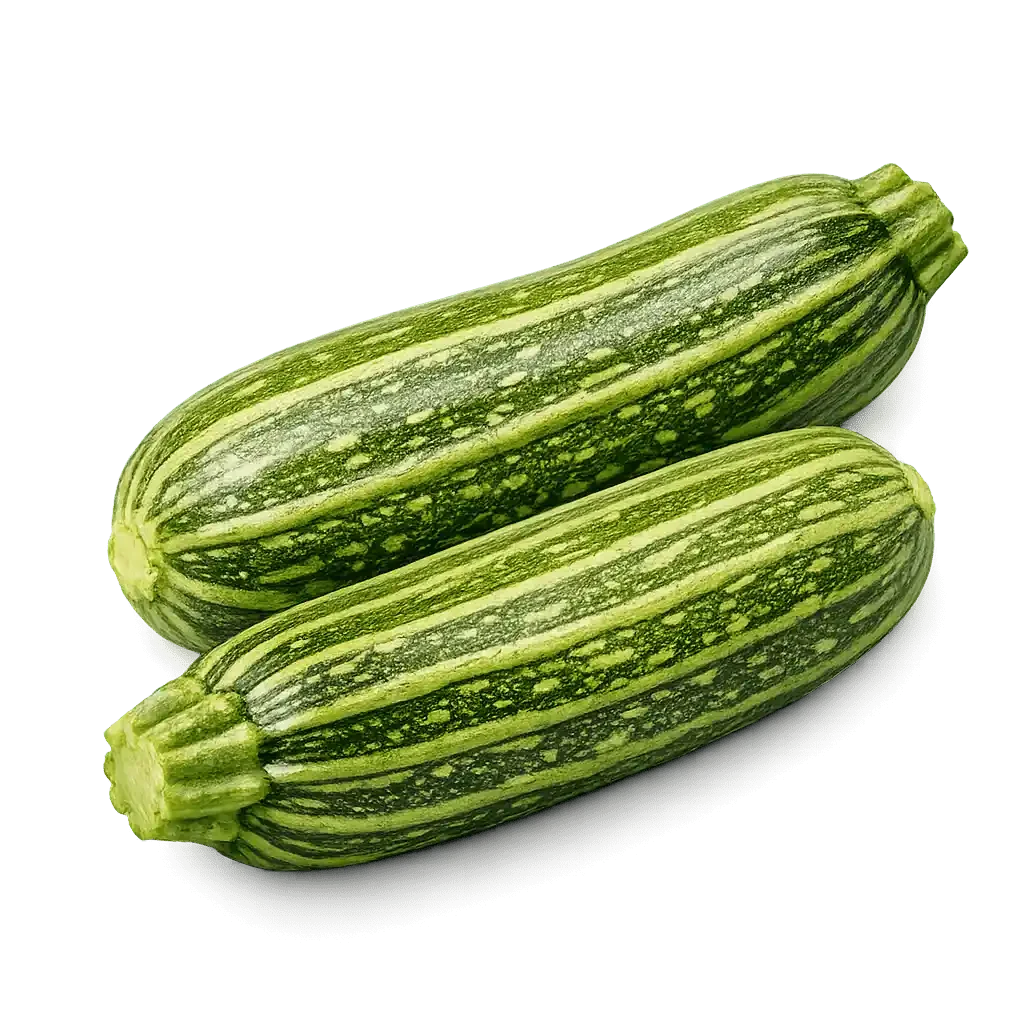
Italy's Renaissance Heirloom with Flavor That Outshines Them All
A Complete Seed-to-Table Guide
Quick Reference
Botanical Name: Cucurbita pepo
Type: Summer Squash (Cocozelle / Ribbed Italian Zucchini)
Growth Habit: Large, semi-vining to bush, big-leafed plants (approximately 3 by 3 feet)
Also Known As: Costata Romanesca, Italian Ribbed Zucchini, Romanesco Zucchini, Zucchina Romana
Origin: Heirloom from the Lazio region (Rome), Italy. Cocozelle types date to the Italian Renaissance (16th century).
Plant In: Spring, 1 to 2 weeks after your last frost date, when soil temperature reaches 70F (21C)
Soil Temperature: 70 to 85F (21 to 29C) for optimal germination; 85F is ideal
Seed Depth: 0.5 to 1 inch
Plant Spacing: 24 to 36 inches apart (or 4 to 6 seeds per hill, thinned to 2 to 3)
Row Spacing: 3 to 6 feet between rows or hills
Sunlight: Full sun (6 to 8 hours daily)
Watering: 1 to 2 inches per week, deep and consistent at the base
Days to Germinate: 7 to 14 days
Days to Harvest: 52 to 59 days from direct seeding (subtract 14 to 20 days for transplants)
Harvest Size: 6 to 12 inches for eating fresh; can grow to 18 inches or more and still maintain quality
Storage (Fresh): Up to 2 weeks at 40 to 50F (5 to 10C), 95% relative humidity
Container Friendly: Possible in very large containers (15+ gallons), but performs best in the ground
USDA Zones: 3 to 11 (grown as a warm-season annual)
Frost Tolerant: No, tender annual, will not survive frost
Introduction
There is a zucchini that seasoned gardeners, professional chefs, and heirloom seed enthusiasts talk about in reverent tones, and it has been grown in the gardens around Rome since the Italian Renaissance. Costata Romanesco is an heirloom cocozelle-type zucchini from the Lazio region of Italy whose name translates simply to "ribbed Roman." Its dramatic, deeply grooved ribs, alternating dark and light green stripes with white flecking, and unmistakable star-shaped cross-sections have made it one of the most visually striking summer squash in the world.
But what truly sets Costata Romanesco apart is its flavor. Where most hybrid zucchini varieties offer mild, watery flesh, this Italian heirloom delivers a dry, meaty texture and a rich, sweet, nutty taste that wins virtually every blind tasting. It produces about half the yield of modern hybrids, but each fruit is so much more flavorful that growers consistently say the trade-off is more than worth it. As famed seed-saver Will Bonsall once remarked, many consider it the only summer squash worth growing if flavor is the priority. In this guide, you will find everything you need to bring this centuries-old Italian treasure to your own garden and kitchen.
Why Grow Costata Romanesco?
Visual Appeal
Costata Romanesco is a showstopper in the garden and at the market. The fruits develop 8 to 10 prominent, deeply grooved ribs running their full length, with alternating dark green and pale green stripes accented by white flecking. Slice one crosswise and you get beautiful, scalloped star-shaped rounds that elevate any dish from ordinary to extraordinary. The large, golden-yellow blossoms are prolific and ornamental in their own right. At farmers' markets and county fairs, these ribbed beauties turn heads and command premium prices.
Flavor and Texture
This is the category where Costata Romanesco leaves every other zucchini in the dust. The flesh is dry, dense, and meaty with a texture closer to eggplant than to typical watery zucchini. The flavor is distinctively sweet, nutty, and earthy, with a depth and complexity that no modern hybrid can match. It wins virtually every taste test it enters. The flesh holds its shape when sauteed, grilled, baked, or broiled, making it a chef's dream. Remarkably, the flavor and texture remain excellent even when fruits grow to 18 inches or larger, a quality almost unheard of among summer squash.
Productivity
Costata Romanesco produces about half the yield of hybrid varieties, which is actually a benefit for many home gardeners who have experienced the relentless flood of conventional zucchini. What it does produce is of exceptional quality. The plants deliver a steady, manageable harvest of high-quality fruits over an extended season. It is also a prolific producer of large, heavy male blossoms, which are a gourmet ingredient in their own right and a major bonus for Italian cooking.
Ease of Growing
Despite its exotic appearance, Costata Romanesco grows much like any other zucchini. The semi-vining plants are vigorous with big, dramatic leaves, growing to roughly 3 by 3 feet or more depending on conditions. It is considered beginner-friendly and forgiving, requiring only consistent watering, full sun, and occasional feeding. The main difference from compact bush hybrids is that it needs more space and is slower to begin bearing. Plan for it and you will be rewarded.
Seed Saving
As an open-pollinated heirloom, Costata Romanesco is ideal for seed saving. Seeds saved from your own plants will grow true to type, allowing you to maintain this centuries-old variety in your own garden year after year. To save seeds, allow one or two fruits to grow very large until the rind hardens and begins to turn yellow. Let the seeds mature inside the fruit for 3 to 4 weeks after harvest, then cut open, remove, clean, and air-dry the seeds at room temperature. Stored in a sealed container in a cool, dry location, the seeds will remain viable for 5 to 6 years.
Nutritional Benefits
Costata Romanesco is rich in vitamins A and C, fiber, antioxidants, potassium, manganese, and folate. Its dense flesh provides more substance per serving than watery hybrid varieties. The dark green skin is especially high in lutein, beta-carotene, and zeaxanthin, which support eye health and immune function. Low in calories and high in water content, it is an excellent addition to a healthy diet. Keeping the tender skin on when cooking maximizes the nutritional benefits.
When to Plant
Temperature Requirements
Costata Romanesco needs warm soil to germinate and grow. Plant outdoors 1 to 2 weeks after your last frost date, when soil temperatures have reached at least 70F (21C). The optimal germination temperature is 85F (29C). Cold, wet soil will cause seeds to rot or germinate poorly. In cool climates, use black plastic mulch to warm the soil before planting.
Starting Indoors
Direct sowing outdoors is recommended for the best results. However, in very short growing seasons, start seeds indoors 2 to 4 weeks before your transplant date. Sow 2 to 3 seeds per pot at a depth of 0.5 to 1 inch and maintain soil temperatures of 70 to 85F. Transplant at the first or second true leaf stage to avoid root binding. Use biodegradable pots to minimize root disturbance. Be careful not to start too early, as the roots can become fibrous and difficult to establish if seedlings are held in pots too long. Soaking seeds in warm water for 8 to 10 hours before planting can improve germination.
Direct Sowing
Direct sowing into warm, moist soil is the preferred method. Plant 4 to 6 seeds per hill, 0.5 to 1 inch deep, and thin to the 2 to 3 strongest plants after emergence. Hills should be spaced 3 to 6 feet apart. For row planting, space seeds 24 to 36 inches apart with 3 to 6 feet between rows. Cover the planting area with row covers to protect seedlings from cucumber beetles and to warm the soil.
Succession Planting
Because Costata Romanesco is slower to bear than hybrids, succession planting every 3 to 4 weeks from late spring through midsummer helps ensure a continuous harvest. Start the first planting as soon as the soil is warm, then follow up with additional sowings to replace plants as they age and become more susceptible to powdery mildew. Plan your final planting at least 75 days before the first expected fall frost.
How to Plant and Seed Spacing
Seed Depth and Spacing
Plant seeds 0.5 to 1 inch deep. Space plants 24 to 36 inches apart, or use hills spaced 3 to 6 feet apart with 2 to 3 plants per hill. Costata Romanesco's semi-vining habit and large leaves require more space than compact bush varieties. Wider spacing promotes better airflow, which helps prevent powdery mildew.
Soil Requirements
Costata Romanesco needs loose, fertile, well-drained soil with a pH between 5.8 and 6.8 and plenty of nitrogen. Before planting, amend the soil generously with rich compost, well-rotted manure, or general-purpose garden fertilizer. Sow or transplant into planting holes filled with compost that have been prepared 2 weeks in advance for the best results. If seedling leaves yellow, supplement with fish emulsion.
Sunlight
Full sun is essential. Select a site with at least 6 to 8 hours of direct sunlight per day. Costata Romanesco thrives in warm, sunny climates. In hot-summer areas, the plants perform exceptionally well. In cooler regions, maximize sun exposure and use black plastic mulch to boost soil warmth.
Watering at Planting
Water thoroughly after planting and keep the soil consistently moist during the germination and seedling stages. Once established, water deeply at the base of the plant. Avoid wetting the foliage, as this promotes powdery mildew and other fungal diseases. In hot, dry climates, consider planting in a shallow basin rather than a raised mound to help the soil retain moisture.
Container Growing
While Costata Romanesco can be grown in very large containers of 15 gallons or more, it performs best in the ground where its semi-vining roots have room to spread. If container growing is your only option, use the largest container available, fill with rich potting mix amended with compost, and water frequently. Be prepared for a somewhat smaller plant and lower yield compared to in-ground growing.
Companion Planting
Excellent companions include corn, beans, nasturtiums, marigolds, basil, borage, radishes, and dill. Basil and marigolds help deter pests and encourage flower development. Radishes planted nearby can help repel flea beetles and cucumber beetles. Borage attracts pollinators, which is important because Costata Romanesco requires bee pollination for good fruit set. Avoid planting near other Cucurbita pepo varieties if you plan to save seeds, as cross-pollination will affect the next generation.
How to Grow and Care for Costata Romanesco
Watering
Provide 1 to 2 inches of water per week, adjusting for rainfall and temperature. Water deeply at the base, never overhead. Drip irrigation or soaker hoses are ideal. Mulch around the plants to preserve soil moisture and prevent soil splash, which can carry fungal spores onto the leaves. Consistent deep watering encourages the roots to grow deep, producing a stronger, more resilient plant.
Fertilizing
Costata Romanesco is a moderate to heavy feeder. Work compost and a balanced fertilizer into the soil at planting. When blooms first appear, apply 2 tablespoons of balanced fertilizer around each plant, keeping it away from the stem. Side-dress with compost every 3 to 4 weeks during the growing season. Fish emulsion is an excellent organic option if leaves begin to yellow.
Mulching and Weeding
Apply a 2 to 3 inch layer of organic mulch around each plant. Mulch conserves moisture, suppresses weeds, stabilizes soil temperature, and prevents disease spores from splashing onto foliage. Hoe and weed regularly, but do not dig deeper than 1 inch to avoid cutting the shallow feeder roots. Black plastic mulch warms the soil and is especially beneficial in cooler climates.
Pollination
Costata Romanesco produces an abundance of large, showy male and female flowers. Male flowers appear first (and in greater numbers), followed by females with a tiny ribbed fruit at their base. Bee pollination is essential for proper fruit set. Poor fruit development, malformed fruits, or small fruits that wither and blacken usually indicate insufficient pollination and will improve as more male flowers appear. Growing borage, basil, and brightly colored flowers nearby attracts pollinators. Hand-pollination is an effective backup if bee activity is low.
Pest and Disease Management
Like most cucurbits, Costata Romanesco is susceptible to powdery mildew, especially after the first few weeks of harvest. Maintain good air circulation by giving plants wide spacing and eliminating weeds. Use floating row covers early in the season to exclude cucumber beetles (which spread bacterial wilt) and squash bugs. Remove covers when flowering begins to allow pollination. Hand-pick squash bugs and destroy their egg clusters. Cucumber beetles can be deterred by spraying or dipping seedlings in kaolin clay. Crop rotation and thorough cleanup of all plant debris at the end of the season are essential for reducing disease and pest pressure in future years.
Growth Timeline
Days 1 to 14 (Germination): Seeds swell and sprout. The first rounded seed leaves (cotyledons) push through the soil. Germination takes 7 to 14 days. Keep soil consistently warm and moist. Soaking seeds beforehand can speed this process.
Days 14 to 28 (Seedling Stage): True leaves emerge, distinctly lobed and large. The root system establishes vigorously. Thin hills to the 2 to 3 strongest plants. Begin light feeding with fish emulsion if leaves yellow.
Days 28 to 42 (Vegetative Growth): Dramatic expansion of the semi-vining plant. Large, broad leaves create a sprawling canopy. The plant grows to roughly 3 by 3 feet or larger. This is the stage where Costata Romanesco's larger habit becomes apparent compared to compact hybrids.
Days 42 to 52 (Flowering): Male flowers appear first in abundance, followed by female flowers with a tiny ribbed fruit at their base. Blooms are large, golden-yellow, and ornamental. Bee activity is critical for pollination during this window.
Days 52 to 59 (Fruit Development and First Harvest): Deeply ribbed, striped fruits develop. First harvest of star-shaped zucchini at 6 to 8 inches. Fruits continue to grow and maintain quality well beyond this size.
How to Know It Is Ready
Costata Romanesco can be harvested across a wide size range, which is one of its greatest strengths. At 4 to 6 inches, the fruits are young and tender, perfect for frying whole with the blossom still attached in the Italian tradition. At 6 to 12 inches, they are at standard eating size with fully developed ribs, beautiful star-shaped slices, and peak nutty flavor. Remarkably, even at 18 inches or larger, the flesh stays firm, dense, and flavorful without becoming spongy or seedy. The skin should be tender enough to pierce with a fingernail at any eating size.
Keep Picking
Harvest 2 to 3 times per week during peak production. Remove any excess fruit to encourage continued production. Even oversized fruits should be removed to keep the plant producing. If you are entering a county fair, leave one fruit on the vine to grow to its full potential of 20 pounds or more. For all other purposes, regular picking extends the harvest season and maximizes total yield.
Harvesting
How to Harvest
Use a sharp knife to cut the fruit from the plant, leaving a short stem attached. Be gentle, as the tender skin damages easily and scratches or nicks will reduce storage life. This fragile skin is a liability for commercial shipping but is perfectly manageable for home gardeners and local market growers. Avoid pulling or twisting, which can damage the plant.
Best Time to Harvest
Harvest in the cool of the morning for the best texture and flavor. In the Italian tradition, pick at 4 to 5 inches with the blossom still attached and fry whole. For everyday cooking, 6 to 12 inches is the sweet spot. For grilling thick rounds or making stuffed zucchini, let fruits grow to 12 to 18 inches without any loss in quality. Complete all harvesting before the first fall frost, except for fruits being saved for seed.
Harvesting Blossoms
Costata Romanesco is one of the best varieties for squash blossom production. The plants produce an abundance of large, heavy male blossoms that are ideal for stuffing and frying. Harvest in mid to late morning when fully open. Clip 1 to 2 inches below the flower base. Because male flowers are so plentiful, you can harvest generously while still leaving plenty for pollination. Female blossoms can also be harvested, but at the cost of a potential fruit.
Expected Yield
Expect about half the total fruit count of hybrid zucchini varieties, but each fruit will be significantly larger and more flavorful. A single healthy plant will produce a manageable, steady stream of high-quality fruits and a generous supply of edible blossoms over the course of the season. For most families, 2 to 3 plants provide a satisfying harvest without the overwhelming surplus that other varieties produce.
How to Store
Refrigerator Storage
Store unwashed, uncut fruits in a perforated plastic bag or loosely wrapped in a paper towel in the crisper drawer. At 40 to 50F (5 to 10C) with 95% relative humidity, they will keep for up to 2 weeks. Use as soon as possible for the best quality. The tender skin means these fruits are more fragile than thick-skinned hybrids, so handle gently.
Freezing
Slice or dice, blanch in boiling water for 1 to 2 minutes, then plunge into an ice bath. Drain, pat dry, and freeze in a single layer on a baking sheet before transferring to airtight freezer bags. The dense, meaty flesh freezes better than watery hybrids, maintaining more of its texture after thawing. Frozen Costata Romanesco works well in soups, stews, and baked goods. Shredded flesh can be frozen without blanching for use in zucchini bread and fritters.
Pickling
The firm texture makes excellent pickles. Slice into star-shaped rounds or spears and pack into sterilized jars with a brine of vinegar, salt, sugar, and spices. The ribbed cross-sections make especially attractive pickle slices. Refrigerate for at least 24 hours, or process in a water bath canner for shelf-stable pickles.
Dehydrating
Slice into thin star-shaped rounds and dry in a food dehydrator at 125F (52C) for 8 to 12 hours until crisp. The dense flesh produces more substantial chips than watery varieties. Store in airtight containers for several months. Rehydrate in soups and sauces as needed.
Signs of Spoilage
Discard any fruits that feel soft, mushy, or show wrinkled skin. Visible mold, dark slimy patches, or a sour smell indicate the squash is past its prime. If the flesh tastes noticeably bitter, stop eating it immediately, as this may signal elevated cucurbitacin levels. Note that this is especially important with open-pollinated varieties. Never save seeds from or consume fruits that taste bitter.
Quick Recipe Ideas
Costata Romanesco is the chef's zucchini, with a flavor and texture that elevate every dish. Here are five recipes that celebrate its unique star-shaped beauty and nutty, meaty character:
1. Fried Whole Baby Romanesco: Harvest at 4 to 5 inches with the blossom still attached. Dip in a light tempura batter and fry in hot oil until golden and crisp. Sprinkle with flaky sea salt and a squeeze of lemon. This is how they do it in Rome, and once you try it, you will understand why.
2. Grilled Romanesco Rounds with Pesto: Slice into thick, star-shaped rounds, brush generously with olive oil, and grill for 3 to 4 minutes per side until caramelized and tender. Top with a spoonful of basil pesto and shaved parmesan. The dense flesh holds up perfectly on the grill without falling apart.
3. Costata Romanesco Fritters: Shred the zucchini, squeeze out excess water, and mix with egg, flour, feta cheese, fresh dill, and garlic. Pan-fry in olive oil until golden on both sides. Serve with a dollop of plain yogurt. The nutty flavor and dense texture make these the best zucchini fritters you have ever tasted.
4. Ribbed Romanesco Ratatouille: Slice into star-shaped rounds and layer with eggplant, tomato, bell pepper, and onion in a baking dish. Drizzle with olive oil, fresh thyme, and garlic. Roast at 375F for 40 minutes. The star-shaped slices make this classic Provencal dish even more stunning.
5. Raw Romanesco Ribbon Salad: Use a vegetable peeler or mandoline to shave young fruits into long, scalloped ribbons. Toss with arugula, shaved parmesan, toasted pine nuts, lemon juice, and your best olive oil. The raw flesh is firm, nutty, and sweetly earthy, nothing like the bland, watery raw zucchini you may be used to.
Bonus Tip: Costata Romanesco produces the most abundant and heaviest male blossoms of any zucchini variety. Stuff them with ricotta, mozzarella, fresh herbs, and a touch of anchovy, then batter and fry for fiori di zucca, one of Rome's most beloved street foods. With this variety, you will have enough blossoms to make it a weekly tradition.
Final Thoughts
Costata Romanesco is the zucchini for gardeners and cooks who believe flavor should come first. This Renaissance-era heirloom from the gardens of Rome has endured for centuries because it delivers something no modern hybrid can match: a dense, meaty texture and a rich, sweet, nutty taste that transforms every dish it touches. Yes, it produces less than a hybrid. Yes, the skin is tender and does not ship well. Yes, the plants are bigger and slower to start. None of that matters once you slice one open and see those beautiful star-shaped ribs, or take the first bite of a grilled round drizzled with pesto. If you have the space, the patience, and the appreciation for real flavor, Costata Romanesco will become the only zucchini you want to grow. It has been earning that distinction in Italian gardens since the 1500s, and it will earn it in yours.
Have you grown Costata Romanesco zucchini? Share your tips, favorite recipes,
and harvest photos in the comments below!
Happy Growing!