
Sweat Bees
The Complete Homesteader's Guide
Overview
Sweat bees (family Halictidae) are a diverse group of small native pollinators famous for their attraction to human perspiration and their stunning metallic green or blue coloration. With nearly 4,500 species worldwide and approximately 500 species in North America, sweat bees represent the second largest bee family globally. These tiny bees (1/4 to 1/2 inch long) exhibit the full spectrum of social behaviors, from completely solitary to primitively eusocial, making them fascinating subjects for understanding bee evolution. Many species are ground nesters that construct burrows in bare soil, while others nest in rotting wood. For homesteaders, sweat bees are exceptional generalist pollinators active throughout spring, summer, and fall, visiting an enormous variety of wildflowers and crops including sunflowers, stone fruits, apples, alfalfa, clovers, and garden vegetables. Unlike specialist pollinators, sweat bees can adapt to whatever flowers are blooming, making them resilient contributors to homestead pollination. Their tiny size allows them to access flowers that larger bees cannot, and their abundance makes them critical for ecosystem health and crop production.
Flight Range & Foraging Distance
Sweat bees are very short range foragers, staying extremely close to their nests.
Typical Foraging Range: 75 to 140 yards (68 to 128 meters) from nest
Maximum Distance: Most species stay within 200 meters
Very Short Range: Among the shortest foraging distances of all bees
Nest Placement: Critical to have flowers immediately adjacent to nesting areas
Optimal Habitat: Flowers within 100 yards of bare soil nesting sites
Compared to Other Bees: Much shorter than honeybees (1 to 2 miles), bumblebees (500+ meters), or even mason bees (200 to 300 feet)
Species Variation: Smaller species may forage even closer (under 50 yards)
Homestead Implications: Sweat bees require flowers and nesting habitat in very close proximity. Unlike bees that can cover entire properties, sweat bees only service the immediate area around their ground nests. This makes creating diverse habitat patches throughout the homestead essential for supporting robust populations.
What Sweat Bees Eat & Drink
Primary Diet: Nectar and pollen from wide variety of flowering plants
True Generalists: Visit whatever flowers are blooming; not picky
Adult Feeding: Adults drink nectar for energy
Larval Provisioning: Collect pollen and nectar to provision nest cells
Salt Attraction: Lap up human sweat for salt and minerals (hence the name)
Pollen Collection: Carried on hind legs in specialized hairs (scopae)
Metabolic Flexibility: Can digest pollen from many different plant families
Water Needs: Drink from shallow water sources
Favorite Flowers (Season by Season)
Spring (April to May):
Fruit tree blossoms (apples, plums, cherries)
Spring wildflowers
Dandelions
Early garden vegetables
Summer (June to August):
Sunflowers, coneflowers (Echinacea)
Asters, black-eyed Susans
Clovers (white, red, alsike)
Alfalfa
Squash, cucumbers, melons
Tomatoes, peppers
Garden herbs (when flowering)
Native wildflowers
Fall (September to October):
Goldenrod, asters
Late sunflowers
Sedum, Joe Pye weed
Late garden vegetables
Generalist Advantage
Unlike specialist pollinators that depend on specific plants, sweat bees thrive on diversity:
Visit flowers from dozens of plant families
Adapt foraging to whatever is blooming
Can access tiny flowers larger bees ignore
Navigate complex flower structures
Homestead Value: Sweat bees are the ultimate backup pollinators. When specialist bees are absent or weather limits other pollinators, sweat bees continue working on whatever flowers are available. Their long active season (April through October) and generalist habits make them reliable for consistent pollination across diverse crops.
Temperature Tolerance & Weather Conditions
Sweat bees are warm weather specialists preferring sunny, warm days.
Temperature Requirements
Activity Range: Prefer temperatures 70 to 85°F (21 to 29°C)
Minimum Foraging: Generally inactive below 60°F (15°C)
Heat Tolerance: Can forage up to 95°F (35°C)
Sunny Day Preference: Most active during bright, sunny conditions
Overcast Sensitivity: Reduced activity on cloudy days
Rain Avoidance: Stay in nests during rain
Morning Activity: Need sun exposure to warm up before foraging
Temperature Affects Behavior: Warmer areas may have eusocial populations while cooler areas have solitary populations
Social Behavior & Temperature Link
Fascinating research shows temperature dramatically affects sweat bee social structure:
Warm Climates: Populations become eusocial (queens and workers)
Cool Climates: Same species remains solitary
Same Species, Different Behavior: Halictus rubicundus can be social or solitary depending on local temperature
Longer Seasons: Warmer weather allows multiple generations, favoring social behavior
Shorter Seasons: Cool areas only allow single generation, preventing social behavior
Active Season
Spring Emergence: April when temperatures warm
Peak Activity: June through August
Fall Activity: Continue until first hard frosts (October)
Overwintering: Mated females hibernate in ground nests
Winter Survival: Only mated females survive; males and workers die
Multi-generational: Some species have 2 to 3 generations per year in warm climates
Homestead Consideration: Sweat bees complement cool weather pollinators (mason bees, bumblebees) by providing consistent pollination during hot summer months when other bees slow down. However, they need warm, sunny weather to work effectively.
Honey & Wax Production
Sweat bees produce NO harvestable honey or wax.
No Honey: Do not produce or store honey
Provisions Only: Pollen and nectar provisions consumed by larvae within days
No Wax: Do not produce beeswax
Nest Lining: Some species line cells with waxy substance from Dufour's gland (not harvestable)
No Products: Value is exclusively through pollination services
Homestead Reality: Support sweat bees solely for pollination. Their tiny size means even if they did store honey, quantities would be microscopic.
Pollination Services: Generalist Garden Experts
Sweat bees are critical pollinators for diverse homestead crops and wildflowers.
Pollination Advantages
True Generalists: Pollinate anything in bloom
Small Size: Access tiny flowers large bees cannot reach
Abundant Numbers: Ground nesting aggregations create local pollinator populations
Long Season: Active April through October (6+ months)
Summer Specialists: Peak activity during hottest months
Native Species: Support biodiversity and ecosystem health
Flower Flexibility: Visit multiple crop types in single foraging trip
Weather Resilient: Work in warm conditions that slow other bees
Critical Crops for Sweat Bees
Excellent Pollination:
Sunflowers: Major pollinator
Alfalfa: Important commercial pollinator
Clovers: All varieties
Stone Fruits: Apples, plums, cherries
Asters, Coneflowers: Native wildflowers
Cucurbits: Squash, cucumbers, melons
Tomatoes, Peppers: Garden vegetables
Berries: Strawberries, blueberries
Good Pollination:
Garden vegetables (beans, peas)
Herbs (when flowering)
Native prairie plants
Ornamental flowers
Pollination Statistics
Crop Contribution: Important pollinators for 25+ commercial crops
Native Pollinator Value: Estimated billions in economic value
Abundance: Can have hundreds of females nesting in single aggregation
Diversity: Different species active throughout growing season
Homestead Value: For diverse vegetable gardens and flower beds, sweat bees provide consistent, reliable pollination across many crop types. Their abundance and generalist habits make them essential backup pollinators when honeybees or other specialists are scarce.
Social Structure: Variable from Solitary to Eusocial
Sweat bees exhibit extraordinary diversity in social behavior.
Social Behavior Spectrum
Solitary Species:
Each female builds own nest
No cooperation
Common in cool climates or short seasons
Example: Many Agapostemon species
Communal Species:
Multiple females share nest entrance
Each provisions own cells
No cooperation in brood care
Reduces parasite access to nests
Example: Agapostemon virescens
Primitively Eusocial Species:
Queen and worker castes
Workers help raise siblings
Overlapping generations
Common in warm climates
Example: Halictus ligatus, Halictus rubicundus (in warm areas)
Socially Flexible Species:
Same species can be solitary or social depending on environment
Temperature and season length determine behavior
Remarkable evolutionary adaptation
Example: Halictus rubicundus
Eusocial Colony Lifecycle (Warm Climate Populations)
Spring (April to May):
Mated queen emerges from hibernation
Excavates nest in bare ground
Lays first brood of eggs
Provisions cells with pollen and nectar
Early Summer (June to July):
First brood emerges as workers (all female)
Workers forage and provision cells
Queen focuses on egg laying
Colony grows to 10 to 50 workers
Late Summer (August to September):
Colony produces reproductive females (gynes) and males
Gynes and males mate
Males die after mating
Workers die as season ends
Fall/Winter (October to March):
Only mated gynes survive
Hibernate in ground
Emerge next spring as queens
Solitary Lifecycle (Cool Climates)
Spring to Fall:
Single generation
Each female builds nest
Provisions cells
Dies in fall
Winter:
Only mated females survive hibernation
Homestead Consideration: The variable social behavior means sweat bee populations function differently in different climates. Warm climate homesteaders may have eusocial populations with larger numbers, while cool climate homesteaders support solitary populations.
Distance from Cabin/Home: Ground Nesting Considerations
Sweat bees nest in the ground and are extremely docile.
Nesting Habitat
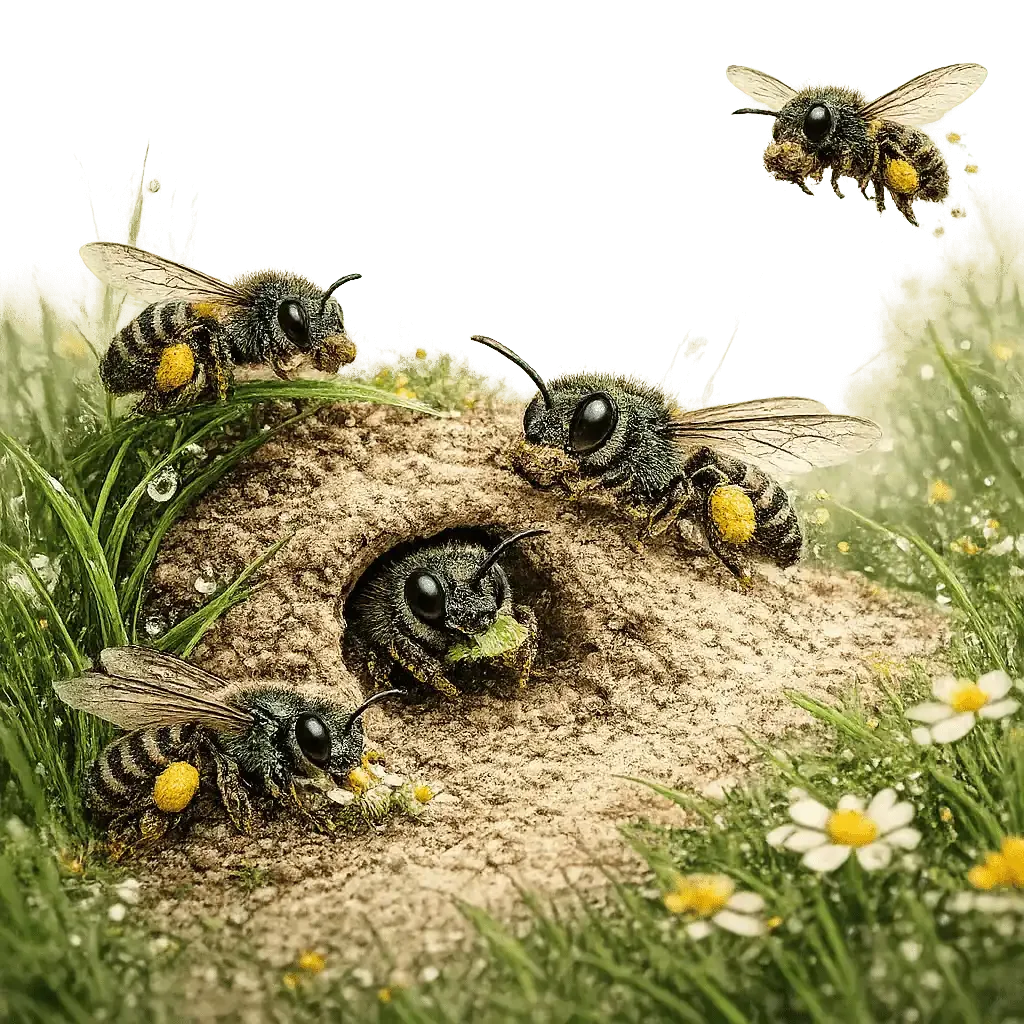
Ground Nests: Most species excavate burrows in bare soil
Nest Aggregations: Hundreds of females may nest in same area
Soil Preference: Loose, sandy, well-drained soil
Sun Exposure: Prefer south-facing slopes with morning sun
Bare Ground: Need exposed soil, not covered by vegetation
Wood Nesters: Some species (Augochlora) nest in rotting wood
Recommended Placement
Bare Soil Patches: Leave areas of exposed soil in garden
Sunny Locations: South or east facing for morning warmth
Well Drained: Avoid waterlogged areas
Near Flowers: Within 100 yards of diverse blooms
Size: Even small patches (1 to 2 square feet) support nesting
Safety & Temperament
Extremely Docile: Rarely sting
Mild Sting: Rated 1.0 on Schmidt Sting Pain Index ("light, ephemeral, almost fruity")
Sting When Swatted: Only sting if pressed against skin
Sweat Attraction: Land on skin to lap up sweat (not aggressive)
Child Safe: Harmless if children understand not to swat them
Pet Safe: No threat to pets
Ground Nest Safety
Mowing: Can mow over nests without harming bees (they're underground)
Foot Traffic: Light traffic acceptable; avoid heavy compaction
Garden Work: Can work near nests safely
Visibility: Nest entrances are tiny holes (pencil sized or smaller)
Homestead Reality: Sweat bees can nest right in vegetable gardens, flower beds, and pathways without safety concerns. Their attraction to sweat means they may land on gardeners, but they only sting if accidentally pressed or swatted. Teaching children to observe rather than swat makes them excellent educational insects.
Advantages of Supporting Sweat Bees
Exceptional Generalist Pollination: Visit anything in bloom
Long Active Season: April through October (6+ months)
Summer Heat Tolerance: Work when other bees slow down
Tiny Size: Access flowers large bees cannot reach
Abundant Populations: Ground nesting aggregations create high bee density
Native Species: Support biodiversity and ecosystem health
Extremely Docile: Safest bees around children
No Management: Simply provide bare soil and flowers
Self Sustaining: Populations grow naturally with good habitat
Multiple Species: Different species provide season-long coverage
Crop Diversity: Pollinate dozens of crop types
Backup Pollinators: Work when specialists are absent
Easy to Attract: Small habitat changes support populations
Educational Value: Metallic colors and sweat behavior teach children
Climate Adaptable: Thrive in various climates
Disadvantages & Challenges
No Harvestable Products: Produce no honey or wax
Very Short Foraging Range: Require flowers within 100 yards of nests
Sunny Weather Dependent: Inactive on cool, cloudy, or rainy days
Ground Nesting Vulnerable: Tilling destroys nests
Pesticide Sensitive: Ground nests exposed to soil-applied pesticides
Sweat Attraction: Can be annoying when gardening in hot weather
Mild Sting: Though rare, can sting if swatted
Identification Difficult: Many species look similar
Parasites: Susceptible to cuckoo bees and flies
Small Size: Individual bees less effective than larger bees (but make up in numbers)
Cannot Manage: No way to "keep" or manage like honeybees
Bare Soil Requirement: May conflict with mulching preferences
Population Fluctuations: Wild populations vary year to year
How to Attract & Support Sweat Bees
Providing Nesting Habitat
Create Bare Soil Patches:
Leave areas of exposed soil (no mulch, no vegetation)
1 to 10 square feet sufficient
South or east facing for sun exposure
Loose, sandy, well-drained soil preferred
Multiple patches throughout property better than one large area
Soil Preparation:
Remove vegetation and mulch
Loosen compacted soil
Add sand to heavy clay if needed
Ensure good drainage (no standing water)
Research shows landscaping pebbles mixed into soil attracts some species
Placement:
Within 100 yards of flower sources
Protected from heavy foot traffic
Visible from house for observation
Multiple locations across property
Providing Food Sources
Continuous Bloom (April through October):
Spring:
Fruit trees, spring bulbs
Dandelions, spring wildflowers
Early vegetables
Summer:
Sunflowers, coneflowers, asters
Clovers, alfalfa
Squash, cucumbers, melons
Garden vegetables
Fall:
Goldenrod, asters
Late sunflowers, sedum
Planting Strategy:
Diverse species better than monocultures
Native plants when possible
Large patches (3+ feet diameter) more attractive
Avoid double flowers (no pollen/nectar)
Protection from Threats
Pesticide Elimination:
Never use neonicotinoids
Avoid soil-applied pesticides near nesting areas
Never spray flowering plants
Use organic pest controls
Tilling Avoidance:
Do not till nesting areas
Till vegetable beds in late fall after bees hibernate
Use no-till methods where possible
Preserve Habitat:
Leave some areas "messy" with bare soil
Do not mulch everywhere
Maintain south-facing slopes
Protect existing nest aggregations
Water Sources
Shallow dishes with landing stones
Muddy areas for minerals
Change water regularly
Year-Round Support Calendar
January to March: Hibernating females underground; plan bare soil locations; order native plant seeds
April to May: Queens emerge and begin nesting; ensure bare soil available; early flowers blooming
June to August: Peak nesting and foraging activity; workers active in social species; maintain flower bloom; avoid disturbing nest areas
September to October: Reproductive females and males mating; prepare for winter; new queens entering hibernation
November to December: All activity ceased; protect nesting areas from disturbance; plan next year's habitat improvements
Common Mistakes to Avoid
Mulching everywhere (eliminates nesting habitat)
Heavy tilling (destroys ground nests)
Pesticide use (kills ground-nesting bees)
No bare soil (bees have nowhere to nest)
Flowers too far from bare soil (beyond their foraging range)
Expecting honey (they produce none)
Swatting when they land (just after sweat, not attacking)
Shade only gardens (they need sun exposure)
Compacted soil (too hard to excavate)
Single flower type (generalists need diversity)
Measuring Success
First Year:
Small nest entrances visible in bare soil patches
Metallic green or dark bees foraging on flowers
Tiny bees landing on skin for sweat
Second Year:
Multiple nest entrances in bare soil
Increased bee activity on flowers
Improved fruit and vegetable set
Third Year:
Dense nest aggregations (10+ nests per square foot possible)
Constant bee activity on diverse flowers
Noticeably better pollination across all crops
Conclusion
Sweat bees represent an often overlooked but absolutely critical component of homestead pollination. Their exceptional diversity (500+ species in North America), generalist feeding habits, long active season, and incredible abundance make them essential for vegetable gardens, fruit trees, and wildflower meadows.
Unlike honeybees requiring management or mason bees needing artificial houses, sweat bees ask only for two simple things: bare soil for nesting and diverse flowers within 100 yards. The tiniest habitat modification (leaving patches of exposed soil) can support thriving populations that provide months of free pollination services.
For homesteaders committed to sustainable food production, supporting sweat bees is among the easiest and most effective pollinator conservation actions. Their tiny size, mild temperament, and attraction to sweat make them fascinating educational insects for children, while their abundant numbers ensure consistent crop pollination even when other pollinators are scarce.
Start by identifying 3 to 5 locations on your property for bare soil patches (1 to 2 square feet each). Position them in sunny areas near diverse flower plantings. Eliminate pesticides, especially soil-applied products. Plant continuous bloom from spring through fall. Within two years, you'll likely have thriving sweat bee populations providing essential pollination services to your homestead, all while teaching the next generation about these remarkable native pollinators.
Explore more Types of Bees & Pollinators