
Mason Bees
The Complete Homesteader's Guide
Overview
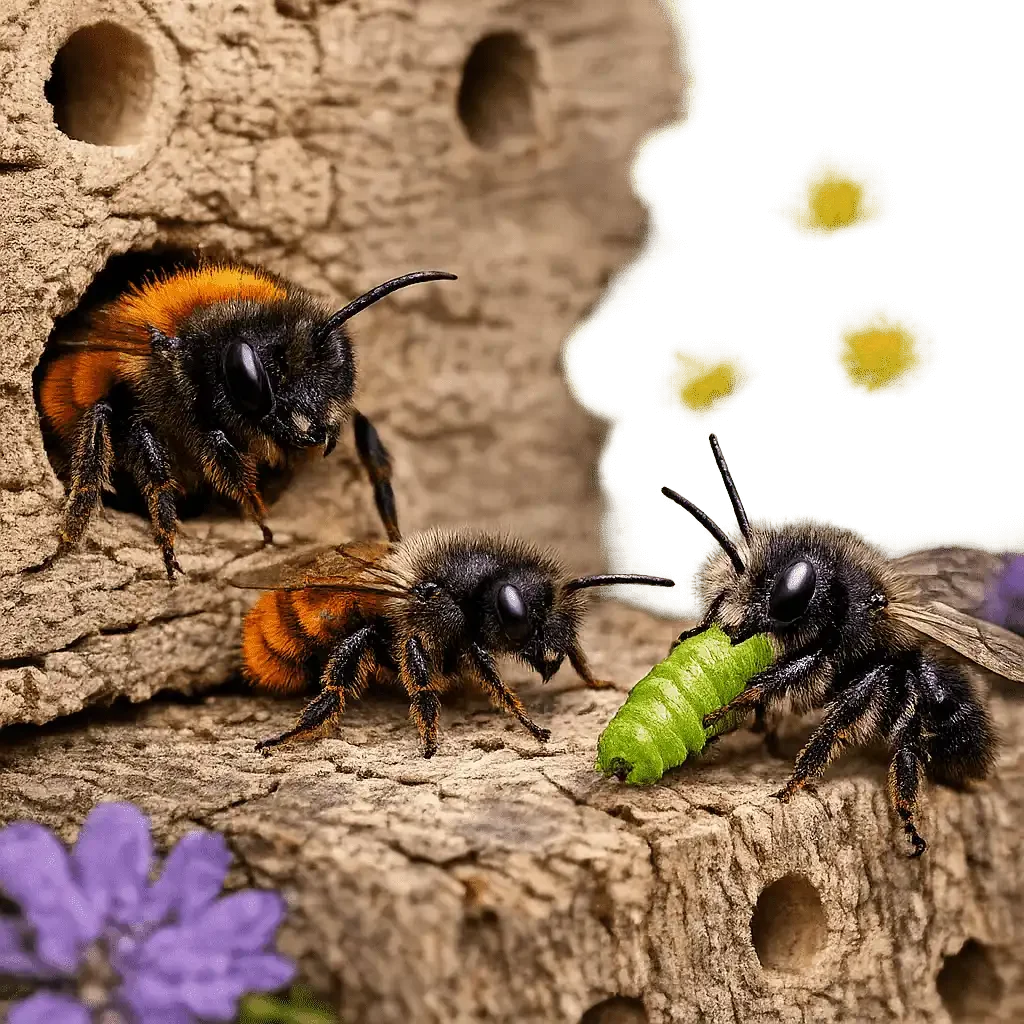
Mason bees (genus Osmia) are solitary spring pollinators named for their unique habit of using mud to construct nest partitions. With over 350 species worldwide and approximately 140 species in North America, mason bees are among the most efficient pollinators for early spring fruit trees and crops. The Blue Orchard Bee (Osmia lignaria) is the most commonly managed species in North America, prized for its exceptional pollination of apples, cherries, plums, and other fruit trees. Unlike social honeybees, each female mason bee works independently, building and provisioning her own nest in natural or provided cavities. For homesteaders with fruit orchards or early spring gardens, mason bees offer extraordinary pollination efficiency without the complexity of honeybee management. One mason bee can do the pollination work of 100 honeybees in early spring conditions, and they fly in cooler, wetter weather when honeybees stay home. Understanding these native pollinators is essential for maximizing fruit set and creating resilient pollinator habitat on homesteads.
Flight Range & Foraging Distance
Mason bees are short range foragers, staying close to their nests for efficient provisioning.
Typical Foraging Range: 200 to 300 feet (60 to 90 meters) from nest
Maximum Distance: Can fly up to 500 meters in some studies, occasionally up to 6 km
Preferred Range: Most flights under 500 meters; seek nearest flowers
Optimal Placement: Flower sources should be within 300 feet of bee houses
Trip Duration: 2 minutes to 2 hours per foraging trip
Visits Per Trip: 75 flowers per trip on average
Provisioning Trips: 25 trips to create complete pollen/nectar provision for one egg
Compared to Honeybees: Much shorter range than honeybees (1 to 2 miles)
Compared to Bumblebees: Similar to or slightly less than bumblebees (500+ meters)
Nesting Fidelity: Females nest near where they emerged; learn nest location through orientation flights
Homestead Implications: Mason bees provide targeted pollination to the orchard or garden immediately surrounding their houses. Place bee houses within 300 feet of fruit trees for maximum effectiveness. Their short range means you have more control over what gets pollinated compared to honeybees.
What Mason Bees Eat & Drink
Primary Diet: Nectar and pollen from early spring flowers
Adult Feeding: Adults drink nectar for energy throughout active season
Larval Provisioning: Collect pollen and nectar to create provision ball for each egg
No Honey: Do not produce or store honey; all provisions consumed by larvae
Pollen Collection: Carried on underside of abdomen (scopae) not on legs
Messy Pollinators: Pollen sticks all over body like Velcro; very effective at spreading it
Provision Ratio: Mix pollen with nectar and saliva; roll into ball for larvae
Water Needs: Minimal for adults; primarily need mud for nest construction
Favorite Early Spring Flowers
Fruit Trees (Primary):
Apples, pears, plums, cherries (Rosaceae family)
Peaches, apricots, nectarines
Crabapples
Early Blooming Trees/Shrubs:
Willows, maples
Serviceberry, Oregon grape
Redbud, flowering dogwood
Pussy willow
Spring Flowers:
Dandelions (important early source)
Crocus, early tulips
Hellebores
Spring bulbs
Garden Crops:
Early peas
Strawberries
Blueberries
Early flowering herbs
Native Wildflowers:
Trillium, bloodroot
Spring beauty
Native violets
Homestead Value: Mason bees specialize in early spring bloom (March through June), perfectly timed for fruit tree pollination. Their activity starts when temperatures reach 55°F (13°C), earlier than most honeybees will fly effectively.
Temperature Tolerance & Weather Conditions
Mason bees are cold hardy spring specialists adapted to variable early season weather.
Temperature Requirements
Emergence Temperature: Begin emerging when daytime temperatures reach 50 to 55°F (10 to 13°C)
Flight Temperature: Can forage at 55°F (13°C); full activity at 60°F+ (15°C+)
Cold Tolerance: Much better than honeybees in cool spring conditions
Rain Tolerance: Will forage in light rain and overcast conditions
Active Season: March through June in most regions (4 to 6 weeks per individual)
Weather Advantage: Work in conditions that keep honeybees in hives
Morning Activity: Cold blooded; bask in morning sun to warm up before foraging
Optimal Conditions: 60 to 70°F (15 to 21°C) for peak activity
Weather Sensitivity
Light Rain: Will continue foraging in drizzle
Heavy Rain: Retreat to nest cavities
Wind: Moderate wind tolerance
Overcast Days: Active in cloudy conditions if warm enough
Cold Snaps: Can survive late spring frosts while in nests
Overwintering & Development
Lifecycle: Single annual generation
Winter Form: Overwinter as fully developed adults inside cocoons
Hibernation: Adults mature in fall but remain dormant all winter
Cold Requirement: Need cold winter (below 32°F for extended period) to break diapause
Spring Development: No further development needed; emerge as adults when warm
Emergence Timing: Males emerge first; females 2 to 5 days later
Homestead Consideration: Mason bees fill the critical early spring pollination gap when honeybees are just building up and many native bees haven't emerged. Their cold tolerance makes them ideal for homesteads in regions with unpredictable spring weather.
Honey & Wax Production
Mason bees produce NO harvestable honey or wax.
No Honey: Solitary bees do not produce or store honey
Provisions Only: Pollen/nectar balls eaten by larvae within days of provisioning
No Wax: Do not produce beeswax
Mud Nests: Use mud to construct nest partitions and cap nests
No Products: Entire value is pollination services
Homestead Reality: Keep mason bees solely for early spring fruit tree pollination. Their value is exceptional but exclusively through pollination, not products.
Pollination Services: Fruit Tree Specialists
Mason bees are among the most efficient pollinators for spring fruit crops.
Pollination Advantages
Exceptional Efficiency: One mason bee equals 100 honeybees in early spring pollination
Cool Weather Work: Forage at 55°F when honeybees require 60 to 65°F
Messy Pollen Transfer: Pollen covers entire body; very effective at cross pollination
Belly Pollen: Pollen on abdomen contacts different flower parts than leg pollen
No Flower Fidelity: Visit multiple tree species on same trip; excellent for mixed orchards
Weather Resilient: Work in light rain, wind, and overcast conditions
Native Species: Coevolved with native plants and fruit trees
Short Range: Concentrated pollination within 300 feet of house
Critical Crops for Mason Bees
Primary (Excellent Pollination):
Apples: Most important commercial use
Pears: Highly effective
Cherries: Sweet and tart varieties
Plums: Excellent pollinator
Apricots: Very effective
Almonds: Commercial orchards use mason bees
Secondary:
Peaches, nectarines
Blueberries
Strawberries
Early vegetables (peas)
Native spring wildflowers
Pollination Statistics
Efficiency: 95% flower visitation rate in orchards
Orchard Use: Requires 250 to 500 females per acre for commercial orchards
Homestead Scale: 20 to 50 females sufficient for small home orchard
Fruit Set: Studies show 30 to 40% improvement in fruit set with mason bees
Homestead Value: For fruit tree growers, mason bees are essential. They work when trees bloom (early spring), tolerate weather that stops honeybees, and are dramatically more efficient per bee. A small investment in mason bee houses can transform fruit harvests.
Social Structure: Truly Solitary
Mason bees are solitary; each female operates independently.
Basic Structure
Solitary: No colony, no queen, no workers
Independent Females: Each builds own nest, provisions own offspring
No Cooperation: Females do not help each other
Nesting Aggregations: Many females may nest in same bee house but work independently
Males: Mate then die; provide no parental care
Female Lifecycle
Emergence (March to May):
Males emerge first
Females emerge 2 to 5 days later
Mating occurs immediately after female emergence
Males die within days of mating
Nesting (April to June):
Females locate suitable cavities (hollow stems, bee houses, beetle holes)
Perform orientation flight to learn nest location
Select nest hole approximately 8mm (5/16 inch) diameter, 6 inches deep
Provisioning (April to June):
Collect mud to build back wall of first cell
Make 25 foraging trips (75 flowers each) to create provision ball
Mix pollen and nectar with saliva
Lay single egg on provision
Seal cell with mud partition
Repeat for 5 to 8 cells per tunnel
Female eggs (larger provisions) laid in back for protection
Male eggs (smaller provisions) laid near front
Cap completed tunnel with thick mud plug
Female may provision multiple tunnels (15 to 20 eggs total)
Death (Late June to July):
Adults die after completing nesting
Lifespan only 4 to 6 weeks
Larval Development
Egg Stage: Few days
Larval Stage: 2 to 3 weeks feeding on provision
Pupation: 2 to 3 weeks in summer
Adult Maturation: Fully developed by late summer/fall
Overwintering: Remain dormant in cocoon all winter
Spring: Emerge when temperatures warm
Homestead Consideration: The solitary nature means you provide habitat for independent wild bees. Success measured by number of females nesting annually, not colony strength.
Distance from Cabin/Home: Safe Placement
Mason bees are extremely docile and can be placed very close to living areas.
Recommended Placement
Minimum Distance: Can place 5 to 10 feet from patios, doors, play areas
Ideal Distance: 10 to 30 feet provides comfort while keeping within foraging range
Near Fruit Trees: Place bee houses as close as possible to orchards (within 100 feet ideal)
Morning Sun: East or southeast facing critical for cold blooded bees
Eye Level: 4 to 6 feet off ground protects from ground predators
Solid Mounting: Fence, wall, post; must not swing in wind
Roof Overhang: 2 to 3 inches for rain protection
Safety & Temperament
Extremely Gentle: Rarely sting even when handled
Female Sting: Females can sting but very mild (half honeybee pain)
Males Harmless: Males cannot sting
No Aggression: Do not defend nests; safe to observe closely
Child Safe: Excellent for teaching children about pollinators
Pet Safe: No threat to pets
Homestead Reality: Mason bees are the safest bees for close proximity to homes. Bee houses can be mounted right on houses near fruit trees without safety concerns.
Advantages of Supporting Mason Bees
Exceptional Spring Pollination: Peak activity matches fruit tree bloom
Extreme Efficiency: One mason bee equals 100 honeybees for early pollination
Cold Weather Work: Active at 55°F when honeybees stay home
Rain Tolerance: Work in light rain and overcast conditions
Easy Habitat: Simple bee houses attract them instantly
No Management: Provide habitat; they do the rest
Extremely Docile: Safest bees for home placement
Native Species: Support biodiversity
Short Range: Concentrated pollination where you need it
No Feeding Required: No sugar water or supplements
Educational Value: Easy to observe nesting behavior up close
Commercially Available: Can purchase cocoons to jumpstart populations
Complementary: Work alongside honeybees without competition
Space Efficient: Small bee house sufficient for home orchards
Fruit Quality: Improve fruit size and shape through better pollination
Disadvantages & Challenges
No Honey/Wax: Produce no harvestable products
Short Active Season: Only 4 to 6 weeks per year
Spring Only: No summer or fall pollination
Cold Requirement: Need freezing winters; won't thrive in mild climates
Mud Dependency: Require access to damp clay-rich mud
Parasites: Susceptible to pollen mites, wasps, and other parasites
Disease: Chalkbrood fungus can devastate populations
Nest Cleaning Required: Annual cocoon harvesting and cleaning recommended
Dispersal: Some bees will nest elsewhere despite provided houses
Woodpecker Damage: Major predator of nests
Weather Dependent: Extended cold/wet springs reduce nesting success
Cannot Move: Unlike honeybees, can't relocate to different crops
Lower Total Numbers: Individual females vs thousands in honeybee colony
Population Variability: Wild populations fluctuate year to year
How to Attract & Support Mason Bees
Providing Nesting Habitat
Commercial Bee Houses:
Purchase houses with 5/16 inch (8mm) diameter holes
Depth: 6 inches minimum
Paper tubes, natural reeds, or wood trays
Replace tubes annually
DIY Bee Houses:
Drill 5/16 inch holes in untreated wood block
6 inches deep, not completely through
Space holes 3/4 inch apart (center to center)
Sand holes smooth inside
Block dimensions: 4x4 inches to 6x6 inches
Providing Mud
Essential Resource: Females need mud for nest construction
Mud Type: Clay-rich, silty soil preferred
Moisture: Damp enough to stick together but not soupy
Distance: Within 50 feet of bee house ideal
DIY Mud Patch: Mix clay soil with water in shallow container
Maintenance: Keep moist during nesting season (April through June)
Food Sources (Early Spring Bloom)
Plant fruit trees and early flowers within 300 feet of bee houses
Protection
Disease Prevention:
Harvest cocoons in fall
Clean cocoons of debris and parasites
Store at 35 to 40°F through winter
Provide clean new tubes each spring
Predator Management:
Install woodpecker netting (3/4 inch mesh, 2 inches from house)
Elevate houses above ground for mouse protection
Solid mounting prevents raccoon damage
Pesticide Elimination:
Never spray fruit trees during bloom
Avoid neonicotinoids completely
Population Management
Purchasing Cocoons:
Buy from reputable suppliers
Order 20 to 50 cocoons to start
Time release for local emergence (March to April)
Place in bee house with emergence chamber
Cocoon Harvesting (Recommended):
Wait until November/December
Carefully open nests
Separate cocoons from mud, debris, parasites
Store in refrigerator (35 to 40°F) in ventilated container
Release in spring matching local emergence
Year-Round Management Calendar
January to February: Store cocoons in refrigerator; clean bee houses; order new tubes; plan flower succession
March: Release cocoons when daytime temps reach 50 to 55°F; watch for emergence; ensure mud available; fruit trees beginning to bloom
April to June: Peak nesting activity; observe females bringing mud and pollen; do not disturb active nests; maintain mud source
July to September: Adults dead; developing larvae in cocoons; leave nests completely undisturbed
October to December: Harvest cocoons for cleaning; clean and store cocoons; sanitize reusable nest blocks; order new tubes for next season
Common Mistakes to Avoid
No mud source (females will abandon site)
Wrong size holes (must be 5/16 inch for Osmia lignaria)
West facing houses (too much afternoon heat)
Never cleaning nests (parasites and disease build up)
Placing too far from fruit trees (remember 300 foot maximum)
Swinging bee houses (bees avoid unstable structures)
Expecting honey (they produce none)
Spraying during bloom (kills bees and ruins pollination)
Starting too late (install houses before bees emerge in early spring)
No roof overhang (rain ruins nests)
Measuring Success
First Year:
20 to 40% of tubes occupied
Visible mud plugs on completed nests
Improved fruit set on nearby trees
Second Year:
50%+ tube occupation
Self-sustaining population
Noticeably better fruit production
Third Year:
Full tube occupation requiring more houses
Excess cocoons to share or expand
Dramatic improvement in fruit harvests
Conclusion
Mason bees represent the ideal solution for homesteaders seeking superior fruit tree pollination without honeybee complexity. Their exceptional efficiency (one mason bee equals 100 honeybees), cold weather tolerance, and extremely docile nature make them perfect for home orchards.
Success requires only a simple bee house, nearby mud, early spring flowers within 300 feet, and annual cocoon harvesting for disease prevention. Unlike honeybees requiring equipment, knowledge, and weekly management, mason bees need only basic habitat and minimal annual maintenance.
For fruit growers, the investment in mason bees pays enormous dividends. Studies show 30 to 40% improvement in fruit set, larger fruit, and better shape. A $50 bee house and $30 in cocoons can transform a struggling orchard into an abundant producer within two years.
Start with one bee house (50 holes), purchase 20 to 50 cocoons, provide mud and early flowers, and observe their remarkable nesting behavior. Within three years you'll have a thriving population providing free, superior pollination to your fruit trees every spring.
Explore more Types of Bees & Pollinators