
Complete Guide to Cattle Breeds
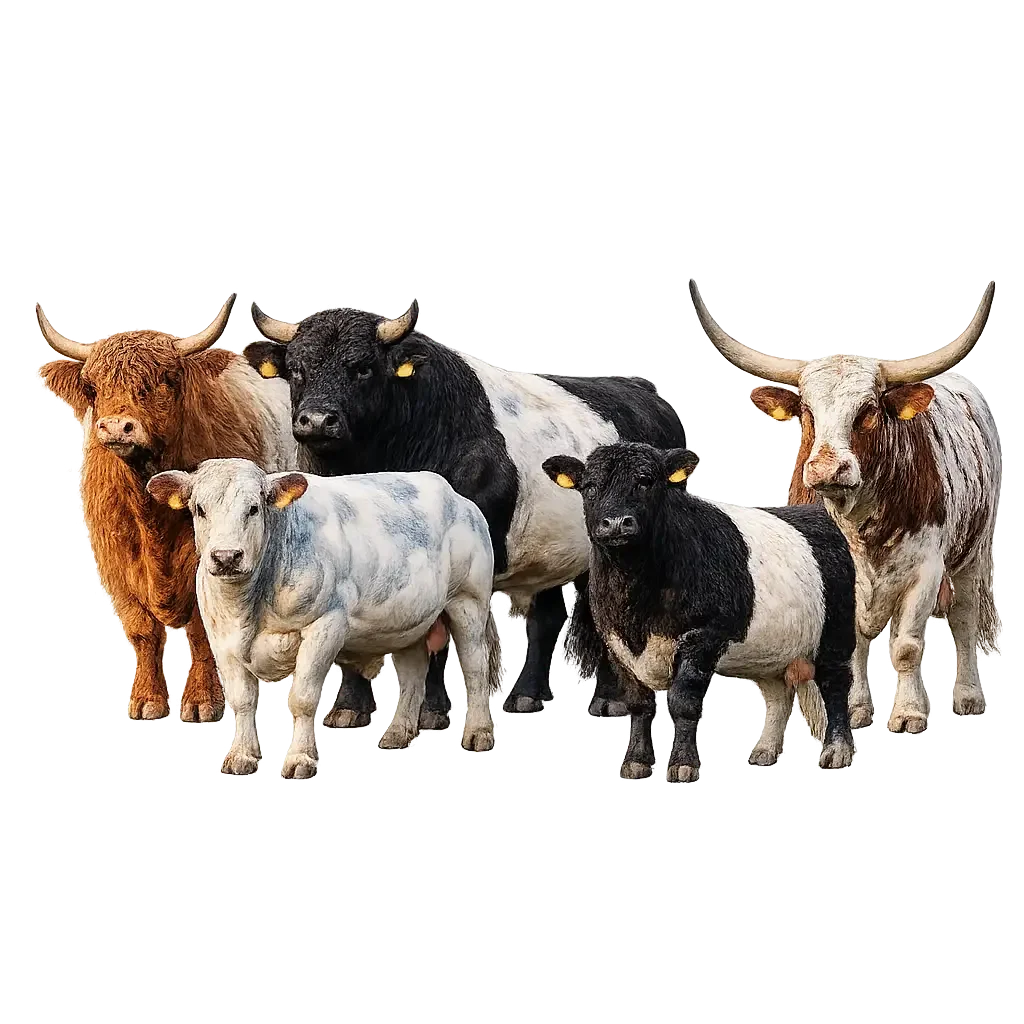
Comprehensive Directory of 30+ Popular Cattle Breeds for Beef Production, Homesteading & Ranch Operations
Choosing the right beef cattle breed is one of the most important decisions for ranchers, homesteaders, and cattle farmers. Whether you're raising cattle for grass-fed beef production, starting a small farm operation, or managing a commercial ranch, understanding the unique characteristics of different beef cattle breeds is essential for success.
This comprehensive guide covers 30+ popular beef cattle breeds, including heritage breeds, modern commercial cattle, and specialty breeds for niche markets. We'll explore everything from the world-famous Aberdeen Angus and premium Wagyu to hardy Highland cattle and distinctive Belted Galloways.
Each breed profile includes detailed information on temperament, meat quality, climate adaptability, calving ease, feed efficiency, market value, and ideal uses-helping you make informed decisions for your cattle operation.
Table of Contents
Continental European Breeds
Heritage & Rare Breeds
Miniature & Small Cattle Breeds
Dairy Breeds Also Raised for Beef
Breed Comparison Chart
How to Choose the Right Breed
British cattle breeds are renowned for their excellent meat quality, docile temperament, and adaptability. These breeds formed the foundation of the beef industry in North America and remain popular worldwide for both purebred and crossbreeding operations.
The World's Most Popular Beef Breed
The Aberdeen Angus, commonly known as Black Angus, is the most popular beef cattle breed globally. Originating from northeastern Scotland, this naturally polled (hornless) breed has become synonymous with premium beef quality.
Key Characteristics
Color: Solid black
Weight: Bulls: 1,800-2,500 lbs | Cows: 1,200-1,800 lbs
Meat Quality: Exceptional marbling, frequently achieves Prime/Choice grades
Temperament: Docile, easy to handle
Climate: Temperate to cool climates
Best For:
Commercial beef production
Grass-fed and grain-finished operations
Crossbreeding programs for hybrid vigor
Small to large-scale operations
Certified Angus Beef premium markets
Advantages:
Outstanding meat quality with excellent marbling
Easy calving with light birth weights
Naturally polled (no dehorning required)
Efficient feed conversion
Strong maternal characteristics
Hardy and disease-resistant
Consistently commands premium prices
Long productive lifespan
Disadvantages:
Less heat-tolerant than Brahman-influenced breeds
Black coat can be disadvantage in very hot, sunny climates
Smaller frame size compared to some continental breeds
The White-Faced Champion of Adaptability
Hereford cattle are one of the most recognizable beef breeds with their distinctive red body and white face. Developed in Herefordshire, England, these cattle are prized for their hardiness, efficiency, and calm temperament.
Key Characteristics
Color: Red body with white face, crest, dewlap, and underline
Weight: Bulls: 1,800-2,400 lbs | Cows: 1,200-1,600 lbs
Climate: Extremely adaptable, thrives in diverse conditions
Grazing: Superior foragers, efficient on pasture
Temperament: Docile and manageable
Herefords are renowned for their adaptability to various climates and management systems. They excel in both extensive range operations and intensive feeding programs. The breed's docility makes them ideal for operations of all sizes.
Best For:
Range and pasture operations
Various climate conditions
Commercial beef production
Crossbreeding programs
Beginning cattle farmers
Advantages:
Exceptional adaptability to diverse climates
Superior foraging ability
Docile temperament
Easy calving
Long productive life
Good mothering ability
Hardy and disease-resistant
Ancient Scottish Breed Built for Harsh Conditions
Highland cattle are one of the oldest and most distinctive cattle breeds, recognizable by their long, shaggy coats and impressive horns. Originating from the Scottish Highlands, these cattle are exceptionally hardy and well-suited to cold, wet climates.
Key Characteristics
Color: Red, black, brindle, dun, yellow, or white
Weight: Bulls: 1,500-2,000 lbs | Cows: 900-1,300 lbs
Cold Hardiness: Exceptional - double-layered coat provides insulation
Meat: Premium quality, lean with excellent flavor
Coat: Long, shaggy double coat
Highland cattle are perfect for conservation grazing, marginal land, and organic production. Their ability to thrive on rough forage and withstand harsh weather makes them ideal for sustainable, low-input operations.
Best For:
Cold, wet, or harsh climates
Conservation grazing
Marginal or rough land
Organic and sustainable operations
Premium grass-fed beef markets
Agritourism and heritage farming
Advantages:
Exceptional cold hardiness
Minimal shelter requirements
Superior foraging on rough terrain
Low maintenance
Premium quality lean beef
Long lifespan and productivity
Disease and parasite resistant
Easy calving
"Oreo Cows" - Hardy Heritage Breed
Belted Galloway cattle, affectionately called "Belties" or "Oreo Cows," are instantly recognizable by their distinctive white belt encircling a black (or red/dun) body. These Scottish cattle combine striking appearance with exceptional hardiness and premium beef quality.
Key Characteristics
Appearance: Black/red/dun with white belt, naturally polled
Weight: Bulls: 1,700-2,300 lbs | Cows: 1,000-1,500 lbs
Efficiency: Superior foragers, thrive on marginal pasture
Temperament: Calm, docile, friendly - excellent for families
Coat: Long, weather-resistant double coat
Belted Galloways excel in grass-based operations and are particularly popular for organic production, direct-to-consumer sales, and agritourism due to their unique appearance and friendly nature.
Best For:
Cold, wet climates
Grass-fed beef production
Conservation grazing
Small farms and homesteads
Direct-to-consumer markets
Agritourism operations
Heritage breed enthusiasts
Advantages:
Exceptionally hardy and cold-tolerant
Superior foraging ability
Easy calving with small birth weights
Excellent maternal characteristics
Premium, well-marbled beef
Naturally polled
Docile, friendly temperament
Low maintenance requirements
Unique, eye-catching appearance
Long productive lifespan
America's First Beef Breed
Devon cattle, also called North Devon or Red Ruby Devon, are one of Britain's oldest native breeds. Known for their rich ruby red color, these medium-sized cattle were among the first beef breeds brought to America by early colonists.
Devons are triple-purpose cattle historically used for beef, milk, and draft work. Today they're valued for grass-fed beef production, with excellent meat quality, hardiness, and ability to thrive on pasture alone.
Key Characteristics:
Color: Rich ruby red
Size: Medium frame
Horns: Medium-length upward-curving horns
Meat: Well-marbled, flavorful beef
Best For:
Grass-fed beef operations
Heritage breed conservation
Sustainable farming
Homestead operations
Solid-Colored Cousin of the Beltie
Galloway cattle are the solid-colored relatives of Belted Galloways, sharing the same Scottish origins and exceptional hardiness. These naturally polled cattle come in black, red, dun, or white and possess the same cold-hardy double coat.
Galloways are prized for conservation grazing, organic production, and producing premium quality beef on grass-based systems. Their low-maintenance nature and ability to utilize rough forage make them economical choices for sustainable operations.
Key Characteristics:
Color: Black, red, dun, or white (solid colors)
Coat: Long, shaggy double coat
Horns: Naturally polled
Hardiness: Exceptional cold tolerance
Versatile Dual-Purpose Heritage Breed
Shorthorn cattle are an ancient English breed with a rich history dating back to the late 1700s. Originally developed as dual-purpose cattle for both beef and milk, modern Shorthorns are primarily raised for high-quality beef production.
Shorthorns are known for their docility, easy calving, and efficient feed conversion. They come in red, white, or roan colors and adapt well to various climates and management systems.
Key Characteristics:
Color: Red, white, or roan
Size: Medium to large frame
Temperament: Very docile
Versatility: Good for beef and crossbreeding
Continental cattle breeds from mainland Europe are known for their large frame size, rapid growth rates, and high lean meat production. These breeds revolutionized the beef industry when introduced to North America in the 1960s-1970s.
The White Muscle Machine from France
Charolais cattle, originating from the Charolles region of France, are large-framed, cream-colored cattle known for exceptional growth rates and heavy muscling. They're among the most popular terminal sire breeds worldwide.
Key Characteristics
Color: Cream to white
Weight: Bulls: 2,000-2,800 lbs | Cows: 1,400-1,900 lbs
Growth: Rapid growth, excellent feed efficiency
Carcass: High cutability, lean meat with good marbling
Frame: Large, heavily muscled
Charolais excel as terminal sires in crossbreeding programs, producing fast-growing calves with excellent carcass quality. They're particularly valued in feedlot operations for their efficiency and high-yielding carcasses.
Best For:
Terminal sire in crossbreeding programs
Feedlot operations
Commercial beef production
Operations seeking rapid growth
Advantages:
Exceptional growth rates
Excellent feed efficiency
High carcass cutability
Good temperament
Considerations:
Larger birth weights may require calving assistance
Best used as terminal sires on mature cows
Golden-Red Breed for Premium Lean Beef
Limousin cattle from the Limousin region of France are renowned for producing exceptionally lean, heavily-muscled beef with minimal waste. Their distinctive golden-red color and fine bone structure make them easily recognizable.
Key Characteristics
Color: Golden-red to reddish-brown
Weight: Bulls: 2,000-2,600 lbs | Cows: 1,300-1,700 lbs
Carcass: Very lean with minimal waste
Bone: Fine bone structure, high meat-to-bone ratio
Limousins are valued for their high dressing percentages, excellent feed efficiency, and ability to produce quality beef on grass or grain. They're popular as terminal sires and for producing carcasses that meet modern consumer preferences for lean meat.
Advantages:
Exceptionally lean beef
High dressing percentage
Minimal waste
Excellent feed efficiency
Fine bone structure
Swiss Versatility Champion
Simmental cattle originated in Switzerland and are among the world's oldest and most widely distributed cattle breeds. These large-framed cattle are known for their versatility, rapid growth, and excellent maternal traits.
Key Characteristics
Color: Red and white or black and white
Weight: Bulls: 2,200-2,800 lbs | Cows: 1,500-2,000 lbs
Maternal: Excellent mothers with good milk production
Adaptability: Thrives in various climates and systems
Growth: Rapid growth with good muscling
Simmental cattle are popular for both purebred and commercial operations, excelling as maternal breeds or terminal sires. Their combination of growth, muscling, and maternal ability makes them versatile for diverse production goals.
Best For:
Commercial beef operations
Maternal lines
Terminal sire programs
Crossbreeding operations
Advantages:
Versatility (maternal and growth traits)
Rapid growth rates
Good milk production
Excellent maternal instincts
Adaptable to various systems
The Double-Muscled Marvel
Belgian Blue cattle are famous for their extreme muscular development caused by a myostatin gene mutation. This "double-muscling" creates the most heavily-muscled cattle breed in existence, with exceptional meat yields.
Key Characteristics
Muscling: Extreme double-muscling throughout
Yield: 70-80% dressing percentage (highest of all breeds)
Meat: Ultra-lean beef, approximately 80% lean meat
Calving: High rate of cesarean sections required
Color: White, blue-roan, black, or combinations
Belgian Blues are primarily used as terminal sires for producing lean beef. They require experienced management due to calving difficulties but offer unmatched meat yields and feed efficiency.
Best For:
Terminal crossbreeding programs
Lean beef production
Health-conscious markets
Operations with veterinary support
Advantages:
Exceptional meat yield (highest dressing percentage)
Extremely lean beef
Outstanding feed efficiency
Rapid growth rates
Docile temperament
Disadvantages:
Very high rate of calving difficulty
Often requires cesarean sections
Higher veterinary costs
Requires experienced management
Not suitable for extensive operations
Italian Double-Muscled Breed with Tender Beef
Piedmontese cattle from northern Italy's Piedmont region carry a similar double-muscling trait as Belgian Blues but with easier calving. These white-gray cattle produce exceptionally tender, lean beef with unique texture.
Piedmontese beef is prized for its tenderness (due to inactive myostatin), lean composition, and flavor. The breed offers easier management than Belgian Blues while still providing lean beef for health-conscious markets.
Key Characteristics:
Color: White to gray
Muscling: Double-muscled but moderate
Calving: Easier than Belgian Blue
Meat: Exceptionally tender and lean
American cattle breeders developed several influential breeds by combining the hardiness of European cattle with traits suited to diverse North American climates and production systems.
Heat-Tolerant Foundation of American Crossbreeds
Brahman cattle, developed in the United States from several Indian Zebu breeds, are the foundation of heat tolerance in American beef production. These distinctive cattle with their prominent humps, large drooping ears, and loose skin thrive in hot, humid climates.
Key Characteristics
Heat Tolerance: Exceptional - best heat-adapted beef breed
Parasite Resistance: Superior resistance to insects and disease
Hardiness: Thrives in harsh conditions, rough forage
Crossbreeding: Foundation for heat-tolerant composite breeds
Appearance: Large hump, drooping ears, loose skin
Brahman cattle are essential in hot climates and form the basis of many composite breeds like Brangus, Santa Gertrudis, and Braford. Their genetics provide heat tolerance, parasite resistance, and hardiness to crossbred cattle.
Best For:
Hot, humid climates
Areas with high parasite pressure
Crossbreeding programs
Harsh, challenging environments
Advantages:
Outstanding heat tolerance
Excellent parasite and disease resistance
Thrives on poor quality forage
Hardy and long-lived
Valuable in crossbreeding
Considerations:
More temperamental than British breeds
Requires experienced handling
Longer to mature than some breeds
Best of Both Worlds: Angus Quality + Brahman Hardiness
Brangus cattle (3/8 Brahman, 5/8 Angus) combine the superior meat quality and maternal traits of Angus with the heat tolerance and hardiness of Brahman. This American composite breed excels in hot climates while maintaining excellent beef quality.
Brangus cattle are naturally polled, adapt to diverse conditions, and produce well-marbled beef. They're popular in the southern United States and other warm regions where purebred British breeds struggle.
Key Characteristics:
Color: Solid black (also Red Brangus available)
Composition: 3/8 Brahman, 5/8 Angus
Horns: Naturally polled
Adaptation: Heat-tolerant with Angus quality
Best For:
Hot, humid climates
Commercial beef production
Operations wanting Angus quality with heat tolerance
America's First Beef Breed - Texas Tough
Santa Gertrudis cattle, developed on the famous King Ranch in Texas, are America's first recognized beef breed (5/8 Shorthorn, 3/8 Brahman). These cherry-red cattle combine British beef quality with Zebu adaptability.
Santa Gertrudis thrive in hot, humid climates and on marginal forage. They're known for rapid growth, good temperament, and the ability to produce quality beef under challenging conditions. Popular in tropical and subtropical regions worldwide.
Key Characteristics:
Color: Cherry red
Composition: 5/8 Shorthorn, 3/8 Brahman
Size: Large frame
Adaptation: Excellent in hot climates
Living Legend of the American West
Texas Longhorn cattle are iconic American cattle descended from Spanish cattle brought to the Americas in the 1500s. Famous for their dramatic horn spans (up to 7 feet tip-to-tip), these cattle are incredibly hardy and self-sufficient.
Key Characteristics
Horns: Dramatic horns up to 7+ feet tip-to-tip
Color: Any color or combination imaginable
Survival: Legendary hardiness, minimal inputs needed
Calving: Easiest calving breed, small birth weights
Meat: Lean, flavorful beef
Texas Longhorns excel in harsh range conditions, conservation grazing, and niche beef markets. They produce lean, flavorful beef and are popular for heritage breeding, agritourism, and sustainable ranching operations.
Best For:
Harsh range conditions
Conservation grazing
Heritage breed conservation
Low-input operations
Agritourism
Lean beef markets
Advantages:
Legendary hardiness and survivability
Easiest calving of all breeds
Minimal inputs required
Parasite and disease resistant
Long lifespan
Thrives on marginal land
Unique appearance for niche markets
Asian cattle breeds bring unique genetics and exceptional meat quality traits to the global beef industry, with Wagyu leading the premium beef market.
The Ultimate Premium Beef Experience
Wagyu cattle (Japanese: "Japanese cow") produce the world's most expensive and highly-marbled beef. These Japanese breeds (primarily Black Wagyu/Japanese Black) are famous for intense intramuscular marbling creating a butter-like texture and unparalleled eating experience.
Key Characteristics
Marbling: Extreme intramuscular fat - BMS scores 8-12
Value: Premium prices - highest-value beef globally
Finishing: Long feeding period (24-30 months)
Market: Ultra-premium, fine dining, specialty markets
Genetics: Japanese Black (most common), Red, Shorthorn, Polled
Wagyu cattle require intensive management and longer feeding periods but produce beef commanding premium prices. Popular in crossbreeding programs to add marbling to commercial cattle. Authentic Japanese Wagyu (Kobe, Matsusaka, Ohmi) and American Wagyu both command high market premiums.
Best For:
Fine dining restaurants
Direct-to-consumer premium sales
Crossbreeding for added marbling
Specialty beef operations
Advantages:
Highest marbling of any breed
Commands premium prices
Unique flavor and texture
Growing market demand
Valuable genetics for crossbreeding
Considerations:
Long finishing period (increased costs)
Requires intensive management
Higher initial investment
Specialized feeding programs
Heritage & Rare Breeds
Heritage cattle breeds represent important genetic diversity and historical significance. Many offer unique traits valuable for niche markets, conservation grazing, and sustainable agriculture.
The Perfect Homestead Cattle
Dexter cattle are the smallest European beef breed, originating from southwestern Ireland. These compact, dual-purpose cattle are ideal for small farms, homesteads, and sustainable operations requiring less feed and land than standard cattle.
Dexters produce excellent-quality beef with rich flavor and fine texture. They're docile, hardy, and efficient grazers. Perfect for families, small acreages, and direct-to-consumer beef sales. Typically 36-44 inches tall at shoulder.
Key Characteristics:
Size: Small - 36-44 inches at shoulder
Weight: Bulls: 900-1,200 lbs | Cows: 600-900 lbs
Color: Black, red, or dun
Purpose: Dual-purpose (beef and milk)
Best For:
Small farms and homesteads
Limited acreage
Family beef production
Direct-to-consumer sales
Sustainable agriculture
Advantages:
Small size requires less land and feed
Excellent meat quality
Can provide milk for family use
Docile and manageable
Hardy and adaptable
Easy calving
Long-lived
Miniature & Small Cattle Breeds
Miniature cattle breeds are perfect for small farms, homesteads, and hobby operations. They require less feed and land while producing quality beef and milk for family consumption.
Angus Quality in Compact Size
Lowline Angus, developed in Australia, are miniature versions of Aberdeen Angus cattle (typically 36-48 inches tall). They retain all the desirable Angus traits - excellent marbling, docility, easy calving, naturally polled - in a smaller, more efficient package.
Lowlines are ideal for small acreages, efficient grass conversion, and producing premium beef with less environmental impact. They require about 1/3 the feed of full-sized cattle while maintaining exceptional meat quality.
Key Characteristics:
Height: 36-48 inches at shoulder
Color: Solid black
Traits: All Angus qualities in miniature form
Efficiency: Requires 1/3 feed of full-size cattle
Best For:
Small acreages (1-5 acres per animal)
Premium grass-fed beef
Efficient beef production
Homesteads and small farms
Direct marketing
The Classic White-Face in Miniature
Miniature Hereford cattle maintain the iconic appearance and qualities of traditional Herefords in a compact size (typically under 42 inches). They're perfect for small farms wanting the efficiency and adaptability of Herefords with reduced land and feed requirements.
Key Characteristics:
Height: Under 42 inches
Appearance: Red with white face (classic Hereford markings)
Temperament: Docile and manageable
Small Dairy Cattle for Homesteads
Miniature Jersey cattle (typically 38-42 inches tall) offer the rich milk production of standard Jerseys in a family-friendly size. Perfect for homesteads wanting fresh milk, butter, and cheese without managing full-sized dairy cattle.
Key Characteristics:
Height: 38-42 inches
Purpose: Primarily dairy, also beef
Milk: Rich, high butterfat content
Tiny Tropical Cattle
Miniature Zebu are the smallest cattle breed (typically 26-42 inches), originating from India. These gentle, heat-tolerant cattle with characteristic humps are popular as pets, show animals, and small-scale beef/milk production for homesteads in warm climates.
Key Characteristics:
Height: 26-42 inches (smallest cattle breed)
Appearance: Small hump, various colors
Climate: Excellent heat tolerance
Dairy Breeds Also Raised for Beef
Several dairy breeds are also utilized in beef production, particularly for crossbreeding or when bull calves/cull cows enter the beef supply chain.
Hardy Scottish Dairy with Dual-Purpose Potential
Ayrshire cattle, with their distinctive red and white coloring, are exceptional dairy cattle from Scotland. While primarily dairy animals, they offer grazing efficiency and hardiness valuable in beef crossbreeding programs.
Key Characteristics:
Color: Red and white spotted
Purpose: Primarily dairy
Grazing: Excellent foragers
Hardiness: Very hardy and disease-resistant
Ancient Alpine Breed with Beef Potential
Brown Swiss are large, solid-colored (light to dark brown) dairy cattle from Switzerland. Their substantial frame and good growth rates make bull calves and crossbreds suitable for beef production, especially in crossbreeding programs.
World's Highest Milk Producer
Holstein Friesian cattle (black and white or red and white) are the world's highest milk-producing breed. While primarily dairy, Holstein bull calves and beef crosses contribute significantly to beef supply, though with less marbling than beef breeds.
Small Dairy Breed with Rich Milk
Jersey cattle, small fawn-colored dairy cattle from Jersey Island, produce the richest milk of all dairy breeds. Jersey-beef crosses are gaining popularity for producing well-marbled beef with Jersey's efficiency and docility.
Golden Dairy Cattle from Channel Islands
Guernsey cattle are medium-sized fawn and white dairy cattle known for golden-colored, beta-carotene-rich milk. While primarily dairy, their genetics appear in some beef crossbreeding programs for efficiency traits.
True Dual-Purpose Heritage Breed
Milking Shorthorn cattle are the dairy type of Shorthorn cattle, bred specifically for milk production while maintaining beef conformation. They're true dual-purpose cattle suitable for small farms wanting both milk and beef production.
Angus Excellence in Red
Red Angus are the red color variant of Aberdeen Angus, sharing identical characteristics except color. They offer all Angus advantages - excellent marbling, docility, easy calving, natural polling - with the red coat providing some heat tolerance advantages over black Angus in hot climates.
Key Characteristics:
Color: Solid red
Traits: Identical to Black Angus except color
Advantage: Red coat reflects more heat than black
Best For:
Warmer climates
All uses suitable for Black Angus
Operations wanting Angus quality with better heat tolerance
Quick Breed Comparison Chart
Breed,Origin,Size,Best Climate,Meat Quality,Primary Use
Aberdeen Angus,Scotland,Medium,Temperate,Excellent marbling,Commercial beef
Hereford,England,Medium-Large,Very adaptable,Good quality,Range/pasture
Highland,Scotland,Medium,Cold/wet,"Lean, premium",Marginal land/organic
Belted Galloway,Scotland,Medium,Cold/wet,Well-marbled,"Grass-fed/heritage"
Charolais,France,Large,Temperate,Lean with marbling,Terminal sire
Limousin,France,Large,Temperate,Very lean,Terminal sire
Simmental,Switzerland,Large,Adaptable,Good marbling,Maternal/terminal
Belgian Blue,Belgium,Large,Temperate,Ultra-lean,"Terminal sire/lean beef"
Brahman,USA/India,Medium-Large,"Hot/humid",Moderate,"Crossbreeding/hot climates"
Brangus,USA,Medium-Large,"Hot/adaptable",Good marbling,"Commercial/hot regions"
Santa Gertrudis,USA,Large,"Hot/humid",Good quality,Range/subtropical
Texas Longhorn,USA,Medium,Very adaptable,Lean,"Range/heritage/niche"
Wagyu,Japan,Medium,Temperate,Extreme marbling,"Premium/luxury beef"
Dexter,Ireland,Small,"Cool/temperate",Excellent for size,"Homestead/small farm"
Lowline Angus,Australia,Miniature,Adaptable,Excellent marbling,"Small acreage/efficient"
How to Choose the Right Beef Cattle Breed
Key Factors to Consider
1. Climate & Environment
Cold climates: Highland, Belted Galloway, Galloway (double coats for insulation)
Hot climates: Brahman, Brangus, Santa Gertrudis (heat tolerance, parasite resistance)
Moderate climates: Angus, Hereford, Charolais (highly adaptable)
Harsh/marginal land: Highland, Texas Longhorn, Galloway (superior foragers)
2. Operation Type & Size
Commercial feedlots: Charolais, Limousin, Belgian Blue (rapid growth, high yields)
Grass-fed operations: Belted Galloway, Highland, Devon (efficient grazers)
Small farms/homesteads: Dexter, Lowline Angus, Miniature breeds (efficient for size)
Range operations: Hereford, Texas Longhorn, Santa Gertrudis (hardy, self-sufficient)
3. Market Focus
Premium marbled beef: Angus, Red Angus, Wagyu (exceptional marbling)
Lean beef markets: Belgian Blue, Piedmontese, Limousin (minimal fat)
Grass-fed/organic: Highland, Belted Galloway, Devon (thrive on pasture)
Direct-to-consumer: Dexter, Highland, Belted Galloway (premium niche appeal)
Commodity beef: Angus, Hereford crossbreds (consistent, marketable)
4. Management Considerations
Easy calving: Angus, Hereford, Texas Longhorn, Red Angus
Docile temperament: Angus, Hereford, Belted Galloway, Shorthorn
Low maintenance: Highland, Galloway, Texas Longhorn (minimal inputs)
Experienced management: Belgian Blue, Brahman bulls (specialized care)
5. Production Goals
Maximum growth rate: Charolais, Simmental, Limousin
Feed efficiency: Angus, Lowline Angus, Hereford
Longevity: Highland, Belted Galloway, Hereford
Crossbreeding programs: Terminal sires (Charolais, Limousin) on maternal breeds (Angus, Hereford)
Popular Crossbreeding Combinations
Strategic crossbreeding combines complementary traits from different breeds:
Angus × Hereford: "Black Baldies" - combines Angus quality with Hereford hardiness
Angus × Brahman: Brangus - Angus quality with heat tolerance
Charolais × Angus: Growth and size with marbling quality
Limousin × Hereford: Lean meat with adaptability
Simmental × Angus: Growth with maternal traits and meat quality
Wagyu × Angus: Enhanced marbling with Angus hardiness
Starting Your Cattle Operation
For beginning cattle farmers:
Start small: Begin with 3-5 animals to learn management
Choose docile breeds: Angus, Hereford, or Belted Galloway for easier handling
Match breed to resources: Ensure adequate land, feed, and facilities
Consider miniature breeds: For limited acreage, Lowline Angus or Dexter
Buy quality stock: Invest in healthy, well-bred animals from reputable sources
Plan your market: Identify your beef sales outlet before breeding
Connect with other farmers: Join breed associations and local cattle groups
Learn continuously: Attend workshops, read resources, consult veterinarians
Ready to Start Your Cattle Operation?
Explore our comprehensive breed profiles for detailed information on each cattle breed's characteristics, management requirements, and production potential.