
Zebu
Overview
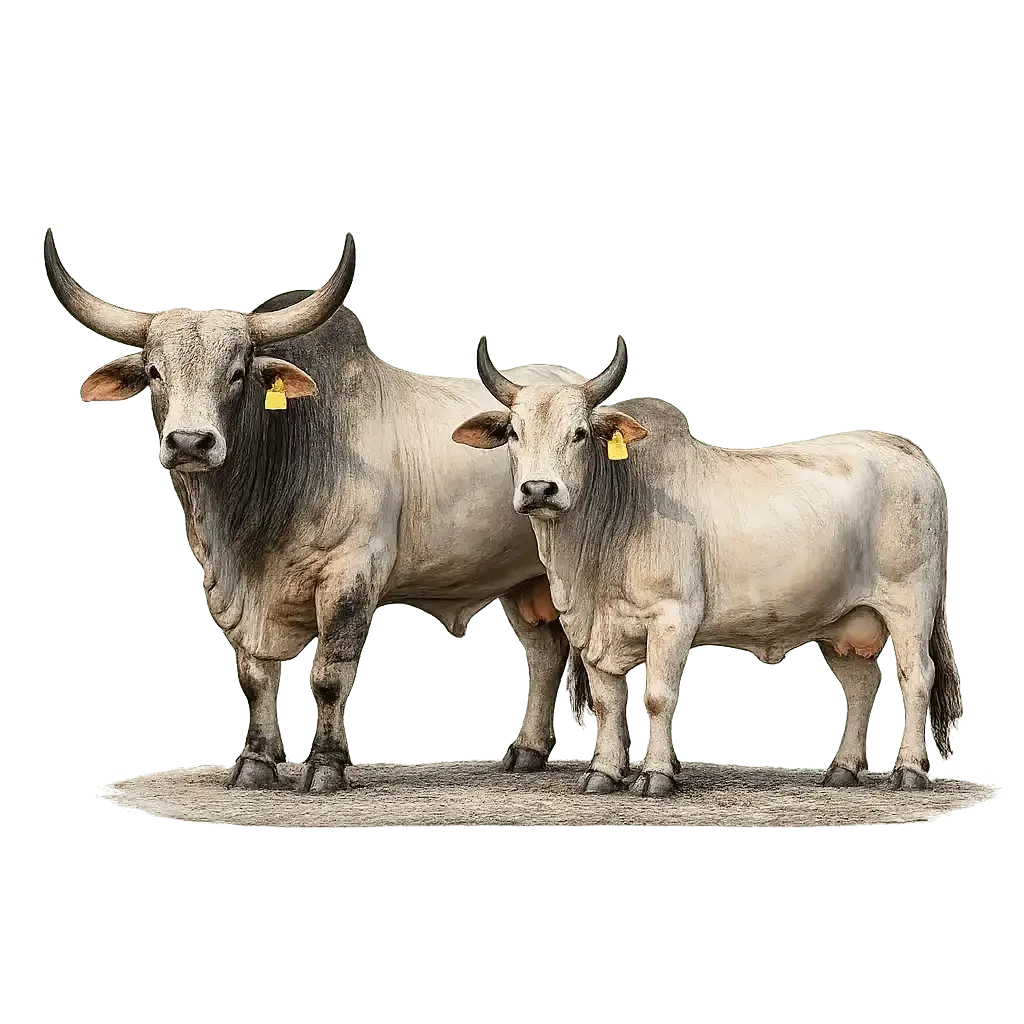
Zebu cattle (Bos indicus) are a distinct subspecies of domestic cattle originating from the Indian subcontinent, instantly recognizable by their prominent shoulder hump, large drooping ears, and loose, pendulous skin. Developed over thousands of years in tropical climates, Zebu cattle possess unparalleled heat tolerance, disease resistance, and ability to thrive in harsh conditions where European cattle (Bos taurus) struggle or fail. Zebu genetics form the foundation of tropical cattle production worldwide and are the basis for numerous American breeds including Brahman, Brangus, and Santa Gertrudis. While Zebu is technically a classification encompassing many Indian breeds rather than a single breed, these cattle share distinctive characteristics that make them essential for beef production in hot, humid climates across Africa, South America, Asia, and the American South.
Related Reading: If you love the unique look and hardiness of the Zebu but have limited acreage, explore the Miniature Zebu - the naturally small breed that shares this ancient heritage.
Origin & History
Origin: Indian subcontinent (India, Pakistan, Bangladesh)
Development Period: Domesticated over 8,000-10,000 years ago
Ancient Heritage: One of the oldest domesticated cattle types
Major Breeds: Guzerat, Nelore, Gir, Brahman, and dozens of regional varieties
Global Spread: Introduced to Africa centuries ago, Americas in 1800s-1900s
American Introduction: Imported to United States starting in late 1800s
Modern Importance: Foundation for tropical cattle worldwide
Distribution: Predominant cattle in tropical and subtropical regions globally
Physical Characteristics
Color: Wide variety - white, gray, red, black, brown, or mixed
Build: Variable by breed; generally moderate to large frame
Weight: Bulls 1,000-2,400 lbs; Cows 600-1,400 lbs (varies by breed)
Height: Bulls 4.5-6 feet at shoulder; Cows 4-5 feet (varies by breed)
Distinctive Features:
Prominent muscular hump over shoulders (both sexes)
Large, drooping, pendulous ears
Loose, thin skin with extensive folds
Large dewlap hanging from throat to brisket
Upturned or lyre-shaped horns (most breeds)
Short, smooth coat with minimal hair
Thin, mobile skin increases cooling surface
Often dark pigmented skin under light hair
Reproduction & Breeding
Gestation Period: Approximately 285-292 days (slightly longer than Bos taurus)
Breeding Age: Heifers bred at 24-30 months (later maturity)
Calving: Generally good calving ease
Calf Birth Weight: 55-85 lbs (moderate)
Calving Interval: 12-15 months typical
Fertility: Excellent fertility in heat stress conditions
Breeding Season: Year-round; excel in summer breeding
Sexual Maturity: Bulls mature at 20-30 months
Lifespan & Productivity
Average Lifespan: 15-20+ years
Productive Life: Cows typically produce 10-15+ calves in lifetime
Prime Production Years: 4-14 years of age
Longevity: Exceptional longevity and durability
Stayability: Cows remain productive well into late teens
Milk Production
Purpose: Varies by breed - some dairy, some beef, many dual-purpose
Daily Production: 5-25 lbs per day (highly variable by breed)
Lactation Period: 6-10 months
Maternal Ability: Generally excellent mothers
Milk Quality: Often higher butterfat than European breeds
Note: Some Zebu breeds are important dairy cattle in India
Calf Growth & Development
Weaning Weight: 350-550 lbs at 205 days (varies by breed)
Daily Gain: 1.5-2.5 lbs per day on good feed
Market Weight: 900-1,300 lbs at 18-30 months
Feed Efficiency: Excellent on forage-based diets
Growth Rate: Moderate; slower than European breeds
Vigor: Calves are hardy and disease-resistant
Temperament
Zebu cattle temperament varies significantly by breed and management. Some breeds like Gir are known for docility, while others can be more alert and reactive. Generally, Zebu cattle are intelligent and aware of their surroundings, with good memory for places and handling experiences. They can be calm and manageable when raised with consistent, gentle handling from birth.
Zebu cows demonstrate strong maternal instincts and are protective of calves. Bulls require careful handling and secure facilities, particularly during breeding season. The breed's intelligence means they respond well to patient, consistent handling but remember rough treatment. Overall temperament depends heavily on individual breed type, handling history, and management practices.
Meat Quality
Marbling: Generally less marbling than British breeds
Flavor: Good beef flavor, lean and flavorful
Tenderness: Variable; can be tender with proper management
Grading: Typically grades Select or lower due to leanness
Dressing Percentage: 50-60% (varies by breed and condition)
Lean Meat: Produces very lean beef with less external fat
Market Appeal: Preferred in many tropical countries
Crossbreeding: Best value often in crosses with British breeds
Feeding & Nutrition
Grazing: Superior browsers and grazers on tropical forage
Feed Requirements: Efficient on low-quality, mature forage
Heat Adaptation: Maintain feed intake during heat stress
Water: 8-15 gallons per day (efficient water utilization)
Mineral Needs: Standard cattle mineral program
Forage Quality: Thrive on marginal forage rejecting European cattle
Browse: Consume brush, weeds, and low-quality vegetation
Health & Care
Hardiness: Exceptionally hardy in tropical conditions
Common Issues: Very healthy; minimal problems in appropriate climates
Vaccinations: Standard cattle vaccination protocols
Parasite Control: Superior natural resistance to parasites
Hoof Care: Good hoof quality; minimal problems
Climate Adaptation: Exceptional in hot, humid climates; poor in cold
Disease Resistance: Natural resistance to many tropical diseases
Tick Resistance: Significantly lower tick infestations than European cattle
Heat Tolerance and Tropical Adaptations
Physiological Adaptations: Superior sweating capacity and heat dissipation
Hump Function: Stores nutrients; muscle tissue generates less metabolic heat
Skin Characteristics: Thin, loose skin maximizes cooling surface area
Ear Size: Large ears provide extensive surface for heat loss
Coat: Short, sleek coat with minimal insulation
Performance: Maintain condition and reproduction in extreme heat
Temperature Range: Thrive in 80-110°F temperatures
Humidity Tolerance: Excel in humid tropical conditions
Advantages
Unparalleled heat tolerance for hot, humid climates
Superior disease and parasite resistance
Thrive on low-quality forage and marginal land
Exceptional longevity and reproductive persistence
Maintain fertility during heat stress
Hardy and durable in challenging environments
Lower death losses than European cattle in tropics
Foundation genetics for numerous improved breeds
Adapt to harsh conditions European cattle cannot survive
Essential for beef production in tropical regions
Disadvantages
Later maturity than European breeds
Slower growth rates on high-quality feed
Less marbling and leaner beef than British breeds
May be more reactive and alert than British breeds
Perform poorly in cold northern climates
Lower milk production than specialized dairy breeds (most types)
May require more experienced handling
Face market discrimination in some temperate regions
Best Suited For
Tropical and subtropical climates worldwide
Hot, humid regions with high parasite pressure
Areas with extreme summer heat stress
Operations on marginal, poor-quality forage
Developing countries in tropical regions
Crossbreeding programs in warm climates
Extensive range operations in hot areas
Regions where European cattle fail to thrive
Operations prioritizing hardiness over growth rate
Economic Considerations
Initial Cost: Varies widely by breed and region
Return on Investment: Excellent in appropriate climates
Market Demand: Strong in tropical regions worldwide
Maintenance Costs: Lower than European breeds in tropics
Veterinary Costs: Reduced due to disease resistance
Feed Costs: Lower due to efficient forage utilization
Crossbreeding Value: High value for adding heat tolerance
Global Importance: Essential for tropical beef production
Major Zebu Breeds
Brahman: American breed from Zebu foundation (Guzerat, Nelore, Gir, Krishna)
Nelore: Brazilian beef breed, most numerous in South America
Guzerat/Kankrej: Large Indian breed with prominent hump
Gir: Dairy breed from India with distinctive lyre-shaped horns
Sahiwal: Important dairy breed from Pakistan/India
Red Sindhi: Red dairy breed from Pakistan
Tharparkar: Dual-purpose breed from India/Pakistan
Afrikaner: South African Zebu-type adapted to Africa
Fun Facts
Zebu cattle were domesticated over 8,000 years ago in India
The distinctive hump can weigh 30-50 pounds in large bulls
Zebu cattle are considered sacred in Hindu culture
They can survive and reproduce in conditions that kill European cattle
Zebu genetics dominate cattle production in tropical regions worldwide
The loose skin can increase surface area by 50% for cooling
Zebu cattle have 40-50% lower tick infestations than European breeds
They are classified as a separate subspecies - Bos indicus vs Bos taurus
Zebu crosses with European cattle show exceptional hybrid vigor
Brazil has the largest commercial cattle herd globally, mostly Zebu-based
The hump is muscle, not fat, and provides working power in draft animals
Zebu cattle shaped the development of American breeds like Brahman
While smaller than European breeds, the Zebu provides lean, traditional cuts; see our beef cuts guide for more.