
Boysenberry
Complete Homestead Growing Guide
The boysenberry (Rubus ursinus x idaeus) is a large, juicy hybrid berry with a flavor so distinctive and beloved that it inspired an entire generation of preserves, pies, and fond memories. Developed in the early 1920s by Rudolph Boysen, a Southern California farmer who crossed raspberry, blackberry, and loganberry, this complex hybrid was later rescued from obscurity by Walter Knott of Knott's Berry Farm fame. Knott propagated the struggling vines, commercialized the fruit, and built an empire around it. Today, boysenberry remains one of the most flavorful berries a homesteader can grow, yet it has largely disappeared from commercial production due to its fragile nature and short shelf life.
Boysenberry grows as a trailing or semi-trailing bramble, producing long, arching canes that can reach 10 to 15 feet in length if left unsupported. The plant spreads from a crown and produces new primocanes (first-year vegetative canes) each season, which become floricanes (second-year fruiting canes) the following year. The leaves are compound with three to five leaflets, dark green above and lighter beneath. Depending on the variety, canes may be thorny or thornless. Boysenberry is hardy in USDA Zones 5 through 10, performing best in Zones 7 through 9 where summers are warm and winters are mild but provide adequate chill hours.
For homesteaders, boysenberry matters because it produces enormous, intensely flavored berries that simply cannot be purchased at any grocery store. Commercial production has declined dramatically because the fruit is too soft and perishable for long-distance shipping. This means the only reliable way to enjoy boysenberries is to grow them yourself. The plants are productive, the flavor is unmatched among bramble fruits, and the preservation possibilities are outstanding. If you have the right climate and the willingness to manage trailing canes, boysenberry will reward you with one of the finest fruits you have ever tasted.
How Long Does It Take to Grow?
Boysenberry is one of the faster fruit crops to reach production, which is one of its most appealing traits for homesteaders eager to start harvesting. Here is a year-by-year breakdown from planting to peak output.
Year 1: Plant bare-root or container-grown boysenberry in early spring. During the first season, the plant produces vigorous primocanes that grow rapidly, often reaching 6 to 10 feet in length by late summer. These canes are vegetative only and will not fruit this year. Your job is to train them onto a trellis or wire support system and keep the plant well-watered and mulched. No fruit in year one.
Year 2: This is your first harvest year. The primocanes from year one are now floricanes and will flower and fruit in late spring to early summer. At the same time, the plant sends up a new crop of primocanes from the crown. Expect a moderate first harvest of 3 to 5 pounds per plant, depending on how well the canes were established and trained. The berries will be full-sized and fully flavored even in this first fruiting year.
Year 3: Production increases substantially as the plant's root system matures and more canes are available for fruiting. Expect 5 to 10 pounds per plant. The growth cycle is now fully established, with old floricanes being removed after harvest and new primocanes being trained for next year's crop.
Years 4 to 5: Peak production. A well-maintained boysenberry plant will produce 8 to 15 pounds of fruit per season. The crown is fully mature, the root system is extensive, and the plant is generating maximum cane growth each year. This level of production continues as long as the plant is properly managed.
Years 6 and beyond: Boysenberry plants remain productive for 10 to 15 years with good care. After about year 8 to 10, you may notice a gradual decline in vigor. At that point, new plantings should be established to maintain your supply. Some homesteaders stagger plantings every 5 to 7 years to ensure continuous production.
Berry Shelf Life
Boysenberry's biggest limitation as a commercial crop is its biggest motivation for growing it at home. These berries are extremely perishable, but proper handling extends their usable life significantly.
Fresh: Boysenberries are fragile. Freshly picked, unwashed berries stored in a single layer in a shallow container will keep in the refrigerator for 2 to 3 days at 34 to 38 degrees Fahrenheit. That is it. Handle them gently, do not stack them, and plan to eat or process them quickly. This extreme perishability is exactly why you will never find quality boysenberries in a supermarket.
Frozen: Freezing is the single best storage method for boysenberries. Spread unwashed berries on a parchment-lined sheet pan in a single layer, freeze for 2 to 3 hours until solid, then transfer to freezer bags with air removed. Properly frozen at 0 degrees Fahrenheit, boysenberries maintain excellent quality for 10 to 12 months. Freezing preserves the flavor remarkably well.
Dried: Boysenberries can be dehydrated, but their high moisture content makes drying slow and the results less satisfying than with firmer berries. Dehydrate at 135 degrees Fahrenheit for 16 to 24 hours until leathery. Dried boysenberries store for 6 to 12 months in airtight containers but lose some of their distinctive flavor and texture in the process.
Jams and Preserves: This is where boysenberry truly shines in preservation. Water-bath canned boysenberry jam or preserves keep 12 to 18 months and capture the berry's incredible flavor nearly perfectly. Historically, preserved boysenberry has been the primary form in which most people have experienced this fruit.
Homestead Storage Tip: Pick boysenberries in the cool of the morning when the fruit is firm and temperatures are low. Bring a cooler with ice packs to the patch if your garden is far from the kitchen. Getting the berries chilled within 30 minutes of picking dramatically extends their usable window and prevents the mushy, leaking deterioration that sets in quickly in warm weather.
Berry Color and Appearance
Boysenberry is one of the most visually impressive berries in the bramble family, and its appearance at every stage is distinctive.
Flowers appear on second-year floricanes in late spring, typically May to June depending on your zone. The blossoms are white to pale pink, about 1 inch across, with five petals. They appear in small clusters at the tips and along the upper portions of the fruiting canes. The flowers are self-fertile and attractive to bees, which improve fruit set and berry size.
Unripe berries first appear as hard, green drupelets in tight clusters. They gradually turn red, then transition through a deep maroon as they approach maturity. This color progression takes approximately 4 to 6 weeks from initial fruit set.
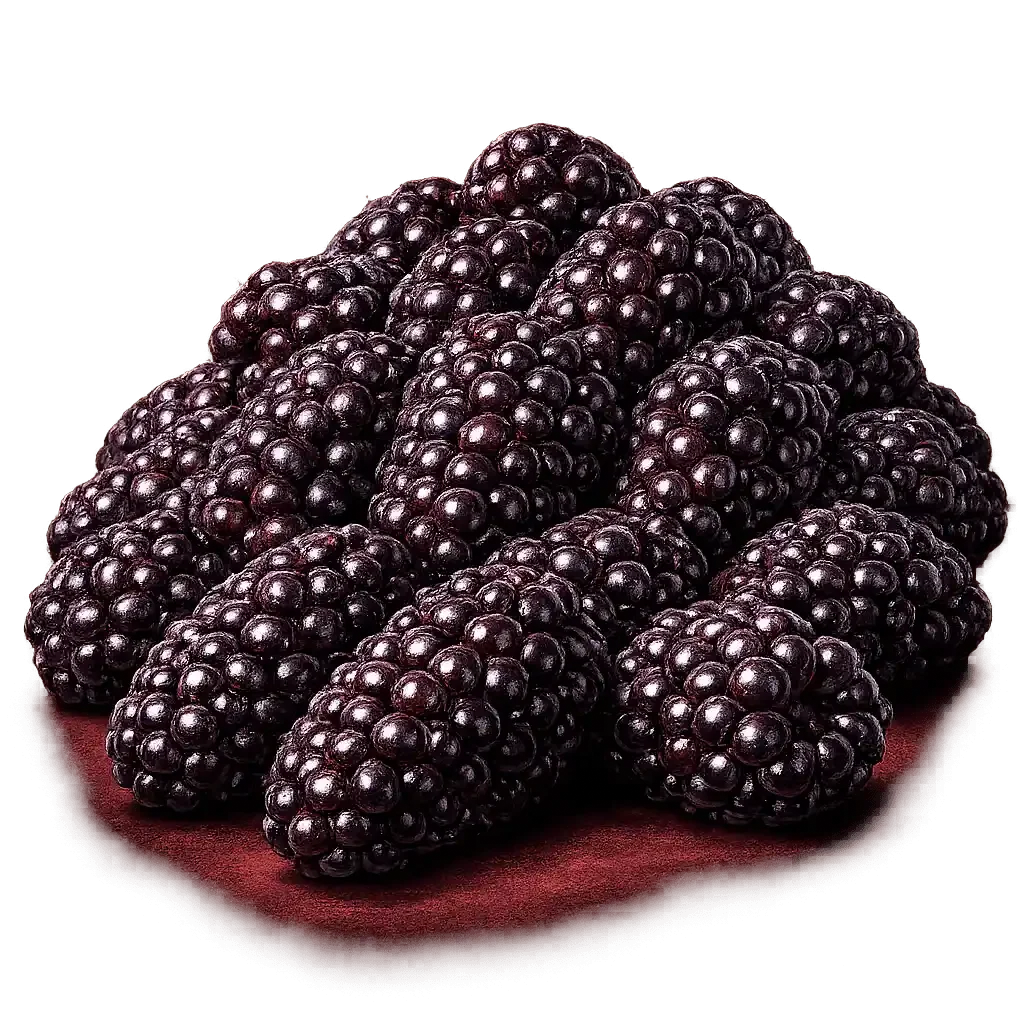
Ripe berries are large, often the largest of any bramble fruit, measuring 1 to 1.5 inches in length and roughly 3/4 to 1 inch in diameter. They are elongated, somewhat conical in shape, with a deep reddish-purple to maroon-black color when fully ripe. The surface is composed of large, plump individual drupelets that give the berry a bumpy, glistening appearance. The flesh is very soft and juicy, and the berry detaches from its core (receptacle) when picked, leaving a hollow center like a blackberry.
Ripening time varies by climate but generally runs from late June through August. In mild coastal areas (Zones 9 to 10), harvest can begin as early as mid-June. In cooler inland zones (5 to 7), July through August is more typical. The harvest window for an individual plant spans 3 to 5 weeks, with berries ripening progressively from the tips of the canes downward.
Visual appeal is outstanding. The large, dark, glistening berries hanging in clusters from arching canes are genuinely beautiful. Ripe boysenberries have a jewel-like quality that makes them one of the most photogenic fruits in the garden.
How Much Berry Can You Collect?
Boysenberry is a generous producer for a trailing bramble, and well-maintained plants deliver impressive yields relative to the space they occupy.
Young plants (year 2): Expect 3 to 5 pounds per plant from the first fruiting year. The berries will be full-sized but total quantity is limited by the number of canes available.
Mature plants (years 4 to 5 and beyond): A healthy, well-trellised boysenberry plant in its prime produces 8 to 15 pounds of fruit per season. Plants receiving excellent care in ideal climates (warm, long summers with mild winters) can push toward 20 pounds in exceptional years.
Per-row and acre estimates: Boysenberry planted at 5 to 8 foot spacing within rows and 8 to 10 feet between rows yields approximately 50 to 100 pounds per 100 linear feet of row from established plantings. Commercial-scale production (rarely practiced today) has documented yields of 5,000 to 8,000 pounds per acre under optimized conditions.
Harvest season spans 3 to 5 weeks per planting, with the bulk of production concentrated in a 2 to 3 week peak period. Plan to pick every 2 to 3 days during peak season, as ripe berries deteriorate quickly on the vine.
Ease of harvest is moderate. The berries are large and easy to see, and they detach readily when ripe with a gentle tug. However, thorny varieties require careful navigation, and the trailing canes need a trellis system to keep fruit accessible. Thornless cultivars significantly improve the picking experience. An experienced picker can harvest 5 to 8 pounds per hour.
Homestead reality: Five to eight well-maintained boysenberry plants will produce 40 to 100 pounds of fruit per season at maturity. That is enough to keep a family supplied with frozen berries, jam, syrup, and pies throughout the year. The catch is that the harvest comes in a concentrated window, so be prepared for intensive picking and processing over a few weeks. Plan your canning and freezing schedule before the first berry ripens.
Why Boysenberry Berries Are Good for You
Boysenberries deliver an impressive nutritional profile that combines the best attributes of their blackberry, raspberry, and loganberry parentage.
Key vitamins and minerals: Boysenberries are a strong source of vitamin C (providing approximately 18 to 20 milligrams per 100 grams of fresh fruit), vitamin K, and folate. They contain good levels of manganese, potassium, and magnesium. The dietary fiber content is significant at approximately 5 to 7 grams per cup, supporting digestive health and satiety.
Antioxidants: Boysenberries are rich in anthocyanins, the pigment compounds responsible for their deep purple color and associated with numerous health benefits. They also contain ellagic acid, a polyphenol found in the raspberry side of their heritage, which has been studied for its potential anticancer properties. The total antioxidant capacity of boysenberries is comparable to that of blackberries and exceeds many commonly consumed fruits.
Research-backed health benefits: Studies have shown that the anthocyanins in boysenberries demonstrate anti-inflammatory effects and may support cardiovascular health by improving blood vessel function and reducing oxidative stress. Research from Plant and Food Research in New Zealand has investigated boysenberry's effects on lung health, with promising findings suggesting that boysenberry extracts may help reduce airway inflammation. The ellagic acid content has been studied for its potential to inhibit tumor growth in laboratory settings, though human clinical trials are still limited. The high fiber content supports healthy cholesterol levels and digestive regularity.
Traditional and folk uses: While boysenberry does not have the centuries-long traditional use of wild berries due to its relatively recent origin (1920s), it inherits the folk medicine traditions of its parent species. Blackberry and raspberry preparations have long been used in herbal medicine as astringents, for digestive complaints, and as general tonics. The high vitamin C content made berry-based preparations valued for immune support.
What You Can Make with Boysenberry Berries
Boysenberry's rich, complex flavor makes it one of the most versatile berries in the kitchen. Its taste is often described as the perfect balance between sweet and tart, with deep berry richness and a wine-like complexity.
Boysenberry Jam and Preserves: The quintessential boysenberry product. The berry's natural pectin, acidity, and intense flavor produce a jam that is widely considered among the finest of all fruit preserves. Whole-berry preserves showcase the fruit's texture, while seedless jam (strained through a fine mesh) offers a smoother spread.
Boysenberry Pie: A classic that rivals any fruit pie. The large, juicy berries break down into a thick, luscious filling with minimal added thickener needed. Use 4 to 5 cups of berries, 3/4 cup sugar, 3 tablespoons cornstarch, and a tablespoon of lemon juice for a standard double-crust pie.
Boysenberry Syrup: Simmer strained juice with sugar for a rich, pourable syrup that transforms pancakes, ice cream, and cocktails. The deep purple color makes a stunning presentation on the plate.
Boysenberry Wine: The high sugar and acid content of boysenberries produce an excellent fruit wine. Expect a deep garnet color, full body, and a flavor profile that balances berry sweetness with tannic complexity. A 5-gallon batch requires approximately 12 to 15 pounds of fruit.
Boysenberry Cobbler and Crisp: The berries' soft texture and intense juice make them perfect for baked desserts. They collapse into a thick, saucy filling beneath a biscuit or oat topping with minimal effort.
Boysenberry Sauce: Reduce strained juice with sugar and a splash of balsamic vinegar for a savory sauce that pairs exceptionally with duck, lamb, pork tenderloin, and soft cheeses.
Boysenberry Frozen Desserts: Pureed boysenberry makes outstanding sorbet, ice cream, and popsicles. The intense color and flavor carry through freezing without losing their character.
Homestead tip: Boysenberry seeds are relatively small and soft compared to blackberry seeds, but if you prefer a seedless product, strain cooked berries through a fine-mesh sieve or food mill before making jam, syrup, or sauce. You will lose about 15 to 20 percent of the volume to seeds and pulp, so adjust your quantities accordingly.
Best Ways to Store, Can, or Make Jam
Given boysenberry's extreme perishability, efficient preservation is essential. Here are the best methods to lock in that irreplaceable flavor.
Freezing: The most important preservation method for boysenberry. Pick berries at peak ripeness, spread unwashed on parchment-lined sheet pans, freeze solid for 2 to 3 hours, then transfer to freezer bags. Remove as much air as possible and seal. At 0 degrees Fahrenheit, frozen boysenberries keep 10 to 12 months. Do not wash before freezing, as the added moisture accelerates deterioration. Rinse briefly only when ready to use.
Canning Boysenberry Jam (Recipe):
Ingredients: 5 cups crushed boysenberries (approximately 2 to 2.5 quarts fresh) 1 package (1.75 ounces) powdered pectin 7 cups granulated sugar 2 tablespoons lemon juice
Method:
Wash and gently crush berries in a large pot using a potato masher. Measure 5 cups of crushed fruit.
Stir in pectin and lemon juice. Bring to a full rolling boil over high heat, stirring constantly.
Add sugar all at once. Return to a full rolling boil and boil hard for exactly 1 minute, stirring constantly.
Remove from heat and skim foam. Ladle into hot, sterilized half-pint jars, leaving 1/4 inch headspace.
Wipe rims clean, apply lids and bands fingertip-tight, and process in a boiling water bath for 10 minutes (adjust for altitude: add 5 minutes above 6,000 feet).
Yield: approximately 8 to 9 half-pint jars.
Boysenberry Syrup: Combine 4 cups strained boysenberry juice with 2 1/2 cups sugar in a heavy saucepan. Bring to a boil, stir until dissolved, and simmer for 10 to 12 minutes. Ladle into hot jars with 1/4 inch headspace and process in a boiling water bath for 10 minutes.
Drying: Spread berries on lined dehydrator trays and dry at 135 degrees Fahrenheit for 16 to 24 hours. The high moisture content means drying takes significantly longer than firmer berries. Dried boysenberries should be leathery with no visible moisture. Store in airtight containers for 6 to 12 months.
Freezer jam: For those who prefer a fresh-tasting spread without heat processing, boysenberry freezer jam is excellent. Crush berries, combine with pectin designed for freezer jam and sugar per package directions, ladle into freezer-safe containers, and freeze. Keeps 6 to 12 months in the freezer and 3 weeks in the refrigerator once thawed.
Pros of Growing Boysenberry
Exceptional flavor. Boysenberry is widely regarded as one of the finest-tasting berries in existence. The complex, balanced blend of sweet, tart, and deep berry richness is unmatched by any single-species berry and simply cannot be purchased commercially in most areas.
Large berry size. At 1 to 1.5 inches long, boysenberries are among the largest bramble fruits. Large berries mean faster picking, higher yields per plant, and more impressive results in the kitchen.
High yields from compact plantings. Producing 8 to 15 pounds per plant at maturity, a small planting of five to eight plants generates 40 to 100 pounds of fruit annually. That is a tremendous amount of preserving potential from a modest space.
Fast to production. Unlike tree fruits that take years to bear, boysenberry produces its first harvest in just the second year after planting. By year three, you are in serious production.
Self-fertile. Boysenberry does not require a separate pollinator variety. A single plant can set a full crop, though planting multiples increases yield through improved pollination.
Excellent preservation berry. The intense flavor, natural pectin, and balanced acidity make boysenberry one of the best berries for jam, syrup, pie, and wine. Preserved boysenberry retains its character better than most fruits.
Thornless varieties available. Thornless boysenberry cultivars eliminate the pain and frustration of navigating thorny canes during training, pruning, and harvest. This is a significant quality-of-life improvement for the homestead grower.
Cons of Growing Boysenberry
Extreme perishability. A 2 to 3 day fresh shelf life is the shortest of almost any common fruit. You must be prepared to pick and process quickly. There is no room for procrastination during boysenberry season.
Trellising required. The long, trailing canes (10 to 15 feet) must be trained on a wire trellis or similar support. Without trellising, the canes sprawl on the ground, making harvest nearly impossible and promoting disease. Building and maintaining a trellis adds cost and labor.
Annual cane management. Boysenberry requires yearly pruning. Spent floricanes must be cut out after harvest, and new primocanes must be trained onto the trellis each season. This is not a plant-it-and-forget-it crop. Neglect leads to an unmanageable tangle within two to three years.
Limited cold hardiness. Hardy only to USDA Zone 5, and marginal even there, boysenberry is not suitable for the coldest homesteads. In Zones 5 and 6, winter cane damage is a real risk, and laying canes on the ground and mulching for winter protection may be necessary. This adds significant labor.
Disease susceptibility. Boysenberry is susceptible to several bramble diseases, including anthracnose, cane blight, verticillium wilt, and downy mildew. Good sanitation (removing old canes promptly, maintaining air circulation) is essential. In humid climates, disease pressure can be challenging to manage without spraying.
Thorns on traditional varieties. The original boysenberry has formidable thorns. While thornless cultivars exist, they are sometimes reported to have slightly lower vigor or yields than thorned types, though modern thornless selections have largely closed this gap.
Concentrated harvest window. The 3 to 5 week harvest period requires frequent picking every 2 to 3 days, with intensive processing needed to handle the volume. This can create a demanding schedule during the peak of summer when many other homestead tasks are also competing for your time.
Growing Tips for Homesteaders
Site selection: Choose a location with full sun (at least 6 to 8 hours of direct sunlight) and excellent air circulation. Good airflow is critical for reducing disease pressure in this moisture-sensitive crop. Avoid low-lying frost pockets, as late spring frosts can damage emerging flower buds. Well-drained soil is essential. Boysenberry will not tolerate waterlogged roots. Ideal soil pH is 5.5 to 6.5. Avoid planting in ground where tomatoes, peppers, potatoes, or other brambles have grown in the past 3 to 4 years to reduce verticillium wilt risk.
Planting: Plant bare-root boysenberry in early spring, setting crowns 2 to 3 inches below the soil surface. Space plants 5 to 8 feet apart within the row and 8 to 10 feet between rows. Install a two-wire trellis system before or at planting time, with wires at 3 and 5 feet above ground, supported by sturdy posts every 15 to 20 feet. Mulch with 3 to 4 inches of straw, wood chips, or shredded bark to conserve moisture and suppress weeds. Water deeply after planting and maintain consistent moisture through the first growing season.
Maintenance: Train new primocanes onto the trellis as they grow during summer, either weaving them along the wires or bundling and tying them. After harvest, cut all spent floricanes to ground level and remove them from the area to reduce disease carryover. In Zones 5 and 6, consider laying canes on the ground in late fall and covering with 4 to 6 inches of straw mulch for winter protection, re-training them onto the trellis in spring. Water consistently during fruit development, providing 1 to 1.5 inches per week. Avoid overhead irrigation, which promotes foliar disease. Drip irrigation or soaker hoses are ideal. Fertilize lightly in early spring with a balanced organic fertilizer or compost applied around the base of the plants. Avoid high-nitrogen applications that promote excessive vegetative growth at the expense of fruit.
Variety selection: The original thorned boysenberry remains widely available and is known for vigor and yield. Thornless boysenberry cultivars (often sold simply as "Thornless Boysenberry") are strongly recommended for homestead growers due to the dramatically easier management and harvesting experience. In areas with higher disease pressure, look for stock from reputable nurseries that certify virus-free plants. Boysenberry is sometimes confused with similar hybrids like marionberry, loganberry, and tayberry. While all are excellent, boysenberry has a distinctly sweeter, less tart profile and larger fruit than most of these relatives.
Companion planting and integration: Avoid planting boysenberry near wild brambles, which can harbor diseases and pests. Boysenberry benefits from pollinator-attracting companion plantings nearby, such as lavender, oregano, borage, and clover. In a homestead layout, position the boysenberry trellis along a south-facing fence line or property edge where it receives maximum sun and does not shade other crops. The trellis itself can double as a privacy screen or visual barrier during the growing season when canes are fully leafed out.
Conclusion
Boysenberry occupies a unique position among homestead fruits. It is simultaneously one of the most rewarding berries you can grow and one of the most demanding in terms of post-harvest urgency. The flavor is legendary for good reason. A ripe boysenberry, still warm from the sun, eaten within minutes of picking, is a taste experience that no store-bought berry can replicate. The jam is the stuff of family heirloom recipes. The pies are the kind that win county fairs.
The trade-off is that boysenberry asks more of you than a blueberry bush or a strawberry bed. It needs a trellis. It needs annual cane management. It needs you to be ready with freezer bags and canning jars the moment harvest begins, because those berries will not wait. But for the homesteader who enjoys the hands-on rhythm of tending, picking, and preserving, that is not a drawback. That is the whole point.
If you garden in Zones 5 through 10 and you have a sunny spot with decent drainage and room for a trellis, boysenberry belongs in your plan. Start with five plants, build a simple two-wire trellis, and by year three you will understand why Rudolph Boysen created it and Walter Knott built a farm around it. Some berries are good. Boysenberry is unforgettable.
Explore more guides on different types of berries