
Chokeberry
Complete Homestead Growing Guide
The chokeberry (Aronia melanocarpa for black chokeberry, Aronia arbutifolia for red chokeberry) is a native North American shrub that has quietly become one of the most exciting fruit crops for homesteaders and small-scale growers. Originally found growing wild from the Great Lakes region through New England and southward along the Appalachian range, chokeberry has gained enormous popularity in recent years thanks to its extraordinary antioxidant content and near-bulletproof hardiness.
Chokeberry grows as a dense, upright, multi-stemmed deciduous shrub typically reaching 3 to 8 feet tall with a similar spread. Black chokeberry (Aronia melanocarpa) is the species most commonly grown for fruit production, while red chokeberry (Aronia arbutifolia) is more often planted as an ornamental. The plant features glossy, dark green leaves that turn brilliant shades of scarlet, orange, and purple in autumn, making it one of the most visually stunning shrubs in the fall landscape. Chokeberry is hardy in USDA Zones 3 through 8, giving it an impressive range that covers the vast majority of the continental United States and southern Canada.
For homesteaders, chokeberry matters because it checks nearly every box you could ask for in a perennial fruit crop. It tolerates wet soils that would rot most other fruit plants. It laughs at cold winters. It has virtually no serious pest or disease problems. It produces heavy, reliable crops of nutrient-dense berries with documented health benefits that rival any so-called superfruit on the market. And it does all of this with minimal care. If you are building a resilient homestead food system, chokeberry deserves a prominent place in your plan.
How Long Does It Take to Grow?
Chokeberry is one of the faster small-fruit shrubs to reach production, giving homesteaders a relatively quick return on their investment. Here is what a realistic timeline looks like from planting day forward.
Year 1: Bare-root or container-grown plants will focus on root establishment. Expect 6 to 12 inches of new top growth. Some container-grown plants may carry a few flower clusters from the nursery, but pinch these off to direct energy into root development. Water consistently during this first season.
Year 2: Plants begin to show vigorous growth, putting on 12 to 18 inches of new shoots. You will likely see your first real flower clusters in spring, and a small handful of berries will follow. Expect less than a pound per plant. This is a taste-test year, not a production year.
Year 3: Production increases noticeably. Healthy plants will yield 2 to 5 pounds of fruit per bush. The shrubs are now 3 to 4 feet tall and beginning to develop their mature form. This is the first year where you will have enough fruit to make a meaningful batch of jam or juice.
Years 4 to 5: Chokeberry hits solid production. Plants are 4 to 6 feet tall, well-branched, and capable of producing 10 to 15 pounds of fruit per bush under good conditions. You are now operating at a level that supports serious preservation efforts.
Years 6 to 8: Full maturity. Bushes are at their maximum size and producing peak yields of 15 to 25 pounds per plant annually. The plants have filled in completely and require minimal input beyond occasional pruning.
Years 10 and beyond: Chokeberry is a long-lived shrub with productive lifespans of 20 to 30 years or more. Periodic renewal pruning (removing the oldest canes every few years) keeps the plants vigorous and productive well into their second and third decades.
Berry Shelf Life
Chokeberries have an advantage over many soft fruits when it comes to storage. Their firm skin and relatively dry flesh give them a longer shelf life than you might expect from a berry this size.
Fresh: Unwashed chokeberries stored in a shallow container in the refrigerator at 34 to 38 degrees Fahrenheit will keep for 2 to 3 weeks, which is remarkably long for a fresh berry. Some growers report up to 4 weeks under ideal conditions. This extended fresh shelf life gives homesteaders valuable flexibility during the busy harvest season.
Frozen: Chokeberries freeze exceptionally well. Spread clean, de-stemmed berries on a parchment-lined sheet pan, freeze solid for 2 to 3 hours, then transfer to freezer bags with air removed. Frozen chokeberries maintain quality for 12 to 24 months at 0 degrees Fahrenheit. Freezing also has the added benefit of mellowing some of the astringency, making the berries more pleasant for direct use in smoothies and baking.
Dried: Dehydrate at 135 degrees Fahrenheit for 10 to 16 hours until berries are shriveled and leathery with no moisture when squeezed. Dried chokeberries resemble dark raisins and store in airtight containers for 1 to 2 years in a cool, dark pantry. They make an excellent trail mix addition and a convenient way to use the berries year-round.
Jams and Jellies: Properly water-bath canned chokeberry jam or jelly keeps 12 to 18 months on the shelf. The high pectin content of the berries makes them very cooperative in the jam pot.
Homestead Storage Tip: Chokeberries are one of the few berries that actually improve with a light frost. If possible, delay your harvest until after the first frost or freeze your berries before processing. The cold exposure breaks down some of the tannins responsible for the astringent, puckery flavor, resulting in a noticeably smoother final product.
Berry Color and Appearance
Chokeberry is a four-season ornamental as well as a food crop, which makes it one of the rare homestead plants that looks as good as it performs.
Flowers appear in mid to late spring (May in most zones) as flat-topped clusters (corymbs) of small, white to pale pink blossoms. Each cluster contains 10 to 25 individual flowers, each roughly 1/2 inch across with five petals and prominent stamens. The flowers are attractive to bees and other pollinators and have a mild, pleasant fragrance.
Unripe berries emerge as small, hard, green clusters in early summer. They gradually transition through shades of red over several weeks before reaching their final color.
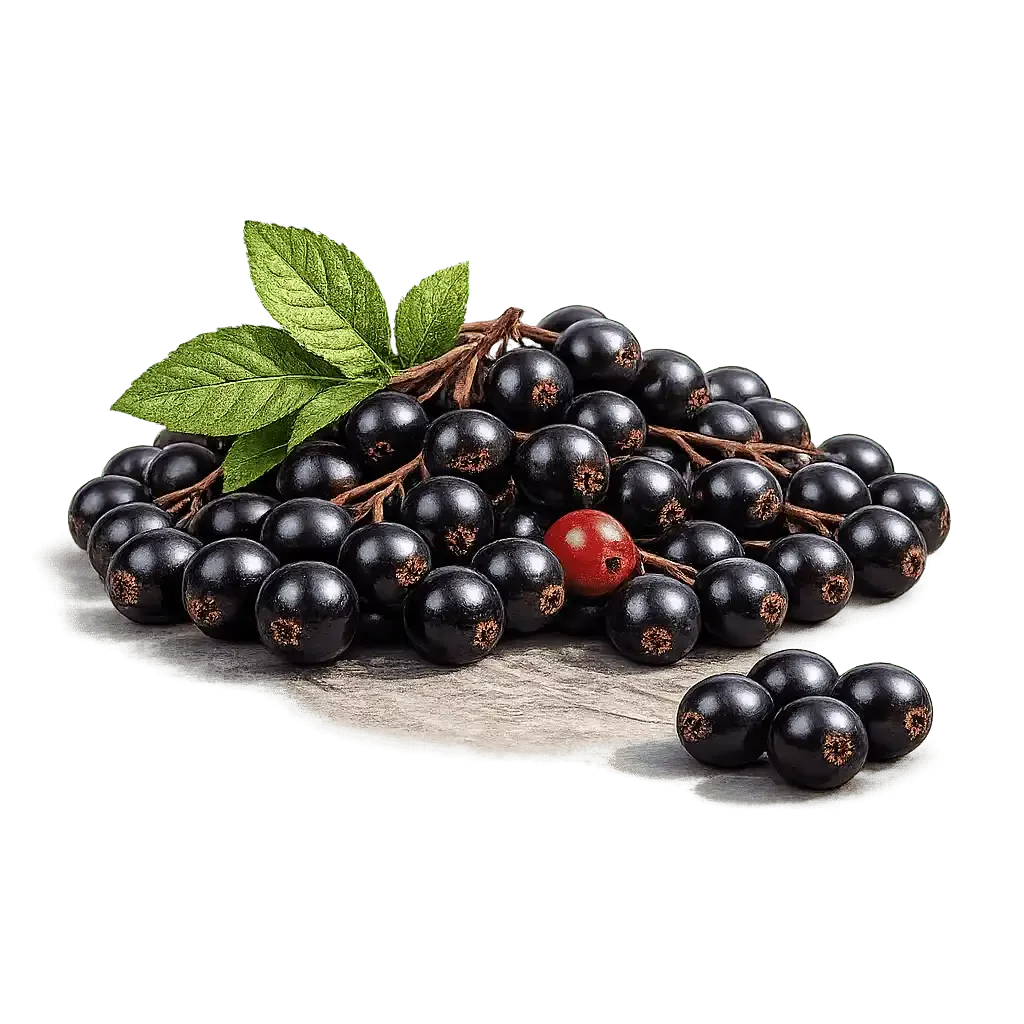
Ripe berries on black chokeberry are glossy, round to slightly oval, and approximately 1/3 to 1/2 inch in diameter. They are deep purplish-black when fully ripe, hanging in tight, drooping clusters of 10 to 20 berries. Each berry contains several small seeds that are barely noticeable when eating or processing. Red chokeberry produces slightly smaller, bright red berries that persist on the plant well into winter.
Ripening time for black chokeberry is typically late August through September, depending on your zone and the cultivar. The berries ripen relatively uniformly within each cluster, which is convenient for harvest. Unlike many fruits, ripe chokeberries hold well on the bush for 2 to 3 weeks without dropping or deteriorating, giving you a generous harvest window.
Visual appeal is outstanding. The glossy dark berries against the backdrop of the shrub's spectacular fall foliage create a striking display. Many homesteaders value chokeberry as much for its ornamental contribution as its fruit production.
How Much Berry Can You Collect?
Chokeberry is a genuinely productive fruit crop, and yield numbers are one of its strongest selling points for homesteaders looking to maximize output from limited space.
Young plants (years 2 to 3): Expect 1 to 5 pounds per bush. Enough for small-batch experimentation and taste testing, but not yet production-level quantities.
Mature plants (years 5 and beyond): A well-maintained, full-sun chokeberry bush will produce 15 to 25 pounds of berries per year. Some commercial cultivars like 'Viking' and 'Nero' can push toward 30 pounds under optimal conditions.
Per-row and acre estimates: Chokeberry planted at standard commercial spacing of 3 to 4 feet within rows and 10 to 12 feet between rows translates to roughly 900 to 1,200 plants per acre. At mature yields, that is 13,000 to 30,000 pounds per acre, making chokeberry one of the highest-yielding small fruit crops available. For a homestead hedgerow planting at 4 to 6 foot spacing, expect 75 to 125 pounds per 100 linear feet from established plants.
Harvest season runs from late August through mid-September in most regions. The entire crop on an individual bush typically ripens within a 2 to 3 week window, and berries hold on the plant well without degradation, which is a major convenience.
Ease of harvest is one of chokeberry's best features. The clusters hang at accessible heights (3 to 6 feet), the berries detach cleanly from the stems, and the fruit is firm enough to handle without crushing. An experienced picker can harvest 15 to 20 pounds per hour by hand. For larger plantings, berry stripping combs or modified blueberry rakes speed things up considerably.
Homestead reality: Four to six mature chokeberry bushes will produce 60 to 150 pounds of fruit per year. That is more than enough for a family's annual supply of jam, juice, dried berries, and frozen stores, with plenty left to share or sell. It is hard to find another fruit shrub that matches this kind of output-per-square-foot at such low maintenance.
Why Chokeberry Berries Are Good for You
Chokeberry has earned its "superfruit" reputation through hard science, not marketing hype. The nutritional profile of this unassuming berry is genuinely remarkable.
Key vitamins and minerals: Chokeberries are rich in vitamin C (providing roughly 15 to 20 milligrams per 100 grams of fresh fruit), vitamin K, and vitamin E. They contain meaningful amounts of manganese, potassium, iron, and folate. The dietary fiber content is notable at approximately 5.3 grams per 100 grams, which is higher than most berries.
Antioxidants: This is where chokeberry stands in a class by itself. Black chokeberry has one of the highest measured ORAC values (Oxygen Radical Absorbance Capacity) of any fruit tested, scoring approximately 16,062 per 100 grams. For comparison, blueberries score around 4,669. The dominant antioxidant compounds are anthocyanins, proanthocyanidins, and phenolic acids, all present in concentrations that dwarf those found in more commercially popular berries.
Research-backed health benefits: Clinical studies published in journals including the European Journal of Nutrition and the American Journal of Clinical Nutrition have documented several measurable health effects. Chokeberry consumption has been shown to reduce markers of oxidative stress, lower LDL cholesterol levels, improve blood pressure in hypertensive patients, and reduce inflammation. Research also indicates potential benefits for blood sugar regulation, with studies showing improved insulin sensitivity in subjects consuming chokeberry extract. The berries' high anthocyanin content has demonstrated protective effects on cardiovascular health and may support urinary tract health.
Traditional medicinal uses: Native American peoples used chokeberry as a cold remedy and general tonic. The Potawatomi and other Great Lakes tribes used the berries and bark in various medicinal preparations. European herbalists, particularly in Poland and other Eastern European countries where Aronia cultivation has been widespread for decades, have long used chokeberry in folk remedies for circulatory and digestive complaints.
What You Can Make with Chokeberry Berries
Chokeberries are astringent and tart when eaten raw, but they transform into outstanding products with processing. Their deep color, high pectin content, and complex flavor make them one of the most versatile homestead fruits for kitchen use.
Chokeberry Jam: The natural pectin and tartness make chokeberry a dream to work with in the jam pot. The resulting jam is deeply colored, thick-bodied, and has a rich, berry flavor with wine-like complexity. It pairs beautifully with strong cheeses and charcuterie.
Chokeberry Juice: Pressed or simmered and strained, chokeberry juice is a deep purple, nutrient-dense beverage. Dilute with water or sparkling water and sweeten to taste for a refreshing drink, or use as a base for other recipes.
Chokeberry Wine: The high tannin and anthocyanin content produce a full-bodied, deeply colored wine that improves with aging. Chokeberry wine has a loyal following in Eastern Europe and is gaining popularity among homestead winemakers in North America.
Pies and Baked Goods: Mix chokeberries with apples or pears to balance the tartness in pies, crumbles, and muffins. The berries hold their shape well during baking and contribute an intense color and flavor.
Chokeberry Syrup: A versatile pantry staple. Drizzle over pancakes, yogurt, or ice cream, or use as a cocktail mixer. The deep purple color makes a stunning presentation.
Fruit Leather: Puree cooked, strained chokeberry pulp with honey or sugar and dehydrate at 135 degrees Fahrenheit on lined trays for 6 to 8 hours. The resulting leather is chewy, tart, and packed with nutrition.
Sauces and Reductions: Chokeberry sauce pairs exceptionally well with duck, venison, pork, and lamb. Simmer juice with sugar, vinegar, and warming spices like cinnamon or star anise for a gourmet-quality condiment.
Smoothie Additions: Frozen chokeberries blend directly into smoothies, contributing color, nutrients, and tartness without the same level of astringency as raw fresh berries.
Homestead tip: Blend chokeberries with sweeter fruits like apples, pears, or grapes in any recipe. A 50/50 blend of chokeberry and apple juice makes a balanced, delicious base for jelly, cider, or drinking juice that is more approachable for the whole family.
Best Ways to Store, Can, or Make Jam
Preserving chokeberries is straightforward, and their firm texture and high pectin make them forgiving to work with. Here are the most reliable methods.
Freezing: Wash and de-stem berries, spread in a single layer on sheet pans, freeze for 2 to 3 hours, then transfer to freezer bags. Remove air and seal. Properly stored at 0 degrees Fahrenheit, frozen chokeberries maintain quality for up to 24 months. Freezing before processing is actually recommended, as it reduces astringency.
Canning Chokeberry Jam (Recipe):
Ingredients: 4 cups chokeberry puree (from approximately 5 pounds fresh or frozen berries) 3 cups granulated sugar 1 package (1.75 ounces) powdered pectin 2 tablespoons lemon juice
Method:
Wash berries and place in a large pot with 1/2 cup water. Bring to a boil, reduce heat, and simmer for 15 minutes, mashing with a potato masher.
Press through a food mill or fine mesh strainer to remove skins and seeds. Measure 4 cups puree.
Combine puree, lemon juice, and pectin in a large pot. Bring to a full rolling boil over high heat, stirring constantly.
Add sugar all at once. Return to a full rolling boil and boil hard for exactly 1 minute, stirring constantly.
Remove from heat and skim any foam. Ladle into hot, sterilized half-pint jars, leaving 1/4 inch headspace.
Wipe rims clean, apply lids and bands fingertip-tight, and process in a boiling water bath for 10 minutes (adjust for altitude: add 5 minutes above 6,000 feet).
Yield: approximately 6 to 7 half-pint jars.
Chokeberry Syrup: Combine 4 cups chokeberry juice with 2 cups sugar in a saucepan. Bring to a boil, stirring until sugar dissolves, then simmer for 10 minutes. Ladle into hot jars with 1/4 inch headspace and process in a boiling water bath for 10 minutes. Makes approximately 4 to 5 half-pint jars.
Drying: Spread clean berries on dehydrator trays in a single layer. Dry at 135 degrees Fahrenheit for 10 to 16 hours until berries are shriveled and leathery. Store in airtight glass jars or vacuum-sealed bags in a cool, dark location for up to 2 years.
Juice concentrate: Simmer berries with minimal water, strain, then reduce the juice by half over medium heat. Freeze in ice cube trays and transfer cubes to labeled freezer bags. Each cube provides a measured shot of concentrated chokeberry juice for smoothies, sauces, or reconstituting into beverages.
Pros of Growing Chokeberry
Outstanding cold hardiness. Hardy to USDA Zone 3, chokeberry tolerates winter temperatures well below minus 30 degrees Fahrenheit. It is one of the toughest fruit-bearing shrubs available for northern homesteads.
Exceptional nutritional value. With the highest documented antioxidant levels of nearly any fruit tested, chokeberry is a genuine superfood backed by clinical research, not just marketing.
Virtually pest and disease free. Chokeberry has no significant insect pest or disease problems in most regions. You can grow it without spraying anything, period. This is a massive advantage for organic and low-input homesteads.
Tolerates wet soils. Unlike most fruit plants, chokeberry performs well in seasonally wet or poorly drained soils. It is an excellent choice for those low spots on the property where other fruit crops would suffer root rot.
High yields in small spaces. Producing 15 to 25 pounds per bush at maturity, chokeberry delivers impressive yields from a compact 5 to 6 foot footprint. A short hedgerow of six plants can supply a family's annual needs.
Extended fresh shelf life. At 2 to 3 weeks of refrigerated storage and weeks of holding on the bush without deteriorating, chokeberry gives you a far more flexible harvest window than most berries.
Beautiful ornamental value. White spring flowers, glossy dark berries, and spectacular scarlet-to-purple fall foliage make chokeberry a landscape asset as well as a food crop.
Self-fertile. Chokeberry is self-pollinating, so a single plant can set fruit. Cross-pollination between multiple plants does improve yields, but you do not need two different cultivars to get a crop.
Cons of Growing Chokeberry
Strong astringency when raw. Fresh chokeberries are mouth-drying and intensely tart. They are not a snacking berry, and almost all fruit must be processed in some way before it is enjoyable. This adds time and effort to the harvest.
Suckering habit. Chokeberry spreads by root suckers and can gradually colonize an area if left unchecked. Regular mowing or digging of suckers is necessary to keep plantings contained. In a managed hedgerow this is a minor issue, but in a formal landscape it requires attention.
Bird competition. While the berries hold on the bush well, birds (especially robins, cedar waxwings, and starlings) discover mature chokeberry plantings and can strip fruit quickly. Netting may be necessary in areas with heavy bird pressure, particularly as berries approach full ripeness.
Processing required. Unlike blueberries or strawberries that can be eaten fresh by the handful, chokeberry demands processing. You need equipment (pots, strainers, canning supplies, a dehydrator) and time to turn the raw fruit into usable products. Homesteaders who prefer grab-and-eat fruit may find this inconvenient.
Limited consumer familiarity. If you are growing for market sale, chokeberry is still relatively unknown to most American consumers. You may need to invest time in customer education, sampling, and value-added products (jams, dried berries, juice) rather than selling fresh fruit at a farmstand.
Can be slow to establish in heavy shade. While chokeberry tolerates partial shade, fruit production drops dramatically without at least 6 hours of direct sun. Plants in too much shade become leggy and unproductive.
Growing Tips for Homesteaders
Site selection: Full sun (6 or more hours of direct sunlight) is essential for maximum fruit production. Chokeberry is one of the few fruit shrubs that genuinely tolerates wet feet, so those low-lying areas, seasonal seeps, or rain garden edges that are useless for other fruit crops are prime chokeberry real estate. That said, it also grows perfectly well in average, well-drained soil. Soil pH between 5.0 and 6.5 is ideal, but chokeberry tolerates a range from 4.5 to 7.5.
Planting: Plant bare-root stock in early spring or container-grown plants from spring through early fall. Space bushes 4 to 6 feet apart for a dense hedgerow or 6 to 8 feet apart for individual specimen plants. Dig a hole twice as wide as the root ball and the same depth. Backfill with native soil, water deeply, and mulch with 3 to 4 inches of wood chips or shredded bark in a 3-foot circle around each plant. Keep mulch a few inches away from the stems to prevent moisture buildup against the bark.
Maintenance: Water weekly during the first growing season if rainfall is less than 1 inch per week. After establishment, chokeberry rarely needs supplemental irrigation except during severe drought. Prune in late winter or early spring by removing any dead, damaged, or crossing branches. Every 3 to 4 years, remove the oldest one-third of canes at ground level to stimulate vigorous new growth and maintain productivity. Manage suckers by mowing or digging unwanted shoots. Fertilization is usually unnecessary, but a light top-dressing of compost in early spring benefits plants on poor soils.
Variety selection: For fruit production, black chokeberry (Aronia melanocarpa) is the clear choice. The cultivar 'Viking' is the most widely planted worldwide and delivers reliable, heavy crops with large berries. 'Nero' is another excellent producer, slightly more compact than 'Viking,' making it well-suited to tighter spaces. 'McKenzie' is a good choice for combined ornamental and fruit use. 'Galicjanka' is a newer Polish cultivar gaining attention for its larger berry size and reduced astringency. Avoid planting red chokeberry (Aronia arbutifolia) if fruit production is your primary goal, as its berries are smaller and less flavorful.
Companion planting and integration: Chokeberry works beautifully in mixed hedgerows alongside elderberry, hazelnut, and serviceberry. In permaculture food forests, plant it in the shrub layer where it can receive adequate sun. Its tolerance for wet soils makes it an excellent choice for bioswale edges, rain garden plantings, and riparian buffers that double as food-producing landscapes. The early flowers provide valuable pollinator forage that benefits nearby fruit trees, vegetable gardens, and wildflower plantings.
Conclusion
Chokeberry is the kind of plant that makes you wonder why it is not in every homestead landscape already. It produces heavy crops of nutrient-dense fruit on a tough, attractive, disease-free shrub that thrives where many other fruit plants struggle. The fact that it tolerates Zone 3 winters, wet soils, and neglect while still delivering 15 to 25 pounds of berries per bush is almost hard to believe until you see it for yourself.
The trade-off is the processing requirement. Chokeberry is not going to replace your strawberry patch for fresh snacking. But if you are the kind of homesteader who finds satisfaction in a pantry shelf lined with jars of deep purple jam, a freezer stocked with bags of frozen berries for winter smoothies, and a fruit source that asks almost nothing of you in return for years of reliable production, chokeberry is your plant.
Start with three to six bushes of 'Viking' or 'Nero' in a sunny spot, give them a year to settle in, and stand back. By year five you will have more fruit than you know what to do with, a stunning fall foliage display, and the quiet confidence that comes from growing one of the most resilient and nutritious fruit crops in North America.
Explore more guides on different types of berries