
Juneberry (Saskatoon)
Complete Homestead Growing Guide
The juneberry, also known as the Saskatoon berry, serviceberry, or shadbush, is a fruit bearing shrub or small tree in the genus Amelanchier, belonging to the Rosaceae family. The most commonly cultivated species for fruit production is Amelanchier alnifolia, native to the northern plains of North America, with its range spanning from Alaska through the Canadian prairies and into the northern United States. Indigenous peoples across North America have harvested wild Saskatoon berries for thousands of years, using them as a staple food source, including as a key ingredient in pemmican.
Juneberry plants grow as multi stemmed shrubs or small trees, typically reaching 6 to 15 feet in height depending on cultivar and growing conditions. Some varieties stay compact at 4 to 6 feet, making them ideal for smaller homesteads. The plants produce clusters of white, star shaped flowers in spring, followed by round, blueberry sized fruits that ripen from green to red to deep purple. They are hardy in USDA zones 2 through 7, making them one of the most cold tolerant fruit producing shrubs available. Some cultivars tolerate winter temperatures as low as minus 60 degrees Fahrenheit.
For homesteaders, the juneberry is a powerhouse plant. It requires minimal inputs once established, produces reliably in harsh climates where many other fruits fail, fixes nitrogen loosely through mycorrhizal associations, provides wildlife habitat, and delivers a nutrient dense fruit suitable for fresh eating, preserving, and baking. If you live in a cold climate and want a low maintenance perennial fruit source, the juneberry should be near the top of your list.
How Long Does It Take to Grow?
Juneberries are not instant gratification plants, but they reward patience with decades of production. Here is what to expect year by year.
Year 1: Establishment year. The plant focuses on root development. You may see a handful of flowers but should remove them to direct energy into root and shoot growth. Expect 12 to 18 inches of new growth on a healthy plant.
Year 2: The shrub begins branching out more aggressively. You will likely see your first small crop of berries, perhaps a quarter cup to half a cup per plant. Let it fruit lightly but do not expect meaningful harvests yet.
Year 3: Production begins in earnest. A well tended plant can produce 1 to 3 pounds of fruit. The plant is now 3 to 5 feet tall depending on cultivar.
Years 4 to 5: The shrub is approaching its productive stride. Expect 4 to 8 pounds per plant annually. Canopy is filling out and the root system is well established.
Years 6 to 8: Full production. Mature plants in good conditions yield 8 to 15 pounds of fruit per year. Some exceptional cultivars and sites report up to 20 pounds per plant.
Years 10 and beyond: Juneberries are long lived, producing for 30 to 50 years or more with proper management. Periodic renewal pruning keeps plants vigorous and productive for decades.
From bare root transplant to meaningful harvest, plan on three years. From transplant to full production, plan on five to eight years. Starting from seed adds two to three additional years and is generally not recommended for homestead purposes due to genetic variability.
Berry Shelf Life
Juneberries are softer than blueberries and require careful handling after harvest.
Fresh: Refrigerated at 33 to 36 degrees Fahrenheit, fresh juneberries last 3 to 5 days. Handle gently and spread in shallow layers to prevent crushing. Do not wash until ready to use.
Frozen: Flash freeze on sheet pans, then transfer to vacuum sealed bags or freezer containers. Properly frozen juneberries maintain quality for 12 to 18 months at 0 degrees Fahrenheit or below.
Dried: Dehydrate at 135 degrees Fahrenheit for 10 to 14 hours until leathery with no moisture pockets. Dried berries stored in airtight containers in a cool, dark place last 12 months or longer. They make an excellent trail snack and pemmican ingredient.
Jams and preserves: Properly water bath canned jams and preserves maintain peak quality for 12 to 18 months. Stored in a cool pantry at 50 to 70 degrees Fahrenheit, they remain safe far longer.
Homestead storage tip: For maximum efficiency, freeze your bulk harvest in 2 cup portions. This makes it easy to pull out exactly what you need for a batch of jam, a pie, or a smoothie without thawing more than necessary.
Berry Color and Appearance
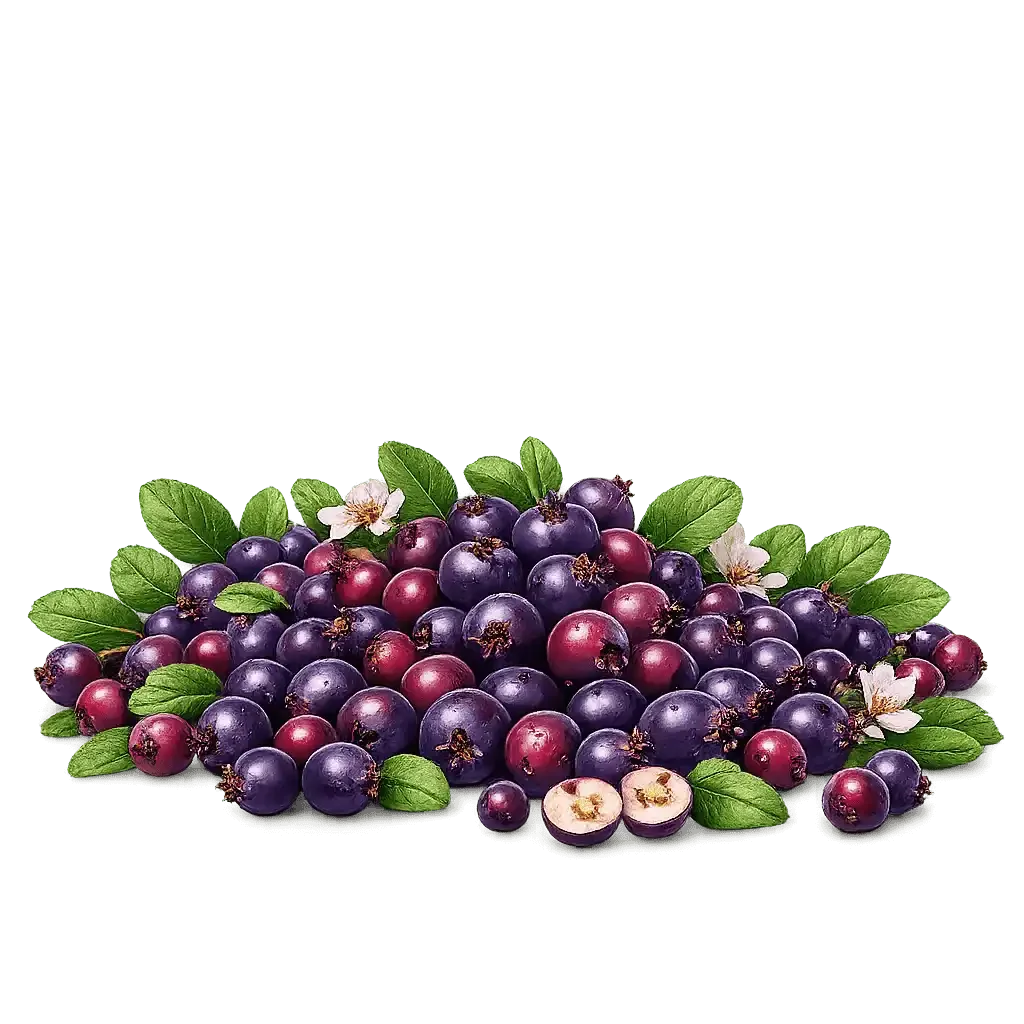
Flowers: Juneberry flowers are white to cream colored, with five slender petals arranged in a star shape. They appear in drooping or upright racemes of 5 to 15 flowers per cluster, blooming in early to mid spring, often before the leaves fully emerge. The blooming period is a visual highlight, giving the shrub a snow white appearance.
Unripe berries: The fruit starts as small, hard, green spheres clustered along the raceme. As they develop, they transition through shades of pink and red before reaching their final color.
Ripe berries: Fully ripe juneberries are deep purple to nearly black, round, and approximately 1/4 to 1/2 inch in diameter, similar in size to a large blueberry. The skin has a slight waxy bloom. Flavor is a unique blend of blueberry, almond, and mild cherry, sweeter and richer than most people expect.
Seeds: Each berry contains 4 to 10 small, soft seeds similar to those found in a pear or apple. The seeds are barely noticeable when eating fresh or in baked goods. They contain trace amounts of amygdalin, but not in quantities that pose any concern for normal consumption.
Cluster pattern: Berries ripen unevenly within each cluster over a 2 to 3 week window. A single raceme may have fully ripe, partially ripe, and still green berries at the same time. This is normal and actually extends the fresh eating window.
Ripening time: Berries ripen in June through July depending on your zone and cultivar. In zone 3, expect harvest in mid to late July. In zone 6, harvest may begin in early to mid June. Total harvest window per plant is typically 2 to 4 weeks.
How Much Berry Can You Collect?
Young plants (years 2 to 3): Expect 1/4 pound to 3 pounds per plant. Production increases rapidly each year during this phase.
Mature plants (years 6 and up): A single mature juneberry shrub reliably produces 8 to 15 pounds of fruit per year under good conditions. Top performing cultivars in optimal sites can reach 20 pounds.
Per row: A hedgerow of juneberries spaced 4 to 6 feet apart in a 100 foot row (roughly 17 to 25 plants) can yield 135 to 375 pounds of fruit per year at maturity.
Per acre: Commercial Saskatoon berry operations in Canada report yields of 3,000 to 7,000 pounds per acre using tighter spacing. Homestead scale with wider spacing and less intensive management will fall on the lower end.
Harvest season: The harvest window is concentrated, typically 2 to 4 weeks per cultivar. Planting early, mid, and late season varieties can extend your total harvest to 5 to 6 weeks.
Ease of harvest: Juneberries grow at a convenient height for hand picking. Berries detach cleanly when ripe, similar to blueberries. A practiced picker can harvest 3 to 5 pounds per hour by hand. For larger plantings, berry rakes or mechanical harvesters dramatically increase efficiency.
Homestead reality: A family of four can meet their annual berry needs for fresh eating, freezing, and preserving with 6 to 10 mature plants. Plant 15 to 20 if you want surplus for trading, selling at the farm stand, or making wine.
Why Juneberries Are Good for You
Juneberries pack a serious nutritional punch, rivaling and in some cases exceeding blueberries in key categories.
Vitamins and minerals: Juneberries are an excellent source of manganese, providing roughly 80% of the daily value per cup. They are a good source of iron (significantly more than blueberries), magnesium, potassium, copper, and vitamin C. A one cup serving provides approximately 80 to 90 calories, 1 to 2 grams of protein, and 3 to 5 grams of fiber.
Antioxidants: Juneberries are rich in anthocyanins, the pigments responsible for their deep purple color. Research published in the Journal of Agricultural and Food Chemistry found that Saskatoon berries contain high levels of phenolic compounds with strong antioxidant activity. They also contain flavonols, proanthocyanidins, and hydroxycinnamic acids.
Heart health: Studies from the University of Saskatchewan have shown that Saskatoon berry extracts may help reduce LDL cholesterol oxidation and exhibit anti inflammatory properties relevant to cardiovascular health.
Blood sugar regulation: Preliminary research suggests that compounds in Saskatoon berries may help modulate blood sugar responses, making them a potentially beneficial food for those managing diabetes or insulin resistance.
Traditional uses: Indigenous peoples of the northern plains used juneberries not only as a dietary staple but also in traditional medicine. Bark and root preparations were used for digestive issues, and the berries themselves were valued for their restorative and strengthening properties. The fruit was a critical component of pemmican, the high calorie survival food that sustained people through long winters and travel.
What You Can Make with Juneberries
Jam and jelly: Juneberry jam is the most popular preserve. The berries have a natural pectin content that is moderate, so adding commercial pectin or combining with a high pectin fruit like tart apple produces a firmer set. The flavor is rich, sweet, and slightly nutty.
Pies and tarts: Juneberry pie is often described as a cross between blueberry pie and cherry pie with an almond undertone. Use juneberries as a 1:1 replacement for blueberries in any pie recipe. Add a tablespoon of lemon juice to brighten the flavor.
Syrup: Cook berries down with sugar and a splash of lemon juice, strain, and bottle. Juneberry syrup is outstanding on pancakes, waffles, and ice cream. Process in a water bath canner for shelf stable storage.
Wine and mead: Juneberries make a smooth, medium bodied fruit wine with a beautiful garnet color. They also make an excellent addition to mead. Use 3 to 4 pounds of fruit per gallon of wine.
Baked goods: Muffins, scones, cobblers, crisps, and quick breads all benefit from juneberries. Their slightly almond like flavor adds depth that blueberries lack.
Sauces: A juneberry sauce pairs well with pork, venison, and duck. Simmer berries with a bit of balsamic vinegar, honey, and fresh thyme for a sophisticated homestead condiment.
Pemmican: For the historically minded homesteader, dried juneberries mixed with rendered tallow and dried meat make authentic pemmican, one of the most calorie dense and shelf stable trail foods ever developed.
Homestead tip: Juneberries blend exceptionally well with other fruits. Mix them 50/50 with rhubarb for a spectacular jam, or combine with saskatoons and wild strawberries for a prairie mixed berry preserve.
Best Ways to Store, Can, or Make Jam
Freezing: The simplest and most versatile preservation method. Spread clean, dry berries in a single layer on parchment lined sheet pans and freeze for 2 hours. Transfer to vacuum sealed bags or rigid freezer containers, removing as much air as possible. Label with the date. Use within 18 months for best quality.
Juneberry Jam (Water Bath Canned)
Ingredients:
• 4 cups crushed juneberries (about 6 cups whole)
• 3 cups granulated sugar
• 1 box (1.75 ounces) powdered pectin
• 2 tablespoons fresh lemon juice
• 1/2 teaspoon butter (optional, reduces foaming)
Method:
Prepare your water bath canner and sterilize jars and lids. Crush juneberries in a large pot using a potato masher, leaving some chunks for texture. Stir in the lemon juice and pectin. Bring to a full rolling boil over high heat, stirring constantly. Add sugar all at once. Return to a full rolling boil and boil hard for exactly 1 minute. Remove from heat and skim any foam. Ladle hot jam into sterilized half pint jars, leaving 1/4 inch headspace. Wipe rims, apply lids and bands finger tight. Process in a boiling water bath for 10 minutes (adjust for altitude: add 5 minutes above 6,000 feet). Yield: approximately 5 to 6 half pint jars.
Juneberry Syrup
Combine 4 cups of juneberries, 1 cup of water, and 1 cup of sugar in a saucepan. Bring to a boil, reduce heat, and simmer for 20 minutes. Strain through a fine mesh sieve or cheesecloth, pressing gently. Return liquid to the pan, add an additional 1/2 cup sugar, and simmer until slightly thickened, about 10 minutes. Pour into sterilized jars and process in a water bath for 10 minutes. Yield: approximately 2 to 3 half pint jars.
Drying
Spread clean berries in a single layer on dehydrator trays. Dry at 135 degrees Fahrenheit for 10 to 14 hours, rotating trays every 3 to 4 hours. Berries are done when they are leathery and no longer sticky. Condition by placing in a sealed jar for 5 to 7 days, shaking daily. If condensation appears, return to the dehydrator. Store in airtight containers with oxygen absorbers for long term pantry storage.
Pros of Growing Juneberry
• Extreme cold hardiness: Thrives in USDA zones 2 through 7. Few other fruit bearing shrubs can match this cold tolerance, making juneberries a cornerstone fruit for northern homesteads.
• Low maintenance: Once established, juneberries require minimal pruning, little to no supplemental irrigation in most climates, and no spraying in many regions. They are far less labor intensive than tree fruits.
• Reliable production: Juneberries produce consistently year after year with very few off years. Late frosts occasionally reduce yields, but total crop failures are rare.
• Versatile in the kitchen: From fresh eating to pies, jams, wines, syrups, and pemmican, there are very few fruits this adaptable. They substitute for blueberries in virtually any recipe.
• Nutritionally dense: Higher in iron, manganese, and several antioxidant compounds than blueberries. A genuine superfood that grows in your backyard.
• Attractive ornamental value: White spring blooms, vibrant fall foliage in shades of orange and red, and an appealing natural form make juneberries a dual purpose landscape and food plant.
• Wildlife value: Juneberries support native pollinators during bloom and provide food and cover for songbirds and small mammals. They fit well into a permaculture or ecosystem focused homestead design.
• Long productive lifespan: With basic care, expect 30 to 50 years of production from a single planting. That is a serious return on a modest investment.
Cons of Growing Juneberry
• Bird competition: Birds love juneberries. Without netting, you can lose 50% or more of your crop to cedar waxwings, robins, and other fruit eating birds. Netting is strongly recommended for serious production.
• Suckering habit: Most juneberry cultivars spread by root suckers. This is useful if you want a hedgerow but can be a nuisance if you prefer tidy, isolated plants. Regular sucker removal is needed to maintain defined spacing.
• Short harvest window: The 2 to 4 week harvest period demands that you pick frequently and process quickly. This is manageable but requires planning during a busy time on most homesteads.
• Saskatoon sawfly and other pests: While generally pest resistant, juneberries can be affected by the Saskatoon sawfly, whose larvae defoliate plants. Leaf spot fungi and powdery mildew occasionally appear, particularly in humid climates.
• Slow to reach full production: Waiting 5 to 8 years for peak yields requires patience. This is comparable to most tree fruits but slower than raspberries or strawberries.
• Limited cultivar availability: Depending on your region, sourcing named cultivars may require ordering from specialty nurseries. Local garden centers often carry generic seedlings rather than improved selections.
• Heat sensitivity: Juneberries do not perform well in hot, humid climates. South of zone 7, growth and fruit quality decline significantly. They are truly a northern fruit.
Growing Tips for Homesteaders
Site Selection
Choose a location with full sun for maximum fruit production. Juneberries tolerate partial shade but yield decreases noticeably with less than 6 hours of direct sunlight. Well drained soil is essential. They perform well in a wide pH range from 5.5 to 7.5 but prefer slightly acidic to neutral conditions. Avoid low lying frost pockets where late spring frosts could damage flowers. A north facing slope or a site near a large body of water can help delay bloom and reduce frost risk.
Planting
Plant bare root stock in early spring while still dormant, or container grown plants anytime from spring through early fall. Space plants 4 to 6 feet apart for a hedgerow or 8 to 12 feet apart for individual shrubs. Dig a hole twice the width of the root ball and the same depth. Backfill with native soil amended with compost. Water deeply at planting and mulch with 3 to 4 inches of wood chips, keeping mulch 4 inches away from the stem. Avoid planting too deep. The root flare should be at or slightly above the soil surface.
Maintenance
Water regularly during the first two growing seasons to establish a strong root system. After establishment, supplemental watering is only necessary during prolonged drought. Fertilize lightly in early spring with a balanced organic fertilizer or a 2 to 3 inch top dressing of compost. Prune annually in late winter while dormant. Remove dead, damaged, and crossing branches. Thin older stems at the base every 3 to 4 years to encourage new productive growth. For hedgerow plantings, manage suckers to maintain your desired width and density.
Variety Selection
Thiessen: Large fruit, vigorous grower, sweet flavor. One of the most widely available cultivars. Reaches 12 to 15 feet. Smoky: The industry standard for commercial production in Canada. Sweet, mild flavor, consistent yields, 10 to 14 feet tall. Martin: Large berries, upright habit, good for hedgerows. Ripens uniformly within clusters. Regent: Compact variety, only 4 to 6 feet tall. Ideal for small homesteads, edible landscaping, or container growing. Excellent flavor. Northline: Heavy producer with a spreading habit. Good for hedgerow plantings. Berries are slightly smaller but abundant.
Companion Planting
Juneberries pair well with other nitrogen fixing or pollinator supporting plants. Consider planting them alongside comfrey (as a dynamic accumulator and mulch plant), white clover (living mulch and nitrogen fixer), or elderberry (another native fruit that shares similar growing conditions). Avoid planting near black walnut trees, as juneberries may be sensitive to juglone toxicity.
Conclusion
The juneberry deserves a prominent place on any northern homestead. It is one of the few fruit bearing shrubs that combines extreme cold hardiness, reliable production, low maintenance needs, exceptional nutrition, and genuine versatility in the kitchen. Whether you are building a permaculture food forest, establishing a hedgerow along a property line, or simply looking for a productive edible landscape plant, the juneberry delivers on every front.
For homesteaders who have struggled with fruit production in harsh climates, juneberries can be transformative. While you wait for apple and pear trees to come into production, a well planned juneberry planting will already be filling your freezer and pantry shelves. The berries freeze beautifully, make outstanding jam, and can be dried for year round use. With 6 to 10 mature plants, a single family can produce all the berry product they need for the year, with surplus left over for sharing or selling.
Start with two or three named cultivars this spring, protect them from deer browse in the first couple of years, and give them time to establish. By year five, you will wonder why you did not plant them sooner. The juneberry is not flashy, not trendy, and not complicated. It is simply one of the most practical and rewarding fruit plants a homesteader can grow.
Explore more guides on different types of berries