
Jostaberry
Complete Homestead Growing Guide
The jostaberry (pronounced YOST-a-berry) is a hybrid cross between the black currant (Ribes nigrum) and two gooseberry species (Ribes divaricatum and Ribes uva-crispa). Its botanical name is Ribes x nidigrolaria. Developed in Germany in the 1970s by Dr. Rudolf Bauer at the Max Planck Institute, the jostaberry was the result of decades of deliberate crossbreeding aimed at combining the best traits of both parent species: the flavor and nutritional density of black currants with the vigor, thornlessness, and disease resistance of gooseberries.
The jostaberry grows as a vigorous, thornless, deciduous shrub reaching 5 to 7 feet tall and 5 to 8 feet wide at maturity. The bush has a spreading, arching habit with dark green, glossy leaves that resemble a blend of its parent species. It is hardy in USDA zones 3 through 8, giving it an impressively wide growing range from cold northern climates well into the mid South. The plant is self fertile, though cross pollination with a black currant or gooseberry planted nearby can increase yields.
For homesteaders, the jostaberry is an outstanding choice. It is thornless, unlike gooseberries. It is highly resistant to white pine blister rust, powdery mildew, and American gooseberry mildew, which are the diseases that plague its parent species and have led to planting restrictions on currants and gooseberries in many parts of the United States. The jostaberry sidesteps most of these restrictions. It produces abundantly with minimal care, thrives in partial shade where other fruits struggle, and delivers fruit packed with vitamin C and antioxidants. If you want a tough, productive, low fuss berry bush, the jostaberry should be on your radar.
How Long Does It Take to Grow?
Jostaberries are faster to produce than many people expect, and their vigorous growth habit means you will see results quickly.
Year 1: Establishment and root development. Container grown plants may produce a few berries in their first summer, but it is best to remove flowers and redirect energy into building a strong root system and framework branches. Expect 18 to 24 inches of vigorous new growth.
Year 2: The bush begins filling out rapidly. You will get your first real taste of fruit, typically 1 to 3 pounds per plant. The shrub may already be 3 to 4 feet tall and wide.
Year 3: A noticeable jump in production. Expect 4 to 8 pounds per plant. The framework of the bush is largely established, and fruiting wood is developing on second year canes.
Years 4 to 5: Approaching full production. Yields climb to 8 to 12 pounds per plant. The shrub is now 5 to 7 feet tall and wide, with a dense canopy of productive wood.
Years 6 and beyond: Full maturity. Well managed jostaberry bushes consistently produce 10 to 15 pounds of fruit annually, with some exceptional plants pushing past 20 pounds. Production continues reliably for 15 to 20 years with proper renewal pruning.
From planting to meaningful harvest, plan on two years. From planting to peak production, plan on four to five years. This is significantly faster than most tree fruits and comparable to blueberries, making the jostaberry one of the quicker returns on investment in perennial fruit planting.
Berry Shelf Life
Jostaberries have a firmer skin than black currants, which gives them a slight edge in post harvest handling, though they are still softer than gooseberries.
Fresh: Stored unwashed in a shallow container in the refrigerator at 33 to 38 degrees Fahrenheit, fresh jostaberries keep for 5 to 7 days. Their firmer skin holds up better than black currants, but they will still soften and weep if piled too deep.
Frozen: Jostaberries freeze exceptionally well. Spread clean, dry berries on parchment lined sheet pans and freeze solid for 2 hours before transferring to vacuum sealed bags or rigid containers. Frozen jostaberries maintain excellent quality for 12 to 18 months at 0 degrees Fahrenheit or below.
Dried: Dehydrate at 135 degrees Fahrenheit for 12 to 16 hours until leathery with no sticky spots. Dried jostaberries have a concentrated tart sweetness that works well in trail mixes and granola. Store in airtight containers in a cool, dark location for up to 12 months.
Jams and preserves: Water bath canned jostaberry jam and preserves maintain peak quality for 12 to 18 months stored in a cool pantry at 50 to 70 degrees Fahrenheit. The high natural pectin content of jostaberries makes them excellent candidates for jamming.
Homestead storage tip: Freeze your harvest in pre measured 2 cup portions in labeled bags. This saves time when you are ready to make a batch of jam or toss berries into muffins mid winter. Jostaberries also hold their shape well after thawing, making them one of the better berries for freezer to pie conversions.
Berry Color and Appearance
Flowers: Jostaberry flowers are small and inconspicuous, appearing in short racemes of 3 to 5 blooms per cluster in mid spring. The flowers are greenish yellow with a slight pinkish tint, resembling gooseberry flowers more than currant flowers. They are attractive to early season pollinators, especially bumblebees.
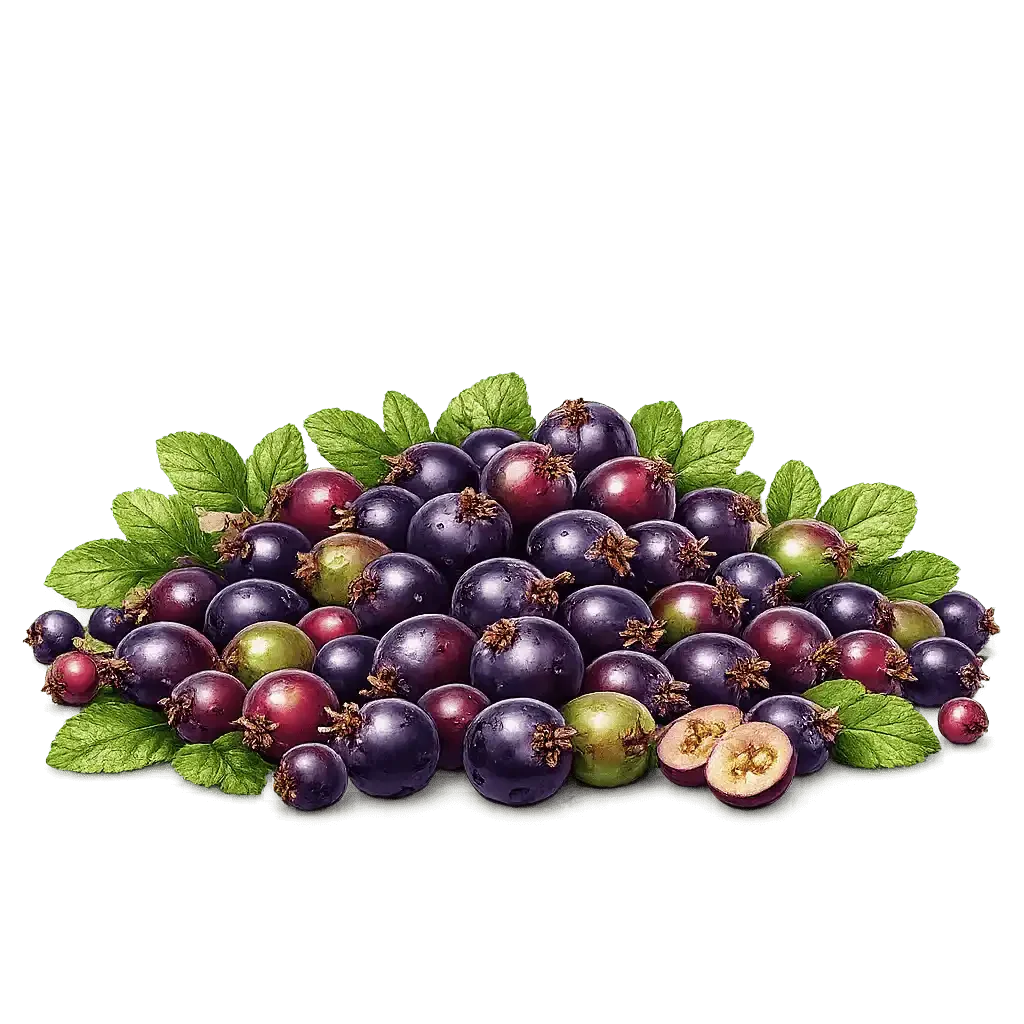
Unripe berries: Young fruit starts as small, hard, bright green spheres with visible striping, much like miniature gooseberries. As they develop through early summer, they gradually darken through shades of green, then reddish purple.
Ripe berries: Fully ripe jostaberries are deep blue black to nearly black, round to slightly oval, and approximately 1/2 to 3/4 inch in diameter. They are roughly twice the size of black currants and slightly smaller than large gooseberries. The skin has a subtle bloom similar to blueberries. The flavor is distinctive: a complex blend of black currant tartness and gooseberry sweetness with grape like undertones. Sweetness increases the longer berries hang on the bush after turning black.
Seeds: Each berry contains 10 to 30 small, soft seeds similar to those in currants. The seeds are barely noticeable when eating fresh and virtually disappear in jams and baked goods.
Cluster pattern: Berries form in small clusters of 3 to 5 fruits along the stems of second year wood. Clusters ripen unevenly over a 3 to 4 week window, with berries at the base of the cluster ripening first. Individual berries can be picked as they reach peak color without disturbing the rest.
Ripening time: Jostaberries typically ripen from late June through July depending on climate zone. In zone 4, expect harvest to begin in early to mid July. In zone 7, berries may begin ripening in mid to late June. The extended ripening window within each bush provides 3 to 5 weeks of picking.
How Much Berry Can You Collect?
Young plants (years 2 to 3): Expect 1 to 8 pounds per plant as the bush builds its framework. Production increases rapidly each season during this establishment phase.
Mature plants (years 5 and up): A single well maintained jostaberry bush reliably produces 10 to 15 pounds of fruit per year. Exceptional specimens in ideal conditions with good pollination partners nearby can yield 18 to 22 pounds.
Per row: A hedgerow of jostaberries planted 5 to 6 feet apart in a 100 foot row (roughly 17 to 20 plants) can yield 170 to 300 pounds of fruit annually at maturity. This is a substantial harvest from a single row.
Per acre: Intensive plantings report yields in the range of 5,000 to 10,000 pounds per acre. Homestead scale plantings with wider spacing and less intensive management will fall toward the lower end, but even casual production is impressive.
Harvest season: The picking window spans 3 to 5 weeks per plant due to the uneven ripening habit. Plan to pick every 3 to 5 days during peak season for best quality.
Ease of harvest: Harvesting jostaberries is pleasant work. The bushes are thornless, which is a major advantage over gooseberries. Berries detach cleanly when ripe with a gentle tug. The open, arching growth habit provides easy access to fruit. An experienced picker can harvest 4 to 6 pounds per hour by hand.
Homestead reality: A family of four will find their fresh eating, freezing, and preserving needs well covered with 4 to 6 mature bushes. If you want surplus for juice, wine, or bartering, plant 8 to 12 bushes. The plants are large, so plan your space accordingly.
Why Jostaberries Are Good for You
Jostaberries inherit the nutritional strengths of both parent species, creating a berry that is genuinely nutrient dense.
Vitamins and minerals: Jostaberries are exceptionally high in vitamin C, containing roughly 100 to 130 milligrams per cup, which provides well over 100% of the recommended daily intake. They are also a good source of potassium, iron, manganese, and B vitamins including thiamine and niacin. A one cup serving provides approximately 70 to 80 calories, 2 grams of protein, and 5 to 7 grams of dietary fiber.
Antioxidants: The deep blue black color of jostaberries signals a high concentration of anthocyanins, the same class of antioxidants found in blueberries and black currants. They also contain significant levels of flavonoids, phenolic acids, and proanthocyanidins. Research on Ribes species has consistently demonstrated strong free radical scavenging activity in these berries.
Immune support: The extremely high vitamin C content makes jostaberries a powerful immune supporting food. Historically, black currants were used in Europe as a natural remedy for colds and flu, and the jostaberry carries this same nutritional profile.
Anti inflammatory properties: Studies on black currant and gooseberry extracts have shown anti inflammatory effects linked to their anthocyanin and gamma linolenic acid content. While specific clinical trials on jostaberries are limited, the inherited phytochemical profile strongly suggests similar benefits.
Eye health: Anthocyanins found in dark berries like the jostaberry have been studied for their potential to support retinal health and reduce eye fatigue. European research on black currant anthocyanins has shown promising results in this area.
Traditional uses: Black currants and gooseberries have a long history in European folk medicine. Black currant leaves were used as teas for urinary tract support and inflammation, while the berries were valued for treating sore throats and fevers. The jostaberry, as a direct descendant, carries forward this tradition as a food that is both nourishing and functional.
What You Can Make with Jostaberries
Jam and jelly: Jostaberry jam is outstanding. The natural pectin content is high enough that you can make a soft set jam without any added pectin. For a firmer set, use commercial pectin and the standard proportions. The flavor is deeply fruity with a pleasant tartness that balances the sugar beautifully.
Pies and crumbles: Jostaberry pie fills the kitchen with a rich, tangy aroma. Use them as a 1:1 substitute for blueberries or black currants in any recipe. They pair especially well with a buttery streusel topping. Add 2 tablespoons of cornstarch per 4 cups of berries to thicken the filling.
Syrup: Simmer berries with sugar and water, strain, and bottle. Jostaberry syrup has a striking dark purple color and a complex flavor that elevates pancakes, yogurt, and cocktails. Process in a water bath canner for pantry stable storage.
Juice and cordial: Jostaberries make a deeply colored, vitamin C rich juice. Simmer 4 pounds of berries with 4 cups of water, mash, strain through cheesecloth, and sweeten to taste. Dilute as a cordial or drink straight. Excellent mixed with sparkling water.
Wine: Jostaberry wine produces a medium bodied, garnet colored wine with a flavor profile reminiscent of a dry rose with berry undertones. Use 4 to 5 pounds of fruit per gallon. The tartness and tannin from the skins contribute structure that many fruit wines lack.
Baked goods: Muffins, scones, coffee cakes, and quick breads all benefit from jostaberries. Their tartness keeps baked goods from being cloying, and the dark juice creates attractive purple streaks through batters.
Sauces and chutneys: A jostaberry sauce pairs beautifully with roasted poultry, pork, and game meats. Simmer berries with red onion, ginger, brown sugar, and apple cider vinegar for a chutney that rivals anything you would make with cranberries.
Homestead tip: Jostaberries blend exceptionally well with milder fruits. Mix them 50/50 with strawberries for a jam with more complexity, or combine with apples in a crumble for a crowd pleasing fall dessert.
Best Ways to Store, Can, or Make Jam
Freezing: The simplest and most effective preservation method for jostaberries. Spread clean, dry berries in a single layer on parchment lined sheet pans. Freeze for 2 hours until solid, then transfer to vacuum sealed bags or rigid freezer containers. Remove as much air as possible and label with the date. Use within 18 months for best quality. Frozen jostaberries hold their shape well and can go directly into pies, muffins, and smoothies without thawing.
Jostaberry Jam (Water Bath Canned)
Ingredients:
• 4 cups crushed jostaberries (about 5 to 6 cups whole)
• 4 cups granulated sugar
• 1 box (1.75 ounces) powdered pectin
• 2 tablespoons fresh lemon juice
• 1/2 teaspoon butter (optional, reduces foaming)
Method:
Prepare your water bath canner and sterilize jars and lids. Crush jostaberries in a large, heavy bottomed pot using a potato masher. Stir in the lemon juice and powdered pectin. Bring to a full rolling boil over high heat, stirring constantly. Add all the sugar at once and stir to dissolve. Return to a full rolling boil and boil hard for exactly 1 minute, stirring continuously. Remove from heat and skim any foam with a metal spoon. Ladle hot jam into sterilized half pint jars, leaving 1/4 inch headspace. Wipe rims clean with a damp cloth, apply lids and bands finger tight. Process in a boiling water bath for 10 minutes (adjust for altitude: add 5 minutes above 6,000 feet). Remove jars and let cool undisturbed for 12 to 24 hours. Check seals before storing. Yield: approximately 6 to 7 half pint jars.
Jostaberry Syrup
Combine 4 cups of jostaberries, 1 cup of water, and 1 and 1/2 cups of sugar in a heavy saucepan. Bring to a boil, reduce heat, and simmer for 15 to 20 minutes, mashing berries occasionally. Strain through a fine mesh sieve lined with cheesecloth, pressing gently to extract juice without forcing pulp through. Return the strained liquid to the pan, bring to a simmer, and cook until slightly thickened, about 8 to 10 minutes. Pour into sterilized half pint jars, leaving 1/4 inch headspace, and process in a boiling water bath for 10 minutes. Yield: approximately 2 to 3 half pint jars.
Drying
Spread clean jostaberries in a single layer on dehydrator trays. Dry at 135 degrees Fahrenheit for 12 to 18 hours, rotating trays every 3 to 4 hours for even drying. Berries are done when they are wrinkled, leathery, and no longer sticky or moist when squeezed. Condition by placing in a sealed glass jar for 5 to 7 days, shaking daily to redistribute moisture. If condensation appears inside the jar, return berries to the dehydrator for another 2 to 3 hours. Store in airtight containers with oxygen absorbers for pantry storage up to 12 months.
Pros of Growing Jostaberry
• Thornless: Unlike gooseberries, jostaberry bushes have no thorns whatsoever. This makes harvesting a pleasure rather than a battle and is a significant advantage for families with children helping in the garden.
• Disease resistant: Jostaberries are highly resistant to white pine blister rust, powdery mildew, and American gooseberry mildew. These are the diseases that have historically caused planting bans on Ribes species in many US states. The jostaberry largely avoids these restrictions.
• Wide climate adaptability: Hardy in USDA zones 3 through 8, the jostaberry grows successfully across a much wider range than either parent species alone. It tolerates cold winters and moderate summer heat with equal ease.
• Shade tolerant: Jostaberries produce reasonable crops in as little as 4 hours of direct sunlight, making them one of the best fruiting shrubs for partially shaded sites. Few other fruits are this productive in less than full sun.
• Vigorous and fast growing: Jostaberry bushes establish quickly and reach productive size in 3 to 4 years. Their vigor means they compete well with weeds once established and fill their allotted space rapidly.
• High vitamin C content: With over 100 milligrams of vitamin C per cup, jostaberries are among the highest vitamin C fruits you can grow in a temperate garden. This makes them a genuinely valuable food crop for self sufficient homesteads.
• Self fertile: Jostaberries will set fruit without a cross pollinator, though planting a black currant or gooseberry nearby increases yields. This simplifies planning for homesteaders with limited space.
• Long productive life: With proper renewal pruning, expect 15 to 20 years of reliable production from each bush. That represents a significant return on a modest initial investment.
Cons of Growing Jostaberry
• Large plant size: Mature jostaberry bushes reach 5 to 7 feet tall and 5 to 8 feet wide. They need significant space and are not suitable for small raised beds or tight garden plots. Plan your layout with their mature spread in mind.
• Uneven ripening: Berries within a cluster ripen over 3 to 4 weeks, requiring multiple picking sessions. While this extends the fresh eating season, it also means you cannot do a single large harvest and be done.
• Tart when underripe: Berries that look dark enough to pick are sometimes still quite tart. The trick is to wait until they feel slightly soft and detach easily. Picking too early results in mouth puckering fruit that needs more sugar in processing.
• Limited commercial availability: Jostaberry plants can be harder to source than mainstream fruits. Specialty nurseries and online suppliers are often the only option. Named cultivars are particularly scarce in the United States.
• Bird pressure: Birds are attracted to the dark, sweet berries. Netting is recommended if you want to keep the full crop, especially during peak ripening when cedar waxwings and robins move through.
• Pruning requirements: Jostaberries fruit best on 2 to 3 year old wood. Without annual renewal pruning to remove older canes and encourage new growth, productivity declines over time. This is not difficult but does require consistent attention.
• Flavor unfamiliarity: The jostaberry flavor is unique and may be unfamiliar to people accustomed to sweeter berries. Some family members may need time to develop a taste for the tart, complex fruit. Processing with sugar in jams and baked goods often wins over skeptics.
Growing Tips for Homesteaders
Site Selection
Jostaberries are remarkably adaptable to site conditions. They produce best in full sun (6 or more hours of direct light) but are one of the few fruiting shrubs that still yield well in partial shade with as little as 4 hours of direct sunlight. Choose a location with well drained, moisture retentive soil. They tolerate a wide pH range from 5.5 to 7.0 but perform best in slightly acidic to neutral conditions. Jostaberries appreciate some wind protection, as their arching branches can be heavy with fruit. Avoid waterlogged sites where standing water persists after rain.
Planting
Plant bare root jostaberries in early spring while dormant, or container grown plants from spring through early fall. Space bushes 5 to 6 feet apart in a row, or 6 to 8 feet apart for individual specimens. Dig a hole twice the width and the same depth as the root ball. Amend heavy clay or very sandy soil with 2 to 3 inches of compost worked into the backfill. Plant at the same depth the bush was growing in the nursery, or set bare root plants so the topmost roots are 1 to 2 inches below the soil surface. Water deeply after planting and apply 3 to 4 inches of wood chip or straw mulch, keeping it 3 to 4 inches away from the stems.
Maintenance
Water regularly during the first two growing seasons to establish a deep root system, providing 1 to 1.5 inches of water per week during dry spells. Once established, jostaberries are moderately drought tolerant but produce best with consistent moisture, especially during fruit development from late spring through early summer. Fertilize in early spring with a balanced organic fertilizer or a 2 to 3 inch layer of compost spread under the canopy. Prune annually in late winter. Remove any canes older than 4 years at ground level, thin crowded interior growth to improve air circulation, and remove any weak or damaged wood. Aim to maintain 8 to 12 productive canes of mixed ages per bush.
Variety Selection
Josta: The original and most widely available cultivar. Strong grower, heavy producer, good all around performer. This is the standard by which others are measured. Jogranda: Produces the largest fruit of the jostaberry types, approaching 3/4 inch in diameter. Slightly sweeter than Josta with a more gooseberry like flavor. Jostine: A more compact grower than Josta, better suited to smaller spaces. Fruit is slightly more tart with a stronger black currant influence in the flavor. Orus 8: An older selection from Oregon State University. Vigorous grower with good production. Less commonly available but worth seeking out for its consistent performance.
Companion Planting
Jostaberries work well planted alongside other Ribes family members. A black currant planted within 15 to 20 feet serves as a cross pollinator and can boost jostaberry yields by 10 to 20 percent. Comfrey planted around the base acts as a dynamic accumulator, drawing up minerals from deep in the soil and providing excellent mulch material when cut. White Dutch clover sown as a living mulch between rows fixes nitrogen, suppresses weeds, and supports pollinators. Avoid planting near black walnut trees, which produce juglone that can inhibit growth in many Ribes species.
Conclusion
The jostaberry is one of the most underappreciated fruiting shrubs available to homesteaders. It combines the best qualities of its parent species while leaving behind their worst drawbacks. You get the intense nutrition and rich flavor of black currants in a thornless, disease resistant package that grows vigorously across a wide range of climates. For homesteaders in zones 3 through 8, the jostaberry fills a niche that very few other plants can match: a productive, low maintenance, shade tolerant perennial fruit that delivers vitamin C rich harvests year after year.
Practically speaking, 4 to 6 mature bushes will keep a family of four supplied with fresh berries, frozen reserves, several batches of jam, and enough surplus to experiment with wine, syrup, or chutney. The plants ask for very little in return: decent soil, occasional pruning, a bit of compost each spring, and the patience to let them establish. Within four to five years, you will have a reliable annual harvest that lasts for two decades or more.
If you are building a homestead fruit garden and have not considered the jostaberry, now is the time. Order a few plants from a specialty nursery this winter, get them in the ground as soon as the soil thaws in spring, and by year three you will be making your first batch of jostaberry jam. It is a berry that rewards the homesteader who values resilience, nutrition, and self sufficiency over flash and familiarity. Plant it, prune it, pick it, and you will not be disappointed.
Explore more guides on different types of berries