
Raspberry
Complete Homestead Growing Guide
Overview
Raspberry (Rubus idaeus) is a beloved deciduous bramble producing sweet-tart, aromatic berries that are among the most popular fruits grown on homesteads worldwide. A member of the rose family (Rosaceae), the raspberry is native to both Europe and North America, with thousands of years of cultivation history dating back to ancient Greece and Rome. The plant grows 3 to 9 feet tall with biennial canes emerging from a perennial root system, producing compound leaves with 3 to 5 serrated leaflets, small white flowers, and clusters of iconic red aggregate drupelets. Raspberries come in four main colors: red, black, purple, and golden yellow, with red being the most widely grown. For homesteaders, raspberries offer exceptional yields, a long harvest season (especially when combining summer-bearing and everbearing varieties), ease of preservation, and one of the highest-value fruits you can grow at home.
How Long Does It Take to Grow?
Raspberries are among the fastest fruit-producing plants a homesteader can grow, delivering berries within 1 to 2 years of planting.
Year 1: Newly planted raspberry canes focus on establishing roots and producing vigorous primocanes (first-year canes). Summer-bearing varieties will not fruit in year one, but everbearing varieties can produce a small fall crop on the tips of their primocanes during the first growing season.
Year 2: Summer-bearing varieties produce their first real harvest on second-year canes (floricanes) from June through August. Everbearing varieties produce both a summer crop on last year's canes and a fall crop on new primocanes. Yields are moderate but satisfying.
Year 3: Plants are well established with strong root systems sending up numerous canes. Yields increase significantly. This is the first year of substantial harvests for most summer-bearing plantings.
Year 4: Full production begins. Plants reach peak performance with dense cane growth and heavy fruit set. Red raspberry plantings should produce approximately 2 to 6 pounds per plant depending on variety and care.
Mature Production: A well-maintained raspberry planting can remain productive for 10 to 20 years or more, though many growers replace plantings every 8 to 12 years as vigor declines and disease pressure increases.
Homestead Timeline: Expect your first meaningful harvest in year 2, with full production by year 3 to 4. This is one of the fastest returns of any perennial fruit crop, making raspberries an excellent choice for impatient homesteaders who want results quickly.
Berry Shelf Life
Raspberries are notoriously perishable and require prompt handling after harvest.
Fresh Berries: Store unwashed in the refrigerator for 1 to 2 days maximum. At room temperature, raspberries can begin to mold within just a few hours. Arrange in a single layer in a shallow container to prevent crushing. Do not wash until ready to eat.
Frozen Berries: Spread clean, dry berries in a single layer on a parchment-lined baking sheet and freeze until solid. Transfer to freezer bags, removing as much air as possible. Properly frozen raspberries maintain quality for 10 to 12 months at 0°F. Frozen berries retain their nutritional value remarkably well.
Dried Berries: Raspberries can be dried in a dehydrator at 135°F for 12 to 24 hours until leathery. Dried raspberries store 6 to 12 months in airtight containers. They lose their shape but concentrate in flavor.
Jams and Preserves: Properly canned raspberry jam stores 12 to 18 months in a cool, dark pantry.
Homestead Storage Tip: Plan to process or freeze raspberries the same day you harvest them. Pick every 2 to 3 days during peak season to prevent fruit from becoming overripe on the cane, which leads to mold and attracts pests.
Berry Color & Appearance
Flowers: Small, white, five-petaled blooms approximately 1/2 to 1 inch across, appearing in clusters or occasionally solitary. Each flower contains five sepals, numerous stamens, and several pistils arranged on a cone-shaped receptacle. Blooms appear from April through June depending on variety and climate.
Unripe Berries: Hard, green, tightly clustered drupelets firmly attached to the receptacle.
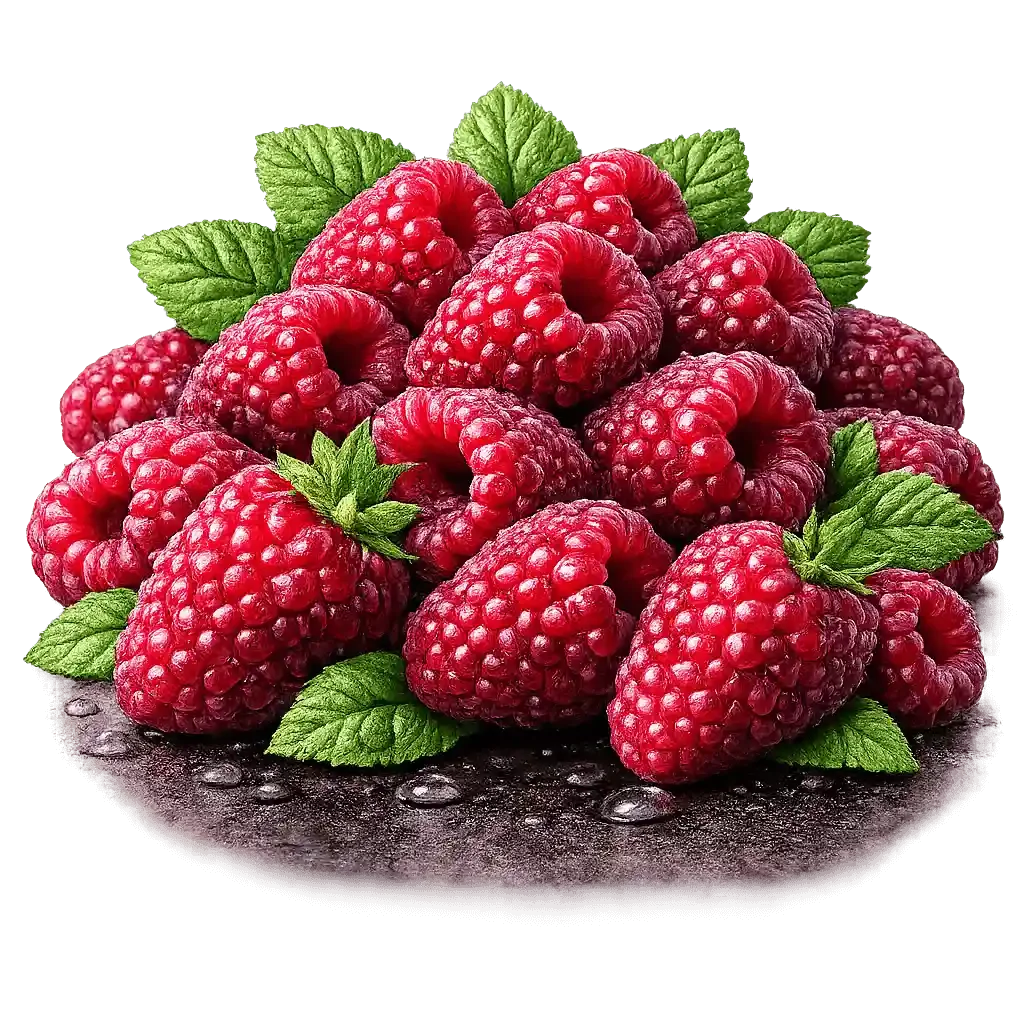
Ripe Berries: Deep red, black, purple, or golden yellow depending on variety. Red raspberries are the most common, turning from green to pink to deep ruby red when fully ripe. The berry detaches cleanly from the white cone-shaped receptacle (torus) when ripe, leaving a characteristic hollow center.
Size: Medium-sized aggregate fruit approximately 1/2 to 3/4 inch long and 1/2 to 3/4 inch wide, composed of 75 to over 100 individual drupelets. Each drupelet contains a tiny seed.
Cluster Pattern: Berries form in loose clusters (racemes) along lateral branches of floricanes. Multiple berries ripen sequentially within each cluster over a period of days to weeks.
Seeds: Each drupelet contains one small, somewhat crunchy seed. Raspberry seeds are smaller and softer than blackberry seeds, making them less noticeable when eating fresh.
Ripening Time: Summer-bearing varieties ripen from late June through August. Everbearing varieties produce a fall crop from August through the first frost in October or November. Some varieties in mild climates can produce into early winter.
Visual Appeal: The combination of bright green foliage, delicate white flowers, and jewel-toned berries makes raspberry plantings attractive additions to the homestead landscape.
How Much Berry Can You Collect?
Raspberry yields are among the most generous of any small fruit, making them a homestead staple.
Young Plants (Year 1 to 2): Everbearing varieties may produce a handful to 1 pound per plant in their first fall crop. Summer-bearing varieties produce little to nothing in year one, then 1 to 2 pounds in year two.
Mature Plants (Year 3+): A healthy, well-maintained raspberry plant produces 2 to 6 pounds of fruit per season depending on variety, growing conditions, and management. Summer-bearing red varieties tend toward the higher end; black raspberries produce roughly half the yield of reds.
Per Row: Expect 18 to 27 pounds per 10 feet of row for mature summer-bearing red or yellow varieties. Everbearing cultivars and black raspberries yield slightly less.
Per Acre Commercial: Well-managed field plantings produce approximately 5,000 pounds per acre at maturity. High-tunnel production can double that figure.
Harvest Season: Berries ripen over a 4 to 6 week window for summer-bearing types. Everbearing varieties extend the harvest for an additional 6 to 8 weeks in fall. Pick every 2 to 3 days during peak production.
Ease of Harvest: Ripe raspberries detach easily from the receptacle with a gentle tug. The hollow center confirms proper ripeness. Thorny varieties require gloves and long sleeves. Thornless cultivars are available and make harvesting much more pleasant.
Homestead Reality: A 25-foot row of mature summer-bearing red raspberries (approximately 12 plants) can yield 45 to 65 pounds of fruit per season. Combined with a similar row of everbearing varieties, a homestead could harvest 80 to 120 pounds annually, providing ample fruit for fresh eating, freezing, and preserving.
Why Raspberry Berries Are Good for You
Raspberries rank among the most nutritionally dense fruits available, offering an exceptional combination of fiber, vitamins, minerals, and antioxidants with remarkably few calories.
Outstanding Fiber Content
One cup of fresh raspberries (about 123 grams) provides approximately 8 grams of dietary fiber, which is more than most fruits and roughly 30% of the recommended daily intake. This high fiber content supports digestive health, helps regulate blood sugar levels, lowers cholesterol, and promotes satiety for weight management.
Excellent Vitamin C Source
A single cup of raspberries delivers approximately 36% of the daily value for vitamin C. This essential vitamin supports immune function, collagen production for healthy skin, wound healing, and acts as a powerful antioxidant protecting cells from oxidative damage.
Rich in Manganese
Raspberries provide about 36% of the daily value for manganese per cup serving. Manganese is essential for bone health, metabolism, blood sugar regulation, and serves as a cofactor for the critical antioxidant enzyme superoxide dismutase.
Powerful Antioxidant Profile
Raspberries possess an ORAC (Oxygen Radical Absorbance Capacity) value of approximately 4,900 per 100 grams, ranking them among the top antioxidant fruits. They contain a rich array of polyphenolic compounds including ellagitannins, anthocyanins, quercetin, gallic acid, and ellagic acid. These compounds work together to neutralize free radicals and reduce oxidative stress linked to aging, heart disease, cancer, and neurodegenerative conditions.
Additional Vitamins and Minerals
Raspberries also provide meaningful amounts of vitamin E, vitamin K, B-complex vitamins (including folate, niacin, riboflavin, and B6), along with minerals such as potassium, copper, iron, and magnesium. They contain small amounts of omega-3 fatty acids (alpha-linolenic acid) that support cardiovascular health.
Research-Backed Health Benefits
Cancer Prevention: The ellagitannins and ellagic acid in raspberries have shown promise in inhibiting abnormal cell division and promoting the death of cancer cells in laboratory studies.
Heart Health: The flavonoids quercetin and gallic acid contribute to cardiovascular protection by reducing inflammation, improving blood vessel function, and helping regulate blood pressure and cholesterol.
Blood Sugar Regulation: The high fiber content and low sugar content (only about 5 grams per cup) help prevent blood sugar spikes, making raspberries a diabetes-friendly fruit.
Anti-Inflammatory Effects: The polyphenolic compounds in raspberries help reduce chronic inflammation throughout the body, potentially lowering the risk of arthritis, heart disease, and metabolic syndrome.
Skin Health: Vitamin C and antioxidants support collagen production and may help protect against UV-related skin damage. Research suggests that these benefits persist even in processed raspberry products.
Traditional Medicinal Uses
Raspberry leaf tea has been used in herbal medicine for centuries. Native American tribes including the Chippewa and Omaha brewed the leaves to treat diarrhea. The tea has long been associated with easing menstrual cramping and supporting childbirth, though pregnant individuals should consult a healthcare provider before use. Young raspberry shoots were traditionally eaten raw or cooked like asparagus.
What You Can Make with Raspberry Berries
Raspberries' bold sweet-tart flavor and beautiful color make them one of the most versatile culinary berries.
Raspberry Jam or Preserves
The classic preparation. Combine 4 cups crushed raspberries with sugar and pectin for a beautiful, deeply flavored jam. Raspberry seeds are small enough that most people enjoy them in jam, though seedless jelly can be made by straining through a jelly bag.
Fresh Eating and Desserts
Raspberries shine eaten fresh out of hand, tossed into yogurt or cereal, layered in parfaits, or piled onto cheesecake, pavlova, tarts, and pies. Their flavor is delicate enough to enjoy unadorned yet bold enough to star in any dessert.
Raspberry Syrup and Sauce
Simmer berries with sugar and water, strain if desired, and reduce to desired thickness. Use as a topping for pancakes, ice cream, and waffles. Raspberry coulis (strained sauce) is a restaurant-quality dessert accompaniment.
Raspberry Vinegar
Steep fresh raspberries in white wine vinegar for 2 to 3 weeks, strain, and bottle. Raspberry vinegar makes exceptional salad dressings and deglazing liquid for savory dishes.
Baked Goods
Fold fresh or frozen raspberries into muffins, scones, cakes, bread, cookies, and crumbles. Raspberries pair especially well with lemon, chocolate, vanilla, almond, and white chocolate.
Raspberry Wine, Mead, and Liqueur
Raspberries produce excellent fruit wines with vibrant color and complex flavor. They also make superb infused spirits and the French liqueur Framboise. Homestead fermenters prize raspberries for their consistent, high-quality results.
Smoothies and Frozen Treats
Frozen raspberries blend beautifully into smoothies, sorbets, and homemade ice cream. Their intense flavor holds up well through freezing and blending.
Raspberry Fruit Leather
Puree cooked or raw raspberries, spread thin on parchment, and dry in a dehydrator or low oven for a portable, shelf-stable snack.
Homestead Tip: Raspberries contain very little sugar compared to most fruits, so recipes may need more sweetener than you expect. Their bright acidity balances rich and sweet flavors beautifully.
Best Ways to Store, Can, or Make Jam
Freezing (Best All-Purpose Method)
Spread clean, dry raspberries in a single layer on a parchment-lined baking sheet. Freeze until solid (about 2 hours), then transfer to labeled freezer bags, pressing out air. Frozen raspberries keep 10 to 12 months at 0°F. This method preserves nutrition, flavor, and color better than any other storage method.
Canning Raspberry Jam
Ingredients:
5 cups crushed raspberries
7 cups sugar
1 box powdered pectin
Method:
Combine crushed berries and pectin in a large pot
Bring to a full rolling boil, stirring constantly
Add sugar all at once and return to a rolling boil for 1 minute
Remove from heat, skim foam
Ladle into sterilized jars leaving 1/4 inch headspace
Wipe rims, apply lids and bands
Process in boiling water bath for 10 minutes
Store up to 18 months
Drying
Spread berries on dehydrator trays in a single layer. Dry at 135°F for 12 to 24 hours until berries are leathery and no moisture remains. Store in airtight containers for 6 to 12 months. Dried raspberries are excellent in trail mix, granola, and baked goods.
Raspberry Syrup
Combine 4 cups berries with 1 cup water and 1 to 2 cups sugar. Simmer 20 minutes, strain through cheesecloth, and return juice to pot. Reduce to desired consistency. Can in a boiling water bath or refrigerate for up to 3 weeks. Frozen syrup stores up to 12 months.
Raspberry Vinegar Preservation
Pack fresh berries into a clean jar, cover completely with white wine vinegar, seal, and steep 2 to 4 weeks in a cool, dark place. Strain, bottle, and store indefinitely.
Pros of Growing Raspberry
Exceptionally High Yields: Among the most productive small fruits. A modest 25-foot row can yield 50+ pounds of berries per season, providing abundant fresh eating and preservation.
Fast Production: Everbearing varieties can fruit in year one. Summer-bearing types produce meaningful harvests by year two. Few perennial fruits reward patience so quickly.
Extended Harvest Season: By planting both summer-bearing and everbearing varieties, homesteaders can harvest raspberries from June through October or later, providing fresh fruit for nearly half the year.
Outstanding Flavor and Versatility: Raspberries are prized for fresh eating, baking, preserving, and fermenting. Their sweet-tart flavor and beautiful color enhance almost any recipe.
Exceptional Nutrition: Very high in fiber, vitamin C, manganese, and antioxidants. Low in sugar and calories. One of the most nutrient-dense fruits available.
Wide Climate Adaptability: Hardy in USDA zones 3 to 8 (some varieties to zone 2), with low-chill cultivars available for warmer regions. Can be grown successfully across most of the United States and Canada.
Self-Fertile: All raspberry cultivars are self-pollinating, so a single variety will produce fruit. No need for cross-pollination partners.
Multiple Color Options: Red, black, purple, and golden varieties offer different flavors, appearances, and culinary uses.
Freezes Beautifully: Frozen raspberries retain excellent nutrition and flavor, making year-round enjoyment easy.
Propagates Easily: Red raspberries spread via root suckers, providing free plants for expanding your patch or sharing with neighbors. Black and purple types propagate by tip layering.
Cons of Growing Raspberry
Short Fresh Shelf Life: Raspberries are extremely perishable, lasting only 1 to 2 days refrigerated. Must be harvested and processed promptly. At room temperature, mold can develop within hours.
Biennial Cane Management: Summer-bearing varieties require annual pruning to remove spent floricanes and manage primocane growth. Everbearing types need less complex pruning but still require annual mowing or cutting. Neglected plantings become tangled, diseased, and unproductive.
Thorny Canes: Most varieties have sharp thorns that make pruning and harvesting uncomfortable. Thornless cultivars exist but are less widely available and sometimes less productive.
Disease Susceptibility: Raspberries are vulnerable to numerous diseases including anthracnose, botrytis (gray mold), root rot, cane blight, and several viral infections. Proper site selection, air circulation, and certified disease-free stock are essential.
Pest Pressure: Spotted wing drosophila, Japanese beetles, cane borers, aphids, and spider mites can all cause significant damage. Birds will take a substantial portion of the crop without netting.
Spreading Habit: Red raspberries spread aggressively through root suckers and can become invasive if not managed. Requires regular removal of suckers growing outside the intended row.
Needs Trellising: Most summer-bearing varieties benefit from or require a trellis system to support the canes, prevent breakage, improve air circulation, and make harvesting easier. This adds cost and labor at planting time.
Site Restrictions: Should not be planted where tomatoes, potatoes, peppers, eggplant, or strawberries grew within the previous 3 to 4 years due to shared soil-borne diseases like Verticillium wilt.
Growing Tips for Homesteaders
Site Selection
Sunlight: Full sun (6 to 8 hours minimum). Raspberries tolerate light afternoon shade, especially in hot climates, but fruit production and flavor decline with less sun.
Soil: Fertile, well-drained loam is ideal. Raspberries cannot tolerate waterlogged or poorly drained soil, which causes root rot. Preferred pH is 6.0 to 6.5 (slightly acidic). Avoid heavy clay and very sandy soils.
Air Circulation: Good airflow around and through the planting helps prevent fungal diseases. Avoid low-lying frost pockets and enclosed areas.
Spacing: Plant 2 to 3 feet apart within rows. Space rows 6 to 8 feet apart for summer-bearing types, 4 to 6 feet for everbearing types managed by mowing.
Planting
Timing: Plant bare-root canes in early spring as soon as the ground can be worked. Container plants can go in spring through early summer.
Method: Dig a hole wide enough to spread the roots. Plant at the same depth the cane grew at the nursery. Backfill, firm the soil, and water deeply. Cut planted canes back to 8 to 10 inches to encourage root establishment. Mulch with 2 to 3 inches of straw, wood chips, or composted bark.
Avoid: Do not plant in soil where Solanaceous crops (tomatoes, peppers, potatoes, eggplant) or strawberries grew recently, as these crops share root diseases with raspberries.
Maintenance
Watering: Provide 1 to 1.5 inches of water per week during the growing season. Consistent moisture is critical during fruit development. Drip irrigation is ideal as it keeps foliage dry, reducing disease risk.
Fertilizing: Apply a balanced fertilizer or compost in early spring. Start with light applications (2 to 3 pounds of 10-10-10 per 100 feet of row) the year after planting, increasing gradually in subsequent years. Split applications at budbreak and again 4 to 6 weeks later.
Mulching: Maintain a 2 to 3 inch mulch layer to conserve moisture, suppress weeds, and moderate soil temperature. Refresh mulch annually.
Pruning - Summer-Bearing: Remove spent floricanes immediately after harvest by cutting them to ground level. In late winter, thin remaining primocanes to 4 to 6 strong canes per foot of row. Do not tip or shorten primocanes during the growing season.
Pruning - Everbearing: For a single large fall crop, mow or cut all canes to the ground in late winter. For two crops (smaller summer + fall), selectively remove only the portion of the cane that fruited in fall, leaving the lower portion to produce a summer crop on the floricane.
Pruning - Black and Purple: Tip primocanes at 3 feet tall in early summer to encourage branching and increase yield four to fivefold. Remove dead floricanes after harvest.
Variety Selection
Summer-Bearing Red: Latham (extremely hardy), Tulameen (large, sweet), Boyne (cold-hardy, productive), Meeker (excellent flavor, commercial standard).
Everbearing Red: Heritage (classic, reliable), Caroline (large fruit, vigorous), Polka (sweet, high yield), Autumn Bliss (early ripening, disease resistant).
Black Raspberry: Jewel (sweet, productive), Bristol (classic variety). Yields roughly half that of red types but with distinctive rich flavor.
Purple Raspberry: Royalty (high yield, unique flavor, cross of red and black).
Golden/Yellow: Anne (sweet, mild flavor), Fall Gold (hardy, everbearing). Beautiful appearance and unique honey-like sweetness.
Conclusion
Raspberries stand as one of the most rewarding fruits a homesteader can grow. Few plants match their combination of fast production, generous yields, outstanding nutrition, and versatile culinary use. From the first handful of sun-warmed berries eaten straight from the cane to jars of jewel-red jam lining the pantry shelves, raspberries deliver value and satisfaction season after season.
The challenges are real but manageable. Annual pruning, disease prevention, pest control, and the relentless need to process berries quickly all demand attention. But for homesteaders willing to invest in proper site preparation, a simple trellis system, and a regular pruning schedule, the payoff is extraordinary.
A well-planned raspberry planting incorporating both summer-bearing and everbearing varieties can supply fresh fruit from June through October, with frozen and preserved berries extending enjoyment through winter and spring. The high fiber, exceptional antioxidant content, and low calorie profile make raspberries one of the healthiest foods you can grow at home.
Start with 10 to 20 disease-free plants from a reputable nursery, give them full sun, well-drained soil, and consistent moisture, and within two seasons you will understand why raspberries have been cherished by gardeners and homesteaders for thousands of years. Just be prepared to pick every few days during peak season, because once the harvest begins, those ruby-red berries wait for no one!
Explore more guides on different types of berries