
Oregon Grape
Complete Homestead Growing Guide
Overview
Oregon Grape (Mahonia aquifolium) is a handsome evergreen shrub native to the Pacific Northwest, producing clusters of tart, dark blue-purple berries with remarkable medicinal properties. Despite its common name, Oregon Grape is not related to true grapes at all - it belongs to the barberry family (Berberidaceae) and is closely related to barberry (Berberis vulgaris), sharing the powerful medicinal compound berberine. The shrub grows 3 to 6 feet tall, features holly-like, spiny evergreen leaves that shift through bronze, green, and burgundy across the seasons, bright golden-yellow fragrant flowers in spring, and dusky blue berry clusters in late summer. Oregon Grape is the state flower of Oregon and has been used by Indigenous peoples of the Pacific Northwest for centuries as food, medicine, and dye. For homesteaders, Oregon Grape offers year-round ornamental beauty, potent medicinal value, wildlife habitat, deer resistance, and low-maintenance fruit production in challenging shade conditions where most other fruiting shrubs will not grow.
How Long Does It Take to Grow?
Oregon Grape is a slow to moderate grower that rewards patient homesteaders with decades of reliable production.
Year 1: Newly planted Oregon Grape focuses on root establishment. Top growth is slow during the first season, typically adding only a few inches. The plant is acclimating and putting energy into developing its root system and underground rhizomes.
Year 2: Growth begins to pick up modestly. Expect 4 to 8 inches of new growth. The shrub starts filling out with additional stems emerging from the base and nearby rhizomes.
Year 3: Most Oregon Grape shrubs begin producing their first flowers and a small set of berries by the third year. Yields are light but enough for sampling and small batches of jelly.
Year 4 to 5: Flower and berry production increase noticeably. The shrub reaches 2 to 4 feet tall depending on conditions and variety. Multiple stems produce flower clusters and subsequent berry sets.
Mature Size Reached: Tall Oregon Grape (M. aquifolium) reaches its mature size of 3 to 6 feet tall and 2 to 5 feet wide by year 6 to 10, depending on site conditions. It may grow slowly at first, then accelerate once fully established. Low Oregon Grape (M. nervosa) stays much shorter at 1 to 2 feet, while Creeping Oregon Grape (M. repens) reaches only about 1 foot tall.
Homestead Timeline: Plan on 3 to 4 years before your first meaningful berry harvest. Oregon Grape is a long-lived, slow-building investment - not a quick-return crop. However, the ornamental value, wildlife benefits, and medicinal bark are available from early on, and the shrub produces reliably for decades once established.
Berry Shelf Life
Oregon Grape berries are moderately durable compared to softer berries, owing to their firm texture and waxy bloom.
Fresh Berries: Store in the refrigerator for up to 1 week in a breathable container. The berries' firm skin helps them hold up better than raspberries or salmonberries. Do not wash until ready to use.
Frozen Berries: Wash, dry thoroughly, spread on a baking sheet to freeze individually, then transfer to freezer bags. Frozen Oregon Grape berries store 10 to 12 months at 0°F. Freezing is an excellent storage method that works well with these firm berries.
Dried Berries: Oregon Grape berries can be dried in a dehydrator at 135°F for 10 to 16 hours. Dried berries store 6 to 12 months in airtight containers in a cool, dark location. Traditionally, Indigenous peoples dried the berries mixed with sweeter fruits like salal and huckleberry for fruit leather.
Jams and Jellies: Properly canned Oregon Grape jelly stores 12 to 18 months in a cool, dark pantry. Jelly is the most popular and traditional preserved form.
Juice: Strained Oregon Grape juice can be canned using a boiling water bath or frozen. Stores 12 to 18 months canned, or up to 12 months frozen.
Homestead Storage Tip: Because Oregon Grape berries are intensely tart and somewhat bitter when raw, most homesteaders process them into jelly, syrup, or juice rather than storing them whole for fresh eating. The berries hold on the plant well into fall, so you can harvest over several weeks.
Berry Color & Appearance
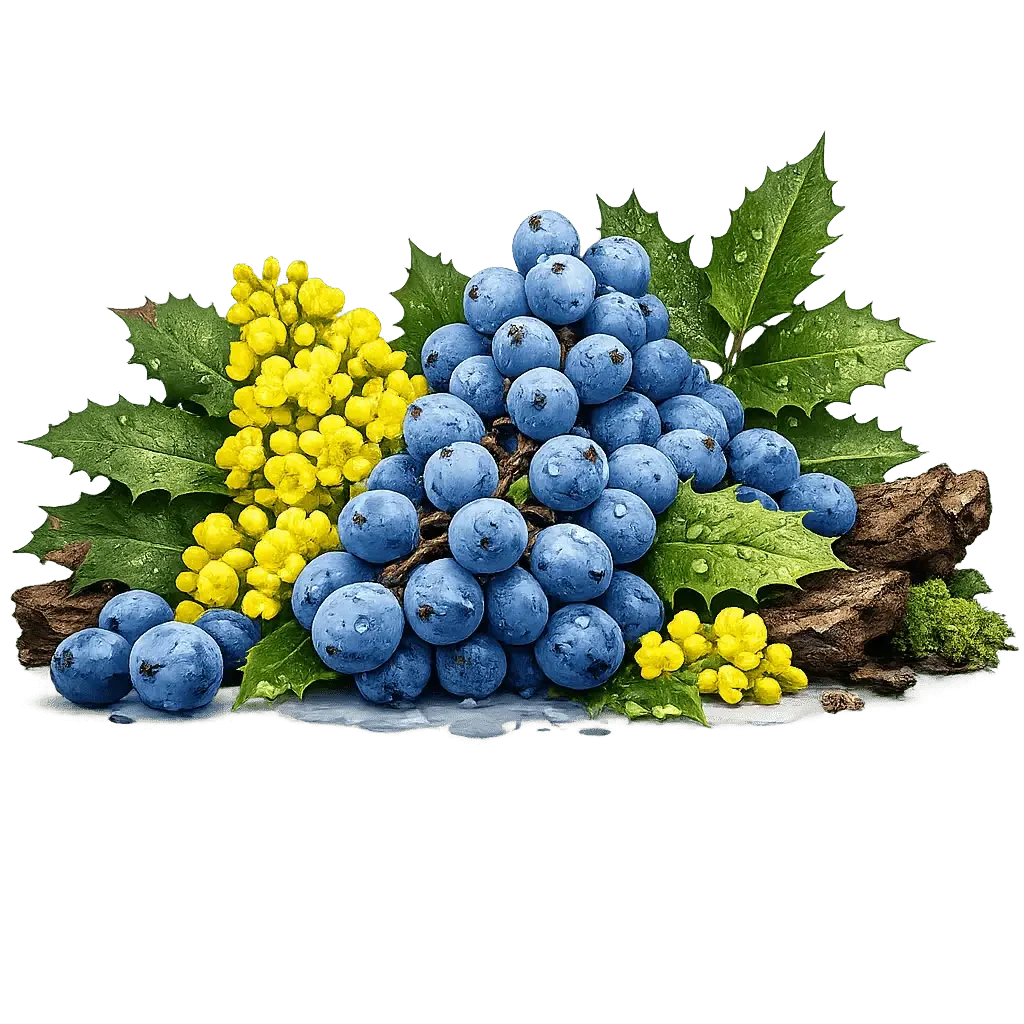
Flowers: Bright golden-yellow, lightly fragrant, small blossoms clustered in dense upright racemes up to 8 inches long at the tips of stems. Flowers appear from March through June depending on climate, attracting bees, hummingbirds, and other early-season pollinators.
Unripe Berries: Small, hard, green, gradually transitioning through reddish tones before reaching their mature color.
Ripe Berries: Dark blue to blue-purple, approximately 1/3 inch (8 to 10 mm) in diameter, covered with a distinctive powdery, silvery-white waxy bloom (similar to the bloom on real grapes or blueberries). The deep blue color beneath the bloom is vivid and striking.
Size: Small, round to slightly oblong berries about the size of a large blueberry, each containing 1 to 5 hard seeds.
Cluster Pattern: Berries hang in dense, grape-like clusters at the tips of stems, giving the plant its common name. Each cluster may contain 10 to 30 or more individual berries.
Seeds: Each berry contains 1 to 5 relatively large, hard seeds. Seeds are typically strained out when making jelly or syrup.
Ripening Time: Late July through September depending on climate and elevation. Berries persist on the plant into fall and early winter if not harvested by birds.
Visual Appeal: The combination of bronze spring foliage, bright yellow flowers, dusty blue berry clusters, glossy green summer leaves, and deep burgundy-purple fall and winter color gives Oregon Grape unmatched four-season ornamental interest.
How Much Berry Can You Collect?
Oregon Grape yields are modest compared to dedicated fruit crops but consistent and reliable once established.
Young Shrubs (Year 3 to 4): A handful to 1 cup per plant. Enough for tasting but not for preservation projects.
Mature Shrubs (Year 5+): 1 to 4 pounds per well-established shrub in a productive year. Larger specimens growing in groups with good cross-pollination produce more heavily.
Groupings: Oregon Grape produces better fruit crops when planted in groups. Three to five mature shrubs can yield 5 to 15 pounds of berries collectively, which is enough for several batches of jelly.
Harvest Season: Single harvest window in late summer to early fall. Berries ripen over 2 to 4 weeks and can be picked as entire clusters, then processed at home.
Ease of Harvest: The holly-like spiny leaves make harvesting somewhat prickly - wear leather gloves. However, the berries hang in accessible clusters at stem tips, making them relatively easy to strip or clip. Harvesting whole clusters with pruning shears is the most efficient method.
Homestead Reality: A hedge of 6 to 8 mature Oregon Grape shrubs can yield 10 to 25 pounds of berries in a good year. This provides enough fruit for 15 to 30 half-pint jars of jelly, plus juice and syrup. While Oregon Grape will never match the sheer volume of raspberries or blackberries, its fruit comes from a plant that requires virtually no care in shade conditions where other fruiting shrubs cannot survive.
Why Oregon Grape Berries Are Good for You
Oregon Grape is valued far more for its medicinal properties than for raw nutritional content, making it one of the most medicinally significant plants a homesteader can grow.
Berberine: The Star Compound
The alkaloid berberine is Oregon Grape's most important active compound, found in the roots, bark, stems, and to a lesser extent the berries. Berberine gives the inner bark and roots their distinctive bright yellow color and provides a wide range of medicinal actions.
Antimicrobial Activity: Berberine demonstrates strong activity against numerous bacteria, fungi, and protozoa. Research shows effectiveness against E. coli, Staphylococcus (including MRSA), Candida, Aspergillus, and Giardia. Oregon Grape has been used traditionally to treat urinary tract infections, intestinal infections, respiratory infections, and skin infections.
Digestive Support: Oregon Grape stimulates bile production from the liver and gallbladder, supporting fat digestion and liver detoxification. The bitter compounds promote healthy digestive secretions and can help relieve heartburn, bloating, and constipation. Berberine has also been studied for reducing diarrhea by slowing intestinal transit time.
Blood Sugar Regulation: Multiple studies indicate berberine may help lower blood sugar and improve insulin sensitivity in individuals with type 2 diabetes. Some research suggests effects comparable to the pharmaceutical drug metformin.
Cardiovascular Support: Berberine shows potential for improving cholesterol profiles, reducing triglycerides, and supporting overall heart health.
Anti-Inflammatory Effects: Oregon Grape whole-plant extracts demonstrate anti-inflammatory activity that goes beyond berberine alone, with studies showing benefits for inflammatory conditions including arthritis and inflammatory bowel conditions.
Skin Health Benefits
Oregon Grape has gained significant attention for its topical use in treating skin conditions. Clinical studies have found that Oregon Grape cream (10% extract) can meaningfully reduce symptoms of psoriasis and atopic dermatitis. In one study, 63% of psoriasis patients reported that Oregon Grape cream was equal or superior to standard pharmaceutical treatment. The antimicrobial and anti-inflammatory properties work together to calm skin irritation, reduce scaling, and inhibit bacterial growth on affected skin.
Nutritional Content of the Berries
While less studied nutritionally than mainstream berries, Oregon Grape berries contain vitamins C and K, manganese, fiber, flavonoids, and tannins. Their antioxidant content helps protect cells against oxidative damage. The berries are low in sugar and calories.
Immune System Support
The combination of berberine's antimicrobial properties and Oregon Grape's ability to enhance immune cell function (particularly macrophage activity) makes it a valuable plant for overall immune support. Indigenous peoples and early Eclectic physicians considered it an important general health tonic.
Traditional Medicinal Uses
Indigenous peoples of the Pacific Northwest used Oregon Grape extensively. The berries were eaten for poor appetite. Root and bark tea was used to treat jaundice, arthritis, diarrhea, fever, kidney problems, and stomach ailments. The Blackfoot used it as a blood medicine and for rheumatism. The Nitinaht used it as a laxative and in combination with hemlock and alder for tuberculosis. The Okanogan-Colville used an infusion of the branches as a blood tonic. Eclectic physicians adopted it for liver and gallbladder ailments, gastrointestinal infections, constipation, and as a general tonic.
Important Caution: Oregon Grape root and bark preparations should not be used by pregnant or breastfeeding women, as berberine can cross the placenta and may cause harm. It is unsafe for infants and young children. Those taking prescription medications should consult a healthcare provider before using Oregon Grape medicinally, as berberine can interact with certain drugs.
What You Can Make with Oregon Grape Berries
Oregon Grape berries are intensely tart and somewhat bitter raw, but transform beautifully when prepared with sweetener.
Oregon Grape Jelly
The most popular and traditional preparation. Simmer 6 cups of cleaned berries with 2 cups of water for 15 minutes, mashing to release juice. Strain through a food mill to remove seeds, then combine the juice with sugar and pectin following standard jelly recipes. The resulting jelly has a complex, earthy flavor with undertones of cherry, raspberry, and lemon.
Oregon Grape Syrup
Cook berries with water and sugar, strain out seeds and pulp, and reduce to desired thickness. Use on pancakes, waffles, yogurt, or ice cream. Mix into cocktails, sparkling water, or lemonade for a unique tart-sweet beverage.
Mixed Berry Fruit Leather
Traditionally, Indigenous peoples combined Oregon Grape berries with sweeter fruits like salal berries, huckleberries, or salmonberries to create fruit leather. The tart Oregon Grape adds complexity while the sweeter berries balance the bitterness. Puree the mixed cooked fruits, spread thin, and dry in a dehydrator or low oven.
Oregon Grape Wine
The berries produce a distinctive, deeply colored wine with complex tart and earthy flavors. Combine with appropriate amounts of sugar and wine yeast. The high acidity of Oregon Grape makes it well-suited to winemaking.
Oregon Grape Sauce
Cook berries with water and sugar until softened, strain seeds, and serve as a tart sauce alongside game meats, poultry, or pork. The flavor profile pairs particularly well with rich, savory foods.
Medicinal Bark Tea
While not a berry preparation, Oregon Grape bark tea is one of the most valuable products a homesteader can make from this plant. Strip the bright yellow inner bark from stems (no need to dig roots), dry thoroughly, and steep 1 to 3 teaspoons in 2 cups of boiled water for 15 minutes. Drink up to 3 cups daily for digestive support and immune health.
Yellow Dye
The bright yellow inner bark of roots and stems produces a beautiful, lasting dye for fabric, yarn, and basket materials. Indigenous peoples used this dye extensively. Simply simmer shredded bark in water to extract the color.
Homestead Tip: Oregon Grape berries are best combined with sweeter fruits to balance their pronounced tartness and bitterness. Mixing with apple, salal, huckleberry, or even grape juice dramatically improves the flavor of jellies and syrups. Always strain seeds for the smoothest results.
Best Ways to Store, Can, or Make Jam
Freezing
Wash berries, dry completely, spread in a single layer on a baking sheet, freeze until solid, then transfer to freezer bags. Remove air and store up to 12 months at 0°F. Frozen berries process into jelly and juice just as well as fresh.
Canning Oregon Grape Jelly
Ingredients:
6 cups cleaned Oregon Grape berries
2 cups water
4 to 5 cups sugar (adjust to taste - these berries are very tart)
1 box liquid pectin
Method:
Combine berries and water in a large pot, bring to a boil
Reduce heat and simmer 15 minutes, mashing berries to release juice
Strain through a food mill or jelly bag to remove seeds and skins
Measure juice and combine with sugar in a clean pot
Bring to a rolling boil, add liquid pectin
Boil hard for 1 minute, stirring constantly
Pour into sterilized jars leaving 1/4 inch headspace
Wipe rims, apply lids and bands
Process in boiling water bath for 10 minutes
Store up to 18 months
Canning Oregon Grape Juice
Combine 4 cups berries with 2 cups water. Simmer, covered, for 15 minutes. Strain through a jelly bag without squeezing for clear juice. Heat juice to boiling, pour into sterilized jars with 1/4 inch headspace, and process in boiling water bath for 10 minutes.
Drying
Spread washed berries on dehydrator trays. Dry at 135°F for 10 to 16 hours until completely dry and hard. Store in airtight containers for 6 to 12 months. Dried berries can be rehydrated for cooking or ground into powder.
Drying Bark for Medicinal Use
Harvest stems with pruning shears. Strip outer bark, then carefully peel the bright yellow inner bark with a knife while stems are fresh (dried bark becomes very tough to strip). Dry bark in paper bags or on screens with good airflow for 1 to 2 weeks. Store in airtight containers for 1 to 2 years.
Pros of Growing Oregon Grape
Exceptional Shade Tolerance: One of very few fruiting shrubs that produces berries in partial to full shade. Thrives under trees and in woodland settings where most other food plants fail.
Evergreen Beauty Year-Round: Glossy, holly-like leaves provide four-season interest - bronze in spring, deep green in summer, burgundy-purple in fall and winter. One of the most ornamental native shrubs in North America.
Potent Medicinal Value: Contains berberine, a well-researched compound with antimicrobial, anti-inflammatory, digestive, and blood sugar-regulating properties. A more sustainable alternative to endangered goldenseal.
Deer Resistant: The spiny, holly-like leaves deter deer browsing, making Oregon Grape reliable in areas with heavy deer pressure.
Extremely Low Maintenance: Once established, Oregon Grape requires virtually no care - no spraying, minimal pruning, no fertilizing in reasonable soil. Few serious pest or disease problems.
Drought Tolerant Once Established: Surprisingly tough once roots are developed, tolerating dry conditions that stress many other shrubs.
Outstanding Wildlife Value: Flowers provide critical early-season nectar for bees, hummingbirds, and butterflies. Berries are eagerly consumed by robins, waxwings, juncos, towhees, and other birds. Dense foliage provides nesting habitat and shelter.
Erosion Control: Robust rhizome system stabilizes slopes and banks effectively. Commonly used in highway and restoration plantings.
Multi-Purpose Plant: Edible berries, medicinal bark and root, natural yellow dye, ornamental landscape plant, wildlife habitat, and privacy screen - all from a single species.
Native and Non-Invasive in Range: Well-behaved in its native Pacific Northwest range. Spreads by suckers but is easily managed and not aggressively invasive.
Long-Lived: Oregon Grape shrubs produce for decades with minimal care, making them a true plant-once investment.
Cons of Growing Oregon Grape
Very Tart and Bitter Berries: Fresh berries are too sour and bitter for most people to enjoy raw. Requires cooking with significant sweetener or blending with sweeter fruits. Not a snacking berry.
Modest Yields: Produces far fewer berries than dedicated fruit crops like raspberries, blueberries, or blackberries. Oregon Grape is best viewed as a supplemental fruit source, not a primary crop.
Slow Growth: Takes 3 to 5 years to begin producing meaningful berry harvests. Patience is required. Not for homesteaders wanting immediate results.
Spiny Foliage: The sharp, holly-like leaf spines make pruning and harvesting uncomfortable. Not ideal near pathways, play areas, or where people brush against the plants. Gloves are essential for handling.
Large, Hard Seeds: Each berry contains several hard seeds that must be strained out for smooth jelly, syrup, and sauce. This adds processing time and reduces yield volume.
Medicinal Cautions: Berberine-containing preparations are unsafe for pregnant or breastfeeding women, infants, and young children. Potential drug interactions exist with cyclosporine and certain liver-metabolized medications.
Suckers Can Spread: While not aggressively invasive, Oregon Grape does spread by underground rhizomes and may need occasional sucker removal to keep it contained.
Potential for Leaf Issues: Can develop chlorosis (yellowing leaves) in alkaline soil. Susceptible to leaf burn from harsh winter winds and occasional rust or leaf spot diseases, though serious problems are rare.
Growing Tips for Homesteaders
Site Selection
Sunlight: Partial shade to full shade. Performs best in dappled light or the open shade beneath tall trees. Tolerates full sun in cooler, maritime climates but may suffer leaf scorch in hot, sunny, or exposed locations. Better fruit production occurs with some sun exposure.
Soil: Prefers organically rich, moist, acidic, well-drained soil. Tolerates a wide range of soil types from dry to moderately moist, but does not tolerate compacted, waterlogged, or highly alkaline conditions. Will develop chlorosis (yellow leaves) in soil that is too alkaline.
Wind Protection: Protect from harsh, drying winter winds which can burn the evergreen foliage.
Spacing: Plant 3 to 5 feet apart for hedges or groupings. Allow 4 to 6 feet between individual specimens. Plant in groups for better cross-pollination and heavier fruit set.
Planting
Timing: Plant container-grown stock in spring or fall. Fall planting in mild climates allows root establishment over winter.
From Seed: Seeds require 90 days of cold-moist stratification. Sow outdoors in fall and allow nature to provide stratification naturally.
From Divisions or Suckers: Divide multi-stemmed parent plants in early spring or fall. Transplant suckers with attached roots for the easiest propagation method.
Method: Dig a hole twice as wide as the root ball and the same depth. Amend with compost if soil is poor. Backfill, firm gently, and water deeply. Apply 2 to 3 inches of mulch (composted bark or leaf mold works well) to retain moisture and maintain soil acidity.
Maintenance
Watering: Water regularly during the first 1 to 2 years of establishment. Once established, Oregon Grape is remarkably drought tolerant in its native range, though supplemental watering during extended dry spells improves berry production.
Fertilizing: Generally unnecessary in decent soil. If growth is poor, apply a light top-dressing of compost or acidic fertilizer in early spring. Avoid lime and alkaline amendments.
Mulching: Maintain a 2 to 3 inch mulch layer of composted bark, leaf mold, or wood chips to retain moisture, suppress weeds, and maintain soil acidity.
Pruning: Minimal pruning needed. Remove dead, damaged, or crossing stems by cutting them all the way to ground level. To control spread, remove unwanted suckers as they appear. For overgrown or leggy shrubs, cut back hard to 6 to 12 inches from the ground in late winter to rejuvenate - new growth will emerge vigorously from the base.
Companion Planting
Oregon Grape grows naturally alongside Douglas fir, western hemlock, Ponderosa pine, red alder, sword fern, salal, wild ginger, huckleberry, and native iris. These make excellent companions for a Pacific Northwest food forest, woodland garden, or naturalistic landscape planting. Oregon Grape also pairs well with rhododendrons, azaleas, and other acid-loving shrubs.
Conclusion
Oregon Grape is one of the most versatile and valuable native plants a Pacific Northwest homesteader can grow. Where other fruiting shrubs demand full sun and rich soil, Oregon Grape thrives quietly in the shade, producing its golden flowers, dusty blue berries, and brilliant seasonal foliage year after year with almost no attention.
The berries will never replace raspberries or blueberries for sheer eating pleasure - they are too tart and bitter for fresh snacking. But transformed into jelly, syrup, or wine, Oregon Grape reveals a complex, earthy-fruity character that is uniquely delicious. And the medicinal value of the plant's berberine-rich bark and roots elevates Oregon Grape from a mere ornamental to a genuine homestead apothecary staple, offering antimicrobial, digestive, and anti-inflammatory support backed by both centuries of traditional use and modern scientific research.
For homesteaders with shady, difficult ground, deer-heavy properties, or a desire for a truly low-maintenance fruiting shrub, Oregon Grape is hard to beat. Plant a hedge of five or six shrubs along your woodland edge, beneath your conifers, or as a foundation planting, and you will enjoy a lifetime of beauty, berries, and medicine from the plant that earned its place as Oregon's state flower. Just remember the gloves at harvest time, the sugar in your jelly pot, and the caution required when using berberine-containing preparations medicinally!
Explore more guides on different types of berries