
American Elderberry
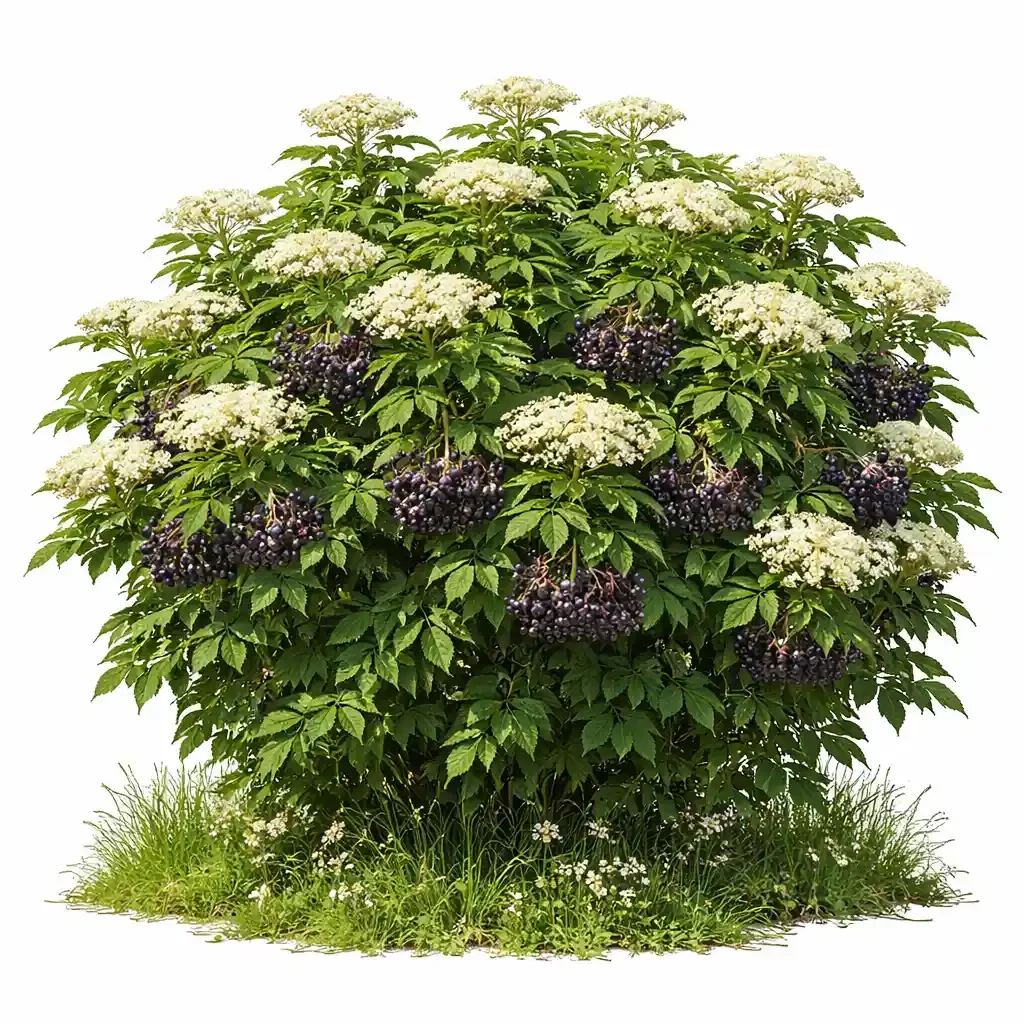
Category: Edible & Medicinal Shrubs
Botanical Name: Sambucus canadensis
Written by Arthur Simitian | simitiannest.com
If you are going to plant one edible shrub on your homestead, American Elderberry is the one that earns its space faster than almost anything else you can put in the ground. It produces food, medicine, pollinator habitat, and wildlife value from a single planting that asks very little of you in return. Two bushes can give you enough berries to make syrup, jelly, and wine for your household and still have some left over to dry for winter.
But elderberry is not a plant you put in the ground and forget about. It spreads. It spreads aggressively. And every part of it except the cooked berries and flowers will make you sick if you eat it raw. These are not dealbreakers, but they are things you need to know before you plant.
This is everything I have learned about growing American Elderberry, what you can realistically expect from it, and what to watch out for.
Where It Grows and What It Needs
American Elderberry is native to eastern and central North America. If you live anywhere from southeastern Canada down through most of the eastern United States, this plant already grows wild in your area, along stream banks, at the edges of fields, in ditches, and on the borders of woodlands. It is hardy in USDA Zones 3 through 9, which covers the vast majority of the continental U.S.
It is a deciduous shrub, not a tree. It grows 5 to 12 feet tall and 6 to 10 feet wide in a multi-stemmed clump. New canes shoot up from the roots every year, reach near full height in their first season, and develop lateral branches in their second season. Those second-year lateral branches are where the flowers and fruit develop. By the third year, cane productivity starts to decline. This is why annual pruning matters, but we will get to that.
Sun: Full sun is essential for fruit production. You need 6 to 8 hours of direct sunlight daily. The plant will survive in partial shade, but your berry harvest will be noticeably smaller. If you are growing it purely as an ornamental or for the flowers, partial shade is acceptable.
Soil: Moist, well-drained, and fertile. Elderberry naturally grows in wet areas and loves organic matter. It tolerates clay soil if the drainage is decent, but it does not do well in sandy or dry ground. Slightly acidic soil (pH 5.5 to 6.5) is ideal, though it will tolerate up to 7.0. If you have alkaline soil, look for cultivars like Wyldewood or Adams No. 2 that show better tolerance.
Water: This is a thirsty plant. It needs 1 to 2 inches of water per week from bloom time through harvest, which means spring through fall. If you are not getting adequate rainfall, you need to water by hand. The shallow root system cannot reach deep moisture, so drought stress shows up fast, especially in the first year.
Spacing: Plant bushes 6 to 10 feet apart within a row, and 10 to 12 feet between rows if you are planting multiple rows. This gives the mature spread room to fill in without overcrowding.
The Root System: What You Need to Know Before You Plant
This is the section most people skip and later regret.
American Elderberry has a shallow, mat-like root system that sits in the top 10 to 12 inches of soil. As the plant matures, it does develop a primary taproot that gives it some drought tolerance, but the dominant root behavior is lateral spreading through suckers.
Those suckers are how elderberry reproduces and colonizes new ground. In good conditions, the roots can spread 7 to 10 feet per year underground. I have seen reports of suckers popping up 10 to 15 feet from the original planting within two to three years. If you plant two bushes in a back corner and walk away, you will have an elderberry thicket within a few seasons.
This is not necessarily a problem. If you have space for a hedgerow, elderberry will fill it in for free. Every sucker is a new plant that can be dug up and transplanted, given to a neighbor, or sold. Some growers turn their sucker production into a small income stream by selling rooted starts at farmers markets.
But if you have a small property, a tidy garden layout, or elderberry planted near other shrubs and beds, you need a containment plan:
• Container planting: A pot at least 24 inches wide and 20 inches deep works. The plant will be slightly smaller but still productive.
• Root barriers: Buried plastic or concrete barriers around the planting area will block sucker spread.
• Regular sucker removal: Cut or mow suckers as they appear. Late winter pruning is the best time for a thorough cleanup.
• Mowing: If suckers pop up in a lawn area, regular mowing keeps them in check.
The good news: elderberry roots are not strong enough to damage foundations, pipes, or sewer lines. They are shallow and soft. The concern is horizontal spread, not structural damage.
Pollination: You Need Two Different Varieties
This is the other thing people miss. American Elderberry is only partially self-fruitful. If you plant a single bush, you might get a handful of berries. If you want a real harvest, you need at least two different cultivars planted within 60 feet of each other for cross-pollination.
The key word is "different." Two plants grown from cuttings of the same bush are genetically identical clones. They will not cross-pollinate each other. You need two named varieties, for example, Adams No. 2 and York, or Nova and Bob Gordon.
If you have wild elderberry growing nearby, the wild plants will be genetically different from your cultivated varieties and can serve as pollinators, provided they bloom at the same time.
Timeline: When Do You Actually Get Fruit?
Year 1: No berries. Remove all flower heads during the first summer to push energy into root establishment. You can harvest the flowers before removing them. Elderflowers make excellent tea, cordials, and fritters. But do not let the plant fruit in its first year.
Year 2: A small first crop. Not enough to do much with, but enough to taste and get excited about what is coming.
Year 3 and beyond: Full production. A mature, well-maintained elderberry bush produces 12 to 15 pounds of berries per year. That is a significant amount of fruit from a single shrub. Two bushes producing at full capacity give you 24 to 30 pounds of berries annually, more than enough for a household supply of syrup, jelly, and dried berries with surplus to share or sell.
Berries ripen from mid-August to mid-September depending on your location and cultivar. Individual plants ripen over a roughly 3-week window. Clusters ripen over 5 to 15 days, so you will be harvesting weekly during the peak.
Harvest method: Clip entire berry clusters from the shrub with scissors. Do not try to pick individual berries on the plant. Bring the clusters inside and remove the berries from the stems. This is the most tedious part of elderberry processing. A helpful shortcut: freeze the whole clusters first, then pop the berries off while frozen. They separate much more cleanly and quickly.
The Toxicity Issue: Cook Everything
Every part of the American Elderberry plant except the cooked ripe berries and the flowers contains cyanogenic glycosides. That includes the leaves, stems, roots, bark, and unripe green berries. Even ripe berries eaten raw in quantity can cause nausea, vomiting, and stomach cramps.
This is not a casual snacking fruit. You cannot walk up to the bush, pop berries in your mouth, and enjoy them like blueberries. Everything must be cooked or dried before consumption. Cooking and drying destroy the cyanogenic glycosides and make the berries safe and delicious.
If you have young children on the homestead, this is worth thinking about. The berries look appealing hanging in clusters, and kids may not understand the raw/cooked distinction. Plant accordingly, maybe not right next to the play area.
Also be aware that elderberry can look similar to some highly toxic plants: poison hemlock, water hemlock, devil's walking stick, and pokeweed all have berries or flower structures that a beginner might confuse. Always confirm your identification, and source your initial plants from a reputable nursery rather than transplanting wild specimens you are not 100% certain about.
What You Can Make: Food, Medicine, and Preserves
This is where elderberry really justifies its space on the homestead. The list of products you can make from a single planting is long.
From the Berries
Elderberry Syrup is the flagship product. Simmer berries with water, ginger, cinnamon, and cloves for 30 to 45 minutes, strain, mix with raw honey. Used daily (1 to 2 teaspoons) as immune support during cold and flu season, or every few hours when symptoms appear. A batch costs under $10 to make at home versus $15 or more for a 4-ounce bottle at a health food store. Stores 2 to 3 months in the refrigerator.
Elderberry Jelly and Jam are shelf-stable when properly canned. Elderberries are naturally low in pectin and sit around pH 5 (above the 4.6 safe canning threshold), so tested recipes use high sugar concentrations to make them safe for water bath canning. You need roughly 11 to 12 cups of stemmed berries (about 3 pounds) to get enough juice for one batch of jelly.
Elderberry Wine is a traditional homestead beverage with a deep, rich flavor. If you already make fruit wines, elderberry is an excellent addition to your rotation.
Dried Elderberries are the most practical long-term storage option. Dehydrate the cooked berries and store them in airtight containers. Use year-round for tea, rehydrated syrup, baking, and tinctures.
Other berry products: pie and cobbler filling, juice and concentrate, vinegar, gummies (syrup set with gelatin, kids love these), tinctures (berry extract in alcohol), and drinking shrubs (berry, sugar, and vinegar ferments for cocktails and sparkling water).
From the Flowers
Elderflower Tea from dried flowers is light, floral, with a honey-like scent. Elderflower Cordial is made by steeping fresh flowers in sugar water with lemon. Elderflower Fritters are whole flower clusters dipped in batter and fried. Elderflower Champagne is a naturally fermented sparkling beverage.
The flowers harvest before the berries (late June to July), so you get two distinct harvest seasons from the same plant.
Medicinal Uses
Elderberry has centuries of traditional use across cultures, and modern research increasingly backs it up. The berries are rich in antioxidants, vitamin C, vitamin A, B vitamins, potassium, phosphorus, and iron. Studies have shown that elderberry compounds can inhibit the enzymes viruses use to penetrate healthy cells in the respiratory tract. Clinical trials have found that elderberry supplementation can significantly reduce the duration and severity of upper respiratory symptoms.
On the homestead, elderberry syrup is the practical application. A daily teaspoon during cold season for prevention, increased dosage at the first sign of symptoms. It is not a substitute for medical care, and these statements have not been evaluated by the FDA, but it is one of the most widely used and well-regarded herbal preparations in the homesteading community for good reason.
Pros and Cons for the Homestead
Why Plant It
High fruit yield from minimal space, 12 to 15 pounds per plant, per year. Both berries and flowers are usable, giving you two harvests. Native plant already adapted to your region. Extremely cold hardy down to Zone 3. Fast growing, reaching productive size in 2 to 3 years. Very few serious pest or disease problems. Excellent pollinator plant attracting bees, butterflies, and beneficial insects. Wildlife value for birds and other animals. Some deer resistance. Self-propagating through suckers, which means free plants for expanding, sharing, or selling. Low input cost once established. Products like syrup, dried berries, and rooted cuttings have real market value at farmers markets. Elderflower and berry products make wonderful homestead gifts.
Why Think Twice
Aggressive spreading is the number one drawback. Without management, it will take over. Requires sucker control every season. All parts are toxic when raw, you must cook or dry berries before eating. Not a grab-and-go snacking fruit. Destemming berries is genuinely tedious without a steam juicer or destemming equipment. Birds will eat your crop if you do not net the plants. Shallow roots make it drought-sensitive and a poor competitor against weeds, so mulching is essential. You must buy and plant at least two different cultivars for cross-pollination, doubling your startup cost and space. No meaningful berry harvest until year 2 or 3. Processing happens all at once during a 3-week harvest window, which falls in late summer when you are already busy with everything else on the homestead.
Pruning and Long-Term Maintenance
Elderberry fruits best on second-year wood. By the third year, cane productivity drops. Annual dormant-season pruning (late winter to early spring) keeps the plant productive:
Remove all dead, broken, and diseased canes. Remove all canes older than three years. Thin remaining canes to 5 to 8 per bush for good light penetration and air circulation. Remove all suckers growing outside the desired footprint. Some commercial growers mow the entire plant to the ground every 2 to 3 years for complete rejuvenation.
Save healthy one-year-old canes (pencil-thickness or larger) during pruning. These are ready-made hardwood cuttings for propagation.
Quick Reference
Zones 3 to 9
Height 5 to 12 feet
Width 6 to 10 feet
Root depth is shallow, roughly 10 to 12 inches
Root spread is aggressive at 7 to 10 feet per year through suckers
Full sun, 6 to 8 hours minimum
Prefers moist, well drained soil with a pH of 5.5 to 6.5
Needs 1 to 2 inches of water per week during the growing season
Requires two or more different cultivars within 60 feet for pollination
First real harvest in year 3
Annual yield is 12 to 15 pounds per mature plant
Harvest window runs from mid August to mid September
Top products include syrup, jelly, wine, dried berries, and tea
American Elderberry is one of the highest-value plants you can add to a homestead. It gives back more than it asks for. Just give it moisture, sun, a pollination partner, and a plan for those suckers, and it will feed your family and your medicine cabinet for years.