
Bay Laurel
Written By Arthur Simitian
Bay laurel is one of the oldest cultivated plants in the Western world, with a continuous history of use that stretches from ancient Greece and Rome through the medieval monastery garden to the contemporary homestead kitchen. On the right site it grows into a large, handsome, densely foliated evergreen shrub or tree that provides a perpetual harvest of one of the most useful culinary herbs available, functions as a formal or informal screen and windbreak, offers meaningful wildlife support, and contributes a Mediterranean gravitas to the landscape that few other plants can match. For homesteads in appropriate climates, it belongs in the permanent planting plan without qualification.
This guide covers bay laurel in full: what it is, its culinary and medicinal value, how to grow it in the ground and in containers for colder climates, pruning and shaping for hedge and specimen use, pest and disease management, harvesting and drying, wildlife contributions, and the cold hardiness realities that shape where it can and cannot be grown without protection.
What Is Bay Laurel
Bay laurel, Laurus nobilis, is a broadleaf evergreen shrub or tree in the family Lauraceae, native to the Mediterranean basin, where it grows naturally in woodland margins, maquis scrubland, and the forest understory across a region spanning from the Canary Islands and Morocco through southern Europe to Turkey and the Caucasus. It is the sole European species of the genus Laurus, and it is the plant that gave the word laurel its cultural and linguistic significance in the Western tradition.
The plant is ancient in cultivation. The Greeks and Romans considered it sacred to Apollo and used its leaves and branches for the crowns awarded to poets, athletes, military commanders, and emperors. The word baccalaureate, bachelor of arts in academic tradition, derives from the laurel berries, bacca lauri, that symbolized achievement in classical culture. This cultural weight is carried by a plant that is simultaneously one of the most practical and undemanding culinary herbs available, which gives it a satisfying dual identity as both a symbol of civilization and a working component of the productive homestead.
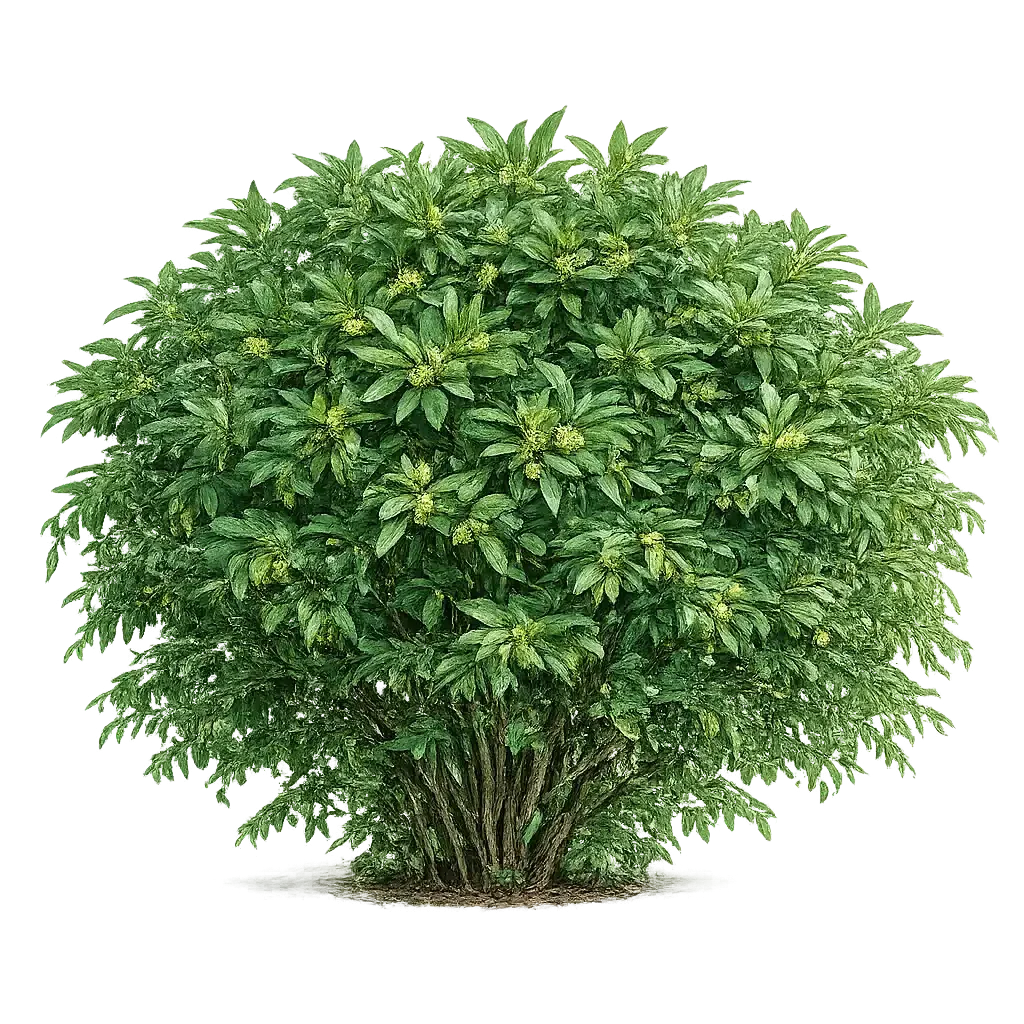
Left unpruned, bay laurel can grow into a substantial tree reaching thirty to sixty feet in its native Mediterranean climate, though in most cultivated settings it is maintained as a large shrub or small tree through regular pruning. The bark is smooth, dark gray to gray-brown. The leaves are the plant's defining feature: lance-shaped to elliptical, two to four inches long, leathery in texture, dark glossy green on the upper surface with a paler matte surface below, and intensely aromatic when crushed or bruised, releasing the distinctive warm, slightly medicinal fragrance of culinary bay.
Bay laurel is dioecious, meaning individual plants are either male or female. The small, pale yellow flowers appear in spring in clusters from the leaf axils and are attractive to bees and other small pollinators, though they are not conspicuous enough to be considered a significant ornamental feature. Female plants produce small, oval berries that ripen from green to black in autumn and are consumed by birds, contributing to seed dispersal in appropriate climates.
The Bay Leaf in the Kitchen
Bay laurel produces what is simply called the bay leaf in culinary use, one of the most widely used and broadly applicable herbs in European, Mediterranean, and Latin American cooking. The fresh leaf is more complex and more intensely flavored than the dried leaf sold commercially, and the homesteader with a productive bay plant in the garden has access to an ingredient of substantially better quality than anything available from a supermarket spice jar.
Fresh bay leaves have a bright, slightly floral, eucalyptus-like quality layered over the familiar warm bay note. Dried leaves, which are the commercial standard, are more muted and predominantly warm and slightly medicinal. Both are useful in different contexts, and a bay plant on the homestead provides both simultaneously: fresh leaves year-round from the living plant, and dried leaves from any harvest that exceeds immediate fresh use.
Braised and slow-cooked meats, where a bay leaf or two added at the beginning of cooking integrates into the braising liquid and develops complexity over long cooking times
Stocks and broths of every kind, where bay is part of the classic bouquet garni alongside thyme and parsley
Bean and legume dishes, where bay is a traditional addition claimed to improve digestibility alongside its flavor contribution
Tomato sauces, ragus, and long-cooked pasta sauces throughout the Mediterranean tradition
Rice pudding and other milk-based desserts, where fresh bay leaves infused in warm milk add a subtle, sophisticated aromatic note
Pickles and preserved vegetables, where bay contributes to the aromatic complexity of the brine
Smoked and cured meats, where bay is a traditional component of curing spice mixes
Soups and stews of every description across European cooking traditions
Infused oils and vinegars for culinary use
Dried and used as a pantry insect repellent in grain storage containers, where the volatile compounds deter weevils and other pantry pests
Bay leaves are always removed before serving. They do not soften significantly with cooking and remain leathery and potentially sharp-edged through any cooking process, making them a choking hazard if consumed. The flavor is extractive: the leaf releases its aromatics into the surrounding liquid or fat and is then removed, having done its work.
Medicinal and Household Uses
Bay laurel has a documented history of medicinal use across the Mediterranean world that extends back to ancient Greece and Rome and continues into contemporary herbal medicine. The leaves and berries contain a range of bioactive compounds including eucalyptol, linalool, and various terpenes that account for both the plant's distinctive fragrance and its medicinal properties.
Bay leaf tea, prepared by simmering several fresh or dried leaves in water, has been used traditionally for digestive complaints including bloating, gas, and slow digestion. Contemporary research has shown some support for the traditional claim that bay improves insulin function and may have modest benefits for blood sugar regulation, though the evidence is preliminary and bay should not be substituted for medical treatment of any condition.
Bay berry oil, expressed from the fruit of the bay laurel, is distinct from the commercial bay oil used in hair products, which is typically derived from the unrelated West Indian bay, Pimenta racemosa. True laurel berry oil has been used since ancient times as a topical preparation for joint pain, skin conditions, and hair care. It is the base of the traditional Aleppo soap of Syria and the nabulsi soap of Palestine, both of which have been produced using laurel berry oil for centuries.
The dried leaves placed in containers of stored grain, flour, and dried beans deter weevils and other pantry pests through the volatile compounds they release, which is a practical, chemical-free pest management technique with genuine effectiveness and no food safety concerns.
Climate and Growing Zones
Bay laurel is reliably hardy in USDA zones 8 through 11 in the ground without protection, tolerating light frosts down to approximately 20 degrees Fahrenheit with minimal damage. In zones 7 and 6, it can be grown in the ground on sheltered, south-facing sites with some winter protection, though cold damage to the foliage and occasional stem dieback are likely in harsh winters. Below zone 6, outdoor establishment without winter protection is not reliable, and container growing with cold-season indoor housing is the practical approach.
In zones 8 through 11, bay laurel is an outstanding permanent landscape shrub and one of the most useful and beautiful large evergreen plants available. In zones 9 through 11 it grows into a substantial tree if unpruned and reaches its full ornamental and productive potential. In the mild maritime climates of the Pacific Coast from northern California through the Pacific Northwest, it thrives and is commonly grown as a garden hedge and specimen.
For cold-climate homesteaders in zones 5 and 6, container bay laurel grown in large pots that are moved to a cool, frost-free space for the winter months is a thoroughly practical approach and one that has been standard in northern European kitchen gardens for centuries. A bay tree that has been container-grown for five to ten years, moved inside each winter and back outside each spring, develops into a substantial, productive plant that provides generous culinary harvests indefinitely.
Sunlight Requirements
Bay laurel grows in full sun to partial shade and is one of the more shade-tolerant large evergreen shrubs available for warm-climate homesteads. In full sun it develops the densest growth habit, most aromatic foliage, and strongest structural form. In partial shade of three to four hours of direct sun it grows somewhat more openly but remains healthy and productive as a culinary herb plant.
In hot, dry inland climates with intense summer sun, afternoon shade protection improves the appearance of the foliage by preventing the bleaching and browning of leaf tips that occurs on sun-stressed plants in these conditions. In coastal and mild maritime climates with softer light, full sun throughout the day is ideal and causes no stress.
For container-grown plants overwintered indoors, the most common management challenge is inadequate light during the indoor period. A cool, bright window or a greenhouse with good light is far preferable to a warm, dim interior for overwintering bay, and the plant's condition when it returns outdoors in spring reflects directly the quality of light it received through the winter months.
Soil Requirements
Bay laurel grows best in well-drained soils with moderate fertility and is notably tolerant of poor, rocky, and alkaline conditions that reflect its native Mediterranean habitat. It does not perform well in heavy, waterlogged soils: good drainage is the single most important soil requirement, and more bay laurels have been lost to root rot from poorly drained soil than from any other cause in cultivation.
It tolerates a soil pH range from mildly acidic to moderately alkaline, approximately 6.0 to 8.0, which accommodates the chalky, limestone-derived soils common across much of the Mediterranean basin. On very acidic soils below pH 5.5 it can show yellowing of the foliage from micronutrient deficiencies, and a modest lime application to raise the pH is the appropriate correction.
For container culture, a well-draining potting mix is essential. A mix of standard potting compost with twenty to thirty percent perlite or coarse horticultural grit provides the drainage and aeration that bay roots require, and avoiding saucers under pots that allow water to stand at the base of the container prevents the root rot that is the most common cause of failure in container bay culture.
Bay Laurel as a Hedge and Screen
Bay laurel is an outstanding hedge and screen plant in zones 8 and warmer, producing a dense, glossy, evergreen barrier that is formal enough for structured garden designs and versatile enough for informal screens and windbreaks. It responds very well to shearing, tolerates hard pruning without permanent damage, and develops the dense, compact branching structure of a good formal hedge when maintained consistently.
As a screen or informal hedge it can be managed at any height from four feet to fifteen feet or more, making it one of the most flexible evergreen hedging plants available in warm climates. As a formal clipped hedge it is maintained at a precise height and width with flat or slightly tapered sides and a level top, producing an effect similar to common boxwood or English laurel but with the added value of a continuous culinary harvest from the clippings.
The hedging clippings from a sheared bay hedge are fully usable in the kitchen, which transforms the maintenance pruning from a disposal problem into a harvest event. Shearing the hedge once or twice per year produces quantities of fresh bay leaves that can be used immediately or dried for storage, and the aromatic quality of freshly sheared bay foliage makes the task notably more pleasant than most pruning work.
3 to 4 feet apart for a dense formal hedge managed at four to six feet
4 to 6 feet apart for a taller screen or informal hedge managed at eight to twelve feet
6 to 8 feet apart for individual specimen plants developed as multi-stemmed shrubs or standard trees
At least 4 feet from structures and fences to allow for mature spread and pruning access on both sides of the hedge
When to Plant Bay Laurel
In zones 8 and warmer, bay laurel is best planted in spring after the last frost date or in early fall when temperatures have dropped from summer highs and root establishment is supported by cooler, moister conditions. Spring planting gives a full growing season before the first winter in the ground. Fall planting in zones 9 and 10, where winters are mild, allows strong root establishment before the following summer's heat.
Container-grown bay is available year-round from nurseries and can be planted at any time in zones 9 and 10. In zone 8 and the cooler edges of zone 7, spring planting is strongly preferred to give the plant maximum time to establish before its first winter exposure.
For container culture in cold climates, begin with a well-grown nursery plant in a container of at least three to five gallons and pot it up into a ten to fifteen gallon container for the first growing season. Repot every two to three years as the root system fills the container, and allow the plant to stabilize in its new container before the cold-season move indoors.
Planting Process
Choose a site with full sun to partial shade and excellent drainage. On sites with heavy clay soil, raising the planting area with incorporated coarse grit and organic matter improves drainage enough to support good establishment. Avoid any location where water stands after rain.
Dig a planting hole two to three times the width of the container root ball and no deeper than the root ball itself. Bay laurel is susceptible to crown rot if planted too deeply, and the crown of the plant should sit at or very slightly above the surrounding soil level.
Remove the plant from its container and gently loosen any circling roots at the base of the root ball. Bay laurel develops a dense root ball in container culture and benefits from root loosening before planting to encourage outward growth into the surrounding soil.
Backfill with native soil, incorporating modest compost on very poor or sandy soils. Firm the soil gently around the root ball and create a shallow watering basin around the planting area to direct water to the root zone during establishment.
Water thoroughly immediately after planting and maintain consistent moisture through the first growing season. Bay establishes slowly in its first year and should not be subjected to drought stress before its root system is fully developed.
Apply a two to three inch layer of mulch around the base, keeping it pulled back from the main stem. Mulch conserves moisture, moderates soil temperature, and suppresses competing weeds through the critical establishment period.
Watering Needs
Bay laurel is drought tolerant once established and one of the most self-sufficient large evergreen shrubs available for dry Mediterranean and similar climates. In its native habitat it survives the long, hot, dry Mediterranean summer on rainfall alone, and established plants in zones 9 and 10 with comparable summer drought patterns typically require no supplemental irrigation after the first two to three years.
During establishment, consistent but moderate watering supports root development without waterlogging the soil. Deep watering once or twice per week during dry conditions in the first growing season is appropriate. Overwatering during establishment, particularly in heavy soils, is a more common cause of failure than underwatering, and the balance between adequate moisture and good drainage is the critical management judgment to develop.
Container-grown bay requires more attentive watering than plants in the ground, as containers dry out more quickly and root-bound plants are more sensitive to moisture fluctuation. During the growing season, check the moisture level of the container every few days and water when the top two to three inches of the potting mix have dried. During the cool indoor overwintering period, reduce watering significantly: the plant's reduced metabolic rate means it needs far less water than in active growth, and overwatering in winter is the primary cause of root rot in container bay.
Fertilization Strategy
Bay laurel in the ground on average soils requires minimal fertilization and performs well with an annual application of compost worked lightly into the soil around the drip line in early spring. On very poor or sandy soils, a balanced organic fertilizer in early spring supports better growth and more aromatic foliage. Avoid high-nitrogen fertilizers, which produce soft, lush growth that is less aromatic, less disease-resistant, and less cold-hardy than the firm, moderate growth of plants on lean to average fertility.
Container-grown bay benefits from regular feeding during the growing season, as the limited soil volume of a container is quickly depleted of nutrients by an actively growing plant. A balanced liquid fertilizer applied every two to four weeks from spring through late summer maintains good growth and foliage quality. Stop feeding entirely from late summer onward to allow the plant to harden before the cold-season indoor period.
Pruning Bay Laurel
Bay laurel tolerates pruning extremely well and can be shaped into virtually any form from a formal clipped ball or pyramid to a multi-stemmed naturalistic shrub to a standard tree with a clear trunk and rounded head. The flexibility it offers to the pruner is one of the qualities that has made it a favorite of formal European garden design for centuries.
For hedge and screen applications, shear once or twice per year in late spring after the first flush of new growth has hardened, and again in late summer if a second shearing is needed to maintain a precise outline. Avoid pruning in late summer in zone 7 and 8 climates where an early frost is possible: late pruning stimulates new growth that is vulnerable to frost damage.
For specimen shrubs and standard trees, selective hand pruning with secateurs gives a more natural, refined result than power shearing. Remove inward-facing, crossing, and dead branches in late spring, shape the overall outline, and clear the lower stem of any branches that are developing below the intended crown height on standard forms.
Bay laurel regenerates vigorously from old wood and tolerates hard renovation pruning. Overgrown plants that have become too large or have developed leggy, open growth can be cut back severely in spring and will typically produce vigorous new growth within the same season. This resilience to hard cutting is one of the practical advantages of bay over more sensitive evergreen hedging plants that do not recover well from major pruning.
Harvesting Bay Leaves
Bay leaves can be harvested at any time of year from an established plant, and the harvest is genuinely continuous for plants growing in the ground in appropriate climates. The most aromatic leaves are fully mature leaves that have been on the plant for at least one full growing season, with the characteristic leathery texture and deep color of mature bay. Young, newly emerged leaves are paler green, softer, and less intensely flavored than mature ones.
For fresh use, harvest individual leaves by pinching them cleanly from the stem and use within a day or two for maximum fragrance. For drying, harvest stems of four to six leaves, tie them loosely in small bundles, and hang in a warm, well-ventilated location away from direct sun for one to two weeks until fully dry. Properly dried bay leaves stored in an airtight container retain good flavor for twelve to eighteen months, significantly longer than commercially dried bay, which is often old by the time it reaches the consumer.
The pruning and shearing work on a bay hedge provides the most abundant harvests, and the fresh clippings from a hedge shearing can be processed for drying immediately rather than being composted. A single shearing of a ten-foot bay hedge section can yield enough fresh leaves to supply a household's culinary needs for several months.
Overwintering in Cold Climates
For homesteaders in zones 5 through 7 growing bay in containers, the annual overwintering cycle is a central management task that determines the long-term health and productivity of the plant. Done well, it is straightforward. Done poorly, it produces the stressed, spider-mite-infested, soil-waterlogged plants that give container bay a reputation for difficulty it does not deserve when managed correctly.
Move the container indoors before the first hard frost, targeting a move when nighttime temperatures are consistently dropping below 35 degrees Fahrenheit. The ideal overwintering location is cool rather than warm: a temperature range of 40 to 50 degrees Fahrenheit is ideal, allowing the plant to rest in a semi-dormant state without the active growth that warm interiors encourage. An unheated garage with a bright window, a cool greenhouse, or a frost-free shed with supplemental lighting are all appropriate overwintering environments.
Warm, dry indoor environments, including most heated living spaces, create conditions favorable to spider mite infestations, which are the most common and damaging pest problem on overwintered bay. Keeping the plant cool, ensuring good air circulation, and misting the foliage occasionally with water reduces spider mite pressure significantly. If mites appear despite these precautions, a forceful spray of water on both leaf surfaces dislodges them effectively without chemical intervention.
Reduce watering significantly through the indoor period. The plant's reduced metabolic rate in cool conditions means it requires a fraction of the water it needs in active summer growth, and overwatering in winter causes the root rot that is the most common reason container bay plants decline and die. Water only when the top few inches of the potting mix have dried out completely.
Move the plant back outdoors in spring after the last frost risk has passed, reintroducing it to full sun gradually over one to two weeks if it was overwintered in low light. Plants moved from dim indoor conditions to full sun without transition can suffer leaf scorch during the adjustment period.
Wildlife Value
Bay laurel provides meaningful wildlife support in warm-climate gardens, particularly as an evergreen structure plant that offers year-round shelter and nesting habitat in climates where deciduous shrubs lose this function entirely for several months each year. The dense, leathery foliage creates a stable microclimate within the canopy that is used by nesting birds, overwintering insects, and small lizards in Mediterranean climates.
The spring flowers, while not conspicuous, are attractive to small bees, hoverflies, and other beneficial insects that forage for pollen and nectar at that time of year. The berries on female plants are consumed by birds including thrushes, waxwings, and other fruit-eating species in autumn and winter, providing a food source during the period when other fruit and berry supplies have been depleted.
As a large evergreen hedge or specimen in warm-climate gardens, bay laurel provides one of the most stable and long-lasting structural habitat features available. Its longevity, density, and year-round foliage make it one of the most valuable single shrubs for wildlife support in Mediterranean and subtropical garden contexts.
Pests and Diseases
Bay laurel in the ground in appropriate climates is generally healthy and requires little pest or disease management. The volatile aromatic compounds in the foliage that make it useful as a pantry pest repellent also deter many common garden insect pests, and well-sited plants in good drainage rarely experience serious problems.
Bay sucker, Trioza alacris, is the most significant pest of bay laurel in the ground in European climates, causing the characteristic curling and yellowing of leaf margins as the nymphs feed on the undersides of young leaves. Affected leaves are unsightly but the plant's health is not seriously compromised, and removing and disposing of affected leaves reduces the population. No chemical treatment is typically necessary or desirable.
Scale insects can colonize the stems and undersides of leaves, particularly on plants growing in sheltered, still-air conditions. A dormant oil spray applied in late winter smothers overwintering scale effectively without chemical residue concerns on a plant being harvested for food.
Spider mite, as discussed in the overwintering section, is the primary pest concern on container-grown plants moved indoors for the winter. Maintaining cool temperatures, good air circulation, and adequate leaf moisture through the indoor period prevents the warm, dry conditions that spider mites require to establish populations.
Root rot from poor drainage is the most significant disease concern and, as noted throughout this guide, is prevented entirely by ensuring good drainage at the planting site or in the container. Bay planted in well-drained soil is rarely troubled by root rot. Bay planted in heavy, wet soil rarely thrives for long.
Pros and Cons of Planting Bay Laurel
Advantages
Continuous culinary harvest of fresh bay leaves from an established plant
Evergreen, providing year-round structure, screening, and wildlife habitat
Tolerates shaping into formal hedges, topiary, and standard tree forms
Hedging clippings are fully usable as a culinary herb harvest
Drought tolerant once established in appropriate climates
Tolerates alkaline and poor soils that challenge many other evergreens
Dried leaves deter pantry weevils and insects in grain storage
Long-lived and low maintenance in appropriate zones
Significant historical and cultural depth as a garden and culinary plant
Can be container-grown and overwintered indoors in cold climates
Limitations
Not reliably hardy below zone 7 in the ground without protection
Requires cool, bright overwintering conditions in cold climates, not a warm interior
Spider mite pressure on container plants overwintered indoors requires management
Establishes slowly, taking two to three years to reach productive size
Poor drainage causes root rot regardless of climate suitability
Dioecious: berry production requires both male and female plants in proximity
Large containers become heavy and difficult to move for cold-climate growers
Bay sucker and scale insects require occasional management in some climates
Long-Term Planning Considerations
Bay laurel planted in an appropriate climate and well-drained soil is one of the most permanent and low-maintenance fixtures a homestead can establish. In its native Mediterranean climate and comparable zones 9 and 10 conditions, it is genuinely a plant for generations: bay trees in southern Europe are known to live for several hundred years, and a well-sited bay planted today will outlast any structure on the property and several generations of the family that planted it.
In zone 8, where occasional hard winters cause dieback but rarely kill established plants, bay is still a long-term fixture that recovers reliably and continues providing its culinary and landscape contributions for decades. The planning consideration here is siting for maximum winter protection: a south or west-facing wall, shelter from north and east winds, and good drainage together create the microclimate where zone 8 bay performs most reliably.
For cold-climate container growers, the long-term planning consideration is the container itself. A bay plant that is repotted every two to three years and moved indoors each winter will be in a very large, heavy container within ten years, and planning for how that movement will be managed, whether through wheeled dollies, permanent positioning in a greenhouse, or other arrangements, is worth addressing before the plant reaches that size rather than after.
Final Thoughts
Bay laurel connects the contemporary homestead to one of the oldest continuous traditions of deliberate plant cultivation in the Western world. Every kitchen garden in ancient Rome had one. Every medieval monastery in northern Europe grew one in a pot and brought it inside each winter. Every serious Mediterranean kitchen garden still considers it indispensable. That continuity across three thousand years of cooking and gardening is not sentiment. It is an endorsement backed by the most rigorous long-term trial available: sustained practical use across generations of experienced growers who kept planting it because it earned its place.
For the homestead in the right climate, bay laurel is simply part of the permanent planting. For the homestead in a colder zone, the container and the annual indoor cycle are a small investment for a return that includes the finest fresh bay leaf available and an evergreen presence in the garden that no dried herb from a jar can replace.