
English Laurel
Written By Arthur Simitian
English laurel is the fastest-growing evergreen hedging plant most growers in temperate climates have access to, and when it is matched to the right conditions it delivers results that no other hedge plant can achieve on the same timeline. A privacy screen that would take boxwood fifteen years to form can be achieved with English laurel in three to five. For homesteads and properties that need dense, tall, year-round screening quickly and without elaborate maintenance, it is one of the most practical choices available.
This guide covers English laurel in full: what it is, how it functions as a living fence and privacy screen, its genuine limitations, planting, care, pruning, disease and toxicity considerations, invasiveness in applicable regions, variety selection, and an honest assessment of where it belongs and where it does not.
What Is English Laurel
English laurel, Prunus laurocerasus, is a large, fast-growing evergreen shrub native to southwestern Asia and southeastern Europe, from the Balkans through Turkey and the Caucasus region. Despite its common name it is not native to England, though it has been cultivated there and across temperate Europe as a garden and hedging plant for several centuries following its introduction in the late 1500s.
It belongs to the Prunus genus alongside cherries, plums, and peaches, and produces similar small white flowers in upright clusters in spring, followed by small black fruit that resembles a miniature cherry. Both the flowers and the fruit are attractive to bees and birds respectively, giving the plant secondary ecological value beyond its hedging function.
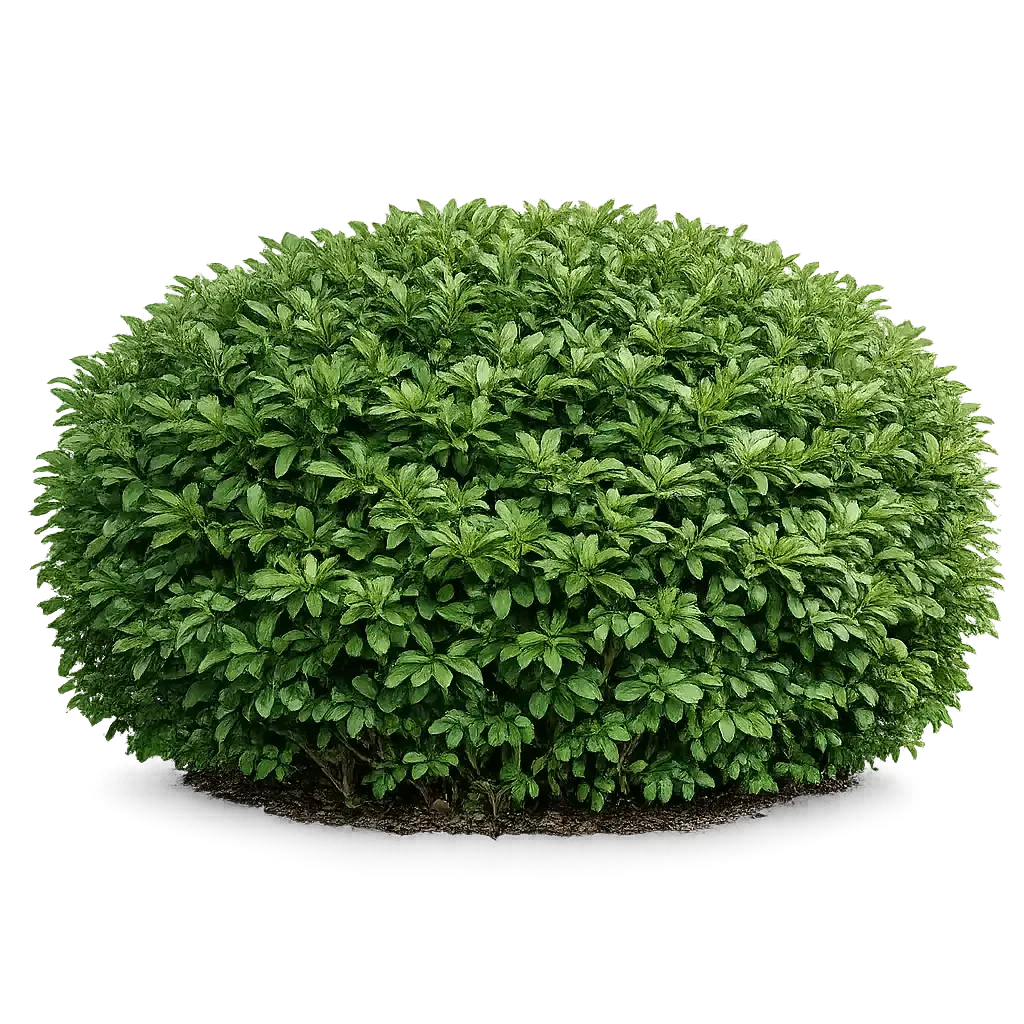
The foliage is the plant's most distinctive feature: large, glossy, leathery leaves of a deep, lustrous dark green that make it one of the most visually substantial evergreen hedging plants available. Leaves typically measure three to seven inches in length depending on the variety, and the overall effect of a mature hedge is one of dense, solid, architectural presence that few other plants achieve.
Left unpruned, English laurel grows into a large, spreading shrub or small tree reaching fifteen to thirty feet in height and comparable spread over time. As a maintained hedge it can be held at virtually any height from four to fifteen feet with regular pruning, and its vigorous regrowth means it recovers quickly from even hard cutting.
Why Use English Laurel for Living Fences and Privacy
The single most compelling reason to plant English laurel is speed. Among evergreen hedging plants suited to temperate climates, it grows faster than almost any alternative, adding one to two feet of height per year under good conditions. For properties that need functional screening sooner rather than later, this growth rate is genuinely transformative.
The large, dense foliage also provides a degree of sound attenuation and wind reduction that smaller-leafed hedging plants do not match. A well-established English laurel hedge along a road or property boundary meaningfully reduces noise and creates a sheltered microclimate on the protected side. This wind and noise reduction is a practical benefit for homesteads situated near roads or adjacent to exposed, windy sites.
English laurel is also notably tolerant of shade, growing and hedging effectively in sites with as little as two to three hours of direct sun. This shade tolerance makes it one of the few fast-growing evergreen options for north-facing walls, shaded boundaries under tree canopies, and other low-light situations where most screening plants struggle.
As a security hedge, English laurel lacks thorns and therefore does not provide the physical deterrence of barberry or hawthorn. Its value in the security context is primarily as a visual screen that eliminates sightlines into the property and as a dense physical mass that is cumbersome to push through even without thorns, particularly at greater widths. Combined with thorned interior plantings or fencing, it provides an effective outer screen layer in a layered security approach.
Climate and Growing Zones
English laurel is reliably hardy in USDA zones 6 through 9 and performs best in mild, moist temperate climates. It is particularly well suited to the Pacific Northwest coast of North America and the Atlantic climate zones of western Europe, where its native climate conditions are closely replicated.
In zone 5, English laurel is marginally hardy and significant foliage damage or dieback can occur in hard winters, particularly on exposed sites. Sheltered positions against south-facing walls or in protected microclimates extend its reliable range somewhat into zone 5, but it cannot be depended upon as a permanent hedge plant in that zone without winter protection.
At the warmer end of its range, English laurel tolerates the heat of zones 8 and 9 reasonably well as long as adequate moisture is available. In hot, dry climates it struggles without supplemental irrigation and becomes more susceptible to disease and pest pressure.
Pacific Northwest note: English laurel has naturalized extensively in the Pacific Northwest, where conditions are ideal for its growth. In Washington, Oregon, and British Columbia it is considered invasive in many natural areas, spread by birds consuming the fruit. Growers in this region should research current local guidance and consider whether native alternatives better suit the site and context.
Sunlight Requirements
English laurel is one of the most shade-tolerant large evergreen hedging plants available, which is a significant practical advantage over alternatives like photinia and cherry laurel cultivars that require more sun. It grows and hedges effectively in full sun through to quite deep shade, adapting its growth habit to the available light.
In full sun it produces the densest, most compact growth and the deepest foliage color. In partial to full shade it grows somewhat more openly, with larger individual leaves and slightly more spacing between stems, but remains effective as a screen. In very deep shade under dense tree canopies, growth slows and the plant becomes thinner, though it still outperforms most competitors in these conditions.
For hedging applications along shaded boundaries where fast-growing alternatives have failed, English laurel is frequently the most practical solution available.
Soil Requirements
English laurel is adaptable to a wide range of soil types including sandy, loamy, and moderately clay soils, and it tolerates both slightly acidic and slightly alkaline conditions across a pH range of roughly 5.5 to 7.5. It is more forgiving of soil variation than boxwood and less demanding than many other Prunus family members.
Good drainage is important. English laurel does not tolerate persistently waterlogged soil and will develop root and crown problems in poorly drained conditions. In heavy clay soils, incorporating organic matter before planting and planting on a slight mound improves drainage and establishment.
English laurel is moderately drought tolerant once established, but it performs noticeably better with consistent moisture availability, particularly during hot summer periods. In dry climates, supplemental irrigation is important for maintaining the vigorous growth rate and lush foliage that make it valuable as a screen plant.
Designing an Effective English Laurel Screen
Because English laurel grows vigorously and reaches large dimensions at maturity, planning for its ultimate size at the outset is more important than with slower-growing hedging plants. A screen that is perfectly scaled at five years may require significant ongoing management to hold at the intended size by year ten if the initial design did not account for mature dimensions.
For most privacy and screening applications, a single row of plants at appropriate spacing is sufficient, as the large foliage and vigorous horizontal branching of English laurel creates canopy closure and gap-free coverage faster than double-row plantings of smaller-leafed alternatives.
3 to 4 feet apart for a dense, gap-free screen at six to ten feet tall
4 to 5 feet apart for a taller screen at ten to fifteen feet where faster coverage is less critical
5 to 6 feet apart for a more naturalistic, less formal hedgerow application
At least 4 to 6 feet from structures, fences, and property boundaries to allow for mature spread without damage or encroachment
The distance from structures deserves particular attention. English laurel planted too close to a fence, wall, or building will eventually push against it with significant force as the stems thicken and the canopy expands. Planning adequate clearance from the beginning avoids structural problems and the difficult management that results from plants that have grown into and around adjacent structures.
When to Plant English Laurel
English laurel can be planted in spring after the last frost or in fall in zones 6 and warmer. Fall planting is generally preferred in mild climates, as the cool, moist conditions of autumn support excellent root establishment before the demands of the following summer growing season.
In zone 6, spring planting is the safer approach, allowing the roots to establish through a full growing season before the plant faces its first winter in the ground. Container-grown plants, which are the standard form available from nurseries, can be planted at any point during the growing season with attentive watering, though spring and fall establishment is always preferable.
English laurel is widely available in a range of container sizes from small one-gallon transplants to large five-gallon and fifteen-gallon specimens. Purchasing larger plants accelerates the timeline to effective coverage but increases the cost per plant substantially. For long hedge runs, smaller plants at close spacing often provide a more economical path to coverage than widely spaced large specimens.
Planting Process
Mark the planting line carefully before beginning, accounting for the setback from structures and boundaries needed for mature spread. String lines ensure consistent alignment for formal hedge applications.
Dig planting holes two to three times the width of each root ball and no deeper than the root ball itself. Setting the crown at or slightly above soil level is important for drainage and to prevent crown rot.
If the root ball is pot-bound with circling roots, score the sides of the root ball vertically in two or three places before planting to encourage outward root spread.
Backfill with native soil amended with compost. Avoid over-enriching the planting hole, which can discourage roots from spreading into surrounding native soil.
Water very thoroughly immediately after planting and keep the soil consistently moist through the first full growing season. English laurel establishes rapidly when moisture is adequate and can stall significantly when it is not.
Apply three to four inches of organic mulch along the planting run, keeping it pulled back several inches from each stem base.
Watering Needs
English laurel's large leaf surface transpires considerable moisture, and consistent water availability is directly linked to the vigorous growth rate that makes it valuable as a fast screen. During establishment, deep watering two to three times per week in the absence of rainfall is appropriate, particularly in warm summer conditions.
Once established, English laurel in mild, regularly moist climates such as the Pacific Northwest requires little supplemental irrigation. In drier climates or during extended summer dry periods, supplemental watering maintains the growth rate and prevents the foliage stress that increases susceptibility to disease. Drip irrigation along established hedge runs is an efficient and effective approach in dry summer climates.
Fertilization Strategy
English laurel responds well to modest annual fertilization, and a consistent feeding program supports the vigorous growth rate that makes it valuable as a fast screen. A balanced slow-release fertilizer applied in early spring before new growth begins is the standard approach and produces reliable results.
In soils of average fertility, a single spring application is usually sufficient. On poor, sandy, or heavily leached soils, a second modest application in early summer can maintain growth momentum through the season. Avoid late-season fertilization, which stimulates soft growth that may be damaged by early frost in zones 6 and 7.
Pruning English Laurel
Pruning English laurel is straightforward but requires the right tools and a clear understanding of timing. The large leaf size means that shearing with power hedge trimmers cuts through individual leaves rather than between them, producing a ragged finish of half-cut brown leaf edges that is visible and somewhat unsightly for several weeks until new growth covers the cuts. For formal applications where appearance matters, hand pruning with loppers or hand shears that cut between leaves rather than through them produces a significantly cleaner result.
For informal screens and naturalistic hedgerows where precise appearance is secondary to function, power shearing is perfectly acceptable and dramatically reduces the labor involved in managing long hedge runs.
Prune English laurel once annually in late spring after the main flush of new growth has completed, typically in late May through June. A second light pruning in late summer, around August, addresses the second flush of growth that vigorous plants often produce and keeps the hedge tight through winter. Avoid pruning after early September in zone 6, as new growth may not harden before frost.
English laurel tolerates hard renovation pruning exceptionally well and recovers vigorously from even very severe cutting. Plants that have grown far beyond their intended size can be cut back hard to eighteen inches or even lower and will typically regrow strongly within one to two seasons. This tolerance for hard cutting is one of the practical advantages of English laurel over less resilient alternatives.
Toxicity Considerations
English laurel is toxic and this deserves clear, direct mention for any grower with livestock, children, or pets. The leaves, bark, seeds, and wilted plant material all contain prunasin, a cyanogenic glycoside that releases hydrogen cyanide when metabolized. Ingestion of significant quantities of the foliage or seeds can cause serious or fatal poisoning in livestock, dogs, and humans.
Fresh, intact leaves are less immediately dangerous than wilted or freshly cut material, where the enzyme activity that releases cyanide is most active. Freshly cut hedge clippings are therefore a more acute hazard to livestock than the intact hedge itself, and should never be left where livestock can access them.
For homesteads with goats, horses, cattle, or other browsing animals that have access to hedge boundaries, English laurel requires careful placement and management to ensure animals cannot reach the foliage or fallen clippings. This is a genuine limitation for certain homestead configurations.
Clipping disposal: Freshly cut English laurel clippings should be composted in an enclosed compost system away from livestock access, or disposed of in green waste. Do not leave cut material in piles where animals may browse it. The toxicity diminishes as material fully dries or fully decomposes.
Invasiveness Considerations
English laurel has naturalized significantly in the Pacific Northwest of North America, where birds consume the small black fruit and deposit seeds in natural areas, forest understories, and disturbed ground. In Washington, Oregon, and British Columbia it competes aggressively with native vegetation and is listed as invasive or a plant of concern by several regional authorities.
Outside the Pacific Northwest, English laurel has shown much lower invasive tendency in most of its North American range, and it is not considered a significant invasive concern in most of the eastern US and Canada. However, growers in the Pacific Northwest should seriously consider whether English laurel is the appropriate choice for their context, and should research current local guidance before planting.
Sterile or low-fruiting varieties reduce seed dispersal risk and are worth seeking out for new plantings in regions where invasiveness is a concern. Schipkaensis and some other compact cultivars fruit less prolifically than the straight species and present lower dispersal risk.
Pests and Diseases
English laurel is generally robust and resistant to serious pest and disease problems in well-sited plantings with adequate moisture. There are, however, several issues worth understanding.
Shot hole disease, caused by the fungal pathogen Wilsonomyces carpophilus, is the most common problem. It produces circular brown spots on the leaves that eventually fall out, leaving characteristic holes in the foliage that give the disease its name. Shot hole is most prevalent in wet conditions with poor air circulation and is managed primarily through adequate plant spacing, good drainage, and avoiding overhead irrigation. Copper-based fungicide applications in late summer and fall can reduce severity in heavily affected plantings.
Phytophthora root rot can affect English laurel in poorly drained or excessively irrigated sites and is typically fatal once established. Good drainage and appropriate watering are the primary preventive measures.
Vine weevil can occasionally damage the roots of container-grown and recently transplanted plants. In established in-ground plantings it is rarely a significant concern. Scale insects and aphids may appear on new growth but are rarely serious on healthy, vigorous plants.
Variety Selection
The straight species, Prunus laurocerasus, is the most vigorous and largest-growing form and is appropriate where tall, fast screening is the primary goal and adequate space for management is available. For most managed hedge applications, selected cultivars with more controlled growth habits offer better long-term manageability.
Schipkaensis, also sold as Skip laurel, is the most widely planted cultivar in North America and a reliable performer in zones 5 through 9. It is more cold-hardy than the straight species, more compact in habit, and produces less fruit, reducing invasive spread risk. It is the standard recommendation for most hedge and screening applications.
Otto Luyken is a compact, low-growing form reaching three to four feet in height with a wide, spreading habit, suited to low borders, bank stabilization, and ground cover applications rather than tall screening hedges. It is reliably hardy to zone 6 and produces attractive flower clusters in spring.
Zabeliana is another low-growing, wide-spreading cultivar suited to ground cover and slope stabilization applications. Caucasica is a narrow, upright form suited to tight spaces where a columnar evergreen screen is needed without significant lateral spread.
For cold-climate growers at the edge of the plant's range, Schipkaensis is the first choice for its combination of improved cold hardiness and manageable growth habit.
Pros and Cons of Planting English Laurel
Advantages
Fastest-growing evergreen hedging plant for temperate climates
Dense, large-leafed foliage provides immediate visual impact
Excellent shade tolerance for difficult low-light sites
Year-round screening and wind reduction
Tolerates hard renovation pruning and recovers vigorously
Attractive spring flowers support bees and pollinators
Fruit provides winter food for birds
Adaptable to a wide range of soil types
Effective sound attenuation and wind reduction
Skip laurel cultivar extends hardy range to zone 5
Limitations
All parts are toxic to livestock, pets, and humans
Invasive in Pacific Northwest and some other regions
Requires significant ongoing management to contain mature size
No thorned deterrence against animals or intruders
Shearing cuts large leaves, causing temporary ragged appearance
Shot hole disease common in humid or wet conditions
Not reliably hardy below zone 6 in most forms
Clippings are acutely toxic to livestock when fresh
Long-Term Planning Considerations
English laurel rewards growers who plan for its mature dimensions from the start and commit to the regular management required to hold it at the intended size. The same vigorous growth rate that makes it so effective as a fast screen also means that a neglected English laurel hedge can reach twenty feet and spread six feet wide within a decade, overwhelming adjacent structures and neighboring plantings.
Annual pruning is non-negotiable for a managed hedge. Growers who cannot commit to pruning at least once per year, and ideally twice for a tight formal appearance, should consider whether a slower-growing alternative with lower maintenance demands is a better long-term fit.
For homesteads where fast screening is the priority and the long-term management commitment is realistic, English laurel is one of the most effective and rewarding hedging investments available. The combination of rapid establishment, year-round coverage, large attractive foliage, and tolerance for hard cutting produces a functional and handsome screen faster than any comparable alternative.
Final Thoughts
English laurel is a plant that delivers on its primary promise more reliably than almost anything else in its category. When you need a tall, dense, evergreen screen quickly, in sun or shade, on a wide range of soils, it is extraordinarily effective. The caveats are real and worth taking seriously: the toxicity to livestock requires thoughtful placement, the invasiveness concern in the Pacific Northwest requires research before planting, and the vigorous growth demands consistent management.
For growers who understand what they are planting and site and manage it accordingly, English laurel is one of the most practical and impactful hedging plants available. Few other choices provide so much screening so quickly, with such reliable resilience to pruning and adverse conditions.