
Common Boxwood
Written By Arthur Simitian
Common boxwood is one of the most enduring hedging plants in the history of cultivated landscapes. For centuries it has defined garden boundaries, formed topiary and parterres, and provided the dense, year-round evergreen structure that few other plants can match. On the homestead it earns its place as a living fence that offers genuine visual screening, wind reduction, and a degree of physical deterrence, all within a plant that responds to shearing with exceptional precision and holds its form through the seasons. It is not without its challenges, and understanding them honestly is essential to making it work over the long term.
This guide covers common boxwood in full: what it is, how it functions as a living fence and boundary hedge, planting, care, pruning, the diseases that threaten it and how to manage them, variety selection, and an honest accounting of where it thrives and where it struggles.
What Is Common Boxwood
Common boxwood, Buxus sempervirens, is a slow-growing evergreen shrub native to western and southern Europe, northern Africa, and western Asia, where it grows naturally in woodland margins and rocky hillsides in mild, temperate climates. It has been cultivated as a garden plant for at least two thousand years, making it one of the longest-cultivated ornamental shrubs in the Western tradition.
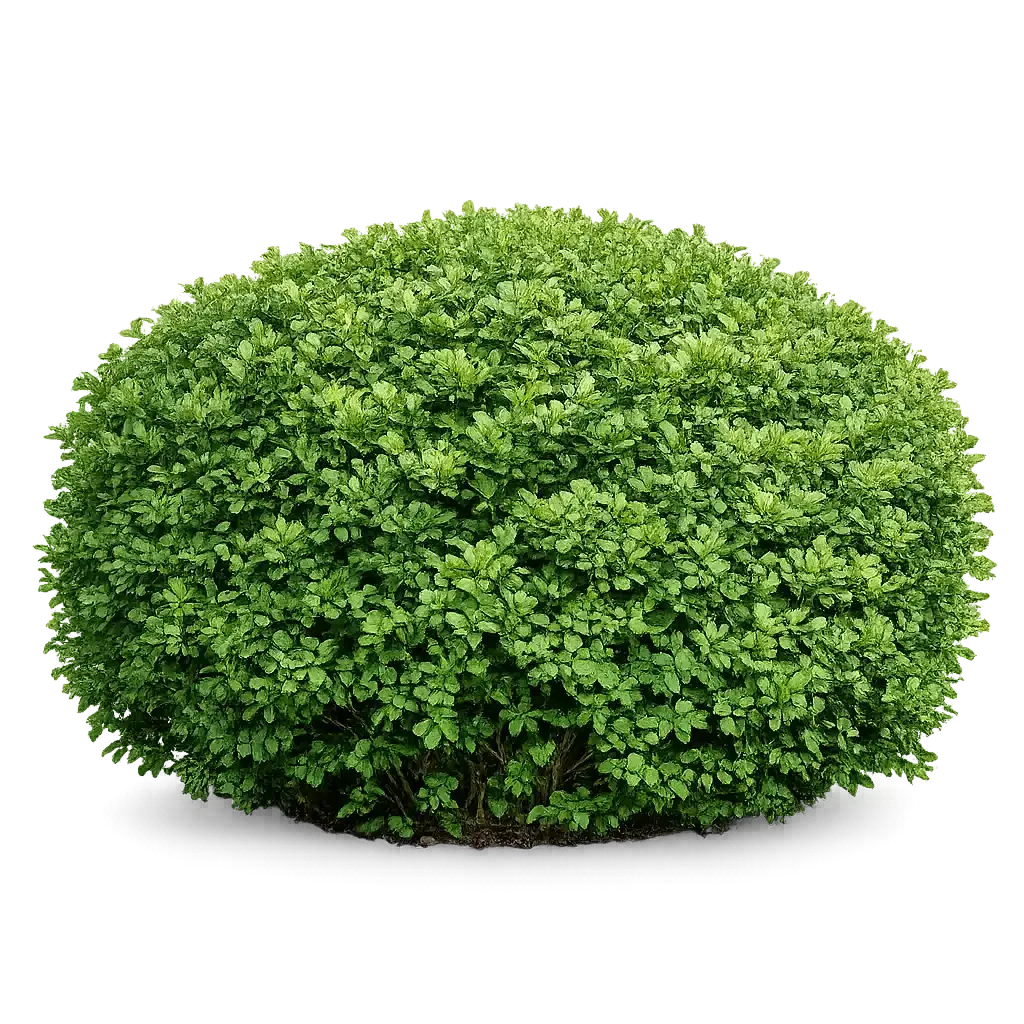
The plant produces small, oval, glossy dark green leaves densely arranged on fine, twiggy stems. This dense branching habit is what makes it so effective as a formal hedge: it responds to shearing by producing multiple new shoots at the cut point, steadily increasing in density with each annual clipping. A well-maintained boxwood hedge of twenty years or more is an extraordinarily dense mass of interwoven stems and foliage with virtually no gaps.
Left unpruned, common boxwood grows slowly into a rounded, irregular shrub reaching ten to fifteen feet in height and comparable spread over many decades. In cultivated settings it is almost always kept clipped, and the wide range of available cultivars means that forms ranging from dwarf edging plants of under a foot to large screening hedges of six feet or more are available to suit almost any application.
The foliage of boxwood has a distinctive, somewhat pungent scent that many people find pleasant in small amounts and overpowering in quantity. All parts of the plant are toxic if ingested, which contributes to its effectiveness as a deer-resistant hedge in most regions.
Why Use Boxwood for Living Fences and Hedges
Boxwood's primary value as a living fence plant is its unmatched ability to form a dense, precise, year-round evergreen barrier that can be maintained at almost any width and height within the plant's natural range. Unlike deciduous hedging plants that lose their screening and barrier function in winter, a boxwood hedge provides continuous visual privacy and wind protection across all four seasons.
The physical deterrence offered by boxwood is less about thorns, which it lacks entirely, and more about sheer density. A mature boxwood hedge clipped to three feet wide and five feet tall is a solid mass of interlocking woody stems that most small animals will not penetrate and that provides a clear, unmistakable boundary signal to humans. It will not stop a determined large animal or intruder the way a thorned barberry or hawthorn hedge will, but for defining boundaries, containing small livestock in adjacent areas, and deterring casual trespass, it is highly effective.
For homesteads where the visual formality and precision of a clipped evergreen hedge are valued alongside function, boxwood offers something that thorned alternatives cannot: a refined, controlled aesthetic that integrates with kitchen gardens, formal vegetable beds, orchard borders, and entry approaches in a way that wild-looking security hedges do not.
Climate and Growing Zones
Common boxwood, Buxus sempervirens, is hardy in USDA zones 5 through 8, performing best where winters are cold but not extreme and summers are moderate. It tolerates occasional temperatures down to around minus ten degrees Fahrenheit but can suffer significant foliage burn and dieback in prolonged hard cold, particularly when combined with desiccating winter winds.
In zones 4 and colder, Buxus sempervirens is not reliably hardy and significant winter damage is common. For colder climates, Korean boxwood, Buxus sinica var. insularis, and its cultivars, particularly Winter Gem and Chicagoland Green, offer substantially better cold hardiness and are reliably productive in zones 4 and sometimes zone 3 with good siting.
At the warmer end of the range, boxwood can struggle in the heat and humidity of zones 9 and 10, where fungal diseases become more difficult to manage and summer heat stress reduces vigor. In these climates, English boxwood selections or heat-tolerant cultivars perform better than standard common boxwood.
Winter protection note: In zones 5 and 6, boxwood planted in exposed positions benefits from a burlap windbreak screen on the north and west sides during winter. This reduces foliage desiccation from cold, dry winds, which is one of the most common causes of winter damage in marginal zones. Avoid wrapping the plant tightly, as this can trap moisture and promote disease.
Sunlight Requirements
Common boxwood grows well in both full sun and partial shade, which gives it a practical versatility that many hedging plants lack. In full sun it produces dense, compact growth with the deepest foliage color. In partial shade, growth is slightly more open and the foliage takes on a lighter green tone, but the plant remains healthy and productive as a hedge.
In hot climates, afternoon shade is actually beneficial, reducing heat stress and the fungal disease pressure that increases with high temperatures and humidity. In cool northern climates, full sun produces the best results. Deep shade produces thin, weak growth that hedges poorly and is more vulnerable to disease.
One consideration specific to boxwood is its sensitivity to reflected heat from paved surfaces, walls, and south-facing foundations in warm climates. Planting too close to heat-radiating structures in zones 7 and 8 can stress plants and increase susceptibility to mite infestations and foliage scorch.
Soil Requirements
Boxwood performs best in fertile, well-drained, slightly acidic to neutral soil with a pH between 6.0 and 7.0. Unlike some of the other plants in this series, it does benefit meaningfully from reasonable soil quality and responds well to organic matter incorporation at planting.
Good drainage is essential. Boxwood is notably intolerant of waterlogged conditions and will develop root rot relatively quickly in persistently wet soil. Raised planting beds or mounded planting rows are worth considering in heavy clay soils.
Boxwood roots are shallow and fibrous, spreading widely just below the soil surface. This root habit means the plant competes poorly with surface-rooting trees and aggressive ground covers, and it also means the root zone is vulnerable to soil compaction from foot traffic and machinery. Maintaining a mulched zone around hedges and avoiding heavy foot traffic directly over the root zone is important for long-term health.
Designing an Effective Boxwood Hedge
Boxwood's strength is in precision and density rather than physical deterrence through thorns, so the design of a boxwood hedge focuses on achieving continuous, gap-free coverage at the target height and width as efficiently as possible.
For a formal clipped hedge, a single row of plants at close spacing is the standard approach and produces excellent results. For wider, more substantial hedges intended to provide greater visual and physical presence, a double staggered row is more effective.
12 to 18 inches apart for a tight, formal single-row hedge at three to four feet tall
18 to 24 inches apart for a single-row hedge at four to six feet tall
18 inches within rows and 18 inches between rows for a double staggered row hedge
2 to 3 feet apart for a less formal, naturalistic hedgerow application
3 to 4 feet apart for specimen or foundation plantings
When shearing a formal hedge, maintain a profile that is slightly wider at the base than at the top. This trapezoid profile ensures that sunlight reaches the lower foliage, preventing the base from thinning and opening over time. A hedge clipped with vertical sides or wider at the top will gradually lose its lower foliage as light is blocked by the overhanging canopy above.
When to Plant Boxwood
Boxwood can be planted in spring after the last frost or in early fall, at least six weeks before the first hard freeze. Fall planting in zones 6 and warmer is often the preferred approach, as the mild, moist conditions of autumn support root establishment without summer heat stress, and plants set out in fall tend to establish more vigorously than those planted in spring.
In zones 5 and 6, spring planting is safer, giving the roots a full growing season to establish before facing their first winter in the ground. Newly planted boxwood with limited root systems is more vulnerable to winter desiccation than established plants, and fall-planted specimens in cold zones may not have sufficient time to root in adequately before winter arrives.
Planting Process
Mark the planting line with string or stakes before beginning, particularly for long formal hedge runs where consistent alignment is important.
Dig planting holes two to three times the width of each root ball and no deeper than the root ball itself. Boxwood planted too deeply is significantly more vulnerable to root rot and crown disease.
Set each plant so the top of the root ball sits at or just slightly above the surrounding soil level. The crown of the plant should never be buried.
Backfill with native soil amended with compost at roughly one part compost to three parts native soil. Firm gently around the roots to eliminate air pockets.
Water thoroughly and deeply immediately after planting. Boxwood establishes most reliably with consistent moisture through the first full growing season.
Apply two to three inches of organic mulch along the planting run, keeping it several inches back from each stem. Avoid piling mulch against the stems, which encourages crown rot and provides habitat for voles.
Watering Needs
Boxwood requires more consistent moisture than many other hedging shrubs, particularly during establishment and during hot, dry summer periods. Its shallow, fibrous root system means it is more vulnerable to drought stress than deep-rooted plants, and drought stress is one of the primary factors that weakens boxwood and increases its susceptibility to disease and pest problems.
During the first two years after planting, water deeply once or twice per week during dry spells. Once established, boxwood in average soils typically requires supplemental watering during extended drought, particularly in summer. Maintaining a two to three inch mulch layer over the root zone significantly reduces moisture loss and moderates soil temperature fluctuations that stress the shallow roots.
In zones 7 and 8 where summer heat is significant, consistent summer irrigation is not optional for boxwood in exposed sites. Plants that go into drought stress repeatedly become significantly more vulnerable to boxwood blight and other diseases.
Fertilization Strategy
Boxwood responds well to modest, consistent fertilization and benefits more from annual feeding than some of the tougher, leaner-growing shrubs in this series. An application of a balanced, slow-release organic fertilizer in early spring, before new growth begins, is the standard approach and produces reliable results.
Avoid late-season fertilization, particularly with nitrogen-rich products. Feeding in late summer or fall stimulates soft new growth that may not harden off before winter, increasing cold damage in marginal zones. Spring feeding only is the appropriate approach in zones 5 and 6.
Boxwood on acidic soils, particularly in the eastern US, sometimes develops iron or manganese deficiency, visible as yellowing between the leaf veins on new growth. A soil test is the most reliable diagnostic tool, and lime or targeted micronutrient supplementation can address deficiencies once identified.
Pruning Boxwood
Pruning is where boxwood truly distinguishes itself from other hedging plants. Its response to shearing is reliable, consistent, and precise in a way that few other plants match. Sheared cuts produce multiple new shoots at each cut point, steadily increasing the density of the hedge with each annual clipping. Over years and decades, a well-maintained boxwood hedge becomes progressively denser and more refined.
For a formal clipped hedge, shear once annually in late spring after the flush of new growth has hardened off, typically in June in most temperate climates. A second light shearing in late summer, around August, refines the profile and removes the second flush of growth that some varieties produce. Avoid shearing after early September in cold zones, as new growth stimulated by late pruning may not harden before frost.
For renovation of overgrown or misshapen boxwood, modest corrective pruning over two to three seasons is preferable to a single severe cut. Boxwood does not respond as reliably to hard renovation pruning as some other shrubs, and removing too much foliage at once can stress the plant and create bare patches that are slow to fill. Reducing the hedge gradually over several seasons produces a better result.
Hand shears produce a more refined finish than power hedge trimmers for formal applications, and they also allow more selective thinning of the interior canopy, which improves air circulation and reduces disease pressure. For long hedge runs, power shearing followed by hand detailing is a practical compromise.
When to Expect Effective Hedge Coverage
Boxwood is slow growing, and this is the most significant practical limitation for growers who need functional hedge coverage quickly. Common boxwood grows approximately three to six inches per year under good conditions, meaning a hedge planted at two feet tall may take five to eight years to reach a useful screening height of four to five feet.
Planting at close spacing, eighteen inches or less for formal hedges, accelerates canopy closure and produces a continuous barrier faster than wider spacing. Purchasing larger, more established plants from the nursery is another approach to reducing the wait time, though the cost per plant increases significantly with size.
Temporary fencing or fast-growing annual screens can provide functional coverage during the establishment period while the permanent boxwood hedge matures. This is worth planning for, particularly on homesteads where the hedge is intended to serve an immediate functional purpose.
Pests and Diseases
This is the section of any honest boxwood guide that requires the most candor. Boxwood faces a set of serious disease and pest threats that have become more prevalent and geographically widespread over the past two decades, and any grower considering a significant boxwood planting needs to understand these threats before committing.
Boxwood blight, caused by the fungal pathogen Calonectria pseudonaviculata, is the most serious threat. It causes rapid defoliation beginning with circular brown spots on the leaves, progressing to complete leaf drop and dieback of stems. It spreads readily through infected plant material, contaminated tools, and water splash. Once established in a planting it is very difficult to eradicate. Boxwood blight is now present across much of the eastern United States, parts of the Pacific Northwest, and Europe.
The most effective management strategies for boxwood blight combine planting resistant or tolerant varieties, maintaining excellent air circulation through appropriate spacing and pruning, avoiding overhead irrigation, removing and destroying infected material promptly, and disinfecting tools between plants. Preventive fungicide programs are effective but require consistent application throughout the growing season and represent a significant ongoing commitment.
Boxwood leafminer is the most common insect pest, with larvae mining through the interior of leaves and causing a characteristic blistering and bronzing of foliage. It is rarely fatal but significantly reduces the ornamental quality of the hedge and weakens the plant over time. Systemic insecticide treatments are the most effective control, though cultural approaches including removing heavily infested growth and encouraging beneficial insect populations can reduce pressure.
Boxwood mite causes stippling and bronzing of foliage, particularly on plants in hot, dry sites. Adequate irrigation and avoiding heat-stressed planting locations reduces susceptibility. Boxwood psyllid causes a characteristic cupping of new leaves in spring and is more of a cosmetic nuisance than a serious health threat.
Voles are a serious practical threat to boxwood in many regions. They feed on the shallow roots and crown just below the soil surface, causing sudden wilting and death of sections of hedge that appear healthy above ground. Keeping mulch pulled back from the stems and using hardware cloth root guards in areas with known vole pressure are the most reliable preventive measures.
On boxwood blight: The risk of boxwood blight is not a reason to avoid boxwood entirely, but it is a reason to choose resistant varieties, buy from reputable certified disease-free sources, practice strict tool sanitation, and avoid overhead watering. Growers who take these precautions have maintained healthy hedges in regions where boxwood blight is present.
Variety Selection
Variety selection is more important with boxwood than with almost any other hedging plant, because the differences between varieties in cold hardiness, disease resistance, growth rate, and mature size are substantial and directly affect long-term success.
For cold climates in zones 4 and 5, Korean boxwood selections are the appropriate starting point. Winter Gem is one of the most widely planted cold-hardy cultivars, forming a compact mound with good cold resistance and reliable performance in zone 4. Chicagoland Green is similarly hardy and produces a slightly more upright growth habit suited to hedge applications.
For zones 5 through 7 where boxwood blight is a concern, newer blight-resistant cultivars represent a significant advance over older varieties. The NewGen Independence and NewGen Freedom series, along with Katerberg and SB108 (sold as Highlander), have shown substantially improved resistance to boxwood blight in trials and are the most responsible choices for new plantings in affected regions.
For formal edging and low border hedges, Suffruticosa, the traditional English edging boxwood, produces very slow, compact growth and the finest-textured foliage of any common variety. It is, however, among the most susceptible to boxwood blight and is not recommended for regions where the disease is present.
For general hedging in zones 6 through 8 with lower disease pressure, Green Mountain and Green Velvet are widely available, vigorous, and reliable performers with good cold hardiness and adaptability.
Pros and Cons of Planting Common Boxwood
Advantages
Dense evergreen coverage provides year-round screening and structure
Responds to shearing with exceptional precision and density
Tolerates partial shade better than most hedging shrubs
Deer resistant due to toxic, pungent foliage
Exceptionally long-lived with proper care
Available in a wide range of sizes for every hedging application
Refined formal aesthetic integrates with kitchen and ornamental gardens
Holds a clipped profile cleanly through the seasons
Provides wind reduction and microclimate benefits year-round
Newer disease-resistant varieties extend reliable use into affected regions
Limitations
Slow growing, requiring years to reach functional hedge height
Serious vulnerability to boxwood blight in affected regions
Requires more consistent moisture than drought-tolerant alternatives
Shallow roots are vulnerable to drought, voles, and compaction
No physical thorned deterrence against determined animals or intruders
All parts are toxic to humans, livestock, and pets if ingested
Requires annual shearing to maintain form and density
Cold-climate plantings need wind protection in marginal zones
Long-Term Planning Considerations
A boxwood hedge is a genuine long-term commitment. The slow growth rate means that a decision made today will not deliver its full result for a decade or more, which requires a planning horizon and patience that not every situation allows. But for those who can commit to that timeline, a mature, well-maintained boxwood hedge is one of the most enduring and functional landscape elements available.
The disease situation, particularly the spread of boxwood blight, is the factor that has most changed the long-term calculus for boxwood plantings in many regions. Growers making new plantings should research current disease prevalence in their area, select resistant varieties from the outset, purchase only from reputable certified sources, and understand the ongoing management commitment that boxwood in affected regions requires. Investing in a significant boxwood planting with older susceptible varieties in a high-blight-pressure area is a risk that the newer resistant cultivars substantially reduce.
For homesteads where the visual character of a formal evergreen hedge is central to the design, and where the growing conditions and management commitment align with what boxwood requires, it remains one of the most rewarding long-term hedging plants available. The combination of year-round evergreen structure, exceptional response to pruning, deer resistance, and longevity is difficult to match.
Final Thoughts
Common boxwood carries the weight of centuries of cultivation and for good reason. In the right climate, with appropriate variety selection and consistent care, it forms hedges of extraordinary density, precision, and longevity that define spaces and provide functional boundaries with a refinement that few other plants approach.
It asks more of the grower than some of the tougher hedging alternatives in this series: more attention to moisture, more diligence around disease management, more patience during the establishment years. But for homesteads and gardens where a formal evergreen hedge is the right fit, the investment is returned many times over in a living structure that improves with every passing decade.