
Witch Hazel
Written By Arthur Simitian
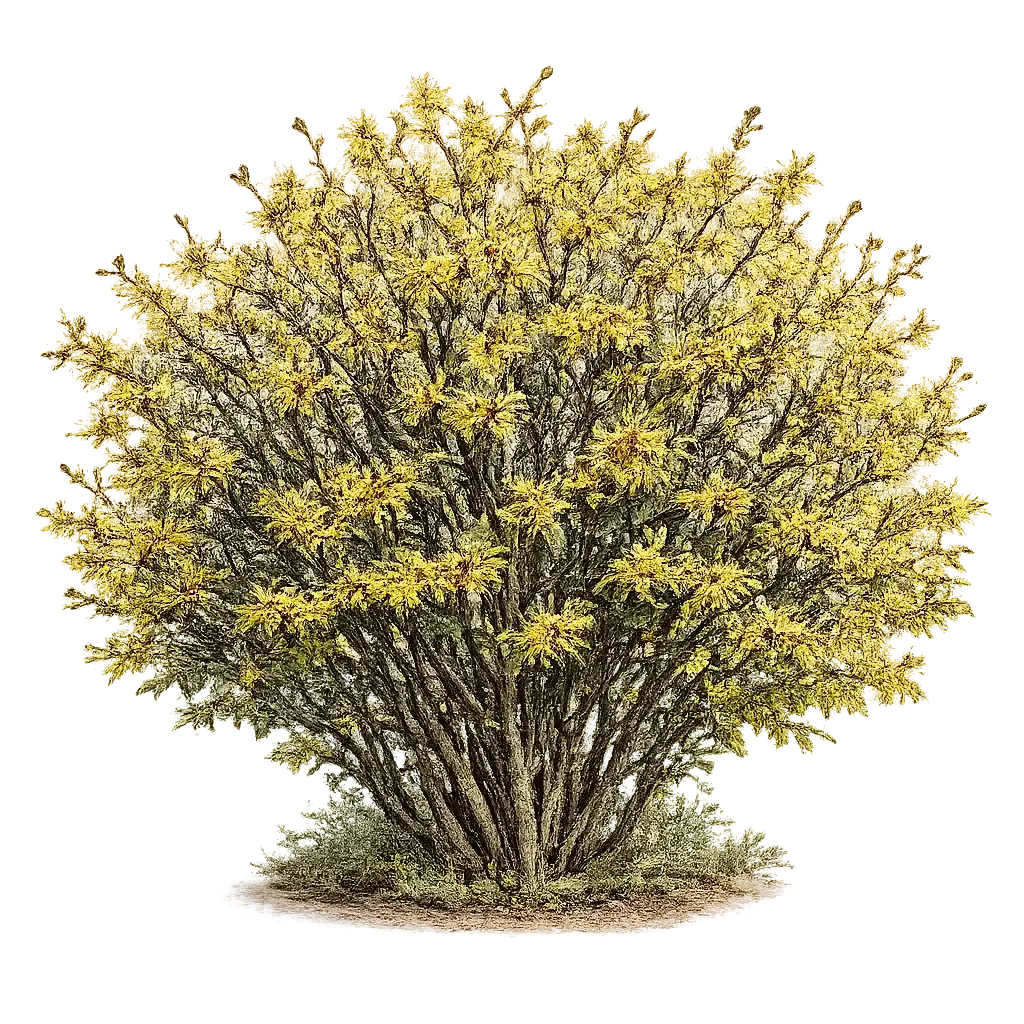
Witch hazel blooms when nothing else will. In the depth of winter, when every other flowering shrub on the property is dormant and the landscape has been gray and leafless for months, witch hazel opens its extraordinary ribbon-petaled flowers along bare branches and fills the cold air with a fragrance that seems impossible given the season. It is the most unexpected bloom in the temperate garden, and the first time a grower encounters it, the response is almost universally the same: disbelief followed by permanent attachment. A shrub that flowers in January and February, produces medicinal bark and leaves of documented value, turns magnificent colors in autumn, supports late-season pollinators with nectar when almost nothing else is available, and asks only for decent drainage and some shade tolerance is a shrub that earns its space comprehensively and across every month of the year.
This guide covers witch hazel completely: the species worth knowing and how their bloom times differ, the winter flowering ecology and what pollinators use it, the medicinal history and current uses, pruning approach, site requirements, and variety selection across a wide range of flower colors and forms.
What Is Witch Hazel
Witch hazel is the common name for shrubs and small trees in the genus Hamamelis, a member of the family Hamamelidaceae. The genus contains four species, two native to North America and two native to Asia, along with a rich range of hybrid selections derived primarily from crosses between the Asian species. The name has no connection to witchcraft: it derives from the Old English word wych, meaning pliant or flexible, in reference to the flexible branches used historically as divining rods, a practice that gave the plant another common name, water witch.
All witch hazels share the same distinctive flower structure: four long, strap-like petals that unfurl from a small calyx along bare winter or very early spring branches, producing the spidery, ribbon-like appearance that is instantly recognizable and unlike the flower structure of any other commonly grown temperate shrub. The petals can roll up tightly in extreme cold and re-extend when temperatures moderate, which is one of the mechanisms that allows the flowers to survive weeks or months of winter cold without damage. The fragrance varies across species and varieties from intensely sweet to spicy to faintly clove-like.
The seed capsules that follow the flowers are among the most entertaining features of the plant: they ripen over the course of the growing season and then split explosively in autumn, ejecting seeds with enough force to propel them ten to twenty feet from the parent plant with an audible crack. This ballistic seed dispersal is one of the more dramatic botanical mechanisms in the temperate plant world and is part of what makes witch hazel genuinely interesting to observe across all four seasons.
The Four Species and When They Bloom
Understanding the bloom timing of the four witch hazel species is the most important practical knowledge for growers who want to place winter-flowering plants in their homestead landscape, because the species span a bloom season from October through April that allows a deliberate planting sequence to provide nearly continuous witch hazel interest through the entire dormant season.
Common witch hazel, Hamamelis virginiana, is the North American native species native from Nova Scotia and Quebec south through the eastern United States to Florida and west to Nebraska. It blooms in autumn, typically October through December, often while the leaves are still on the plant or are just falling, which means the yellow flowers can be partially obscured by the autumn foliage. It is the most cold-hardy of the four species, reliably hardy to zone 3, and its bark and leaves are the source of the commercial witch hazel extract widely used in skin care and medicine. It grows as a large shrub or small tree reaching fifteen to twenty feet.
Ozark witch hazel, Hamamelis vernalis, is the second North American native species, native to the Ozark Plateau region of Missouri, Arkansas, and Oklahoma, growing naturally along stream banks and rocky slopes. It blooms from January through March, with a fragrance that is among the most intense of the four species, and it is shorter and more compact than common witch hazel at six to ten feet. It is reliably hardy to zone 4 and is one of the best choices for cold-climate homesteads where the midwinter bloom period is the most desired season.
Japanese witch hazel, Hamamelis japonica, native to Japan, blooms from January through March and is the parent of many hybrid varieties. It reaches fifteen to twenty feet in height and is hardy to zone 5. The flowers range from pale yellow to red and have a moderately pleasant fragrance.
Chinese witch hazel, Hamamelis mollis, native to central China, blooms from January through March and is widely considered the most ornamentally beautiful of the four species, with large, golden-yellow, intensely fragrant flowers on a plant reaching ten to fifteen feet. It is hardy to zone 5 and is one of the most commonly grown species in European gardens, where it has been cultivated for over a century.
Hybrid witch hazel, Hamamelis x intermedia, is the cross between Japanese and Chinese witch hazel that has produced the greatest range of named garden varieties across colors from pale primrose yellow through orange, copper, and deep burgundy-red. Most of the named cultivars in commerce belong to this hybrid group. They bloom from January through March, are hardy to zone 5 in most selections, and offer the widest flower color range of any witch hazel group.
Winter Flowering and Pollinator Value
Witch hazel's winter flowering is not merely an ornamental curiosity. It represents a genuine and significant ecological contribution at a time of year when almost no other native or cultivated shrub provides pollen and nectar for insects, and the wildlife value of this out-of-season flowering is difficult to overstate for the homestead that includes overwintering insects in its ecological planning.
On warm winter days, particularly those above 50 degrees Fahrenheit when the sun is direct, witch hazel flowers attract a range of winter-active insects that are less commonly considered in pollinator planting plans than the spring and summer species but are genuinely dependent on early and late season resources. Winter-active moths, midges, and small native bees that overwinter as adults and are capable of foraging on mild winter days visit witch hazel flowers for nectar and pollen, and the flowers are the primary resource available to these insects across much of the winter flowering period.
Witch hazel moths, Eulithis explanata and related species, are specifically associated with witch hazel as both a larval host plant and an adult nectar source. These moths fly in late autumn and winter, their flight period synchronized with witch hazel's bloom period in a relationship that reflects millions of years of coevolution between the plant and its specialist pollinators.
For homesteads that maintain mason bee houses and native bee habitat, witch hazel's early spring bloom on the Ozark and hybrid varieties overlaps with the emergence period of some mason bee species and provides an early pollen resource at the critical time when overwintering females are beginning to forage and fill their nesting chambers.
The foliage supports the larvae of several moth and butterfly species through summer, adding a larval host function to the adult-insect nectar function that makes witch hazel one of the more ecologically complete native shrubs in the eastern landscape.
Medicinal Value: The Original Witch Hazel
The witch hazel of the medicine cabinet, the clear astringent liquid sold in pharmacies across North America, is derived from the bark and leaves of common witch hazel, Hamamelis virginiana, through a steam distillation process that has been practiced commercially since the nineteenth century. The plant has one of the longest and most extensively documented medicinal histories of any North American native shrub.
Several Indigenous peoples of eastern North America used common witch hazel medicinally before European contact, applying bark decoctions and poultices to treat skin inflammations, muscle soreness, insect bites, bruises, and eye irritations. European settlers adopted these uses, and by the mid-nineteenth century commercial extraction of witch hazel had become a significant industry in New England, where it remains centered today.
The medicinal properties of witch hazel are attributable primarily to its high tannin content, particularly hamamelitannin, which is unique to the genus, along with gallic acid, catechins, and volatile oils including eugenol and carvacrol. These compounds produce strong astringent effects that tighten and tone skin tissue, reduce inflammation, slow minor bleeding, and have documented antimicrobial activity against several common skin pathogens.
Current evidence-supported uses for witch hazel extract include treatment of minor skin irritations, sunburn, razor burn, and insect bites where its anti-inflammatory and astringent effects provide genuine relief. It is a component in many commercial hemorrhoid treatments, where the same astringent properties reduce swelling and discomfort. It is used as a facial toner where its tannin content temporarily tightens pores and reduces excess sebum. It is applied to bruises and minor sprains where its anti-inflammatory effects are comparable to those of some pharmaceutical preparations.
Homestead-scale preparation of witch hazel extract is straightforward for growers with established plants. The bark of young stems and the leaves harvested in autumn are simmered in water to produce a decoction that, once cooled and strained, is the functional equivalent of the commercial distillate for most topical applications. The commercial product includes alcohol as a preservative and solvent, which the home preparation lacks, making the home-prepared version shorter-lived and appropriate for fresh use rather than long-term storage without added alcohol.
Harvesting bark without harming the plant: For medicinal bark harvest, take small sections of bark from young stems of one to two years of age rather than from the main trunk or old wood. Harvest from several different stems across the plant rather than stripping one branch entirely, and never remove bark from more than a quarter of the plant's stems in a single season. Young witch hazel plants should not be harvested at all until they are well established, typically five or more years after planting.
Climate and Growing Zones
Common witch hazel, Hamamelis virginiana, is the most cold-hardy species, reliably performing in zones 3 through 8 and representing the best choice for cold-climate homesteads in zones 3 and 4 where the Asian species and most hybrid selections are not reliably hardy.
Ozark witch hazel, Hamamelis vernalis, is hardy in zones 4 through 8 and is the most appropriate native species for midwinter bloom in cold climates, flowering from January through March on bare branches with a fragrance that carries across a significant distance on warm winter days.
Chinese witch hazel and hybrid witch hazel selections are hardy in zones 5 through 8, with some of the hardier hybrid selections performing in protected zone 4 sites with adequate snow cover. For zone 5 and 6 homesteads, the hybrid varieties offer the widest color range and the showiest winter flower display and are the most popular choices for ornamental planting.
In zones 7 and 8, all four species perform well, and the extended mild winters provide a longer bloom season than colder climates allow. The summer heat and humidity of the deep South can cause stress on the Asian species and hybrids, and in zones 8 and 9 the native common witch hazel is typically more adaptable and longer-lived than the Asian selections.
Sunlight Requirements
Witch hazel is one of the most shade-tolerant flowering shrubs available and is the appropriate choice for partially shaded homestead sites where most other flowering plants perform poorly. It grows naturally as an understory shrub and forest edge plant across much of its native range, and this natural habitat reflects genuine shade tolerance rather than a mere ability to survive reduced light.
In full sun it grows more vigorously, produces more abundant flowers, and develops its best autumn color. In partial shade of three to four hours of direct sun it flowers well and is healthy, growing more openly than in full sun but remaining productive and ornamentally attractive. In dense shade below a full canopy it grows slowly and flowers sparsely.
The shade tolerance is practically significant for homesteads where suitable planting space in full sun is already committed to food-producing plants. Witch hazel can be placed in the partial shade of a building, fence, or existing tree canopy where it fills a functional and ornamental role that few other high-value shrubs can occupy.
Winter light access is as important as summer light for maximizing the winter flower display. A plant that is shaded from the low winter sun by a building or dense evergreen planting will flower without the warming effect of direct winter sunlight and will be less visually effective than the same plant in a position where winter sun reaches the bare flowering branches.
Soil Requirements
Witch hazel grows best in moist, humus-rich, well-drained soils with a mildly acidic to neutral pH in the range of 5.5 to 6.5. It performs well on the loamy, moderately fertile soils of woodland edges and forest margins that represent its natural habitat across the eastern United States and in comparable soils in cultivation.
It tolerates a range of soil types from sandy loam through clay loam provided drainage is adequate, and it is more tolerant of moderately wet conditions than many ornamental shrubs, particularly in the case of the Ozark witch hazel which grows naturally along stream banks. Persistently waterlogged soils are not appropriate, but seasonally moist and even briefly flooded conditions are tolerated by established plants.
It does not perform well on alkaline soils above pH 7.0, where it may show interveinal chlorosis from iron and manganese deficiency. On alkaline soils, soil acidification with sulfur applications or planting in amended beds with acid-adjusted soil is necessary for satisfactory performance.
The humus-rich conditions of forest soils are replicated in cultivation by incorporating generous compost at planting and maintaining a deep organic mulch around the base of the plant. This moisture-retaining, humus-building mulch layer is the most productive single soil management practice for witch hazel in homestead settings.
How Far Apart to Plant
8 to 10 feet apart for most species and hybrid selections grown as specimen shrubs with full canopy development
6 to 8 feet apart for compact hybrid selections such as Jelena and Arnold Promise in mixed shrub borders
10 to 15 feet from buildings and other structures to allow for the mature spread of large-growing species such as common witch hazel at full size
At least 6 feet from paths and seating areas to allow for the natural spread of the arching habit while keeping the fragrant flowers accessible for close appreciation
In combination plantings, space each species to allow full canopy development without crowding, as witch hazel's winter flower display is most effective on plants with room to express their natural vase-shaped or spreading form
When to Plant
Witch hazel is best planted in early spring while dormant or in early fall after summer heat has subsided. Container-grown plants are available throughout the growing season from native plant nurseries and specialty woody plant growers, and can be planted at any time with attentive watering. Spring and early fall planting produce the most reliable root establishment with the least irrigation demand.
Fall planting in zones 5 through 7 is an excellent approach for witch hazel, allowing root establishment through the mild autumn before the plant begins flowering in winter or early spring. In zones 3 and 4, spring planting is preferred to ensure adequate establishment before the following winter.
Witch hazel establishes slowly relative to fast-growing native shrubs like ninebark or red-osier dogwood, and patience through the first two to three years of relatively modest growth is required before the plant begins to develop into the substantial, multi-season specimen it becomes at maturity. Planting a witch hazel is a long-term investment that repays the patience required through the establishment period with decades of reliable winter flowering and expanding ornamental contribution.
Planting Process
Test soil pH if possible and apply sulfur amendments in advance of planting if the pH is above 6.5. Incorporate generous compost into the planting area to build the humus-rich soil conditions that witch hazel prefers, working it into the top twelve inches of soil across an area two to three times the width of the intended planting hole.
Choose a site with appropriate light for the intended use. Full sun to partial shade for maximum flowering and autumn color. Partial shade is acceptable and appropriate for sites where full sun planting space is limited. Ensure that some winter sunlight reaches the intended planting position to bring out the best in the winter flower display.
Dig a planting hole two to three times the width of the container root ball and equal in depth. Set the plant with the crown at soil level. Witch hazel should not be planted deeply, as the crown needs to remain above the soil surface for good air circulation and to prevent crown rot.
Backfill with a mixture of native soil and compost, water thoroughly, and apply a deep organic mulch layer of three to four inches around the base, keeping it pulled well back from the main stems. The mulch is one of the most important establishment practices for witch hazel, retaining the soil moisture and building the organic matter that the plant's performance depends on.
Water consistently through the first two growing seasons, maintaining evenly moist but not waterlogged soil conditions. Witch hazel is more sensitive to drought stress during establishment than many other native shrubs, and inconsistent moisture in the first years delays establishment and reduces early flowering.
Watering Needs
Witch hazel prefers consistent soil moisture and is less drought tolerant than the dry-site natives such as staghorn sumac, ninebark, and sagebrush discussed elsewhere in this series. On the moist, humus-rich woodland soils of its native habitat, it never experiences significant drought stress, and in cultivation it performs best on sites where soil moisture is consistently maintained through the growing season.
On average soils in temperate climates with moderate summer rainfall, established witch hazels typically require supplemental irrigation only during extended dry spells. On well-drained, sandy soils or in regions with dry summers, more consistent supplemental irrigation supports better growth, more abundant flowering, and healthier summer foliage. The deep organic mulch that should always be maintained around witch hazel significantly reduces the irrigation demand by slowing evaporation from the soil surface.
Drought stress in summer, while not immediately lethal to established plants, reduces the following winter's flower bud development and produces a noticeably less abundant bloom display in the subsequent flowering season. Maintaining adequate moisture through summer is therefore directly connected to the quality of the winter flowering that is the plant's primary ornamental contribution.
Fertilization Strategy
Witch hazel benefits from a light annual application of compost or a balanced organic fertilizer in early spring on average to poor soils, which supports the consistent, moderate growth that produces the best winter flowering. On naturally rich woodland soils with good organic matter content, no supplemental feeding is required beyond maintaining the deep mulch layer that builds organic matter over time.
On acidic soils, a fertilizer formulated for acid-loving plants provides both the nutrition and the pH-appropriate nutrient balance that witch hazel performs best with. On neutral soils an all-purpose balanced organic product is appropriate. High-nitrogen fertilizers should be avoided, as the same response that affects other flowering shrubs, excessive vegetative growth at the expense of flower production, applies equally here.
Pruning Witch Hazel
Witch hazel requires minimal pruning and develops its most attractive natural form without significant intervention. The natural habit, a vase-shaped to spreading, multi-stemmed structure with irregular, somewhat zigzagging branches, is part of the plant's ornamental character and is best allowed to develop without the shaping that would impose an artificial uniformity on what is inherently an informal, architectural plant.
Witch hazel flowers on old wood, which means pruning timing is important for maintaining the flowering performance that is the plant's primary value. The correct time to prune is immediately after flowering in late winter or early spring, before new growth begins. Any pruning done at other times of year removes either the developing flower buds of the following season or the current season's flowers themselves.
Annual maintenance consists of removing dead, damaged, or crossing branches in late winter or very early spring immediately after the flowers have finished, and of removing any suckers that arise from the rootstock below the graft union on grafted plants. The sucker removal is important on grafted cultivars because rootstock suckers, typically from common witch hazel, grow vigorously and can dominate and eventually replace the desirable grafted variety if left unmanaged.
Witch hazel tolerates selective thinning and shaping when genuinely needed but does not respond as vigorously to renovation pruning as shrubs like ninebark and red-osier dogwood. Hard cutting back of large, established plants produces slow recovery and should only be undertaken when necessary to correct a structural problem rather than as a routine management practice.
Autumn Color and Four-Season Value
Witch hazel delivers meaningful ornamental contributions across all four seasons, which distinguishes it from plants that are notable in one season and invisible in the others and makes it one of the most complete single-plant investments in the homestead landscape.
In spring, the bare branches carry the last of the winter flowers into March on the later-blooming species and hybrids, the fading blossoms still fragrant on mild days as the first green buds begin to swell. The transition from winter flower to spring leaf is gradual and interesting rather than abrupt.
Through summer, witch hazel is a handsome, clean-foliaged shrub with broadly oval to obovate leaves of medium to dark green. The foliage is not particularly remarkable in summer, but it is entirely healthy and disease-free on well-sited plants, providing an unobtrusive but substantial green presence through the growing season.
In autumn, the foliage colors to yellow, orange, and occasionally red on most species and hybrid selections before dropping, providing an autumn display that is reliable if not always spectacular. Common witch hazel and Ozark witch hazel have particularly good autumn color, often showing deep golden-yellow to orange. The hybrid varieties vary considerably in autumn color quality, with some selections such as Jelena producing particularly vivid orange to copper tones.
In winter, the bare branches carry the extraordinary spidery flowers that are the plant's most distinctive and irreplaceable contribution, filling the most visually barren period of the year with color, fragrance, and ecological function simultaneously.
Variety Selection
For growers in zones 3 and 4, common witch hazel, Hamamelis virginiana, is the most cold-hardy and most reliable choice and is available from native plant nurseries as locally sourced seedling plants. Its autumn bloom timing, October through December, makes it the earliest-flowering species in the genus and the appropriate choice for homesteads where autumn rather than midwinter is the desired bloom season.
For zones 4 through 8 where midwinter bloom is the goal, Ozark witch hazel, Hamamelis vernalis, is the hardiest option for January through March flowering and carries the most intensely fragrant flowers of any North American witch hazel. The selection Carnea offers pale pinkish-copper flowers on a compact plant. Sandra produces exceptional autumn color alongside good midwinter bloom.
Among hybrid selections in zones 5 through 8, Arnold Promise is one of the most widely planted and most reliably performing, producing bright yellow flowers with a pleasant fragrance from January through March on a broadly vase-shaped plant reaching twelve to fifteen feet. It is one of the most cold-tolerant of the hybrid selections and one of the most reliably available through the nursery trade.
Jelena, also sold as Copper Beauty, is a hybrid selection with large, vivid copper-orange flowers and outstanding autumn foliage color in deep orange and red. It is one of the most ornamentally striking witch hazels available and is appropriate for growers who want maximum color impact from a single plant.
Diane produces deep, wine-red flowers that are the darkest and most richly colored of the widely available hybrid selections, paired with good autumn color. For growers who want something other than the yellow that dominates witch hazel offerings, Diane is the most reliable deep-red option.
Pallida is a pale sulphur-yellow selection of Chinese witch hazel, Hamamelis mollis, producing very large, intensely fragrant flowers with a soft, luminous quality on bare branches. It is considered by many to be the finest fragrance of any cultivated witch hazel and is worth seeking out for planting near paths and seating areas where the scent can be fully appreciated.
Wisley Supreme is a Chinese witch hazel selection with exceptional golden-yellow flower size and coverage, one of the showiest of the species-type selections and consistently rated among the most floriferous witch hazels in trial gardens.
Pests and Diseases
Witch hazel is one of the healthiest and most problem-free flowering shrubs available for the temperate homestead, requiring essentially no pest or disease management on well-sited plants with appropriate soil moisture and pH. This low maintenance health profile is one of its most practically convenient characteristics.
Witch hazel aphids can cause the distinctive cone-shaped galls on the leaves in spring and summer, similar in mechanism and impact to the galls caused by aphids on staghorn sumac foliage. The galls are unsightly but harmless to the plant's long-term health and are not worth treating with any intervention on an otherwise healthy specimen.
Powdery mildew occasionally affects foliage in late summer in humid climates and on plants in still-air locations with poor air circulation. As with the other shrubs in this series, full sun siting and adequate plant spacing are the most effective preventive measures.
Iron and manganese deficiency producing interveinal chlorosis on the foliage is the most common cultural problem on witch hazel and indicates alkaline soil conditions rather than a nutrient shortage per se. Correcting soil pH through sulfur application resolves the deficiency more effectively than adding chelated micronutrients as a compensating supplement, as the root cause remains present without pH correction.
Deer occasionally browse the foliage and young stems of witch hazel, and newly planted shrubs in areas with significant deer pressure benefit from protection during establishment. Established plants of substantial size are less vulnerable to serious deer damage, though browsing on lower branches can continue on accessible stems.
Pros and Cons of Planting Witch Hazel
Advantages
Blooms in midwinter when no other flowering shrub is in season, filling the most barren period of the year with color and fragrance
Intensely fragrant flowers that carry across a significant distance on mild winter days
Native common witch hazel is the source of commercially valuable medicinal bark and leaf extract
Excellent shade tolerance, appropriate for partially shaded sites where most flowering shrubs fail
Four-season interest across winter flowers, spring emergence, summer foliage, and autumn color
Supports winter-active moths and specialist pollinators with critical out-of-season nectar
Larval host plant for several moth and butterfly species through summer
Generally free of serious pest and disease problems on well-sited plants
Long-lived and increasingly ornamental with age
Wide variety selection across flower colors from yellow through orange, copper, and deep red
Limitations
Establishes slowly, requiring patience through the first two to three years before flowering freely
Requires moist, humus-rich, acidic soil conditions and performs poorly on alkaline or droughty sites
Asian species and most hybrid selections are not reliably hardy below zone 5
Autumn-blooming common witch hazel flowers can be partially obscured by lingering foliage
Grafted cultivars produce rootstock suckers requiring ongoing removal
Pruning at the wrong time removes the flower buds that represent the plant's primary ornamental value
Requires attention to soil pH, declining noticeably on alkaline soils
Large-growing species reach fifteen to twenty feet at maturity, requiring appropriate siting space
Long-Term Planning Considerations
Witch hazel planted on an appropriate moist, acidic, partially to fully sunny site improves with every passing year in every dimension simultaneously. The root system deepens and supports increasingly vigorous flowering. The branching structure fills into a more complex and architecturally interesting form. The flower display becomes more abundant as the plant matures. The autumn color becomes richer on well-established crowns with deep reserves. The medicinal harvest available from the bark and leaves grows with the plant without any reduction in plant health.
The most important long-term planning decisions are selecting the species appropriate to the hardiness zone and the desired bloom timing, ensuring that the soil pH and moisture conditions are appropriate before planting rather than attempting to correct problems after the fact, maintaining the deep organic mulch that is the most productive single management practice for long-term witch hazel health, and siting the plant where the winter flower display is visible and the fragrance accessible from the places on the homestead where people actually spend time in winter.
A mature witch hazel in full midwinter bloom, its bare branches lined with hundreds of spidery golden flowers against a cold blue sky, fragrant on any afternoon when the temperature rises above freezing, is one of the finest things a temperate garden can produce. The homestead that includes one has solved the most difficult gardening problem of all: finding something worth looking at in February.
Final Thoughts
Witch hazel does something that no other shrub in the temperate plant palette does: it blooms when winter is at its most insistent, when the cold is deepest and the days are shortest and the landscape has been asking nothing of the gardener for months. The flowers open on bare branches with a fragrance that is warm and sweet and completely at odds with the season. And they stay. They curl up tight when the temperature drops below freezing and open again when it moderates. They can be in bloom for six weeks. Sometimes longer.
No other plant in this series does that. No other plant comes close. For the homestead grower willing to wait through a slow establishment, to maintain the soil moisture and pH and mulch that witch hazel asks for, the return is one of the most genuine and lasting pleasures that four-season gardening offers.