
American Shorthair
Overview
The American Shorthair is a true working cat breed with deep roots in American agricultural history. Sturdy, athletic, and famous for their exceptional hunting abilities, these cats arrived on ships with early European settlers to protect cargo and provisions from rodents. Over centuries, they adapted to life on American farms and homesteads, developing into one of the most resilient, healthy, and versatile cat breeds in existence.
American Shorthairs are prized for their robust health, even temperament, impressive mousing skills, and minimal maintenance requirements. They are the quintessential farmhouse cat - independent yet affectionate, hardy yet beautiful, and exceptionally skilled at pest control. Their reputation as America's own breed makes them a perfect choice for both working farm environments and family homes.
Origin & History
Origin: United States (descended from European cats)
Arrival in America: Early 1600s with European settlers (Mayflower era)
Original Purpose: Ship cats and farm mousers for pest control
Development: Naturally evolved through selective breeding of healthiest working cats
Recognition: One of the first five breeds recognized by the Cat Fanciers' Association (1906)
Original Name: "Domestic Shorthair" until renamed in 1966
Current Status: One of the most popular pedigreed cat breeds in America
Heritage: Direct descendant of early American working farm cats
Physical Characteristics
Size: Medium to large
Weight: Males 11-15 lbs; Females 8-12 lbs
Body Type: Muscular, powerful, athletic build
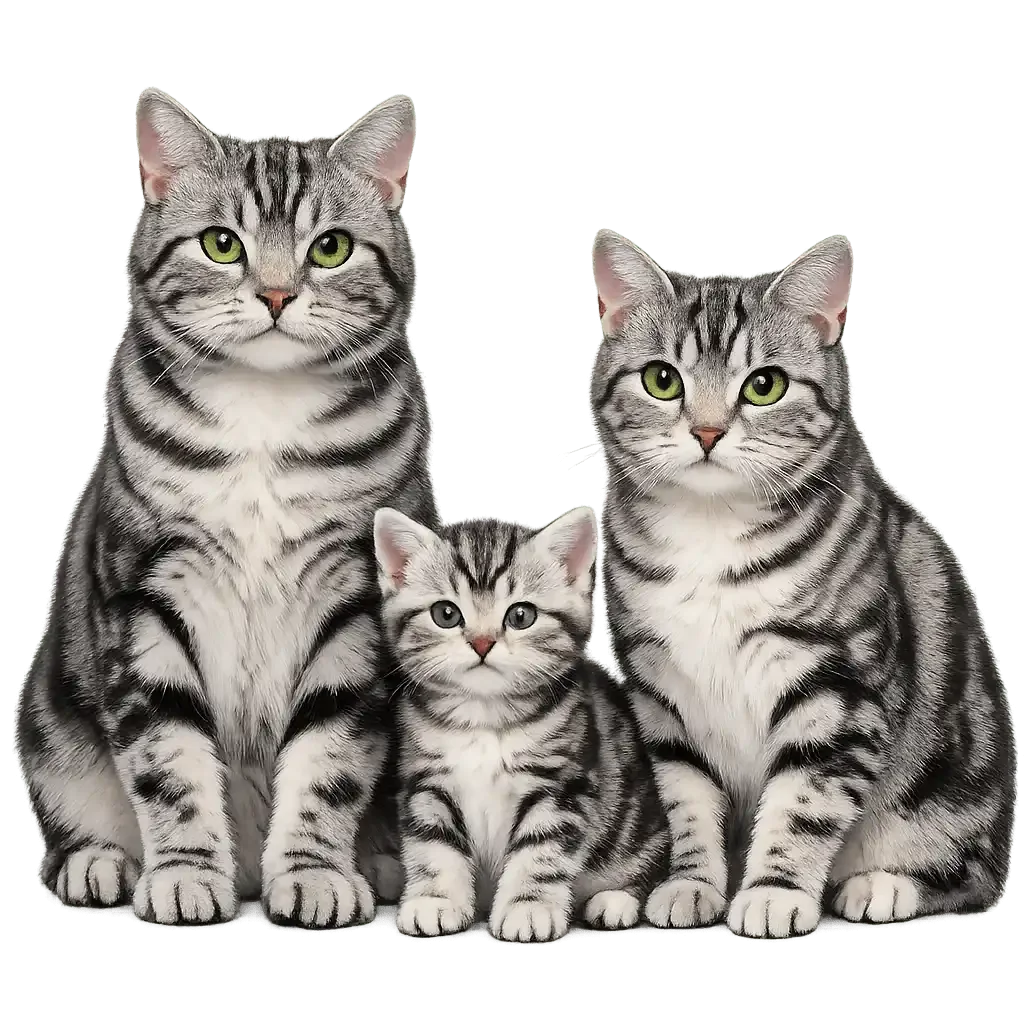
Coat: Short, thick, dense, hard-textured
Colors: Over 80 colors and patterns (silver tabby most iconic)
Common Patterns: Tabby, solid, bi-color, calico, tortoiseshell
Head: Large, full-cheeked face with square muzzle
Eyes: Large, round, wide-set (color varies with coat)
Ears: Medium-sized, slightly rounded tips
Legs: Strong, medium length, heavy-boned
Paws: Large, round, firm - excellent for hunting
Tail: Medium length, heavy at base, tapering to blunt tip
Overall Appearance: Powerful, balanced, working cat physique
Reproduction & Breeding
Sexual Maturity: Females 5-9 months; Males 5-7 months
Breeding Age: Best to wait until 18-24 months for full maturity
Heat Cycle: Every 2-3 weeks during breeding season (spring/summer)
Gestation Period: 63-65 days (approximately 9 weeks)
Litter Size: Average 4-5 kittens (range 3-7)
Birthing: Generally easy, unassisted births (good mothers)
Kitten Development: Eyes open at 7-10 days; weaned at 8-10 weeks
Breeding Frequency: Can have 2-3 litters per year (should limit to 1-2)
Fertility Period: Productive breeding years 2-8 years old
Lifespan & Health
Average Lifespan: 15-20 years
Record Lifespan: Some live into their early 20s
Health Status: Exceptionally healthy breed with few genetic issues
Common Health Issues: Hypertrophic cardiomyopathy (HCM) - rare but monitor
Dental Health: Prone to tartar buildup - regular dental care recommended
Weight Management: Can become overweight - monitor food intake
Vaccinations: Standard feline vaccines (FVRCP, rabies)
Parasite Control: Regular flea/tick prevention especially for outdoor cats
Spay/Neuter: Recommended at 5-6 months if not breeding
Temperament & Personality
American Shorthairs have an ideal temperament for farm life - independent yet social, calm yet playful, and adaptable to various living situations. They are affectionate without being demanding, enjoying human companionship but not requiring constant attention. These cats are known for their even-tempered, gentle nature, making them excellent with children and other pets when properly socialized.
They retain strong hunting instincts and are naturally curious and intelligent. American Shorthairs are quiet cats with soft voices, rarely excessive in their meowing. They are confident and well-balanced, handling changes in routine better than many breeds. While they enjoy playtime and interaction, they are equally content entertaining themselves, making them perfect for busy farm environments where they can patrol and hunt throughout the day.
Hunting & Working Ability
Prey Drive: Exceptional - one of the best mousing breeds
Hunting Skills: Natural hunters from kittenhood
Target Prey: Mice, rats, moles, voles, small birds, insects
Hunting Style: Patient stalkers with explosive pouncing ability
Working Ability: Can clear barns, sheds, and outbuildings of rodents
Territory Size: Will patrol several acres if allowed to roam
Night Hunting: Excellent nocturnal hunters with superior night vision
Independence: Self-sufficient hunters requiring minimal training
Care & Maintenance
Grooming: Minimal - weekly brushing sufficient
Shedding: Moderate year-round; heavier in spring
Bathing: Rarely needed (self-grooming sufficient)
Nail Trimming: Every 2-3 weeks (less if outdoor and using scratching surfaces)
Dental Care: Weekly tooth brushing recommended
Feeding: High-quality cat food; 1/3 to 1/2 cup daily (split into 2 meals)
Water: Fresh water always available
Litter Box: One per cat plus one extra; scoop daily
Exercise: Moderate - provide climbing/scratching opportunities
Environmental Enrichment: Enjoys toys, perches, and outdoor access
Climate Adaptability
Climate Tolerance: Excellent - adapts to hot and cold climates
Cold Tolerance: Very good - thick coat provides insulation
Heat Tolerance: Good - manages well in warm weather
Indoor/Outdoor: Thrives in both; outdoor access ideal for farm cats
Shelter Needs: Barn, shed, or access to warm shelter in extreme weather
Weather Resistance: Hardy constitution handles variable weather well
Advantages for Farmhouse Living
Exceptional pest control - superior mousing and ratting abilities
Extremely hardy and healthy with minimal veterinary needs
Independent and self-sufficient - doesn't require constant attention
Adaptable to outdoor/barn living with shelter access
Low maintenance grooming requirements
Even temperament - good with children and other animals
Weather-resistant with thick coat for temperature regulation
Long lifespan (15-20 years) provides years of service
Natural hunting instincts require no training
Quiet and non-demanding personality
Strong immune system and disease resistance
Excellent climbers and jumpers for barn/shed patrol
Territorial nature keeps rodents away from buildings
Affordable to maintain compared to other pest control methods
Reproduces reliably if maintaining a working cat colony
Disadvantages for Farmhouse Living
Can become overweight if overfed and under-exercised
May hunt beneficial wildlife (birds, beneficial rodents) if not managed
Outdoor access increases risk of injury, disease, and parasites
Can wander far from home if not neutered/spayed
May bring "gifts" (dead prey) to the house
Requires regular flea/tick prevention in outdoor environments
Vaccination and veterinary care still necessary despite hardy nature
Can reproduce rapidly if not spayed/neutered (colony management needed)
May establish territory disputes with other farm cats
Susceptible to vehicle accidents if near roads
Predators (coyotes, large hawks, owls) can pose threats
May spray/mark territory if not neutered
Best Suited For
Working farms and homesteads needing pest control
Barns, stables, and agricultural outbuildings
Rural properties with rodent populations
Families wanting low-maintenance, friendly cats
Homes with children and other pets
Indoor/outdoor living situations
Owners seeking healthy, long-lived cats
First-time cat owners (easy temperament)
Anyone wanting authentic American heritage breed
Organic farms (natural pest control alternative)
Economic Considerations
Initial Cost: Pedigreed kittens $600-$1,200; Farm/working cats often free or low-cost
Annual Veterinary Care: $200-$400 (vaccines, checkups, preventatives)
Food Costs: $200-$400 annually (supplemental feeding for working cats)
Spay/Neuter: $50-$200 one-time cost
Pest Control Value: Eliminates need for expensive rodenticides and traps
Long-term Value: 15-20 year lifespan provides extended service
Maintenance: Very low compared to other pets
Fun Facts
American Shorthairs are believed to have arrived on the Mayflower in 1620
They were originally called "Domestic Shorthairs" until 1966
One of the first five cat breeds registered by the Cat Fanciers' Association
The silver tabby pattern is the most recognized and iconic coloration
American Shorthairs have been featured on U.S. postage stamps
They can have over 80 different color and pattern combinations
The breed was developed naturally, not through selective crossbreeding
American Shorthairs were valued at $2,000 per cat in the early 1900s (substantial sum)
They are one of the top 10 most popular cat breeds in America
Their powerful jaws and large paws make them formidable hunters
Many American Shorthairs enjoy playing fetch like dogs
The breed has appeared in numerous cat food commercials and advertisements