
Maine Coon
Overview
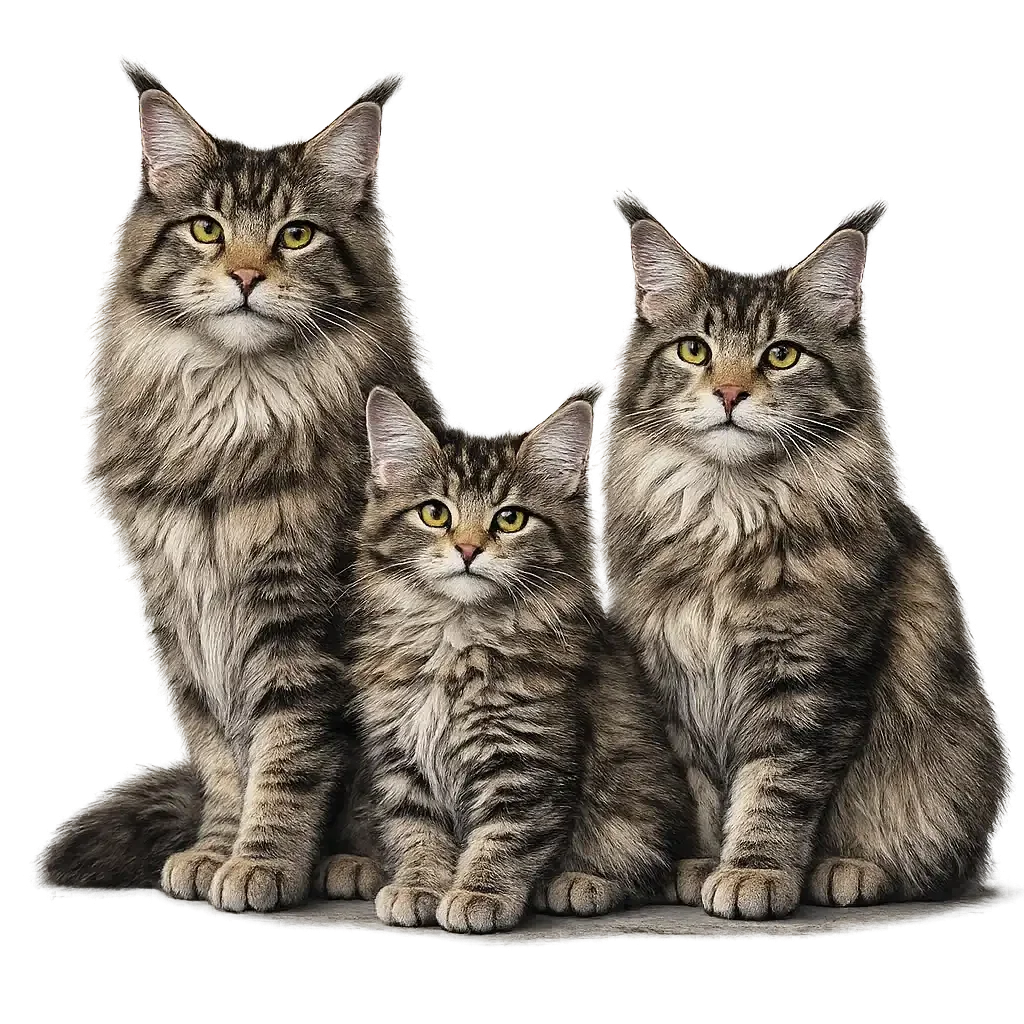
The Maine Coon is one of the largest and most majestic domestic cat breeds, often called the "gentle giant" of the feline world. Native to the northeastern United States, particularly Maine (where it is the official state cat), this breed evolved naturally to withstand harsh New England winters. With their thick, water-resistant coats, tufted ears, enormous paws, and luxurious plumed tails, Maine Coons are built for cold climates and outdoor work.
Maine Coons have a long, distinguished history as working farm cats, prized for their exceptional mousing abilities, friendly personalities, and adaptability to rural life. These impressive cats combine the hunting prowess needed for effective pest control with a remarkably gentle, sociable temperament that makes them beloved companions. Their size, intelligence, and hardy constitution make them ideal for farmhouse living in cold climates.
Origin & History
Origin: Maine, United States
Development Period: 1800s (naturally evolved breed)
Ancestry: Likely descended from longhaired cats brought by seafarers
Folk Legend: Myth says they descend from cats and raccoons (biologically impossible)
Working History: Valued as ship cats and farm mousers in New England
Recognition: One of the oldest natural North American breeds
First Cat Show: Featured in New York cat shows in the 1860s
State Cat: Official state cat of Maine since 1985
Decline & Revival: Nearly extinct in 1950s; revived by dedicated breeders
Current Status: One of the most popular pedigreed cat breeds worldwide
Physical Characteristics
Size: Large to extra-large (one of the largest domestic breeds)
Weight: Males 13-25 lbs (average 15-18 lbs); Females 8-16 lbs (average 10-14 lbs)
Length: Can reach 40+ inches from nose to tail tip
Body Type: Long, rectangular, muscular, substantial build
Coat: Long, thick, shaggy, water-resistant double coat
Coat Texture: Silky, flowing, with shorter hair on shoulders, longer on belly and britches
Colors: Almost all colors and patterns (tabby patterns most common)
Popular Colors: Brown tabby, silver tabby, red, black, white, cream
Head: Broad, medium-length, square muzzle
Eyes: Large, expressive, wide-set (green, gold, copper, or blue)
Ears: Large, wide at base, tufted tips (lynx-like appearance)
Ear Furnishings: Long hair inside ears for cold protection
Paws: Large, round, heavily tufted (snowshoe effect for walking on snow)
Tail: Long, luxuriously plumed, as long as the body
Ruff: Distinctive lion-like mane around neck and chest
Growth: Slow-maturing; reaches full size at 3-5 years old
Reproduction & Breeding
Sexual Maturity: Females 6-12 months; Males 6-9 months
Breeding Age: Best to wait until 18-24 months (later maturity than most breeds)
Heat Cycle: Every 2-3 weeks during breeding season (spring/summer)
Gestation Period: 63-65 days (approximately 9 weeks)
Litter Size: Average 4-6 kittens (range 3-8)
Birthing: Generally good mothers; may need assistance due to large kitten size
Kitten Development: Eyes open at 7-14 days; weaned at 10-12 weeks (later than most breeds)
Kitten Size: Larger than average kittens at birth
Breeding Frequency: Should limit to 1-2 litters per year
Fertility Period: Productive breeding years 2-8 years old
Lifespan & Health
Average Lifespan: 12-15 years
Record Lifespan: Some live into their late teens
Health Status: Generally healthy but some breed-specific concerns
Common Health Issues:
Hypertrophic cardiomyopathy (HCM) - heart condition
Hip dysplasia (due to large size)
Spinal muscular atrophy (SMA) - genetic condition
Polycystic kidney disease (PKD) - less common
Dental Health: Regular dental care needed
Weight Management: Monitor to prevent obesity
Genetic Testing: Available for HCM, SMA, and PKD
Vaccinations: Standard feline vaccines (FVRCP, rabies)
Parasite Control: Regular flea/tick prevention for outdoor cats
Spay/Neuter: Recommended at 6-9 months if not breeding
Temperament & Personality
Maine Coons are renowned for their exceptionally gentle, friendly, and sociable personalities, earning them the nickname "gentle giants." Despite their impressive size, they are remarkably docile and affectionate cats that form strong bonds with their families. They are playful well into adulthood, maintaining kitten-like energy and curiosity throughout their lives.
These cats are highly intelligent and trainable, often learning to fetch, walk on leashes, and respond to commands. Maine Coons are known for their dog-like loyalty and tendency to follow their owners around. They are generally good with children, other cats, and even dogs when properly socialized. Unlike many cats, Maine Coons often enjoy water and may play in water bowls or streams.
They communicate with distinctive chirping trills rather than typical meows and are moderately vocal. Maine Coons are neither overly demanding nor completely aloof - they enjoy companionship but aren't clingy. Their calm, stable temperament makes them excellent family pets and working farm cats alike.
Hunting & Working Ability
Prey Drive: Excellent - strong natural hunting instincts
Hunting Skills: Patient stalkers with powerful pouncing ability
Target Prey: Mice, rats, moles, voles, rabbits, small birds
Hunting Style: Methodical and strategic hunters
Working Ability: Can manage large rodent populations on farms
Size Advantage: Large enough to tackle bigger prey like rats
Territory Size: Will patrol extensive areas if allowed
Cold Weather Hunting: Thick coat allows hunting in snow and freezing temperatures
Stamina: Excellent endurance for extended hunting sessions
Intelligence: Problem-solvers who adapt hunting strategies
Care & Maintenance
Grooming: Moderate to high - brush 2-3 times weekly (daily during shedding season)
Coat Maintenance: Long coat requires regular grooming to prevent mats
Shedding: Heavy shedding, especially in spring
Bathing: Occasional baths helpful for coat maintenance (most enjoy water)
Nail Trimming: Every 2-3 weeks
Dental Care: Weekly tooth brushing recommended
Feeding: High-quality cat food; 3/4 to 1 cup daily (split into 2-3 meals)
Caloric Needs: Higher than average due to size
Water: Fresh water always available; may prefer running water
Litter Box: Extra-large boxes needed; one per cat plus one extra
Exercise: Moderate to high - needs space to run and climb
Environmental Enrichment: Cat trees, toys, outdoor access ideal
Climate Adaptability
Climate Tolerance: Excellent for cold; moderate for heat
Cold Tolerance: Outstanding - specifically adapted for harsh winters
Winter Features: Thick undercoat, ear tufts, snowshoe paws, water-resistant coat
Heat Tolerance: Moderate - can overheat in extreme temperatures
Best Climate: Cool to cold regions (New England, Northern states, Canada)
Indoor/Outdoor: Thrives with outdoor access in appropriate climates
Shelter Needs: Barn or outbuilding access for extreme weather
Snow Performance: Large paws act as snowshoes; loves playing in snow
Advantages for Farmhouse Living
Exceptional cold-weather tolerance - ideal for northern farms
Superior mousing and ratting abilities due to size and hunting prowess
Large size allows tackling bigger pests (large rats, young rabbits)
Gentle, friendly temperament perfect for family farms
Excellent with children and other animals
Intelligent and trainable - can learn boundaries and routines
Dog-like loyalty - often stays close to home
Water-resistant coat handles wet, snowy conditions
Hardy constitution bred for harsh New England climate
Good longevity (12-15 years) provides extended service
Adaptable to barn/outbuilding living with shelter access
Playful nature helps with farm life morale
Often enjoys water - won't avoid wet areas
Large paws excellent for snow navigation
Communicative personality helps locate them on property
Disadvantages for Farmhouse Living
Requires regular grooming - long coat mats easily without care
Heavy shedding requires maintenance
Can overheat in hot, humid climates
Higher food costs due to large size
Prone to certain genetic health issues (HCM, hip dysplasia)
Slower to mature - not fully grown until 3-5 years
Large size requires more space and larger litter boxes
Outdoor access increases risk of parasites in long coat
May hunt beneficial wildlife due to strong prey drive
Higher initial purchase cost for pedigreed cats ($1,000-$2,500)
Friendly nature may make them vulnerable to theft
Can wander far if not neutered (territorial instinct)
Coat can collect burrs, debris, and ice balls in winter
May bring large prey items (rats, rabbits) as "gifts"
Best Suited For
Cold-climate farms and homesteads
Northern regions with harsh winters
Barns and outbuildings with rodent issues
Family farms with children
Rural properties with space to roam
Owners willing to commit to regular grooming
Farms with other animals (good with livestock)
Properties with large pest populations
Operations seeking gentle, trainable cats
Cold-weather organic farms (natural pest control)
Economic Considerations
Initial Cost: Pedigreed kittens $1,000-$2,500; Working/barn lines $200-$500
Annual Veterinary Care: $300-$500 (vaccines, checkups, preventatives, cardiac screening)
Food Costs: $400-$600 annually (higher due to size)
Grooming Supplies: $50-$150 annually (or professional grooming costs)
Spay/Neuter: $75-$250 (more for larger cats)
Pest Control Value: Excellent ROI - eliminates rodenticide costs
Long-term Value: 12-15 year lifespan provides extended service
Maintenance: Moderate - higher than short-haired breeds
Fun Facts
Maine Coons are one of the largest domestic cat breeds in the world
The world record for longest domestic cat was a Maine Coon at 48.5 inches
They are the official state cat of Maine
Folk legend claims they're part raccoon (impossible but explains the name)
Maine Coons have water-resistant fur like otters
Their tufted paws act like natural snowshoes
They can take 3-5 years to reach full adult size
Maine Coons often chirp and trill instead of meowing
Many Maine Coons love playing in water - unusual for cats
The breed nearly went extinct in the 1950s but was saved by dedicated breeders
Maine Coons won "Best Cat" at the first major U.S. cat show in 1895
Their thick tail can wrap around their face for warmth in cold weather
Some Maine Coons can be trained to walk on leashes
The breed is known as the "dogs of the cat world" due to loyalty
Maine Coons have been featured in Harry Potter films (Mrs. Norris)