
Ameraucana Bantam
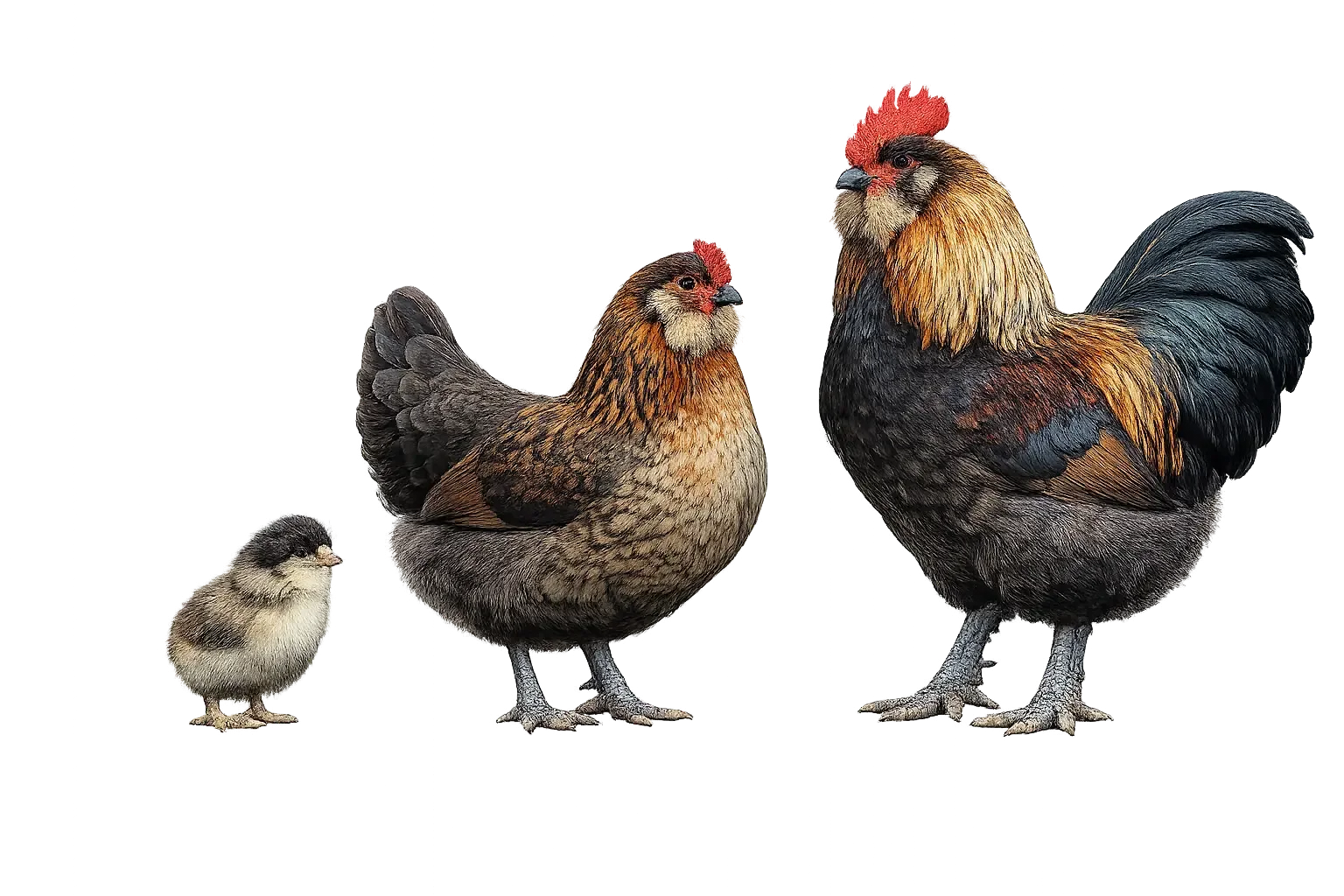
One of the lesser-known facts about the Ameraucana breed is that the bantam version came first. The breeders who developed the Ameraucana in the 1970s, working from Easter Egger-type blue egg layers to create a standardized, true-breeding breed with beard, muffs, pea comb, slate legs, full tail, and consistent blue egg production, achieved their first formal recognition in the bantam class before the large fowl standard was complete. Mike Gilbert of Wisconsin, Jerry Segler of Illinois, and John W. Blehm of Michigan were the primary developers of the original eight recognized bantam varieties, with the Wheaten and White varieties achieving American Bantam Association recognition in 1980 and all eight varieties receiving both ABA and APA recognition in 1984. The large fowl Ameraucana was recognized in the same year, but the Ameraucana Breeders Club and the Ameraucana Alliance both note that bantam Ameraucanas were bred to a consistent standard with a greater level of uniformity earlier in the breed's development. The Ameraucana Bantam is not, as is sometimes assumed, simply a scaled-down version of the large fowl: it is an equal and separately recognized standard in its own right, with a separate ABA recognition history and a weight standard of approximately 1.875 lbs for cocks and 1.625 lbs for hens in the APA bantam standard. It lays the same blue eggs as the large fowl Ameraucana, in a smaller size, with the same pea comb cold hardiness, the same beard and muffs, the same slate legs, and the same foraging and ranging character in a compact, space-efficient package. For homestead and backyard keepers who want a genuine, APA and ABA-recognized Ameraucana with blue egg production, active temperament, and excellent cold hardiness in a small footprint that costs less to feed and requires less housing space than the large fowl, the Ameraucana Bantam makes a case that the large fowl cannot.
Quick Facts
Class: All Other Comb Clean Legged (ABA); All Other Standard Breeds (APA)
Weight: Cocks approximately 1.875 lbs (30 oz); hens approximately 1.625 lbs (26 oz) per APA bantam standard
Egg Production: Approximately 100 to 150 small blue eggs per year; 2 to 3 eggs per week; smaller volume than large fowl but same blue color
Egg Color: Blue; ranging from light sky blue to medium pastel blue; blue throughout the shell inside and out; identical color to large fowl Ameraucana eggs
Egg Size: Small; proportionally smaller than large fowl Ameraucana eggs
Primary Purpose: Dual purpose at bantam scale; blue eggs; exhibition; pet; forager
Temperament: Active, curious, and generally friendly; individual variation exists; comparable to large fowl Ameraucana temperament range
Brooding: Variable; some hens go broody and are good mothers; bantam broody hens can hatch large fowl eggs with care
Flight Capability: Moderate to high; bantam breeds are generally more capable fliers than large fowl; covered runs or six-foot fencing recommended
APA Recognition: 1984 (eight varieties); ABA recognition of Wheaten and White began in 1980; ABA recognizes ten varieties including Self Blue and Splash
Country of Origin: United States; developed in the Midwest in the 1970s and 1980s by Mike Gilbert, Jerry Segler, and John W. Blehm
Varieties (APA Bantam): Black, Blue, Blue Wheaten, Brown Red, Buff, Silver, Wheaten, White; ABA additionally recognizes Self Blue and Splash
Comb Type: Pea comb; minimal frostbite risk; identical to large fowl
Distinctive Trait: Full APA and ABA-recognized bantam breed laying blue eggs; beard and muffs; slate legs; pea comb; full tail; came before the large fowl in breed standardization history
Conservation Status: Not at risk; active breeding community
Lifespan: 7 to 10 years
Breed Overview
The Ameraucana Bantam's origin story is the origin story of the Ameraucana breed itself, because bantam development preceded large fowl standardization in this breed's history, reversing the usual pattern where a large fowl breed exists first and a bantam is subsequently developed from it. The breeders who created the Ameraucana worked from blue egg laying Easter Egger-type birds in the early 1970s, seeking to stabilize a consistent breed with specific physical characteristics, blue eggs, and reliable enough genetics to breed true at least 50 percent of the time as the APA requires for breed recognition.
The founding breeders organized around the Ameraucana Bantam Club, which later became the Ameraucana Breeders Club and eventually joined with other groups to form the Ameraucana Alliance. The club's approach to breed development was democratic and collaborative: breed attributes were determined by majority vote among members, color varieties were developed and proposed by individual breeders or small groups, and the resulting standard reflected genuine community consensus rather than one breeder's vision. The Wheaten and White varieties achieved ABA recognition first in 1980; all eight original varieties received both ABA and APA recognition in 1984.
The Ameraucana Alliance notes that the bantam Ameraucana was bred to a greater level of consistency and uniformity earlier in the breed's development than the large fowl, reflecting the founding breeders' initial focus on the bantam class. The large fowl Ameraucana, while recognized in the same year, followed the bantam's development rather than preceding it.
Today the ABA recognizes ten Ameraucana bantam varieties including the Self Blue and Splash varieties added more recently, giving the bantam class a broader color recognition than the eight-variety large fowl APA standard. The APA bantam recognition matches the original eight varieties, with Self Blue and Splash currently recognized only by the ABA in the bantam class. This recognition disparity between ABA and APA standards is a practical consideration for exhibition breeders who show in APA-only shows versus ABA or mixed shows.
Plumage and Appearance
The Ameraucana Bantam's appearance is identical to the large fowl Ameraucana in every physical characteristic except size. The beard and muffs are full and present together, covering the lower face and cheeks. The pea comb is small and low-set. The legs are slate to nearly black. The eyes are reddish bay. The tail is full and carried at the upward angles specified in the breed standard. Every color variety available in the large fowl has a bantam counterpart with identical plumage characteristics evaluated under the same color standards.
What changes at bantam scale is the overall physical impression. A bantam Ameraucana hen weighing 1.625 pounds stands considerably smaller than her 5.5-pound large fowl counterpart, and the difference in visual scale changes how the breed reads in a flock. The bantam's beard and muffs appear proportionally similar to the large fowl's but create a relatively larger visual impression on the smaller bird, and the compact, active body type of the bantam reads as more alert and bird-like than the larger, more substantial large fowl silhouette.
The breed standard for the bantam is identical to the large fowl in all physical characteristics except weight. Both are evaluated against the same criteria for beard and muff fullness, pea comb conformation, slate leg color, tail carriage, and color variety-specific plumage standards. Exhibition breeders who show both bantam and large fowl Ameraucanas operate under the same plumage quality standards in both classes.
One physical difference between bantam and large fowl that affects management is flight capability. Bantam breeds generally retain more active flight ability than their large fowl counterparts, and the Ameraucana Bantam is more capable of sustained flight over standard fencing than the large fowl Ameraucana. This is not unique to the Ameraucana among bantam breeds; it is a general characteristic of bantam scale that keepers transitioning from large fowl to bantam management need to account for in containment planning.
Egg Production
The Ameraucana Bantam lays blue eggs that are identical in color to the large fowl Ameraucana's eggs but smaller in size, reflecting the bantam's smaller body and reproductive capacity. Annual production of approximately 100 to 150 small blue eggs per year, or 2 to 3 per week, represents the typical range for well-managed bantam Ameraucana hens. This is below the large fowl's 150 to 250 range in both absolute numbers and egg size, which is a genuine practical consideration for homestead keepers choosing between bantam and large fowl for their primary blue egg source.
The blue color is identical in mechanism and appearance to the large fowl egg: oocyanin pigment penetrating the shell from inside to outside, producing a shell that is blue throughout rather than tinted on the surface. A bantam Ameraucana blue egg cut in half shows the same blue on the interior of the shell as the exterior, exactly as the large fowl egg does. The shade of blue each individual hen produces is consistent across her laying life regardless of body size.
The production comparison between bantam and large fowl is most useful when framed in terms of resource consumption relative to output. A bantam Ameraucana hen produces fewer and smaller eggs per year than a large fowl hen, but she also consumes approximately one quarter to one fifth of the feed, requires proportionally less housing space, and generates proportionally less waste. For homestead keepers who value the bantam's space and feed efficiency alongside the blue egg production, the per-egg resource cost of a bantam flock is not dramatically different from a large fowl flock when the size difference is accounted for.
Broodiness in the Ameraucana Bantam is variable, as it is in the large fowl. Some hens go broody and are good mothers; others rarely or never commit to incubation. When bantam Ameraucana hens do go broody, they can be used to hatch large fowl eggs, a practical function that bantam hens across many breeds serve. The small body size reduces the egg-crushing risk somewhat relative to large hen sizes, though the proportion of body weight to egg size in a large fowl egg under a bantam hen requires attentive nest management to ensure proper incubation without shifting eggs.
Temperament and Behavior
The Ameraucana Bantam's temperament range is comparable to the large fowl Ameraucana's: generally active, curious, and friendly, with individual variation from calm and approachable to more flighty and independent. Bantam breeds as a class are sometimes described as more active and alert than their large fowl counterparts, and the Ameraucana Bantam reflects this general tendency, showing the quick, darting movements and heightened alertness that bantam-scale birds typically exhibit relative to heavier large fowl.
This activity level is an advantage in foraging environments, where the Ameraucana Bantam's compact size and active character make it an efficient forager relative to its feed consumption. A bantam flock covering ground for insects and plant material can supplement its diet meaningfully from range access, contributing to feed efficiency at a scale that makes bantam foraging economically worthwhile even given the smaller egg output.
The breed's people-orientation varies by individual and by the handling history of the specific birds. Bantam Ameraucanas handled regularly from young are manageable and become reasonably tame; those raised without regular handling maintain more independence and wariness toward human contact. The breed is not a lap bird in the manner of the Silkie or Sultan, but it is not characteristically skittish or difficult when handled consistently.
In mixed flocks the Ameraucana Bantam holds a moderate position, generally peaceful toward other breeds but occasionally on the receiving end of size-based bullying from significantly larger companions. The breed's active character and relatively quick movement allow it to avoid confrontation better than slower, calmer bantam varieties, but pairing bantam Ameraucanas with breeds of similar size and temperament produces the most harmonious flock dynamics.
Climate Adaptability
The Ameraucana Bantam's pea comb is the primary cold-climate advantage, identical in function to the large fowl's: minimal surface area presented to cold air, producing essentially no frostbite risk under standard cold-weather housing conditions. The breed handles North American winters well across most regions with dry, well-ventilated, wind-protected housing.
The bantam's smaller body mass is a relevant cold-climate consideration compared to the large fowl. Smaller birds have a higher surface-area-to-volume ratio, which means they lose body heat more quickly relative to their mass than larger birds. The Ameraucana Bantam manages cold winters adequately with appropriate housing, but it does not have the same cold-buffer that a large fowl's greater body mass provides. In extreme cold regions, ensuring the housing is truly draft-free and providing adequate flock density to allow body heat sharing between birds is more important for bantam flocks than for large fowl flocks.
Heat tolerance is good for the bantam's size, as smaller body mass generates less metabolic heat and the active ranging behavior supports natural temperature regulation. Standard shade and cool water management handles summer heat adequately without special intervention for most North American climates.
The beard and muff feathering management consideration that applies to all Ameraucana varieties applies equally to the bantam: waterer design that prevents beard submersion keeps the beard dry and reduces matting and cold-weather chilling from wet feathers.
Housing and Management
The Ameraucana Bantam's housing requirements are proportionally smaller than the large fowl's in every dimension except containment height. Four square feet of indoor floor space per bird is the standard baseline, though the bantam's smaller body means it uses that space more efficiently than a large fowl bird. The practical housing advantage of the bantam is that a given coop and run designed for large fowl can accommodate approximately four to five times as many bantam birds, making the bantam format more space-efficient for keepers with fixed infrastructure.
Fencing height is the management area where the bantam requires more rather than less infrastructure than the large fowl. The bantam's more active flight capability means standard four-foot fencing that reliably contains large fowl Ameraucanas may not contain bantam birds. Six-foot fencing or covered runs provide appropriate containment for bantam flocks where flight over fencing is a concern.
Roost bar sizing follows bantam proportions: smaller diameter bars that allow the bantam's smaller feet to grip properly are more comfortable and more appropriate than the standard large fowl roost bar dimensions. This is a minor but practical consideration for keepers setting up bantam housing who are accustomed to large fowl infrastructure.
Feed management follows standard layer guidelines with quantities adjusted for bantam body weight. A bantam Ameraucana consumes approximately one quarter of the feed a large fowl Ameraucana does, which makes feed cost management more favorable for bantam operations on a per-bird basis despite the smaller egg output. Layer feed with 16 to 18 percent protein and free-choice oyster shell for calcium support the bantam's production needs without modification to the formula.
Breed verification is as important for the Ameraucana Bantam as for any Ameraucana variety. The misspellings Americana and Americauna, and birds sold at bantam scale under these names, are Easter Eggers rather than true Ameraucanas. A genuine Ameraucana Bantam has slate legs, a pea comb, beard and muffs together, a full tail, and consistent blue egg production.
Sourcing Considerations
The Ameraucana Bantam is less widely available from mainstream hatcheries than the large fowl Ameraucana, with fewer mainstream sources carrying verified bantam Ameraucana stock rather than bantam-sized Easter Eggers. The Ameraucana Breeders Club directory and the Ameraucana Alliance are the primary North American resources for verified bantam Ameraucana breeders, and exhibition shows where bantam Ameraucana breeders display their birds are good venues for sourcing and evaluating stock directly.
The ABA's bantam-specific recognition means that breeders active in the ABA bantam show community maintain verified bantam Ameraucana breeding programs that may not overlap with APA large fowl breeding programs. Sourcing specifically from breeders who show in ABA bantam classes produces the most reliably verified bantam stock.
The color variety recognition differences between ABA and APA bantam standards are worth understanding before sourcing. If exhibition in APA-only shows is the goal, Self Blue and Splash bantam varieties should be verified against APA bantam recognition status before purchasing birds intended for APA competition. The ABA recognizes both Self Blue and Splash in bantam; the APA currently does not in the bantam class.
Pros and Cons
Pros
Full APA and ABA-recognized breed with established bantam standard; not a bantam Easter Egger but a genuine standardized breed
Came before large fowl in breed standardization history; bantam Ameraucana was bred to consistent standards earlier than large fowl
Consistent blue egg production from a verified Ameraucana; same blue color as large fowl eggs
Pea comb provides excellent cold hardiness with minimal frostbite risk; identical advantage to large fowl
Approximately one quarter of the feed consumption of large fowl; more economical per bird in feed-cost terms
Proportionally more birds per unit of housing space than large fowl; space-efficient format for fixed infrastructure
Active forager; efficient at supplementing diet from range relative to body size
ABA recognition covers ten varieties including Self Blue and Splash not currently in the APA bantam standard; broader exhibition options in ABA shows
Long productive lifespan of 7 to 10 years
Cons
Egg production of 100 to 150 small eggs per year is below large fowl Ameraucana production in both volume and egg size
More capable of sustained flight than large fowl; requires six-foot fencing or covered runs for reliable containment
Smaller body mass means less cold-buffer in extreme winter conditions compared to large fowl
Less widely available from mainstream hatcheries than large fowl Ameraucana; specialty sourcing through breeder networks required for verified stock
APA bantam standard does not currently include Self Blue or Splash varieties; exhibition limitations in APA-only shows for these colors
Broodiness variable; not reliable for natural hatching programs
Individual temperament variation; some birds calmer, some more flighty
Profitability
The Ameraucana Bantam's profitability is built on the same blue egg premium that supports the large fowl Ameraucana's direct-sale value, adjusted for the smaller egg size and volume. Blue bantam eggs command curiosity and novelty pricing in direct-sale markets where egg variety and color drive buyer interest, though the smaller size typically prices below large fowl blue eggs in markets where buyers are comparing directly.
The bantam format's primary profitability advantage over large fowl is the feed efficiency and space efficiency that allow more birds per unit of resource investment. A homestead operation that produces a mixed color egg basket for direct sale can maintain more bantam Ameraucanas per acre of range and per dollar of feed than large fowl, potentially generating comparable overall blue egg volume from a larger bantam flock at lower per-bird infrastructure cost.
Exhibition breeding of verified Ameraucana Bantam birds in correct color varieties commands consistent demand from the ABA bantam show community. Breeders producing correct-type bantam birds with good beard and muff development, proper pea comb conformation, and verified blue egg production from documented breeding lines serve a dedicated and knowledgeable buyer community that values verified breed credentials over hatchery convenience.
Comparison With Related Breeds
Large Fowl Ameraucana (Blue, Blue Splash, Lavender varieties): The most direct comparison. All breed characteristics are shared: same physical standard, same blue egg color, same pea comb cold hardiness, same temperament range. The bantam produces fewer and smaller eggs, consumes less feed, requires less space, and flies more actively. The large fowl produces more and larger eggs, consumes more feed, requires more space, and is more easily contained. The choice between bantam and large fowl is primarily a resource management decision based on the keeper's available space, feed budget, and egg volume requirements.
Splash Ameraucana Bantam: A specific color variety within the Ameraucana Bantam that is covered separately in your directory. The Splash Bantam is recognized by the ABA but not currently by the APA in the bantam class, making it an important variety distinction for exhibition purposes. All other breed characteristics are identical across the Ameraucana Bantam color varieties.
Easter Egger (Bantam): The most commonly confused comparison at bantam scale, since bantam Easter Eggers are widely sold at hatcheries under Ameraucana-adjacent names. A true Ameraucana Bantam has slate legs, pea comb, beard and muffs together, a full tail, and consistent blue egg production verified through documented breeding. A bantam Easter Egger may have some of these characteristics but does not meet the full breed standard and may lay blue, green, pink, or brown eggs depending on its specific genetics.
Silkie Bantam: The most popular true bantam breed for comparison on overall ornamental character and brooding utility. The Silkie Bantam is considerably more docile and people-oriented than the Ameraucana Bantam, has more dramatic ornamental feathering, and is a more reliable broody hen. The Ameraucana Bantam is a better layer of blue eggs and a more active forager. Both are bantam breeds well-suited to backyard and homestead settings; the Ameraucana serves the blue egg function, the Silkie serves the brooding and companion function.
Belgian d'Uccle Bantam: A true bantam with no large fowl counterpart, known for its calm temperament, feathered feet, and muffs and beard similar in appearance to the Ameraucana Bantam's face feathering. The d'Uccle lays cream to tinted small eggs rather than blue, is generally calmer and more people-oriented than the Ameraucana Bantam, and has a somewhat different exhibition culture. Both are small, muffed and bearded bantam breeds; the Ameraucana's defining advantage is the blue egg.
Final Verdict
The Ameraucana Bantam is the right choice for the keeper who wants genuine, verified, standardized Ameraucana blue egg production in a compact, space-efficient format that costs less to feed and house than the large fowl without sacrificing the breed's defining characteristics: the pea comb cold hardiness, the beard and muffs, the slate legs, the active foraging character, and the consistent blue eggs that are blue from the inside of the shell to the outside. The flight management requirement and the smaller egg volume are the practical tradeoffs of bantam scale that every prospective keeper should understand before choosing bantam over large fowl for their primary blue egg production. For keepers with limited space, limited feed budgets, or a preference for the compact energy and quick movement of bantam-scale birds, the Ameraucana Bantam delivers the full Ameraucana breed experience in a genuinely more resource-efficient package. The dual purpose and homestead category is better for including it.
Frequently Asked Questions
Did the Ameraucana Bantam come before the large fowl? Yes, in terms of breed standardization. The breeders who developed the Ameraucana in the 1970s achieved greater consistency and uniformity in the bantam class earlier in the breed's development than in the large fowl. The Wheaten and White bantam varieties were recognized by the American Bantam Association in 1980, before the APA recognized any Ameraucana variety in either class. Both the bantam and large fowl received APA recognition in 1984, but the Ameraucana Alliance notes that the bantam was bred to a more consistent standard earlier in the breed's history.
How big are Ameraucana Bantam eggs? Small, proportionally reflecting the bantam hen's smaller body size. The eggs are the same blue color as large fowl Ameraucana eggs, produced by the same oocyanin pigment mechanism, but smaller in absolute size. For direct-sale purposes, bantam blue eggs are typically sold differently from large fowl blue eggs given the size difference, though they are equally blue and equally genuine in breed origin.
Can an Ameraucana Bantam hen hatch large fowl eggs? Yes, with attentive management. Bantam hens can and do incubate large fowl eggs successfully; the size difference requires ensuring the hen can cover the larger eggs adequately and that nest management supports proper incubation without egg shifting. This is a practical use that many bantam keepers employ, and the Ameraucana Bantam's occasional broodiness makes individual hens useful for this function when they commit to a clutch.
What is the difference between ABA and APA recognition for the Ameraucana Bantam? The ABA recognizes ten Ameraucana Bantam varieties including Self Blue and Splash in addition to the eight shared with the APA. The APA currently recognizes eight bantam Ameraucana varieties, the same eight recognized since 1984, without the Self Blue and Splash varieties that the APA has since recognized only in the large fowl class. Exhibition breeders who show in ABA shows have access to broader color variety competition than breeders who show exclusively in APA shows.
Why does the Ameraucana Bantam require taller fencing than large fowl? Bantam breeds generally retain more active flight capability than their large fowl counterparts because their smaller body weight requires less lift for sustained flight. A large fowl Ameraucana weighing 5.5 pounds is a substantially less efficient flier than a bantam Ameraucana weighing 1.625 pounds. Four-foot fencing that reliably contains large fowl may not contain bantam birds, which can fly over it with modest effort. Six-foot fencing or covered runs provide appropriate containment for bantam flocks.
Where can I find verified Ameraucana Bantam chicks? The Ameraucana Breeders Club directory and the Ameraucana Alliance are the primary North American resources for verified bantam breeders. ABA bantam poultry shows are good venues for meeting Ameraucana Bantam breeders directly. Mainstream hatcheries rarely carry verified bantam Ameraucanas; birds sold as bantam Ameraucanas at hatcheries are typically bantam Easter Eggers. Verify slate legs, pea comb, beard and muffs, and consistent blue egg production history before purchasing.
Related Breeds
Blue Ameraucana
Blue Splash Ameraucana
Lavender Ameraucana
Splash Ameraucana Bantam
Easter Egger
White Silkie Bantam
Belgian d'Anvers