
Ameribella
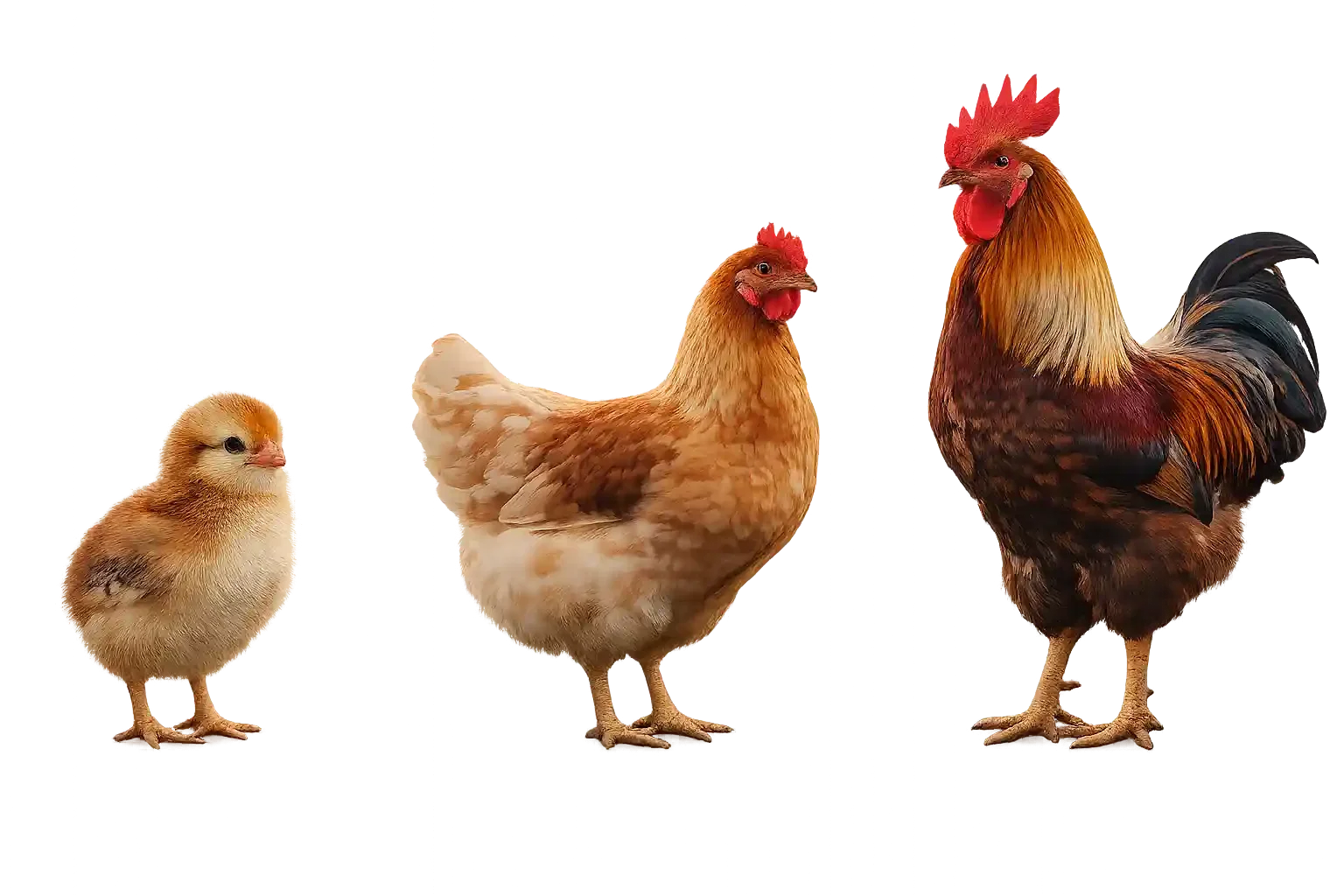
The Ameribella is a proprietary sex-link hybrid chicken developed exclusively by My Pet Chicken and introduced to the market in 2024. It was built around three specific goals: high egg production, climate adaptability, and sex-linked genetics that allow male and female chicks to be distinguished at hatch by feather color, eliminating the guesswork and rehoming stress that unsexed breeds create for backyard keepers who cannot or do not want roosters. The result is a hen that lays 5 to 6 large cream-tinted eggs per week, reaching up to approximately 280 to 300 eggs per year, from a compact, mostly black-feathered bird with reddish highlights that is calm, sociable, and straightforward to manage in a range of climates and flock sizes. As a first-generation hybrid it benefits from hybrid vigor, the health and hardiness advantage that comes from the mixing of two genetically distinct parent lines, and like all sex-link hybrids it does not breed true, meaning offspring from Ameribella-to-Ameribella crosses will not reliably replicate the parent's production characteristics or sex-linkage. The Ameribella is not recognized by the APA or any breed standards organization and is not suitable for exhibition. It is a production-oriented backyard flock bird available exclusively through My Pet Chicken, and it is evaluated most honestly on those terms: as a reliable, beginner-friendly, high-producing hybrid layer with a straightforward care profile and a clean-looking black plumage that is more attractive than most production hybrids. For the homestead keeper who wants maximum cream egg output with the confidence of a sex-linked purchase and is comfortable sourcing from a single exclusive supplier, the Ameribella delivers.
Quick Facts
Type: Proprietary sex-link hybrid; exclusive to My Pet Chicken; introduced 2024
Weight: Not published; estimated medium-weight hen based on body type descriptions
Egg Production: Approximately 280 to 300 large cream-tinted eggs per year; 5 to 6 eggs per week
Egg Color: Cream-tinted; lighter than a standard brown egg; warm cream rather than pure white
Egg Size: Large
Primary Purpose: Egg production; dual purpose at homestead scale
Temperament: Calm, sociable, and easy to handle; described as beginner-friendly; active and curious; good with families
Brooding: Low; production hybrids are generally not broody
Flight Capability: Moderate; standard fencing adequate
APA Recognition: None; hybrid breeds are not eligible for APA recognition or exhibition
Country of Origin: United States; developed by My Pet Chicken
Parent Breeds: Not publicly disclosed by My Pet Chicken
Sex-Link Characteristics: Hen chicks hatch predominantly black; rooster chicks hatch with barred coloring distinguishable at hatch
Distinctive Trait: My Pet Chicken exclusive sex-link hybrid; mostly black plumage with reddish highlights in hens; barred plumage in roosters; high cream egg production; does not breed true
Availability: Exclusively through My Pet Chicken; day-old chicks and pullets
Lifespan: Estimated 5 to 7 years, consistent with production hybrid breeds
Breed Overview
The Ameribella is one of several proprietary hybrid breeds that My Pet Chicken has developed and markets exclusively through its platform, positioned alongside their Lavender Dream Easter Egger and other exclusive offerings as breeds unavailable from any other hatchery or supplier. The breed's development followed the standard sex-link hybrid model: crossing two compatible parent breeds selected so that the color genetics inherited from each parent express differently in male and female offspring, producing chicks whose sex is identifiable at hatch by down color or early feather pattern without requiring vent sexing.
The specific parent breeds used in the Ameribella cross are not publicly disclosed by My Pet Chicken, which is standard practice for proprietary hybrid producers who maintain their parent flock genetics as a competitive advantage. What the publicly available information confirms is the sex-link mechanism at work in the Ameribella: hen chicks hatch predominantly black, while rooster chicks hatch with barred feathering that distinguishes them immediately from their sisters. This barred rooster pattern is consistent with several established sex-link crosses where the barring gene from one parent interacts with the base color genetics from the other to produce sex-distinguishable offspring at hatch.
The Ameribella's introduction in 2024 placed it in the competitive production hybrid market occupied by established sex-links such as the Black Sex Link, Red Sex Link, Cinnamon Queen, and Golden Comet. My Pet Chicken's positioning of the Ameribella emphasizes the combination of high production volume, climate adaptability, and the exclusive availability that differentiates it from these widely sourced alternatives. For buyers who already use My Pet Chicken as their primary chick source and want a high-production sex-link without sourcing from multiple suppliers, the Ameribella offers a convenient one-stop option.
As a first-generation hybrid, the Ameribella benefits from heterosis, the genetic phenomenon by which offspring from two distinct parent lines often exceed either parent in health, growth, and production efficiency. This hybrid vigor is the primary reason commercial and serious backyard production operations favor hybrid layers over heritage breeds for volume production: the first-generation cross reliably produces birds that perform at or above the production figures of either parent breed, with generally strong disease resistance and adaptability.
The practical limitation of all sex-link hybrids including the Ameribella is that they do not breed true. A keeper who breeds Ameribella hens with Ameribella roosters will not produce Ameribella offspring: the hybrid genetics do not replicate consistently in subsequent generations, and the sex-linkage mechanism that makes chick sexing simple disappears in the F2 generation. Keepers who want to maintain a self-sustaining flock must source new Ameribella chicks from My Pet Chicken each generation rather than propagating from their own flock.
Plumage and Appearance
The Ameribella hen's plumage is predominantly black with reddish highlights, described by My Pet Chicken as a mostly black bird with copper or reddish tones visible particularly in the hackle and chest areas. The overall impression is of a clean, dark-feathered production bird with enough warmth in the coloring to be more visually interesting than a solidly uniform black. The black feathering is smooth and sleek rather than fluffy, reflecting the production-oriented genetics of the hybrid rather than the ornamental type of heritage breeds.
The Ameribella rooster, which keepers who order sexed hens will not typically maintain, has black barred plumage that is the visual signature of the sex-link mechanism at work in the breed. The barred pattern in the rooster versus the predominantly black pattern in the hen is what makes hatch-day sexing possible, with keepers able to sort rooster from hen chicks by feather pattern rather than by the more technically demanding vent sexing method.
The breed does not have a published weight standard given its hybrid rather than breed status, but descriptions of the bird's appearance and production profile suggest a medium-weight hen consistent with other black sex-link type birds, typically in the 5 to 7 pound range at maturity.
Egg Production
The Ameribella's egg production is the central value proposition of the breed and the primary reason a keeper would choose it over heritage alternatives in the same directory. Five to 6 large cream-tinted eggs per week, projected at up to approximately 280 to 300 eggs per year, places the Ameribella at the high end of the production spectrum alongside other top-performing sex-link hybrids and significantly above the heritage dual-purpose breeds covered elsewhere in this directory.
For context: the Black Australorp, the highest-producing heritage breed in this directory, lays approximately 250 to 300 eggs per year. The Black Copper Marans lays 150 to 200. The Blue Ameraucana lays 150 to 250. The Ameribella matches the Australorp's upper range while starting production earlier, at approximately 4 to 5 months of age compared to the Australorp's 5 to 6 months, and doing so from a hybrid specifically engineered for production consistency.
The egg color is cream-tinted, a warm off-white that sits between a pure white egg and a standard light brown egg. It is not olive, green, or blue: the Ameribella lays a cream egg consistently, which is important to note given that the breed appears in some chicken directories alongside green and olive egg layers in ways that can create confusion about what color to expect. A cream egg from an Ameribella is a clean, warm cream shell that photographs well in a mixed egg carton alongside the darker browns, blues, and greens of heritage breed eggs.
Production hybrids including the Ameribella generally lay consistently through their first two to three years, with production declining more sharply after that point than heritage breeds. This is the standard tradeoff of high-production hybrid genetics: intense early production followed by faster decline, in contrast to heritage breeds whose lower peak production tends to taper more gradually over a longer laying life.
Broodiness is low, consistent with sex-link hybrids generally. The production genetics that drive high egg volume are associated with reduced brooding tendency, which is an advantage for keepers who want consistent egg supply without brooding interruptions but a limitation for those who want natural flock propagation through broody hens.
Temperament and Behavior
The Ameribella is described by My Pet Chicken as calm, sociable, and easy to handle, with an active and curious character that makes it engaging to observe while remaining manageable in backyard and homestead settings. Keeper accounts from BackYard Chickens community discussions confirm the curious, investigative temperament, with one keeper noting the bird's smart and inquisitive nature from early in development.
The beginner-friendly positioning of the Ameribella reflects the general character of well-bred sex-link hybrids, which tend toward docility and approachability partly as a function of the heritage breeds used in their parent stock, often Rhode Island Red, Plymouth Rock, or similar calm dual-purpose breeds. The Ameribella's temperament fits comfortably into the manageable, family-appropriate backyard flock category without the exceptional people-seeking affection of the Silkie or the Sultan.
In mixed flocks the Ameribella's medium-weight, calm-natured character should integrate without significant dominance or vulnerability issues alongside breeds of similar size and temperament. The breed's active foraging character, consistent with sex-link hybrids generally, contributes to feed efficiency in range settings.
Climate Adaptability
My Pet Chicken describes the Ameribella as adaptable to both warm southern and cold northern climates, consistent with the climate adaptability that is a characteristic of most production sex-link hybrids. The specific comb type of the Ameribella is not published, which is the most relevant climate variable for cold-climate comb frostbite management. If the Ameribella carries a standard single comb consistent with many sex-link crosses, standard frostbite monitoring during hard freezes would apply to the roosters particularly. Keepers in regions with sustained extreme cold should confirm comb type before acquiring birds if frostbite management is a priority concern.
Heat tolerance is generally good for production hybrids, which are selected for year-round production performance across climate conditions. Standard shade and cool water management in summer is the appropriate baseline for the Ameribella as for any production layer in warm weather.
Housing and Management
Standard production layer housing requirements apply. Four square feet of indoor floor space per bird minimum. Standard four-foot fencing adequate for a bird of this size and temperament. Layer feed with 16 to 18 percent protein and free-choice oyster shell for calcium supplementation supports the high weekly production volume. The Ameribella's active foraging character benefits from range access where available, supplementing the feed ration with insects and plant material in ways that improve feed cost efficiency.
The non-breeding nature of the hybrid is the most important management consideration unique to the Ameribella relative to heritage breeds. Keepers who want to propagate their flock from their own birds cannot do so effectively with the Ameribella: offspring from Ameribella crosses will not replicate the parent's production characteristics, sex-linkage, or cream egg color consistency. Planning for regular chick replacement from My Pet Chicken is the appropriate long-term management approach for an Ameribella-centered flock.
The exclusive sourcing requirement from My Pet Chicken is a supply chain dependency that distinguishes the Ameribella from heritage breeds available from multiple hatcheries and breeders. Keepers who want to avoid single-supplier dependency for their primary laying flock should factor this into their sourcing strategy.
Sourcing Considerations
The Ameribella is available exclusively through My Pet Chicken as day-old chicks and as pullets at or near laying age. No other hatchery, breeder, or supplier carries this breed by design, as it is a proprietary My Pet Chicken exclusive. Availability is subject to My Pet Chicken's seasonal hatch schedules and demand; the product listing notes birds sell quickly, suggesting demand exceeds supply in peak ordering periods.
The sex-link purchase confidence that My Pet Chicken emphasizes as a key selling point is genuine: ordering sexed hen Ameribellas from My Pet Chicken's verified sex-link chick program delivers hens with the reliability that sex-link sexing provides, well above the 80 to 90 percent accuracy of standard vent sexing on non-sex-linked breeds.
Pros and Cons
Pros
High egg production of approximately 280 to 300 cream-tinted eggs per year; 5 to 6 large eggs per week from each hen
Sex-link genetics allow reliable chick sexing at hatch; ordered hens are hens with high confidence
Hybrid vigor from first-generation cross genetics produces a hardy, health-robust bird
Early lay onset at approximately 4 to 5 months of age
Calm, sociable, beginner-friendly temperament; good for families and first-time keepers
Adaptable to a range of climates including both cold northern and warm southern regions
Attractive mostly black plumage with reddish highlights; more visually interesting than most production hybrids
Available as pullets near laying age for keepers who want immediate production without the brooder stage
Cons
Does not breed true; cannot propagate a self-sustaining flock from Ameribella crosses
Exclusive to My Pet Chicken; single-supplier dependency for all replacement stock
Parent breeds not disclosed; genetic background opaque
Not APA recognized; not suitable for exhibition
Production decline typically more rapid after peak years than heritage breeds
Broodiness low; not suitable for natural hatching programs
Comb type not published; frostbite management specifics unconfirmed for extreme cold climates
Long-term keeper reviews limited given 2024 introduction date; multi-year production track record not yet established
Profitability
The Ameribella's profitability is built around high-volume cream egg production from a low-maintenance, beginner-accessible hybrid at a price point competitive with other production sex-links. For homestead operations where egg volume, production reliability, and predictable sexed-hen purchases are the primary value drivers, the Ameribella delivers a compelling return on feed and housing investment given its production figures.
The cream egg color does not carry the premium market value of the blue eggs from an Ameraucana or the chocolate brown of a Black Copper Marans, but cream eggs in a mixed carton alongside those colors provide a clean visual contrast that experienced egg marketers use effectively. A mixed carton of chocolate brown, sky blue, olive green, and cream eggs is a direct-sale product with strong visual appeal, and the Ameribella's cream eggs contribute meaningfully to that visual variety.
The single-supplier dependency affects profitability planning in that replacement chick costs and availability are subject to My Pet Chicken's pricing and seasonal schedule rather than the competitive market of widely available heritage breeds. Keepers who scale their Ameribella flock significantly should factor My Pet Chicken's minimum order requirements and shipping costs into their annual replacement planning.
Comparison With Related Breeds
Black Sex Link: The most direct comparison from the established sex-link market. The Black Sex Link, a cross between a Rhode Island Red rooster and a Barred Plymouth Rock hen, produces hens with predominantly black plumage and reddish highlights that are visually similar to the Ameribella's description, lays large brown eggs at approximately 200 to 280 per year, and is widely available from multiple hatcheries without single-supplier dependency. The Ameribella projects higher production at 280 to 300 eggs per year in cream rather than brown, but the Black Sex Link's wider sourcing options and established multi-decade track record are practical advantages for keepers who value sourcing flexibility.
Black Australorp: The heritage breed comparison for a black-feathered, high-producing dual-purpose bird. The Black Australorp lays 250 to 300 large light brown eggs per year from a true-breeding APA-recognized heritage breed with a century of documented production history, beetle-green iridescent plumage, and genuine dual-purpose meat utility. The Ameribella matches the Australorp's upper production range with earlier lay onset, sex-link sexing confidence, and hybrid vigor health advantages, but the Australorp breeds true, is available from multiple suppliers, has exhibition credentials, and produces a worthwhile meat bird. For keepers who value heritage breed credentials alongside high production, the Australorp is the heritage answer to the Ameribella's hybrid proposition.
Cinnamon Queen: Another widely available production sex-link with comparable production figures of approximately 250 to 300 large brown eggs per year, golden buff to reddish-brown plumage in hens, and sex-link chick sexing. The Cinnamon Queen is available from multiple hatcheries without single-supplier dependency. The Ameribella produces cream rather than brown eggs and has the My Pet Chicken exclusive sourcing structure; otherwise the two occupy very similar positions in the production hybrid market.
Whiting True Blue: The blue egg production comparison for keepers considering the Ameribella specifically for egg color variety in a mixed carton. The Whiting True Blue lays approximately 280 to 300 sky blue eggs per year at production figures comparable to the Ameribella, is a Murray McMurray exclusive with similar single-supplier dependency, and adds the blue egg color that commands the strongest premium in direct-sale markets. Keepers building a rainbow egg basket flock would gain more direct-sale value from the Whiting True Blue's blue contribution than from the Ameribella's cream, though both are high-production proprietary exclusives from their respective suppliers.
Final Verdict
The Ameribella is an honest, well-positioned production hybrid that does what My Pet Chicken designed it to do: produce a high volume of cream eggs from a calm, attractive, sex-linked bird that beginners can manage successfully and that experienced keepers can integrate into a mixed flock without management complications. The single-supplier dependency, the non-breeding hybrid genetics, and the short production track record given its 2024 introduction are the genuine limitations that a careful buyer should understand before committing to the Ameribella as a primary flock bird. For the keeper who sources regularly from My Pet Chicken, wants the convenience of reliable sex-link chick sexing, and values cream egg production volume over heritage breed credentials or exhibition eligibility, the Ameribella is a practical and reasonable choice. The dual purpose and homestead category is better for including it.
Frequently Asked Questions
What color eggs does the Ameribella lay? Large cream-tinted eggs, described as a warm off-white between a pure white egg and a standard light brown egg. The Ameribella does not lay olive, green, or blue eggs. The cream color is consistent across hens and across the laying season.
Is the Ameribella available from hatcheries other than My Pet Chicken? No. The Ameribella is a proprietary breed developed exclusively by My Pet Chicken and is not available from any other supplier. Keepers who want Ameribellas must source them directly from My Pet Chicken as day-old chicks or as pullets.
Can I breed my Ameribella hens to produce more Ameribellas? No. As a first-generation hybrid, the Ameribella does not breed true. Offspring from Ameribella-to-Ameribella crosses will not reliably replicate the parent's production characteristics, cream egg color, sex-linkage at hatch, or other hybrid traits. Maintaining an Ameribella flock requires purchasing replacement chicks from My Pet Chicken each generation.
How do I tell male and female Ameribella chicks apart at hatch? Hen chicks hatch predominantly black, while rooster chicks hatch with barred feathering that distinguishes them from the solid-dark hens. This sex-link mechanism is what allows My Pet Chicken to offer the Ameribella with reliable sexed-hen confidence at the time of purchase.
How does the Ameribella compare to heritage breeds for long-term keeping? Production hybrids including the Ameribella typically deliver peak egg production in their first two to three years with a faster production decline afterward compared to heritage breeds. Heritage breeds like the Black Australorp lay at a somewhat lower peak volume but taper more gradually over a longer productive lifespan. For keepers who replace their laying flock every two to three years anyway, the Ameribella's high early production is a genuine advantage; for keepers who want a productive hen over a six to eight year horizon, heritage breeds generally perform better across the full timeline.
What are the parent breeds of the Ameribella? My Pet Chicken has not publicly disclosed the specific parent breeds used in the Ameribella cross. This is standard practice for proprietary hybrid producers who maintain their parent flock genetics as a competitive advantage. The sex-link mechanism and the barred rooster plumage are consistent with several established sex-link crosses but the specific parents have not been confirmed.
Related Breeds
Black Sex Link
Black Australorp
Cinnamon Queen
Whiting True Blue
Rhode Island Red
Barred Plymouth Rock