
Murray’s Choice Layer (Hatchery Line)
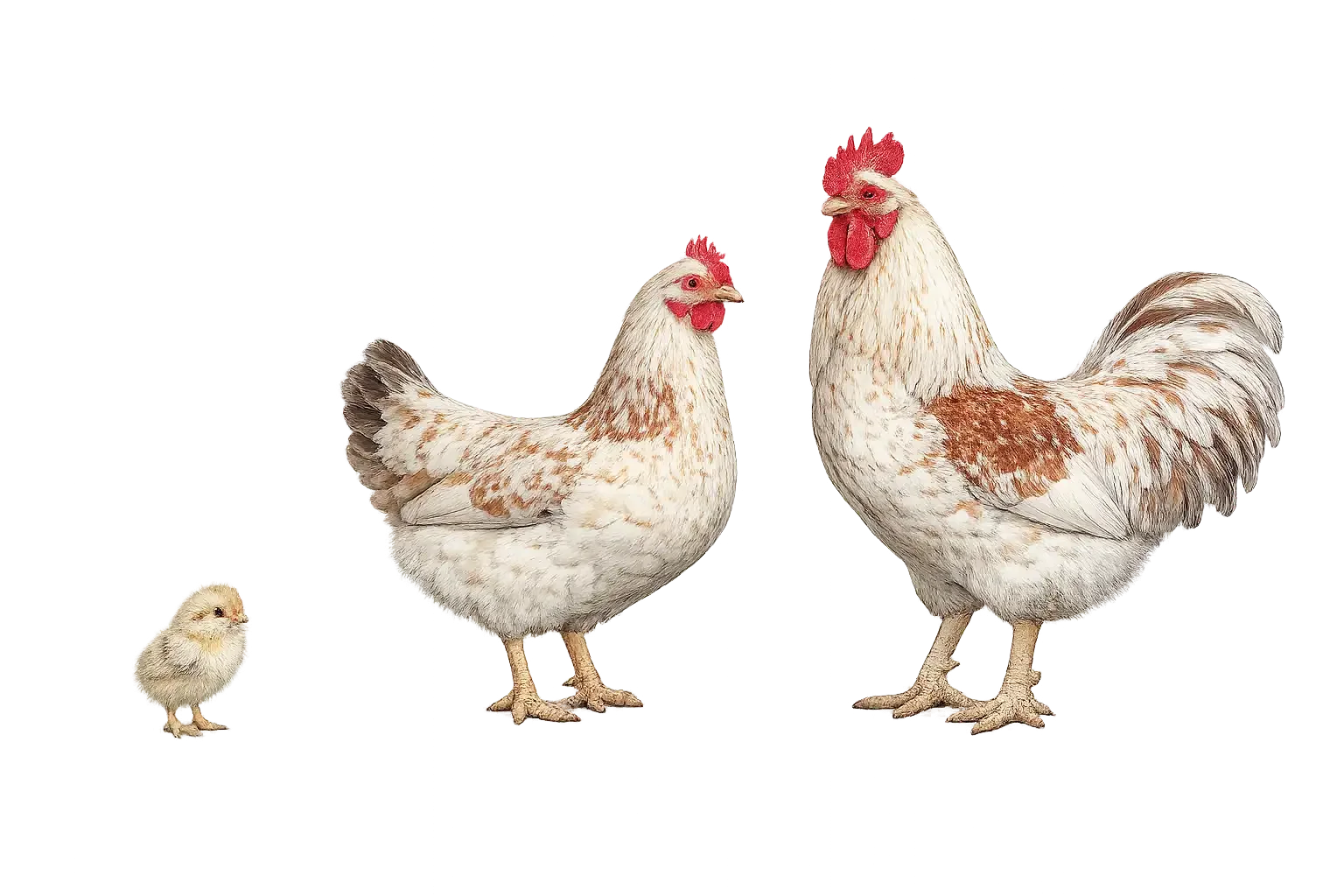
Murray's Choice Layers is Murray McMurray Hatchery's most popular all-female baby chick assortment and the product that most directly serves the largest segment of their customer base: keepers who want laying hens from a range of breeds, do not need to commit to specific varieties, and want the visual and production diversity of a mixed flock delivered in a single female-only order at a meaningful discount below individual breed pricing. It is the successor to their Rainbow Layer assortment, a name McMurray used for the same product until 2015, and it has served as the entry-level diversified laying flock product for backyard and homestead keepers throughout McMurray's modern catalog history.
The product's structure is more specifically defined than most McMurray assortments. Rather than drawing randomly from the full catalog, Murray's Choice Layers is assembled from four designated breed groups: White Egg Layers, Heavy Breeds, Ameraucanas, and Rare and Unusual Varieties. McMurray guarantees at least five different varieties in a 15-bird order drawn from these four groups, though they explicitly note that they cannot guarantee breeds from all four groups will be represented in every order. The egg basket result, which McMurray specifically highlights in their marketing language as potentially including white, tinted, and brown eggs, is the most tangible and visually compelling outcome of the four-group structure: a flock that might include a White Leghorn, a Barred Rock, an Ameraucana, a Wyandotte, and a rare breed alongside other varieties produces a genuinely diverse egg color collection that single-breed or single-category orders cannot match.
For the keeper who wants a diverse, all-female, egg-productive laying flock assembled from McMurray's standard breed catalog without the research, decision-making, and minimum-per-breed commitment of individual breed ordering, Murray's Choice Layers is the most practical and most economical path to that outcome from a major American hatchery.
Quick Facts
Type: Hatchery assortment product; all-female sexed pullets from four designated breed groups; not a breed
Sex: All female; McMurray standard 90 percent sexing accuracy applies; occasional cockerels from sexing error possible
Variety Guarantee: At least 5 different varieties in a 15-bird order; drawn from four groups: White Egg Layers, Heavy Breeds, Ameraucanas, and Rare and Unusual Varieties; McMurray cannot guarantee all four groups will be represented in every order
Breed Pool: White Egg Layers including Leghorns, Minorcas, and other Mediterranean production breeds; Heavy Breeds including Barred Rocks, Wyandottes, Orpingtons, Australorps, New Hampshire Reds, Rhode Island Reds, and other American class heritage breeds; Ameraucanas for tinted and blue egg color variety; Rare and Unusual Varieties from McMurray's conservation and specialty breed program
Egg Colors: White from White Egg Layer group; brown from Heavy Breed group; blue or tinted from Ameraucana group if included; additional colors possible from Rare and Unusual group
Egg Production: Varies by variety received; White Egg Layers produce 250 to 320 white eggs per year; Heavy Breeds produce 180 to 280 brown eggs per year; Ameraucanas produce 180 to 220 blue eggs per year; overall flock production solid across all breed categories
Egg Size: Varies by variety; large to extra-large from Heavy Breeds; large from White Egg Layers; medium to large from Ameraucanas
Primary Purpose: Mixed heritage layer flock; egg diversity; beginner-accessible all-female assortment
Temperament: Varies by variety; Heavy Breeds generally calm and beginner-friendly; White Egg Layers more active and alert; Ameraucanas calm and curious; overall flock temperament manageable for most keeper situations
Brooding: Variable by variety; Ameraucanas and some Heavy Breeds occasionally broody; White Egg Layers generally non-broody
Available From: Murray McMurray Hatchery exclusively; minimum 15 birds April through October; minimum 25 birds February through March; year-round availability
Pricing: Approximately $5.70 per bird at 15-bird minimum; discounted below individual breed pricing reflecting assortment format
Distinctive Characteristic: McMurray's best-selling all-female assortment; four-group breed structure produces consistent egg color diversity; formerly sold as Rainbow Layer through 2014
Understanding Murray's Choice Layers
Murray's Choice Layers is the product that answers the most common question a new keeper asks McMurray: "I want a variety of laying hens, all female, but I don't know exactly what breeds I want. What should I order?" The answer has been the Rainbow Layer, now rebranded as Murray's Choice Layers, for decades, and its position as McMurray's best-selling all-female assortment reflects how well the product matches that specific keeper need.
The four-group structure is what distinguishes Murray's Choice Layers from McMurray's more broadly random assortments. By drawing from designated groups rather than the full catalog without constraint, the assortment produces a more predictable egg color range and more consistent flock character than a completely random all-female assortment would deliver. A keeper who orders 15 Murray's Choice birds can reasonably expect that the resulting flock will include some production white egg layers alongside some heavier dual-purpose brown egg layers and a reasonable chance of Ameraucanas for color egg variety, even without knowing in advance which specific breeds will appear.
The explicit caveat that McMurray cannot guarantee all four groups will be represented in every order is the most important disclaimer to understand before placing an order. A 15-bird Murray's Choice order that contains only Heavy Breeds and White Egg Layers without any Ameraucanas or Rare breeds is technically compliant with the product's guarantee as long as five different varieties are represented. Keepers who specifically want Ameraucanas for blue egg color should order Ameraucanas as a specific breed rather than relying on Murray's Choice to reliably deliver them.
The breeds selected for each order vary from week to week based on McMurray's hatch availability across their full catalog. A May order may contain different specific breeds than a July order even within the same four-group framework, because the weekly availability of each variety shifts across the season. McMurray specifically notes that they do not select breeds based on the destination's climate, which means a keeper in a cold northern state receives the same random selection as a keeper in a hot southern state without any cold-hardiness preference applied. Keepers with specific climate-driven breed requirements should order individual breeds with confirmed climate suitability rather than relying on Murray's Choice to self-select appropriately.
The Four Breed Groups
Understanding what each of Murray's Choice Layers' four breed groups typically contributes to an order helps keepers know what to expect from the resulting flock across egg production, temperament, egg color, and management requirements.
The White Egg Layers group contributes the highest per-bird production volume in the assortment, with Leghorn-class white egg layers producing 250 to 320 white eggs per year from lighter-bodied, more active birds. White Leghorns are the most likely representative from this group given their dominance of McMurray's white egg layer catalog. Birds from this group will be the most active, most alert, and most flight-capable birds in the assortment, requiring higher fencing than the Heavy Breeds and benefiting from genuine range access to express their foraging character fully. Their white eggs represent the high-volume production end of the egg basket.
The Heavy Breeds group contributes the most beginner-friendly, most dual-purpose, and most climate-hardy birds in the assortment, with Barred Rocks, Wyandottes, Orpingtons, Australorps, New Hampshire Reds, and Rhode Island Reds as likely representatives. Birds from this group produce 180 to 280 large brown eggs per year in calmer, heavier bodies that handle cold climates well, tolerate confinement better than the White Egg Layers, and provide genuine dual-purpose meat utility from their larger frames. A Buff Cochins confirmation in a buyer's order, documented in McMurray's own Q&A, confirms that feather-footed heavy breeds also appear in this group.
The Ameraucana group contributes the egg basket's color variety, with blue to greenish-blue tinted eggs at 180 to 220 per year from calm, curious, pea-combed birds that handle cold well. As noted above, Ameraucanas are not guaranteed to appear in every Murray's Choice order, but they are the most distinctive contribution when they do appear, immediately identifiable by their muffs, beard, pea comb, and the blue eggs in the nest box. Their presence in the flock is the element that most frequently generates the "rainbow egg basket" that McMurray's product marketing highlights.
The Rare and Unusual Varieties group contributes the most unpredictable and potentially most visually interesting birds in the assortment, drawn from McMurray's conservation and specialty breed catalog. This may include breeds from their Rarest of Rare program, unusual heritage varieties not commonly available through mainstream sources, or distinctive breeds that add visual character to the flock beyond what the standard production and heritage categories offer. Like the Ameraucana group, this group's specific representation in any given order cannot be predicted and may not be present in every order.
Egg Production
The Murray's Choice Layers assortment's egg production is one of its strongest practical attributes, with the four-group structure creating a flock whose combined output spans white, brown, and potentially blue and tinted egg colors at production volumes that range from solid heritage breed levels to Leghorn-adjacent production depending on which specific breeds appear.
A 15-bird Murray's Choice order that produces a mix of White Leghorns, Barred Rocks, Rhode Island Reds, and Ameraucanas delivers approximately 15 to 20 eggs per day from a healthy peak-production flock, or roughly 100 to 140 eggs per week. This production range is meaningful for a family egg supply, a small direct-sale operation, or a CSA egg program that values breed diversity alongside production volume.
The egg color diversity is the most visually distinctive production outcome of the four-group structure. A mixed egg basket containing white Leghorn eggs alongside brown Barred Rock eggs, medium brown Wyandotte eggs, and blue Ameraucana eggs creates the multi-color carton that direct-sale buyers consistently find most appealing and that photographs most compellingly for farm social media. This visual diversity is genuinely difficult to replicate with single-breed orders at comparable cost and minimum order size.
Laying onset varies by breed, with most birds starting at 5 to 7 months per McMurray's documentation, and the range across breed groups means the flock will not reach full production simultaneously. White Egg Layers typically begin earliest at 17 to 20 weeks; Heavy Breeds follow at 20 to 26 weeks; Ameraucanas start at approximately 24 to 30 weeks. This staggered onset means the keeper experiences a gradual ramp to full flock production rather than a simultaneous start across all birds.
Temperament Across the Flock
The temperament range within a Murray's Choice flock reflects the four-group breed diversity, and managing a flock with meaningfully different temperament profiles across its members is one of the practical management realities of assortment flock keeping.
Heavy Breed birds from Barred Rocks, Wyandottes, Orpingtons, and Australorps represent the calmest, most beginner-friendly, and most people-tolerant end of the temperament spectrum. These birds approach their keeper readily, tolerate handling with minimal stress, and create a settled, confident flock presence that reduces daily management complexity.
White Egg Layer birds from Leghorn-class breeds represent the most active, most alert, and most independent end. They forage aggressively, maintain greater predator awareness, and require more active management in mixed flocks where their energy and flight capability contrasts with the calmer Heavy Breed flock members. They are not aggressive, but their activity level can create flock tension in mixed groups with more docile breeds if housing space is inadequate.
Ameraucana birds fall in the calm and curious middle, approaching their keeper with interest and foraging actively without the nervous reactivity of the pure Leghorn.
The diversity of temperament profiles means the flock cannot be managed as a single-character group but instead requires management infrastructure, particularly space and fencing, appropriate to the most active and most flight-capable birds in the order. Designing flock housing for the White Egg Layer end of the temperament spectrum produces a setup that comfortably accommodates all birds in the assortment.
Climate Adaptability
The Murray's Choice flock's climate adaptability varies by breed group. McMurray explicitly notes that they do not select breeds based on the destination's climate, which means cold-climate keepers may receive Mediterranean light breeds less suited to hard winters alongside cold-hardy Heavy Breeds, and warm-climate keepers may receive cold-adapted heavy breeds alongside the heat-tolerant light breeds.
The Heavy Breeds group produces the most cold-hardy birds in the assortment, with breeds like Barred Rocks, Australorps, and Wyandottes well-documented for cold northern performance. The White Egg Layers group produces the most heat-tolerant birds but the most cold-vulnerable in terms of single-comb frostbite risk.
Keepers in extreme climates, whether very cold northern regions or very hot southern ones, who have specific climate-driven breed requirements will find Murray's Choice less reliably suitable than individual breed orders from verified climate-appropriate breeds. For moderate North American climates, the four-group diversity produces a flock that handles typical seasonal variation adequately across most of the variety pool.
Sourcing Considerations
The February through March minimum order of 25 birds rather than 15 is a meaningful planning consideration for smaller-flock keepers who want a spring start. Keepers who want early-season birds at the 15-bird minimum must target April or later hatch dates. The year-round availability of Murray's Choice, unlike the Ornamental Layer Collection's February through June window, provides flexibility for keepers who prefer summer or fall ordering.
The pricing at approximately $5.70 per bird at the 15-bird minimum represents a meaningful discount below individual breed pullet pricing from McMurray, where specific heritage breed pullets typically run $7 to $10 per bird depending on rarity. This pricing makes Murray's Choice the most economical access point for an all-female diversified heritage layer flock from McMurray.
The breed identification challenge is the same as all McMurray assortments: breeds are not marked, recorded, or disclosed, and identification is left to the keeper as birds feather out. For most heritage breed identification, this is a manageable and often enjoyable puzzle. The four-group structure provides useful identification context: a buff-colored heavy-bodied bird is likely from the Heavy Breeds group; a white active bird is likely from the White Egg Layers group; a bird with muffs, beard, and pea comb is likely an Ameraucana.
Comparing Murray's Choice Layers to Other McMurray Assortments
Ornamental Layer Collection: The other major all-female McMurray assortment, covered in a separate post in this directory. The Ornamental Layer draws from the Rarest of Rare and Top Hat crested breed pools rather than the four production layer groups of Murray's Choice. It costs approximately $7 per bird compared to Murray's Choice at approximately $5.70, is seasonally available February through June only rather than year-round, and produces an ornamental-focused flock with lower egg production than Murray's Choice. Murray's Choice is the production and heritage layer assortment; the Ornamental Layer is the visual and ornamental breed assortment.
Super Duper: The all-male cockerel assortment from McMurray's full catalog, covered in a dedicated post. Murray's Choice is all-female for egg production; the Super Duper is all-male for heritage meat production at the lowest possible per-bird price. They serve opposite primary purposes.
Brown Egg Layers: McMurray's all-female assortment specifically from their brown egg layer catalog, guaranteed to include at least five different heavy breed varieties including Black Australorps, Brahmas, Barred Rocks, Wyandottes, Orpingtons, and similar. This assortment produces only brown eggs from heavier, calmer heritage breeds without the white egg layer activity or the Ameraucana color variety of Murray's Choice. For keepers who specifically want an all-calm, all-brown-egg, all-heavy-breed female flock, the Brown Egg Layers assortment is a more targeted product than Murray's Choice.
Pros and Cons
Pros
McMurray's best-selling all-female assortment; one of the most widely ordered heritage layer products in the American hatchery market
Four-group breed structure produces consistent egg color diversity including white, brown, and potentially blue and tinted eggs
At least 5 varieties guaranteed in a 15-bird order
No bantams; all standard breed pullets
Year-round availability without seasonal ordering window constraints
Most economical all-female assortment price point from McMurray at approximately $5.70 per bird
No individual breed minimum order requirements; single order covers multiple breed categories
McMurray's 90 percent sexing accuracy guarantee applies; all female order with reliable sexing
Flock diversity creates visual interest, breed learning opportunity, and social media appeal
Heavy Breeds group provides genuine dual-purpose meat utility from surplus birds
Cons
Not a breed; no specific variety guarantee; specific breeds cannot be requested
Ameraucanas and Rare breeds not guaranteed in every order; blue eggs cannot be relied upon in order planning
McMurray does not select for climate suitability by destination; climate-specific requirements not addressed
Breeds vary week to week; same order placed at different dates may produce different flock compositions
Breeds not marked or recorded; identification requires keeper research as birds feather out
Temperament range across the four groups requires housing and fencing designed for the most active birds in the order
February and March orders require 25-bird minimum rather than 15
Occasional cockerels from 10 percent sexing error rate possible
Flock production onset staggered across breed groups rather than simultaneous
Profitability
Murray's Choice Layers' profitability for homestead and small farm egg operations is built on the combination of egg volume from the White Egg Layer group, egg color diversity from the four-group structure, and per-bird cost savings relative to individual breed ordering.
The rainbow egg basket that the four-group structure produces is one of the most consistent and most documented direct-sale marketing advantages in the heritage poultry market. Customers at farmers markets and farm stands consistently respond to multi-color egg cartons with greater purchase interest than to uniform-color alternatives, and the Murray's Choice flock structure produces the mix of white, brown, and potentially blue eggs that creates that appeal without requiring the keeper to identify, order, and manage the minimum quantities of multiple specific breeds separately.
For operations that sell eggs by the carton, the visual diversity premium from a mixed-color carton can support pricing above commodity and even above standard brown heritage egg pricing when combined with effective heritage provenance storytelling. The Ameraucana blue eggs, when they appear in the order, are the most individually premium-valued eggs in the carton and disproportionately support the carton's direct-sale appeal.
The per-bird cost savings of approximately 20 to 30 percent below individual breed pullet pricing from McMurray compounds meaningfully across flock replacement cycles for operations that refresh their laying flock annually or biannually. Over three to five flock replacement cycles, the cumulative savings relative to specific breed ordering can represent a meaningful operational cost reduction.
Final Verdict
Murray's Choice Layers is the right product for the largest category of McMurray's customer base: keepers who want a diverse, all-female, production-oriented laying flock from reliable heritage breeds without the research burden and per-breed minimum commitment of individual breed ordering. The four-group structure delivers more consistent egg color diversity than fully random assortments, the year-round availability and 15-bird minimum make it accessible for small homestead operations, and the pricing below individual breed rates makes it the most economical diversified heritage layer option from a major American hatchery. The inability to guarantee specific breeds or all four groups in every order, the climate-neutral selection that does not account for destination, and the staggered laying onset across breed groups are genuine planning considerations that well-prepared keepers accommodate easily. For everyone else, Murray's Choice Layers is what it has always been: the sensible, proven, broadly useful all-female heritage layer assortment that has served as the entry point for diverse-flock homestead keeping from Murray McMurray for decades.
Frequently Asked Questions
Will I definitely get Ameraucanas and blue eggs in my Murray's Choice order? Not definitely. McMurray specifically states that they cannot guarantee all four breed groups will be represented in every order. Ameraucanas are a designated group within the assortment pool, but they may or may not appear in any given order. Keepers who specifically want blue eggs and Ameraucana hens should order Ameraucanas as a specific breed rather than relying on Murray's Choice to deliver them. If Ameraucanas do appear in the order, their blue eggs are genuinely the most visually distinctive contribution to the mixed egg basket.
What specific breeds might I receive? From the White Egg Layers group: White Leghorns and other Leghorn-class Mediterranean production breeds. From the Heavy Breeds group: Barred Plymouth Rocks, Wyandottes (multiple color varieties), Buff and White Orpingtons, Black Australorps, Rhode Island Reds, New Hampshire Reds, Brahmas, and similar American class heritage breeds. From the Ameraucana group: Ameraucanas if the group is represented. From the Rare and Unusual group: breeds from McMurray's conservation and specialty program. The specific varieties within each group vary by weekly availability.
Why is the minimum order 25 in February and March but 15 in other months? McMurray requires larger minimum orders in the coldest shipping months to ensure chicks generate enough body heat in the shipping box to survive transit safely. The 25-bird minimum in February and March reflects the thermal management reality of shipping live chicks in cold weather, not a product-specific requirement. This is consistent across their assortment and individual breed products during those months.
Will my Murray's Choice birds be identified by breed when they arrive? No. McMurray does not mark chicks by breed in assortment orders and does not keep records of which specific breeds were included in a given assortment. Breed identification is left to the keeper and is described by McMurray as part of the assortment experience. Most heritage breeds are identifiable by 6 to 8 weeks of age as their adult feathering develops, and online breed identification communities including BackYard Chickens can assist with confirmation of specific varieties from photographs.
How does Murray's Choice compare to ordering individual breeds separately? The per-bird cost of Murray's Choice is approximately 20 to 30 percent below individual specific breed pullet pricing from McMurray, making it the most economical path to a diversified heritage layer flock. The trade-off is the inability to specify breeds, guarantee specific varieties, or control the climate suitability of the birds received. Keepers who have specific breed requirements, climate-driven preferences, or production targets that depend on particular varieties are better served by individual breed orders despite the higher per-bird cost. Keepers who value diversity, economy, and the assortment experience over breed specificity will find Murray's Choice the better value.
Related Breeds
Black Australorp
Barred Plymouth Rock
White Leghorn
Black Ameraucana
White Rock
Rhode Island Red