
Meat-N-Egg Combo (Hatchery Line)
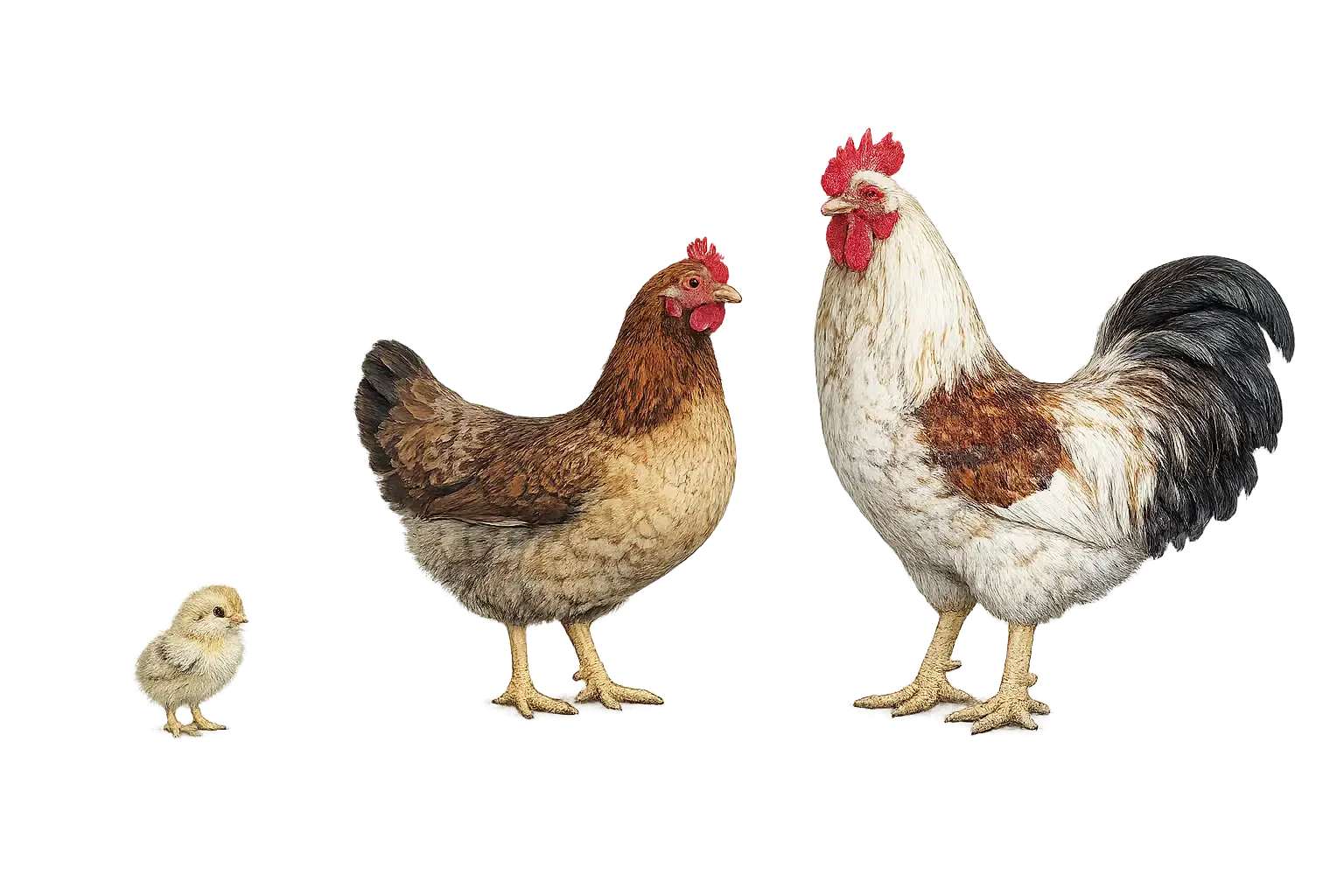
The Meat-N-Egg Combo is a Murray McMurray Hatchery assortment product that combines two entirely different types of chicken in a single order: fast-growing commercial Cornish Cross meat birds and assorted heritage female layers drawn from the Murray's Choice and Brown Egg Layer pools. The combination is designed to serve the homestead keeper who wants both a summer meat bird program and a year-round egg production flock from a single order, without managing two separate orders, two separate arrival dates, and two separate brooding setups. In a 25-bird order, McMurray ships 15 Cornish X Rocks or Cornish Roasters as the meat bird component and 10 assorted female layers as the egg production component. In a 15-bird order, the ratio shifts to 10 meat birds and 5 layers.
The two bird types in the Meat-N-Egg Combo are as different from each other as any two chickens can be. The Cornish Cross meat birds are fast-growing commercial broiler genetics specifically developed to reach processing weight in 6 to 8 weeks, converting feed to meat more efficiently than any heritage breed and producing the broad-breasted, high-yield carcass that defines the commercial chicken market. The assorted heritage layer pullets from the Murray's Choice and Brown Egg Layer pools are slower-growing, smaller-bodied, longer-lived heritage breed hens that will be producing eggs when the meat birds are long processed. Raising both in the same brooder is straightforward in the first weeks when size differences are minimal, but the divergence in growth rate makes the Cornish Cross birds visually unmistakable from their heritage flock companions within days of arrival and clearly dominant in size within two weeks.
For the homestead keeper who has planned for two-purpose management from the start and who wants a single order that produces summer freezer chickens alongside a winter egg-laying flock, the Meat-N-Egg Combo delivers both functions from one box. For the keeper who expects a uniform, manageable mixed flock without the broiler management considerations that fast-growing Cornish Cross birds require, the two-purpose nature of the assortment creates complications that individual breed ordering avoids.
Quick Facts
Type: Hatchery assortment product; two-component combination of Cornish Cross meat birds and heritage layer pullets; not a breed
Composition (25-bird order): 15 Cornish X Rock or Cornish Roaster meat birds (straight run, mixed sex) plus 10 assorted female heritage layers from Murray's Choice and Brown Egg Layer pools
Composition (15-bird order): 10 Cornish X Rock or Cornish Roaster meat birds (straight run, mixed sex) plus 5 assorted female heritage layers
Meat Bird Sex: Straight run; may be all male, all female, or mixed sex; sex not guaranteed or specified
Layer Sex: Female; McMurray 90 percent sexing accuracy applies
Meat Bird Breed: Cornish X Rock (Cornish Cross) or Cornish Roaster; both are commercial broiler genetics; specific type is hatchery choice
Layer Breed Pool: Murray's Choice Layers and Brown Egg Layer assortment pool; same breed groups as covered in the Murray's Choice Layer post in this directory; assorted heritage breeds laying white and brown eggs
Meat Bird Processing: 6 to 8 weeks per Q&A; 7 to 10 weeks per product description; most efficient processing at the shorter end of this range before leg and cardiovascular stress from rapid growth increases
Layer Laying Onset: 18 to 20 weeks per product description; approximately 4 to 5 months
Identification: Meat birds and layers shipped together in the same box without markings; meat birds visually distinguishable from layers within days by their dramatically faster growth rate
Altitude Restriction: Not recommended above 5,000 feet elevation due to Cornish Cross cardiovascular and respiratory stress at altitude
Available From: Murray McMurray Hatchery exclusively; minimum 15 birds; sold in lots of 15, 25, 50, 75, and 100
Distinctive Characteristic: The only McMurray assortment combining commercial broiler genetics with heritage layer pullets in a single order; simultaneous meat and egg program from one box; meat birds processing at 6 to 8 weeks while layers are still in juvenile development
Understanding the Meat-N-Egg Combo
The Meat-N-Egg Combo's appeal is straightforward: it bundles the two most common homestead poultry goals, meat for the freezer and eggs for the table, into a single order and a single brooding event. The practical management reality of raising Cornish Cross broilers alongside heritage heritage pullets in the same space is equally straightforward once understood, and the keeper who plans for it in advance finds the combination genuinely efficient.
The Cornish Cross component is the most important component to understand before ordering. The Cornish Cross is not a heritage breed. It is a commercial hybrid specifically developed for maximum growth rate, feed-to-meat conversion efficiency, and broad breast muscle development, and it has been optimized for these traits to a degree that makes it fundamentally different from heritage breeds in its management requirements and its physical limitations. Cornish Cross birds grow so rapidly that their cardiovascular and skeletal systems are under significant stress by the time they reach processing weight, which is why the altitude restriction exists: above 5,000 feet, the reduced oxygen availability at elevation combined with the Cornish Cross's already-stressed cardiovascular system creates unacceptable mortality risk.
The processing window for Cornish Cross birds is narrow and consequential. Processing at 6 to 8 weeks produces the optimal combination of yield, tenderness, and bird health. Birds processed earlier are smaller but more tender; birds held significantly beyond 8 weeks face increasing rates of heart failure, leg breakdown, and respiratory stress that compromise the birds' welfare and increase mortality before planned processing. The Meat-N-Egg Combo's management timeline is therefore dictated by the Cornish Cross component: the processing date for the meat birds is a hard deadline, not a flexible target.
The heritage layer pullets in the same brooder during the Cornish Cross grow-out period represent the beginning of the long-term egg production flock that continues after the meat birds are processed. These birds require the same basic brooding setup as the Cornish Cross during the first few weeks but diverge significantly in feed management as the broilers grow: Cornish Cross birds should be fed a high-protein broiler starter with managed access to prevent the overconsumption that exacerbates cardiovascular stress, while heritage pullets benefit from a standard layer starter or grower ration without the same overconsumption risk. Managing feed access appropriately for two bird types with different nutritional needs is the primary management complexity of the Meat-N-Egg Combo during the joint brooding period.
The Cornish Cross Component
The Cornish Cross is the most commercially consequential chicken genetics in the history of food production, representing the crossbred offspring of Cornish and White Plymouth Rock parent lines selected over decades of industrial breeding for maximum muscle development, minimum time to processing weight, and optimal feed conversion. The result is a bird that reaches 6 to 8 pound live weight in 6 to 8 weeks, produces the broad-breasted, high-yield white-meat-heavy carcass that defines commercial chicken in the supermarket, and requires specific management attention that heritage breeds do not.
McMurray's Meat-N-Egg Combo uses either their Cornish X Rock or their Cornish Roaster, with the specific type being hatchery choice at the time of the order. Both are commercial broiler genetics with comparable rapid-growth characteristics; the Cornish Roaster is a slightly slower-growing variant that produces a larger roasting bird at 8 to 10 weeks rather than the standard fryer-weight Cornish Cross at 6 to 8 weeks. Keepers who want to know which they received will be able to identify the specific type by the growth rate and maturity timeline as birds develop.
The feed management protocol for Cornish Cross birds during the grow-out period requires active management rather than the free-choice access appropriate for heritage breeds. Cornish Cross birds left with unrestricted feed access around the clock develop faster but also accumulate visceral fat and experience cardiovascular stress at higher rates than birds whose feed access is managed through timed feeding periods. The standard commercial management approach of providing feed for 12 hours per day and removing access for the remaining 12 hours reduces cardiovascular and leg problems without meaningfully reducing final processing weight. This timed feeding approach is impractical in the same space as heritage pullets that benefit from free-choice access, which is one of the practical management arguments for separating the meat birds from the layers once the Cornish Cross birds are large enough to be safely housed apart.
The straight-run sex composition of the Cornish Cross component means the 15 meat birds in a 25-bird order may be all males, all females, or a mixed group. The sex difference in Cornish Cross birds is less consequential than in heritage breeds because both sexes grow rapidly to processing weight, with males typically reaching fryer weight a few days earlier and producing larger carcasses. McMurray's note that the meat birds "could be all males, all females, or some of both" is an honest acknowledgment that sex ratio in the meat component is not guaranteed or controlled.
The Heritage Layer Component
The ten assorted female layers in a 25-bird Meat-N-Egg Combo order are drawn from the same breed pools as McMurray's Murray's Choice Layers and Brown Egg Layer assortments, both covered in separate posts in this directory. These are heritage breed pullets including White Egg Layers such as Leghorns, Heavy Breeds such as Barred Rocks and Wyandottes, and potentially Ameraucanas and Rare and Unusual Varieties depending on availability at the time of the order.
The heritage layer component represents the long-term egg production flock that remains after the Cornish Cross birds are processed. These birds will begin laying at approximately 18 to 20 weeks, roughly 10 to 14 weeks after the Cornish Cross birds have been processed, and will provide egg production for the following 2 to 4 years depending on breed and management.
Because the layer component is drawn from the same pools as Murray's Choice Layers and the Brown Egg Layer assortment, the same expectations apply: at least some variety across the heritage breeds represented, brown and potentially white and blue eggs from the mixed pool, no specific breed guarantee, and no breed identification markings from the hatchery. The Murray's Choice Layer post in this directory covers the breed pool expectations in detail that applies equally to the layer component of the Meat-N-Egg Combo.
Brooding Management for Two Bird Types
The most practically complex aspect of the Meat-N-Egg Combo is managing two fundamentally different bird types in the same brooding space simultaneously. Understanding the differences in advance allows keepers to plan infrastructure and management protocols that work for both populations.
For the first two to three weeks, the management requirements of Cornish Cross chicks and heritage pullet chicks are similar enough that standard brooding setup handles both without significant modification. Temperature requirements, waterer access, and basic space allocation are comparable between the two types at this age, and the size difference, while already beginning to manifest, is not yet great enough to create management problems.
By weeks three and four, the Cornish Cross birds are noticeably larger than the heritage pullets and beginning to show the characteristic rapid-growth body proportions that distinguish them from heritage breeds. At this point the feed management divergence becomes more significant, with the Cornish Cross birds benefiting from managed feed access and the heritage pullets benefiting from free-choice feeding. Separating the two groups into different sections of the brooder or different adjacent pens at this stage allows appropriate feed management for each type and prevents the Cornish Cross birds from outcompeting the smaller heritage pullets for feeder access.
By weeks five and six, the Cornish Cross birds are substantially larger than the heritage pullets and should be managed in separate space if they have not been already. Processing at 6 to 8 weeks removes the meat bird component from the operation entirely, leaving only the heritage pullets to continue their development through laying onset.
The altitude restriction applies to the Cornish Cross birds specifically. Heritage pullet breeds do not share the Cornish Cross's cardiovascular stress at altitude, so the restriction is relevant only to the meat bird component of the order.
Identification Without Markings
McMurray does not mark or identify meat birds separately from heritage pullets in the shipping box, which is the standard practice across all their assortment products. The practical identification of which chicks are meat birds and which are heritage pullets is straightforward within days of arrival and requires no special knowledge or tools.
Cornish Cross chicks grow at a rate that makes them visually distinguishable from heritage breed chicks by the end of the first week. By day five to seven, Cornish Cross chicks are already meaningfully larger than their heritage flock mates and beginning to show the wider, broader body proportions of commercial broiler genetics. By two weeks, the size difference is dramatic and unmistakable. A keeper who has not seen Cornish Cross chicks alongside heritage chicks before will have no difficulty identifying which population is which within the first week simply by observing the relative size and growth rate of the brooder birds.
The heritage pullets in the assortment, while not individually breed-identified, can be identified by breed type as they feather out using the standard visual identification approaches applicable to the Murray's Choice Layer pool. The McMurray website provides breed photos and chick identification videos for each variety in their catalog that assist with identification as birds develop.
Practical Considerations for Homestead Operations
The Meat-N-Egg Combo's practical utility for homestead operations depends on how well the keeper has planned for the two-phase management timeline it creates.
Phase one is the Cornish Cross grow-out from hatch to processing at 6 to 8 weeks. During this phase, the primary management focus is the Cornish Cross birds: appropriate feed management to minimize cardiovascular stress, adequate space for rapid growth, and timely processing at the optimal window. The heritage pullets share the brooding space during this phase and require standard heritage chick care alongside the broiler management.
Phase two begins when the Cornish Cross birds are processed and runs from approximately week 8 through the heritage pullets' laying onset at 18 to 20 weeks. During this phase, the heritage pullets transition from the brooder to the laying flock infrastructure, and management shifts entirely to standard heritage breed laying flock protocols.
Phase three is the ongoing laying flock operation from approximately 5 months onward, when the heritage pullets have reached laying age and established their production routine. This phase continues for 2 to 4 years depending on breed and management, representing the long-term value of the layer component of the Meat-N-Egg Combo order.
The single-order efficiency of the Meat-N-Egg Combo is its most tangible practical advantage: one chick order, one hatch date, one shipping event, and one brooding setup produces both the summer meat supply and the long-term laying flock. For keepers who want both functions and are comfortable managing two bird types simultaneously, this efficiency is genuine and meaningful.
Comparing the Meat-N-Egg Combo to Separate Orders
The most common alternative to the Meat-N-Egg Combo is ordering Cornish Cross meat birds and heritage layer pullets separately from McMurray's individual product pages, which allows specific breed selection, sex selection within the heritage layer component, specific Cornish Cross type selection, and independent timing of the two orders.
The trade-offs are practical. Separate orders require meeting McMurray's minimum quantities for each product independently, which may force larger orders than the keeper wants from either category. Separate orders require coordinating two hatch dates and two shipping events if the keeper wants the brooding periods to overlap. Separate orders cost more per bird than the Meat-N-Egg Combo's bundled pricing.
The Meat-N-Egg Combo accepts a loss of specificity in the heritage layer component, the ability to specify particular breeds or climate-appropriate varieties, in exchange for the convenience and efficiency of a single order. For keepers who have specific breed requirements for their heritage layers, separate ordering is the appropriate approach despite its higher complexity and cost. For keepers who are comfortable with the Murray's Choice Layer pool's variety diversity and want the single-order efficiency, the Meat-N-Egg Combo serves its purpose well.
Pros and Cons
Pros
The only McMurray product combining commercial meat bird and heritage layer pullets in a single order
Single order, single arrival, single brooding setup for both meat and egg production goals
Bundled pricing below ordering meat birds and heritage layers separately
Cornish Cross meat birds ready to process at 6 to 8 weeks, providing early-season freezer meat while layers are still developing
Heritage layer pullets begin laying at 18 to 20 weeks, providing egg production for years after meat birds are processed
Meat birds and layers visually distinguishable within days by growth rate difference
Available in multiple quantities: 15, 25, 50, 75, and 100 birds to match different operation scales
Straightforward two-phase management timeline with clear decision points
Cons
Cornish Cross birds require specific feed management distinct from heritage pullet needs; managing two feed protocols in shared space requires planning
Altitude restriction above 5,000 feet applies to Cornish Cross component
Meat bird sex is straight run and not specified; ratio may vary from guaranteed proportions as documented by buyer accounts
No specific breed guarantee for heritage layer component; specific breed varieties cannot be requested
Heritage layer breeds not selected for destination climate; cold or heat-specific breed requirements cannot be accommodated
Processing deadline for Cornish Cross birds is a hard timeline management requirement, not flexible
Chicks not marked by type in shipping box; visual identification required as birds develop
Layer component is relatively small at 10 pullets in a 25-bird order; keepers who want more layers than meat birds need a separate layer order alongside the Combo
Profitability
The Meat-N-Egg Combo's profitability for homestead operations is built across two distinct revenue streams with different timelines. The Cornish Cross meat birds produce the most immediate return: processed at 6 to 8 weeks, a 25-bird order's 15 Cornish Cross birds yield approximately 75 to 90 pounds of dressed chicken at 5 to 6 pounds per bird, filling a meaningful portion of a family's annual meat supply or providing direct-sale heritage chicken revenue at the early-season point when customers are most actively seeking fresh local chicken.
The heritage layer pullets produce the longer-term return: 10 laying hens at peak production contribute approximately 50 to 70 eggs per week across the flock, with the diversity of the Murray's Choice and Brown Egg Layer pool potentially producing the multi-color egg basket that supports direct-sale premium pricing.
The bundled per-bird pricing below separate order pricing provides a modest but real cost savings that compounds across multiple Meat-N-Egg Combo order cycles.
Final Verdict
The Meat-N-Egg Combo is the right product for the homestead keeper who specifically wants both a summer Cornish Cross meat bird grow-out and a heritage laying flock from a single order, who has planned for the two-phase management timeline and the feed management complexity of two bird types in shared brooding space, and who is comfortable with the Murray's Choice Layer pool's variety diversity in the heritage component without specific breed selection. The product does exactly what it describes and serves its stated purpose efficiently. The Cornish Cross altitude restriction is the most consequential hard limitation; keepers above 5,000 feet should not order this product. For everyone else at compatible elevations who wants both freezer chickens and laying hens from one order, the Meat-N-Egg Combo delivers both without requiring the buyer to manage two separate orders, two arrival events, or two brooding setups. The dual purpose and homestead category is the right home for it.
Frequently Asked Questions
How do I tell the Cornish Cross meat birds apart from the heritage layer pullets when they arrive? You do not need any special knowledge to tell them apart within the first week. Cornish Cross chicks grow at a dramatically faster rate than heritage breed chicks, and the size difference is visible within the first few days of life. By the end of the first week, the Cornish Cross chicks are noticeably larger and broader than the heritage pullets; by two weeks, the difference is unmistakable. McMurray does not mark the chicks, but the visual identification is straightforward enough that most keepers can sort the two populations confidently within 5 to 7 days of arrival.
Can I keep the Cornish Cross birds longer than 8 weeks to get larger birds? Technically yes, but not recommended for welfare and practical reasons. Cornish Cross birds held beyond 8 weeks experience significantly higher rates of heart failure, leg breakdown, and respiratory stress as their body weight exceeds what their cardiovascular and skeletal systems can sustain comfortably. Processing at 6 to 8 weeks produces the best combination of yield, tenderness, and bird welfare. Birds processed at the shorter end of the window are smaller and more tender; birds at the longer end are larger but beginning to show the stress-related health issues that fast-growing broiler genetics create.
Can I order the Meat-N-Egg Combo if I live above 5,000 feet elevation? McMurray specifically recommends against this product above 5,000 feet due to the Cornish Cross component's susceptibility to cardiovascular and respiratory stress at altitude. The reduced oxygen at elevation combined with the Cornish Cross birds' already-stressed cardiovascular systems from rapid growth creates unacceptable mortality risk. The heritage layer pullets in the order do not share this altitude restriction, but since the Cornish Cross birds are shipped in the same box, keepers above 5,000 feet should order heritage meat breeds instead of the Meat-N-Egg Combo.
How should I handle the different feed needs of the Cornish Cross and heritage pullets in the same brooding space? For the first two to three weeks, standard broiler starter feed works adequately for both types. As the Cornish Cross birds grow and the feed management divergence becomes more significant, the most practical approach is to physically separate the two groups into different sections of the brooding space or adjacent pens, which allows managed timed feeding for the Cornish Cross birds and free-choice feeding for the heritage pullets. Most keepers find that the size difference is large enough by weeks three to four to make separation straightforward and practical.
What if I receive the wrong ratio of meat birds to layers? Buyer accounts document occasional ratio variation, with one ordering 15 birds expecting 10 meat birds and 5 layers but receiving 7 meat birds and 8 layers. McMurray's ratio guarantee is part of the product description, but as with all assortment products, minor variation can occur in practice. For most homestead keepers, a slightly different ratio between the two components is a minor inconvenience rather than a significant problem, since both types still fulfill their respective purposes in the operation.
Related Breeds
Barred Plymouth Rock
Black Australorp
White Leghorn
Black Ameraucana
Murray's Choice Layer
Ornamental Layer