
Sex-Link Chickens
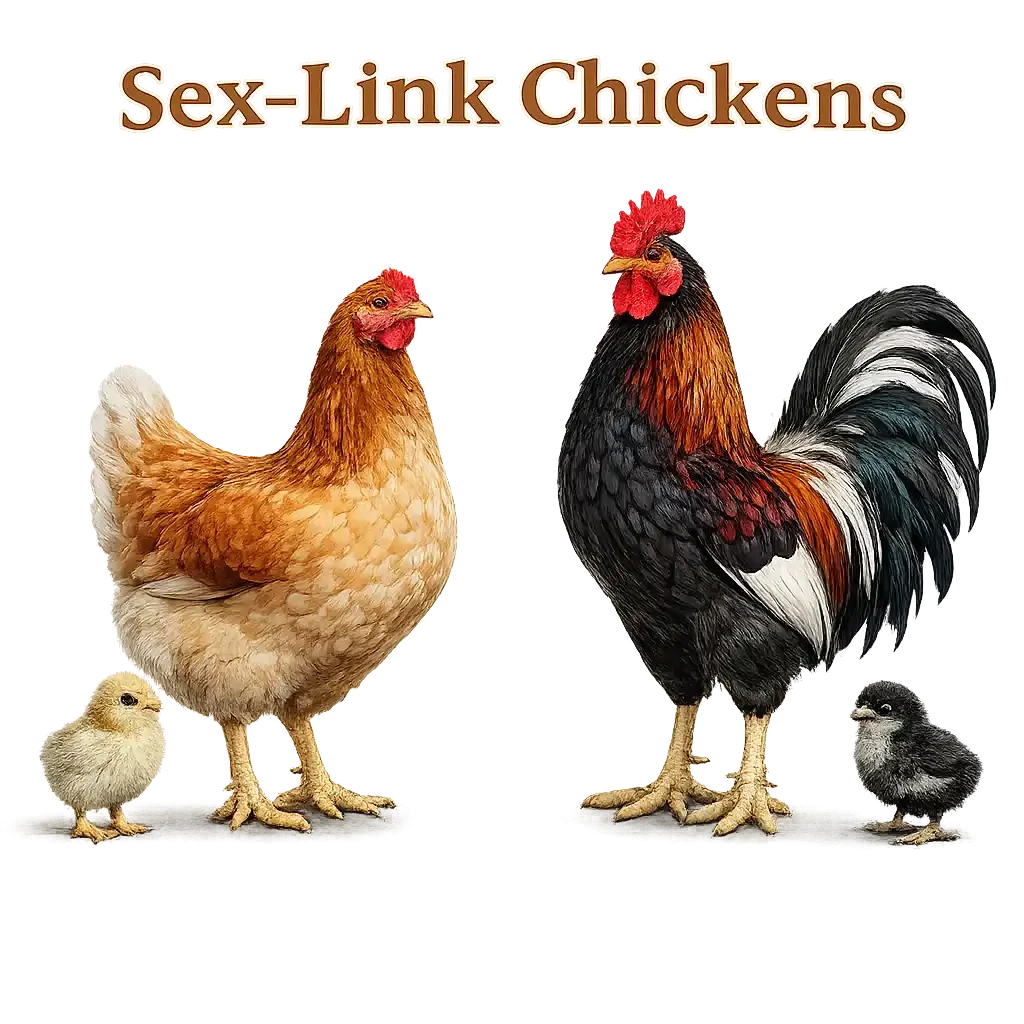
Sex-link chickens are among the most practical and widely kept birds in the backyard flock world, and also among the most misunderstood in terms of what they are, how they work, and what a keeper can realistically expect from them over the long term. The term sex-link describes a specific characteristic rather than a breed: a sex-link chicken is any chicken produced by a cross between two parent breeds whose color genetics interact in a way that makes male and female chicks visually distinguishable at hatch by their down color or early feather pattern. The practical benefit of this is significant. A keeper who orders sexed hen chicks from a verified sex-link cross receives hens with substantially higher accuracy than standard vent sexing can provide on non-sex-linked breeds, eliminating the surprise rooster problem that every keeper who has ordered straight-run or vented chicks of non-sex-linked breeds has encountered at some point. Sex-link hybrids are also typically high-producing layers, benefiting from the hybrid vigor that first-generation crosses between two distinct parent lines often generate. Understanding what sex-link chickens are, why they work the way they do, what their genuine limitations are, and how they differ from auto-sexing breeds and from heritage dual-purpose birds is the purpose of this page.
What Sex-Link Means and Why It Works
The sex-link characteristic depends on a specific interaction between color genetics and sex chromosomes in chickens. Chickens, unlike mammals, have a ZW sex chromosome system rather than an XY system: males are ZZ and females are ZW. Certain color genes in chickens are carried on the Z chromosome, which means they behave differently depending on whether the bird is ZZ or ZW. When breeders select parent lines whose color genetics take advantage of this Z-chromosome linkage, the resulting offspring express different colors in males and females based on how many copies of the relevant color gene each sex carries.
The two most common mechanisms used in commercial and backyard sex-link crosses are the silver gene and the barring gene. In silver sex-link crosses, a silver male is crossed with a gold female, producing silver female chicks and gold male chicks that can be distinguished at hatch by their down color. In barring sex-link crosses, a barred male is crossed with a non-barred female, producing barred male chicks with a characteristic white head spot and non-barred female chicks that hatch without it. Both mechanisms produce the same practical result: a hatchery or keeper can identify male and female chicks at hatch by looking at them rather than by vent sexing, with accuracy rates that approach 100 percent in well-managed sex-link programs compared to the 80 to 90 percent accuracy typical of professional vent sexing.
It is important to understand that sex-link is a characteristic of the first-generation cross, not a permanent property of the offspring. When two sex-link chickens are bred together, the offspring do not reliably inherit the sex-linkage mechanism. The color genetics that produce distinguishable male and female chicks depend on the specific combination of two distinct parent lines; once those parent lines are mixed, subsequent generations express unpredictable combinations of the color genes rather than the clean sex-distinguishable pattern the first-generation cross produces. This is the fundamental limitation of sex-link hybrids for keepers who want to propagate their own flock from their own birds.
Hybrid Vigor and Why Sex-Links Lay So Well
The high egg production associated with sex-link hybrids is not accidental. First-generation crosses between two genetically distinct parent lines often produce offspring that outperform either parent in health, growth rate, disease resistance, and production efficiency. This phenomenon is called heterosis, commonly referred to as hybrid vigor, and it is the genetic mechanism that commercial poultry production has exploited for decades to produce the high-performance hybrid laying flocks that supply the commercial egg market.
In the context of sex-link crosses developed for backyard and small-scale homestead use, hybrid vigor typically expresses as earlier lay onset, higher weekly egg production during peak laying years, stronger resistance to common disease challenges, and broader climate adaptability than either parent breed alone. A Cinnamon Queen or Golden Comet from a well-managed parent flock regularly lays 250 to 300 large brown eggs per year, which matches or exceeds the highest-producing heritage breeds while starting production at 4 to 5 months of age rather than the 5 to 7 months typical of heritage dual-purpose breeds.
The tradeoff is that hybrid vigor does not transfer to subsequent generations reliably. The first-generation cross produces the performance peak; subsequent crosses produce increasingly variable offspring as the distinct parent line genetics mix and the heterosis effect diminishes. This is why commercial laying operations and reputable hatcheries maintain separate, closed parent flocks of pure parent breeds rather than breeding their hybrids to each other: the performance of the hybrid depends entirely on the genetic consistency of the parent lines used to produce it.
Sex-Link vs. Auto-Sexing: An Important Distinction
Sex-link and auto-sexing are terms that are frequently used interchangeably in backyard chicken discussions, but they describe fundamentally different genetics and have importantly different practical implications.
A sex-link chicken is a first-generation hybrid whose sex-distinguishable coloring at hatch depends on crossing two specific parent breeds. The sex-linkage does not persist in subsequent generations and the bird does not breed true to any consistent type.
An auto-sexing chicken is a member of a true breed whose sex-distinguishable coloring at hatch is built into the breed's genetics and reproduces consistently from generation to generation. Auto-sexing breeds breed true: an auto-sexing hen crossed with an auto-sexing rooster of the same breed produces auto-sexing offspring with the same sex-distinguishable characteristics. The Cream Legbar is the most widely kept auto-sexing breed in North America, with female chicks hatching with dark chipmunk striping and male chicks hatching noticeably paler. The Bielefelder is another auto-sexing breed in your directory.
The practical difference matters for keepers who want to maintain a self-sustaining flock. Auto-sexing breeds support self-propagating flocks where the keeper can hatch their own chicks and maintain the sex-distinguishing benefit across generations. Sex-link hybrids do not, because the sex-link characteristic disappears in subsequent crosses. A keeper who wants to hatch their own replacement layers and still be able to sex chicks at hatch needs an auto-sexing breed, not a sex-link hybrid.
Common Sex-Link Types in the North American Market
The sex-link hybrid market in North America uses a variety of names for what are often very similar or identical crosses produced from comparable parent lines by different hatcheries. Understanding the naming landscape prevents confusion when comparing products across suppliers.
The most widely kept sex-link category is the red or golden sex-link group, which includes birds sold under names including Cinnamon Queen, Golden Comet, Red Sex Link, ISA Brown, and several other hatchery-specific designations. Most of these are produced from a cross between a Rhode Island Red rooster and a Rhode Island White or Delaware hen, or from similar red-male-on-white-female combinations, producing chicks where female chicks hatch reddish-gold and male chicks hatch white or very light. The resulting hens lay large brown eggs at production figures that typically range from 250 to 320 per year depending on the specific parent lines and management conditions. The Cinnamon Queen is covered in a dedicated post in this directory.
The black sex-link group includes birds sold under names including Black Sex Link, Black Star, and similar designations. The standard cross is a Rhode Island Red rooster over a Barred Plymouth Rock hen, producing female chicks that hatch solid black and male chicks that hatch with a characteristic white spot on the head from the barring gene. The resulting hens lay large brown eggs at 200 to 280 per year with a generally calm temperament and strong cold hardiness. The Black Sex Link is covered in a dedicated post in this directory.
Proprietary hatchery-specific sex-links are a growing category where individual hatcheries develop and market exclusive hybrid crosses under brand names. My Pet Chicken's Ameribella, introduced in 2024, is an example: a sex-link hybrid exclusive to that supplier producing primarily black-feathered hens that lay cream-tinted eggs. The specific parent breeds of proprietary exclusive hybrids are typically not disclosed by the producing hatchery.
What Eggs Do Sex-Links Lay
The egg color of a sex-link hybrid is determined by the egg color genetics of the parent breeds used in the cross, not by the sex-link mechanism itself. Standard red and black sex-link crosses using Rhode Island Red, Plymouth Rock, and related parent breeds produce large brown eggs. The shade of brown varies between lines and individuals but typically falls in the medium to medium-dark brown range.
Some hatchery-developed proprietary sex-link hybrids produce cream-tinted eggs, off-white eggs, or occasionally tinted eggs depending on the egg color genetics of their undisclosed parent lines. True blue eggs require the presence of the oocyanin gene from blue egg laying parent breeds such as Ameraucana or Araucana; standard sex-link crosses using brown egg laying parent breeds do not produce blue eggs.
This is worth clarifying because the colorful egg basket trend in backyard poultry has led some sellers to market sex-link birds with descriptions that imply blue or specialty egg color that the genetics of the cross cannot actually produce. Buyers who specifically want blue eggs need a true Ameraucana, Araucana, Cream Legbar, or Whiting True Blue, not a standard sex-link hybrid regardless of the marketing language used.
The Non-Breeding Limitation in Practice
The practical implication of sex-links not breeding true deserves more explanation than it typically receives in marketing materials. A keeper who builds an Ameribella flock or a Cinnamon Queen flock and decides to breed their birds to produce replacement chicks will find that the offspring are genetically unpredictable: they may be larger or smaller than the parents, lay more or fewer eggs, show different feather colors, and will not reliably be sex-distinguishable at hatch. This is not a defect in the birds; it is an inherent characteristic of how hybrid genetics work.
Keepers who want a self-sustaining flock that propagates reliably from their own breeding stock have two practical alternatives. The first is to use heritage breeds, which are true-breeding by definition and produce offspring that reliably replicate the parent's characteristics when bred within the breed. Heritage breeds like the Black Australorp, Barred Plymouth Rock, and Rhode Island Red in your directory produce reliable replacement stock from flock breeding but do not carry sex-link advantages at hatch. The second alternative is to use auto-sexing breeds like the Cream Legbar or Bielefelder, which breed true and provide sex-distinguishable chicks at hatch across generations.
Neither alternative delivers the combination of peak production volume and hatch-day sexing convenience that a well-bred sex-link hybrid provides in its first two to three years. The sex-link hybrid's production peak in those first years is genuinely higher than most heritage breeds can match. The tradeoff is the requirement to source new chicks from a hatchery or breeder each generation rather than propagating from the home flock.
Production Lifespan and Decline
Sex-link hybrids selected for high first-year production tend to experience more rapid production decline after their peak than heritage breeds, a pattern consistent with the general tradeoff between peak output and sustained productivity that applies across all high-output laying systems. Most sex-link hens produce at their highest volume in their first full laying year, maintain strong production into the second year, and begin declining meaningfully in the third year. By years four and five, production from many sex-link lines has fallen to levels where replacement is economically rational for keepers who are managing their flock primarily for egg volume.
Heritage breeds like the Black Australorp and Plymouth Rock generally decline more gradually, maintaining meaningful production across a longer timeline and often remaining productive contributors to a mixed flock for five to seven years or longer. For keepers who replace their laying flock every two to three years anyway, the sex-link's high early production is a genuine economic advantage. For keepers who want a productive hen across a longer horizon without the management overhead of regular replacement planning, heritage breeds are generally the better fit.
Sourcing Sex-Link Chickens Well
The quality of a sex-link hybrid depends entirely on the quality of the parent flock from which it is produced. Hatcheries that maintain well-selected, closed parent flocks of documented pure parent breeds produce hybrids with consistent production figures, temperament, and health characteristics. Hatcheries or backyard sellers who produce sex-link adjacent crosses from mixed or poorly documented parent stock produce birds that may carry the sex-link coloring characteristic without the consistent production performance associated with the best-managed programs.
Practical sourcing guidance for sex-link buyers: purchase from hatcheries with documented parent breed programs and verifiable production records rather than from sellers who simply describe their birds as sex-links without specifying the parent cross. Understand that different hatcheries may use the same breed name for crosses with different parent stocks, producing meaningfully different birds in terms of production, temperament, and longevity. When in doubt, ask the supplier specifically what parent breeds are used in the cross before purchasing.
Sex-Links in a Mixed Flock
Sex-link hybrids generally integrate well into mixed heritage flocks. Their calm temperament, particularly in the red and black sex-link categories, makes them compatible with most heritage breeds of similar size. Their high production during peak years contributes meaningfully to the overall egg volume of a mixed flock that also includes heritage breeds with lower but more sustained production curves. Many experienced homestead keepers maintain a mixed flock that combines a core of heritage dual-purpose breeds for long-term sustained production, natural incubation, and breeding stock with a cohort of sex-link hens for peak production during their high-volume years, replacing the sex-link cohort every two to three years while the heritage component continues.
This mixed approach captures the practical strengths of both categories without fully committing to the limitations of either: the sex-link hens provide volume and sexing confidence; the heritage hens provide sustainability, broodiness for natural hatching, and a self-propagating genetic resource.
Frequently Asked Questions
Can I breed my sex-link hens and get more sex-links? No. Sex-link chicks require crossing two specific parent breed lines whose color genetics interact to produce sex-distinguishable offspring at hatch. Breeding sex-link to sex-link produces offspring with unpredictable color genetics that do not reliably replicate the sex-link pattern or the parent's production characteristics. To produce true sex-link chicks, you need access to the specific pure parent breeds used in the original cross and the knowledge to manage the crossing program correctly.
Are sex-links and auto-sexing breeds the same thing? No. Auto-sexing breeds are true breeds whose sex-distinguishable coloring at hatch is built into the breed's genetics and breeds true across generations. Sex-link hybrids are first-generation crosses whose sex-distinguishable coloring depends on the specific parent line combination and does not persist in subsequent generations. Auto-sexing breeds support self-sustaining breeding programs; sex-link hybrids do not.
Do sex-links always lay brown eggs? Standard red and black sex-link crosses using Rhode Island Red, Plymouth Rock, and related parent breeds lay brown eggs. Some proprietary hatchery-specific sex-link hybrids lay cream or tinted eggs depending on their undisclosed parent genetics. No standard sex-link cross produces true blue eggs, which require the oocyanin gene from blue-egg parent breeds.
Why do different hatcheries use the same name for what seem to be different birds? Sex-link names like Cinnamon Queen, Golden Comet, and Red Sex Link are not trademarked or standardized across the industry. Different hatcheries use these names for crosses made from similar but not identical parent stock combinations, producing birds that share general characteristics but may differ meaningfully in production figures, temperament, and appearance. Focusing on the specific parent breeds used in the cross rather than the marketing name gives more reliable information about what to expect from a specific hatchery's offering.
How long do sex-link hens lay well? Most sex-link hens lay at their highest volume in their first full laying year, maintain strong production into the second year, and begin declining meaningfully in the third year. Heritage breeds generally maintain more sustained production across a longer timeline. Keepers who replace their flock every two to three years find sex-links' high early production economically advantageous; keepers who want productive hens over a longer horizon without regular replacement planning are often better served by heritage breeds.
Are sex-links recognized by the APA? No. The American Poultry Association recognizes standardized breeds with consistent, documented genetics that breed true across generations. Sex-link hybrids are first-generation crosses that do not breed true and have no consistent physical standard eligible for recognition. They are not suitable for APA-sanctioned exhibition shows.
Breeds in This Directory
The following sex-link and hybrid entries are covered in dedicated posts in this directory:
Ameribella
Black Sex Link
Cinnamon Queen