
Splash Ameraucana Bantam
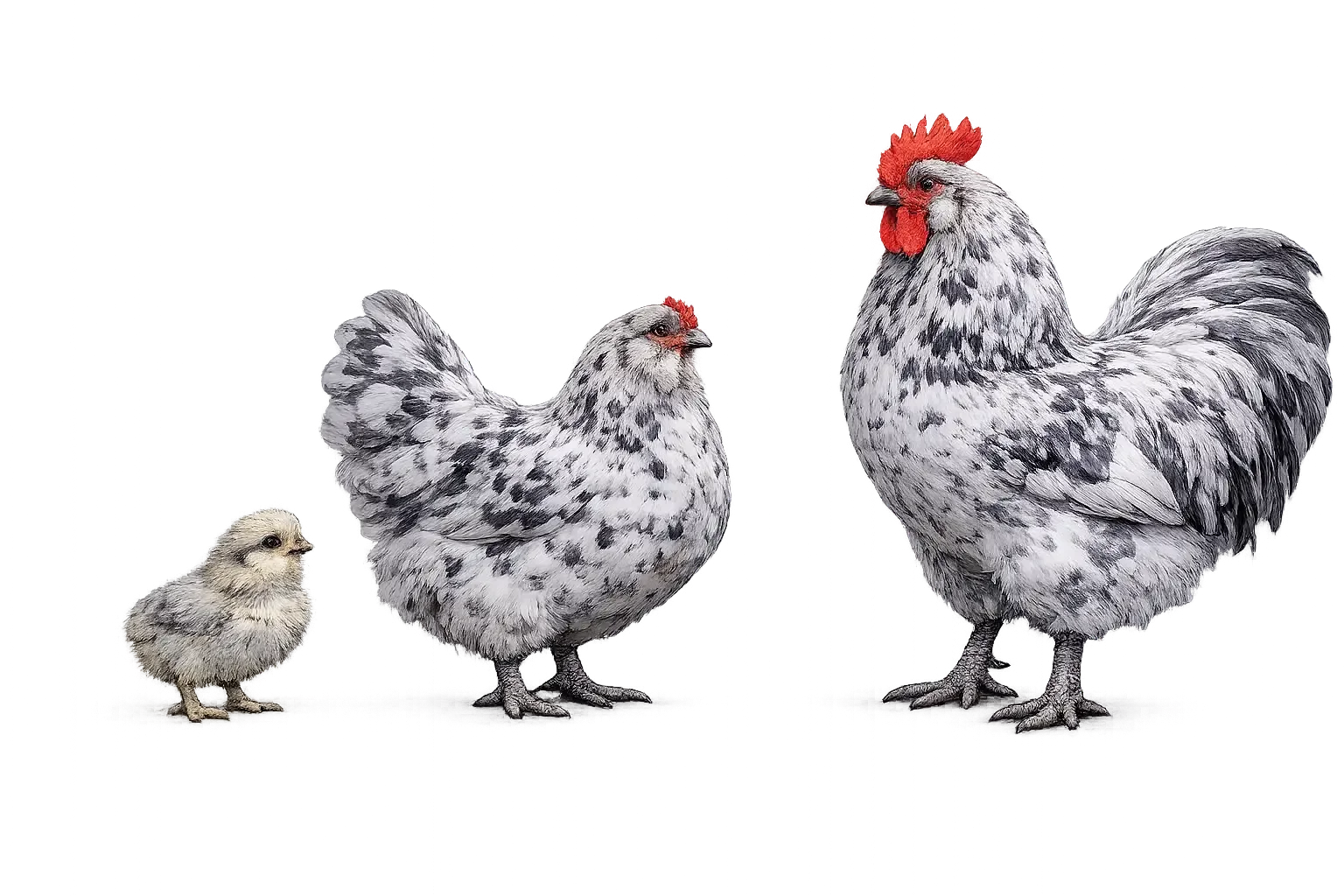
The Splash Ameraucana Bantam occupies an interesting position in the Ameraucana family: it is the most visually unpredictable of the recognized bantam varieties, it is recognized by the American Bantam Association but not currently by the American Poultry Association in the bantam class, and it combines the splash plumage genetics covered in the large fowl Blue Splash Ameraucana post with the bantam scale, resource efficiency, and active character covered in the Ameraucana Bantam post. The result is a compact, predominantly white bird with irregular blue-black splashing across its feathers, carrying the full Ameraucana breed signature of beard, muffs, pea comb, slate legs, and full tail, in a package weighing approximately 1.875 lbs for cocks and 1.625 lbs for hens, laying the same consistently blue eggs as every other Ameraucana variety. The splash plumage is produced by two copies of the blue dilution gene acting on black base pigment, diluting it so completely that what remains is an irregular distribution of blue-gray and near-black marks on a predominantly white ground, and because both parents contribute one copy each when two splash birds are crossed, splash-to-splash crosses produce 100 percent splash offspring, making it one of the simplest color varieties to maintain as a self-sustaining breeding group once a verified pair is established. The ABA recognized the Splash bantam variety in 2022, making it among the most recently formalized bantam Ameraucana color varieties. For the homestead keeper who wants the most visually striking bantam Ameraucana with genuinely simple color genetics for self-sustaining production, and who shows in ABA bantam classes where the variety is fully recognized, the Splash Ameraucana Bantam makes a specific and practical case.
Quick Facts
Class: All Other Comb Clean Legged (ABA); not currently recognized in APA bantam standard
Weight: Cocks approximately 1.875 lbs (30 oz); hens approximately 1.625 lbs (26 oz) per ABA bantam standard
Egg Production: Approximately 100 to 150 small blue eggs per year; 2 to 3 eggs per week
Egg Color: Blue; identical to all other Ameraucana varieties; blue throughout the shell inside and out
Egg Size: Small; proportionally smaller than large fowl Ameraucana eggs
Primary Purpose: Dual purpose at bantam scale; blue eggs; exhibition; pet; forager
Temperament: Active, curious, and generally friendly; comparable to all other Ameraucana bantam variety temperament range
Brooding: Variable; some hens go broody and are capable mothers
Flight Capability: Moderate to high; bantam breeds are generally more capable fliers than large fowl; covered runs or six-foot fencing recommended
ABA Recognition: 2022 (Splash bantam variety); APA does not currently recognize Splash in the bantam class
Country of Origin: United States; developed within the established Ameraucana bantam breeding community
Varieties Context: Splash is one of ten ABA-recognized bantam Ameraucana varieties; one of eight APA-recognized bantam varieties does not include Splash
Comb Type: Pea comb; minimal frostbite risk
Distinctive Trait: Splash plumage at bantam scale; predominantly white with irregular blue-black patches and stippling; no two birds look identical; breeds true from splash-to-splash crosses; lays blue eggs; ABA-only bantam recognition
Conservation Status: Not at risk; active breeding community
Lifespan: 7 to 10 years
Breed Overview
The Splash Ameraucana Bantam shares the full breed history of all Ameraucana varieties, developed in the United States in the 1970s and 1980s from blue egg laying Easter Egger-type stock by breeders working to establish a standardized, true-breeding breed with consistent physical characteristics and reliable blue egg production. The bantam Ameraucana as a class was developed before the large fowl standard was complete, with the original eight bantam varieties receiving ABA recognition beginning in 1980 and full APA recognition in 1984.
The Splash variety at bantam scale followed the same pattern as the large fowl Splash Ameraucana: it is a natural product of the blue dilution gene's incomplete dominance, appearing in approximately 25 percent of offspring from blue-to-blue crosses and in approximately 50 percent of offspring from blue-to-splash crosses. Once identified and stabilized as a variety, splash-to-splash crosses produce 100 percent splash offspring, making the variety self-sustaining without the color variance management that blue-to-blue crossing requires.
The ABA formally recognized the Splash bantam variety in 2022, completing the variety's official standing within the ABA bantam standard. The APA bantam standard currently does not include Splash, meaning that Splash Ameraucana Bantams compete at APA shows in any-other-variety classes rather than under a recognized variety description. For keepers whose exhibition activity is primarily in ABA bantam shows, this distinction has no practical effect; for keepers who show exclusively in APA-sanctioned shows, the Splash bantam's recognition status is a genuine exhibition consideration worth understanding before investing in the variety for show purposes.
The Ameraucana Breeders Club and the Ameraucana Alliance both note that cross-breeding different Ameraucana color varieties is possible but produces offspring that may not meet any variety description, depending on the genetics involved. Splash is particularly useful in the breeding toolkit because crossing splash to black produces 100 percent blue offspring, making the Splash variety a practical tool for efficiently generating blue birds in large numbers for keepers who maintain multiple Ameraucana color varieties.
Plumage and Appearance
The Splash Ameraucana Bantam's plumage is identical in genetic mechanism and visual character to the large fowl Blue Splash Ameraucana's splash plumage, expressed on the bantam's proportionally smaller body. The predominantly white ground color carries irregular blue-gray and near-black patches, splashing, and stippling distributed across the feather tracts in patterns that vary significantly between individual birds. No two splash birds look identical, and this unpredictability within a defined white-dominant range is the variety's most visually distinctive characteristic.
At bantam scale, the splash pattern creates a different visual impression than it does on the large fowl bird simply because the overall bird is smaller and the patches and stippling appear proportionally larger relative to the bird's total surface area. A bantam splash pattern that might read as subtle on a 5.5-pound large fowl hen reads more dramatically on a 1.625-pound bantam hen because the same absolute patch size covers a higher proportion of the smaller bird's plumage area.
The ABA exhibition standard for the Splash Ameraucana Bantam mirrors the large fowl standard in calling for a predominantly white bird with blue splashing, disqualifying birds that show more than 50 percent blue in the plumage or that display rust coloring. Brassiness, the yellowing of the white areas from sun exposure, genetics, or diet, is a defect rather than a disqualification but is selected against in exhibition breeding programs.
All other physical characteristics are identical to every other Ameraucana bantam variety. The beard and muffs are full and present together. The pea comb is small and low. The legs are slate to nearly black. The eyes are reddish bay. The tail is full. The white ground of the splash plumage makes the dark slate legs particularly visible and contributes to the overall visual contrast of the variety's appearance.
The predominantly white plumage of the Splash Ameraucana Bantam is more visible to aerial and ground predators than darker varieties in open free-range situations. This is a practical management consideration for keepers who free-range their bantam flocks in environments with significant predator pressure, where darker plumage provides somewhat better visual concealment.
Egg Production
The Splash Ameraucana Bantam lays blue eggs at the same rate and in the same color as every other Ameraucana bantam variety: approximately 100 to 150 small blue eggs per year, or 2 to 3 per week. The splash plumage genetics have no relationship to the blue egg gene; a splash hen from verified Ameraucana stock lays exactly the same blue eggs as a black, blue, wheaten, or white Ameraucana bantam hen.
The egg color is consistent for each individual hen throughout her laying life: the shade of blue each hen produces, from light pastel to a deeper sky blue, remains her characteristic shade across her productive years. The eggs are blue throughout the shell from inside to outside, produced by oocyanin pigment that penetrates the shell during formation rather than sitting on the surface as a coating.
Annual production of 100 to 150 small blue eggs places the Splash Ameraucana Bantam in the modest but consistent layer category for bantam breeds. The resource efficiency of bantam scale, approximately one quarter to one fifth the feed consumption of large fowl, means the per-egg feed cost comparison between bantam and large fowl is more favorable than the raw production numbers suggest when feed efficiency is accounted for.
Broodiness is variable across the variety as it is across all Ameraucana bantam varieties. Some hens go broody and commit attentively to incubation; others rarely or never do. The variety's true-breeding characteristic from splash-to-splash crosses simplifies flock propagation when broody hens do occur, since all offspring from a splash pair are splash regardless of which individual hen sets the clutch.
Temperament and Behavior
The Splash Ameraucana Bantam's temperament is identical to the Ameraucana Bantam's in every practical characteristic. The breed's active, curious, generally friendly disposition applies equally across all color varieties. No behavioral difference exists between splash, blue, black, or white Ameraucana bantam birds; temperament is a breed characteristic, not a color characteristic.
The active foraging character that makes the Ameraucana Bantam an efficient range bird applies fully to the Splash variety. The compact bantam size and alert, quick movement of the variety make it an effective forager relative to its feed consumption, supplementing its diet meaningfully from range access in homestead and backyard settings.
In mixed flocks the Splash Ameraucana Bantam is generally peaceful toward other breeds, holding a moderate position in the pecking order without significant aggression or significant vulnerability. The variety's predominantly white plumage may attract slightly more pecking attention from curious flockmates than darker varieties, a minor consideration in mixed flocks that can be managed through appropriate companion breed selection.
Climate Adaptability
The Splash Ameraucana Bantam's climate performance is identical to the Ameraucana Bantam's in every respect. The pea comb presents minimal frostbite risk. The bantam's smaller body mass requires more attentive housing management in extreme cold than large fowl, as smaller birds lose body heat more quickly relative to their mass. Standard dry, well-ventilated, draft-free housing handles North American winters adequately across most regions.
One climate note specific to the Splash variety: the predominantly white plumage absorbs less solar heat than darker variety plumages, giving the Splash bantam a modest advantage over black or blue varieties in direct summer sun heat management. The practical difference at bantam scale is small but slightly favorable for the Splash in hot-climate situations where minimizing solar heat absorption matters.
The beard and muff waterer management consideration applies as it does to all Ameraucana varieties, bantam and large fowl alike.
Housing and Management
Standard Ameraucana Bantam housing requirements apply in full. Four square feet of indoor floor space per bird minimum. Six-foot fencing or covered runs for reliable containment given the bantam's active flight capability. Roost bars sized for bantam feet. Nipple or cup-style waterers to prevent wet beard conditions.
The Splash variety's white ground plumage shows dirt and soiling more visibly than darker varieties, which has a minor practical implication for litter management. Clean, dry litter conditions maintain the white plumage's appearance and prevent the staining that wet or soiled substrates cause. This is an aesthetic rather than a health consideration for homestead birds, but it is relevant for exhibition birds where plumage condition is evaluated.
Breeding management for the Splash Ameraucana Bantam is the simplest of any Ameraucana color variety for keepers who want to maintain a single consistent color: splash-to-splash crosses produce 100 percent splash offspring every generation. A verified splash pair produces all splash chicks without the color variance management that blue-to-blue or blue-to-splash crosses require. Keepers who want to produce blue offspring efficiently can breed splash to black, producing 100 percent blue offspring from that cross.
Breed verification is essential. Bantam Easter Eggers with splash-like coloring are sold at some hatcheries under Ameraucana-adjacent names. A genuine Splash Ameraucana Bantam has slate legs, a pea comb, beard and muffs together, a full tail, and consistent blue egg production verified through documented breeding. The ABA recognition of the Splash bantam variety in 2022 provides a formal standard against which birds can be evaluated for exhibition.
Sourcing Considerations
The Splash Ameraucana Bantam is among the less commonly available Ameraucana bantam varieties given the recency of its ABA recognition in 2022 and the smaller number of breeders who have developed and stabilized splash bantam lines relative to the longer-established black, blue, wheaten, and white varieties. Sourcing requires research through the Ameraucana Breeders Club directory, the Ameraucana Alliance, and breeders active in ABA bantam exhibition circuits where splash birds are shown and evaluated.
The ABA recognition in 2022 is recent enough that some breeders are still in the process of developing and stabilizing their splash bantam lines. Sourcing from breeders who have been working with splash bantam genetics for multiple generations and can document consistent splash color expression and blue egg production produces better starting stock than purchasing from breeders with less established lines.
Mainstream hatcheries do not carry verified Splash Ameraucana Bantams. The variety requires specialty sourcing through the breeder network.
Pros and Cons
Pros
Most visually striking Ameraucana bantam variety; predominantly white with irregular blue-black splash markings creates a dramatic and unpredictable plumage pattern
Breeds true from splash-to-splash crosses; simplest color genetics management of any Ameraucana variety for a self-sustaining single-color flock
Crossing splash to black produces 100 percent blue offspring; useful breeding tool for keepers managing multiple Ameraucana color varieties
Consistent blue egg production at bantam scale; same blue color as every other Ameraucana variety
Pea comb provides excellent cold hardiness with minimal frostbite risk
White-dominant plumage absorbs less solar heat than darker varieties; modest heat management advantage in summer
Active forager; efficient at supplementing diet from range relative to bantam body size
ABA recognized since 2022; formal variety standard established for exhibition evaluation
Approximately one quarter of the feed consumption of large fowl Ameraucanas
Cons
APA does not currently recognize Splash in the bantam class; exhibition limited to ABA shows and any-other-variety classes at APA shows
Less widely available than longer-established Ameraucana bantam varieties; specialty sourcing required
Fewer established breeders with multi-generation splash bantam lines than for older varieties
Predominantly white plumage more visible to predators in open free-range settings than darker varieties
White plumage shows dirt and soiling more visibly; requires attentive litter management for maintained appearance
Brassiness in the white areas is a common exhibition defect requiring management
Bantam egg production of 100 to 150 small eggs per year below large fowl Ameraucana production in both volume and size
Flight capability requires six-foot fencing or covered runs
Profitability
The Splash Ameraucana Bantam's profitability profile follows the same general structure as the Ameraucana Bantam's, with the additional visual marketing appeal of the splash plumage's dramatic and unpredictable appearance. The combination of a strikingly patterned white and blue-marked bantam bird laying blue eggs is a strong visual proposition for farm social media and direct marketing to buyers who value novelty and visual interest in their egg source.
The variety's true-breeding characteristic from splash-to-splash crosses simplifies breeding program management and reduces ongoing sourcing dependence, which supports long-term operational profitability for keepers who establish a verified splash pair and propagate their own replacements.
The ABA bantam exhibition market for Splash Ameraucanas is active and growing given the variety's recent 2022 recognition. Breeders producing correct-type splash bantams with clean white ground, well-defined splash marking, and verified blue egg production from documented lines serve a dedicated buyer community seeking the variety for exhibition purposes.
Comparison With Related Breeds
Ameraucana Bantam (general): The parent category covering all Ameraucana bantam varieties. The Splash Ameraucana Bantam shares all breed characteristics with every other Ameraucana bantam variety; the only differences are the splash plumage color, the true-breeding characteristic from splash-to-splash crosses, and the ABA-only recognition status that distinguishes the Splash from the eight varieties recognized by both ABA and APA in the bantam class.
Blue Splash Ameraucana (large fowl): The large fowl equivalent covered separately in this directory. All splash genetics, breeding behavior, and plumage characteristics are identical between the bantam and large fowl splash varieties. The bantam produces smaller eggs, consumes less feed, requires less space, and flies more actively. The large fowl produces more and larger eggs and is more easily contained. The APA recognition status differs: the large fowl Blue Splash Ameraucana is APA-recognized while the bantam Splash variety is not.
Splash Silkie Bantam: A comparison bantam breed that also expresses the blue-black-splash genetics at bantam scale, shared in the Silkie variety list in your directory. The Splash Silkie has hookless fur-like feathering rather than conventional feathers, a dramatically different body type and temperament, cream eggs rather than blue, and strong brooding instincts. Both are splash-patterned bantam breeds; the Ameraucana Bantam serves the blue egg function, the Silkie serves the ornamental and brooding function.
Ameraucana Bantam (other varieties): The Black, Blue, Wheaten, and White bantam varieties that share ABA and APA recognition in the bantam class. All practical breed characteristics are identical across varieties; the differences are entirely in plumage color and the breeding management implications of each color's genetics. The Splash is the simplest to maintain as a self-sustaining single-color variety; the Blue is the most visually expected Ameraucana color; the Black is the most dramatically dark; the White is the cleanest and most visible.
Final Verdict
The Splash Ameraucana Bantam is the right choice for the keeper who wants the most visually dynamic bantam Ameraucana in a self-sustaining format with the simplest color genetics management, shows primarily in ABA bantam classes where the variety is fully recognized, and values the combination of splash plumage drama and blue egg production that no other bantam variety delivers in quite the same way. The APA recognition gap is a genuine exhibition consideration for APA show participants; the sourcing challenge is a genuine practical consideration given the variety's recent formal recognition; and the white plumage's visibility to predators is a genuine free-range management consideration in high-predator environments. None of these limitations diminish the case for the variety in ABA exhibition or homestead blue egg production contexts where the splash's specific advantages, its visual impact, its true-breeding simplicity, and its blue-production breeding utility, are the governing criteria. The dual purpose and homestead category is better for including it.
Frequently Asked Questions
Do Splash Ameraucana Bantams lay blue eggs? Yes, consistently. The splash plumage genetics have no relationship to the blue egg gene. Every Ameraucana variety, including the Splash, lays blue eggs throughout the hen's laying life. The shade of blue each hen produces is consistent for her lifetime, ranging from light pastel to a deeper sky blue depending on the individual.
Is the Splash Ameraucana Bantam recognized by the APA? Not currently in the bantam class. The ABA recognized the Splash bantam variety in 2022. The APA currently does not recognize Splash in the bantam class, though Splash is recognized in the large fowl Ameraucana class. Splash Ameraucana Bantams compete in any-other-variety classes at APA shows rather than under a recognized variety description.
If I breed two Splash Ameraucana Bantams together, what color chicks will I get? One hundred percent splash. Splash birds carry two copies of the blue dilution gene; when two splash birds are crossed, every offspring receives one copy from each parent and expresses the splash pattern. This true-breeding characteristic is the variety's most practical advantage for keepers who want a self-sustaining single-color flock without the color variance of blue-to-blue crosses.
What is the difference between the Splash Ameraucana Bantam and the Blue Splash Ameraucana large fowl?The genetics, plumage pattern, and breeding behavior are identical. The differences are scale, egg size and volume, feed consumption, containment requirements, and APA recognition status. The large fowl produces more and larger blue eggs, consumes more feed, requires more space, and is APA-recognized in the splash variety. The bantam produces fewer and smaller blue eggs, consumes less feed, requires less space but taller fencing, and is ABA-recognized but not APA-recognized in the splash bantam class.
Why does the splash pattern look different on every bird? The splash pattern is produced by the double dose of the blue dilution gene acting unevenly across different feather tracts during development. The uneven expression of the gene across feather groups produces the irregular distribution of blue-gray and near-black marking on a white ground that defines the splash appearance. Because the variation is inherent to the genetic mechanism rather than controlled by a patterning gene that specifies exact marking location, no two birds express the same splash distribution, making every splash bird visually unique within a defined white-dominant range.
Where can I find verified Splash Ameraucana Bantam chicks? Through the Ameraucana Breeders Club directory, the Ameraucana Alliance, and breeders active in ABA bantam exhibition circuits. Mainstream hatcheries do not carry verified Splash Ameraucana Bantams. Given the variety's 2022 ABA recognition, the number of established breeders with multi-generation splash bantam lines is smaller than for the longer-recognized varieties; sourcing research may require more patience than for black, blue, or wheaten bantam Ameraucanas.
Related Breeds
Ameraucana Bantam
Blue Splash Ameraucana
Blue Ameraucana
Lavender Ameraucana
Splash Silkie
Easter Egger