
Agapanthus
Quick Overview
Common Name: Agapanthus, Lily of the Nile, African Lily, Blue African Lily
Scientific Name: Agapanthus spp.
Plant Type: Tender to Hardy Perennial
USDA Zones: 6 to 11 depending on variety
Sun Requirement: Full Sun to Partial Shade
Soil Type: Well-drained, moderately fertile
Bloom Season: Early through Late Summer
Height: 18 to 48 inches depending on species and variety
Pollinator Friendly: Yes
Edible: No, toxic if ingested
Why Grow Agapanthus on a Homestead
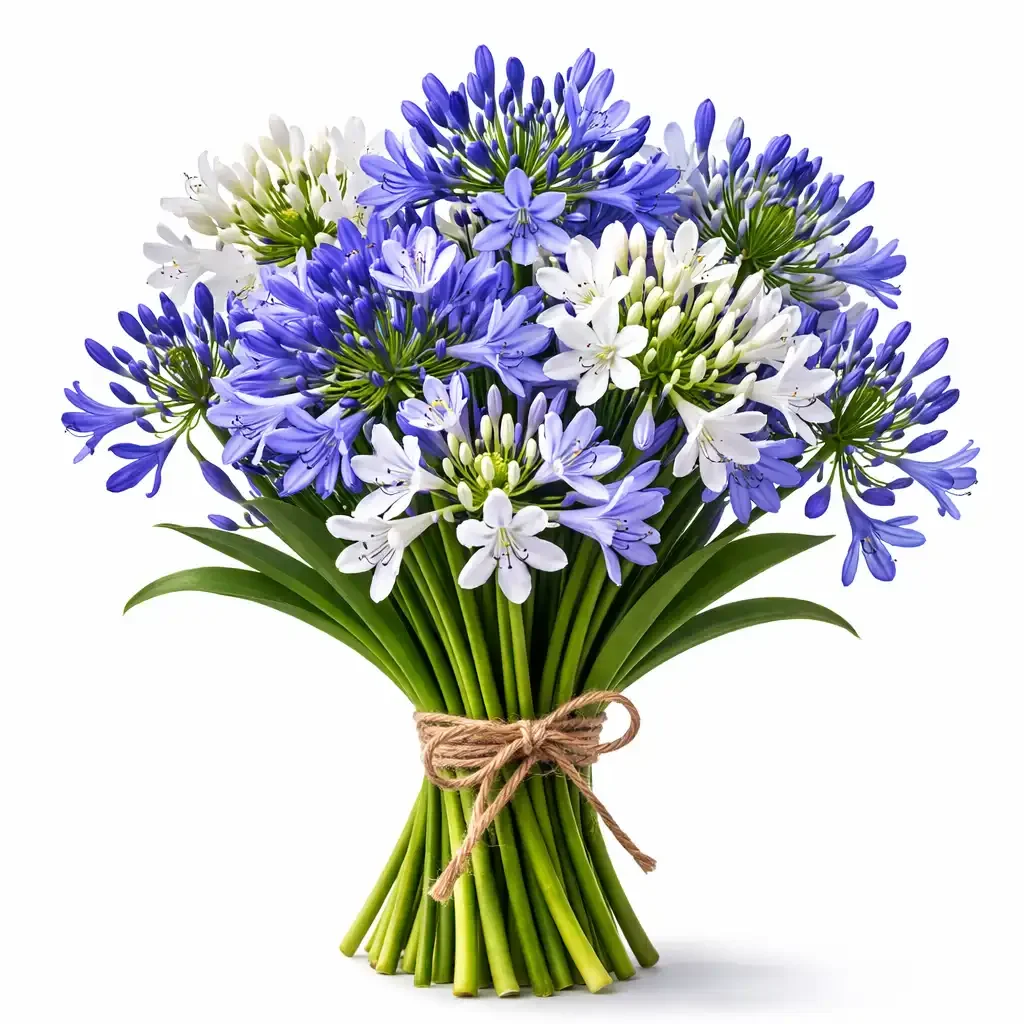
Agapanthus is one of the most architecturally striking and commercially distinctive specialty cut flowers available to homestead growers in appropriate climates. Its large, perfectly spherical to rounded umbel flower heads composed of dozens of individual trumpet-shaped florets in the most vivid and sophisticated blue, deep violet, soft lavender, white, and bicolor combinations, carried on tall, straight, leafless stems, create a bold architectural statement in arrangements that combines the geometric drama of spherical form with the rarity of genuine true blue color in a single extraordinary stem. In the professional floral industry Agapanthus is considered one of the most versatile and architecturally powerful specialty flowers available for the summer season, providing a structural presence and a blue color intensity that florists and wedding designers use to anchor and elevate summer arrangements across every design aesthetic.
For homestead growers in appropriate climates, Agapanthus represents one of the most strategically valuable permanent perennial cut flower investments available. Once established, Agapanthus plants produce an increasing abundance of harvestable stems as they mature and divide, with established clumps becoming progressively more productive over years and even decades of growth with minimal ongoing management. The genuine rarity of locally grown fresh Agapanthus at most farmers markets and in most local florist supply chains, combined with the consistent florist demand for quality blue architectural cut material during the summer season, creates a premium market position that rewards the patience required during the two to three year establishment period before meaningful commercial harvest begins.
Here is why Agapanthus deserves a prominent spot on your homestead in appropriate climates:
The vivid blue umbel heads provide genuinely irreplaceable architectural presence and rare blue color simultaneously. The combination of bold spherical to rounded flower head architecture and genuine true blue color in a single tall-stemmed flower creates a specialty market position that no other commonly grown summer cut flower can replicate.
It is a permanent, expanding perennial that delivers dramatically improving returns over time. Established Agapanthus clumps expand progressively through rhizome division each season, producing increasing quantities of harvestable stems year after year from a fixed initial planting investment.
The summer blooming window coincides with the most commercially active market season. Agapanthus blooms from early through late summer precisely when the summer cut flower market is most active and when demand for distinctive, locally grown architectural specialty material is highest.
It thrives in mild winter climates where it provides essentially permanent, low-maintenance production. In mild winter climates within USDA zones 8 to 11, established Agapanthus is one of the most self-sufficient and lowest-maintenance perennial cut flower crops available, requiring essentially no winter protection, minimal fertilizing, and limited ongoing management.
The white varieties provide a complementary permanent white architectural stem alongside the blue forms. Growing both blue and white Agapanthus varieties creates a comprehensive architectural summer cut material offering that serves the full range of florist color palette requirements from a single permanent planting.
Growing Conditions
Sunlight
Agapanthus performs best in full sun to light partial shade. It needs at least 5 to 6 hours of direct sunlight per day for the most abundant flowering and the strongest, tallest stems. In full sun it produces the most productive and most densely flowered umbels. In partial shade stem length often increases as plants reach for light, which can actually be commercially beneficial for cut flower use, but flower density per umbel and overall production decrease. In hot summer climates some afternoon shade reduces heat stress and can actually improve flower quality and extend the bloom period. The moderate shade tolerance of Agapanthus makes it more placement-flexible than many other perennial cut flower crops.
Soil
Agapanthus prefers well-drained, moderately fertile soil. Good drainage is important, particularly during the winter dormancy period in cold climates where waterlogged soil causes rhizome rot. A loose, well-drained soil with a pH between 6.0 and 7.5 is ideal. Incorporating compost before planting improves soil structure and fertility while maintaining good drainage. Agapanthus is more tolerant of a range of soil conditions than many other perennial cut flower crops and can perform well in average garden soil without extensive amendment. In heavy clay soils, incorporating coarse sand and compost or building raised beds ensures adequate drainage.
Water
Agapanthus needs consistent watering during its active growing and blooming season in spring and summer. Adequate moisture during the development of the flower heads and stems is important for the largest, most fully developed umbels that create commercial value. After blooming as foliage begins to die back or enter dormancy in fall, reduce watering significantly. Established Agapanthus develops significant drought tolerance and actually benefits from somewhat dry conditions during its dormancy period in late fall and winter. In mild climates where the foliage is evergreen year-round, maintain some moisture year-round but allow the soil to dry more between waterings during the cooler, less active growing months.
Temperature
Temperature hardiness varies significantly between Agapanthus species and varieties. Deciduous varieties, primarily those derived from Agapanthus africanus and Agapanthus campanulatus, are hardier and can survive in USDA zones 6 to 7 with appropriate mulching and winter protection. Evergreen varieties, primarily those derived from Agapanthus orientalis, are less cold hardy and are most reliable in USDA zones 8 to 11. The distinction between deciduous and evergreen varieties is the single most important selection criterion for growers in cold to moderate climates. In cold winter climates within USDA zones 6 to 7, choosing deciduous varieties, planting in the most protected location available, providing a generous winter mulch after the ground has cooled, and growing in raised beds with excellent drainage gives the best chance of successful perennial establishment.
Planting Guide
Agapanthus is best established from nursery container plants or from divided clumps. Growing from seed is slow, typically taking three to four years to produce blooming plants, and produces variable quality. Named variety plants from reputable suppliers give the fastest and most reliable path to premium cut flower quality.
Step 1: Choose a planting location with full sun to light partial shade and well-drained soil. In cold climates choose the most sheltered and best-drained position available. South-facing slopes, against south-facing walls, and in raised beds all provide the warmest possible microclimate in borderline climates.
Step 2: Prepare the planting area by incorporating compost and a balanced fertilizer. Unlike some cut flower crops that prefer lean conditions, Agapanthus benefits from moderately fertile soil that supports the vigorous growth necessary for the most productive cut flower clumps.
Step 3: Plant rhizomes or container plants with the crown at or just below soil level. Do not plant too deeply as burying the crown deeply increases rot risk. Space plants 18 to 24 inches apart for cut flower production.
Step 4: Water thoroughly after planting and maintain consistent moisture throughout the first growing season to support establishment. First season plants typically produce limited or no blooms as they focus on root system development.
Step 5: In cold winter climates within USDA zones 6 to 7, apply a generous layer of straw or shredded leaf mulch over the planting area in fall after the ground has cooled. Remove mulch carefully in spring as new growth emerges.
Step 6: Be patient during the establishment period. Agapanthus typically produces limited blooms in its first one to two seasons while developing its root system, with meaningful commercial production beginning in year two to three. Full productive maturity with maximum stem yield typically arrives in years three to five.
Seed vs Division or Container Plant: Named variety nursery container plants or division-grown plants from established clumps are strongly recommended. Growing from seed is too slow for commercial cut flower production.
Spacing: 18 to 24 inches apart for cut flower production.
Planting Season: Spring in most climates. Fall planting works well in mild climates within USDA zones 8 to 11.
Maintenance
Dividing
Dividing established Agapanthus clumps is both the primary method of production expansion and an important ongoing management practice for maintaining productivity. Clumps that have been growing for three to five years without division often become congested, with individual stems becoming shorter and less well-developed as resources are divided among an increasing number of crowded growing points. Divide in early spring before new growth begins or in fall after blooming has completely finished. Lift clumps carefully, separate into individual crowns or small groups of crowns with intact rhizomes, and replant at appropriate spacing in prepared soil.
Post-Bloom Management
After blooming has finished, remove spent flower heads before they develop and disperse seeds. This prevents unwanted self-seeding and allows the plant to direct energy toward rhizome development and the following season's flower bud formation rather than seed production.
Fertilizing
Apply a balanced fertilizer in early spring as new growth emerges and a light application every six to eight weeks throughout the growing season. A fertilizer with adequate potassium supports strong stem development and the vivid blue colors that create commercial value. Avoid excessive nitrogen which promotes lush foliage at the expense of flower stem production.
Winter Protection in Cold Climates
In cold winter climates within USDA zones 6 to 7, apply a generous mulch of straw or shredded leaves six to eight inches deep over the planting area after the ground has cooled in late fall. This mulch provides critical insulation for the rhizomes against the hard freezes that can damage or kill plants in marginal climates. Remove the mulch gradually in spring as temperatures warm to prevent crown rot from accumulating moisture.
Pest Control
Agapanthus is largely pest resistant. Snails and slugs can damage emerging growth in spring, particularly in mild, humid climates. Iron phosphate slug bait provides effective control. Mealybugs can occasionally infest the base of stems and rhizomes in warm climates. Treat with horticultural oil or insecticidal soap at the first sign of infestation.
Harvesting
When to Harvest
Harvest Agapanthus stems when approximately one quarter to one third of the individual florets in the umbel have opened, with the remaining florets showing color in the bud stage. At this stage the remaining florets open progressively over the following days after cutting, creating a beautifully developing display that provides an extended period of fresh visual impact in the vase. Stems harvested when the umbel is fully open have shorter remaining vase life. Harvest in the early morning when stems are fully hydrated.
How to Cut
Use clean, sharp scissors or pruners. Cut stems as long as possible at the base of the stem near the plant crown, ideally 24 to 36 inches for tall varieties. The long, straight, leafless stems of Agapanthus are one of its most commercially valuable characteristics and maximizing available stem length is essential for premium cut flower value. Place stems immediately into a bucket of cool water with a floral preservative.
Conditioning
After cutting, place stems in deep cool water in a cool, dark location for several hours or overnight before sale or arrangement. Agapanthus conditions readily and the umbels open beautifully and progressively during the conditioning period and through the vase life. Properly conditioned Agapanthus stems hold up well in arrangements and at market displays.
How Often to Harvest
During the main summer blooming period, harvest every two to three days as new stems reach the correct stage. The bloom period for established Agapanthus plantings typically extends over four to eight weeks with different stems in the same planting reaching harvest stage at different times.
Vase Life
Agapanthus typically lasts 7 to 14 days as a fresh cut flower with proper conditioning. Strip all foliage from the stems, which typically carry minimal leaves in any case, recut stems at an angle, and place in fresh water with a floral preservative. Change water every two to three days and remove individual spent florets as they fade to maintain the arrangement's appearance and extend the effective display period of the developing remaining florets.
Uses on a Homestead
Cut Flower Use
Agapanthus is grown primarily as a bold architectural focal and accent flower in mixed summer bouquets and large-scale floral installations. Its tall straight stems topped by the rounded umbel of vivid blue or white trumpet florets create an immediately architectural and visually distinctive presence in arrangements. It pairs magnificently with roses, dahlias, Liatris, Eryngium, ornamental grasses, and other summer cut flowers in mixed arrangements that benefit from a bold architectural counterpoint. Even a single Agapanthus stem commands attention in any mixed arrangement due to the combination of its height, its geometric flower head form, and the genuine rarity of its blue color.
Wedding and Event Flowers
Agapanthus is a consistently sought-after specialty flower for summer weddings and large-scale events. The tall, straight stems and bold spherical umbels create a dramatic architectural presence in tall arrangements, ceremony installations, and large-scale event floristry where height and visual impact are primary requirements. The vivid blue varieties are particularly prized for wedding designs where blue is a key color element, as Agapanthus provides a scale of blue architectural presence that smaller blue flowers cannot replicate. White Agapanthus is widely used in classic and contemporary white and green wedding designs where its architectural form provides dramatic structural interest.
Farmers Market
Fresh Agapanthus at a summer farmers market creates an immediately distinctive and visually commanding display that customers find immediately compelling. The combination of tall stems, bold geometric flower heads, and genuine blue color creates the most architecturally striking single stem available at most summer market stands. The genuine rarity of fresh Agapanthus as a cut material at most market stands creates strong purchasing interest and premium pricing conditions.
Container and Agritourism
In mild climates, container-grown Agapanthus creates spectacular summer garden displays that generate powerful agritourism content. Established clumps in large decorative containers or in mass landscape plantings create garden displays of extraordinary beauty during the summer blooming period that attract visitors and generate the social media content that builds farm stand and subscription customer communities.
Can You Make Money With Agapanthus
Yes, Agapanthus is a financially rewarding long-term perennial cut flower investment for homestead growers in appropriate climates, particularly those in mild winter areas where it grows with exceptional self-sufficiency once established.
Genuinely irreplaceable combination of blue color and architectural form. The combination of genuine true blue umbel heads on tall architectural stems creates a specialty market position that no other commonly grown summer cut flower can occupy. This genuine uniqueness supports consistent premium pricing.
Permanent expanding perennial with dramatically improving returns. Established Agapanthus clumps expand through annual division, providing increasing quantities of harvestable stems year after year. The financial return per plant improves every season as established clumps mature and produce maximum stem yields.
Essentially self-sufficient in mild winter climates. In mild winter climates within USDA zones 8 to 11, established Agapanthus is one of the most self-sufficient and lowest-maintenance perennial cut flower crops available. The ongoing cost of production in established plantings is essentially just the time required to fertilize, divide, and harvest.
Strong dual market across fresh cut stems and dried botanical products. The dried seed heads of Agapanthus that develop after blooming are attractive and commercially useful as dried botanical products, providing an additional income dimension from the same permanent planting.
Farmers Market: Fresh Agapanthus stems sell for 3 to 6 dollars per individual stem given their dramatic size and architectural presence. Mixed bundles sell for 15 to 25 dollars depending on stem count and color.
Florists and Wedding Designers: Agapanthus is in consistent summer demand from florists and wedding designers for architectural accent applications. Local supply is rare and valued. Wholesale pricing reflects the premium specialty positioning of quality locally grown stems.
CSA Flower Subscriptions: Agapanthus is one of the most architecturally extraordinary and visually commanding additions to a summer flower subscription box. A single stem in a subscription delivery creates immediate subscriber excitement and signals genuine specialty cut flower expertise.
Companion Plants
Agapanthus grows naturally alongside other warm season and Mediterranean-climate perennials with similar growing requirements.
Lavender: Both prefer well-drained soil and full sun in Mediterranean-climate conditions. The soft purple of lavender and the vivid blue of Agapanthus create beautiful complementary color combinations in the garden and in arrangements.
Roses: Both are summer-blooming perennials that complement each other magnificently in mixed summer arrangements where Agapanthus provides bold architectural umbrella form and roses provide refined focal blooms.
Eucalyptus: Both are adapted to similar Mediterranean-climate growing conditions and complement each other beautifully in arrangements where Agapanthus provides bold blue focal interest and Eucalyptus provides complementary silver-blue aromatic foliage.
Liatris: The tall purple spikes of Liatris provide beautiful complementary vertical form alongside the rounded umbel form of Agapanthus in mixed summer arrangements with harmonious blue-purple color relationships.
Eryngium: Both provide bold blue architectural forms in summer arrangements and share similar lean-soil adaptations and drought tolerance characteristics.
Ornamental Grasses: Drought-tolerant ornamental grasses complement Agapanthus beautifully in arrangements and in the landscape, adding movement and a naturalistic quality that contrasts with the bold, static architectural form of Agapanthus umbels.
Common Problems
Failure to Bloom
The most common frustration with Agapanthus, particularly in its first few seasons after establishment. Failure to bloom is typically caused by one or more of the following: plants not yet reaching maturity, as first and second year plants routinely produce minimal or no blooms; division too soon after establishment which sets plants back; insufficient sun; excessive nitrogen fertilization; or winter damage in borderline climates that reduces the vigor needed for bloom production. Allow adequate establishment time of two to three years before expecting consistent commercial bloom production. Choose the sunniest location available. Avoid high-nitrogen fertilizers. In cold climates provide adequate winter protection.
Cold Damage in Borderline Climates
Occurs when temperatures drop below the cold hardiness threshold of the specific variety being grown, particularly when rhizomes are exposed to hard freezes without adequate insulation. Prevention through choosing the hardiest deciduous varieties for cold climates, planting in the most sheltered location available, providing a generous mulch after the ground cools in fall, and ensuring excellent drainage are the most effective protective strategies.
Rhizome Rot
Can occur in poorly drained or consistently waterlogged soil particularly during cool and wet winter periods. Prevention through excellent drainage, building raised beds in heavy soils, and reducing watering during the dormancy period is the most effective management approach. Once rhizome rot is established in individual growing points, remove and destroy affected material immediately to prevent spread.
Congested Clumps with Reduced Stem Quality
Develops in Agapanthus that has not been divided for many years. Overcrowded clumps produce increasing numbers of shorter, weaker stems as individual plants compete for resources. Regular division every three to five years maintains the vigorous growth and maximum stem quality that creates commercial value.
Slug and Snail Damage
Can be significant in mild, humid climates particularly in spring when new growth is most vulnerable. Iron phosphate slug bait applied around plants in early spring and after any significant rainfall provides effective control throughout the vulnerable growing period.
Varieties to Consider
Deciduous Hardy Varieties for Cold Climates
Agapanthus Headbourne Hybrids: A group of deciduous hybrids developed specifically for cold hardiness, with reliable performance in USDA zones 6 to 7 with appropriate winter protection. Deep blue to violet-blue umbels on strong stems. The standard starting point for homestead Agapanthus production in cold winter climates. Hardy in USDA zones 6 to 9.
Agapanthus Storm Cloud: A deciduous variety with very deep, intensely saturated deep blue to near-violet blooms on strong stems. One of the most intensely colored Agapanthus varieties available. Commands premium prices for its exceptional color intensity. Hardy in USDA zones 6 to 9.
Agapanthus Purple Cloud: Deep purple-blue umbels on strong stems. Very popular with florists for the unusually deep, rich purple-blue tone that is different from standard blue Agapanthus colors. Hardy in USDA zones 6 to 9.
Standard Blue Varieties for Mild Climates
Agapanthus orientalis Blue: The standard large blue-flowered Agapanthus species. Very large, vivid blue umbels on tall stems reaching 36 to 48 inches. The classic commercial cut flower Agapanthus. Hardy in USDA zones 8 to 11.
Agapanthus africanus Albus: A large white-flowered variety with clean white umbels on tall stems. One of the most widely grown white Agapanthus varieties for cut flower production. Very popular with florists and wedding designers for classic white and green palette designs. Hardy in USDA zones 8 to 11.
Agapanthus Midnight Blue: Very deep, nearly midnight blue umbels on strong stems reaching 30 to 36 inches. One of the darkest and most intensely colored Agapanthus varieties available. Commands significant premium pricing for the extraordinary depth of color. Hardy in USDA zones 7 to 10.
Compact Varieties for Smaller Spaces
Agapanthus Tinkerbell: A compact variety reaching 18 to 24 inches with vivid blue flowers and attractive variegated foliage with cream and green striping. Popular with customers for the attractive foliage as well as the flowers. Useful for growers who want Agapanthus production from more limited growing space. Hardy in USDA zones 7 to 10.
Agapanthus Poppin Purple: A compact to medium-height variety with vivid blue-purple flowers that blooms more prolifically and for a longer period than many standard varieties. Good repeat-blooming tendency that extends the productive harvest window. Hardy in USDA zones 6 to 10.
Final Thoughts
Agapanthus is one of the most architecturally magnificent, most ecologically self-sufficient, and most genuinely rewarding long-term perennial cut flower investments available to homestead growers in appropriate climates. The combination of genuine true blue architectural presence that no other summer cut flower can replicate, the permanent and progressively expanding rhizome system that delivers improving financial returns year after year, the essentially self-sufficient growing habit in mild climates that minimizes ongoing input costs, and the consistent strong florist and wedding market demand for quality architectural blue summer cut material creates a specialty cut flower crop with a long-term commercial profile of exceptional strength. The patience required during the two to three year establishment period is the primary investment beyond the initial planting cost, and homestead growers who plan their Agapanthus planting as a long-term asset rather than an immediate income generator will find that an established Agapanthus collection is among the most financially and personally satisfying permanent plantings their homestead operation can develop. Plant in the sunniest, best-drained location available, provide generous winter protection in cold climates, fertilize moderately throughout the growing season, divide regularly to maintain productivity and expand the planting, harvest at the correct quarter-open stage for maximum vase life, and Agapanthus will reward your homestead with some of the most architecturally extraordinary, most vivid blue, and most commercially distinctive summer cut flower stems available from any perennial planting in an appropriate climate.
FAQ
What is the difference between deciduous and evergreen Agapanthus and why does it matter for cut flower production? Agapanthus species and varieties fall into two broad categories based on their winter behavior. Deciduous varieties lose their foliage in fall and go dormant through winter, resprouting in spring. Evergreen varieties retain their foliage year-round and remain actively growing at a reduced rate throughout mild winters. This distinction matters enormously for cut flower production in climates outside the warmest growing zones. Deciduous varieties are significantly hardier than evergreen varieties because the absence of foliage during the coldest winter months means the plant does not need to protect active leaf tissue from freezing temperatures, and the dormant state provides some natural protection for the rhizomes. Deciduous Agapanthus varieties including the Headbourne Hybrids and Storm Cloud can survive in USDA zones 6 to 7 with appropriate mulching, while most evergreen varieties are damaged or killed by temperatures below approximately 20 to 25 degrees Fahrenheit and are reliable only in USDA zones 8 to 11. Growers in cold winter climates should always confirm they are purchasing deciduous varieties before investing in Agapanthus production.
Why does Agapanthus sometimes fail to bloom after being divided? Agapanthus has a somewhat unique response to disturbance that causes it to redirect energy from flower production to root system re-establishment after division or transplanting. Plants that were recently divided or transplanted typically produce few or no blooms in their first season and sometimes in their second season as they re-establish their root systems. This is entirely normal behavior and not an indication of poor health or inadequate growing conditions. The most effective way to minimize the post-division non-blooming period is to make divisions as early in spring as possible before significant active growth has begun, to divide into sections of adequate size rather than very small individual divisions, and to ensure consistent moisture and appropriate nutrition throughout the re-establishment period. Dividing at the correct time with adequately sized divisions typically restores full blooming production within one to two seasons.
Can Agapanthus be grown in containers for growers in cold climates? Yes, container growing is an excellent option for homestead Agapanthus production in climates outside the in-ground hardiness range. Agapanthus actually performs very well in containers and has the specific advantage of blooming most reliably when somewhat root-bound, meaning that the need to repot frequently is reduced compared to most container perennials. Use large containers of at least 12 to 15 gallons with excellent drainage and a well-drained potting medium. Grow in the sunniest available location during the growing season and move containers to a frost-free indoor location during winter. Container-grown Agapanthus can be overwintered in a cool garage or unheated room as long as temperatures remain above freezing, and plants kept somewhat dry during this storage period require minimal maintenance through the winter months.
Is Agapanthus toxic and should this affect how it is marketed? Yes, Agapanthus contains compounds that are toxic if ingested, particularly the sap which can also cause skin and eye irritation in some individuals. All parts of the plant including the leaves, flowers, and rhizomes contain these compounds. When handling Agapanthus for harvesting and market preparation, wearing gloves and avoiding touching eyes or mouth provides adequate protection. The toxicity is a contact and ingestion concern rather than a proximity concern, meaning that Agapanthus cut flowers in arrangements do not pose any risk to people in the vicinity. When selling at farmers markets, labeling cut Agapanthus with a simple toxic if ingested note and keeping it physically separated from any food or edible plant products provides appropriate customer safety information without significantly affecting commercial appeal.