
Ageratum
Quick Overview
Common Name: Ageratum, Floss Flower, Blueweed
Scientific Name: Ageratum houstonianum
Plant Type: Annual
USDA Zones: 2 to 11
Sun Requirement: Full Sun to Partial Shade
Soil Type: Well-drained, moderately fertile
Bloom Season: Late Spring through First Frost
Height: 12 to 30 inches depending on variety
Pollinator Friendly: Yes
Edible: No, toxic if ingested
Why Grow Ageratum on a Homestead
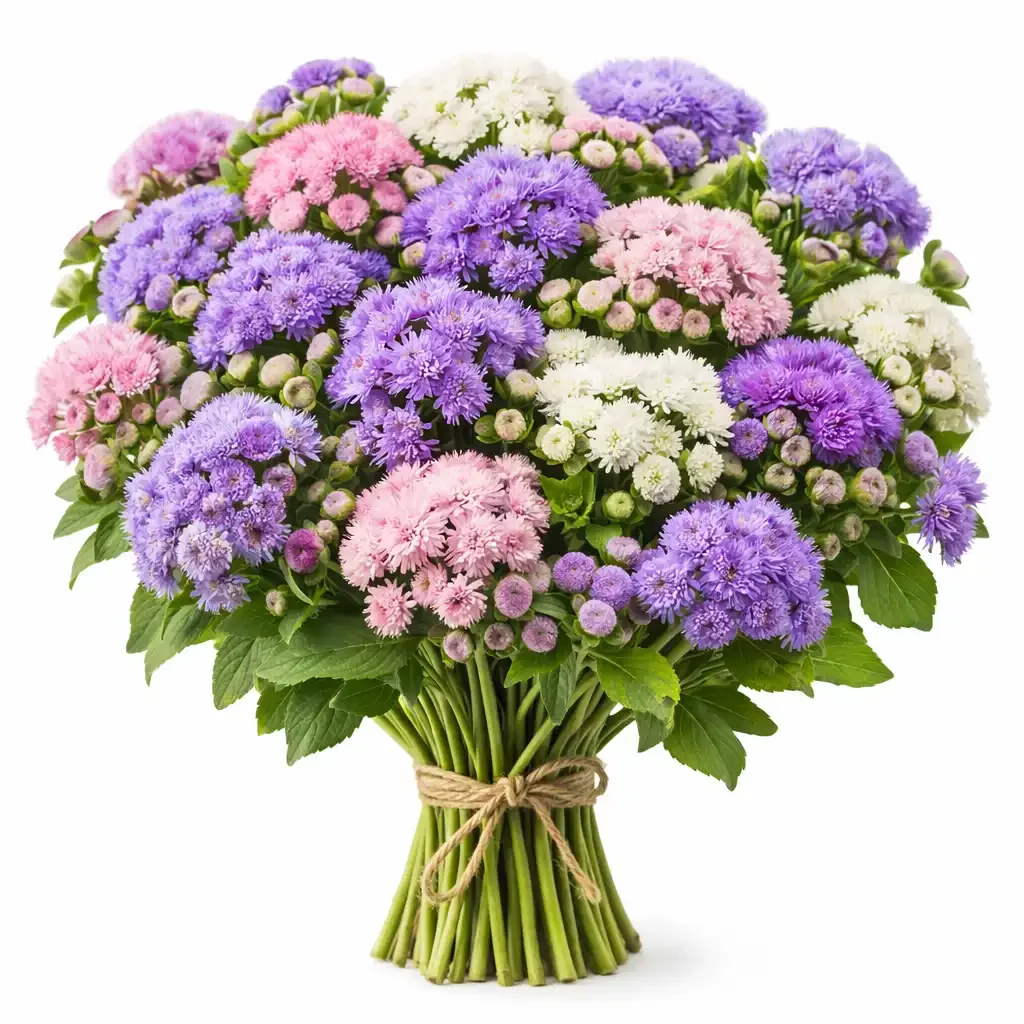
Ageratum is one of the most commercially underutilized and genuinely distinctive specialty cut flowers available to homestead growers. Its soft, powder-puff clusters of tiny, fluffy flowers in the most delicate and sophisticated blue-lavender, soft purple, white, and pink tones available from any summer annual filler flower create a quality of gentle, textural softness in arrangements that is genuinely difficult to replicate with any other commonly grown cut flower. In the professional floral industry, tall cut flower Ageratum varieties are a consistent specialty request from florists and wedding designers who seek the specific soft blue-lavender filler quality that Ageratum provides and that no other commonly grown annual filler can quite replicate.
For homestead growers, Ageratum represents one of the most strategically underserved specialty filler flower opportunities available. Despite the consistent florist demand for tall-stemmed cut flower Ageratum, it remains genuinely rare as a dedicated cut flower crop at most homestead operations. Most gardeners know Ageratum only as the compact, mounding bedding plant used in landscape borders, and the commercial opportunity for cut flower production is almost entirely overlooked even by experienced flower farmers. This oversight creates an essentially uncontested specialty market position for homestead growers who grow the correct tall cut flower varieties and develop the florist relationships that recognize and value this distinctive filler material.
Here is why Ageratum deserves a prominent spot on your homestead:
The soft blue-lavender color is genuinely rare and consistently sought after by florists. True blue-toned filler flowers are among the rarest and most consistently requested in the summer cut flower market. Ageratum delivers soft blue-lavender tones in a fluffy, textural form that no other commonly grown summer filler can replicate, creating a specialty market position of genuine rarity.
It provides filler material with a unique fluffy texture that is genuinely unlike any other summer annual. The powder-puff clusters of tiny flowers create a soft, textural quality in arrangements that differs fundamentally from the more familiar filler textures of Baby's Breath, Feverfew, or Ammi. This genuine distinctiveness creates premium pricing potential that standard fillers cannot support.
It is a cut and come again annual with a very long productive season. Ageratum blooms continuously from late spring through the first frost with regular harvesting, providing one of the longest filler flower production windows of any summer annual.
It thrives in partial shade where many other cut flower crops struggle. Unlike most summer cut flower crops that demand full sun, Ageratum performs well in partial shade, making it an excellent choice for the partially shaded areas of homesteads that are difficult to use productively for more sun-demanding crops.
The wedding market demand for soft blue and lavender filler material is consistently strong and underserved locally. Blue and lavender wedding palettes have been among the most popular wedding design directions for years, and locally grown soft blue filler material is one of the most difficult and most expensive elements for wedding florists to source reliably.
Growing Conditions
Sunlight
Ageratum performs well in full sun to partial shade, making it one of the more shade-tolerant summer annual cut flower crops available. For cut flower production with the longest, strongest stems full sun with at least 5 to 6 hours of direct sunlight daily gives the best results. In partial shade stems become somewhat taller and more open but still produce commercially useful flowers. The shade tolerance of Ageratum is one of its most commercially important growing characteristics as it allows productive cut flower cultivation in partially shaded areas of the homestead that would not support more sun-demanding cut flower crops.
Soil
Ageratum prefers well-drained, moderately fertile soil. It performs well in average garden soil with a modest amount of compost incorporated before planting. Good drainage is important as it does not tolerate waterlogged conditions. Moderately fertile soil supports the vigorous stem development needed for the long stems most commercially valuable for cut flower use without producing the excessive vegetative growth that reduces flowering. Soil pH between 5.8 and 6.8 is suitable.
Water
Water consistently throughout the growing season to maintain even soil moisture. Ageratum needs regular moisture during active growth and blooming but does not tolerate waterlogged conditions. Water at the base of plants rather than overhead to reduce the risk of botrytis and powdery mildew that can affect the dense flower clusters in humid conditions with wet foliage. Once established it develops moderate drought tolerance but produces the longest, most productive stems with consistent moisture throughout the season.
Temperature
Ageratum is a warm season annual that performs best in moderate to warm temperatures between 60 and 80 degrees Fahrenheit. It does not tolerate frost and should not be planted until after the last frost date when conditions are reliably warm. It performs well in warm summer conditions but in very hot climates above 90 degrees Fahrenheit production can slow temporarily before recovering as temperatures moderate. It continues blooming prolifically right up to the first hard frost, providing a reliable harvest throughout the long summer and fall season.
Planting Guide
Ageratum requires a long lead time from seed to bloom and must be started indoors well before the target outdoor planting date to produce commercially valuable stems in its first season.
Step 1: Start seeds indoors 6 to 8 weeks before the last frost date. Ageratum seeds are very small and require specific germination conditions. The seeds need light to germinate and must not be covered with soil. Sow seeds on the surface of moist seed starting mix and press very gently to ensure good surface contact without covering.
Step 2: Maintain seed trays at 65 to 70 degrees Fahrenheit and ensure bright light during germination. Germination typically occurs within 7 to 14 days. Ageratum seeds are tiny and the resulting seedlings are very small and somewhat slow growing during their early stages.
Step 3: Once seedlings have developed two to three sets of true leaves, transplant into individual pots and grow on in a warm, bright location until outdoor planting time after the last frost date.
Step 4: After the last frost date when conditions are reliably warm, transplant outdoors to a location with full sun to partial shade and well-drained, moderately fertile soil. Space plants 9 to 12 inches apart for cut flower production.
Step 5: Water thoroughly after transplanting and keep soil consistently moist until plants are well established. After establishment, maintain consistent moisture appropriate for this moderate moisture requirement annual.
Step 6: For succession harvesting throughout the season, make two to three additional plantings at three to four week intervals after the initial spring planting through early summer. Later successions provide fresh, young, peak-production plants as initial plantings begin to decline late in the season.
Seed vs Transplant: Starting from seed indoors at the correct time is the standard approach. Nursery transplants of tall cut flower varieties may be available from specialty suppliers but are less commonly found than seed.
Spacing: 9 to 12 inches apart for cut flower production.
Planting Season: After last frost when conditions are reliably warm. Indoor starting 6 to 8 weeks before the last frost date.
Maintenance
Pinching
Pinching the central growing tip when plants reach 4 to 6 inches tall encourages branching and significantly increases the number of flowering stems per plant. This is one of the most important practices for maximizing cut flower yield from Ageratum. Pinching delays the first bloom by approximately one to two weeks but the increase in total stem yield throughout the season is substantial.
Deadheading
Regular deadheading of spent flower clusters is essential for keeping Ageratum continuously productive throughout its long season. Ageratum that is allowed to set seed stops producing new stems. For cut flower production, regular harvesting replaces deadheading and is the most efficient way to keep plants productive.
Fertilizing
Ageratum benefits from moderate fertility. Apply a balanced fertilizer at planting and a light application every four to six weeks throughout the season to support the vigorous stem production that maximizes commercial yield. Avoid excessive nitrogen which promotes lush vegetative growth at the expense of the abundant flower cluster production that creates commercial value.
Pest Control
Ageratum is largely pest resistant. Whiteflies can occasionally be a problem in warm, humid conditions. Monitor regularly and treat with neem oil or insecticidal soap at the first sign of significant populations. Aphids occasionally appear on new growth. Spider mites can be a problem in hot, dry conditions. Maintain adequate moisture and treat with neem oil if populations develop.
Disease Prevention
Powdery mildew can affect foliage in conditions of poor air circulation or warm days with cool nights in late season. Space plants properly at 9 to 12 inches for good air circulation, avoid overhead watering, and remove affected foliage promptly. Botrytis can affect the dense flower clusters in cool, humid conditions. Good air circulation and avoiding overhead watering are the most effective preventive measures.
Harvesting
When to Harvest
Harvest Ageratum stems when approximately half to three quarters of the individual flower clusters in the spray are open and showing their characteristic soft blue-lavender or other color. The remaining clusters continue to open after cutting, providing a progressively developing display in the vase. Stems harvested when too few clusters are open may not develop fully after cutting. Harvest in the early morning when stems are fully hydrated and temperatures are cool.
How to Cut
Use clean, sharp scissors or pruners. Cut stems as long as possible at the base of the stem near a lateral shoot, ideally 12 to 18 inches for tall cut flower varieties. Cut just above a lateral shoot or set of leaves to encourage new stem production below the cut. Remove all foliage from the lower half of the stem immediately after cutting. Place stems immediately into a bucket of cool water with a floral preservative.
Conditioning
After cutting, place stems in deep cool water in a cool, dark location for several hours or overnight before sale or arrangement. Ageratum conditions readily and holds up well in arrangements when properly hydrated before sale.
How Often to Harvest
During peak bloom from late spring through fall, harvest every two to three days as new stems reach the correct stage. Regular cutting is both the commercial goal and the most important maintenance practice for keeping plants continuously productive throughout the long season.
Vase Life
Ageratum typically lasts 7 to 10 days as a fresh cut flower with proper conditioning. Strip all foliage below the waterline, recut stems at an angle, and place in fresh water with a floral preservative. Change water every two to three days and keep arrangements in a cool location to maximize vase life.
Uses on a Homestead
Cut Flower Use
Ageratum is grown primarily as a premium specialty filler flower in mixed summer and fall bouquets and arrangements. Its soft, powder-puff clusters of blue-lavender flowers add a distinctive fluffy texture and genuinely rare soft blue tone that enhances virtually every mixed bouquet composition. It is particularly effective in arrangements alongside roses, lisianthus, lavender, white flowers, and other summer cut flowers where its soft blue-lavender filler quality creates beautiful harmony with the complementary flower colors. Even small quantities of tall Ageratum stems significantly enhance the overall professional quality and visual interest of any mixed summer bouquet.
Wedding and Event Flowers
Ageratum is a consistently sought-after specialty filler for wedding florists working with blue, lavender, and soft color palettes. The soft blue-lavender tones that Ageratum provides are among the most difficult and most expensive filler colors for wedding florists to source reliably, and locally grown fresh supply during the summer season is genuinely rare and valued. Wedding florists who discover a reliable local source of tall-stemmed cut flower Ageratum become extremely loyal customers.
Farmers Market
Fresh tall Ageratum at a summer farmers market creates an immediately distinctive market presence as a specialty filler flower that most customers have never seen in the tall cut flower form they know only as a compact garden border plant. The unusual combination of familiar flower face in an unfamiliar tall-stemmed cut flower format creates genuine customer curiosity and purchasing interest. Mixed bouquets featuring Ageratum filler alongside more familiar focal flowers provide an immediately distinctive quality signal that differentiates homestead bouquets from more generic alternatives.
Pollinator Support
Ageratum is an excellent pollinator plant with abundant nectar that attracts butterflies, native bees, and beneficial insects throughout its very long blooming season. Its extended bloom from late spring through frost makes it one of the most continuous nectar sources available from any summer annual cut flower crop.
Can You Make Money With Ageratum
Yes, Ageratum is a profitable specialty filler cut flower crop for homestead operations that grow the correct tall cut flower varieties and develop the florist relationships that recognize and value this distinctive and genuinely underserved specialty.
Genuine rarity of locally grown tall cut flower Ageratum creates uncontested market positioning. Tall cut flower Ageratum as a dedicated locally grown specialty filler is genuinely rare at most farmers markets and in most local florist supply chains. Being a reliable local source creates a market position with essentially no competition.
Soft blue color fills one of the most underserved specialty filler niches in the summer market. Soft blue and blue-lavender filler material is consistently sought by florists and wedding designers and is one of the most difficult filler colors to source reliably. Ageratum fills this specific niche better than any other commonly grown summer annual filler.
Very long productive season provides consistent income. Ageratum blooms from late spring through the first frost with regular harvesting, covering most of the annual cut flower calendar with consistent specialty filler production.
Strong wedding market demand for soft blue and lavender filler material. Blue and lavender wedding palettes are among the most consistently popular wedding design directions. Locally grown soft blue Ageratum filler is specifically sought by wedding florists working in these palettes and commands premium wholesale pricing.
Farmers Market: Fresh Ageratum bundles sell for 6 to 10 dollars per bunch for standard heights. Tall cut flower variety bundles in the most vivid blue-lavender tones sell for 8 to 14 dollars per bunch.
Florists and Wedding Designers: Tall cut flower Ageratum is specifically sought by wedding florists for blue and lavender palette designs. Local supply during the summer season is rare and valued. Wholesale pricing reflects the premium specialty positioning of locally grown tall cut flower varieties.
CSA Flower Subscriptions: Ageratum is a distinctive and unusual addition to summer flower subscription boxes that signals genuine specialty cut flower expertise and differentiates the subscription from more generic alternatives. The soft blue-lavender color enhances the visual sophistication of any summer mixed bouquet it appears in.
Companion Plants
Ageratum grows beautifully alongside other summer and fall cut flowers with complementary bloom times and growing requirements.
Roses: The soft blue-lavender of Ageratum creates one of the most beautiful and complementary filler relationships available for pink, white, and blush roses in mixed arrangements.
Lisianthus: Both are premium summer cut flowers that complement each other magnificently in high-end mixed arrangements where Ageratum provides soft blue filler texture and lisianthus provides refined, ruffled focal blooms.
Lavender: Both provide soft blue-purple tones that harmonize beautifully in arrangements where the complementary but distinct flower forms create visual interest and the complementary colors create harmony.
Snapdragons: Both bloom over long seasons and complement each other in mixed summer arrangements where Ageratum provides fluffy horizontal filler and snapdragons provide vertical color accent.
Zinnias: Both are summer annuals with similar growing requirements that complement each other in bold mixed summer bouquets where the soft blue of Ageratum provides beautiful contrast to the vivid colors of zinnias.
White flowers of any kind: The soft blue-lavender of Ageratum harmonizes beautifully with white flowers of virtually every variety, creating one of the most versatile and commercially useful filler-focal combinations available in the summer market.
Common Problems
Compact Bedding Varieties Mistakenly Grown for Cut Flowers
The most common and most commercially damaging mistake with Ageratum cut flower production. Standard bedding Ageratum varieties grow only 6 to 12 inches tall with stems far too short for commercial cut flower use. Always purchase seeds or plants specifically labeled as tall or cut flower varieties when growing Ageratum for the cut flower market. The commercially important tall cut flower varieties reach 18 to 30 inches with stems of 12 to 18 inches suitable for bouquet and arrangement use.
Powdery Mildew
Can appear on foliage in late summer in conditions of poor air circulation. Space plants properly at 9 to 12 inches, avoid overhead watering, and remove affected foliage promptly. Powdery mildew is primarily a late-season problem that rarely significantly impacts the most commercially important early and mid-season harvest.
Whitefly
Can be a persistent problem in warm, humid conditions, causing reduced plant vigor and honeydew deposits on foliage. Monitor regularly with yellow sticky traps and treat at first sign with neem oil or insecticidal soap. Early detection and consistent treatment prevent populations from building to commercially damaging levels.
Poor Stem Length
Usually caused by growing compact bedding varieties rather than tall cut flower varieties, insufficient sun, or overcrowded conditions. Always choose tall cut flower specific varieties, grow in full sun to light partial shade with at least 5 to 6 hours of sun, and space at 9 to 12 inches for maximum stem elongation. Pinching at the correct early stage also encourages the development of multiple long stems rather than a single short central stem.
Failure to Bloom in Cool Conditions
Ageratum is a warm season annual that requires reliably warm soil and air temperatures to bloom productively. Transplanting too early into cold conditions delays establishment and reduces productivity. Wait until two weeks after the last frost date when conditions are reliably warm before transplanting outdoors. Starting seeds indoors at the correct time gives plants adequate indoor development before outdoor transplanting.
Varieties to Consider
Tall Cut Flower Varieties
Ageratum houstonianum Blue Horizon: The most widely grown and most commercially important tall Ageratum variety for cut flower production. Vivid blue-lavender clusters on strong upright stems reaching 24 to 30 inches. This is the benchmark tall cut flower Ageratum variety and the standard against which all other cut flower Ageratum varieties are measured. Available from specialty cut flower seed suppliers. Reliable germination and consistent production throughout the long season.
Ageratum houstonianum Blue Bouquet: A reliable tall variety with vivid medium blue clusters on strong stems reaching 20 to 24 inches. Good commercial cut flower performance and consistent production. Very popular with florists for the vivid medium blue color.
Ageratum houstonianum Artist Blue: A tall variety with particularly vivid, deeply saturated blue-violet clusters. Commands premium prices for the more intensely saturated color that is genuinely more vivid than standard blue varieties. Very popular with florists and wedding designers for blue palette work where maximum color intensity is the priority.
Ageratum houstonianum White Bouquet: A white-flowered tall variety with the same fluffy powder-puff texture as the blue types but in clean white. Very useful for white and neutral palette wedding work where the distinctive fluffy texture of Ageratum is desired without the blue color. Commands premium prices as an unusual white filler material with a distinctive texture.
Ageratum houstonianum Pink Powder Puffs: A soft pink-toned tall variety that provides the same fluffy filler texture in a warm pink tone. Very popular with florists for blush and pink palette wedding designs. Commands premium prices as an unusual pink-toned specialty filler.
Final Thoughts
Ageratum is one of the most commercially underappreciated and most genuinely specialty-positioned cut flower crops available to homestead growers. The persistent failure of most homestead flower operations to grow the tall cut flower varieties rather than the ubiquitous compact bedding varieties creates a market gap that is genuinely extraordinary given the consistent florist demand for this specific soft blue filler material and the near-total absence of local supply at most markets. Growers who simply grow the correct tall varieties, Blue Horizon being the most reliable starting point, and develop the florist and wedding designer relationships that specifically value soft blue summer filler will find an essentially uncontested specialty market waiting for them with premium pricing conditions that more familiar and more commonly grown summer fillers cannot support. Start seeds indoors at the correct time with surface sowing and bright light, pinch early for maximum branching, harvest regularly to maintain continuous production throughout the very long season, and tall cut flower Ageratum will reward your homestead with one of the most genuinely rare, most florist-demanded, and most personally satisfying specialty filler cut flower crops available from any summer annual planting.
FAQ
Why is Ageratum so rarely seen as a cut flower despite its strong florist demand? The primary reason is a widespread category confusion between the compact landscape bedding varieties of Ageratum that are extremely commonly grown in garden borders and the tall cut flower varieties that are the genuine commercial cut flower crop. When most gardeners and beginning flower farmers think of Ageratum they picture the compact, mounding 6 to 12 inch plants used in landscape borders, which produce stems far too short for any commercial cut flower application. The tall cut flower varieties reaching 18 to 30 inches are a completely different scale of plant that many experienced gardeners have never encountered because they are sold primarily through specialty cut flower seed suppliers rather than through standard garden center channels. This simple category confusion is the primary reason why Ageratum remains so underutilized as a cut flower crop despite consistent florist demand, creating the market gap that homestead growers who know about and grow the tall varieties can exploit so effectively.
What makes the blue color of Ageratum so commercially valuable? Blue is one of the rarest colors in the summer cut flower market. Most flowers that appear blue are actually violet, lavender, or purple rather than true blue. Ageratum delivers a genuine soft blue-lavender tone in a fluffy, powder-puff filler texture that is genuinely unlike any other commonly grown summer filler. This combination of a genuinely rare color tone in a genuinely unique flower texture creates a double specialty value that no other easily grown summer filler provides. Wedding florists working with blue, lavender, and cool palette designs specifically need this specific soft blue filler material and have few good local alternatives, creating a premium pricing environment that reflects genuine commercial scarcity.
Can Ageratum be grown as a cool season crop in mild climates? Yes, Ageratum can be trialed as a cool season crop in mild winter climates within USDA zones 8 to 11 by planting in fall for winter and spring production. Results vary depending on how cold the winter conditions become as Ageratum does not tolerate frost, but in genuinely frost-free or near-frost-free winters it can provide cool season production during a period when warm season annuals are unavailable. In climates with brief, mild winters this approach can extend the effective Ageratum production season and provide cut material during the late winter and spring wedding season that is commercially valuable. In most mild winter climates the primary Ageratum production remains spring through fall with the standard warm season growing approach.
How do I know if I have purchased tall cut flower Ageratum or compact bedding Ageratum? The most reliable way to confirm variety type before germination or early growth is visible is to check the seed packet or plant tag for specific height information. Tall cut flower varieties including Blue Horizon, Blue Bouquet, and Artist Blue should specify mature heights of 18 to 30 inches. Any variety specifying heights below 12 inches is a compact bedding variety unsuitable for cut flower production. In the absence of specific height information, purchasing only from specialty cut flower seed suppliers who specifically market their Ageratum as cut flower varieties is the most reliable approach. General garden seed catalogs and garden centers typically carry only compact bedding varieties. Specialty cut flower seed companies including Johnny's Selected Seeds, Floret Flower Farm, and similar specialty suppliers are the most reliable sources for tall cut flower Ageratum varieties.