
Craspedia
Quick Overview
Common Name: Craspedia, Billy Buttons, Drumstick Flower, Woollyheads
Scientific Name: Craspedia globosa, Craspedia uniflora
Plant Type: Annual in most climates, short-lived perennial in mild climates
USDA Zones: 8 to 11 as perennial, grown as annual in cooler zones
Sun Requirement: Full Sun
Soil Type: Well-drained, sandy, average to poor fertility
Bloom Season: Late Spring through Summer
Height: 18 to 36 inches
Pollinator Friendly: Yes
Edible: No
Why Grow Craspedia on a Homestead
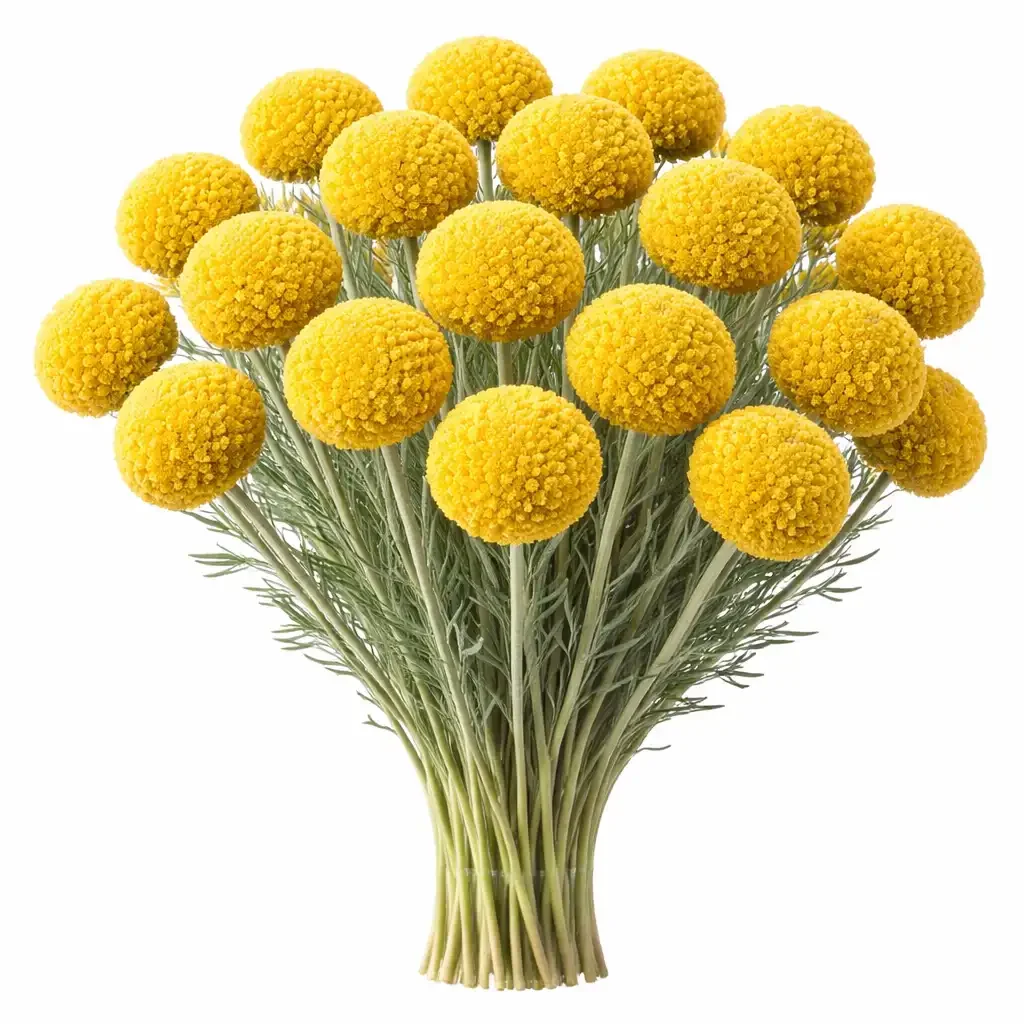
Craspedia is one of the most architecturally distinctive and commercially exciting specialty cut flowers available to homestead growers. Its perfectly spherical, bright golden-yellow flower heads carried on long, straight, leafless stems create a bold, geometric statement in arrangements that is genuinely unlike any other commonly grown cut flower. The combination of the vivid, saturated yellow of the perfectly round flower heads and the clean, uninterrupted line of the long bare stems gives Craspedia an almost sculptural quality that florists and wedding designers find immediately compelling and that customers at farmers markets find fascinating and irresistible. In the contemporary wedding and specialty floral design world, Craspedia has become one of the most sought-after accent flowers available, prized for the bold, playful, geometric personality that it brings to any arrangement it appears in.
For homestead growers, Craspedia represents one of the most strategically underutilized specialty cut flower and dried flower opportunities available. Despite its extraordinary commercial value and consistent florist demand, it remains genuinely rare as a dedicated cut flower crop at most homestead operations, creating an essentially uncontested local market position for growers who develop productive plantings. Its dual capability as both a premium fresh cut flower with an excellent vase life and one of the finest dried flower products available, retaining its vivid yellow color and perfect spherical form with exceptional fidelity when dried, creates year-round income potential from seasonal production.
Here is why Craspedia deserves a prominent spot on your homestead:
It provides a genuinely irreplaceable geometric form in arrangements. The perfectly spherical yellow flower heads of Craspedia on long, straight stems create a bold, architectural quality in arrangements that no other commonly grown cut flower replicates. This genuine uniqueness creates strong market demand and premium pricing.
It is one of the finest and most commercially valuable dried flower products available. Craspedia dries with extraordinary fidelity, retaining its vivid yellow color and perfect spherical form almost unchanged from the fresh state. This exceptional dried flower performance creates year-round income from seasonal fresh harvest.
It is essentially unavailable as a locally grown fresh cut flower in most markets. Despite its strong florist demand and consistent popularity in the wedding market, locally grown fresh Craspedia is genuinely rare at most farmers markets and in most local florist supply chains, creating an uncontested premium market position.
It thrives in lean, well-drained conditions that challenge many other crops. Craspedia is adapted to the well-drained, lean-soil conditions of its native Australian grasslands and actually performs better in lean conditions than in rich, amended beds.
The bold yellow color fills a commercially important gap in the specialty cut flower market. Pure, vivid yellow is one of the most commercially important and consistently popular cut flower colors. Craspedia delivers it in the most distinctive and architecturally unusual form available from any yellow-flowered crop.
Growing Conditions
Sunlight
Craspedia requires full sun to perform its best. It needs at least 6 to 8 hours of direct sunlight per day for the strongest, tallest stems and the most vividly colored flower heads. In partial shade stems become weak and floppy, the characteristic perfectly round flower heads become less well-formed, and the vivid yellow color that is its primary commercial asset becomes less saturated. Full sun combined with good air circulation produces the ideal conditions for the long, straight, commercially valuable stems that make Craspedia so useful to florists.
Soil
Craspedia strongly prefers well-drained, sandy or gravelly soil with average to poor fertility. It is native to Australian grasslands and alpine areas where well-drained, lean conditions prevail, and it performs significantly better in these conditions than in rich, heavily amended garden beds. Overly fertile soil produces lush, leafy growth with weak, floppy stems and reduces the silvery foliage color that provides ornamental interest beyond the flowers. Good drainage is the single most critical soil requirement as Craspedia is very susceptible to root rot in waterlogged conditions. Soil pH between 6.0 and 7.5 is suitable.
Water
Once established, Craspedia is moderately drought tolerant and performs better in drier conditions than in consistently moist soil. It needs regular watering during establishment and through the growing season to support stem elongation and flower head development, but must never sit in waterlogged soil. Water deeply but allow the soil to dry slightly between waterings. In hot summer conditions consistent moisture is particularly important during the critical period when the long flowering stems are elongating, as drought stress at this stage causes shortened stems that are significantly less commercially valuable.
Temperature
Craspedia is a warm season crop that performs best in moderate to warm temperatures between 60 and 80 degrees Fahrenheit. It does not tolerate hard frost but handles light frosts in mild winter climates. In cold winter climates within USDA zones 3 to 7 it is grown as a warm season annual, started indoors in late winter and transplanted after the last frost date for late spring and summer blooming. In mild winter climates within USDA zones 8 to 11 it can be grown as a short-lived perennial or as a cool season crop planted in fall for winter and spring blooming.
Planting Guide
Craspedia requires a long lead time from seed to bloom and must be started indoors significantly earlier than most other annual cut flower crops to produce commercially valuable stems within a single growing season.
Step 1: Start seeds indoors 10 to 14 weeks before the target outdoor transplanting date. This long lead time is one of the most important planning considerations for Craspedia production. In most cold winter climates this means starting seeds in January or February for spring transplanting after the last frost date.
Step 2: Craspedia seeds are small and require good light and moderate warmth to germinate reliably. Sow seeds on the surface of moist seed starting mix or cover with only the thinnest possible dusting of fine vermiculite. Maintain seed trays at 65 to 70 degrees Fahrenheit. Germination typically occurs within 14 to 21 days but can be somewhat erratic.
Step 3: Once seedlings have developed three to four sets of true leaves, transplant into individual pots and grow on in a bright, cool location until outdoor planting time. Craspedia seedlings benefit from a cool growing period of approximately 55 to 60 degrees Fahrenheit for several weeks after transplanting from seed trays into individual pots. This cool period appears to support the development of the strong root systems that produce the best stem length and flower quality.
Step 4: After the last frost date when conditions are reliably frost-free, transplant outdoors to a location with full sun and well-drained, average to lean fertility soil. Space plants 9 to 12 inches apart for cut flower production.
Step 5: In mild winter climates within USDA zones 8 to 11, seeds can be sown directly outdoors in fall or early spring, or transplants can be set out in fall for winter and spring blooming. Cool season production in mild climates often gives the longest, straightest stems as cool temperatures support the slow, steady stem elongation that produces commercial-quality material.
Step 6: Water thoroughly after transplanting and keep soil consistently moist during establishment. After establishment, transition to the deeper, less frequent watering schedule appropriate for this moderately drought-tolerant plant.
Seed vs Transplant: Starting from seed with the correct long lead time is the standard approach for commercial Craspedia production. The long lead time of 10 to 14 weeks makes careful planning essential for timely production.
Spacing: 9 to 12 inches apart for cut flower production.
Planting Season: Indoor sowing in January through February for spring transplanting in cold winter climates. Fall planting in mild winter climates within USDA zones 8 to 11.
Maintenance
Thinning and Spacing
Proper spacing is one of the most important quality management practices for Craspedia cut flower production. Overcrowded plants produce shorter, weaker stems with smaller flower heads. Space seedlings at 9 to 12 inches to ensure each plant has adequate space to develop the long, strong stems that are most commercially valuable.
Fertilizing
Craspedia does not need heavy feeding. A light application of balanced fertilizer at planting is sufficient for most soils. Avoid excessive nitrogen which promotes lush foliage at the expense of the long, straight, upright stems most valuable for cut flower use. In very poor soils a light midseason application of balanced fertilizer supports continued production throughout the season.
Pest Control
Craspedia is generally pest resistant. Aphids can occasionally appear on stems and developing flower heads. Treat with a strong spray of water or neem oil if populations become problematic. The silvery woolly texture of the stems and foliage appears to deter many insect pests naturally.
Disease Prevention
Root rot caused by poor drainage or overwatering is the most serious disease threat. Prevention through excellent drainage and appropriate watering is the only effective management strategy. Good air circulation around plants through proper spacing reduces the fungal disease pressure that can affect the distinctive woolly stems in humid conditions.
Harvesting
When to Harvest Fresh Cut Flowers
Harvest Craspedia flower heads when they are fully developed and showing their most vivid, saturated yellow color, with the perfectly spherical form fully developed and firm to the touch. The individual tiny florets that make up the spherical head should be fully open but not yet beginning to fade or brown at the edges. Unlike many flowers where early harvesting extends vase life, Craspedia actually has the best vase life when harvested at full maturity when the head is completely formed and showing its most vivid color. Harvest in the early morning when stems are fully hydrated.
How to Cut
Use clean, sharp scissors or pruners. Cut stems as long as possible at the base of the stem near the crown of the plant, ideally 18 to 30 inches. The long, straight, leafless stems that Craspedia naturally produces are one of its most commercially valuable characteristics and maximizing stem length is essential for premium cut flower quality. Place stems immediately into a bucket of cool water.
Conditioning
After cutting, place stems in cool water in a cool, dark location for several hours or overnight before sale or arrangement. Craspedia conditions readily and the spherical flower heads hold their form and color well throughout the conditioning and vase life period.
When to Harvest for Drying
For dried flower production, harvest at the same stage as for fresh use, when the flower heads are fully developed and at peak color. Craspedia does not require any special pre-drying treatment and the perfectly spherical heads dry with exceptional fidelity. The vivid yellow color is retained extraordinarily well when properly dried.
Drying
Hang stems upside down in small loose bundles in a warm, dry, well-ventilated space away from direct sunlight. Good air circulation is important to prevent the woolly stems from retaining moisture during drying. Drying takes approximately two to three weeks. The perfectly spherical flower heads retain their form and vivid yellow color exceptionally well when dried, creating premium products that are nearly indistinguishable in appearance from fresh stems.
How Often to Harvest
Each Craspedia plant produces a limited number of stems per season, typically three to eight harvestable stems depending on plant size, growing conditions, and whether basal shoots have been allowed to develop. Harvest each stem as it reaches the correct mature stage. Once all stems from a plant have been harvested, the productive life of that plant is essentially complete as Craspedia does not reliably produce a second flush of stems after all main stems have been cut.
Vase Life
Craspedia typically lasts 10 to 14 days or more as a fresh cut flower with proper conditioning and care. This exceptional longevity is one of its most commercially valuable qualities. Strip all foliage from the lower portion of the stem before placing in water, recut stems at an angle, and place in fresh water with a floral preservative. Change water every few days to maximize longevity.
Uses on a Homestead
Cut Flower Use
Craspedia is grown primarily as a bold geometric accent flower in mixed summer bouquets and arrangements. Its perfectly round, vivid yellow heads on long straight stems add an immediately playful, architectural quality to arrangements that creates visual interest and prevents the repetitive round or vertical forms of most other cut flowers from dominating the design. It pairs beautifully with lavender, eucalyptus, protea, ranunculus, dahlias, and virtually any other summer cut flower where its bold geometric form and vivid yellow provide a striking counterpoint to softer, more complex flower forms.
Dried Flower Use
Dried Craspedia is one of the most commercially valuable and visually distinctive dried flower products available. The perfectly spherical form and vivid yellow color are retained with exceptional fidelity when dried, creating products that are nearly as visually impressive as fresh stems. Dried Craspedia stems and bundles sell consistently well at craft markets, specialty gift shops, florists, and through online platforms throughout the year. Their architectural form, vivid color, and excellent shelf life make them ideal for online sales and year-round craft market applications.
Wedding and Event Flowers
Craspedia is enormously popular in the contemporary wedding and event flower market, particularly for boho, wildflower, garden-style, and contemporary design aesthetics. Its bold geometric form and vivid yellow color create immediate visual impact as accent elements in bridal bouquets, boutonnieres, centerpieces, and ceremony installations. Wedding florists who have access to locally grown fresh Craspedia treat it as a highly valued specialty ingredient and pay premium prices for reliable supply during its brief production season.
Farmers Market
Craspedia is one of the most visually striking and conversation-generating specialty flowers at any farmers market. The perfectly spherical yellow heads on long straight stems create immediate customer curiosity and enthusiasm from customers who have never encountered this extraordinary flower. Its genuine rarity at most market stands and the immediate visual impact of a market display featuring Craspedia bundles creates strong impulse purchasing.
Can You Make Money With Craspedia
Yes, Craspedia is a profitable specialty cut flower and dried flower crop for homestead operations, particularly for growers who leverage its genuine market rarity, exceptional dried flower performance, and strong wedding market demand.
Genuine market rarity creates uncontested premium positioning. Locally grown fresh Craspedia is genuinely rare at most farmers markets and in most local florist supply chains. Being a reliable local source creates a premium market position with essentially no local competition.
Exceptional dried flower performance provides year-round income. Craspedia's outstanding dried color retention and exceptional shelf life create premium dried products that generate consistent income throughout the year from seasonal fresh harvest.
Strong wedding market demand for the distinctive geometric form. Craspedia's perfectly spherical heads are consistently requested by wedding florists for their playful, geometric accent quality. Local supply during the production season is rare and valued.
Premium per-stem pricing reflects genuine specialty status. The combination of unique form, vivid color, long straight stems, and excellent vase life justifies per-stem pricing at the premium end of the summer specialty flower market.
Farmers Market: Fresh Craspedia bundles of five to seven stems sell for 8 to 14 dollars per bunch depending on stem length and head size. Dried Craspedia bundles sell for 10 to 18 dollars per bunch at craft and specialty markets.
Florists and Wedding Designers: Craspedia is in consistent demand from florists and wedding designers for geometric accent applications. Wholesale pricing reflects the premium specialty positioning of quality locally grown Craspedia. Establishing supply relationships with local wedding florists is the most financially rewarding sales channel.
Dried Flower Market: Dried Craspedia is among the most commercially compelling dried flower products available. The vivid yellow, perfect spherical form, and exceptional shelf life create premium products that sell through craft markets, gift shops, and online platforms throughout the year.
Companion Plants
Craspedia grows beautifully alongside other warm season cut flowers and Mediterranean-climate plants with similar lean-soil preferences.
Lavender: Both prefer well-drained, lean soil and full sun. The cool purple of lavender blooms provides a beautiful color contrast to the vivid yellow of Craspedia heads in mixed arrangements.
Eucalyptus: The silver-blue foliage of Eucalyptus provides a beautiful backdrop for the bold yellow of Craspedia in mixed arrangements. Both are Australian-origin plants that grow well in similar lean, well-drained conditions.
Eryngium: Both produce bold, geometric flower structures in contrasting yellow and metallic blue that pair beautifully in mixed contemporary arrangements.
Protea: Both are southern hemisphere natives that share similar lean-soil growing preferences and complement each other in exotic mixed arrangements where their contrasting forms create a striking visual dialogue.
Ornamental Grasses: Fine-textured ornamental grasses provide beautiful movement and a naturalistic backdrop that complements the bold, static, perfectly round form of Craspedia heads in mixed arrangements.
Scabiosa: The delicate pincushion form of Scabiosa provides a beautiful soft contrast to the bold geometric form of Craspedia in mixed arrangements with complementary rounded forms at different scales.
Common Problems
Short Stems
The most common commercial quality problem with Craspedia. Caused by insufficient cool growing temperatures during the stem elongation phase, drought stress during critical stem development periods, overcrowding, excessive heat, or starting seeds too late so that plants bloom under midsummer heat conditions. Start seeds at the correct time with the full 10 to 14 week lead time, maintain consistent moisture during the stem elongation phase, ensure proper spacing of 9 to 12 inches, and grow in full sun with lean soil. In hot summer climates, growing Craspedia as a cool season crop in fall or early spring gives the longest, straightest stems.
Poor Germination
Craspedia seeds can have irregular and sometimes slow germination even under good conditions. Sow more seeds than needed to account for germination variability. Maintain seed trays at the correct temperature of 65 to 70 degrees Fahrenheit and ensure consistent moisture on the soil surface without waterlogging. Fresh seed from reputable suppliers germinates significantly more reliably than old seed.
Root Rot
Caused by poor drainage or overwatering. Craspedia is susceptible to Pythium and other water mold pathogens in waterlogged conditions. Prevention through excellent drainage and appropriate watering is the only effective management strategy. Never plant in areas with poor drainage or standing water.
Floppy Stems
Can occur in overly rich soil, insufficient sun, or overcrowded conditions. Grow in lean soil with full sun and proper spacing. Avoid high-nitrogen fertilizers. Horizontal support netting can help in exposed locations where stems are prone to flopping in wind.
Failure to Bloom
Usually caused by starting seeds too late and not allowing the full required growing period before the heat of midsummer arrives, or by insufficient cool growing temperatures during the establishment phase. The cool growing period of approximately 55 to 60 degrees Fahrenheit for several weeks during the seedling and young plant stage appears to be important for reliable flower initiation. In hot climates, growing as a cool season crop in fall or early spring avoids the heat stress that can inhibit blooming.
Varieties to Consider
Craspedia globosa (Standard Billy Buttons): The most widely grown and commercially important Craspedia species for cut flower production. Perfectly spherical, bright golden-yellow flower heads on long, straight stems reaching 24 to 36 inches. The standard commercial form for homestead cut flower and dried flower production. Available from specialty cut flower seed suppliers.
Craspedia uniflora (Common Billy Buttons): A slightly different species with similar commercial characteristics to C. globosa. The flowers and growing habit are similar enough that the two species are often used interchangeably in commercial cut flower production.
Craspedia Gold: A selected variety with particularly vivid, saturated golden-yellow flower heads and good stem length. One of the most commercially important named selections for cut flower production. Reliable performance and consistent quality.
Craspedia Billy Ball: A trade name under which Craspedia is commonly sold in the cut flower industry. Plants sold under this name are typically selected for the most vivid color and best stem length for commercial cut flower production.
Final Thoughts
Craspedia is one of the most genuinely extraordinary and commercially underutilized specialty cut flowers available to homestead growers. Its perfectly spherical golden-yellow flower heads on long straight stems occupy a completely unique visual and commercial niche in the summer cut flower market, providing a bold geometric accent that florists and wedding designers find immediately compelling and that no other commonly grown flower can replicate. The combination of this genuine market uniqueness, exceptional dried flower performance, strong wedding market demand, and the genuine local scarcity that creates premium pricing without resistance creates a specialty cut flower investment with an exceptional commercial profile relative to the modest production requirements. Start seeds at the correct time with the full ten to fourteen week indoor growing lead time, provide lean well-drained soil and full sun, maintain consistent moisture during stem elongation, harvest at the correct fully mature stage for maximum vase life, and dry the excess for year-round income. Craspedia will reward your homestead with some of the most architecturally distinctive, most vividly colored, and most genuinely sought-after specialty cut flower stems available from any summer annual planting.
FAQ
Why does Craspedia need such a long indoor growing period before transplanting? Craspedia requires a longer indoor growing period than most other annual cut flower crops because it grows relatively slowly in its early stages and requires a significant period of vegetative development, including what appears to be a cool temperature period of approximately 55 to 60 degrees Fahrenheit during the young plant phase, before it is ready to initiate flower stem elongation. Starting too late results in plants that are still in early vegetative stages when the outdoor growing season is already well underway, leading to shortened production windows and reduced stem quality. The full 10 to 14 week indoor growing period gives plants adequate time for complete root system development and the cool temperature exposure that supports reliable flowering stem production after transplanting outdoors.
How do I dry Craspedia for the best color retention? Harvest stems when the spherical flower heads are fully developed and at peak vivid yellow color. Gather into small loose bundles of five to eight stems and hang upside down in a warm, dry, well-ventilated space away from direct sunlight. Good air circulation is important for drying Craspedia due to the woolly texture of the stems which can retain moisture. Drying takes approximately two to three weeks. The vivid yellow color of Craspedia is retained with exceptional fidelity when properly dried, producing stems that are nearly indistinguishable from fresh material in appearance. Store dried stems away from direct sunlight which can cause gradual color fading over time.
Can Craspedia be grown in hot, humid climates? Craspedia can be challenging in hot, humid climates due to the combination of heat stress that shortens and weakens stems and the fungal disease pressure that comes with high humidity. The most effective strategy for growing Craspedia in hot, humid climates is to grow it as a cool season crop in fall or early spring when temperatures are cooler, rather than attempting midsummer production under heat stress conditions. Starting seeds in late summer for fall outdoor transplanting, or starting seeds in late winter for earliest possible spring transplanting, allows plants to complete their stem elongation and flowering during the coolest available growing period. Even in hot climates, Craspedia grown during a cool shoulder season typically produces much better quality stems than plants struggling through midsummer heat.
Is Craspedia the same as Pycnosorus? Yes, Craspedia was previously classified under the genus Pycnosorus in some botanical systems and may still be sold under that name by some suppliers. The plants sold as Pycnosorus globosus in the horticultural trade are the same plants as Craspedia globosa and can be grown and used identically. The name Billy Buttons, which is used for both Craspedia and Pycnosorus, further reflects the common use of both names for essentially the same commercial plant.