
Curry Plant
Quick Overview
Common Name: Curry Plant, Italian Strawflower, Curry Herb
Scientific Name: Helichrysum italicum
Plant Type: Perennial Shrub
USDA Zones: 7 to 11
Sun Requirement: Full Sun
Soil Type: Well-drained, sandy, average to poor fertility
Bloom Season: Foliage harvested year round, flowers in Summer
Height: 12 to 24 inches
Pollinator Friendly: Yes
Edible: Yes, used as a culinary and herbal flavoring in small quantities
Note: Not the same as curry powder or curry leaves
Why Grow Curry Plant on a Homestead
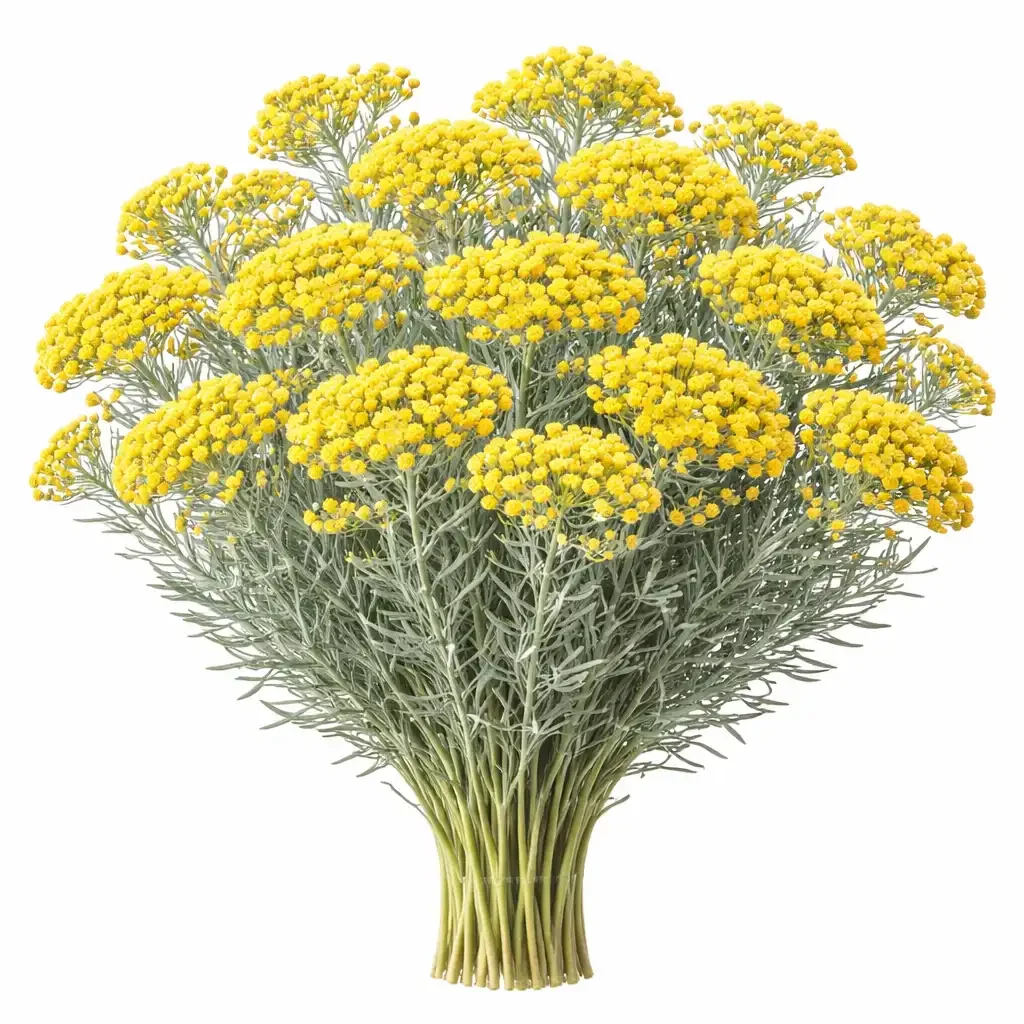
Curry Plant is one of the most distinctive and commercially underutilized specialty foliage crops available to homestead growers. Its intensely aromatic, silver-gray, needle-like leaves create a striking, tactile foliage texture in arrangements that is genuinely unlike any other commonly grown garden herb or foliage plant. The extraordinary, instantly recognizable curry-like aroma of the fresh foliage, a warm, spicy, slightly floral scent that is simultaneously familiar and exotic, creates one of the most powerful and memorable sensory experiences available at any farmers market stand, drawing customers from a distance and generating the kind of immediate, enthusiastic engagement that translates directly into sales.
For homestead growers, Curry Plant occupies a distinctive specialty market niche that sits at the intersection of three growing commercial categories: specialty cut foliage for florists and wedding designers seeking unusual silver-toned textural materials, aromatic herbal plants for customers interested in botanical garden and culinary experiences, and dried botanical products for the craft and home fragrance market. Its silver foliage photographs exceptionally well, making it a powerful social media marketing tool that drives farm stand and farmers market traffic through compelling visual content. And as a drought-tolerant, lean-soil-adapted Mediterranean perennial that requires minimal ongoing care once established, it provides year-round harvestable foliage from a permanent planting with near-zero ongoing input costs.
Here is why Curry Plant deserves a prominent spot on your homestead:
The intensely aromatic silver foliage creates one of the most powerful sensory marketing experiences available at any farm stand. The distinctive curry-like fragrance of fresh Curry Plant foliage is immediately recognized, widely appreciated, and creates a memorable market experience that generates strong impulse purchasing and customer recall that brings people back.
Silver and gray foliage is consistently sought after by florists and wedding designers as a distinctive textural element. Silver foliage is permanently fashionable in the floral design world as a sophisticated neutral that complements every flower color and provides a distinctive alternative to standard green foliage. Curry Plant's fine-textured, aromatic silver foliage occupies a specialty niche within this category that no other commonly grown foliage plant fills.
It is a permanent, drought-tolerant Mediterranean perennial with near-zero ongoing input costs. Once established, Curry Plant requires minimal water, no fertilizing, and essentially no pest or disease management. The ongoing cost of production is essentially just the time required to harvest and present the foliage, making it one of the most financially efficient specialty foliage crops available.
The small, mustard-yellow button flowers provide additional commercial value as a dried flower product. The clusters of small, everlasting-type button flowers that Curry Plant produces in summer dry beautifully with excellent color retention and add an additional dried flower product to the commercial range from a single established planting.
It thrives in lean, well-drained conditions that challenge many other crops. The lean-soil preference and extraordinary drought tolerance of Curry Plant make it an excellent choice for areas of the homestead with marginal soil conditions.
Growing Conditions
Sunlight
Curry Plant requires full sun without compromise. It needs at least 6 to 8 hours of direct sunlight per day and performs best with maximum sun exposure throughout the day. The characteristic silver-gray color of the foliage, which is its primary commercial asset, is most vivid and most intense in full sun conditions. In partial shade the silver tones fade toward green, the plant becomes leggy and less compact, and the aromatic intensity of the foliage decreases significantly. Full sun is the single most important growing requirement for productive, commercially valuable Curry Plant foliage.
Soil
Curry Plant strongly prefers well-drained, sandy or gravelly soil with average to poor fertility. As a Mediterranean native it is perfectly adapted to lean, dry conditions and actually performs significantly better in these conditions than in rich, heavily amended garden beds. Overly fertile soil produces lush, soft, dark green growth that lacks the silver tones and aromatic intensity that make Curry Plant commercially valuable. Excellent drainage is the single most critical soil requirement. Curry Plant is extremely susceptible to root rot and crown rot in waterlogged or poorly drained conditions. Soil pH between 6.0 and 8.0 is suitable with slightly alkaline conditions particularly well tolerated.
Water
Curry Plant is extremely drought tolerant once established and actually performs better in drier conditions than in consistently moist soil. It requires regular watering during its first growing season to establish a strong root system but after that needs only occasional deep watering during extended dry periods. The silver foliage color and aromatic intensity are both at their most vivid in somewhat dry conditions. Overwatering is one of the most common and most damaging mistakes with established Curry Plant, causing root rot, loss of the characteristic silver color, and premature plant decline.
Temperature
Curry Plant is reliably hardy in USDA zones 7 to 11. It tolerates light frost but is damaged by hard freezes below approximately 20 to 25 degrees Fahrenheit. In climates at the cold edge of its hardiness range within USDA zone 7, planting in a sheltered location against a south-facing wall or other wind-protected position and providing frost cloth protection during unusual cold events extends the range of successful cultivation. In mild winter climates within USDA zones 8 to 11 it remains evergreen throughout the year, providing continuous harvestable foliage with no seasonal interruption.
Planting Guide
Curry Plant is best established from nursery container plants or rooted cuttings. Growing from seed is possible but slow and produces variable results. Nursery container plants give the most reliable and fastest path to productive plants.
Step 1: Choose a planting location with full sun and excellent drainage. This is the single most critical planting decision. A location in full sun with well-drained, lean soil that never becomes waterlogged is essential for both plant health and foliage quality.
Step 2: Prepare the planting area by loosening the soil to 12 inches. In heavy clay soils, incorporate significant amounts of coarse sand and fine gravel to improve drainage before planting. In average to sandy soils no amendment is needed. Do not add compost or fertilizer which promotes the soft, dark growth that lacks commercial quality.
Step 3: Plant container plants at the same depth they were growing in their containers. Do not plant too deeply as this increases crown rot risk.
Step 4: Space plants 18 to 24 inches apart for foliage production. Curry Plant grows into a spreading, rounded shrub and needs adequate space to develop its natural form and to provide the good air circulation that reduces disease pressure.
Step 5: Water thoroughly after planting and provide regular irrigation throughout the first growing season to support root establishment. After establishment, transition to the deep, infrequent watering appropriate for this drought-tolerant Mediterranean plant.
Step 6: Apply a light layer of coarse gravel or decomposed granite around the base of plants rather than organic mulch. Gravel mulch maintains dry conditions at the crown that prevent the crown rot that organic mulches can promote by retaining moisture.
Seed vs Transplant: Nursery container plants are strongly recommended. Growing from seed is slow and produces variable results. Propagation from stem cuttings taken in late spring is an economical way to expand an established planting.
Spacing: 18 to 24 inches apart for foliage production.
Planting Season: Spring after last frost in USDA zones 7 to 8. Fall or spring in mild climates within USDA zones 9 to 11.
Maintenance
Pruning
Light but regular pruning is the most important ongoing maintenance practice for productive Curry Plant foliage harvest. After harvesting, always cut back to a healthy lateral shoot or set of leaves lower on the stem. This encourages compact, well-branched growth and prevents the plant from becoming woody and unproductive at its base. An annual harder pruning in early spring that removes approximately one third of the overall growth maintains a productive, well-branched shrub shape and prevents the progressive woodiness that reduces foliage production in unpruned plants. Never cut back into completely bare, leafless wood as Curry Plant does not regenerate readily from stems without foliage.
Fertilizing
Curry Plant does not need fertilizing. It performs best in lean conditions and adding fertilizer, particularly nitrogen-rich products, produces lush, soft, dark growth that lacks the silver tones and aromatic intensity that create its commercial value. In very poor, sandy soils where plants show signs of nutrient deficiency such as very pale, yellowish foliage, a very light application of balanced fertilizer is the maximum that should ever be applied.
Propagating
Curry Plant is easily propagated from semi-ripe stem cuttings taken in late spring or early summer. Cut 3 to 4 inch stem tips, remove the lower leaves, dip the cut end in rooting hormone powder, and insert into a well-drained cutting medium such as perlite or coarse sand. Keep cuttings in a bright, warm location and maintain light moisture until roots develop in approximately three to four weeks. This propagation approach is the most economical way to expand an established Curry Plant planting without purchasing additional nursery plants.
Pest Control
Curry Plant is highly pest resistant due to its aromatic foliage which deters most insects. Root rot and crown rot caused by poor drainage or overwatering are the most serious threats, but these are management issues rather than pest problems. Scale insects can occasionally appear on stems and are best treated with horticultural oil applied in early spring.
Harvesting
When to Harvest Foliage
Harvest Curry Plant foliage stems throughout the growing season whenever fresh growth has reached the desired length. The most commercially valuable foliage is the young, silvery growth at the tips of stems where the color is most vivid and the aromatic intensity is highest. Mature foliage lower on the stems is somewhat less silver and somewhat less aromatic but still commercially useful. Harvest in the early morning when the aromatic oils are most concentrated and the foliage is at its freshest.
How to Cut
Use clean, sharp scissors or pruners. Cut stems at the desired length, typically 8 to 16 inches for most cut foliage applications. Cut just above a lateral shoot to encourage new growth from below the cut. Remove any dry or damaged foliage from the lower portion of the stem. Handle freshly cut stems gently as the silver foliage can bruise and lose its color if handled roughly. The strong aromatic fragrance is released when foliage is handled and can persist on hands for several hours.
When to Harvest Flowers
Harvest the small yellow button flower clusters in summer when they are fully developed and showing their characteristic mustard-yellow color. For fresh use harvest when flowers are at their peak color. For dried use harvest at the same stage as the characteristic everlasting-type flowers of the Helichrysum genus dry very well with minimal color change.
Conditioning
After cutting, place stems in cool water in a cool, dark location for several hours before sale or arrangement. Curry Plant foliage conditions readily and holds up well in arrangements. Some growers find that Curry Plant conditions better without floral preservative additives as the aromatic oils in the foliage can interact with some preservative compounds.
Drying
The foliage and flower stems of Curry Plant dry beautifully. Gather stems into small loose bundles and hang upside down in a warm, dry, well-ventilated space away from direct sunlight. Drying takes approximately two to three weeks. The dried foliage retains much of its characteristic silver-gray color and the aromatic fragrance persists in dried material for months, creating a particularly appealing dried product for home fragrance and botanical craft applications.
How Often to Harvest
In mild climates where Curry Plant grows year round, foliage can be harvested throughout the year as new growth reaches the desired length. In climates with cold winters that slow or stop growth, the main harvest period is spring through fall. With regular light harvesting that removes stem tips and encourages branching, a well-established Curry Plant shrub can produce substantial quantities of harvestable foliage throughout the growing season.
Vase Life
Curry Plant foliage typically lasts 10 to 14 days or more as fresh cut material with proper conditioning. The aromatic oils that give it its characteristic fragrance also appear to inhibit bacterial growth in the vase water, contributing to its excellent longevity. Strip foliage from the lower portion of stems before placing in water.
Uses on a Homestead
Cut Foliage Use
Curry Plant foliage is used primarily as a distinctive silver aromatic accent foliage in mixed bouquets and arrangements. Its fine-textured, silver-gray stems add an unusual, tactile quality to arrangements that is quite different from the broader-leaved foliage materials most commonly used. It pairs beautifully with lavender, roses, echinacea, and other summer flowers where its silver tones complement virtually every flower color and its distinctive fragrance adds a unique sensory dimension. Small amounts of Curry Plant foliage add a sophisticated, distinctive quality to mixed market bouquets that customers notice and appreciate immediately.
Dried Flower and Foliage Use
Dried Curry Plant stems, particularly bundles that include both the silver foliage and the small yellow button flowers, are beautiful and commercially valuable dried botanical products. The persistent aromatic fragrance of dried Curry Plant makes it particularly valuable for home fragrance applications including sachets, potpourri, and aromatic wreaths. Dried Curry Plant bundles sell well at craft markets, specialty gift shops, and through online platforms.
Wedding and Event Flowers
Curry Plant foliage is a distinctive specialty material for florists and wedding designers who work with silver, gray, and neutral palette designs. Its fine-textured silver stems provide a different and more aromatic alternative to dusty miller and other silver foliage materials. Wedding florists who discover locally grown fresh Curry Plant treat it as a distinctive specialty ingredient and return for it regularly throughout the growing season.
Herbal and Fragrance Products
Curry Plant has a long history of use in Mediterranean herbal traditions for culinary flavoring and for aromatic products. The dried foliage can be sold as a culinary herb, incorporated into herbal sachets and potpourri, used in natural fragrance products, and sold as a botanical garden plant for customers who want to grow their own aromatic herb gardens. Always communicate that Curry Plant is used only in small quantities as a flavoring accent rather than as a primary culinary herb.
Pollinator Garden
The small yellow button flowers of Curry Plant attract bees, butterflies, and beneficial insects throughout their summer blooming period, contributing to the overall ecological health of the homestead garden ecosystem.
Can You Make Money With Curry Plant
Yes, Curry Plant is a profitable specialty foliage and herbal crop for homestead operations, particularly for growers who leverage its unique combination of silver foliage, distinctive fragrance, dried botanical market capability, and near-zero ongoing input costs.
Unique combination of silver foliage and powerful fragrance creates genuine market differentiation. No other commonly grown foliage plant provides the same combination of commercially valuable silver-gray color, distinctive aromatic fragrance, and fine textural quality that Curry Plant delivers. This uniqueness creates genuine market differentiation that supports premium pricing.
Year-round harvest in mild climates provides continuous income. In mild winter climates within USDA zones 8 to 11, Curry Plant provides harvestable foliage throughout the year, filling the winter foliage supply gap that most other seasonal foliage crops leave.
Near-zero ongoing input costs after establishment. Curry Plant requires no fertilizing, minimal watering once established, and has essentially no pest or disease management requirements. The ongoing production cost is essentially zero after the initial establishment investment.
Multiple income streams from a single planting. Fresh foliage for florists and market bouquets, dried foliage and flower bundles for craft and home fragrance markets, herbal culinary plants for direct customer sales, and live nursery plants for garden center sales all provide viable income channels from the same permanent planting.
Farmers Market: Fresh Curry Plant foliage bundles sell for 4 to 8 dollars per bunch. Dried Curry Plant bundles sell for 6 to 12 dollars per bunch at craft and specialty markets. Live potted plants sell for 5 to 12 dollars each.
Florists: Curry Plant is a distinctive specialty foliage material for florists and wedding designers working with silver and aromatic design aesthetics. Local supply is genuinely rare and valued.
Herbal and Craft Market: Dried Curry Plant bundles sell consistently well at craft markets and through online shops. Their unusual aromatic quality and persistent fragrance make them particularly appealing for home fragrance applications.
Companion Plants
Curry Plant grows beautifully alongside other Mediterranean-climate and drought-tolerant plants that share its growing requirements.
Lavender: The most natural and harmonious Curry Plant companion. Both are intensely aromatic Mediterranean plants that prefer well-drained, lean soil and full sun. Together they create a beautifully fragrant, silver-toned Mediterranean planting that provides complementary aromatic cut materials throughout the season.
Rosemary: Both are aromatic Mediterranean perennials with similar growing requirements. Rosemary and Curry Plant together create a beautiful aromatic foliage planting that provides multiple fragrant cut materials from the same growing area.
Santolina: A related Mediterranean silver-leaved shrub with similar growing requirements. Santolina and Curry Plant together create a beautiful all-silver aromatic foliage planting with complementary textures.
Echinacea: Both prefer well-drained soil and full sun. The warm golden tones of Echinacea blooms create a beautiful color contrast with the cool silver tones of Curry Plant foliage in mixed summer arrangements.
Ornamental Grasses: Drought-tolerant ornamental grasses complement Curry Plant beautifully in arrangements and in the landscape, adding movement and texture that contrasts with the fine, static form of Curry Plant foliage.
Common Problems
Root Rot and Crown Rot
The most serious and most common problems with Curry Plant. Both are caused by poorly drained soil, overwatering, or organic mulch retaining moisture against the crown. Prevention through excellent drainage, lean soil without compost, coarse gravel mulch rather than organic mulch, and avoiding overwatering is the only effective management strategy. Once root or crown rot is established the plant typically cannot be saved.
Loss of Silver Color
The characteristic silver-gray foliage color becomes less vivid and fades toward green in conditions of excessive fertility, poor drainage, insufficient sun, or consistently moist soil. Growing in lean, well-drained soil in full sun without any fertilization maintains the most vivid silver tones. The intensity of the silver color is directly related to the leanness and dryness of the growing conditions.
Excessive Woodiness
Develops in plants that are not regularly pruned and harvested. The base of unpruned Curry Plant shrubs becomes increasingly woody and bare over time as new growth pushes to the stem tips. Regular harvesting that cuts stems back to lateral shoots and an annual spring pruning that removes one third of the overall growth prevents excessive woodiness and maintains productive, well-branched plants.
Cold Damage in Borderline Climates
Can occur when Curry Plant is grown at the edge of its cold hardiness within USDA zone 7 during unusually cold winters. Plant in sheltered positions protected from cold winds, against south or west-facing walls in the coldest climates, and provide frost cloth protection during unusual cold events. Even if top growth is killed, established plants sometimes regenerate from the root system in spring if the root zone did not freeze.
Skin and Respiratory Sensitivity
The strongly aromatic foliage of Curry Plant can cause skin irritation in sensitive individuals and the volatile oils may cause respiratory irritation when working with large quantities. Wear gloves when harvesting significant quantities and work in well-ventilated conditions. Some individuals are more sensitive to the volatile compounds than others.
Varieties to Consider
Helichrysum italicum subsp. serotinum (Standard Curry Plant): The most widely grown subspecies for both foliage and flower production. Very intensely aromatic, fine-textured silver-gray needle-like foliage on upright stems reaching 18 to 24 inches. Clusters of small mustard-yellow button flowers in summer. The standard commercial form for homestead production.
Helichrysum italicum Darr Hill Monarch: A selected variety with particularly compact, well-branched growth habit and exceptionally vivid silver foliage. More compact than the standard subspecies at 12 to 18 inches, making it ideal for container production and for smaller growing spaces. Very good cut foliage quality.
Helichrysum italicum subsp. microphyllum (Dwarf Curry Plant): A compact, finer-textured subspecies with very small, intensely aromatic leaves on low-growing stems of 6 to 12 inches. Useful for smaller-scale foliage production and for ground cover applications in the homestead garden. Less commercially important for cut foliage production due to the smaller, shorter stems but useful for dried botanical and herbal product applications.
Final Thoughts
Curry Plant is one of the most distinctively positioned and commercially underutilized specialty foliage crops available to homestead growers in appropriate climates. Its unique combination of commercially valuable silver foliage, instantly recognizable aromatic fragrance, excellent dried botanical performance, and near-zero ongoing input costs as a drought-tolerant Mediterranean perennial creates a product that occupies a specialty market niche that no other commonly grown foliage plant fills. It will never be the highest-volume crop in a homestead flower operation but it will consistently be one of the most distinctive, most memorable, and most commercially differentiated. Plant it in the sunniest, best-drained location available, grow it lean without fertilizing or excessive watering, prune it regularly to maintain compact, silver-toned growth, and Curry Plant will reward your homestead with one of the most aromatic, most visually distinctive, and most commercially versatile specialty foliage products available from any Mediterranean perennial planting.
FAQ
Is Curry Plant the same as curry powder or curry leaves? No, Curry Plant is a completely different plant from both curry powder and curry leaves and is not used in the same way. Curry powder is a blend of spices including turmeric, cumin, coriander, and others with no botanical relationship to Curry Plant. Curry leaves, used widely in South Asian cooking, come from Murraya koenigii, a tropical tree that is botanically unrelated to Curry Plant. Curry Plant, Helichrysum italicum, is a Mediterranean aromatic herb whose foliage smells remarkably like curry, giving it the common name, but it is not used as a primary ingredient in curry dishes. It is occasionally used in very small amounts as a flavoring accent in some Mediterranean culinary traditions but is primarily grown for its aromatic and ornamental qualities rather than as a culinary ingredient.
How do I maintain the most vivid silver color in Curry Plant foliage? The intensity of the silver-gray color in Curry Plant foliage is directly related to growing conditions. The most vivid silver tones are produced in full sun with lean, well-drained soil and minimal or no supplemental water beyond what is needed for establishment. Fertilizing, particularly with nitrogen-rich products, causes the foliage to become greener and less silver. Consistently moist soil has a similar effect. Growing in the leanest, driest conditions that the plant can tolerate while still maintaining healthy growth produces the most commercially valuable, most vivid silver foliage. Regular pruning and harvesting that keeps the plant producing fresh young growth from the stem tips also maintains the most vivid silver tones as young foliage is consistently more silvery than older mature foliage.
Can Curry Plant be grown in containers? Yes, Curry Plant grows very well in containers, which is an excellent option for growers in climates at the cold edge of its hardiness range who want the flexibility of moving plants to frost-free indoor locations during winter. Use containers with excellent drainage holes and a very well-drained, lean growing mix such as a combination of standard potting mix and coarse perlite or grit. Never use water-retentive potting mixes or moisture-retaining amendments as these promote the root rot that is the most serious threat to Curry Plant. Allow the growing medium to dry significantly between waterings. Container-grown Curry Plant typically produces somewhat less foliage per plant than ground-planted specimens but can still generate commercially useful quantities of premium silver foliage.
How is Curry Plant used in cooking? Curry Plant is used very sparingly as a culinary flavoring accent in some Mediterranean cooking traditions, particularly in Italy and France where it is sometimes used to add a subtle curry-like note to olive oils, salad dressings, and vegetable dishes. Only very small amounts of foliage are used as the flavor is intense and can be overwhelming. The foliage is typically used fresh or dried as an infusion rather than consumed directly. Always communicate clearly to customers that Curry Plant is used only in very small quantities as a flavoring accent and that it is distinct from the curry spice blend familiar from South Asian cooking.