
Monarda
Quick Overview
Common Name: Monarda, Bee Balm, Bergamot, Oswego Tea
Scientific Name: Monarda didyma, Monarda fistulosa
Plant Type: Perennial
USDA Zones: 3 to 9
Sun Requirement: Full Sun to Partial Shade
Soil Type: Well-drained, average to moderately fertile, moisture retentive
Bloom Season: Summer
Height: 24 to 48 inches depending on variety
Pollinator Friendly: Yes
Edible: Yes, leaves and flowers are edible and used in herbal teas
Why Grow Monarda on a Homestead
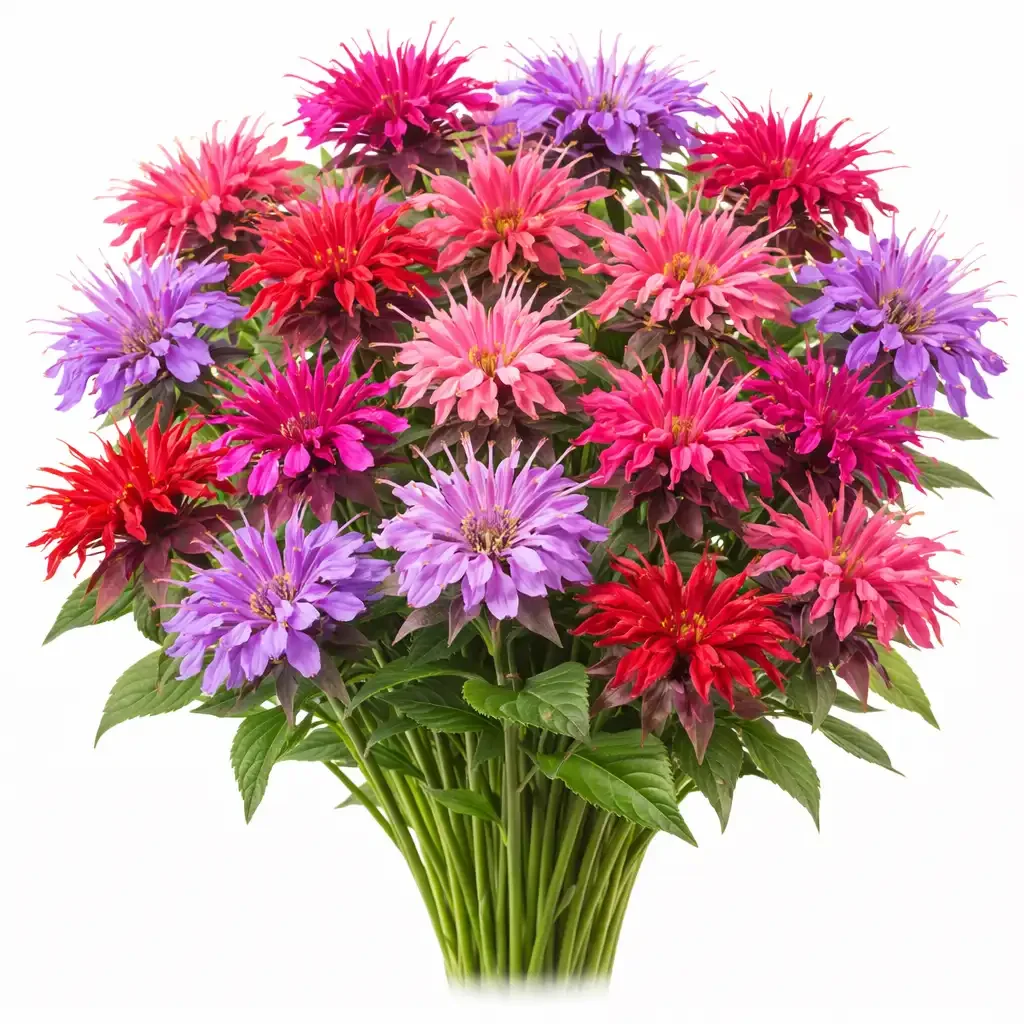
Monarda is one of the most ecologically important and characterful flowering perennials available to homestead cut flower growers. Its shaggy, whorled flower heads in shades of vivid scarlet, deep magenta, soft pink, lavender, and white create a wild, exuberant quality in arrangements that is genuinely unlike any other summer perennial. The blooms have an untamed, painterly quality that resonates powerfully with customers and florists seeking something that feels authentically grown rather than commercially manufactured. And the intensely aromatic foliage, carrying a distinctive oregano-citrus fragrance when crushed, adds a sensory dimension to the homestead garden and market stand that customers find immediately compelling.
For homestead growers, Monarda represents a uniquely multi-functional perennial that earns its place on the homestead in several ways simultaneously. As a cut flower it adds a wild, naturalistic character to summer bouquets. As an herbal plant it provides leaves and flowers for teas and culinary use. As a pollinator plant it is among the most important summer nectar sources available, attracting hummingbirds, bumblebees, butterflies, and beneficial insects in extraordinary numbers. And as a permanent perennial it returns year after year with increasing vigor, spreading slowly to fill in and provide an ever-expanding supply of harvestable stems with minimal ongoing input.
Here is why Monarda deserves a prominent spot on your homestead:
It provides a genuinely wild and naturalistic quality in arrangements. The shaggy, architectural flower heads of Monarda add a character and texture to summer bouquets that no other flower can replicate. It is one of the most distinctive and memorable flowers a homestead grower can offer.
It is a powerful pollinator magnet. Monarda is among the most important summer pollinator plants available. Hummingbirds, bumblebees, butterflies, and beneficial insects visit Monarda flowers in extraordinary numbers, making it one of the most ecologically valuable perennials on any homestead.
It is a permanent, low-maintenance perennial. Once established, Monarda returns year after year with minimal care, spreading slowly to fill in and provide an expanding supply of harvestable stems from a fixed initial investment.
It has genuine herbal value. Monarda leaves and flowers have a long history of use in herbal teas and culinary applications. The distinctive aromatic foliage provides additional harvestable and saleable products beyond the cut flowers.
It thrives in a wide range of climates. Monarda is one of the most climatically adaptable summer perennials available, performing reliably from the coldest winters within USDA zone 3 to the warm, humid summers of USDA zone 9.
Growing Conditions
Sunlight
Monarda performs best in full sun to partial shade. It needs at least 4 to 6 hours of direct sunlight per day for the strongest stems and most abundant flowering. In deeper shade it grows vigorously but produces fewer flowers and becomes more susceptible to powdery mildew, its most common disease problem. For cut flower production with the longest, strongest stems full sun combined with adequate moisture gives the best results.
Soil
Monarda prefers well-drained, average to moderately fertile soil that retains some moisture without becoming waterlogged. Unlike many cut flowers that perform best in lean conditions, Monarda benefits from soil with adequate organic matter that holds moisture reasonably well through the summer. Incorporate compost into the planting bed before establishing. Soil pH between 6.0 and 7.0 is ideal.
Water
Consistent moisture is one of the most important factors in successful Monarda production. Monarda does not tolerate drought stress, which causes shortened stems, reduced bloom quality, and dramatically increased susceptibility to powdery mildew. Water deeply and consistently throughout the growing season, particularly during hot, dry summer periods. Water at the base of the plant rather than overhead to keep foliage dry and reduce powdery mildew pressure. Drip irrigation is ideal for Monarda production.
Temperature
Monarda is an extremely adaptable summer-blooming perennial that thrives across a wide range of climates. It is cold hardy within USDA zones 3 to 9, handling cold winters reliably and emerging dependably in spring. It performs well in the full range of summer temperatures found within its hardiness range, from the cool summers of northern climates to the hot, humid summers of the mid-South and Southeast. In hot, humid climates consistent moisture and good air circulation are the most important factors for maintaining plant health and reducing powdery mildew pressure.
Planting Guide
Monarda can be started from seed, planted from nursery transplants, or established from divisions. For cut flower production, transplants or divisions give the fastest path to productive plants.
Step 1: Choose a location with full sun to partial shade and well-drained, moisture-retentive soil. In hot climates, a location with some afternoon shade helps prevent drought stress during the hottest summer periods.
Step 2: Prepare the planting bed by incorporating generous amounts of compost into the soil. Good soil preparation with adequate organic matter is particularly important for Monarda as it helps retain the consistent moisture the plant needs throughout the summer.
Step 3: Plant nursery transplants or divisions in spring after the last frost date or in fall in mild climates. Space plants 18 to 24 inches apart for cut flower production. Proper spacing is critical for air circulation and powdery mildew prevention.
Step 4: Water thoroughly after planting and keep soil consistently moist throughout the establishment period. Apply a generous layer of organic mulch around the base of plants to retain soil moisture and keep roots cool during summer heat.
Step 5: For divisions, dig up an established clump in early spring before new growth is more than a few inches tall, separate sections with healthy roots and shoots, and replant immediately at the correct spacing.
Step 6: Divide established Monarda clumps every two to three years in early spring to maintain vigor, prevent the center of the clump from dying out, and manage the spreading habit that can encroach on neighboring plants.
Seed vs Transplant: Transplants and divisions give faster results and more reliable performance for cut flower production. Starting from seed is more economical for large plantings but plants typically do not bloom until their second year.
Spacing: 18 to 24 inches apart for cut flower production.
Planting Season: Spring after last frost. Fall planting works well in mild climates.
Maintenance
Deadheading
Remove spent flower heads promptly to encourage the development of lateral shoots that produce secondary flower heads. In Monarda, the spent central flower head is often followed by a ring of smaller secondary flower heads that develop at the base of the spent bloom. These secondary heads are somewhat smaller but still harvestable and marketable. Keeping spent heads removed encourages continued lateral production throughout the summer blooming period.
Dividing
Divide Monarda clumps every two to three years in early spring before new growth reaches more than a few inches tall. Regular division is essential for three reasons: it maintains plant vigor and prevents the center of the clump from dying out, it manages the spreading habit that can make Monarda invasive in small spaces, and it provides free new plants to expand your planting at no cost. Outer sections of divided clumps are always the most vigorous and productive.
Fertilizing
Apply a balanced fertilizer or compost top dressing in early spring as new growth emerges. Light applications every four to six weeks throughout the growing season support continued stem and flower production. Avoid excessive nitrogen which promotes lush, disease-prone foliage at the expense of flower production.
Pest Control
Monarda is generally pest resistant. Its strongly aromatic foliage deters many insects. Aphids can occasionally appear on new growth but are usually managed by the beneficial insects that Monarda attracts in abundance.
Disease Prevention
Powdery mildew is the most common and most significant problem with Monarda. Prevention is far more effective than treatment and involves several complementary strategies. Choose mildew-resistant varieties whenever possible. Space plants properly at 18 to 24 inches to ensure excellent air circulation. Water only at the base of plants and never overhead. Divide clumps regularly to prevent overcrowding. Remove affected foliage promptly. Apply preventive organic fungicide sprays in climates where mildew is prevalent.
Harvesting
When to Harvest
Harvest Monarda flower heads when approximately one third to one half of the individual tubular florets arranged in the characteristic whorled cluster are open. At this stage the flower head is fully formed and visually striking but has not yet begun to decline. The remaining florets will continue to open after cutting. Harvest in the early morning when stems are fully hydrated and temperatures are cool and the aromatic fragrance of the foliage is at its most distinctive.
How to Cut
Use clean, sharp scissors or pruners. Cut stems as long as possible, ideally 18 to 28 inches. Cut just above a set of leaves or a lateral shoot to encourage new stem production from branches below the cut. Remove the lower leaves from the stem immediately after cutting to prevent foliage from fouling the water. Place stems immediately into a bucket of cool water.
Conditioning
After cutting, place stems in deep cool water in a cool, dark location for several hours or overnight before sale or arrangement. This conditioning period allows stems to fully hydrate and significantly improves vase life. The aromatic foliage continues to release its distinctive fragrance during conditioning, adding a sensory dimension to the market experience.
How Often to Harvest
During peak bloom in midsummer, harvest every three to four days as new flower heads reach the correct stage. Regular cutting encourages the plant to produce new lateral shoots with additional flower heads throughout the blooming season. Remove all spent or declining heads promptly to maintain plant productivity.
Vase Life
Monarda typically lasts 5 to 8 days as a fresh cut flower with proper conditioning and care. Strip all foliage below the waterline, recut stems at an angle, and place in fresh water with a floral preservative. Change water every two to three days to maximize longevity.
Uses on a Homestead
Cut Flower Use
Monarda is primarily grown as a distinctive summer cut flower. Its shaggy, architectural flower heads add a wild, naturalistic character to mixed summer bouquets and arrangements that is genuinely unlike any other summer perennial. It pairs beautifully with echinacea, rudbeckia, yarrow, ornamental grasses, and other naturalistic summer flowers in wildflower-style bouquets that are extremely popular at farmers markets. Even a few stems of Monarda transform an ordinary summer bouquet into something with genuine character and personality.
Wedding and Event Flowers
Monarda is a natural choice for wildflower, garden-style, and naturalistic wedding designs. Its distinctive flower form and vivid colors create immediate visual impact in bridal bouquets, centerpieces, and ceremony installations where a lush, naturalistic aesthetic is desired. Red and magenta varieties are particularly dramatic in large-scale event installations.
Herbal Uses
Monarda has a long history of herbal use in North America. Its aromatic leaves and flowers can be used fresh or dried to make herbal teas with a distinctive oregano-bergamot flavor. Dried Monarda leaves and flowers can be sold as loose herbal tea or incorporated into herbal tea blends, potpourri, sachets, and other botanical products for an additional homestead income stream.
Pollinator and Hummingbird Garden
Monarda is one of the most powerful pollinator plants available to homestead growers. Hummingbirds are particularly strongly attracted to the tubular red and pink flowers. Bumblebees, butterflies, sphinx moths, and beneficial insects visit Monarda flowers constantly throughout the summer blooming period. A mass planting of Monarda creates a spectacular and ecologically critical pollinator habitat that benefits every crop on your homestead.
Can You Make Money With Monarda
Yes, Monarda is a profitable specialty cut flower crop for homestead operations, particularly for growers targeting the naturalistic and wildflower aesthetic market and customers seeking something genuinely different from standard summer flowers.
Distinctive appearance commands premium pricing. Monarda's shaggy, architectural flower heads are genuinely unusual at farmers markets and create immediate customer curiosity and engagement. Its rarity as a cut flower justifies premium pricing above more common summer flowers.
Permanent perennial with increasing returns. Once established, Monarda returns year after year with minimal care, spreading slowly to provide an expanding supply of harvestable stems from a fixed initial investment. The return on investment improves each season.
Multiple income streams. Cut flowers, herbal tea products, dried botanical sachets, and pollinator garden experiences all provide viable income channels from a single Monarda planting.
Strong pollinator garden and agritourism value. A mass Monarda planting in full bloom covered in hummingbirds, butterflies, and bees creates a spectacular living display that generates powerful social media content and draws customers to your homestead.
Farmers Market: Fresh Monarda bundles sell for 7 to 12 dollars per bunch depending on variety, stem length, and color. Its distinctive appearance and rarity at market generate customer excitement that drives strong sales.
Florists and Designers: Florists working with naturalistic, garden-style, and wildflower design aesthetics actively seek out Monarda for its distinctive flower form. Local supply is rare and valued.
Herbal Products: Dried Monarda leaves and flowers can be incorporated into herbal tea blends, sachets, and botanical products for additional income beyond cut flowers.
CSA Flower Subscriptions: Monarda adds a genuinely wild and naturalistic character to summer flower subscription boxes that subscribers find immediately exciting and distinctive.
Companion Plants
Monarda grows beautifully alongside many other summer perennials and naturalistic cut flowers with similar growing requirements.
Echinacea: Both are native or naturalized North American perennials that bloom at overlapping times in summer, share similar growing requirements, and create beautiful naturalistic combinations in mixed bouquets and cutting garden beds.
Rudbeckia: Both are summer-blooming perennials with similar cultural requirements that complement each other beautifully in warm-toned wildflower bouquets.
Yarrow: Both are summer perennials with flat or clustered flower forms that complement each other in mixed naturalistic arrangements and share similar pollinator attraction qualities.
Veronica: Both are summer perennials with vertical or clustered flower forms that complement each other in mixed arrangements and grow well together in the cutting garden.
Ornamental Grasses: Native grasses pair beautifully with Monarda in naturalistic arrangements and in the landscape, adding movement and a meadow quality to mixed summer bouquets.
Phlox: Both are fragrant summer perennials that complement each other beautifully in mixed summer bouquets and share similar consistent moisture requirements.
Common Problems
Powdery Mildew
The most common and most significant problem with Monarda. White powdery coating appears on leaves and stems, typically in mid to late summer as humidity rises and air circulation decreases. Once established powdery mildew is difficult to reverse. Prevention through mildew-resistant variety selection, proper spacing at 18 to 24 inches for good air circulation, base watering only, regular division to prevent overcrowding, and preventive organic fungicide sprays in susceptible climates is far more effective than reactive treatment. Choose mildew-resistant varieties such as Jacob Cline, Raspberry Wine, and Colrain Red as the single most effective prevention strategy.
Aggressive Spreading
Monarda spreads vigorously through underground stolons and can colonize significant areas over time if not managed. Regular division every two to three years is the most effective way to keep it in bounds. In small spaces or where spreading into neighboring plantings is a concern, install a root barrier around the planting area.
Drought Stress
Monarda that is not provided with consistent moisture quickly shows signs of stress including shortened stems, reduced bloom quality, premature decline, and sharply increased susceptibility to powdery mildew. Consistent deep watering and a generous mulch layer around the base of plants are the most effective strategies for maintaining plant health and productivity during hot, dry summer periods.
Center Die-Out
Established Monarda clumps commonly develop dead centers over time as the original planting point becomes woody and unproductive while vigorous new growth occurs at the outer edges of the clump. Divide every two to three years in early spring, discarding the woody central portion and replanting only the vigorous outer sections.
Short Vase Life
Monarda has a somewhat shorter vase life than many other perennial cut flowers. Harvesting at the correct stage when one third to one half of florets are open, conditioning in deep cool water overnight before sale, and keeping arrangements away from heat and direct sunlight maximizes vase life within its natural range of five to eight days.
Varieties to Consider
Jacob Cline: One of the most widely grown Monarda varieties for cut flower production. Deep scarlet-red flower heads on very strong stems reaching 36 to 48 inches. Excellent mildew resistance and outstanding pollinator attraction. One of the most productive and reliable Monarda varieties for homestead cut flower production.
Raspberry Wine: Deep wine-red to raspberry blooms on strong stems with good mildew resistance. Very popular at farmers markets for its rich, saturated color. One of the most commercially successful Monarda varieties for the cut flower market.
Colrain Red: Bright red blooms with excellent mildew resistance and strong stems. Very popular with florists and customers for its vivid color and reliable performance.
Violet Queen: Soft violet-purple blooms with good mildew resistance. Very popular with florists working with cool, romantic color palettes. Less common than red varieties giving it a niche market advantage.
Marshall's Delight: Soft pink blooms with excellent mildew resistance. One of the first truly mildew-resistant Monarda varieties introduced. Very popular at farmers markets for its soft, approachable color.
Panorama Mix: A seed-grown mix that includes red, pink, salmon, and purple tones. Useful for establishing a diverse mixed planting from seed at low cost. Performance and mildew resistance are somewhat more variable than named varieties.
Monarda fistulosa (Wild Bergamot): The native species with soft lavender-pink blooms and exceptional drought tolerance compared to the garden hybrids. Very popular with customers and florists seeking an authentically wild and naturalistic aesthetic. Excellent for dry, hot climates where the garden hybrids may struggle without consistent irrigation.
Final Thoughts
Monarda is one of those homestead plants that gives back in ways that go far beyond the cutting garden. Its extraordinary pollinator value, genuine herbal utility, wild and distinctive beauty, and permanent perennial longevity make it one of the most multi-dimensional and ecologically enriching plants you can establish on a homestead. As a cut flower it occupies a genuinely unique niche, providing a wild, naturalistic character in summer bouquets that customers and florists find immediately distinctive and compelling. Choose mildew-resistant varieties, space plants generously for good air circulation, provide consistent moisture throughout the summer, and divide regularly to maintain vigor. Monarda will reward your homestead with decades of spectacular blooms, extraordinary pollinator activity, and a genuinely distinctive market product that sets your flower operation apart from every other summer grower in your area.
FAQ
Is Monarda the same as Bergamot? Yes, Monarda is commonly known as Bee Balm or Bergamot, though it is not related to the Bergamot orange that flavors Earl Grey tea. The Bergamot name refers to the similar aromatic quality of the foliage, which carries a distinctive oregano-citrus scent reminiscent of true bergamot. Monarda fistulosa is also called Wild Bergamot and has a particularly strong aromatic quality. All Monarda species and varieties share the characteristic aromatic foliage that gives them their herbal value and distinctive garden presence.
How do I prevent powdery mildew on Monarda? Variety selection is the single most effective prevention strategy. Choose mildew-resistant varieties such as Jacob Cline, Raspberry Wine, Colrain Red, and Marshall's Delight. Supplement variety selection with good cultural practices including spacing plants at 18 to 24 inches for excellent air circulation, watering only at the base and never overhead, dividing clumps every two to three years to prevent overcrowding, and removing affected foliage promptly when spotted. In climates where mildew pressure is high, preventive organic fungicide sprays applied before mildew appears are far more effective than reactive treatment.
Can Monarda be grown in hot, humid climates? Yes, Monarda performs well in hot, humid climates within its hardiness range of USDA zones 3 to 9. In hot, humid climates consistent moisture, good air circulation, and mildew-resistant variety selection are the most critical success factors. Monarda fistulosa, the native wild bergamot species, tends to have better drought tolerance and disease resistance than the garden hybrids and is often a better choice for growers in the hottest and most humid parts of the growing range.
Does Monarda spread aggressively? Monarda spreads through underground stolons and can colonize significant areas over time if not managed. The rate of spread varies by variety and growing conditions. Regular division every two to three years is the most effective management strategy. In small spaces where spreading is a concern, installing a root barrier around the planting area prevents underground spread into neighboring beds and borders. The spreading habit is an asset in larger naturalized plantings where expanding ground coverage is desirable.
Can Monarda leaves and flowers be used in cooking? Yes, Monarda has a long history of culinary and herbal use in North America. The aromatic leaves and flowers can be used fresh or dried to make herbal teas with a distinctive oregano-bergamot flavor. Fresh leaves can be used as a culinary herb in salads, with meats, or in herbal vinegars. Dried leaves and flowers can be incorporated into herbal tea blends, potpourri, and botanical products. Always use only unsprayed plant material for any culinary or herbal application and introduce new herbs gradually to assess personal tolerance.