
Muscari
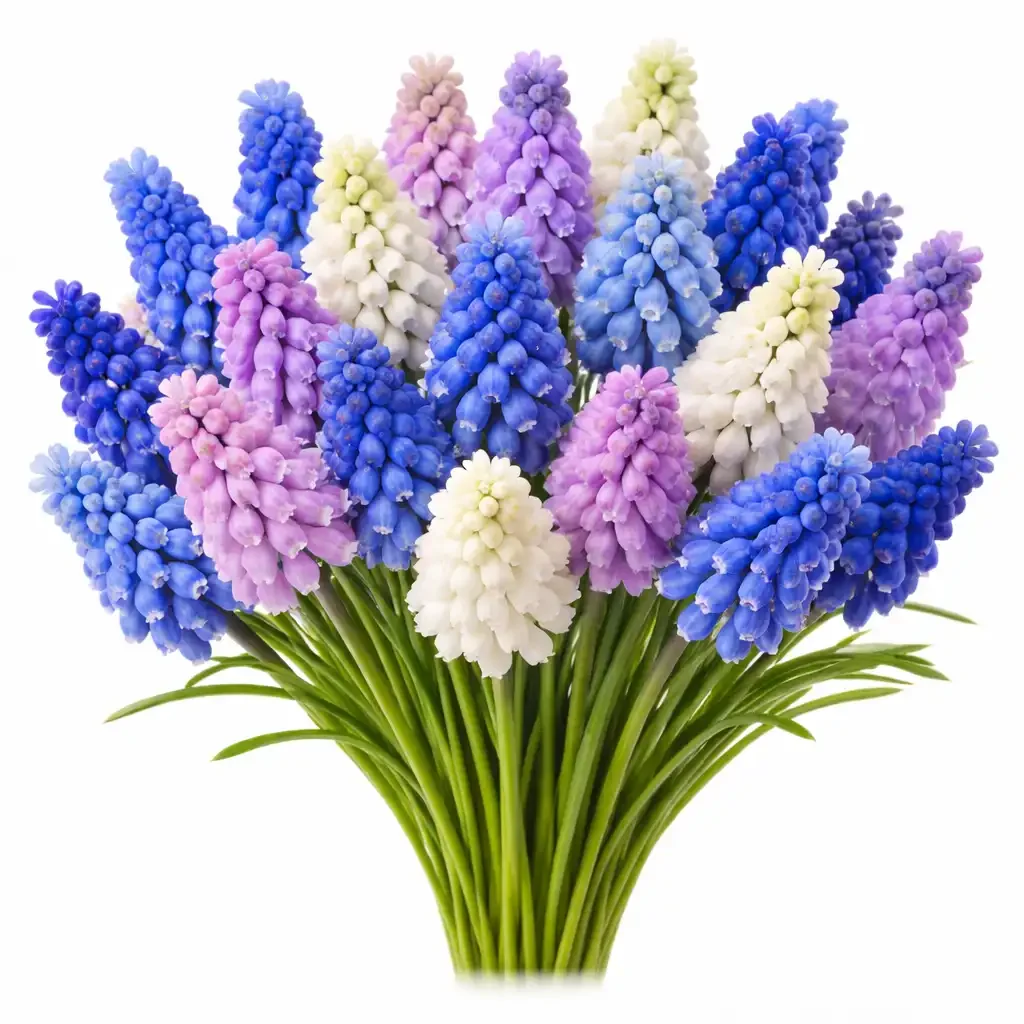
Quick Overview
Common Name: Muscari, Grape Hyacinth, Blue Bells
Scientific Name: Muscari spp.
Plant Type: Perennial Bulb
USDA Zones: 3 to 9
Sun Requirement: Full Sun to Partial Shade
Soil Type: Well-drained, average fertility
Bloom Season: Early to Mid Spring
Height: 6 to 12 inches
Pollinator Friendly: Yes
Edible: No
Why Grow Muscari on a Homestead
Muscari is one of the most charming and ecologically valuable early spring bulbs available to homestead cut flower growers. Its dense, grape-like clusters of tiny, intensely blue to blue-purple florets on short, sturdy stems create one of the most distinctive and immediately appealing color effects in the spring cutting garden. Blue is one of the rarest colors in the cut flower world and Muscari delivers it reliably, prolifically, and at a time of year when virtually no other blue cut flower is available, making it a genuinely unique and commercially valuable addition to any early spring flower operation.
For homestead growers, Muscari represents one of the most cost-effective and ecologically rewarding bulb investments available. It naturalizes readily in most climates, multiplying year after year to produce an increasing abundance of stems from a modest initial planting. It requires virtually no ongoing maintenance after establishment, tolerates a wide range of growing conditions including partial shade, and provides one of the most important early season nectar sources available to bees and other pollinators emerging in early spring. At the farmers market, a bucket of intensely blue Muscari in full bloom is one of the most eye-catching and conversation-generating products a homestead grower can offer during the early spring season.
Here is why Muscari deserves a place on your homestead:
It provides rare true blue color in the early spring market. Blue flowers are extraordinarily rare in the early spring cut flower market. Muscari delivers that color at a time when no other local grower can, creating a genuine market differentiation that customers and florists notice and value.
It naturalizes prolifically and returns with increasing abundance. Muscari multiplies rapidly in the ground, producing more and more stems each season from the same initial investment. A small planting in the first year becomes a productive mass planting within three to five years with no additional input.
It is one of the most important early pollinator plants available. Muscari blooms in early spring when bees and other pollinators are emerging from winter dormancy and food sources are critically scarce. A mass planting of Muscari provides one of the most important early season nectar sources on your entire homestead.
It tolerates partial shade. Unlike most cut flower bulbs that demand full sun, Muscari performs well in partial shade, making it an excellent choice for areas of the homestead that receive less than ideal sun exposure.
It is virtually maintenance free after establishment. Once planted in appropriate conditions, Muscari requires almost no ongoing attention. It naturalizes, it returns, and it multiplies with essentially no input from the grower.
Growing Conditions
Sunlight
Muscari performs well in full sun to partial shade. It is more shade tolerant than most cut flower bulbs and produces acceptable stems with as little as three to four hours of direct sunlight per day. In full sun it produces the strongest, most upright stems. In partial shade stems are somewhat taller and may need support but the plant remains productive. This shade tolerance makes Muscari one of the most flexible bulb crops for homesteads with limited full-sun growing areas.
Soil
Muscari prefers well-drained soil with average fertility. It is not demanding about soil richness and actually performs well in conditions that would challenge more demanding bulb crops. Good drainage is the most important soil requirement. Bulbs sitting in waterlogged soil rot quickly and naturalized plantings decline over time without adequate drainage. Soil pH between 6.0 and 7.5 is suitable for most Muscari species.
Water
Water bulbs well at planting to initiate root development. During the growing and blooming season Muscari needs consistent moisture but must never sit in waterlogged soil. After blooming, as the foliage begins to die back, reduce watering. Like other spring bulbs, Muscari benefits from a relatively dry summer dormancy period. In climates with dry summers this happens naturally. In climates with wet summers, excellent drainage is essential to prevent bulb rot during dormancy.
Temperature
Muscari is extremely cold hardy within USDA zones 3 to 9 and actually benefits from a period of winter cold to bloom reliably. Most species require twelve or more weeks of temperatures below 45 degrees Fahrenheit to set flower spikes reliably. In cold winter climates this happens naturally in the ground. In warm winter climates within USDA zones 8 to 9, choose varieties with lower chilling requirements and plant as early as possible in fall to maximize whatever chilling the winter provides.
Planting Guide
Muscari is planted from bulbs in fall. Fall planting gives bulbs time to establish roots before winter and produces the strongest plants and most reliable blooms the following spring.
Step 1: Purchase high quality bulbs in fall from a reputable supplier. For cut flower production, choose bulbs specifically recommended for cut flower use or select varieties known for the longest stems. Larger bulbs generally produce stronger, taller stems than smaller bulbs.
Step 2: Choose a location with full sun to partial shade and excellent drainage. Muscari is ideal for planting under deciduous trees and shrubs where it receives adequate spring sunlight before the tree canopy leafs out, and where the dry summer conditions under the tree canopy suit its dormancy requirements.
Step 3: Plant bulbs with the pointed end facing up at a depth of approximately two to three inches. Space bulbs 2 to 3 inches apart for a mass planting effect, or 3 to 4 inches apart if you plan to allow them to naturalize and fill in over several seasons.
Step 4: Water thoroughly after planting and allow natural rainfall to handle irrigation through the fall and winter in most climates.
Step 5: For cut flower production, planting in dense blocks or rows rather than scattered individual bulbs gives a more productive and manageable cutting garden layout. Plant bulbs in rows 4 to 6 inches apart with 2 to 3 inches between bulbs within each row.
Step 6: In warm winter climates within USDA zones 8 to 9, plant bulbs as early as possible in fall, typically September through October, to maximize natural winter chilling. Choose varieties recommended for lower chilling climates.
Seed vs Bulb: Always plant from bulbs for cut flower production. Growing Muscari from seed takes several years to produce blooming plants.
Spacing: 2 to 3 inches apart for a mass planting effect. 3 to 4 inches for naturalizing plantings.
Planting Season: Fall, typically September through November depending on your climate.
Maintenance
Post-Bloom Foliage Management
As with all spring bulbs, allow Muscari foliage to die back completely and naturally after blooming rather than cutting it back prematurely. The foliage continues to photosynthesize and feed the bulb for several weeks after blooming, storing energy for the following season's flowers and fueling the bulb multiplication that makes Muscari increasingly productive over time. Cutting back foliage before it has fully yellowed and died back weakens the bulbs and reduces blooming and naturalization in subsequent years.
Dividing
Muscari clumps become very dense over time as bulbs multiply rapidly. Overly dense clumps can produce a forest of small, weak stems rather than strong individual flower spikes. Divide clumps every four to five years in summer after the foliage has fully died back. Dig the clump, separate bulbs, allow them to dry briefly, and replant at the correct spacing and depth in fall. Divisions can also be used to expand your planting to new areas of the homestead.
Fertilizing
Muscari does not need heavy feeding. A light application of balanced bulb fertilizer at planting and a light top dressing of compost in early spring as shoots emerge is sufficient for most soils. Avoid excessive nitrogen which promotes excessive foliage at the expense of flower spike development.
Pest and Disease Management
Muscari is generally pest and disease resistant. Like Narcissus, the toxic compounds in Muscari bulbs make them largely unappealing to deer and rodents. Bulb rot caused by poor drainage is the most common problem and is entirely preventable with excellent drainage and appropriate watering practices.
Harvesting
When to Harvest
Harvest Muscari stems when approximately one half to two thirds of the florets on each spike are open, starting from the bottom of the spike upward. The remaining florets will continue to open progressively after cutting, giving the stem a long and evolving display in the vase. Stems harvested when the spike is still mostly in bud may not develop fully after cutting. Harvest in the early morning when stems are fully hydrated and temperatures are cool.
How to Cut
Use clean, sharp scissors or a sharp knife. Cut or pull stems as close to the base of the plant as possible to maximize stem length. Muscari stems are naturally short, typically 6 to 10 inches, and maximizing whatever length is available is important for cut flower use. Place cut stems immediately into a bucket of cool water.
Working With Short Stems
The naturally short stems of Muscari are the primary limitation for cut flower use. Several strategies help maximize their commercial value despite this limitation. Pairing Muscari with taller flowers in mixed bouquets where it contributes color at a lower level creates beautiful layered arrangements. Selling Muscari as a specialty accent in small bundles of fifteen to twenty stems allows customers to use them as a focal element rather than a filler. Marketing the extraordinary blue color as a genuine rarity in the spring market justifies premium pricing that compensates for the short stems.
How Often to Harvest
During peak bloom, harvest every two to three days as new spikes reach the correct stage. Muscari has a defined bloom window of approximately two to three weeks per variety. Planting multiple varieties with slightly different bloom times extends the total harvest window.
Vase Life
Muscari typically lasts 5 to 7 days as a fresh cut flower with proper care. Strip all foliage below the waterline, recut stems at an angle, and place in fresh water with a floral preservative. Keep arrangements cool and away from direct sunlight to maximize vase life.
Uses on a Homestead
Cut Flower Use
Muscari is primarily used as a specialty accent flower in mixed spring bouquets and arrangements. Its intensely blue clusters provide a rare and striking color accent that complements virtually every other spring flower. It is particularly beautiful alongside Narcissus, tulips, ranunculus, and anemones in mixed spring arrangements where its blue provides a striking contrast to warmer yellows, pinks, and whites. Even a small handful of Muscari stems transforms the character of a spring bouquet.
Wedding and Event Flowers
Muscari is a sought-after specialty flower for spring weddings, particularly for garden-style, wildflower, and romantic design aesthetics. Its rare blue color and delicate clustered form make it a popular accent in bridal bouquets, boutonnieres, and centerpieces. Wedding florists working with blue and soft color palettes actively seek out local sources of quality Muscari stems during their brief spring season.
Farmers Market
Muscari is one of the most visually striking and conversation-generating early spring flowers at any farmers market. Its intense blue color in a season dominated by yellow, white, and pink creates immediate customer excitement. Single-variety bundles sell well as specialty accent items and mixed spring bouquets featuring Muscari command premium prices for their distinctive color.
Pollinator Support
Muscari is one of the most important early season pollinator plants available to homestead growers. It blooms in early spring when bees and other pollinators are emerging from winter dormancy and early season food sources are critically scarce. A mass planting of Muscari provides essential early season nutrition for bumblebees, honeybees, and native bees at the most critical time of year for building pollinator colony strength.
Landscape and Garden Aesthetic
A mass planting of Muscari in full bloom is one of the most beautiful early spring sights in any garden. The intense blue-purple color creates a carpet of color that is extraordinarily photogenic and generates powerful social media content that attracts customer interest and drives market and farm stand traffic.
Can You Make Money With Muscari
Yes, Muscari is a profitable specialty crop for homestead flower operations, particularly for growers who leverage its rare blue color and early season availability as premium market differentiators.
Rare blue color commands premium pricing. True blue flowers are extraordinarily rare in the early spring cut flower market. Muscari delivers that color at a time when no competitor can, justifying premium pricing that far exceeds what the short stems might otherwise suggest.
Naturalizing bulbs provide increasing returns over time. Muscari multiplies rapidly in the ground, producing more stems each season from the same initial bulb investment. The return on investment improves every year as naturalized clumps expand.
Strong pollinator garden and agritourism value. A mass planting of Muscari in full bloom is extraordinarily beautiful and photogenic. Promoting the visual spectacle of a Muscari planting through social media generates powerful organic marketing that drives farmers market and farm stand traffic.
Very low ongoing input costs. Once established, Muscari requires virtually no ongoing attention. It naturalizes, it returns, and it multiplies with essentially no ongoing investment.
Farmers Market: Fresh Muscari bundles of fifteen to twenty stems sell for 8 to 15 dollars per bunch depending on stem quality and color intensity. Their inclusion in mixed spring bouquets significantly increases the perceived value and market price of those bouquets.
Florists and Wedding Designers: Muscari is a sought-after specialty flower for spring wedding work, particularly for blue and soft color palette designs. Local supply during the brief spring season is rare and valued.
CSA Flower Subscriptions: Muscari is one of the most distinctive and exciting additions to an early spring flower subscription box. Its rare blue color and distinctive clustered form generate immediate subscriber excitement and perceived value well beyond what its modest stem length might suggest.
Companion Plants
Muscari grows beautifully alongside many other early spring bulbs and flowers with similar growing requirements and complementary bloom times.
Narcissus: Both naturalize readily and bloom at overlapping times in early spring. The combination of bright yellow Narcissus and deep blue Muscari is one of the most classic and beautiful spring color combinations available. Tulips: Both are spring bulbs that bloom at overlapping times and create stunning color combinations when planted together. Muscari provides beautiful blue contrast to the bold, upright form of tulip blooms. Anemones: Both bloom in early spring and complement each other beautifully in mixed spring arrangements with contrasting forms and complementary colors. Hellebores: Both bloom in early spring and complement each other beautifully in soft, romantic seasonal arrangements. Ranunculus: Both bloom in cool season conditions and pair magnificently in romantic mixed spring arrangements. Fritillaria: A specialty spring bulb that pairs beautifully with Muscari in high-end spring bouquets and wedding work where unusual and distinctive spring flowers are valued.
Common Problems
Short Stems
The most significant limitation of Muscari for cut flower production. Stems are naturally short, typically 6 to 10 inches, which limits their versatility in traditional cut flower use. Maximize stem length by planting large, high-quality bulbs, providing full sun where possible, maintaining consistent moisture during the growing season, and cutting or pulling stems as close to the base as possible at harvest. Marketing strategies that emphasize the rare blue color and specialty nature of the product compensate for the stem length limitation in pricing and presentation.
Overcrowded Clumps
As Muscari naturalizes and multiplies over several years, clumps can become so dense that individual stems become weak and short. Divide clumps every four to five years in summer to maintain productive, vigorous growth and strong individual stem development.
Failure to Bloom in Warm Climates
In warm winter climates within USDA zones 8 and above, insufficient winter chilling can prevent reliable blooming. Choose varieties with lower chilling requirements, plant as early as possible in fall, and consider refrigerating bulbs for four to six weeks before planting to supplement natural chilling in climates where winters are consistently mild.
Bulb Rot
Caused by poorly drained or consistently wet soil during the summer dormancy period. Ensure excellent drainage and avoid overhead irrigation during the summer months when bulbs are dormant. Raised beds are an excellent option for growers with heavy or poorly drained soil.
Excessive Foliage Without Flowers
Can occur when bulbs are planted too shallowly, when clumps are overcrowded, or when foliage was cut back prematurely in the previous season. Plant at the correct depth of two to three inches, divide overcrowded clumps regularly, and always allow foliage to die back completely and naturally after blooming.
Varieties to Consider
Muscari armeniacum (Armenian Grape Hyacinth): The most widely grown species. Dense spikes of deep cobalt blue florets with a lighter blue rim on each floret. Very productive and naturalizes readily across a wide range of climates. The standard for cut flower production and the most widely available form.
Muscari armeniacum Valerie Finnis: A beautiful pale blue to soft lavender variety that is considerably lighter and softer in color than the standard species. Very popular with wedding florists for its soft, romantic color. Commands premium prices for its unusual pale blue tone.
Muscari armeniacum White Magic: A pure white variety that provides the characteristic clustered Muscari form in clean white. Very popular with florists for its versatility in mixed arrangements and wedding work.
Muscari latifolium (Broad-Leaf Grape Hyacinth): A distinctive species with two-toned spikes featuring deep violet lower florets and pale blue upper florets on each spike. Very popular with florists for its unusual bicolor appearance. Naturalizes well and produces larger spikes than the standard species.
Muscari botryoides Album (White Grape Hyacinth): A white-flowered species with smaller, more delicate spikes than M. armeniacum. Very charming and popular for a more delicate, refined appearance in arrangements.
Muscari Blue Spike: A double-flowered variety with very full, densely packed spikes of deep blue florets. Very popular at farmers markets for its unusual and showy appearance. Commands premium prices for its distinctive double form.
Muscari macrocarpum Golden Fragrance: An unusual yellow-flowered species with a strong, sweet fragrance. Extremely rare at farmers markets and very popular with florists for its unusual color and fragrance. Commands the highest prices of any Muscari variety.
Final Thoughts
Muscari is one of the most ecologically valuable, commercially distinctive, and strategically well-positioned bulb crops a homestead flower grower can establish. Its rare true blue color in the early spring market, its extraordinary naturalizing ability that delivers increasing returns year after year, and its virtually zero ongoing input requirements after establishment make it one of the most financially efficient permanent plantings available to any homestead. It is not a high-volume crop and its short stems present real commercial limitations that require creative marketing strategies to overcome. But for growers who understand and embrace its unique qualities, Muscari delivers a combination of ecological richness, market distinctiveness, and long-term financial return that few other bulb crops can match. Plant it generously in fall, allow it to naturalize freely, manage overcrowded clumps with regular division, and Muscari will become one of the most beautiful, most ecologically important, and most commercially distinctive permanent plantings on your entire homestead.
FAQ
How do I maximize stem length from Muscari? Muscari stems are naturally short and there is a practical limit to how much stem length can be achieved. The most effective strategies are planting large, high-quality bulbs from premium suppliers, providing full sun where possible, maintaining consistent moisture during the growing season, and cutting or pulling stems as close to the base of the plant as possible at harvest. Avoiding overcrowded clumps through regular division also helps maintain strong individual stem development. Accept that Muscari is a short-stemmed specialty accent flower and market it accordingly rather than trying to use it as a standard-length cut flower.
Can Muscari be grown in warm winter climates? Many standard Muscari varieties require a period of winter cold to bloom reliably and may not perform well in warm winter climates within USDA zones 8 and above without supplemental chilling. However, some varieties have lower chilling requirements and perform reasonably well in mild winter conditions. Planting as early as possible in fall and choosing varieties recommended for lower chilling climates gives the best results in warm winter regions. Refrigerating bulbs for four to six weeks before planting provides artificial chilling that can improve performance in climates with insufficient natural winter cold.
How quickly does Muscari naturalize? Muscari is one of the most rapidly naturalizing spring bulbs available. Under good growing conditions a single bulb can produce two to four daughter bulbs per season. A modest planting of fifty bulbs in the first year can develop into a productive mass of several hundred bulbs within three to five years. This rapid naturalization is one of Muscari's most commercially valuable characteristics, delivering an expanding supply of stems each season from a fixed initial investment.
What is the difference between Muscari and Hyacinth? Muscari and Hyacinth are different but related genera within the same family. Hyacinths produce much larger, more substantial flower spikes with bigger individual florets and a powerful, distinctive fragrance. Muscari produces smaller, more delicate spikes of tiny grape-like florets with little to no fragrance. Both are spring-blooming bulbs with similar cultural requirements but they occupy different positions in the cut flower market. Hyacinths are focal and fragrance flowers while Muscari are specialty accent flowers valued primarily for their rare blue color.
Is Muscari the same as Grape Hyacinth? Yes, Grape Hyacinth is the most widely used common name for Muscari. The name refers to the clustered, grape-like appearance of the tiny florets arranged along each flower spike. Other common names include Blue Bells in some regions. All of these names refer to the same genus of plants.