
Phlox
Quick Overview
Common Name: Phlox, Garden Phlox, Annual Phlox
Scientific Name: Phlox paniculata, Phlox drummondii
Plant Type: Perennial and Annual varieties available
USDA Zones: 4 to 8 for perennial, 2 to 11 for annual
Sun Requirement: Full Sun to Partial Shade
Soil Type: Well-drained, moderately fertile, moisture retentive
Bloom Season: Summer through Early Fall for perennial, Spring through Summer for annual
Height: 12 to 48 inches depending on species and variety
Pollinator Friendly: Yes
Edible: No
Why Grow Phlox on a Homestead
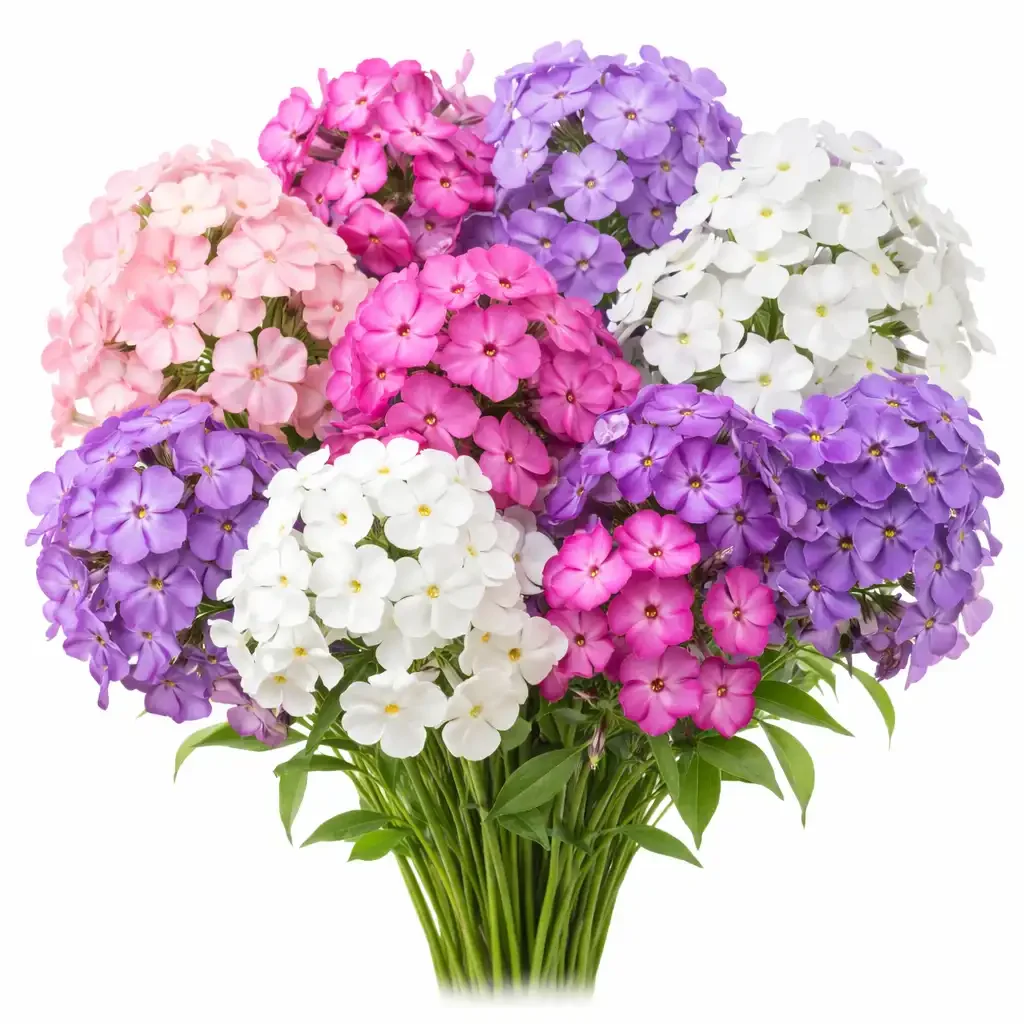
Phlox is one of the most fragrant and romantically beautiful flowering plants available to homestead cut flower growers. Its large, domed clusters of small, five-petaled flowers in shades of pure white, soft pink, lavender, purple, magenta, coral, and red carry a sweet, honeyed fragrance that is one of the most distinctive and evocative scents in the summer garden. At a farmers market stand, a bucket of fresh Phlox in full bloom fills the surrounding area with fragrance that draws customers from across the market in the same way that Sweet Peas and Stock do in the cool season.
For homestead growers, Phlox offers a compelling combination of fragrance, color, and production value that makes it a genuinely useful and profitable addition to the summer cutting garden. Perennial varieties establish permanent clumps that return year after year with increasing vigor, providing a low-maintenance, long-term source of fragrant cut flower stems throughout the summer months. Annual Phlox varieties provide a wider color range and the flexibility of seasonal replanting to suit different market needs and planting plans. Together, the two types give homestead growers a Phlox production option suited to virtually any climate, any space, and any market focus.
Here is why Phlox deserves a prominent spot on your homestead:
It is one of the most fragrant summer cut flowers available. The sweet, honeyed fragrance of Phlox is among the most distinctive and beloved scents in the summer garden. Fragrant flowers consistently command premium prices at farmers markets and from florists, and Phlox delivers that fragrance during the summer months when few other fragrant options are available.
Perennial varieties establish permanent productive clumps. Garden Phlox perennials come back year after year with increasing vigor, providing a permanent, low-maintenance source of fragrant cut flower stems that improves with age and requires progressively less input over time.
It attracts an extraordinary range of pollinators. Phlox is among the top summer pollinator plants available to homestead growers. Butterflies in particular are strongly attracted to Phlox blooms, creating a beautiful and ecologically valuable display throughout the summer months.
It provides summer color when many cool season flowers have finished. Perennial Phlox blooms from midsummer through early fall, filling the cutting garden with fragrant, colorful stems during the peak summer selling season when demand for fresh flowers is at its highest.
It has a romantic, cottage garden quality that customers love. The full, domed flower clusters and sweet fragrance of Phlox create an old-fashioned, romantic garden quality that resonates strongly with customers seeking something beautiful and genuinely fragrant for their home.
Growing Conditions
Sunlight
Phlox performs best in full sun to partial shade. Perennial Garden Phlox needs at least 6 hours of direct sunlight per day for the strongest stems and most abundant flowering. In partial shade it remains productive but produces somewhat weaker stems and is more susceptible to powdery mildew, its most common disease problem. Annual Phlox performs best in full sun and is less tolerant of shade than the perennial types.
Soil
Phlox prefers well-drained, moderately fertile soil that retains some moisture without becoming waterlogged. Unlike many cut flowers that prefer lean conditions, Phlox benefits from soil that has been enriched with compost before planting and that holds moisture reasonably well during dry summer periods. Soil pH between 6.0 and 7.0 is ideal. Heavy clay soils benefit from amendment with compost to improve drainage and aeration while still retaining adequate moisture for Phlox's needs.
Water
Consistent moisture is one of the most important factors in successful Phlox production. Phlox does not tolerate drought stress, which causes shortened stems, reduced bloom quality, and increased susceptibility to powdery mildew. Water deeply and consistently throughout the growing season, particularly during hot, dry summer periods. Water at the base of the plant rather than overhead to keep foliage dry and reduce powdery mildew pressure. Drip irrigation is ideal for Phlox production.
Temperature
Perennial Garden Phlox is a summer-blooming perennial that thrives in the warm temperatures of midsummer. It is cold hardy in USDA zones 4 to 8 and handles summer heat well when adequate moisture is maintained. In climates at the warmer end of its range or beyond USDA zone 8, perennial Phlox may struggle with intense summer heat and benefits from afternoon shade, extra watering, and placement in a location with some protection from the hottest afternoon sun. Annual Phlox is more adaptable to a wider range of temperatures and performs well as a cool to warm season annual across a broad range of climates.
Planting Guide
Perennial and annual Phlox require different planting approaches. Perennial Garden Phlox is best planted from nursery transplants or divisions. Annual Phlox can be started from seed indoors or direct sown in appropriate conditions.
Perennial Garden Phlox
Step 1: Choose a location with full sun to partial shade and well-drained, moisture-retentive soil. In climates at the warmer end of USDA zones 7 to 8 or beyond, a location with some afternoon shade helps prevent heat stress and extends the blooming season.
Step 2: Prepare the planting bed by incorporating generous amounts of compost into the soil to a depth of 12 inches. Good soil preparation is particularly important for perennial Phlox as it will occupy the same location for many years.
Step 3: Plant nursery transplants or divisions in spring or fall, spacing plants 18 to 24 inches apart for cut flower production. Proper spacing is critical for air circulation and powdery mildew prevention.
Step 4: Water thoroughly after planting and keep soil consistently moist throughout the establishment period.
Step 5: Apply a generous layer of organic mulch around the base of plants to retain soil moisture, suppress weeds, and keep roots cool during summer heat.
Step 6: Divide established clumps every two to three years in early spring to maintain vigor and prevent the center of the clump from becoming woody and unproductive.
Annual Phlox
Step 1: Start seeds indoors 6 to 8 weeks before the last frost date in cold winter climates within USDA zones 3 to 7. In mild winter climates within USDA zones 8 to 11, direct sow in early spring or fall to take advantage of the cool season growing period when Annual Phlox performs at its best.
Step 2: Sow seeds on the surface of moist seed starting mix and cover very lightly. Annual Phlox seeds need some light to germinate. Keep seed trays at 65 to 70 degrees Fahrenheit until germination which typically occurs within 10 to 14 days.
Step 3: Transplant outdoors after the last frost date to a location with full sun and well-drained soil. Space plants 9 to 12 inches apart for cut flower production.
Seed vs Transplant: Perennial Phlox is best established from transplants or divisions. Annual Phlox can be started from seed or purchased as transplants.
Spacing: 18 to 24 inches for perennial types. 9 to 12 inches for annual types.
Planting Season: Spring or fall for perennial types. Spring in cold climates, fall or early spring in mild climates for annual types.
Maintenance
Pinching
Pinching the growing tips of perennial Phlox stems when they reach 6 to 8 inches tall encourages the development of multiple lateral shoots and increases the number of flowering stems per plant. This is particularly useful for cut flower production where multiple long stems per plant are the goal. Pinching delays the first bloom by approximately two weeks but significantly increases total stem yield throughout the season.
Deadheading
Remove spent flower clusters promptly to encourage the development of lateral shoots that produce secondary flower clusters. In perennial Phlox, deadheading after the main central cluster has finished can stimulate a second flush of smaller lateral clusters that extends the overall harvest season.
Dividing
Divide perennial Phlox clumps every two to three years in early spring to maintain vigor, prevent the center of the clump from dying out, and expand your planting. Division also improves air circulation within the planting, which is the single most effective prevention strategy for powdery mildew.
Fertilizing
Apply a balanced fertilizer in early spring as new growth begins and a light application every four to six weeks throughout the growing season to support continued stem and flower production. Avoid excessive nitrogen which promotes lush, disease-prone foliage at the expense of flower stem production.
Pest Control
Phlox is generally pest resistant. Aphids can occasionally appear on new growth and developing flower clusters. Spider mites can be a problem during hot, dry periods. Both are managed with a strong spray of water or neem oil if populations become problematic.
Disease Prevention
Powdery mildew is the most common and most significant problem with perennial Phlox. Prevention is far more effective than treatment and involves several complementary strategies. Choose mildew-resistant varieties whenever possible. Space plants properly at 18 to 24 inches to ensure excellent air circulation. Water at the base of plants and never overhead. Divide clumps regularly to prevent overcrowding. Remove affected foliage promptly. Apply preventive organic fungicide sprays in climates where mildew is prevalent.
Harvesting
When to Harvest
Harvest Phlox flower clusters when approximately one quarter to one third of the individual florets within the cluster are open. The remaining florets will continue to open progressively after cutting, giving the stem a long and evolving display in the vase. Clusters harvested too early before any florets have opened may not continue to develop well after cutting. Harvest in the early morning when stems are fully hydrated, temperatures are cool, and the fragrance is at its most intense.
How to Cut
Use clean, sharp scissors or pruners. Cut stems as long as possible, ideally 16 to 24 inches for perennial types. Cut just above a set of leaves or a lateral shoot to encourage new stem production from the branches below. Remove all foliage from the lower half of the stem immediately after cutting and place stems in cool water with a floral preservative.
Conditioning
Phlox benefits from a conditioning period in deep cool water for several hours or overnight before sale or arrangement. This conditioning period allows the stems to fully hydrate and significantly improves vase life. Some growers add a commercial floral preservative to the conditioning water to further extend vase life.
How Often to Harvest
During peak bloom, harvest every two to three days as new flower clusters reach the correct harvest stage. Regular cutting encourages the plant to produce new lateral shoots with additional flower clusters throughout the blooming season. Do not allow clusters to go to seed on the plant as this signals the plant to slow down production.
Vase Life
Phlox typically lasts 7 to 10 days as a fresh cut flower with proper conditioning and care. Strip all foliage below the waterline, recut stems at an angle, and place in fresh water with a floral preservative. Change water every two to three days to maximize longevity. The fragrance of Phlox intensifies as more florets open over the vase life of the stem, making the arrangement more fragrant day by day.
Uses on a Homestead
Cut Flower Use
Phlox is primarily grown as a fragrant cut flower. Its large, domed flower clusters add impressive color and sweet fragrance to mixed summer bouquets and arrangements. It pairs beautifully with dahlias, zinnias, lisianthus, and other summer flowers in full, romantic mixed arrangements. The fragrance of Phlox transforms any bouquet it appears in, adding a sensory dimension that customers remember long after the flowers have faded.
Wedding and Event Flowers
Phlox is a popular choice for summer wedding work, particularly for garden-style and romantic designs where fragrance is valued alongside visual beauty. Its full flower clusters, wide color range, and sweet fragrance make it a natural component of summer bridal bouquets, centerpieces, and event installations. Wedding florists working with summer color palettes actively seek out fragrant local flowers and Phlox is one of the most distinctive options available.
Pollinator Garden
Phlox is one of the most important summer pollinator plants available to homestead growers. Butterflies are particularly strongly attracted to Phlox blooms and a well-established planting creates a spectacular butterfly display throughout the summer months. Hummingbirds are also attracted to Phlox blooms. The pollinator value of a Phlox planting extends well beyond the cutting garden and benefits every other crop on your homestead.
Fragrance at the Farm Stand
Like Sweet Peas in spring and Stock in the cool season, Phlox creates a powerful sensory draw at a summer farmers market stand. The sweet, honeyed fragrance of fresh Phlox carries remarkably far and draws customers to your stand before they even see the flowers. A bucket of fresh Phlox in peak bloom is one of the most effective market presence tools available during the summer months.
Can You Make Money With Phlox
Yes, Phlox is a profitable cut flower crop for homestead operations, particularly for growers focused on the fragrant flower niche and the summer wedding market.
Fragrance premium in the summer market. Intensely fragrant flowers consistently command premium prices at market and from florists. Phlox delivers extraordinary fragrance during the summer months when truly fragrant cut flowers are rare, creating a genuine premium market position.
Perennial low-maintenance production. Established perennial Phlox clumps require progressively less input over time as they mature and fill in, delivering an increasing volume of harvestable stems from a fixed investment in soil preparation and plants.
Long summer blooming season. With the right variety selection and proper deadheading, perennial Phlox can provide a continuous supply of harvestable stems from midsummer through early fall, covering a significant portion of the peak summer selling season.
Strong pollinator garden and agritourism value. A well-established Phlox planting covered in butterflies and bees throughout summer creates a living display that attracts visitors and generates powerful social media content that drives market and farm stand traffic.
Farmers Market: Fresh Phlox bundles sell for 8 to 15 dollars per bunch depending on variety, color, and fragrance intensity. Specialty varieties with unusual colors and particularly strong fragrance command the highest prices.
Florists and Wedding Designers: Phlox is a sought after specialty summer flower for florists working with fragrant and garden-style designs. Local supply is not always available and a reliable source of quality stems is valued by florists who receive regular requests for fragrant summer flowers.
CSA Flower Subscriptions: Phlox is one of the most fragrant and beautiful additions to a summer flower subscription box. Its inclusion immediately elevates the perceived quality and sensory richness of every bouquet it appears in and justifies premium subscription pricing.
Wedding and Event Flowers: Phlox is a natural choice for summer weddings where fragrance is as important as visual beauty. Its full flower clusters, wide color range, and extraordinary fragrance make it one of the most distinctive and premium-priced fragrant flowers available in the summer market.
Companion Plants
Phlox grows beautifully alongside many other summer cut flowers and pollinator plants with similar growing requirements.
Dahlias: Both are summer-blooming cut flowers that complement each other beautifully in mixed arrangements. Dahlias provide bold focal flowers while Phlox contributes fragrance and softer, clustered texture. Echinacea: Both are summer-blooming pollinator plants that thrive in similar conditions and create beautiful naturalistic combinations in mixed bouquets and in the cutting garden. Veronica: Both produce vertical or clustered flower forms that complement each other in mixed arrangements and share similar growing requirements. Zinnias: Both love summer heat and full sun and pair naturally in warm-toned summer bouquets where Phlox adds fragrance to the visual richness of zinnias. Rudbeckia: Both are summer to fall blooming plants that complement each other in warm-toned late summer arrangements and share similar lean-soil tolerance. Lavender: Both are fragrant summer plants that complement each other beautifully in the landscape and in mixed fragrant bouquets.
Common Problems
Powdery Mildew
The most common and most significant problem with perennial Phlox. White powdery coating appears on leaves and can spread rapidly through a planting in warm, humid conditions or when plants are overcrowded. Choose mildew-resistant varieties, space plants 18 to 24 inches apart for excellent air circulation, water only at the base, divide regularly to prevent overcrowding, remove affected foliage promptly, and apply preventive organic fungicide sprays in susceptible climates.
Heat Stress in Hot Climates
Perennial Garden Phlox can struggle with intense summer heat in climates beyond USDA zone 8, producing shortened stems and reduced bloom quality during the hottest periods. Providing afternoon shade, consistent deep watering, and a generous mulch layer around the base of plants helps mitigate heat stress. Choosing heat-tolerant and mildew-resistant varieties and positioning plants in a location with some protection from the hottest afternoon sun are the most effective long-term strategies for growers at the warmer end of the growing range.
Spider Mites
Can be a problem during hot, dry periods. Look for fine webbing on stems and leaves and a pale, stippled appearance on foliage. Increase humidity around plants and treat with neem oil. Consistent deep watering that prevents drought stress is the best preventive measure.
Crown Rot
Can occur in poorly drained or consistently wet soil at the base of plants. Ensure good drainage, keep mulch away from direct contact with stems, and avoid overwatering.
Aphids
Occasionally appear on new growth and developing flower clusters. Usually managed naturally by beneficial insects attracted to Phlox blooms. Treat with a strong spray of water or neem oil if populations become problematic.
Varieties to Consider
Perennial Garden Phlox (Phlox paniculata)
David: Pure white blooms with exceptional mildew resistance. One of the most widely recommended perennial Phlox varieties for cut flower production due to its strong disease resistance and reliable performance. Very popular with florists for its clean white color and good stem length.
Robert Poore: Deep magenta-pink blooms with excellent mildew resistance and very strong stems. One of the most vigorous and productive perennial Phlox varieties for cut flower production. Very popular at farmers markets for its vivid color.
Blue Paradise: Violet-blue blooms that change color with temperature and light conditions. Very popular with florists for its unusual blue tones that are rare in summer cut flowers. Good mildew resistance and strong stems.
Jeana: Soft lavender-pink blooms with extraordinary mildew resistance and exceptional butterfly attraction. One of the most ecologically valuable Phlox varieties available. Long blooming season and reliable performance in a wide range of conditions.
Bright Eyes: Pale pink blooms with a distinctive deep pink eye at the center. A classic and widely grown variety with good stem length and a sweet fragrance. Very popular at farmers markets.
Nicky: Deep magenta-purple blooms with good mildew resistance and strong stems. A reliable performer and florist favorite for arrangements requiring bold, saturated color.
Annual Phlox (Phlox drummondii)
Intensia Series: A widely grown annual series with large blooms in a range of colors including white, pink, red, purple, and bicolors. Strong performance over a long season and good heat tolerance compared to many annual Phlox varieties.
Dolly Mixed: A classic annual seed mix that includes white, pink, red, lavender, and bicolor blooms. Productive and reliable with a good range of colors for mixed bouquets.
21st Century Mix: A tall annual variety selected specifically for cut flower production with longer stems than most annual Phlox types. Good color range and reliable performance.
Final Thoughts
Phlox is one of the most genuinely fragrant and romantically beautiful flowers available to homestead cut flower growers during the summer months. Its sweet, honeyed scent fills the garden, the market stand, and every bouquet it appears in with a fragrance that customers find irresistible and memorable. As a perennial, it rewards the investment of proper establishment with years of increasingly productive, increasingly fragrant harvests that require progressively less input over time. In the summer cutting garden, where so many flowers are visually beautiful but fragrance-free, Phlox fills a sensory gap that no other common summer annual can match. Choose mildew-resistant varieties, space plants generously for good air circulation, water consistently at the base, and Phlox will become one of the most fragrant, most ecologically rich, and most commercially rewarding permanent plants in your homestead cutting garden.
FAQ
Is perennial Phlox difficult to grow in hot climates? Perennial Garden Phlox can be challenging in climates beyond USDA zone 8 where summer heat exceeds its preferred temperature range. It performs best in cooler microclimates with some afternoon shade, consistent deep watering, and generous mulching to keep roots cool. Choosing heat-tolerant and mildew-resistant varieties such as Jeana and David gives the best results in warm climates. Annual Phlox is generally more adaptable to hot climates and is often a more reliable choice for growers in the warmest parts of USDA zones 9 and above where perennial Phlox struggles with summer heat.
How do I prevent powdery mildew on Phlox? The most effective prevention strategy combines multiple approaches. Choose mildew-resistant varieties such as David, Jeana, and Robert Poore. Space plants 18 to 24 inches apart to ensure excellent air circulation. Water only at the base of plants and never overhead. Divide clumps every two to three years to prevent overcrowding. Remove affected foliage immediately when spotted. Apply preventive organic fungicide sprays containing neem oil or potassium bicarbonate before mildew appears in climates where it is prevalent.
Does Phlox fragrance vary between varieties? Yes, fragrance intensity varies significantly between Phlox varieties. Most perennial Garden Phlox varieties are fragrant but the intensity ranges from light to very strong. Species like Phlox paniculata tend to be more fragrant than some modern hybrid selections. When choosing varieties for fragrant cut flower production, read variety descriptions carefully and select those specifically noted for strong fragrance. In general, older and heritage varieties of Phlox paniculata tend to have stronger fragrance than modern compact varieties bred primarily for disease resistance and garden performance.
How long do Phlox plants last as perennials? Well-established perennial Garden Phlox clumps can persist and remain productive for ten years or more with proper care. The key to long-term productivity is dividing clumps every two to three years to prevent the center from becoming woody and unproductive, maintaining consistent moisture and fertility, and managing powdery mildew proactively. Neglected clumps that are never divided gradually decline in vigor and productivity. Regularly divided and well-maintained clumps become more productive over time as the root system expands and matures.
Can annual Phlox be grown year round in mild climates? Annual Phlox can be grown for an extended season in mild winter climates given their longer cool growing periods. It performs best in cool to warm conditions and can be grown from fall through spring as a cool to mild season annual, and again in late summer through fall as temperatures moderate after the intense summer heat. During the hottest summer months it tends to decline and is best replaced with heat-tolerant summer annuals. In humid climates like the mid-South and Southeast, choose heat and humidity tolerant varieties and ensure good air circulation to reduce disease pressure during the warm season. A succession planting approach that coordinates Phlox production with the cooler parts of your seasonal calendar maximizes the annual Phlox harvest window regardless of your specific region.