
Queen Anne's Lace
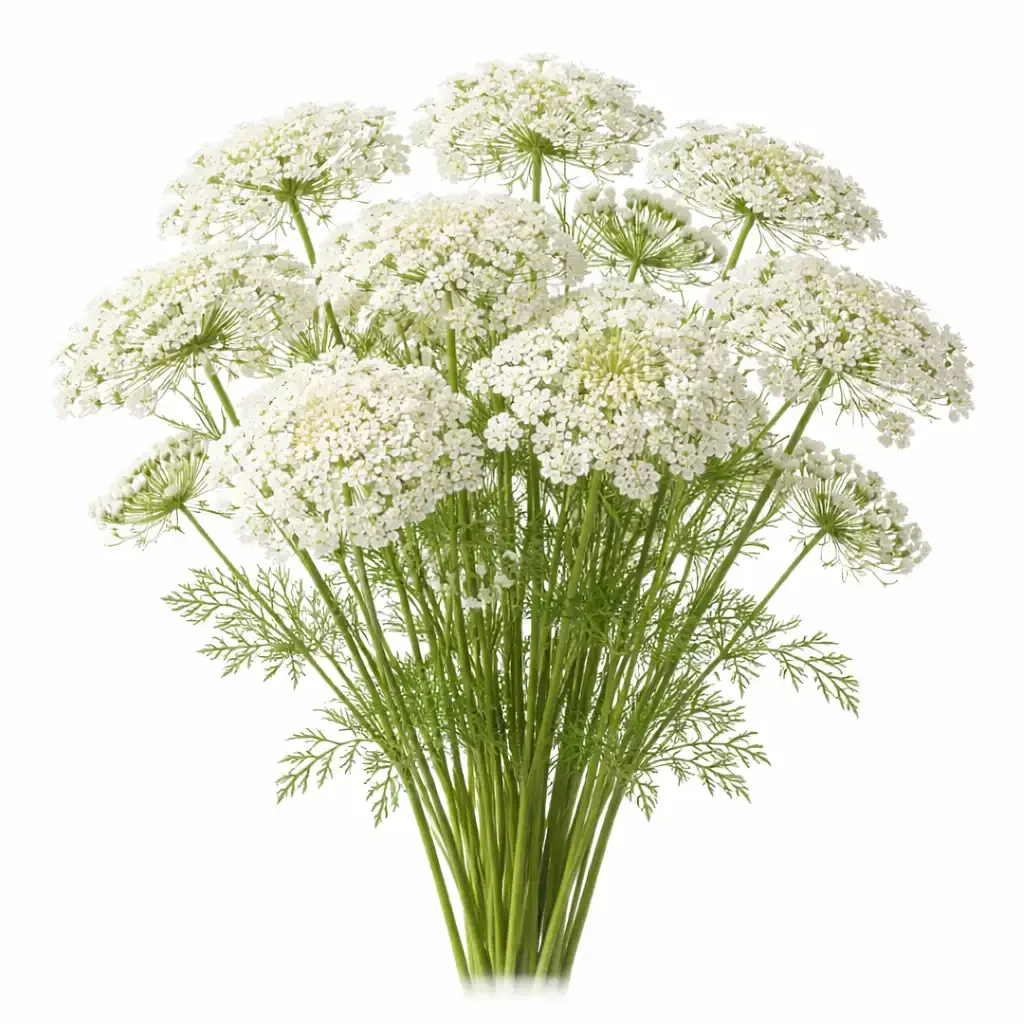
Quick Overview
Common Name: Queen Anne's Lace, Wild Carrot
Scientific Name: Daucus carota
Plant Type: Biennial grown as Annual
USDA Zones: 3 to 9
Sun Requirement: Full Sun to Partial Shade
Soil Type: Well-drained, average to poor fertility
Bloom Season: Summer through Fall
Height: 24 to 48 inches
Pollinator Friendly: Yes
Edible: No, can be confused with toxic plants
Why Grow Queen Anne's Lace on a Homestead
Queen Anne's Lace is one of the most elegant and romantically beautiful filler flowers available to homestead cut flower growers. Its large, flat-topped umbels of tiny white flowers, held on tall, slender stems above finely cut ferny foliage, create a cloud-like, lacy effect in arrangements that no other flower quite replicates. It is the definition of a wildflower aesthetic, bringing a sense of natural meadow beauty to bouquets and arrangements that instantly softens and romanticizes everything around it.
For homestead growers, Queen Anne's Lace represents one of the most cost-effective and prolific filler crops available. It grows readily from seed, thrives in average to poor soil without heavy fertilization, produces an abundance of long-stemmed umbels over a generous summer and fall season, and is in consistent demand from florists and wedding designers who prize its airy, romantic quality. At the farmers market, its delicate beauty and familiar wildflower appearance make it an immediate draw for customers seeking something that feels genuinely natural and unmanufactured.
Here is why Queen Anne's Lace deserves a prominent spot on your homestead:
It is one of the most elegant and versatile filler flowers available. The large, flat-topped umbels of Queen Anne's Lace add a delicate, cloud-like quality to mixed bouquets and arrangements that complements virtually every other flower. It fills space, adds movement and airiness, and softens the overall effect of an arrangement in a way that no structured filler can replicate.
It is extremely easy to grow from seed. Queen Anne's Lace direct sows readily in a wide range of conditions and needs very little attention once established. It is one of the most low-maintenance filler crops available to homestead growers.
It thrives in poor soil. Unlike many cut flowers that need rich, well-amended beds, Queen Anne's Lace actually performs better in lean, well-drained soil. This makes it an ideal crop for areas of the homestead where other crops struggle.
It is a powerful pollinator plant. Queen Anne's Lace is one of the most ecologically important flowering plants available to homestead growers. Its flat-topped umbels are accessible to an extraordinary range of beneficial insects including parasitic wasps, hoverflies, lacewings, and native bees that provide natural pest control throughout your homestead.
It dries beautifully. Queen Anne's Lace can be dried for use in dried arrangements and wreaths, adding an additional market channel beyond fresh cut flowers.
Growing Conditions
Sunlight
Queen Anne's Lace performs best in full sun but tolerates partial shade reasonably well. It needs at least 4 to 6 hours of direct sunlight per day for the strongest stems and most abundant flowering. In partial shade it remains productive but stems may be slightly weaker and flower production somewhat reduced. For cut flower production, full sun is always the preferred choice for the longest, straightest stems.
Soil
Queen Anne's Lace strongly prefers well-drained soil with average to poor fertility. Like its wild roadside relatives, it thrives in lean, somewhat dry conditions and actually produces better, more upright stems in soil that is not overly rich. Overly fertile soil produces lush, floppy growth at the expense of the tall, straight stems most valuable for cut flower use. Sandy or gravelly well-drained soil is ideal. Soil pH between 6.0 and 7.5 is suitable.
Water
Once established, Queen Anne's Lace is moderately drought tolerant. It needs regular watering during establishment but after that requires less supplemental irrigation than most other cut flower crops. Water deeply once or twice a week during dry periods. Avoid waterlogged conditions as Queen Anne's Lace does not tolerate wet feet. Its drought tolerance makes it an efficient and low-input crop for water-conscious homesteads.
Temperature
Queen Anne's Lace is a biennial that is typically grown as an annual for cut flower production. It tolerates a wide range of temperatures and performs well in both cool spring conditions and the heat of summer. It does not tolerate hard frost when actively growing but is quite cold hardy as a young seedling. In mild winter climates within USDA zones 8 to 11 it can be grown for an extended season from late winter through late fall. In cold winter climates within USDA zones 3 to 7, it is grown as a spring through fall annual with a generous harvest window from early summer through the first frost.
Planting Guide
Queen Anne's Lace grows best from direct sowing. It has a long taproot that makes it difficult to transplant successfully and it establishes most readily when sown directly in the garden at the correct time.
Step 1: In cold winter climates, direct sow Queen Anne's Lace in early spring as soon as the soil can be worked. In mild winter climates within USDA zones 8 to 11, sowing can begin in late winter and continue through spring and into early summer for a succession of blooms throughout the warm season.
Step 2: Choose a location with full sun and well-drained soil with average to poor fertility. Avoid recently amended beds with heavy compost additions as this encourages lush, floppy growth.
Step 3: Queen Anne's Lace seeds require a period of cold stratification to germinate well. In cold climates this happens naturally when seeds are sown in early spring in cool soil. In mild climates, refrigerate seeds in a damp paper towel for two to three weeks before sowing to simulate the cold stratification they need.
Step 4: Press seeds onto the soil surface and cover very lightly, no more than one quarter inch deep. Seeds need some light to germinate. Water gently after sowing and keep the soil lightly moist until germination, which typically occurs within 14 to 21 days.
Step 5: Thin seedlings to 6 to 9 inches apart once they are a few inches tall. Tighter spacing encourages taller, straighter stems for cut flower use.
Step 6: For a continuous harvest throughout the season, succession sow every three to four weeks from early spring through early summer. This creates a rolling harvest of fresh umbels from early summer through fall.
Seed vs Transplant: Direct sowing is strongly preferred. Queen Anne's Lace has a sensitive taproot and does not transplant well. If transplanting is necessary, use biodegradable pots started very early before the taproot becomes established.
Spacing: 6 to 9 inches for cut flower production.
Planting Season: Early spring in cold winter climates within USDA zones 3 to 7. Late winter through early summer in mild winter climates within USDA zones 8 to 11.
Maintenance
Thinning
Proper thinning is one of the most important steps for cut flower production. Overcrowded Queen Anne's Lace plants produce shorter, weaker stems that are less valuable for market. Thin seedlings to 6 to 9 inches apart to ensure each plant has adequate space to develop the tall, strong stems that florists and customers want.
Staking
Tall Queen Anne's Lace plants can become floppy in exposed locations or in soil that is too fertile. Horizontal support netting installed early in the season helps keep stems upright. Alternatively, growing in lean soil with full sun naturally produces more compact and self-supporting plants.
Fertilizing
Queen Anne's Lace does not need fertilizing. It thrives in lean conditions and actually produces better cut flower stems in average to poor soil than in rich, heavily amended beds. Adding fertilizer is more likely to cause problems than to improve performance.
Pest Control
Queen Anne's Lace is largely pest resistant. Aphids can occasionally appear on stems and umbels but are usually managed naturally by the beneficial insects that Queen Anne's Lace attracts in abundance. Its flat umbels are a favorite landing platform for parasitic wasps and other beneficial insects that quickly manage aphid populations without intervention.
Disease Prevention
Good drainage and air circulation prevent most disease issues with Queen Anne's Lace. It is a naturally robust plant with few serious disease problems when grown in appropriate conditions. Avoid overcrowding and overhead watering to maintain good air circulation around plants.
Harvesting
When to Harvest
Harvest Queen Anne's Lace when the umbel is fully open and flat, with all the tiny white florets extended to their full width. Unlike many flowers that are harvested before full opening for the longest vase life, Queen Anne's Lace is best harvested when the umbel is fully developed and open. Umbels harvested before full opening may not continue to develop properly after cutting. The center of the umbel should show the tiny dark purple to black floret that is characteristic of true Queen Anne's Lace. Harvest in the early morning when stems are fully hydrated.
How to Cut
Use clean, sharp scissors or pruners. Cut stems as long as possible, ideally 18 to 24 inches. Cut just above a set of leaves or a branching point to encourage new stem production from lateral shoots. Place cut stems immediately into a bucket of cool water. Note that Queen Anne's Lace has hollow stems that can collapse easily. Recutting stems under water helps prevent air bubbles from blocking water uptake.
Conditioning
Queen Anne's Lace benefits from thorough conditioning before use in arrangements or sale at market. After cutting, place stems in deep cool water in a cool, dark location for several hours or overnight. Some growers add a commercial floral preservative to the conditioning water to improve vase life. Properly conditioned Queen Anne's Lace holds up well in arrangements and at market displays.
Drying
To dry Queen Anne's Lace, harvest umbels when fully open and hang bundles upside down in a warm, dry, well-ventilated space. The umbels dry flat and retain their delicate lacy form reasonably well. Dried Queen Anne's Lace can be used in wreaths, dried arrangements, and botanical craft products.
Vase Life
Queen Anne's Lace typically lasts 5 to 7 days as a fresh cut flower with proper conditioning. Strip all foliage below the waterline, recut stems under water at an angle, and place in fresh water with a floral preservative. Change water every two days and recut stems to maximize longevity. Keep arrangements away from heat and direct sunlight.
Uses on a Homestead
Cut Flower Use
Queen Anne's Lace is primarily used as a filler flower in mixed bouquets and arrangements. Its large, flat-topped umbels add a delicate, airy, wildflower quality to arrangements that complements virtually every other flower. It is particularly beautiful alongside roses, dahlias, sweet peas, and other romantic focal flowers where its informal, naturalistic quality softens and romanticizes the overall effect. It is one of the most versatile and universally flattering filler flowers available to homestead growers.
Wedding and Event Flowers
Queen Anne's Lace is a staple in garden-style and romantic wedding designs. Its delicate, lacy quality and wildflower aesthetic make it a natural choice for bridal bouquets, centerpieces, and ceremony installations where a romantic, natural look is desired. Wedding florists use it constantly as a filler and transition element in arrangements and will pay well for a reliable local supply of quality stems.
Dried Flower Use
Dried Queen Anne's Lace umbels add a delicate, lacy texture to dried wreaths and arrangements. They pair beautifully with dried lavender, statice, strawflower, and grasses in naturalistic dried designs.
Pollinator and Beneficial Insect Support
Queen Anne's Lace is one of the most ecologically important plants a homestead grower can cultivate. Its flat umbels provide a perfect landing platform and accessible nectar source for parasitic wasps, hoverflies, lacewings, native bees, and other beneficial insects that are among the most important natural pest control agents in any garden. Planting Queen Anne's Lace throughout your homestead creates a powerful beneficial insect corridor that reduces pest pressure on every other crop.
Can You Make Money With Queen Anne's Lace
Yes, Queen Anne's Lace is a profitable filler crop for homestead flower operations, particularly because of its very low input costs, prolific production, and consistent demand from florists and wedding designers.
Near-zero input costs after establishment. Queen Anne's Lace thrives in lean soil without fertilizing, needs minimal watering once established, and has virtually no pest or disease management requirements. The return on investment per seed packet is exceptional.
Consistent florist demand. Florists use Queen Anne's Lace constantly as a filler and transition element in mixed arrangements. Local supply is not always easy to find and a reliable source of quality stems is valued.
High volume production from a small space. A well-managed succession planting of Queen Anne's Lace produces a large volume of long-stemmed umbels from a relatively small growing area throughout the summer and fall season.
Wedding market demand. Queen Anne's Lace is a staple of the garden-style and romantic wedding aesthetic that dominates the current wedding market. Wedding florists actively seek it out and pay well for quality stems during the wedding season.
Farmers Market: Fresh Queen Anne's Lace bundles sell for 5 to 9 dollars per bunch. Mixed bouquets containing Queen Anne's Lace as a filler command higher prices than bouquets without it, making it a value-adding ingredient in every bouquet you sell.
Florists and Wedding Designers: Queen Anne's Lace is in consistent demand from florists as a filler and transition flower. Wholesale pricing of 0.50 to 1.50 dollars per stem reflects the volume-based nature of filler flower sales. The low cost of production makes even modest wholesale pricing highly profitable.
CSA Flower Subscriptions: Queen Anne's Lace is an essential component of any summer and fall flower subscription box. Its inclusion elevates the overall quality and beauty of every bouquet it appears in and justifies premium subscription pricing.
Dried Flower Market: Dried Queen Anne's Lace bundles sell well at craft markets and through online shops for use in dried arrangements and wreaths.
Companion Plants
Queen Anne's Lace grows well alongside many other cut flowers and is particularly beneficial as a companion plant due to its extraordinary ability to attract beneficial insects.
Roses: Queen Anne's Lace planted near roses attracts beneficial insects that help manage aphids and other rose pests. In bouquets, the two flowers complement each other beautifully. Dahlias: Both bloom in summer and fall and pair beautifully in mixed bouquets. Queen Anne's Lace softens the bold, structured form of dahlia blooms. Zinnias: Both are summer annuals that grow in similar conditions and complement each other perfectly in mixed warm-season bouquets. Echinacea: Both attract beneficial insects and bloom at overlapping times. A natural pairing in both the pollinator garden and the cutting garden. Yarrow: Both are flat-topped flowers that attract similar beneficial insects and complement each other in naturalistic mixed arrangements. Sunflowers: Queen Anne's Lace paired with sunflowers creates one of the most classic and popular summer wildflower bouquet combinations available.
Common Problems
Confusion With Toxic Look-Alikes
This is the most important caution associated with Queen Anne's Lace. It closely resembles several highly toxic plants including Poison Hemlock and Water Hemlock, both of which can cause serious illness or death if ingested or if their sap contacts skin and eyes. Always identify plants with absolute certainty before handling or harvesting. True Queen Anne's Lace has a distinctive tiny dark purple to black floret at the center of the umbel, hairy stems, and a carrot-like scent when the foliage is crushed. Never harvest wild plants unless you are completely certain of their identification. Growing from seed purchased from a reputable supplier eliminates any risk of misidentification.
Floppy Stems
The most common production challenge with Queen Anne's Lace. Caused by overly rich soil, insufficient sun, overcrowding, or lack of support. Grow in lean soil with full sun, thin properly to the correct spacing, and use horizontal support netting if needed. Avoiding nitrogen-rich fertilizers is the single most effective way to prevent floppy stems.
Self-Seeding
Queen Anne's Lace self-seeds prolifically and can become weedy if seed heads are allowed to mature and disperse. Harvest all umbels before they set seed to prevent unwanted spread. In some regions Queen Anne's Lace is considered invasive. Check local regulations before planting and manage self-seeding carefully.
Short Vase Life
Queen Anne's Lace has a shorter vase life than many other cut flowers, typically five to seven days. Proper conditioning in deep cool water overnight before sale significantly extends vase life. Recutting stems under water, using clean buckets, changing water regularly, and keeping arrangements cool and away from direct sunlight all help maximize the vase life of cut stems.
Aphids
Occasionally appear on stems and umbels but are usually managed quickly by the beneficial insects that Queen Anne's Lace attracts. If populations become heavy on young plants before beneficial insect populations have established, a strong spray of water or neem oil provides effective control.
Varieties to Consider
Daucus carota (Common Queen Anne's Lace): The classic species. Large, flat, pure white umbels on tall stems. The standard for cut flower production and the most widely available form. Very productive and well suited to both fresh and dried use.
Dara (Purple Queen Anne's Lace): A color selection with umbels in shades of deep purple, burgundy, pink, and white. Extremely popular with florists and wedding designers for its unusual coloring. Very sought after at farmers markets for its distinctive and dramatic appearance. Commands premium prices for its rarity relative to the white-flowered species.
Chocolate Lace Flower (Orlaya grandiflora): Not a true Queen Anne's Lace but a related umbellifer with a very similar appearance. White umbels with larger outer florets that create a more refined, ornamental appearance than the common species. Very popular with florists and increasingly grown as a specialty cut flower.
Black Knight: A dark-flowered selection with deep maroon to nearly black umbels. Extremely dramatic and highly sought after by florists working with dark and moody color palettes.
Final Thoughts
Queen Anne's Lace is one of those flowers that every homestead cutting garden benefits from growing. Its extraordinary ecological value as a beneficial insect habitat, its prolific and low-maintenance production, its consistent demand from florists and wedding designers, and its unparalleled ability to add a wild, romantic, naturalistic quality to every bouquet it appears in make it one of the most strategically valuable filler crops available to a homestead grower. It is not the most glamorous flower in the cutting garden. It does not command the highest per-stem price. But it makes every other flower it accompanies look more beautiful, and that quality, the ability to elevate everything around it, is one of the most commercially valuable things a filler flower can do. Grow it in lean soil, direct sow it in succession throughout the season, manage its self-seeding carefully, and Queen Anne's Lace will become one of the most reliably productive and universally useful crops on your entire homestead.
FAQ
Is Queen Anne's Lace the same as Dill or Fennel? No, Queen Anne's Lace, Dill, and Fennel are different plants although they all belong to the same family, Apiaceae, and have similar flat-topped umbel flower clusters. Queen Anne's Lace has white flowers and finely cut leaves. Dill has yellow flowers and thread-like foliage with a distinctive anise-like scent. Fennel has yellow flowers and feathery foliage with a strong licorice fragrance. All three are useful cut flower crops and excellent beneficial insect plants but they are distinct plants with different growing characteristics and uses.
Is Queen Anne's Lace invasive? Queen Anne's Lace can be invasive in some regions of the United States, particularly in the eastern and midwestern states where it has naturalized extensively along roadsides and in open fields. It is considered a noxious weed in some states. Check local regulations before planting and manage self-seeding carefully by harvesting all umbels before they set seed. In a controlled cutting garden setting where self-seeding is managed, it is not a significant invasive risk.
How do I tell Queen Anne's Lace apart from Poison Hemlock? The key distinguishing features of true Queen Anne's Lace are its hairy stems, the tiny dark purple to black floret at the center of each umbel, and the carrot-like scent of the crushed foliage. Poison Hemlock has smooth, hollow stems with distinctive purple-red blotching or spotting, no central dark floret, and a musty unpleasant scent rather than a carrot scent. When in any doubt do not handle the plant. Always grow Queen Anne's Lace from seed purchased from a reputable supplier to eliminate any risk of misidentification.
Can Queen Anne's Lace be dyed different colors? Yes, Queen Anne's Lace is one of the most popular flowers for food dye coloring demonstrations because its hollow stems absorb colored water readily and the white umbels take on the color of the water relatively quickly. Placing freshly cut stems in water with food coloring produces umbels in shades of blue, pink, purple, and other colors within a few hours. This is a popular activity for children and educational settings and can also produce interesting novelty cut flower products for market.
Does Queen Anne's Lace come back every year? Queen Anne's Lace is a biennial, meaning it completes its life cycle over two years. In its first year it produces a rosette of foliage and in its second year it flowers, sets seed, and dies. However, it self-seeds so prolifically that in practice it behaves like a perennial in most gardens, with new seedlings appearing each year to replace plants that have finished their cycle. In a managed cutting garden where self-seeding is controlled, it is best treated as an annual replanted from seed each season for the most uniform and productive results.