
Stock
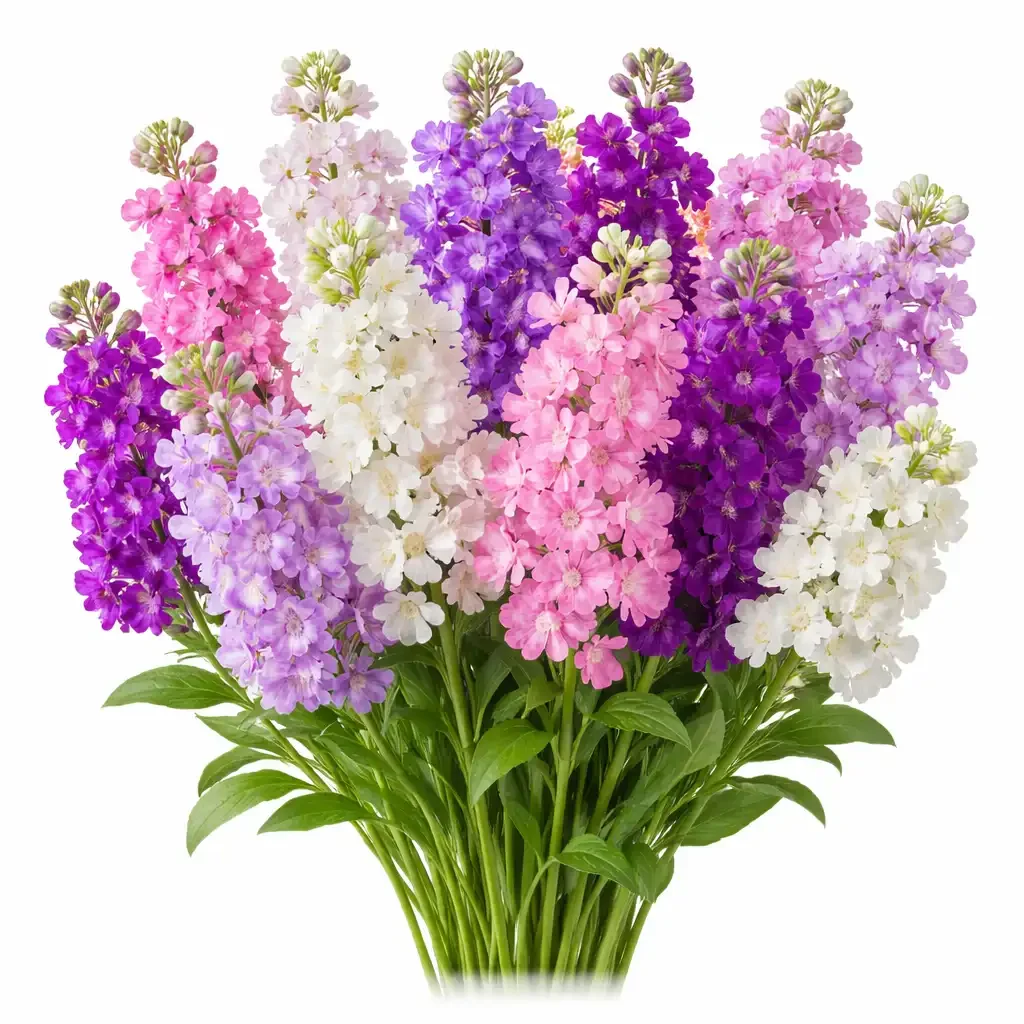
Quick Overview
Common Name: Stock, Gillyflower
Scientific Name: Matthiola incana
Plant Type: Annual, biennial in mild climates
USDA Zones: 2 to 11
Sun Requirement: Full Sun
Soil Type: Well-drained, moderately fertile
Bloom Season: Spring through Early Summer, Fall through Spring in mild winter climates
Height: 12 to 36 inches depending on variety
Pollinator Friendly: Yes
Edible: No
Why Grow Stock on a Homestead
Stock is one of the most intensely fragrant cut flowers available to homestead growers and that fragrance alone makes it one of the most powerful market draws you can have at a farmers market stand. Its dense, spike-shaped flower clusters in shades of white, cream, pink, red, purple, and lavender carry a rich, clove-like scent that fills the air around your stand and draws customers from across the market. A single bucket of fresh Stock in full bloom creates an olfactory experience that customers remember long after the visit is over.
Beyond its extraordinary fragrance, Stock produces tall, elegant flower spikes that are a staple in the professional floral industry. Florists use Stock constantly in mixed arrangements, wedding bouquets, and event installations for its vertical structure, rich color range, and the density of its flower clusters. For homestead growers in mild winter climates within USDA zones 8 to 11, Stock is a particularly valuable crop because it thrives in cool weather and can be grown through the fall, winter, and spring months when most summer annuals have finished.
Here is why Stock deserves a prominent spot on your homestead:
It is one of the most fragrant cut flowers available. The rich, clove-like fragrance of Stock is one of the most distinctive and powerful scents in the cutting garden. Fragrant flowers always command premium prices and Stock is at the top of that category.
It is a florist staple with consistent year-round demand. Stock is used by florists constantly in mixed arrangements and wedding work. Local supply is valued and in short supply from small farms.
It thrives in cool weather. Stock is a cool season crop that performs exceptionally well in mild winter climates within USDA zones 8 to 11, giving warm climate growers a significant production advantage over growers in colder regions where the cool season window is shorter.
It provides income during the cool season gap. In mild winter climates, Stock blooms during fall, winter, and spring when most other cut flowers are not available, filling a critical gap in the harvest calendar.
It is a visually striking cut flower. The tall, densely packed flower spikes of Stock add impressive vertical structure and rich color to arrangements. Even a few stems transform a bouquet.
Growing Conditions
Sunlight
Stock requires full sun for the strongest growth and most abundant flowering. It needs at least 6 hours of direct sunlight per day. In partial shade it produces weaker stems and fewer flowers. Full sun combined with cool temperatures produces the ideal conditions for Stock.
Soil
Stock prefers well-drained, moderately fertile soil. It performs well in soil amended with compost but does not need overly rich conditions. Waterlogged soil causes root rot quickly. A loose, well-drained soil with a pH between 6.5 and 7.5 is ideal. Slightly alkaline conditions suit Stock particularly well.
Water
Water regularly and consistently throughout the growing season. Stock needs consistent moisture to produce strong stems and dense flower spikes but does not tolerate waterlogged conditions. Water deeply at the base of the plant rather than overhead to avoid wetting the foliage and flower spikes. Reduce watering as plants approach the end of their productive life in warm weather.
Temperature
Stock is a cool season crop that performs best in temperatures between 45 and 65 degrees Fahrenheit. It tolerates light frost but is damaged by hard freezes. It declines rapidly when temperatures consistently exceed 75 to 80 degrees Fahrenheit. In mild winter climates within USDA zones 8 to 11, Stock is best grown as a fall through spring crop, taking full advantage of the cool growing season for an exceptionally long and productive blooming period. In cold winter climates within USDA zones 3 to 7, Stock is grown as an early spring crop, sown as soon as conditions allow and harvested through early summer before heat arrives.
Planting Guide
Stock can be started from seed indoors or transplanted from nursery starts. Starting from seed gives you access to the widest range of varieties and the lowest cost per plant for large plantings.
Step 1: In mild winter climates within USDA zones 8 to 11, start seeds indoors in late summer to early fall, typically August through October, for fall and winter transplanting. This timing produces plants that bloom from late fall through spring.
Step 2: In cold winter climates, start seeds indoors 6 to 8 weeks before the last frost date for spring planting, or direct sow in early spring as soon as the soil can be worked.
Step 3: Sow seeds on the surface of moist seed starting mix. Stock seeds need light to germinate so do not cover them. Keep seed trays at 65 to 70 degrees Fahrenheit until germination, which typically occurs within 7 to 14 days.
Step 4: Once seedlings have developed two to three sets of true leaves, transplant into individual pots and grow on in a cool, bright location until outdoor planting time.
Step 5: Transplant outdoors to a location with full sun and well-drained soil. Space plants 9 to 12 inches apart for cut flower production.
Step 6: Water thoroughly after transplanting and keep soil consistently moist until plants are well established.
Seed vs Transplant: Both work well. Nursery transplants are convenient and give faster results. Starting from seed gives access to a wider range of varieties and lower per-plant cost for large plantings.
Spacing: 9 to 12 inches apart for cut flower production.
Planting Season: Late summer to early fall in mild winter climates within USDA zones 8 to 11 for winter and spring blooms. Early spring in cold winter climates.
Maintenance
Selecting for Double Flowers
One of the most important considerations when growing Stock from seed is selecting for double-flowered plants, which are significantly more valuable than single-flowered plants in the cut flower market. Double flowers have dense, fully packed spikes that are far more impressive and desirable than the sparser single-flowered form.
Many seed companies offer selectable strains where seedling leaf color indicates whether the plant will produce double or single flowers. In these strains, lighter green or yellowish seedlings typically produce double flowers while darker green seedlings produce singles. Selecting and keeping only the lighter seedlings at the transplanting stage significantly increases the proportion of double-flowered plants in your crop. Follow the specific instructions provided by your seed supplier for the variety you are growing.
Fertilizing
Apply a balanced fertilizer at planting and a light midseason application to maintain productivity throughout the cool season. Avoid excessive nitrogen which promotes lush foliage at the expense of flower spike development. A balanced or slightly phosphorus-rich fertilizer encourages the densest, most fully packed flower spikes.
Pest Control
Stock is generally pest resistant in cool conditions. Aphids can appear on stems and flower spikes and should be treated promptly with a strong spray of water or neem oil as they can damage developing spikes quickly. Cabbage loopers and other caterpillars can occasionally feed on Stock foliage and can be treated with Bacillus thuringiensis if needed.
Disease Prevention
Botrytis gray mold can be a problem in cool, humid conditions or when plants are overcrowded. Space plants properly for good air circulation and avoid overhead watering. Remove any affected plant material immediately. Root rot caused by waterlogged soil is the other major disease threat. Good drainage is essential.
Harvesting
When to Harvest
Harvest Stock when approximately one quarter to one third of the florets on the spike are open. The remaining florets will continue to open progressively up the spike after cutting, giving the stem a long and evolving display in the vase. Harvesting when too few florets are open results in spikes that may not fully develop after cutting. Harvest in the early morning when stems are fully hydrated and the fragrance is at its peak.
How to Cut
Use clean, sharp pruners or a sharp knife. Cut stems as long as possible, ideally 16 to 24 inches. Cut at an angle just above a set of leaves or a side branch to encourage new lateral shoot development. Strip the lower leaves from the stem immediately after cutting and place stems in deep cool water with a floral preservative.
Conditioning
Stock benefits significantly from a conditioning period before use or sale. After cutting, place stems in deep cool water in a cool, dark location for several hours or overnight. This conditioning period significantly improves vase life and reduces the wilting that can occur in freshly cut stems.
How Often to Harvest
Harvest every few days as new spikes reach the correct stage. After the main central spike is harvested, lateral shoots develop and produce secondary spikes that are somewhat smaller but still harvestable and marketable. Regular harvesting encourages continued lateral shoot development.
Vase Life
Stock typically lasts 7 to 14 days as a fresh cut flower with proper conditioning and care. Strip all foliage below the waterline, recut stems at an angle, and place in fresh water with a floral preservative. Change water every few days and recut stems to maximize vase life.
Uses on a Homestead
Cut Flower Use
Stock is primarily grown as a cut flower. Its tall, densely packed flower spikes add impressive vertical structure, rich color, and extraordinary fragrance to mixed bouquets and arrangements. It pairs beautifully with ranunculus, sweet peas, anemones, and other cool season flowers in romantic spring arrangements. Even a single stem of Stock transforms the fragrance profile of an entire bouquet.
Wedding and Event Flowers
Stock is a wedding florist staple, particularly for spring and early summer weddings. Its elegant spikes, rich fragrance, and wide color range make it a natural choice for bridal bouquets, centerpieces, and large event installations. White and cream Stock varieties are particularly popular for classic and romantic wedding designs.
Fragrance at the Farm Stand
Stock creates one of the most powerful and immediate sensory draws of any cut flower at a farmers market stand. Its rich, clove-like fragrance carries remarkably far and draws customers in before they even see the flowers. A bucket of fresh Stock in full bloom is one of the most effective marketing tools a homestead flower grower can have.
Pollinator Support
Stock blooms attract bees and other pollinators throughout its cool season blooming period, providing a valuable nectar source at a time of year when many other plants are not yet in flower.
Can You Make Money With Stock
Yes, Stock is one of the most profitable cool season cut flower crops available to homestead growers, particularly in mild winter climates within USDA zones 8 to 11 where it can be grown over an exceptionally long season.
Cool season market advantage. Stock blooms during fall, winter, and spring in mild winter climates when most other cut flowers are unavailable, allowing you to sell premium-priced stems with very limited competition. In cold winter climates, the shorter spring season still delivers strong returns given the high demand for fragrant cool season flowers.
Fragrance premium. Intensely fragrant flowers consistently command higher prices at market and from florists. Stock delivers fragrance at a level that few other flowers can match.
Strong florist demand. Stock is used constantly by professional florists and local supply from small farms is rare and highly valued.
Long productive season in mild winter climates. In mild winter climates within USDA zones 8 to 11, a well-timed Stock planting can produce harvestable stems for four to six months, delivering exceptional return on investment from a single planting.
Farmers Market: Fresh Stock bundles sell for 10 to 18 dollars per bunch depending on stem quality, double flower percentage, and color. Single-stem premium spikes can sell individually for 3 to 5 dollars each.
Florists and Wedding Designers: Stock is in consistent demand from florists for mixed arrangements and wedding work. Supplying local florists directly is one of the most profitable sales channels for this crop.
CSA Flower Subscriptions: Stock is one of the most impressive and fragrant additions to a cool season flower subscription box. Its inclusion immediately elevates the perceived value of the subscription.
Wedding and Event Flowers: Stock is a natural choice for spring weddings and events. Its fragrance and elegant spikes make it a highly requested specialty item for wedding florists working in the cool season.
Companion Plants
Stock grows well alongside other cool season crops and spring blooming flowers with similar growing requirements.
Ranunculus: Both are cool season favorites that bloom at the same time and complement each other beautifully in romantic spring arrangements.
Sweet Peas: Both are fragrant cool season crops that pair naturally in the spring cutting garden and in bouquets.
Anemones: Another cool season bloom that overlaps with Stock and creates beautiful combinations in spring arrangements.
Snapdragons: A cool season annual with similar growing requirements that pairs beautifully with Stock in tall, vertical spring arrangements.
Larkspur: A cool season annual that provides tall, complementary color alongside Stock in mixed bouquets and cutting garden beds.
Nigella: A delicate cool season annual that provides a soft contrast to the dense flower spikes of Stock in mixed arrangements.
Common Problems
Failure to Produce Double Flowers
A common disappointment when growing Stock from seed without selecting for double-flowered plants. Many Stock seed strains allow selection of double-flowered seedlings based on leaf color at the transplanting stage. Follow supplier instructions carefully and remove single-flowered seedlings early to maximize the proportion of premium double-flowered plants in your crop.
Botrytis Gray Mold
Can devastate Stock plantings in cool, humid, or overcrowded conditions. Improve air circulation by spacing plants properly, avoid overhead watering, remove affected plant material immediately, and ensure good drainage. Prevention is far more effective than treatment once botrytis takes hold.
Root Rot
Caused by poorly drained or waterlogged soil. Stock does not tolerate wet feet. Plant in well-drained soil, build raised beds if necessary, and avoid overwatering.
Bolting in Heat
Stock bolts and declines rapidly when temperatures rise above 75 to 80 degrees Fahrenheit. Time plantings carefully to take advantage of the cool season regardless of your climate. There is no way to prevent bolting in heat. Plan for plants to decline as summer temperatures arrive and replace with heat-tolerant summer crops.
Aphids
Can appear in large numbers on stems and developing flower spikes. Treat promptly with a strong spray of water or neem oil as aphid damage to developing spikes can significantly reduce their market value.
Varieties to Consider
Katz Series: One of the most widely grown Stock series for cut flower production. Selected for a high percentage of double flowers, strong stems, and excellent fragrance. Available in a wide range of colors including white, cream, pink, red, purple, and lavender. A reliable choice for commercial cut flower production.
Figaro Series: A compact series suited to shorter growing spaces. Good double flower percentage and strong fragrance. Available in mixed and single colors.
Vintage Series: An early-flowering series bred specifically for cool season and low light production. Excellent choice for fall and winter production in mild winter climates. Strong fragrance and good double flower percentage.
Pillow Talk: A soft pink variety with very dense double flower spikes. Extremely popular with wedding florists for its romantic color and exceptional fragrance.
White Wonder: Clean white double flower spikes. One of the most popular Stock varieties for wedding work and for adding a classic, elegant touch to mixed arrangements.
Cheerful White: A reliable white variety with consistent double flower production and very strong fragrance. A farmers market and florist favorite.
Antique Peach: Soft peachy-apricot tones with a warm, vintage aesthetic. Very popular with florists working with earthy and warm color palettes.
Final Thoughts
Stock is one of the most rewarding and commercially valuable crops a homestead flower grower can add to their cool season operation. Its extraordinary fragrance, elegant flower spikes, and consistent demand from florists and wedding designers make it a premium product that earns its place in the cutting garden every single season. In mild winter climates within USDA zones 8 to 11 where it can be grown through the cool months as a long-season crop producing blooms from late fall through spring, Stock delivers exceptional value and market impact at a time of year when very few other flowers are available. In cold winter climates, the shorter spring blooming window is still one of the most profitable and fragrant harvests of the entire cool season calendar. Time your plantings carefully, select for double flowers, harvest at the right stage, and Stock will become one of the most profitable and eagerly anticipated crops on your homestead.
FAQ
What is the difference between single and double Stock flowers and why does it matter for cut flower production? Single Stock flowers have one layer of petals arranged loosely around the center of each floret on the spike, producing a relatively sparse appearance. Double Stock flowers have multiple layers of densely packed petals that create a full, lush spike with far more visual impact and market appeal. Double-flowered Stock commands significantly higher prices from florists and customers and is always preferred for cut flower production. Many seed strains allow growers to select for double-flowered seedlings based on leaf color before transplanting.
How do I get the strongest fragrance from cut Stock? Stock fragrance is strongest in the early morning and in cool temperatures. Harvest in the early morning when fragrance is at its peak. Keep cut stems in a cool location and display at farmers markets in the shade where possible. The fragrance intensifies as more florets open up the spike over the following days in the vase.
Can Stock be grown as a long season crop? In mild winter climates within USDA zones 8 to 11, Stock can be grown from fall through spring as a long-season cool weather crop, typically from a September or October planting through May or June harvest depending on your specific climate. It will decline and bolt as summer heat arrives. In cold winter climates it is grown as a spring annual, sown as early as possible and harvested through early summer before heat causes bolting.
Why do my Stock plants fail to bloom? The most common causes are insufficient chilling, planting in too-warm conditions, or plants that are too young. Stock benefits from exposure to cool temperatures, ideally below 50 degrees Fahrenheit for several weeks, to initiate flower spike development. Plants grown entirely in warm conditions may produce lush foliage but fail to develop flower spikes. Timing your planting for the cool season is the most important factor in reliable blooming.
How do I maximize stem length for cut flower production? Plant Stock at close spacing of 9 inches in rows, ensure full sun, maintain consistent moisture throughout the growing season, and avoid excessive nitrogen fertilization. Choosing tall varieties bred for cut flower production such as the Katz series also helps ensure the longest possible stems. Harvesting the central spike promptly encourages lateral shoot development that produces additional harvestable stems throughout the season.