
Strawflower
Quick Overview
Common Name: Strawflower, Everlasting Daisy, Paper Daisy
Scientific Name: Xerochrysum bracteatum, formerly Helichrysum bracteatum
Plant Type: Annual, short-lived perennial in warm climates
USDA Zones: 2 to 11 as annual, 8 to 11 as short-lived perennial
Sun Requirement: Full Sun
Soil Type: Well-drained, low to average fertility
Bloom Season: Summer through Fall
Height: 12 to 36 inches depending on variety
Pollinator Friendly: Yes
Edible: No
Why Grow Strawflower on a Homestead
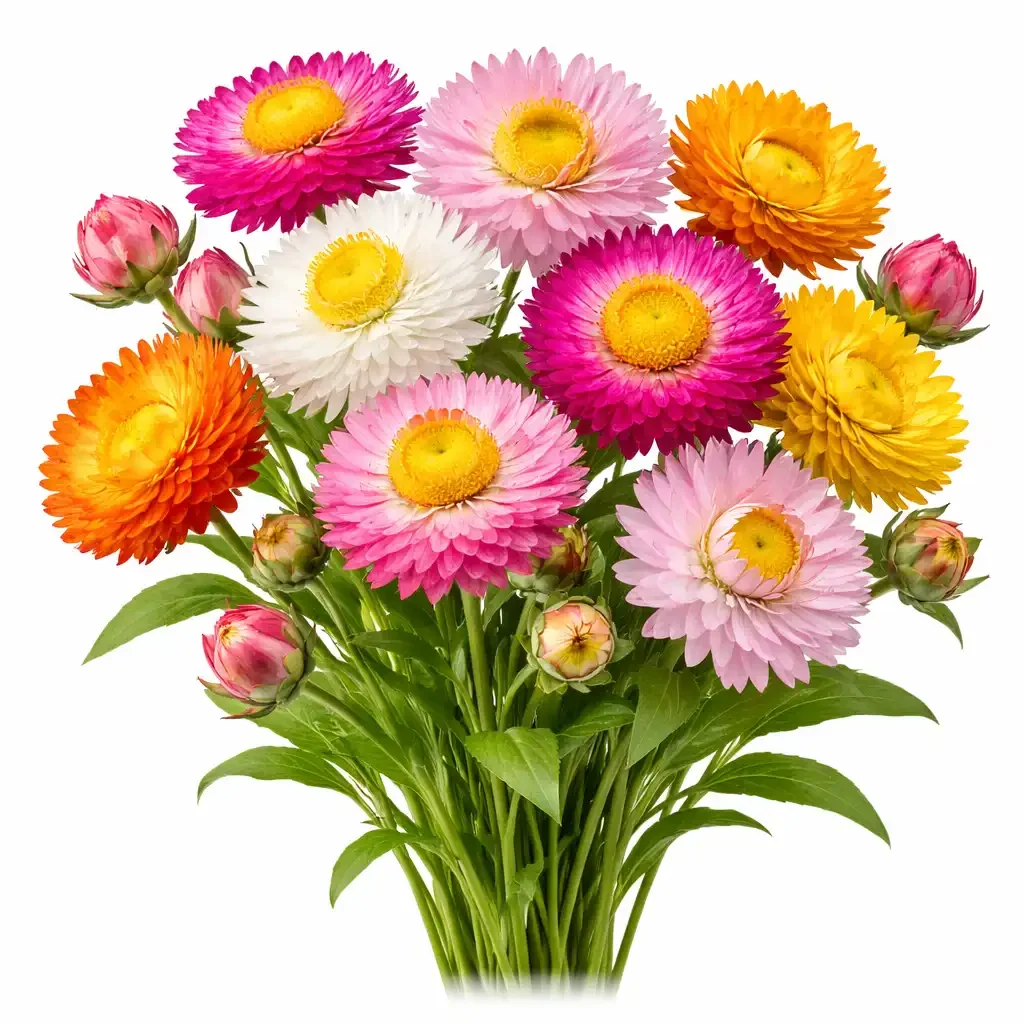
Strawflower is one of the most important and versatile crops in the dried flower world. Its papery, daisy-like blooms in a stunning range of colors from pure white through every shade of yellow, orange, pink, red, and deep burgundy are the definition of an everlasting flower. They dry naturally on the stem, hold their color and form for years, and are one of the most sought after ingredients in dried wreaths, arrangements, and botanical craft products.
For homestead growers, Strawflower represents one of the most reliable and profitable crops available for the dried flower market. It is easy to grow from seed, thrives in heat and full sun, produces an abundance of blooms over a very long season, and provides harvestable material that can be stored and sold over months rather than days. In a cut flower operation where fresh flowers must be sold quickly, Strawflower offers the rare advantage of an extended shelf life that dramatically reduces waste and expands your selling window.
Here is why Strawflower deserves a prominent spot on your homestead:
It is the gold standard of dried flowers. Strawflower is one of the true everlasting flowers. Its papery blooms dry naturally and completely on the stem, requiring no special equipment or treatment. The dried flowers retain their vivid colors and crisp form for years.
It has an exceptionally long harvest season. Strawflower begins blooming in early summer and continues producing new blooms right up to the first hard frost, giving you one of the longest harvest windows of any annual cut flower crop.
It thrives in heat and poor soil. Like many plants from its native Australia, Strawflower is well adapted to hot, dry conditions and lean soil, making it an ideal crop for homesteads in warm, dry climates within USDA zones 9 to 11 as well as any region that experiences hot summers with good natural drainage.
It serves both the fresh and dried flower markets. Strawflower can be used as a fresh cut flower with a reasonable vase life, but its primary and most profitable use is as a dried flower. This dual-market capability maximizes the return from every stem produced.
It is a staple in the craft and botanical product market. Dried Strawflowers are one of the most popular ingredients in wreaths, arrangements, potpourri, and a wide range of botanical craft products. Demand in this market continues to grow strongly.
Growing Conditions
Sunlight
Strawflower requires full sun to perform its best. It needs at least 6 to 8 hours of direct sunlight per day. In partial shade it produces weak stems, fewer blooms, and reduced color intensity. Full sun combined with heat brings out the most vivid colors and the strongest, most upright growth.
Soil
Strawflower strongly prefers well-drained soil with low to average fertility. Like its Australian native relatives, it thrives in lean conditions and actually produces better blooms in soil that is not overly rich. Overly fertile soil leads to lush, floppy foliage at the expense of flower production. Sandy or gravelly soil with good drainage is ideal. Soil pH between 6.0 and 7.0 is ideal.
Water
Strawflower is one of the most drought tolerant annuals available. Once established, it needs very little supplemental watering and actually suffers in consistently wet conditions. Water new seedlings and transplants regularly until established, then reduce watering significantly. In dry climates within USDA zones 9 to 11, established plants often need only occasional deep watering during the driest periods. In more humid climates ensure excellent drainage and avoid overwatering as Strawflower is far more likely to fail from excess moisture than from drought.
Temperature
Strawflower loves heat. It thrives in warm to hot conditions and produces its best blooms during the hottest months of summer. It does not tolerate frost and should not be planted until after the last frost date when soil has warmed. Its tolerance for heat and drought makes it one of the most naturally suited crops for warm, dry climates within USDA zones 9 to 11. In hot, humid climates it performs best with excellent drainage and good air circulation to reduce the fungal disease pressure that comes with higher humidity during the warm season.
Planting Guide
Strawflower can be started from seed indoors or direct sown after the last frost date. Starting indoors gives a head start on the season, particularly in cooler climates where the growing season is shorter.
Step 1: Start seeds indoors 6 to 8 weeks before the last frost date. Strawflower seeds need light to germinate. Press seeds onto the surface of moist seed starting mix without covering them.
Step 2: Keep seed trays warm, ideally between 70 and 75 degrees Fahrenheit, and in bright light. Germination typically occurs within 7 to 10 days.
Step 3: Once seedlings have two sets of true leaves, transplant into individual small pots and grow on in a warm, bright location until outdoor planting time.
Step 4: After the last frost date when soil has warmed, transplant seedlings outdoors to a location with full sun and well-drained soil.
Step 5: Space plants 9 to 12 inches apart for cut flower production. Proper spacing encourages upright stems and good air circulation.
Step 6: In mild winter climates within USDA zones 9 to 11, seeds can also be direct sown after the last frost date when soil has reliably warmed. Direct sowing works well in warm soil and avoids the root disturbance that can sometimes set transplants back. In cold winter climates, starting indoors gives a longer harvest season and is the more reliable approach where the growing season is shorter.
Seed vs Transplant: Both work well. Starting indoors gives a longer harvest season. Direct sowing is simpler and works well in warm climates.
Spacing: 9 to 12 inches apart for cut flower and dried flower production.
Planting Season: After last frost. Start indoors 6 to 8 weeks before outdoor planting date.
Maintenance
Pinching
Pinching the central growing tip when seedlings reach 6 to 8 inches tall encourages branching and dramatically increases the number of flowering stems produced per plant. This is one of the most important steps for maximizing yield in a cut flower and dried flower operation.
Fertilizing
Strawflower does not need heavy feeding. A light application of balanced fertilizer at planting is sufficient. Avoid high nitrogen fertilizers which produce lush foliage at the expense of flowers. In lean soil, a single midseason application of low nitrogen fertilizer can help maintain productivity through the long growing season.
Pest Control
Strawflower is largely pest resistant. Aphids can occasionally appear on new growth but are rarely a serious problem. Its papery blooms and somewhat aromatic foliage naturally deter many insects. Treat aphids with a strong spray of water or neem oil if populations become problematic.
Disease Prevention
Good drainage and air circulation are the most important disease prevention measures for Strawflower. Root rot caused by poorly drained or waterlogged soil is the most serious threat. Avoid overhead watering and do not crowd plants. Powdery mildew can occasionally occur late in the season in humid conditions.
Harvesting
When to Harvest for Fresh Use
For use as a fresh cut flower, harvest Strawflower when blooms are about half to three quarters open. The papery petals should be fully extended and showing their color but the center of the bloom should still be tight. Harvest in the early morning when stems are fully hydrated.
When to Harvest for Drying
For drying, harvest Strawflower when blooms are just beginning to open, at about one quarter to one half open. Blooms harvested at this stage will continue to open slightly as they dry and will hold their form and color best. Blooms that are fully open when harvested may shatter or lose their form as they dry.
How to Cut
Use clean, sharp scissors or pruners. Cut stems as long as possible, ideally 12 to 18 inches. Cut just above a set of leaves or a side shoot to encourage new branching and continued bloom production. An important note for drying: Strawflower stems become very brittle when dried. For dried arrangements where a flexible wire stem is needed, insert a florist wire through the center of the fresh bloom before drying. The wire holds the bloom securely as the stem dries and shrinks.
Drying
To dry Strawflower, gather stems into small bundles and hang upside down in a warm, dry, well-ventilated space away from direct sunlight. Drying takes approximately 2 to 3 weeks. The blooms retain their vivid colors and crisp papery form exceptionally well and can last for years. Alternatively, individual blooms can be removed from stems and dried face-up on a wire rack for use in craft projects.
Vase Life
As a fresh cut flower, Strawflower typically lasts 7 to 10 days in a vase. Strip all foliage below the waterline, recut stems at an angle, and place in fresh water immediately after cutting.
Uses on a Homestead
Dried Flower Use
Strawflower is the quintessential dried flower and its primary use on the homestead. Dried Strawflower bundles, wreaths, arrangements, and loose blooms are all highly marketable products. The vivid, long-lasting colors make Strawflower one of the most eye-catching and popular dried flower products available at craft markets, holiday markets, and online shops.
Cut Flower Use
Strawflower works reasonably well as a fresh cut flower. Its papery blooms add an interesting texture and vivid color to mixed summer bouquets. While not its primary use, fresh Strawflower adds a distinctive quality to market bouquets that customers notice and appreciate.
Wreath Making
Dried Strawflower is one of the most popular wreath-making ingredients. Individual blooms are easy to attach to wreath forms and the range of available colors allows for an almost unlimited variety of wreath designs. Strawflower wreaths sell well year round and particularly strongly in the fall and holiday season.
Potpourri and Botanical Products
Dried Strawflower blooms are a beautiful and long-lasting addition to potpourri, botanical sachets, and a wide range of homestead apothecary and craft products.
Pollinator Support
Despite being primarily valued as a dried flower crop, Strawflower is an excellent pollinator plant. Bees and butterflies visit its blooms constantly throughout its long summer season.
Can You Make Money With Strawflower
Yes, Strawflower is one of the most profitable crops for homestead flower operations focused on the dried flower and craft markets. Its combination of vivid color, exceptional longevity, and strong market demand makes it a high-value product with very low ongoing input costs.
Extended shelf life dramatically reduces waste. Unlike fresh flowers that must be sold within days, dried Strawflower can be stored for months and sold year round, including at holiday markets and through online shops during the winter months when fresh flower income slows.
Strong and growing dried flower market demand. The market for naturally dried flowers continues to grow rapidly. Strawflower is one of the most requested dried flowers by florists, crafters, and retail customers.
Low input cost. Seeds are inexpensive and established plants need very little water, fertilizer, or pest management.
Multiple income streams. Fresh bouquets, dried bundles, wreaths, individual blooms for crafters, potpourri, and botanical products all provide viable income opportunities.
Farmers Market: Fresh Strawflower bundles sell for 6 to 10 dollars per bunch. Dried bundles sell for 8 to 14 dollars per bunch.
Dried Flower Market: Dried Strawflower wreaths, bundles, and arrangements sell well at craft markets, holiday markets, and through online shops year round.
Florists: Florists working with dried and everlasting arrangements actively seek quality Strawflower in a range of colors. Establishing a local supply relationship is a reliable income source.
Online Shop: Dried Strawflower ships extremely well and is ideal for an online dried flower business. Its long shelf life means no rush to sell and no waste from unsold inventory.
Craft Kits: Dried Strawflower blooms sold in mixed color assortments as wreath-making or arrangement kits are popular with crafters and sell well through online platforms.
Companion Plants
Strawflower grows well alongside other heat-loving annuals and drought-tolerant plants with similar growing requirements.
Xeranthemum: Another everlasting flower with similar growing requirements that pairs beautifully with Strawflower in dried arrangements and wreaths. Statice: Shares similar growing conditions and complements Strawflower beautifully in both fresh and dried arrangements. Gomphrena: Both are heat-loving annuals that dry well and grow in similar conditions. A natural pairing in the dried flower garden. Zinnias: Both love heat and full sun and can be harvested together for mixed summer bouquets and market bundles. Yarrow: Shares similar low-maintenance requirements and works beautifully alongside Strawflower in dried arrangements and wreaths. Celosia: Another excellent dried flower crop that thrives in similar conditions and pairs well with Strawflower in bold, colorful dried arrangements.
Common Problems
Root Rot
The most serious and common problem with Strawflower. Caused by poorly drained or waterlogged soil. Plant in well-drained soil, avoid overwatering, and never let water pool around plants. Once root rot sets in it is very difficult to reverse.
Floppy Stems
Can occur in overly rich soil, insufficient sun, or when plants are overcrowded. Grow in lean soil with full sun and space plants properly. Avoid high nitrogen fertilizers. Pinching early in the season also helps develop a stronger, more branched plant with better stem support.
Powdery Mildew
Can occur late in the season in humid conditions. Improve air circulation by spacing plants properly and avoid overhead watering. Remove affected foliage promptly.
Aphids
Occasionally appear on new growth. Usually manageable with a strong spray of water. Neem oil can be used if populations become problematic.
Bloom Shattering When Dried
Caused by harvesting blooms that are too fully open before drying. Harvest for drying when blooms are at one quarter to one half open. Blooms that are fully open when harvested are more likely to shatter and lose their petals as they dry.
Varieties to Consider
Bracted Mixed: A classic mixed color seed blend that includes white, yellow, orange, pink, red, and deep burgundy. A mixed planting gives you the full color range for bouquets, wreaths, and arrangements.
Silvery Rose: Soft silvery-pink blooms with a distinctive metallic sheen. Very popular with florists and wedding designers for its unusual, sophisticated color.
King Size Formula Mix: Large-flowered variety with blooms up to 3 inches across. Strong stems and vivid colors. One of the most popular varieties for both fresh and dried cut flower production.
Bright Bikini Mix: A compact series with very vivid, intensely colored blooms. Excellent for dried flower production and wreath making due to the intensity of color retention after drying.
Copper Red: Deep copper-red blooms that dry to a rich, warm tone. Very popular in fall wreaths and arrangements. Extremely sought after at harvest markets and craft fairs.
White Silvery: Clean white blooms that dry to a beautiful crisp white. Extremely versatile in dried arrangements and wreaths. A florist favorite for its clean, neutral color.
Cockatoo: A tall, branching variety with large yellow blooms on strong stems. Excellent for cut flower production and pairs beautifully with other warm-toned summer flowers in mixed bouquets.
Final Thoughts
Strawflower is one of the most strategically valuable crops a homestead flower grower can add to their operation. In a business where fresh flowers must be sold within days, the ability to harvest, dry, and store a beautiful product for months without any loss of quality is an enormous advantage. Strawflower gives you that advantage in abundance. Its vivid colors, exceptional longevity, low input requirements, and strong year-round market demand make it a cornerstone crop for any homestead focused on the dried flower and craft markets. Grow it in full sun, keep the soil lean and well drained, harvest regularly at the right stage, and Strawflower will reward you with one of the most reliable and profitable harvests on your entire homestead.
FAQ
How do I wire Strawflower stems for dried arrangements? Insert a 22 to 24 gauge florist wire through the center of a fresh Strawflower bloom from the top, pushing it down through the natural stem or replacing the stem entirely. Bend a small hook at the top to secure the bloom. As the flower dries the petals grip the wire firmly, creating a flexible wired stem that can be used in wreaths, arrangements, and corsages where the natural brittle stem would break.
How long do dried Strawflowers last? Dried Strawflowers can last for several years when kept away from direct sunlight, moisture, and excessive handling. Their color retention is exceptional compared to most dried flowers, making them one of the longest-lasting dried flower products available.
Can Strawflower be grown in containers? Yes, compact varieties work well in large containers with well-draining potting mix. Ensure containers have adequate drainage holes and avoid overwatering. Container-grown plants may need slightly more frequent watering than in-ground plants but are otherwise easy to manage.
Is Strawflower the same as Helichrysum? Yes, Strawflower was formerly classified as Helichrysum bracteatum and is still sold under that name by some seed companies. It has been reclassified to Xerochrysum bracteatum but both names refer to the same plant. The name Helichrysum is also used for a related genus of plants that includes the silver-leaved curry plant, which is a different plant entirely.
Why do my Strawflower blooms shatter after drying? Shattering is almost always caused by harvesting blooms that are too fully open before drying. For best results, harvest when blooms are only one quarter to one half open. At this stage the papery petals grip the center of the bloom firmly and hold together well through the drying process and long-term storage.