
Garlic (Softneck)
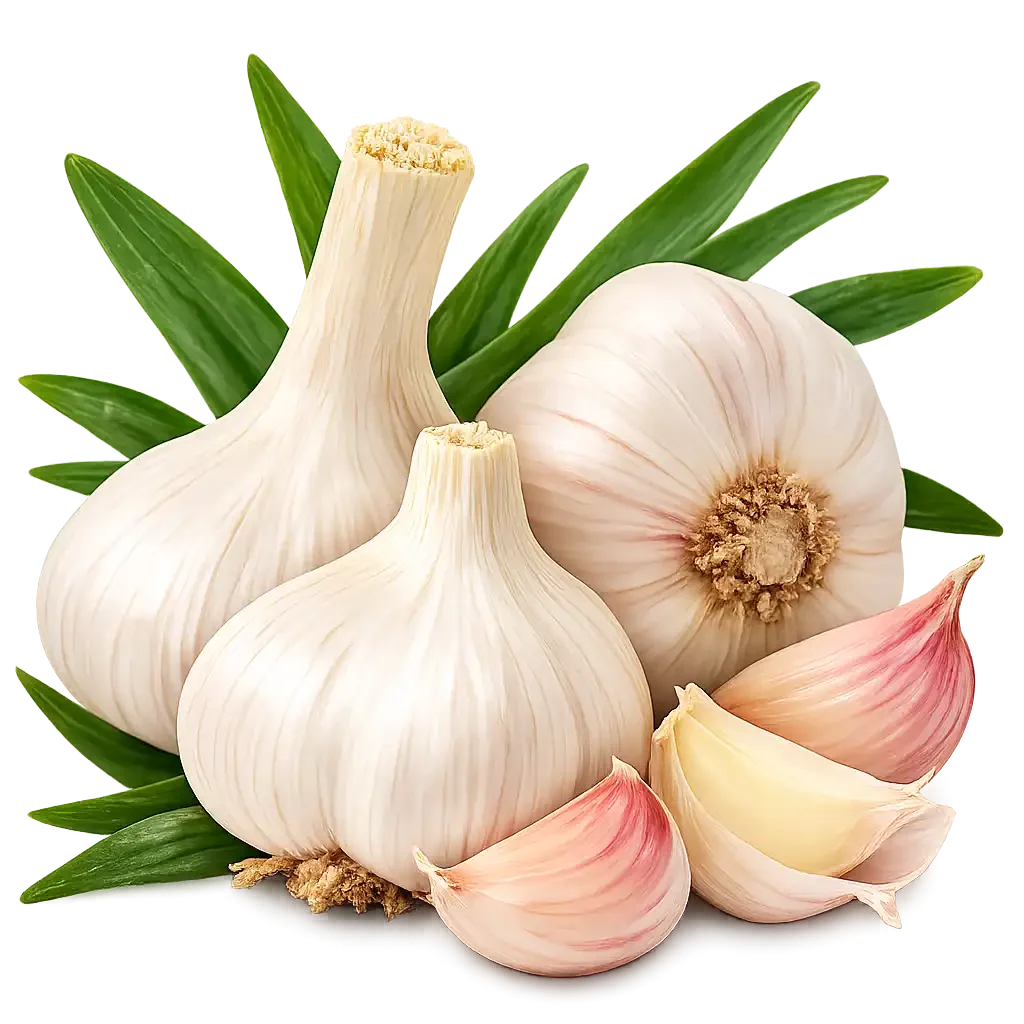
Written By Arthur Simitian
QUICK FACTS
Common Name
Softneck Garlic
Scientific Name
Allium sativum subsp. sativum
Plant Type
Hardy bulbous perennial grown as an annual; overwintered in the ground
Hardiness Zones
3 to 10; adapts to a wider climate range than hardneck; the primary garlic type for mild-winter regions zones 8 to 10
Sun Requirements
Full sun; minimum 6 hours
Soil Type
Rich, loose, well-drained; pH 6.0 to 7.0; same soil requirements as hardneck
Planting Time
Autumn in most climates; can also be planted in late winter or early spring in mild-winter regions
Harvest Time
Mid-summer when lower leaves have browned but 5 to 6 green leaves remain; same timing principle as hardneck
Softneck Groups
Two groups: Artichoke and Silverskin
Defining Feature
No rigid central scape; the neck remains flexible and pliable after curing, allowing braiding; more cloves per head than hardneck arranged in overlapping layers; superior storage life of 8 to 12 months; better adapted to mild winters and commercial mechanized production
Primary Active Compounds
Allicin (formed from alliin on tissue damage); diallyl disulfide; S-allylcysteine; quercetin; fructooligosaccharides; same active compound profile as hardneck with some variation in total allicin content by variety
Two garlic posts: This post covers the two softneck groups, Artichoke and Silverskin. The companion post covers all eight hardneck groups: Rocambole, Porcelain, Purple Stripe, Marbled Purple Stripe, Glazed Purple Stripe, Asiatic, Turban, and Creole. Softneck and hardneck are genuinely different in flavor depth, storage life, climate adaptation, and best uses. Reading both before deciding which to grow, or in what proportion, is worthwhile.
Softneck garlic is the garlic of the commercial market, the supermarket shelf, the long supply chain, and the eight-month pantry supply. That practical durability is not an accident: softneck types were selected over centuries of cultivation specifically for the traits that make them dominant in any context where storage life, yield, and climate adaptability matter more than flavor complexity. They produce more cloves per head, store longer than any hardneck group, tolerate a wider range of winter temperatures, and can be braided into the hanging bundles that have preserved garlic through winter in farmhouse kitchens for centuries. What softneck trades away in that bargain is the peak flavor complexity of Rocambole or the visual drama of Purple Stripe. What it keeps is everything practical. A well-planned homestead garlic planting has room for both types, and softneck is the one that carries the weight of the year.
Introduction
Allium sativum subsp. sativum, the softneck subspecies, represents the more domesticated branch of cultivated garlic, selected away from the wild Central Asian ancestor over generations of cultivation in the agricultural civilizations of the Mediterranean, Middle East, and Central Asia. Where hardneck garlic retains the scape, the coiling flowering stalk of its ancestral form, softneck types have lost the ability to produce viable seed heads in most conditions and have instead concentrated their reproductive energy entirely into the bulb. This shift produced the traits that define softneck: more cloves in more layers, heavier total bulb weight per planting, thicker and more protective wrapper leaves, and the pliable neck that forms when the dried leaf sheaths persist without a rigid stalk running through them.
The practical consequence of this domestication is that softneck garlic is what feeds most of the world. California's San Joaquin Valley produces roughly ninety percent of the garlic consumed in the United States, and essentially all of it is softneck Artichoke types mechanically planted, harvested, and processed at a scale that hardneck's manual scape-removal requirement cannot compete with. The same dominance applies globally: the garlic available in supermarkets in London, Tokyo, Buenos Aires, and Cairo is overwhelmingly softneck, selected for storage and uniformity over the flavor qualities that distinguish the best hardneck varieties.
For the homestead grower, softneck's value is complementary to hardneck rather than a substitute for it. Hardneck supplies the complexity and the scapes; softneck supplies the volume, the long storage span, the varieties best suited to warm winter climates, and the heads that keep through the winter months when the hardneck harvest has been exhausted. A planting of roughly two-thirds softneck and one-third hardneck covers both purposes across the full annual cycle.
How to Grow
Climate Adaptability
The most important practical difference between softneck and hardneck garlic for the homestead grower is climate adaptability. Softneck types do not require the extended cold vernalization that hardneck groups need to form properly segmented bulbs, and they tolerate the mild-winter conditions of zones 7 through 10 where most hardneck types produce rounds, unsegmented single-clove bulbs, rather than the divided heads the grower intended to plant. In those warmer climates, softneck is not the compromise choice; it is the correct choice.
In cold-winter climates of zones 3 through 6, both types perform well, and the decision of which to grow in what proportion is about culinary priorities and storage planning rather than climate limitation. Softneck planted in autumn in a zone 5 garden vernalizes adequately through the winter and bulbs normally in summer, competing with hardneck types on equal agronomic terms. The flavor gap between the best hardneck and a good softneck variety is real but less important to a grower whose kitchen uses large quantities of garlic for everyday cooking than to one growing specifically for the most complex possible flavor.
Planting
Softneck garlic is planted by the same method as hardneck: individual cloves separated from the previous year's best heads, pushed into prepared soil with the pointed end upward and the basal plate downward, at two to three inches depth and six inches between cloves. The same deep soil preparation, generous compost incorporation, and drainage requirements apply. The main practical difference at planting time is that softneck heads contain more cloves, often twelve to twenty in an Artichoke head and fifteen to twenty-five or more in a Silverskin head, which means each head produces more planting material than a Porcelain hardneck head with its four to six large cloves. From a single pound of seed garlic, softneck generally plants more square feet of bed than hardneck.
In mild-winter climates, softneck can also be planted in late winter or early spring, particularly Artichoke types, though autumn planting produces consistently better yields. Spring planting compresses the growth season and typically produces smaller heads than autumn-planted stock in the same climate; it is a useful option for growers who missed the optimal planting window rather than the preferred approach.
Spring and Summer Management
Softneck garlic management through spring is simpler than hardneck because there is no scape to monitor and remove. The flat strap leaves emerge in spring, grow vigorously through cool weather, and the plant moves into bulbing in response to lengthening day and warming temperatures without producing a central flowering stalk that requires attention. This absence of scape management is one of softneck's practical advantages in a busy kitchen garden spring.
Water management through spring and into early summer follows the same pattern as hardneck: consistent moisture through the rapid growth phase, gradually reducing in the final two to three weeks before harvest as the outer wrapper leaves begin to brown. Top-dressing with compost as growth resumes in spring, and maintaining the straw mulch through the winter and spring until it needs to be removed for weeding, covers the nutritional and moisture management needs without complicated intervention.
Harvesting and Curing
Harvest timing follows the same leaf-count principle as hardneck: lift when the lower three or four leaves have browned completely and five to six green leaves remain above. Each remaining green leaf corresponds to one intact wrapper layer, and five to six layers is the minimum for good storage life. Softneck's thicker, more numerous wrapper leaves provide more natural protection than hardneck wrappers, which is one of the structural reasons softneck stores longer after harvest, but the principle of not harvesting too early or too late applies equally.
Curing is the same two-to-four-week process in a warm, shaded, well-ventilated location. The key difference from hardneck is that after curing, softneck heads are ready for braiding while the necks are still slightly pliable. Braiding bundles of ten to fifteen heads together, working the flexible stems into a three-strand plait, produces the hanging garlic braid that stores in a cool, dry, well-ventilated kitchen for six to ten months. This is softneck's exclusive advantage: hardneck stems dry rigid and brittle and cannot be braided; softneck's pliable dried neck is what makes the traditional garlic braid possible.
Braiding softneck garlic: Braid immediately after curing while the necks retain some flexibility, before they dry completely stiff. Work with bundles of three heads to start: cross the left stem over the center, then the right over the new center, in the standard three-strand plait sequence, adding one new head with each crossing to build the braid outward. Keep the heads themselves snugged tightly together as you work; loose braiding gaps allow heads to shift and the braid to come apart in storage. A finished braid of fifteen heads should feel firm and compact, with the heads densely overlapping and the stems forming a tight plaited column. Hang in a cool, dry, well-ventilated spot with indirect light and away from humidity; a shaded corner of a kitchen, a pantry, or a cool outbuilding all work. Check monthly and remove any heads that show signs of softening or sprouting; a single deteriorating head can spread moisture and mold to its neighbors. Well-made braids from a good Silverskin variety in proper storage conditions last reliably through ten months of hanging, carrying the harvest from mid-summer through the following spring planting season.
The Two Softneck Groups
Softneck garlic taxonomy is simpler than hardneck's eight groups, dividing into just two groups with clearly different characteristics. Understanding the distinction between them guides variety selection for specific purposes rather than treating all softneck garlic as interchangeable.
Artichoke
CLOVES: 12 TO 20STORAGE: 8 TO 10 MONTHSZONES: 3 TO 10
Artichoke garlic takes its name from the layered arrangement of its cloves, which overlap concentrically in the manner of artichoke leaves rather than in a single ring. The heads are large, round, and heavy, with clean white to tan outer wrappers that occasionally show faint blushes of color but lack the defined purple striping of hardneck types. The name also reflects the relative ease with which the cloves separate from the head: the overlapping layers peel apart without the resistance of tightly wrapped hardneck types.
Artichoke is the dominant commercial garlic group globally and the type most likely to appear in grocery stores under generic labels. California Early and California Late, the two leading commercial California varieties, are both Artichoke types bred for the San Joaquin Valley's specific climate and mechanical harvest requirements. For the homestead grower, the significance is that Artichoke types are the best-adapted, highest-yielding, and most climate-flexible of all garlic groups, performing reliably from zone 3 through zone 10 with minimal variation in growing requirements by latitude.
Flavor in Artichoke garlic ranges from mild to moderately pungent depending on the specific variety and growing conditions, with less of the complexity found in Rocambole or the distinctive heat of Porcelain but a clean, reliable garlic flavor that works well in everyday cooking. Inchelium Red, from the Colville Reservation in Washington State, is among the most flavorful Artichoke varieties available to home growers, winning multiple taste competitions against both other softneck and hardneck types, and representing the upper end of Artichoke's flavor range. Lorz Italian, an old Italian-American variety with very large heads and good pungency, is another worth seeking from specialty seed garlic suppliers. For growers in zones 8 through 10 who have struggled with hardneck types, Artichoke is the primary recommendation for reliable, high-yield production with adequate flavor for all general culinary purposes.
Silverskin
CLOVES: 15 TO 25+STORAGE: 10 TO 12 MONTHSZONES: 3 TO 10
Silverskin garlic is the storage champion of all cultivated garlic, capable of keeping ten to twelve months under proper conditions and routinely lasting from one summer harvest to the edge of the next. The outer wrappers are a clean, bright, silvery white that gives the group its name and provides a distinctive visual quality on a farmers market table or kitchen counter braid. Heads are medium to large with numerous tightly packed small to medium cloves that are harder to peel than Artichoke or any hardneck type but that provide exceptional protection against moisture loss during the long storage period.
Silverskin's defining trait beyond storage life is its extraordinary adaptability across climates. It requires less cold vernalization than any other garlic group except Creole, bulbing reliably in zones 3 through 10 without the climate sensitivity that limits Rocambole or even Artichoke types in the warmest growing zones. This wide adaptation is the reason Silverskin dominates the commercial braided garlic market: it produces the most storable heads, with the most visually appealing wrapper, from the widest range of growing conditions.
Flavor is sharper, more assertive, and more persistent than Artichoke, with a pungency that lingers and a rawness that mellows more slowly on cooking than either hardneck or Artichoke types. This intensity makes Silverskin particularly well suited to preparations where strong garlic presence is wanted throughout a long cooking process, in slow-braised dishes, in fermented preparations like black garlic, and in the pickled or preserved garlic applications where flavor stability through extended time matters. Nootka Rose, from the Pacific Northwest, and Thermadrone, a French Silverskin widely used in the commercial braid trade, are two of the best-known varieties with established homestead growing records.
For any grower whose primary goal is maintaining a year-round supply from a single annual harvest with minimal attrition before the next planting season, Silverskin is the group that makes that goal achievable. Braided Silverskin in a cool, ventilated kitchen is the most practical long-term garlic storage system available without refrigeration, and the visual quality of a well-made braid of clean silver-white heads hanging in a kitchen is its own reward entirely apart from the function it serves.
Softneck vs. Hardneck: Planning the Planting
The decision of how to split a garlic planting between softneck and hardneck types comes down to three variables: climate, culinary priorities, and storage planning. In cold-winter climates, zones 3 through 6, both types perform well and the split is a culinary and planning choice. In mild-winter climates, zones 7 through 10, softneck is the practical primary choice with hardneck Creole, Turban, and Asiatic types as secondary options where complexity is wanted.
For culinary priorities: hardneck when maximum flavor complexity, large individual cloves, or scapes matter most; softneck when volume, storage through winter, or braiding is the priority. For storage planning: hardneck harvest in mid-summer lasts three to eight months depending on group, exhausting before the following spring in most cases; softneck lasts eight to twelve months and bridges the gap between successive harvests. A mixed planting that harvests hardneck types first and uses them through autumn and early winter, then transitions to softneck through the rest of the year, covers the full calendar with home-grown garlic with no gap.
Black Garlic: A Note on Fermentation
Softneck garlic, particularly Silverskin types, is the preferred raw material for producing black garlic, the Maillard-reaction product formed by holding whole heads at low heat and high humidity for three to six weeks. The process is not fermentation in the strict sense but a prolonged enzymatic and Maillard browning reaction that converts the pungent allicin-precursors and harsh sulfur compounds into a completely transformed product: sweet, complex, umami-rich, with a balsamic-molasses character and a soft, spreadable texture that bears no resemblance to raw garlic in flavor or aroma.
Silverskin's tight, numerous cloves, dense wrapper, and high alliin content make it the most suitable raw material: the protective wrapper sustains the weeks-long low-heat environment without the head drying out prematurely, and the high alliin content produces a more complex black garlic flavor than lower-alliin varieties. A rice cooker held on its lowest warm setting, a dedicated black garlic fermentation unit, or a low oven at 140 to 150 degrees Fahrenheit all achieve the necessary conditions. Whole unpeeled heads are placed in the unit, sealed, and left for three to six weeks with no intervention until the transformation is complete. The investment in time produces a product that sells at specialty food shops for prices that make the effort worthwhile even purely on economic terms.
Cautions and interactions: The same cautions that apply to hardneck garlic apply here. Garlic at culinary doses is very safe with a long history of use. High-dose medicinal garlic supplements have documented anticoagulant activity and can potentiate warfarin; people on blood thinners should not add high-dose supplementation without prescriber discussion. Discontinue high-dose supplements two weeks before elective surgery. Garlic can worsen acid reflux in susceptible individuals; cooking before consuming reduces this effect. Contact dermatitis from prolonged handling of raw garlic is common; gloves prevent burns when processing large quantities. Do not store garlic in oil at room temperature: anaerobic conditions support Clostridium botulinum growth; garlic-in-oil preparations must be refrigerated and used within one week, without exception. This caution applies to all forms of garlic including softneck, hardneck, and black garlic preserved in oil.
Pros and Cons
Advantages
Superior storage life of 8 to 12 months, the longest of any garlic type; Silverskin in particular bridges successive harvests with no seasonal gap in supply
Flexible pliable neck after curing is the prerequisite for braiding; softneck is the only type that can be braided into hanging storage, the most space-efficient and visually appealing long-term garlic storage method available without refrigeration
Widest climate adaptation of any garlic group; performs reliably from zone 3 through zone 10 without the cold-winter dependence that limits most hardneck types
Higher clove yield per head than hardneck, particularly for Silverskin; more total plantable material per pound of seed garlic
No scape removal required; simpler spring management than hardneck types
Artichoke and Silverskin are the preferred raw materials for black garlic production due to tight wrapper structure and high alliin content
Limitations
Lower flavor complexity than the best hardneck varieties, particularly Rocambole; the trade-off for storage and adaptability is real and acknowledged
More numerous, smaller cloves, especially in Silverskin, mean more peeling time per volume of usable garlic than large-cloved Porcelain or Marbled Purple Stripe hardneck
No scapes; the early-summer bonus harvest that hardneck provides is not available from softneck plantings
Artichoke types from commercial sources are frequently sold under generic variety names that provide no information about flavor profile, making intentional variety selection dependent on sourcing from specialist garlic growers rather than general garden centres
Same anticoagulant interaction and botulism-in-oil risks as all garlic types; the cautions are identical regardless of the type grown
Common Problems
White rot (Sclerotium cepivorum) and botrytis neck rot are the primary disease threats, identical to those facing hardneck types. White rot persists in soil for twenty or more years and has no chemical remedy; prevention through clean planting stock and tool hygiene is the only reliable approach. Neck rot follows from wet curing conditions and is entirely preventable through adequate ventilation and dry weather at harvest time.
Sprouting in storage is the most common quality issue with softneck garlic held into the later months of its storage window. Proper curing before storage is the primary prevention; inadequately cured heads with residual neck moisture sprout significantly earlier than well-cured ones. Storage at cool room temperature, 55 to 65 degrees Fahrenheit, with consistent airflow delays sprouting compared to warm, humid storage. Silverskin holds longest before sprouting of the two softneck groups; Artichoke types show sprouting earlier at the outer end of the eight-to-ten-month range.
Fusarium basal rot, visible as brownish discoloration of the basal plate and progressive clove deterioration, occurs in warm soils and follows from infected planting stock or soil carry-over. Rotating the garlic planting to a fresh bed every two to three years and sourcing clean seed garlic prevents most fusarium problems in a home garden context.
Final Thoughts
Softneck garlic does not ask to be the most exciting plant in the garden. It asks to be planted in good soil in autumn, left undisturbed through winter, harvested with appropriate timing in summer, cured properly for three weeks, braided while the neck is still pliable, and hung somewhere cool and ventilated where it can supply the kitchen for the next ten months without requiring further attention. That is a request that deserves to be taken seriously.
The homestead kitchen that runs on home-grown garlic through the full year relies on softneck to close the gap between what the hardneck harvest can sustain and the next planting season. Grow both. Use the hardneck first, when its flavor is at its peak. Let the softneck carry the rest of the year. That is the arrangement that works.