
Yarrow
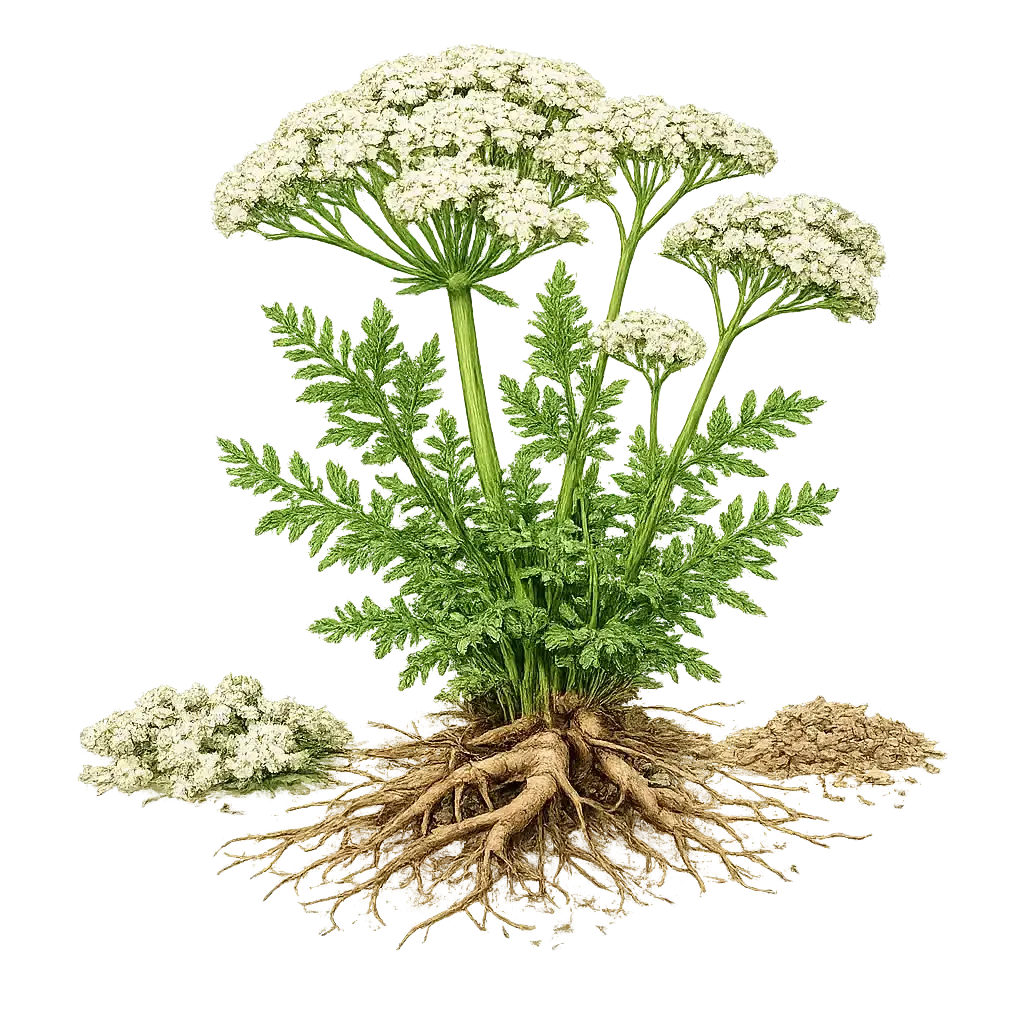
Written By Arthur Simitian
QUICK FACTS
Common Name
Yarrow, Common Yarrow, Milfoil, Soldier's Woundwort
Scientific Name
Achillea millefolium
Plant Type
Hardy perennial
Hardiness Zones
3 to 9
Sun Requirements
Full sun
Soil Type
Well-drained, average to poor; tolerates dry and rocky soils
Plant Height
18 to 36 inches in bloom
Spacing
12 to 18 inches
Uses
Medicinal, wound care, tea, pollinator plant, companion plant, livestock support, natural dye
Yarrow is one of the oldest and most thoroughly documented medicinal herbs in the world. Archaeological evidence of its use in burial sites dates back sixty thousand years. It appears in the medical writings of ancient Greece, in the herbal traditions of virtually every culture within its native range across the temperate Northern Hemisphere, and in modern phytochemical research confirming the biological activity of its constituents. On the homestead it earns its space not through any single dramatic use but through the accumulation of practical contributions across wound care, medicinal tea, pollinator support, companion planting, livestock health, and soil improvement that make it one of the most genuinely useful perennials a grower can establish.
Introduction
Achillea millefolium takes its genus name from Achilles, the Greek hero of the Trojan War, who according to legend used yarrow to stanch the wounds of his soldiers on the battlefield. The common name milfoil, meaning thousand leaves, refers to the finely divided, feathery foliage that is one of the plant's most recognizable characteristics. Soldier's woundwort, staunchweed, and knight's milfoil are other historical common names that consistently reference the plant's most famous traditional application: stopping blood flow from cuts and wounds.
Yarrow is native across the temperate Northern Hemisphere, growing naturally in meadows, pastures, roadsides, and disturbed ground from Europe and western Asia through Siberia and across North America. It is one of the most cosmopolitan wild herbs in existence, and its presence in virtually every traditional herbal system across this vast range is not coincidence. The plant's chemical constituents, including achilleic acid, azulene from the flowers, flavonoids, tannins, and a complex mixture of volatile oils, produce real and measurable biological effects that ancient healers recognized empirically and that modern research is gradually confirming.
On the homestead, yarrow functions across several systems simultaneously. In the herb garden it provides long-season bloom from early summer through autumn that attracts an extraordinary diversity of beneficial insects. In the pasture it is a valued component of traditional hay meadow mixes, providing minerals and medicinal compounds to grazing livestock. In the kitchen garden its beneficial insect attraction function makes it one of the most ecologically productive companion plants available. And in the medicine cabinet its wound care and fever management applications have a documented history that gives the homestead grower genuine confidence in reaching for it when needed.
How to Grow
Sun Requirements
Yarrow is a full sun plant and performs best with six or more hours of direct sunlight per day. In partial shade it grows more laxly, produces fewer flowers, and is significantly more prone to powdery mildew and the flopping stems that make it untidy in the garden. In full sun on average to poor, well-drained soil it is compact, abundantly flowering, long-lived, and essentially self-sufficient.
The correlation between full sun and plant quality is particularly reliable for yarrow. The difference between a full-sun yarrow planting and a partially shaded one is dramatic in terms of flower production, stem strength, and aromatic oil concentration in the foliage, which affects both the medicinal potency of the harvest and the intensity of the characteristic yarrow fragrance that is part of its contribution to the herb garden.
Soil Requirements
Yarrow is one of the most adaptable herbs for difficult soils and is actively at its best on average to poor, dry, and well-drained ground. Rich, heavily amended, fertile soils produce lush, floppy plants with more vegetative growth than flower production and significantly reduced aromatic oil concentration. The lean, stony, well-drained soils of meadows and roadsides where yarrow naturally thrives are the appropriate model for cultivation.
It tolerates a wide pH range from 5.5 to 7.5, tolerates clay soils provided they are not waterlogged, and performs well on sandy soils where most herbs require irrigation. It does not tolerate persistently wet or waterlogged conditions and will decline in heavy clay that holds water through winter. If soil drainage is a concern, raising the planting bed or incorporating coarse grit into heavy clay soils is the appropriate preparation.
Water Needs
Established yarrow is highly drought tolerant and one of the most water-efficient herbs available for the homestead. Its deep root system accesses subsoil moisture during dry periods, and mature plants in appropriate soils rarely require supplemental irrigation even through extended summer drought in zones 4 through 7.
During establishment in the first growing season, consistent moisture supports root development and speeds the transition to self-sufficiency. From the second year onward, irrigation is rarely needed and overwatering is more damaging than drought, promoting the lush, soft growth that is associated with the flopping stems and reduced oil concentration that characterize yarrow on overly rich, moist sites.
Planting
Yarrow can be started from seed, division of established clumps, or nursery transplants. Direct seeding onto a prepared seedbed in early spring or late summer produces reliable results on well-drained soil. The seeds are tiny and require light for germination, so surface sowing with no covering or a very light dusting of fine sand is the correct approach. Germination typically takes ten to fourteen days at temperatures of 65 to 75 degrees Fahrenheit.
Division of established clumps in early spring or early autumn is the fastest way to establish new plantings and the most reliable method for propagating specific named varieties with particular flower colors. Yarrow clumps can be divided aggressively, splitting a single established crown into six or more divisions, all of which establish readily. Division also rejuvenates older clumps that have become woody at the center, which is a common issue in plants over four or five years old.
Transplanting from containers is straightforward at any point in the growing season with adequate watering through establishment. Spring planting is preferred for the fastest establishment before the first flowering season.
Plant Spacing
Plants should be spaced 12 to 18 inches apart to allow good air circulation, which reduces powdery mildew pressure and keeps stems upright. Yarrow spreads by both rhizomes and self-seeding, and the spacing that seems generous at planting will be filled in within two to three growing seasons as the clumps expand. In companion planting applications along vegetable bed edges, spacing at 12 inches produces a continuous beneficial insect border more quickly.
Companion Planting
Yarrow is widely regarded as one of the most beneficial companion plants available for the vegetable and fruit garden, primarily because its flat-topped flower clusters attract an exceptional diversity of predatory and parasitoid insects that manage pest populations across the surrounding growing area.
Good companion plants include:
Brassicas, where parasitoid wasps attracted to yarrow significantly reduce cabbage white caterpillar and aphid pressure
Fruit trees and berry bushes, where yarrow planted at the drip line provides a season-long beneficial insect resource that supports fruit set and pest management simultaneously
Tomatoes and peppers, where hoverflies and lacewings attracted to yarrow manage aphid populations
Aromatic herbs including thyme, oregano, and lavender, which share the same full sun, well-drained soil preferences and together create a highly productive beneficial insect corridor
Roses, where the predatory insects attracted to yarrow manage aphids and thrips without chemical intervention
Yarrow also improves soil health directly through its deep root system, which mines minerals from the subsoil and deposits them in the leaf litter as the plant sheds older foliage. It has a traditional reputation as a dynamic accumulator of potassium, calcium, and phosphorus, and the evidence for mineral concentration in yarrow foliage relative to surrounding soil supports this reputation.
Harvesting
Harvest Time
Aerial parts, including flowers and upper leaves, are harvested for medicinal and culinary use when the flower clusters are fully open, typically from June through September depending on location. For medicinal preparations where the highest concentration of active compounds is the goal, harvesting in the morning after the dew has dried but before the heat of the day volatilizes the aromatic oils produces the most potent material.
For wound care applications where fresh herb is used directly, yarrow can be harvested and used at any point during its growing season. The fresh plant is effective for immediate wound care without any drying or preparation.
For tea and dried herb storage, harvest during peak bloom and dry promptly. Delaying harvest until flowers begin to go to seed reduces the concentration of the flavonoids and volatile oils that give the dried herb its value.
Harvest Method
Cut stems with sharp scissors or pruning shears about six to eight inches below the flower head, taking no more than one third of the plant's total growth in a single harvest to maintain the plant's vigor and ensure regrowth for subsequent cuts. Yarrow typically produces two to three cutting cycles per season when the first flush of flowers is harvested promptly.
For drying, bundle five to ten stems together and hang them upside down in a warm, well-ventilated space out of direct sunlight. The flat flower heads dry well and retain their shape and color when dried quickly. At room temperature in good airflow, yarrow dries completely in seven to ten days. A dehydrator set to 95 degrees or below speeds this to two to three days while preserving volatile oil content better than high-heat drying.
How to Use
Wound Care Uses
The most immediate and historically consistent use of yarrow across virtually every culture within its range is topical wound care: stopping bleeding, reducing inflammation, and preventing infection in fresh cuts and wounds. The combination of constituents responsible for this effect includes tannins that constrict blood vessels and tighten tissue, achilleic acid that reduces bleeding time, and volatile oils with documented antimicrobial activity against several common wound pathogens.
For field use, fresh yarrow leaves are bruised or chewed and applied directly to a fresh cut or wound as a poultice, held in place with a clean cloth. This application genuinely reduces bleeding in minor wounds and is one of the most well-supported topical herbal applications available. For homesteads with livestock, yarrow poultices applied to minor cuts and abrasions provide effective first-response wound care before veterinary supplies are accessed.
A yarrow-infused oil prepared by macerating dried yarrow in a carrier oil such as olive or sunflower for four to six weeks provides a longer-lasting topical preparation suitable for treating skin irritations, bruises, and minor wounds as a salve base.
Tea Uses
Yarrow tea is one of the oldest and most consistent traditional remedies for fever management in European herbal medicine. The diaphoretic effect of yarrow compounds, which promotes sweating and supports the body's natural fever-breaking mechanism, is the primary application. A strong infusion of fresh or dried yarrow flowers and leaves, steeped for ten to fifteen minutes covered to retain volatile oils, drunk hot at the onset of a fever, is the traditional preparation and remains one of the more practically useful homestead medicinal preparations.
Beyond fever management, yarrow tea is used for digestive complaints including cramping, bloating, and sluggish digestion, where its bitter compounds stimulate digestive secretions and its antispasmodic volatile oils reduce cramping. The tea has a pleasantly bitter, aromatic, slightly medicinal flavor that is not to every taste but is entirely drinkable sweetened with honey.
Medicinal Uses
The range of documented traditional uses for yarrow is one of the broadest of any temperate medicinal herb, reflecting both its chemical complexity and its wide availability across cultures. Beyond wound care and fever management, the most evidence-supported applications include urinary tract health, where yarrow's diuretic and anti-inflammatory properties have a long tradition in treating mild urinary infections and irritation; menstrual regulation, where yarrow preparations have been used to reduce excessive menstrual bleeding and ease cramping; and respiratory support, where the diaphoretic and expectorant properties assist recovery from colds and influenza.
The azulene produced when yarrow flowers are steam-distilled into essential oil is the compound responsible for the blue color of yarrow essential oil and has documented anti-inflammatory properties comparable to those of chamomile azulene. Yarrow essential oil applied topically in a carrier oil is used for skin inflammation, eczema, and wound healing where the anti-inflammatory and antimicrobial activity of the concentrated compounds provides genuine therapeutic effect.
Yarrow is contraindicated in pregnancy due to uterine-stimulating effects. People with known allergies to plants in the Asteraceae family, which includes ragweed, chrysanthemum, and chamomile, may experience cross-reactivity and should use yarrow cautiously. Long-term or high-dose internal use is not recommended without guidance from a knowledgeable herbalist or healthcare provider.
Kitchen Uses
Fresh young yarrow leaves have a bitter, aromatic, slightly peppery flavor that works as a minor salad herb in small quantities alongside milder greens. The bitterness intensifies considerably as the plant matures, and older leaves are not pleasant for raw consumption. In small amounts, fresh young yarrow leaves have been used historically as a bitter flavoring in traditional ales and beers before hops became the universal bittering agent, and homestead brewers continue to use it for this purpose.
The flowers are edible as a garnish and add both visual interest and a mild bitter note to salads and herbal preparations. They make an attractive addition to herb vinegars and infused spirits where the flavor complexity they contribute is subtle but distinctive.
Livestock Uses
Yarrow has a long tradition as a valued component of pasture and hay meadow mixes for livestock, where grazing animals selectively consume it alongside other pasture herbs in a way that reflects an instinctive self-medication behavior well documented in grazing species. Cattle, sheep, goats, and horses all graze yarrow voluntarily in mixed pasture settings, and traditional European livestock husbandry incorporated yarrow seed into hay meadow mixes specifically for its mineral content and digestive tonic properties.
The high mineral content of yarrow foliage, particularly calcium, potassium, and phosphorus, supplements the nutritional profile of pasture grasses. The bitter compounds stimulate digestive secretions and support gut health in ruminants. Applied topically, fresh yarrow can be used on minor livestock wounds in the same way as for human wound care, with the same hemostatic and antimicrobial effect.
Natural Dye Uses
Yarrow flowers and foliage produce reliable yellow to gold dyes on natural fibers with alum mordant, and the color range can be shifted toward green with iron mordant or toward warm gold with chrome. The flowers produce the brightest and most intense yellows, while foliage harvested earlier in the season tends toward greener tones. For homesteaders with fiber animals or a natural dyeing practice, yarrow provides one of the most accessible and reliably colorfast yellow dye plants in the temperate garden.
Storage
Dried yarrow flowers and leaves store well for one to two years in airtight glass containers kept in a cool, dark location. The volatile oils that carry both the medicinal activity and the characteristic yarrow fragrance degrade with heat, light, and prolonged exposure to air, so storage conditions that minimize all three extend the shelf life and potency of the dried herb significantly.
Yarrow-infused oil prepared from dried herb, rather than fresh, prevents the water content of fresh plant material from causing mold in the finished oil. A cold infusion of dried yarrow in olive oil over four to six weeks in a warm location produces a useful topical preparation that stores for up to one year in a sealed dark glass bottle.
Yarrow tincture, prepared by macerating dried herb in 60 percent alcohol for four weeks, stores for three to five years and is the most stable long-term medicinal preparation available from the plant. It is the most practical way to preserve the full spectrum of yarrow's water-soluble and oil-soluble active compounds in a single preparation with a long shelf life.
Lifespan of the Plant
Yarrow is a reliably hardy perennial that returns dependably from its root system each spring in zones 3 through 9, with individual plants commonly living for ten years or more on appropriate sites without replanting. It spreads slowly by rhizomes to form expanding clumps, and on open, well-drained sites it also self-seeds freely, naturalizing into a self-sustaining colony over several seasons.
The center of established clumps becomes woody and less productive after four to five years, and dividing the clump in early spring every three to four years maintains vigorous, abundant-flowering plants indefinitely. Division is simple, requires no special equipment, and produces multiple new plants from a single established crown, making it one of the most cost-effective perennials to maintain and multiply.
Pros and Cons
Advantages
One of the most thoroughly documented medicinal herbs available, with sixty thousand years of human use
Exceptional wound care herb with genuine hemostatic and antimicrobial action in fresh plant poultices
Outstanding pollinator and beneficial insect plant across a very long bloom season
Highly drought tolerant once established, requiring no irrigation in most temperate climates
Thrives on poor, dry, well-drained soils where most productive herbs fail
Hardy to zone 3, reliable across the full range of North American temperate climates
Valued livestock pasture herb with mineral content and digestive tonic properties
Produces reliable yellow dye on natural fibers with alum mordant
Spreads gradually to fill available space without aggressive invasion of adjacent areas
Easy to divide and propagate, building large plantings from a single original plant at no cost
Limitations
Contraindicated in pregnancy due to uterine-stimulating effects
Potential cross-reactivity in people with Asteraceae family allergies
Spreads by rhizome and self-seeding, requiring management in formal or contained garden settings
Stems flop in rich soil, partial shade, or overcrowded conditions
Powdery mildew is a recurring late-season issue in humid climates without good air circulation
Flavor too bitter for broad culinary use, limiting kitchen applications compared to other herbs
Long-term or high-dose internal use requires qualified guidance
Common Problems
Powdery mildew is the most common problem on yarrow in cultivation and appears on the foliage as a white powdery coating in late summer, particularly on plants in partial shade, overcrowded positions, or humid climates with poor air circulation. On well-sited plants in full sun with adequate spacing it is rarely serious. Cutting affected plants back hard after the first flush of bloom often eliminates the problem for the season and stimulates clean new growth for the second flowering period.
Stem flopping in overly rich soil or partial shade is a cultural problem rather than a pest or disease issue, and it is corrected entirely by appropriate siting. Plants that have been growing in the same spot for several years and have self-seeded into a dense stand sometimes flop due to competition rather than soil richness, and thinning the stand resolves this without any other intervention.
Spittlebugs, whose frothy white protective mass is visible on stems in early summer, occasionally affect yarrow but cause no significant damage to healthy established plants and do not require treatment. Aphids rarely cause serious problems on well-sited yarrow, particularly when the beneficial insect community that yarrow itself attracts is active in the garden.
Varieties
The straight species, Achillea millefolium in white-flowered form, is the medicinally active variety with the most thoroughly documented chemical profile and the strongest traditional herbal history. For medicinal use, wound care, and livestock applications, the straight white species is the appropriate choice and is available from native plant nurseries as locally sourced seed or division.
Achillea millefolium Cerise Queen produces deep rose-red flowers that fade attractively with age and provides all the ecological companion planting and pollinator functions of the white species alongside a more ornamental flower display. It is one of the most reliable and widely available colored-flower selections.
The Galaxy hybrids, including Salmon Beauty, Paprika, and Terracotta, offer flower colors from soft salmon through warm orange and brick-red, all on plants of similar habit and ecological value to the species. They are somewhat less vigorous than the straight species and benefit from more regular division to maintain flowering performance.
Achillea filipendulina, fern-leaf yarrow, is a closely related species with larger, more mustard-yellow flower heads on taller, more architectural plants reaching four feet. It shares the same companion planting and beneficial insect functions as common yarrow and is particularly useful as a cut flower. It is less drought tolerant than common yarrow and prefers slightly richer soil.
Medicinal note on varieties: The colored-flower ornamental selections and hybrid varieties of yarrow may have different chemical profiles from the straight white-flowered species. For medicinal applications where the traditional phytochemical activity is the goal, the straight white Achillea millefolium species is the most reliably potent and the most appropriate choice.
Final Thoughts
Yarrow is the kind of plant that a serious homestead simply keeps. Not because it is spectacular in any single dimension, though a full-sun planting of white yarrow in July with hoverflies three deep on every flower head comes close, but because it contributes usefully at every level of the homestead system simultaneously. It is in the first aid kit, in the pasture mix, along the vegetable bed borders, and in the medicine cabinet. It asks for poor soil and full sun and nothing else, and it rewards that spartan requirement with decades of reliable, multiplying, self-sustaining contribution.
Sixty thousand years of human use is not a mythology. It is a record of accumulated practical observation by generations of people who needed plants that worked. Yarrow worked then and it works now, and there is very little else in the herb garden that can make the same claim with the same evidentiary support.