
Wormwood
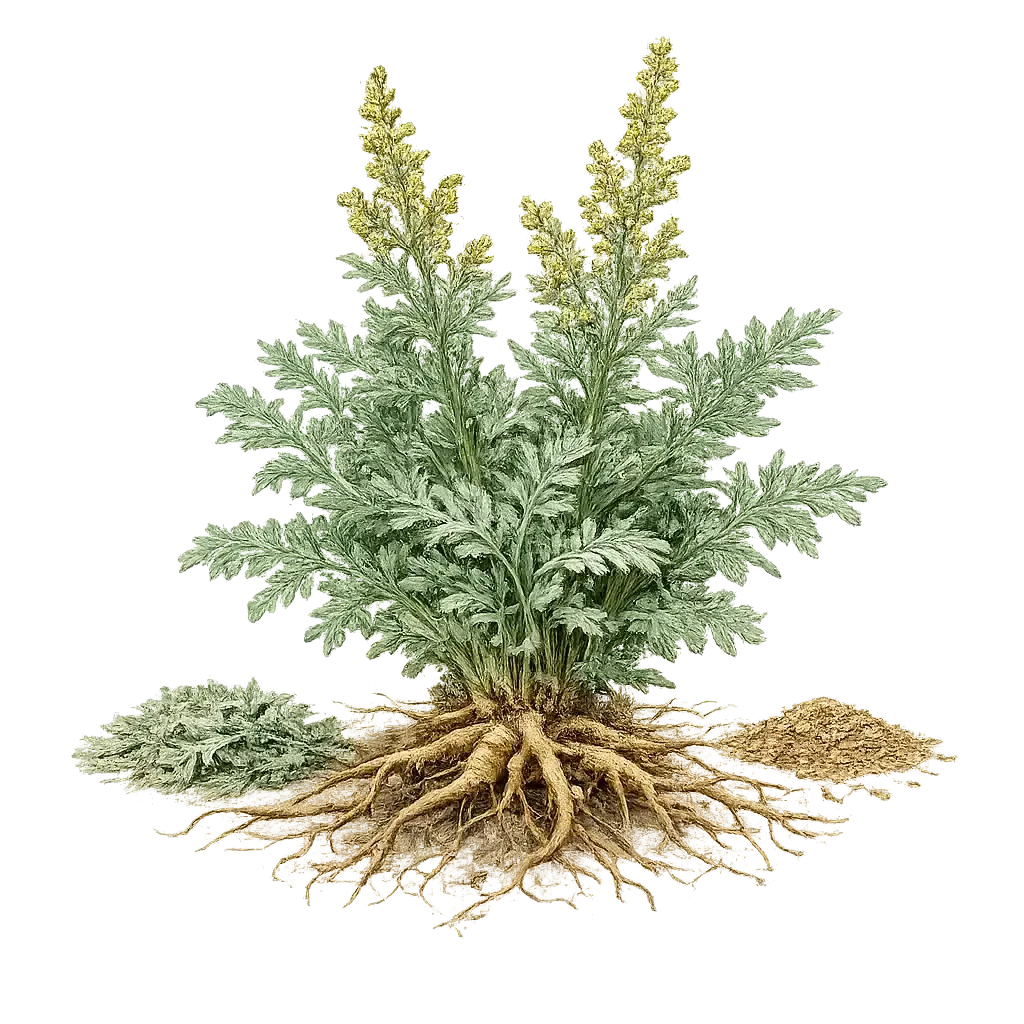
Written By Arthur Simitian
QUICK FACTS
Common Name
Wormwood, Common Wormwood, Green Ginger, Absinthe Wormwood
Scientific Name
Artemisia absinthium
Plant Type
Hardy perennial subshrub
Hardiness Zones
3 to 9
Sun Requirements
Full sun
Soil Type
Well-drained, dry to average; tolerates poor and rocky soils
Plant Height
2 to 4 feet
Spacing
18 to 24 inches
Uses
Medicinal, pest deterrent, companion plant, liqueur flavoring, livestock antiparasitic, natural insecticide
Wormwood is one of the most intensely bitter plants in the temperate herb garden and one of the most practically useful. The silver-gray, finely divided foliage is beautiful enough to earn it a place in any ornamental border, and the chemical potency of its principal compound, thujone, gives it a documented effectiveness in pest control, antiparasitic applications, and medicinal use that few other herbs can match for sheer concentrated biological activity. It is also the herb behind absinthe, the legendary and frequently misunderstood spirit of nineteenth-century European artistic culture. Understanding wormwood, using it correctly, and respecting its genuine toxicity at high doses separates a valuable homestead herb from a hazard.
Introduction
Artemisia absinthium is native to the dry, rocky, and disturbed soils of Europe, Central Asia, and northern Africa, growing naturally on roadsides, wasteland, and the margins of cultivated fields across a wide range that extends into naturalized populations throughout North America. It belongs to the same genus as sagebrush, Artemisia tridentata, and shares the silver-gray, aromatic, finely divided foliage and the intensely volatile aromatic chemistry that characterize the genus. Where sagebrush defines the western American landscape, wormwood has shaped the herbal and cultural landscape of Europe for several thousand years.
The name wormwood reflects its most ancient and most consistent traditional use: the expulsion of intestinal parasites. Absinthium, the species epithet, derives from the Greek word for unpleasant, a reference to the extreme bitterness that is the plant's most immediately obvious characteristic and also the chemical basis for many of its biological effects. The bitter compounds, principally absinthin and artabsin alongside the volatile oil thujone, stimulate digestive secretions, inhibit the feeding and reproduction of intestinal worms, and produce the intensely aromatic quality that makes wormwood effective as a repellent against flying and crawling insects.
On the homestead, wormwood earns its place in several ways. As a pest deterrent it is genuinely effective when used correctly as a companion plant and as a spray preparation. As an antiparasitic herb for livestock it has a long documented tradition in European small-farm practice. As a medicinal herb for digestive and fever applications it has a chemical profile that supports cautious, traditional-dose use. And as a structural, silver-foliaged ornamental it provides year-round visual interest that few other herbs in the temperate garden match.
How to Grow
Sun Requirements
Wormwood requires full sun and performs best with six or more hours of direct sunlight daily. Its native habitat on open, exposed, dry slopes and disturbed ground reflects a genuine requirement for maximum light, and in partial shade it grows laxly, loses the compact, mounding habit that makes it attractive in the herb garden, and develops reduced aromatic oil concentration in the foliage. The silver-gray color that gives wormwood its distinctive appearance, produced by the dense coating of fine hairs on the leaf surface, is most vivid and most visually effective on plants growing in full sun.
Soil Requirements
Wormwood is one of the most soil-tolerant herbs available and actively prefers the lean, dry, well-drained conditions that defeat more demanding plants. Rocky, gravelly, sandy, or poor clay soils with good drainage are all appropriate, and the plant performs reliably on the thin, alkaline soils of roadsides and disturbed ground that represent its natural habitat. Rich, heavily amended soil produces rank, floppy growth with reduced aromatic oil concentration and is genuinely counterproductive.
Good drainage is the single non-negotiable soil requirement. Wormwood does not tolerate persistently wet or waterlogged conditions and will decline reliably in heavy, poorly drained clay soils regardless of other conditions. Raised beds, sloped sites, and soils with natural coarse texture are all appropriate. pH tolerance is wide, from 5.5 to 8.0, and no soil amendment beyond ensuring adequate drainage is needed or beneficial at planting.
Water Needs
Established wormwood is highly drought tolerant and one of the most water-independent herbs in the temperate garden. Its deep root system and the moisture-conserving function of its silver-haired foliage, which reflects heat and reduces transpiration, allow it to survive extended summer drought without supplemental irrigation on appropriate soils.
During the first growing season, moderate watering supports root establishment. From the second year onward, supplemental irrigation is rarely needed in climates with occasional summer rainfall, and on the lean, well-drained soils that suit wormwood best, regular watering produces the lush, soft, less aromatic growth that is less useful and less attractive than the compact, intensely fragrant growth of properly drought-stressed plants.
Planting
Wormwood is most easily established from nursery transplants or divisions of established plants. Starting from seed is possible but slower, as germination is variable and seedlings develop slowly through their first season. Seeds require light for germination and are surface-sown in early spring without covering, kept consistently moist until germination occurs in fourteen to twenty-one days at 65 to 70 degrees Fahrenheit.
Division of established clumps in early spring or early autumn is the fastest and most reliable propagation method, producing transplant-ready divisions that establish quickly and flower in their first season. Stem cuttings taken in early summer root readily in a well-drained medium and are a practical way to multiply specific plants or to establish new plantings from an existing specimen.
Spring planting after the last frost is the standard approach for transplants and divisions. Wormwood establishes quickly in warm soil and typically begins filling its allotted space within the first growing season.
Plant Spacing
Plants should be spaced 18 to 24 inches apart to allow the mounding, spreading habit to develop fully and to ensure adequate air circulation that reduces the powdery mildew pressure that can affect plants in humid, crowded conditions. Wormwood spreads gradually by rhizomes and fills its space reliably over two to three seasons, and spacing that appears generous at planting is typically appropriate by the third year.
In companion planting applications along the borders of vegetable gardens or fruit tree understories, spacing at 18 inches creates an effective deterrent barrier more quickly while still allowing adequate air circulation between plants.
Companion Planting
Wormwood is one of the most discussed companion plants in traditional European kitchen garden practice, with a reputation for deterring a wide range of insect pests through the volatile oils released by its foliage. The scientific evidence for this deterrent effect is mixed and context-dependent: wormwood does not create a pest-free zone around it through proximity alone, but preparations made from its foliage have documented repellent activity against specific insects, and the plant's strong aromatic character appears to confuse or deter certain pests from locating host plants in its immediate vicinity.
Useful companion applications include:
Planted at the borders of brassica beds where the volatile oils may reduce cabbage white butterfly oviposition on nearby plants
Along fruit tree drip lines where a wormwood spray preparation has documented effectiveness against codling moth and aphids
Near carrot and parsnip beds where carrot fly deterrence is a traditional application with some supporting evidence
Around poultry runs and livestock housing where the aromatic foliage deters flies and mites in the immediate area
Important companion planting note: Wormwood releases allelopathic compounds from its roots and leaf litter that inhibit the germination and growth of some neighboring plants, particularly fennel, sage, caraway, and some brassicas when planted too closely. Keep wormwood at least 24 inches from directly adjacent herb and vegetable plantings and use it as a border plant rather than an interplanted companion.
Harvesting
Harvest Time
Aerial parts are harvested for medicinal and pest control preparations just before or during early flowering, typically in July and August in most temperate climates. At this stage the concentration of active compounds, including absinthin, artabsin, and thujone in the volatile oils, is at its peak before the plant's energy shifts into seed production. For ornamental foliage harvest used in dried arrangements, the silvery leaves can be cut at any point during the growing season.
Harvesting in the morning after the dew has dried produces the most aromatic and chemically potent material. The volatile oils that carry both the pest deterrent activity and the medicinal action begin to dissipate with heat, and morning harvests in cool conditions preserve more of these compounds than afternoon harvests in summer heat.
Harvest Method
Cut stems six to eight inches below the flower heads with sharp scissors or pruning shears, taking no more than one third of the plant's total growth in a single harvest to maintain vigor and ensure regrowth. Wear gloves during harvest as the volatile oils in the foliage can cause skin irritation in sensitive individuals, and wash hands thoroughly after handling. Avoid touching eyes or mouth during harvest.
Bundle harvested stems loosely and hang upside down to dry in a well-ventilated space out of direct sunlight. Wormwood dries readily and completely within one to two weeks at room temperature. The dried herb retains its silvery appearance and aromatic character well and stores usably for one to two years in airtight glass containers kept cool and dark.
How to Use
Pest Deterrent Uses
The most immediately practical homestead use of wormwood is as the basis for a topical pest deterrent spray applied to plants, soil surfaces, and the exteriors of livestock housing and poultry runs. A strong wormwood tea, prepared by simmering a generous handful of fresh or dried wormwood in a quart of water for twenty minutes, straining, cooling, and diluting to a full gallon, is applied as a foliar spray to affected plants or as a border spray around beds where pest pressure is a concern.
This preparation has documented repellent activity against aphids, caterpillars, whitefly, and several species of beetles when applied regularly, particularly as a preventive treatment rather than a response to established heavy infestations. Reapplication after rain is essential as the volatile compounds that carry the deterrent effect wash off readily.
Fresh wormwood sprigs tucked into grain storage bins deter grain weevils and moths effectively, and dried wormwood bundles hung in root cellars, pantries, and storage areas provide ongoing insect deterrence through the slow release of volatile oils from the dried foliage. This is one of the most practically useful and low-effort homestead applications of the plant.
Rubbing fresh wormwood foliage onto livestock coats, particularly around the ears, eyes, and under the belly where flies concentrate, provides temporary fly deterrence. The effect is not long-lasting but is safe, free, and immediately available when the plant is growing in the garden.
Medicinal Uses
Wormwood has a long and consistent documented history as a digestive bitter and antiparasitic herb across European, Mediterranean, and Middle Eastern traditional medicine. The extremely bitter taste of absinthin and artabsin stimulates the production of digestive bile and gastric secretions, improving digestion of fats and proteins, reducing bloating and sluggish digestion, and stimulating appetite in conditions of digestive debility.
As an antiparasitic herb for intestinal worms including roundworm, pinworm, and threadworm, wormwood preparations have a documented traditional use that modern research has investigated with some supporting results. The thujone and other volatile compounds in wormwood have demonstrated antiparasitic activity in laboratory settings, and the traditional practice of using wormwood tea or tincture as part of an antiparasitic protocol alongside other herbs such as black walnut hull and cloves has attracted significant popular interest in recent decades.
As a fever herb, wormwood shares the diaphoretic properties of several Artemisia species and has been used in European tradition as a warming, sweat-promoting remedy for fevers and chills, often combined with elderflower and peppermint for this purpose.
Livestock Antiparasitic Uses
European small-farm tradition has long incorporated wormwood into livestock management as an antiparasitic fodder herb, and the same compounds that make wormwood effective against human intestinal parasites have demonstrated activity against internal parasites in sheep, goats, and cattle in traditional practice and in some modern research.
Dried wormwood incorporated into hay at low rates, or fresh wormwood offered to livestock in limited quantities as a supplemental browse, is the traditional application. Quantity is critical: wormwood is a tonic and antiparasitic herb at low doses and toxic at high doses, and livestock access should be managed rather than unrestricted. Animals typically self-limit their intake of bitter herbs, but access to unlimited quantities is not appropriate.
Wormwood is also used in traditional European beekeeping as a fumigant to deter varroa mites and small hive beetles. Dried wormwood placed near hive entrances or used as smoker fuel is a historical practice that some modern natural beekeepers continue to employ.
Liqueur and Beverage Uses
Wormwood is the defining botanical ingredient of absinthe, the anise-flavored spirit that achieved both cultural prominence and regulatory banning across most of Europe and North America in the early twentieth century, and that has been rehabilitated and legally produced again since the early 2000s as the evidence for its alleged neurotoxicity at standard consumption doses has been reassessed. The thujone in wormwood was blamed for the hallucinogenic and addictive properties attributed to absinthe, but modern analysis of historic absinthe bottles and current research on thujone pharmacology has established that the levels present in properly made absinthe are far too low to produce the effects described, and that the problems associated with historical absinthe consumption were attributable primarily to high alcohol content and to adulterants in cheaply made products rather than to thujone specifically.
Wormwood is also a component of vermouth, the name of which derives directly from the German word Wermut meaning wormwood, and of several traditional European digestif bitters where its intense bitterness provides the characteristic bitter finish that defines the style.
Homestead-scale wormwood preparations for beverages are feasible but require attention to the thujone content of the final product and restraint in consumption. Wormwood tinctures and infused spirits made at home should be used in small quantities as flavoring and bitters agents rather than consumed in volume.
Storage
Dried wormwood stores well for one to two years in airtight glass containers kept cool, dry, and out of direct light. The bitter compounds and volatile oils that carry both the medicinal and pest deterrent activity degrade with heat, light, and prolonged air exposure, and storage conditions that minimize all three extend the useful shelf life significantly.
Wormwood tincture prepared in 60 percent alcohol stores for three to five years and is the most stable long-term medicinal preparation. It preserves the full spectrum of bitter compounds and volatile oils in a concentrated, shelf-stable form appropriate for occasional medicinal use.
Dried wormwood bundles for pantry and storage area insect deterrence retain useful volatile oil content for three to four months before the aromatic intensity fades enough to reduce effectiveness. Refreshing the bundles with a new harvest at the start of each storage season maintains continuous deterrent function.
Lifespan of the Plant
Wormwood is a reliably hardy perennial subshrub that returns from its woody base each spring in zones 3 through 9, with individual plants commonly persisting for six to ten years or more on appropriate well-drained sites. It develops an increasingly woody base with age, and the woody older stems are less productive in foliage and aromatic oil content than the current season's growth.
Hard pruning to six to eight inches above the ground in early spring each year, before new growth begins, prevents the plant from becoming woody and leggy, stimulates vigorous new growth from the base, and maintains the compact, mounding habit that is both most ornamentally attractive and most productive for harvest. Without annual pruning, wormwood becomes open and sprawling within three to four years and loses much of its visual and productive value.
Division every three to four years renews vigor in older clumps and produces new plants for expanding the planting or sharing. The combination of annual pruning and periodic division keeps wormwood productive and attractive indefinitely on appropriate sites.
Pros and Cons
Advantages
Striking silver-gray ornamental foliage providing year-round structural interest in the herb garden
Highly effective pest deterrent spray preparation for aphids, caterpillars, and beetles
Reliable dried herb insect deterrent for grain storage, pantries, and root cellars
Documented antiparasitic and digestive medicinal herb with a long and consistent traditional history
Extremely drought tolerant and low maintenance on well-drained soils
Hardy to zone 3, reliable across the full range of northern temperate climates
Useful livestock antiparasitic supplement at controlled low doses
Easy to propagate by division and cuttings, building large plantings at no cost
Virtually no pest or disease problems on well-sited plants
Limitations
Thujone is toxic in high doses and internal use requires strict restraint to traditional low doses
Contraindicated in pregnancy, breastfeeding, epilepsy, and kidney disease
Allelopathic root compounds inhibit growth of some neighboring plants if sited too closely
Requires annual hard pruning to maintain compact, productive habit
Foliage volatile oils can cause skin irritation in sensitive individuals during harvest
Not appropriate as unrestricted livestock browse due to cumulative toxicity at high intake
Pest deterrent spray requires regular reapplication and is preventive rather than curative
Bitter flavor limits culinary applications to flavoring and bitters preparations in small quantities
Common Problems
Wormwood on well-drained soil in full sun is remarkably free of serious pest and disease problems. The same volatile oils that make it useful as a pest deterrent protect the plant itself from most insect herbivores, and the dry, well-drained conditions it prefers are inhospitable to the fungal pathogens that affect many herbs in moist garden conditions.
Root rot from poorly drained or waterlogged soils is the most common cause of wormwood decline in cultivation and is entirely preventable by appropriate site selection. Symptoms are rapid wilting and blackening of the stem base despite apparently adequate moisture, and there is no recovery once root rot is established. Removing and discarding affected plants and improving drainage before replanting is the only response.
Powdery mildew occasionally affects the foliage in humid climates or on plants in still-air positions, producing the characteristic white coating on the leaf surface. On appropriately sited plants in full sun with good air circulation it is rarely serious. The annual hard pruning that should be part of wormwood management removes any overwintered mildew spores and gives the plant a clean start each season.
Legginess and loss of the compact mounding habit in the absence of annual pruning is the most common management problem and is resolved entirely by the early spring cut-back described in the lifespan section above.
Varieties
Artemisia absinthium is the primary medicinal and pest deterrent species and the one this guide focuses on. It is widely available from herb nurseries as transplants or seed and is the appropriate choice for all of the functional applications described above.
Artemisia absinthium Lambrook Silver is a named ornamental selection with particularly intense silver-white foliage and a more compact, tidier habit than the straight species. It retains the aromatic and chemical properties of the species while offering improved ornamental qualities, and is appropriate for growers who want the pest deterrent and medicinal value of wormwood alongside a more refined garden presence.
Artemisia pontica, Roman wormwood, is a shorter, more spreading relative with finer, more feathery silver foliage reaching only 12 to 18 inches. It is used historically in vermouth production and as a milder medicinal alternative to the full-strength common wormwood. It is more appropriate for the front of a border or ground cover application where the lower, spreading habit is an asset.
Artemisia ludoviciana, white sage or prairie sage, is a North American native Artemisia with similar silver foliage and strong aromatic character, often available from native plant nurseries as a companion or alternative to the European wormwood. It is somewhat less medicinally potent but shares many of the pest deterrent applications and is appropriate for growers within its native range who prefer a native species.
Safety summary: Wormwood is a potent herb that is safe and genuinely useful at traditional, low doses and genuinely hazardous at high or prolonged doses. Thujone accumulates in the nervous system with repeated high exposure and can cause seizures, liver damage, and neurological symptoms. Occasional medicinal use at standard herbal doses in healthy adults is supported by traditional practice. Continuous high-dose use is not. It is contraindicated in pregnancy, breastfeeding, epilepsy, kidney disease, and should not be used alongside pharmaceutical anticoagulants or seizure medications without medical guidance.
Final Thoughts
Wormwood is a plant that asks for respect rather than fear. It is not dangerous in the garden, not dangerous as a border plant or a companion plant or a dried bundle in the pantry, and not dangerous as an occasional medicinal herb used at traditional doses with ordinary prudence. What it is, genuinely and without exaggeration, is one of the most chemically active herbs in the temperate garden, and that activity is simultaneously its greatest practical value and the reason it deserves more careful attention than a culinary herb with no physiological effects.
Plant it in full sun on lean, dry soil. Cut it back hard each spring. Harvest it in the morning before the heat takes the oils. Use the spray on the aphids. Hang the bundles in the grain store. Make the tincture for the medicine cabinet. And appreciate the silver-gray foliage through every month of the growing season as one of the most ornamentally distinctive plants the temperate herb garden offers.