
Blenheim (Royal) Apricot Tree
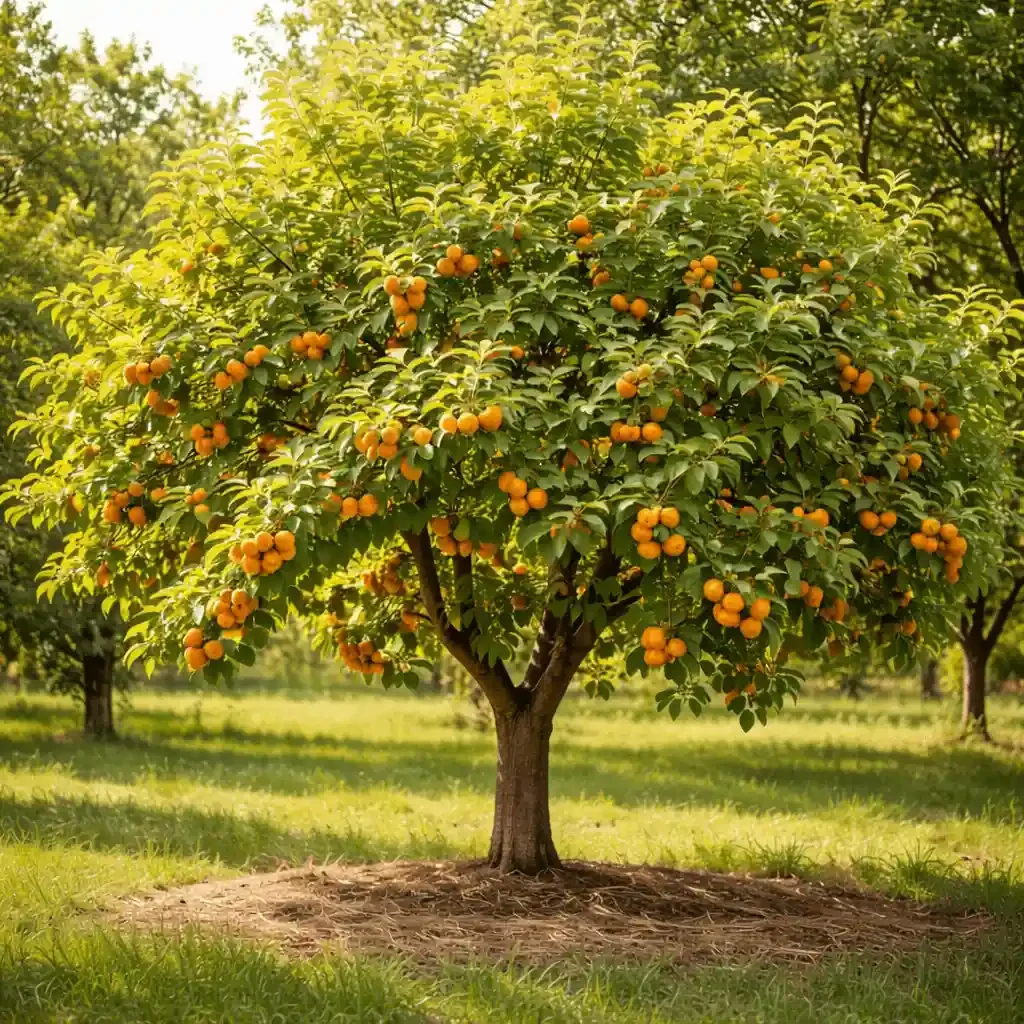
From Palace Gardens to California Orchards - The Apricot That Sets the Standard
The Blenheim apricot (Prunus armeniaca 'Blenheim'), also known as Royal, Royal Blenheim, or Shipley's Blenheim, stands as the gold standard by which all other apricots are judged - a heirloom variety so beloved that longtime orchardists call it their "desert-island apricot." With a complicated genealogy tracing back to two parallel origin stories in early 19th century Europe, Blenheim apricots emerged from either the Luxembourg Gardens of Paris (introduced around 1815 as "Royal") or from a seed planted at England's famous Blenheim Palace in the 1830s by the head gardener named Shipley. The variety arrived in California in the 1880s, brought by Spanish missionaries who planted it in mission gardens along the coast. By the 1920s, Blenheim orchards blanketed Santa Clara and Alameda counties and the Sacramento Valley - the intensely flavored fruit became California's preference in drying yards, famous for superior sun-drying qualities and high sugar content. The medium to large golden-orange fruits have a distinctive appearance - smooth, lightly fuzzy skin with crimson dots, often showing a characteristic slight green shoulder even when fully ripe. Blenheims ripen from the inside out, making harvest timing crucial and tricky. The freestone flesh is golden-orange, firm yet juicy, emitting an aromatic honeysuckle-like fragrance. The flavor is legendary: honey-sweet, fruity, and floral with tangy, subtly acidic, and tart nuances creating perfect balance. This all-purpose variety excels fresh, dried, canned, frozen, or baked. Despite its superior taste, Blenheim nearly disappeared from commercial production - the delicate fruit bruises easily, modern varieties offer better shipping characteristics and earlier harvest windows, and Turkish dried apricots undercut the dried fruit market. Today, Blenheim is listed on Slow Food International's Ark of Taste as an heirloom worth saving. The variety has found new life at farmers markets and in backyard orchards where distance shipping isn't required and flavor matters more than cosmetic perfection.
GROWING TIMELINE: FROM PLANTING TO HARVEST
Time to First Fruit
Grafted trees: 3-4 years to first harvest
Full production: 4-6 years after planting
Seedling trees: 5-8 years (but won't produce true-to-type fruit)
Blenheim apricots are moderately precocious, typically bearing their first meaningful crop in year 3-4 from grafted nursery stock. The trees establish quickly in appropriate climates and begin producing earlier than late-season varieties, though not as early as the very earliest cultivars.
Growth Rate
Blenheim exhibits moderate to moderately vigorous growth, typically adding 18-30 inches of new growth annually under ideal conditions. The tree develops quickly in youth, slowing as it matures. Growth rate varies considerably based on rootstock, soil fertility, and water availability - trees on vigorous rootstock in rich soil grow faster than those on semi-dwarf rootstock in leaner conditions.
Tree Lifespan
A well-maintained Blenheim apricot tree can remain productive for 20-40 years, with some exceptional trees exceeding 50 years. Productivity often declines after 25 years though the tree continues bearing. Peak production typically occurs between years 8-20. Apricots generally have shorter productive lifespans than apples or pears but longer than peaches.
Mature Tree Size
Standard (on vigorous rootstock): 15-20 feet tall, 15-20 feet wide
Semi-dwarf (on size-controlling rootstock): 12-15 feet tall, 12-15 feet wide
Dwarf (on dwarfing rootstock): 8-12 feet tall, 8-12 feet wide
Blenheim develops a spreading growth habit with a rounded crown. The tree is medium-sized for apricots - smaller than extremely vigorous varieties but larger than naturally compact cultivars. Size is highly influenced by rootstock selection and pruning practices. Through annual pruning, standard trees can be maintained at more manageable heights.
Annual Production
A mature Blenheim tree produces 50-150 pounds of apricots annually under favorable conditions, with exceptional trees in ideal climates producing 200+ pounds. Yields vary significantly based on tree age, size, weather during bloom (late frosts can devastate crops), thinning practices, and overall tree health. The variety is considered a good producer when conditions suit it, though the delicate fruit and disease susceptibility can affect consistency.
GROWING REQUIREMENTS
USDA Hardiness Zones
Zones 5-9, with Zones 7-9 being optimal for consistent production. Blenheim requires approximately 400-500 chill hours (temperatures below 45°F during winter dormancy). The tree itself is cold-hardy (surviving temperatures to -20°F or below when fully dormant), but Blenheim blooms very early in spring (February-March in most climates, sometimes even late January in warm areas), making blossoms highly susceptible to frost damage. This early bloom is Blenheim's greatest vulnerability - late spring frosts can destroy entire crops even in zones where the tree thrives. Site selection must consider frost patterns, cold air drainage, and bloom timing. Blenheim performs best in areas with warm, dry springs - the ideal climate features cold winters for chill accumulation, followed by reliable warmth during bloom and fruit set. Zones 5-6 require frost protection strategies.
Sunlight
Full sun is absolutely essential - minimum 6-8 hours of direct sunlight daily for optimal fruit production and flavor development. Blenheim tolerates partial shade (4-6 hours sun) and will still grow and produce some fruit, but yields decrease and flavor suffers. Southern or southeastern exposure maximizes early spring warmth during the critical bloom period and promotes even ripening. Good air circulation around the tree helps reduce disease pressure.
Soil Requirements
Blenheim thrives in well-drained loam or sandy loam soils with pH 6.0-7.5. The variety dislikes "wet feet" - like all apricots, Blenheim is extremely susceptible to root rot, crown diseases, and fungal infections in poorly draining conditions. Avoid heavy clay or compacted soils unless heavily amended for drainage. Blenheim tolerates moderately lean soils better than overly rich conditions - excessive nitrogen promotes vegetative growth at the expense of fruiting and increases disease susceptibility. Ideal soil is moderately fertile, well-structured, and drains freely. Sandy soils work well if supplemented with organic matter for water retention. The variety shows good adaptability to various soil types provided drainage is excellent.
Water Needs
Moderate water requirements once established. Blenheim needs consistent moisture during bloom through fruit development (February-June in California), with peak demand during fruit swell (April-May). Provide deep watering every 7-14 days during growing season depending on temperature, soil type, and rainfall. Mature trees need approximately 25-40 gallons per week during summer. The variety shows reasonable drought tolerance once established but fruit size and quality suffer significantly without adequate water during critical development periods. Reduce watering after harvest to slow vegetative growth and promote dormancy. Avoid overhead irrigation which promotes fungal diseases - drip irrigation or soaker hoses are ideal.
Pollination
Blenheim is self-fruitful (self-pollinating), setting good crops from its own pollen without requiring another apricot variety nearby. This makes Blenheim excellent for small gardens or situations where planting multiple trees isn't practical. However, cross-pollination from compatible apricot varieties (Goldcot, Moorpark, Tilton, etc.) can improve fruit set, increase yields, and sometimes enhance fruit size. Plant compatible pollinizers within 100 feet if available, though Blenheim produces well as a single tree. Honeybees are the primary pollinators - the early bloom (February-March) requires bees active during often-cool spring weather.
TREE APPEARANCE
Size and Form
Blenheim develops as a medium-sized deciduous tree with spreading growth habit and rounded, somewhat open crown. The branching pattern is moderately dense - not as thick as some varieties but not sparse. The tree has attractive architecture with horizontal to slightly upward-angling scaffold branches creating pleasant form. The trunk develops attractive gray-brown bark with vertical fissures and slight peeling as it matures. Branch structure responds well to open-vase or modified central leader training systems. The spreading habit means trees planted too close together can become crowded, so proper spacing (15-20 feet between trees) is important.
Leaves
Ovate (egg-shaped) leaves measuring 3-4 inches long with finely serrated edges emerge after bloom. The foliage is bright medium green, smooth, and attractive throughout the growing season. Leaf coverage is moderate - sufficient for shading developing fruit but open enough for good light penetration and air circulation. Leaves turn yellow-gold in fall before dropping, providing pleasant autumn color. The foliage is susceptible to various fungal diseases (including scab and shot hole) particularly in humid climates or wet springs, so monitoring and preventive care are important.
Blossoms
Blenheim produces abundant showy pinkish-white to pale pink flowers in very early spring - often blooming in late February to early March in California, sometimes even late January in warm microclimates. This extremely early bloom is both blessing (allows early harvest) and curse (high frost risk). Flowers are approximately 1 inch across with five delicate petals, appearing in clusters directly on branches before leaves emerge. The bloom is spectacular, creating clouds of pale pink blossoms that make Blenheim valuable as an ornamental tree beyond fruit production. Individual flowers last 5-7 days; total bloom period extends 10-14 days under favorable conditions. The early bloom means pollinating bees must be active during cooler spring weather than for later-blooming fruits.
Fruit
Blenheim produces medium to large apricots averaging 2-5 centimeters (approximately 1-2 inches) in diameter with round to oval shape and prominent seam down one side. The fruit has distinctive appearance: smooth, lightly fuzzy, taut skin in rich golden yellow-orange hue, sometimes blushed and speckled with crimson dots or red blush. A characteristic feature is the slight green shoulder or green tinge that persists even on ripe fruit - this is normal for Blenheim and doesn't indicate under-ripeness. The delicate skin bruises extremely easily - fruit can practically bruise from a glance, making commercial handling difficult. Blenheim ripens from the inside out, meaning the interior flesh may be fully ripe and sweet while the exterior still shows green tones. This inside-out ripening pattern requires pickers to learn the variety's specific cues. The golden-orange flesh is firm yet tender, dense, semi-aqueous, and very juicy. The pit is freestone (separates easily from flesh) and brown. Harvest typically occurs late June through early July in California (mid-season), with the entire crop ripening over a concentrated 2-3 week window.
FLAVOR AND CHARACTERISTICS
Blenheim apricots are legendary for their flavor - described by fruit enthusiasts as the standard by which all apricots are judged. The taste is intensely complex: honey-sweet and richly fruity with floral notes (honeysuckle-like fragrance carries through to flavor), balanced by tangy, bright acidity and subtle tart nuances that prevent cloying sweetness. The sugar-acid balance is considered perfect - sweet enough to satisfy but with sufficient tartness to create dimension and interest. The aroma is extraordinary - ripe Blenheims emit an intoxicating honeysuckle-like fragrance that fills rooms and announces their presence from across farmers market stalls.
The texture is firm yet juicy - not mushy or mealy but substantial with satisfying bite. The flesh is tender enough to melt on the tongue yet firm enough to maintain structure in cooking. When tree-ripened to perfection, Blenheims achieve an almost ethereal quality that makes people close their eyes and sigh - the experience many describe when asked about their "desert island apricot."
The high sugar content (Blenheims were favored historically for superior drying characteristics because they produced more dried fruit per pound of fresh fruit) means exceptional natural sweetness without added sugar. This intense flavor makes Blenheim ideal for preserves, jams, and other preparations where apricot flavor should shine. Fresh Blenheims taste remarkably different from standard supermarket apricots - the complexity and intensity reveal why heirloom fruit advocates fight to save this variety.
BENEFITS AND USES
Culinary Versatility - The All-Purpose Apricot
Blenheim excels in every possible use:
Fresh eating (superior when tree-ripened, incomparable flavor)
Drying (famous California dried apricots, intense flavor concentrated further)
Canning (holds shape well, famous for canning quality)
Freezing (maintains quality frozen for later use)
Preserves and jams (exceptional flavor, natural pectin)
Baking (pies, tarts, crisps, cobblers, pastries)
Sauces and chutneys (complex flavor creates sophisticated condiments)
Liqueurs and spirits (apricot brandy, infused vodka)
Breakfast applications (pancakes, waffles, yogurt, oatmeal)
Drying Excellence
Blenheim became California's dominant dried apricot variety because of superior characteristics:
High sugar content (more flavor per pound)
Good drying ratio (more dried fruit from each pound fresh)
Excellent flavor retention during drying (intensifies rather than fading)
Beautiful color when dried (golden-orange rather than brown)
Tender yet substantial texture when reconstituted
California Blenheim dried apricots became famous worldwide - the standard for quality dried apricots until cheaper Turkish imports dominated markets in late 20th century.
Historical and Cultural Significance
Blenheim represents California agricultural history:
Dominated Santa Clara Valley and Sacramento Valley orchards in 1920s
Supported thriving dried fruit industry during WWI era
Represents immigrant Spanish missionary contributions to California agriculture
Connects to English royalty (Blenheim Palace, birthplace of Winston Churchill)
Listed on Slow Food Ark of Taste as heirloom worth saving
Home Orchard Value
For backyard growers, Blenheim offers:
Self-fertile (single tree produces full crop)
Superior flavor impossible to find in stores
Moderate size fits typical home orchards
Responds well to pruning for size control
Beautiful ornamental value (spectacular spring bloom)
Multiple uses (fresh, dried, preserved)
Connection to agricultural heritage
STORAGE AND SHELF LIFE
Fresh Storage
Blenheim's delicate nature creates storage challenges. The thin skin and tendency to bruise mean fresh apricots have short shelf life - typically 3-7 days at room temperature, 1-2 weeks refrigerated. Handle with extreme care to avoid bruising. Store unwashed in single layers (not piled) in shallow containers. Refrigerate in crisper drawer for extended storage. The inside-out ripening pattern means fruit that appears slightly green may actually be perfectly ripe - go by aroma and gentle give rather than color alone.
Drying for Long-Term Storage
Drying is Blenheim's traditional preservation method:
Halve fruit and remove pits
Arrange cut-side up on drying racks
Sun-dry in hot, dry conditions (5-7 days) or use dehydrator (12-24 hours at 135°F)
Dried properly, Blenheims store 6-12 months in airtight containers
Home-dried Blenheims taste incomparably better than commercial dried apricots - the flavor concentration is remarkable.
Canning and Preserving
Blenheim's fame for canning quality remains well-deserved:
Holds shape during processing
Maintains color (doesn't brown excessively)
Flavor intensifies rather than fading
Works beautifully in jams, preserves, syrups
Canned Blenheims store 1-2 years in cool, dark conditions.
Freezing
Halved, pitted Blenheims freeze well:
Toss with lemon juice to prevent browning
Freeze in single layer on trays, then bag
Frozen apricots store 8-12 months
Use directly from frozen in baking or smoothies
POPULARITY AND CULTIVATION
Blenheim's story is one of rise, fall, and tentative revival. In its heyday (1920s-1960s), Blenheim dominated California apricot production, covering thousands of acres in Santa Clara and Alameda counties and the Sacramento Valley. The variety's superior drying characteristics made it economically valuable when dried fruits commanded good prices and cheap imports didn't exist.
Decline came from multiple directions:
Urban development - Silicon Valley and suburban sprawl converted prime apricot land to office parks and housing tracts by late 20th century
Turkish competition - Cheaper dried apricots from Turkey undercut California dried fruit markets
Handling difficulties - Blenheim's delicate nature made commercial fresh market sales nearly impossible; modern varieties bred for shipping durability displaced Blenheims
Earlier varieties - Growers seeking early market premiums planted earlier-ripening cultivars
Disease susceptibility - Blenheim's sensitivity to various fungal diseases and weather-related issues made it less reliable than modern resistant varieties
By 2000, Blenheim had nearly disappeared from commercial production. Slow Food International listed the variety on the Ark of Taste - their catalog of heirloom foods worth saving but endangered.
Revival has come through farmers markets and boutique growers where long-distance shipping isn't required and flavor commands premium prices. Customers willing to pay $8-12 per pound for "real" apricots create niche markets supporting small-scale Blenheim production. A few dedicated orchardists (particularly in California's interior valleys) maintain commercial Blenheim plantings, selling primarily at farmers markets and to specialty dried fruit companies.
Home orchard planting has increased as gardeners discover Blenheim's incomparable flavor. For backyard growers not concerned with shipping durability or commercial appearance, Blenheim offers everything desired: exceptional taste, self-fertility, moderate size, and multiple uses.
VARIETIES AND RELATED CULTIVARS
Blenheim's complicated genealogy creates naming confusion. Most experts believe "Royal" (from Luxembourg Gardens, Paris, ~1815) and "Blenheim" or "Shipley's Blenheim" (from Blenheim Palace, England, ~1830s) share bloodlines - possibly the English variety originated from a Royal seed. During WWI, California nurseries shipped trees indiscriminately without maintaining variety distinctions, and the names Royal and Blenheim have been used interchangeably ever since. Today, most sources consider them the same variety, using "Royal Blenheim" or "Blenheim (Royal)" to cover all bases.
Related California Apricot Varieties:
Tilton: Another California heritage variety, larger and firmer than Blenheim. Good for drying but less flavorful. More disease-resistant.
Moorpark: English heirloom (pre-dates Blenheim), larger fruit, good flavor but not as intense as Blenheim. Later ripening.
Goldcot: Modern variety, very cold-hardy, early ripening. Good flavor but doesn't achieve Blenheim's complexity.
Patterson: Modern California variety bred for fresh market. Large, firm, ships well. Decent flavor but lacks Blenheim's magic.
Katy: Very early ripening, self-fertile. Good for extending season but cannot match Blenheim quality.
None of these varieties achieve Blenheim's legendary flavor profile, though several offer practical advantages (disease resistance, shipping quality, earlier/later harvest).
FUN FACTS ABOUT BLENHEIM (ROYAL) APRICOT TREES
Churchill's Birth Fruit: Blenheim Palace in Oxfordshire, England - where one origin story places this apricot's development - is the birthplace of Sir Winston Churchill. The palace's head gardener Shipley supposedly planted the seed that became "Shipley's Blenheim" in the 1830s. The magnificent palace and its gardens were gifts to the Duke of Marlborough, Churchill's ancestor, and the apricot variety carries this royal heritage in every fruit.
The Inside-Out Apricot: Blenheim's distinctive ripening pattern - from inside out rather than outside in - creates harvesting challenges that contributed to commercial decline but actually indicates superior fruit quality. The characteristic green shoulder that persists even on ripe fruit confuses shoppers accustomed to uniformly orange apricots. Experienced Blenheim growers have learned to harvest by vivid color and intoxicating aroma rather than complete color change. This inside-out ripening means fruit picked too early by visual cues alone may be perfectly ripe internally - contributing to the variety's reputation for inconsistent quality among those unfamiliar with its quirks.
WWI Nursery Chaos: The Royal and Blenheim naming confusion traces directly to World War I. When European dried fruit imports stopped, California nurseries couldn't keep up with demand for apricot trees. In their haste to fill orders, they shipped whatever trees they had without maintaining variety integrity. "Royal" and "Blenheim" labels were used interchangeably, creating confusion that persists 100+ years later. Fruit historians still debate whether they're truly the same variety or closely related cousins - practical growers don't care and simply call them "Royal Blenheim" to cover all bases.
The $10 Apricot: At peak farmers market season, premium Blenheims command $8-12 per pound - roughly 10-15 times the price of supermarket apricots. A single perfect Blenheim from specialty growers can cost $2-3 per fruit. Customers pay these prices gladly because once someone tastes a tree-ripened Blenheim, returning to standard apricots feels like settling for cardboard. This premium pricing allows small-scale growers to maintain economically viable Blenheim orchards despite low yields and high labor requirements.
Bruises at a Glance: The description "fruit that practically bruises at a glance" isn't exaggeration - Blenheim's delicate skin and tender flesh mean that handling causing no visible marks on modern apricots creates obvious bruises on Blenheims. This extreme fragility doomed commercial fresh market sales (packing Blenheims in cushioned trays like peaches would make them prohibitively expensive) but actually indicates superior eating quality. Thick-skinned, firm varieties bred for shipping survive handling but sacrifice flavor and texture - the trade-off between durability and deliciousness.
Slow Food Ark Passenger: Blenheim Royal apricot is listed on Slow Food International's Ark of Taste - a catalog of heritage foods worth saving from extinction. Slow Food describes it as "an heirloom fruit that is worth saving for future generations" but acknowledges it's becoming "a backyard fruit... and the exclusive province of niche growers." The Ark listing raises awareness and connects Blenheim growers worldwide to preservation efforts, seed banks, and heritage fruit networks working to maintain genetic diversity.
Silicon Valley's Lost Orchards: Santa Clara Valley - now synonymous with Silicon Valley technology - was once known as the "Valley of Heart's Delight" and covered with Blenheim apricot orchards. Aerial photos from the 1920s-1940s show an ocean of apricot trees stretching from San Jose through Sunnyvale, Mountain View, and beyond. By 2000, almost all had been converted to office parks, tech campuses, and housing developments. A few remnant trees survive in parking lot medians and apartment complex landscaping - living monuments to the valley's agricultural past.
The Honeysuckle Aroma: Blenheim's distinctive honeysuckle-like fragrance is so pronounced that ripe fruits perfume entire rooms. Farmers market vendors report that Blenheim displays attract customers from across the market - people follow the aroma to discover the source. This intense fragrance results from high concentrations of aromatic compounds that also contribute to exceptional flavor. When home orchardists bring Blenheims indoors, family members often ask "what smells so good?" before seeing the fruit.
California's #1 for Decades: From the 1920s through 1960s, Blenheim was unquestionably California's most important apricot variety - the standard by which others were measured. The phrase "California dried apricots" specifically meant Blenheim dried fruits. International markets associated California with Blenheim quality. Modern apricot growers still reference Blenheim when describing flavor goals: "We're trying to approach Blenheim quality in a modern package." No higher praise exists in apricot breeding.
The Green Shoulder Mystery: Blenheim's characteristic green shoulder - the slight green tinge that persists near the stem even on fully ripe fruit - initially confused California growers accustomed to varieties that turned uniformly orange. Early marketing materials had to explain that "Blenheims are ripe when they still show some green." This trait actually indicates the variety's European heritage - many European apricots retain green tones at maturity. Today, informed consumers recognize the green shoulder as Blenheim's authentic signature, while supermarket shoppers reject perfectly ripe Blenheims as "unripe" - another reason the variety struggles in commercial fresh markets.
CONCLUSION: THE APRICOT WORTH SAVING
The Blenheim (Royal) apricot represents everything right and everything frustrating about heirloom fruit varieties. Right: incomparable flavor, rich history, beautiful trees, versatile uses, and the kind of eating experience that creates memories and converts casual fruit eaters into passionate advocates. Frustrating: delicate nature, disease susceptibility, harvest timing challenges, and economic realities that favor durable modern varieties over flavor excellence.
For home gardeners in USDA Zones 5-9 (with frost protection in Zone 5-6), Blenheim offers exceptional value IF you understand its requirements and limitations. The tree needs: full sun, excellent drainage, warm dry springs during bloom, protection from late frosts, regular disease monitoring, and careful harvest timing. In return, it provides: spectacular spring bloom, manageable size, self-fertile convenience, and fruit so delicious that people literally travel to farmers markets just to buy Blenheims during their brief season.
This is not the variety for casual gardeners wanting low-maintenance production - Blenheim demands attention and rewards careful stewardship. But for those willing to learn its quirks (inside-out ripening, green shoulders indicating maturity, extreme fragility), Blenheim delivers an apricot experience impossible to replicate with modern varieties. Tree-ripened Blenheims eaten fresh, sun-dried Blenheims in winter oatmeal, Blenheim jam on morning toast - these simple pleasures justify the variety's preservation.
The choice facing Blenheim growers mirrors larger questions about agriculture: Do we value flavor and heritage, or do we prioritize shipping durability and cosmetic perfection? Can small-scale, quality-focused production survive in markets dominated by efficiency and standardization? Blenheim's story suggests yes - IF enough people care enough to pay premium prices, shop at farmers markets, and plant backyard trees.
If you're planning a home orchard and want the apricot that orchardists call their "desert island fruit," plant Blenheim. Accept its quirks, learn its signals, protect it from frost, harvest at peak aroma, and discover why this heirloom variety is worth saving. One bite of a perfectly ripe, tree-ripened Blenheim will answer any remaining questions about whether flavor matters.
Ready to explore more fruit tree varieties? Download our Complete Tree Directory to discover heritage and modern cultivars perfect for your climate and needs.