
Beltsville Small White
Quick Overview
· Common Name: Beltsville Small White, Beltie
· Breed Type: Heritage Turkey
· Origin: Beltsville, Maryland, United States
· Primary Use: Meat, Exhibition
· Mature Tom Weight: 23 pounds
· Mature Hen Weight: 13 pounds
· Egg Production: Moderate, 80 to 100 eggs per year
· Egg Color: Cream to light brown with brown speckling
· Temperament: Calm, docile, friendly
· Conservation Status: Critical (Livestock Conservancy)
· Lifespan: 5 to 10 years
Breed History and Origin
The Beltsville Small White is one of the few turkey breeds developed entirely through deliberate scientific research rather than through the gradual refinement of existing farm stock. The breed was created at the USDA Agricultural Research Center in Beltsville, Maryland, during the 1930s and 1940s, at a time when American families increasingly wanted a turkey sized to fit a standard household oven and feed a small family without producing overwhelming quantities of leftovers. The large commercial turkey breeds of the era, while impressive in total meat production, were poorly suited to the smaller households and smaller refrigerators of mid-century American domestic life.
The development program drew on several existing breeds to achieve the desired combination of small mature size, white plumage that would produce a clean-dressed carcass without dark pinfeathers, good reproductive performance, and acceptable feed efficiency. Breeds including the White Holland, White Austrian, White Broad Breasted, Narragansett, and Wild Turkey all contributed genetics to the emerging Beltsville Small White line over the course of the development program. The American Poultry Association admitted the Beltsville Small White to the Standard of Perfection in 1951, marking its formal recognition as a distinct breed.
The breed enjoyed moderate commercial popularity through the 1950s as it matched well with the domestic market conditions of the period. However, as American food retail shifted progressively toward larger supermarket chains with industrial refrigeration capacity, and as consumer preference shifted toward larger birds and packaged parts rather than whole small turkeys, the commercial rationale for the Beltsville Small White's primary advantage disappeared. The broad-breasted commercial varieties that dominated supermarket shelves through the 1970s, 1980s, and beyond displaced heritage breeds across the board, and the Beltsville Small White suffered particularly because its one competitive advantage, small size for small households, had been made irrelevant by changing retail and consumer patterns.
By the 1970s the breed had declined dramatically from its mid-century population levels. Today it is listed as Critical by the Livestock Conservancy, meaning the estimated global population of breeding birds is fewer than 500, with fewer than five primary breeding flocks in existence. It represents one of the most endangered domesticated turkey breeds in the United States and one of the most significant conservation priorities in American heritage poultry.
Physical Characteristics
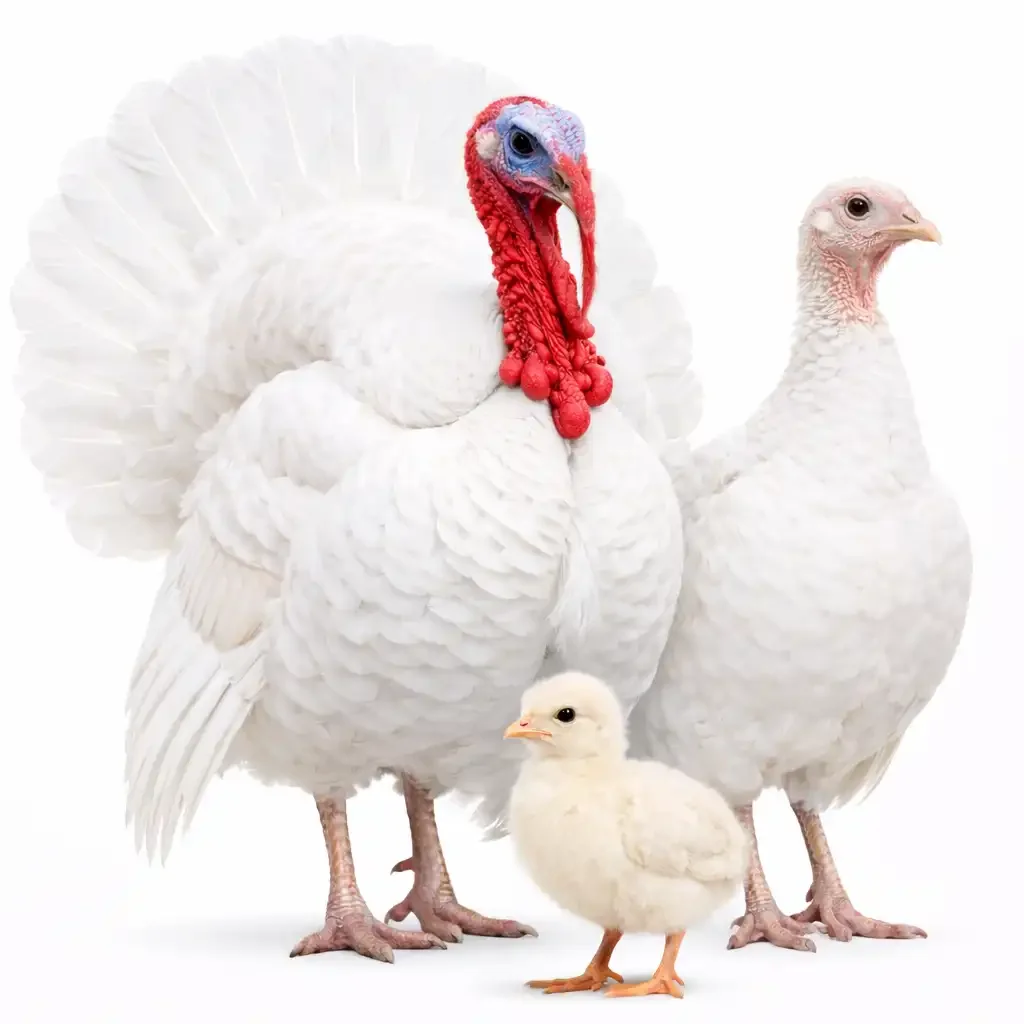
The Beltsville Small White is precisely what its name suggests: a small, completely white turkey with a compact, well-proportioned body that looks like a miniature version of the classic commercial Thanksgiving turkey. The plumage is pure white throughout, with no colored feathers or markings permitted in the breed standard. The skin is white, producing a clean, commercially attractive dressed carcass without the dark pinfeather staining that can affect breeds with darker plumage.
The body is broad and well-muscled relative to the bird's overall size, with a full, rounded breast, a level back, and a compact, tight-feathered appearance that gives the breed a neat, refined look distinct from the more angular profile of some heritage breeds. The head is predominantly red to bluish-white with the characteristic snood, wattles, and caruncles of the turkey species, which flush and change color with the bird's emotional state and hormonal condition.
Mature toms reach approximately 23 pounds and mature hens reach approximately 13 pounds, making the Beltsville Small White significantly lighter than most other heritage turkey breeds and dramatically lighter than broad-breasted commercial varieties. This size difference is the breed's most commercially significant characteristic. The legs are pink to flesh-colored, the beak is light horn colored, and the eyes are dark brown.
Temperament and Behavior
The Beltsville Small White is consistently described by breeders and homestead keepers as one of the calmest and most docile turkey breeds available. The breed was developed in a research environment where handling by scientists and technicians was routine and frequent, and the generations of selection within that low-stress, human-contact-rich environment appear to have contributed to a temperament that is notably comfortable around people. Beltsville Small Whites are reported to be curious, relatively easy to handle, and significantly less prone to the flightiness and aggression that can characterize some heritage turkey breeds.
Toms do display the characteristic strutting, gobbling, and territorial behavior of male turkeys during breeding season, and like all turkeys they can be reactive to unfamiliar stimuli and sudden movements. However, compared to breeds like the Black Spanish or some Narragansett lines, the Beltsville Small White is generally considered a beginner-friendly breed in terms of daily management temperament.
The breed forages actively when given range access, displaying the natural behavioral repertoire of heritage turkeys including active ground foraging, dust bathing, and social flock behaviors. They integrate reasonably well into mixed poultry operations with appropriate space and management.
Raising on a Homestead
Housing
Beltsville Small Whites require the same basic housing as all domestic turkeys. Provide a secure, predator-proof shelter with a minimum of 4 square feet of indoor floor space per bird, though 6 to 8 square feet per bird is preferable for the comfort and behavioral health of the flock. Turkeys prefer to roost, and providing sturdy roost bars at appropriate heights reduces stress and improves health outcomes. Nest boxes for laying hens should be provided at approximately one box per three to four hens, positioned lower than the roost bars to discourage hens from sleeping in the nest area.
Good ventilation is essential as respiratory health in turkeys is closely linked to air quality. Adequate ventilation without cold drafts is the management balance to achieve, particularly in cold winter climates where the temptation to close housing too tightly can create ammonia accumulation that damages respiratory tissue and predisposes birds to illness.
Feeding
Turkeys require higher protein in their diet than chickens, particularly during the brooding phase. Turkey poults should be started on a game bird or turkey starter feed with 28 to 30 percent protein for the first six to eight weeks. This higher protein content is essential for the rapid growth and feather development of young poults and cannot be substituted with standard chick starter which has insufficient protein for optimal turkey development.
After the starter phase, transition to a grower feed with 20 to 22 percent protein through approximately 14 to 16 weeks. Finishing birds can be moved to a finisher ration with 16 to 18 percent protein in the final weeks before processing. Breeding stock maintained through the off season can be fed a maintenance ration.
Fresh, clean water must be available at all times. Turkeys are sensitive to water deprivation and health declines quickly without consistent access to clean water.
Range and Foraging
One of the most important advantages of the Beltsville Small White over commercial broad-breasted varieties is its ability to reproduce naturally and range actively. Heritage breeds including the Beltsville Small White thrive with access to outdoor range where they can express natural foraging behaviors, consuming insects, plant material, and seeds that supplement their feed ration and contribute to the complex flavor profile that distinguishes heritage turkey meat.
A minimum of 25 to 30 square feet of outdoor space per bird is a reasonable starting guideline for range access, though more is always better for behavioral health and foraging opportunity.
Brooding Poults
Turkey poults are more delicate than chicks during the brooding phase and require careful management. Maintain brooder temperature at 95 to 100 degrees Fahrenheit for the first week, reducing by 5 degrees per week until the poults are fully feathered at approximately six to eight weeks. Poults are prone to a condition called starve-out where they fail to find feed and water after placement, and many experienced turkey keepers use colored marbles in the waterers and brightly colored feed to attract poults to the correct resources during the first critical days.
Meat and Production Value
The Beltsville Small White was developed specifically to produce a table bird of ideal size for a small to medium American household, and it fulfills this purpose with a dressed carcass weight of approximately 8 to 14 pounds depending on sex and finishing level. This size positions the Beltsville Small White as the ideal heritage turkey for families who want the flavor, texture, and experience of a genuine heritage turkey without the overwhelming quantity of a large heritage breed or commercial bird.
Heritage turkey meat, including that of the Beltsville Small White, is consistently described as richer, more complex, and more flavorful than commercial broad-breasted turkey meat. The longer growing period, active ranging lifestyle, and genetic heritage of breeds like the Beltsville Small White contribute to a higher proportion of dark meat, better fat distribution, and a depth of flavor that customers who have experienced it return for reliably each season.
The longer time to market weight compared to commercial varieties, typically 26 to 28 weeks to reach processing weight compared to 14 to 16 weeks for broad-breasted commercial birds, means that the cost of production per pound is higher. This is reflected in the premium pricing that heritage turkeys command in direct-to-consumer markets, with whole heritage turkeys regularly selling for six to ten dollars per pound live weight or dressed, compared to one to three dollars per pound for commercial alternatives. For homestead operations targeting the Thanksgiving and holiday direct-sales market, heritage turkey production represents one of the most financially rewarding annual livestock income opportunities available.
Conservation Status
The Beltsville Small White is listed as Critical by the Livestock Conservancy, which is the most urgent conservation category in their classification system. Critical status indicates that the estimated global population of registered breeding birds is fewer than 500, with fewer than five primary breeding flocks maintaining the breed. This makes the Beltsville Small White one of the rarest domesticated turkey breeds in existence and a significant conservation priority for anyone interested in the preservation of American agricultural heritage.
The critical status is the result of several decades of population decline driven by the displacement of heritage breeds from commercial markets, the shift of American turkey consumption toward industrial broad-breasted varieties, and the loss of the small household market niche that the breed was developed to serve. The fragility of the remaining gene pool means that homestead breeders who maintain quality breeding flocks and practice thoughtful selection make a genuinely meaningful contribution to the survival of a piece of American agricultural history that cannot be recreated if lost.
For homestead keepers who raise Beltsville Small Whites, registering with the Livestock Conservancy, maintaining accurate breeding records, and connecting with other breeders through the American Livestock Breeds Conservancy and American Poultry Association networks supports the broader conservation effort and helps maintain the genetic diversity within the surviving population.
Varieties and Color Patterns
The Beltsville Small White is a single-variety breed with no recognized color variants. The breed standard requires pure white plumage throughout, with no colored feathers or markings. The white plumage is the result of deliberate selection during the breed's development, chosen specifically because white-feathered birds produce a cleaner dressed carcass than dark-feathered breeds by eliminating the dark pinfeather staining that can affect the appearance of the skin on the dressed bird.
The uniformity of the white plumage is one of the breed's defining and non-negotiable characteristics. Birds showing colored feathers should not be used for breeding as this indicates genetic contamination or reversion and reduces conformity to the breed standard that is essential for conservation breeding.
Common Health Issues
Blackhead Disease
Histomoniasis, commonly called Blackhead Disease, is the most serious health threat to turkeys and a condition that every homestead turkey keeper must understand and manage proactively. The disease is caused by the protozoan parasite Histomonas meleagridis and transmitted primarily through the cecal worm Heterakis gallinarum, which is carried by chickens without causing disease in the carrier species but is lethal to turkeys exposed to it. Turkeys infected with Blackhead develop liver lesions and cecal damage that is rapidly fatal without treatment.
The most important preventive measure is avoiding shared ground between chickens and turkeys. Ground that has been used by chickens carries cecal worm eggs that can persist in the soil for years. Keeping turkeys on ground that has not been previously used by chickens is the most effective management approach. Herbal preventive protocols using thyme, oregano, and other antimicrobial botanicals are used by some homestead keepers as supportive preventives, though these should not be considered a substitute for appropriate ground management.
Respiratory Disease
Turkeys are particularly susceptible to respiratory diseases including Mycoplasma gallisepticum, Infectious Bronchitis, and Newcastle Disease. Good ventilation in housing, avoiding overcrowding, maintaining clean dry bedding, and acquiring birds from reputable sources with known health histories are the most effective preventive management practices. Birds showing respiratory symptoms including nasal discharge, coughing, sneezing, or labored breathing should be isolated immediately and assessed by a veterinarian.
Parasites
Internal parasites including roundworms, cecal worms, and capillary worms are common in turkey flocks with outdoor range access. Regular fecal monitoring and appropriate deworming protocols help manage internal parasite loads. External parasites including lice and mites can affect turkeys and should be monitored through regular handling and inspection of birds. Dust bathing areas provide birds with a natural external parasite management tool and should always be available.
Poult Mortality
Poult mortality in the first two weeks of life is the most commercially significant health challenge in heritage turkey production. The combination of starve-out risk, temperature sensitivity, and susceptibility to wet bedding and chilling makes the brooding phase the highest-risk period of the production cycle. Careful attention to brooder temperature, water and feed accessibility, dry bedding, and poult behavior during the first two weeks dramatically reduces losses.
FAQ
How big does a Beltsville Small White turkey get? Mature toms reach approximately 23 pounds and mature hens reach approximately 13 pounds. The dressed carcass weight for a finished bird is typically 8 to 14 pounds depending on sex and finishing. This is significantly smaller than most other heritage turkey breeds and dramatically smaller than commercial broad-breasted varieties, making the Beltsville Small White one of the best options for homesteads and families who want a heritage turkey in a manageable size.
Can Beltsville Small White turkeys reproduce naturally? Yes. Unlike commercial broad-breasted turkey varieties which have been selected so heavily for breast meat that natural mating is physically difficult or impossible, heritage breeds including the Beltsville Small White are fully capable of natural mating. This is one of the most important practical and conservation advantages of heritage breeds over commercial varieties. Maintaining the ability to reproduce without artificial insemination is essential for any homestead operation that wants to maintain a self-sustaining breeding flock.
How long does it take Beltsville Small White turkeys to reach processing weight? Beltsville Small White turkeys typically reach processing weight at approximately 26 to 28 weeks of age. This is significantly longer than commercial broad-breasted varieties which reach processing weight in 14 to 16 weeks. The longer growing period contributes to the complex flavor profile and better fat distribution that distinguishes heritage turkey meat but also means higher feed costs per pound of meat produced, which is reflected in the premium pricing heritage turkeys command in direct-to-consumer markets.
Is the Beltsville Small White a good breed for beginners? Yes, the Beltsville Small White is considered one of the more beginner-friendly heritage turkey breeds due to its notably calm and docile temperament. The breed's history of development in a research environment with regular human contact appears to have contributed to a comfort around people that makes daily management less challenging than some other heritage breeds. The manageable adult size also makes handling easier than working with larger heritage breeds. The primary challenges for beginners are the same as for any heritage turkey: the vulnerability of poults during brooding, the Blackhead Disease management requirements, and the longer time to market weight compared to commercial varieties.
Why is the Beltsville Small White so rare? The Beltsville Small White's rarity is a direct result of the shift in American turkey consumption toward large commercial broad-breasted varieties sold through supermarket channels, which eliminated the small-household market niche that the breed was specifically developed to serve. As American households got larger refrigerators and retail chains scaled up toward industrial production, the Beltsville Small White's advantage of producing a small, household-friendly carcass became commercially irrelevant. Heritage breed production declined broadly through the latter half of the twentieth century, and the Beltsville Small White suffered particularly because it lost the specific market advantage that had been the primary justification for its existence. The growing direct-to-consumer heritage food market of recent years represents the most significant opportunity for recovery of breeds like the Beltsville Small White.