
White Holland
Quick Overview
Common Name: White Holland, Dutch, Snowbird
Breed Type: Heritage Turkey
Origin: Holland, Europe; developed further in the United States
Primary Use: Meat, Exhibition
Mature Tom Weight: 36 pounds
Mature Hen Weight: 20 pounds
Egg Production: Moderate, 50 to 90 eggs per year
Egg Color: Cream to light brown with brown speckling
Temperament: Calm, docile, manageable
Conservation Status: Critical (Livestock Conservancy)
Lifespan: 5 to 10 years
Breed History and Origin
The White Holland is one of the oldest and most historically significant white turkey breeds in the Western world, with a lineage that traces back to the white domestic turkeys that European traders and explorers brought from the Americas to Europe in the early sixteenth century. The breed takes its name from Holland, where white turkeys were selectively developed and refined over several centuries before returning to North America with European settlers who valued the clean white plumage for the dressed carcass advantage it provided over darker-feathered breeds.
The history of the White Holland in the United States is closely intertwined with the broader history of American turkey production. The breed was one of the most widely kept commercial turkey varieties through the nineteenth century and into the early twentieth century, valued for its white plumage that produced a clean, pinfeather-free dressed carcass, its acceptable meat production, and its docile temperament that made management straightforward on the farm operations of the era. The American Poultry Association admitted the White Holland to the Standard of Perfection in 1874, cementing its status as an established and recognized breed in American poultry culture.
The breed's twentieth century history follows the same trajectory as most American heritage turkey breeds: a period of reasonable commercial relevance through the first half of the century followed by rapid displacement as the broad-breasted commercial varieties developed by industrial poultry science took over the mainstream market. The irony in the White Holland's case is particularly notable, as the Broad-Breasted White turkey that displaced it in commercial production was itself developed partly through crosses with White Holland genetics. The breed that contributed to the commercial standard was effectively rendered obsolete by the product of those contributions.
By the latter decades of the twentieth century, the White Holland had declined to genuinely endangered population levels. The Livestock Conservancy currently lists it as Critical, meaning the global population of registered breeding birds is fewer than 500. Finding authentic, standard-bred White Holland stock that has not been contaminated by crosses with Broad-Breasted White genetics is one of the primary challenges for breeders working to preserve the breed, as the physical similarity between the two makes visual identification unreliable without confirmed breeding records.
Physical Characteristics
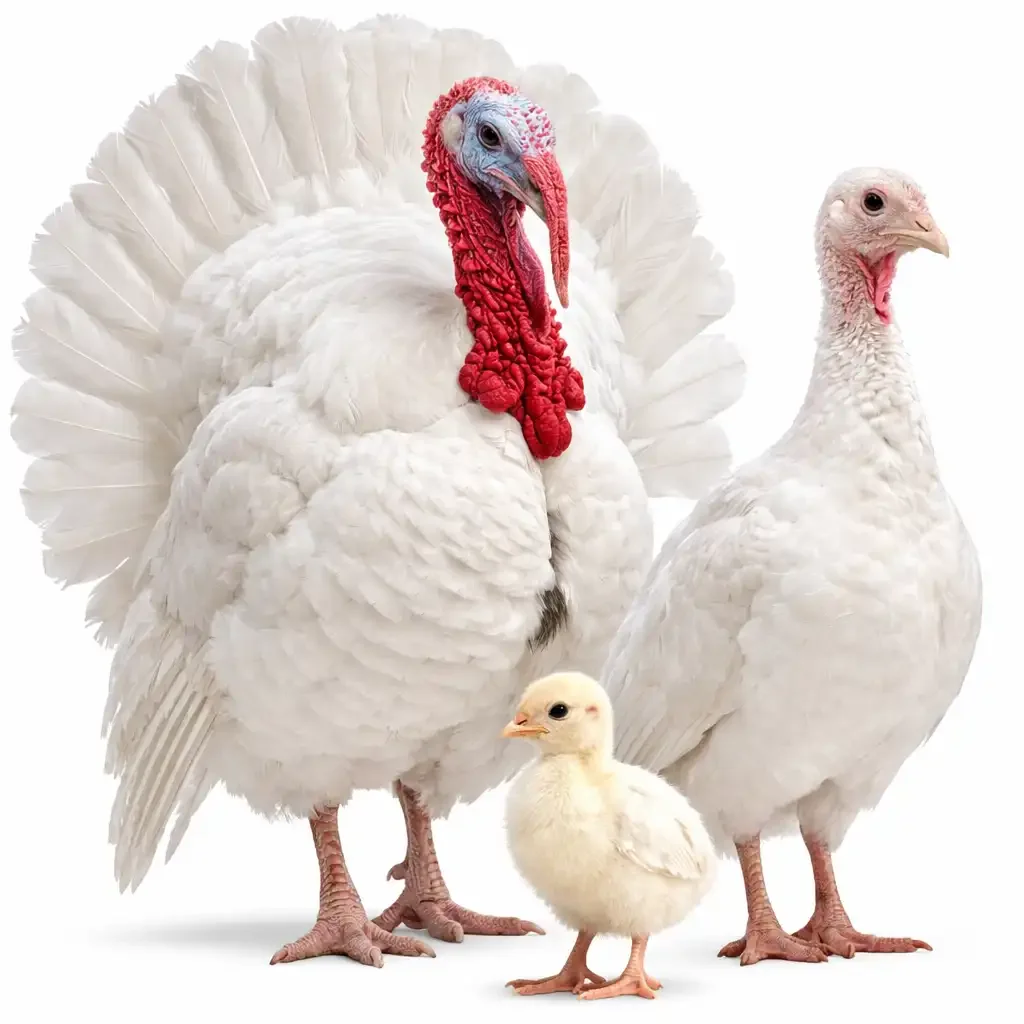
The White Holland is a large, stately, classically proportioned heritage turkey with pure white plumage throughout, a broad and well-muscled body, and the dignified bearing that characterizes the best examples of the American heritage turkey tradition. The breed is significantly larger than the Beltsville Small White while remaining smaller than the broad-breasted commercial varieties that share its white plumage, occupying a size range appropriate for larger family meals and more substantial commercial production.
The plumage is pure white from head to tail with no colored feathers or markings permitted under the breed standard. The white feathering produces the clean dressed carcass that historically made white-feathered turkeys commercially preferable to dark-feathered alternatives, as dark pinfeathers leave visible stubble marks on the skin of the dressed bird that reduce its retail appeal.
The head and facial skin display the classic turkey characteristics of red to bluish-white caruncles and wattles that change color with the bird's emotional and hormonal state. The beard of the tom is black and well-developed in mature birds. The legs and feet are pinkish to flesh-colored, the beak is horn-colored, and the eyes are dark brown. The body is well-rounded with a broad, deep breast, a level back, and a strong, well-proportioned frame that conveys the substance and depth of a genuine table bird.
Mature toms reach approximately 36 pounds and mature hens reach approximately 20 pounds, placing the White Holland in the large heritage turkey size category. These weights are for birds raised on traditional heritage schedules with outdoor range access and represent the full genetic potential of well-managed breeding stock.
Temperament and Behavior
The White Holland is consistently described by experienced breeders as one of the most docile and manageable of the heritage turkey breeds, a characterization that appears to have remained consistent through the centuries of the breed's development in both European and American contexts. The calm temperament may reflect in part the long association of white turkeys with European farmyard environments where regular human contact over many generations selected for birds that tolerated handling without excessive stress responses.
Toms display the full range of turkey behavioral characteristics including strutting, gobbling, and territorial displays during breeding season, but the White Holland tom is generally reported to be less aggressive toward handlers than some other heritage breeds. Hens are calm and reasonable mothers in appropriate brooding conditions. The overall management temperament of the breed makes it a reasonable choice for homestead keepers who are relatively new to turkey management, particularly given that its large size makes handling somewhat more challenging physically than smaller heritage breeds regardless of temperament.
The breed forages actively when given range access, displaying strong natural foraging instincts that contribute to the complex flavor of the meat. White Holland turkeys on range readily seek out insects, seeds, and plant material, and the combination of active ranging and heritage genetics produces the meat quality distinction that differentiates heritage turkey production from commercial alternatives.
Raising on a Homestead
Housing
White Holland turkeys require substantial housing given their large mature size. Provide a minimum of 6 square feet of indoor floor space per bird, with 8 to 10 square feet preferable for birds of this size category. Roost bars must be sturdy enough to support the weight of mature birds, which at 20 to 36 pounds place considerable stress on inadequate roost structures. Position roost bars at heights accessible to the birds but not so high that jumping down creates injury risk for large, heavy individuals.
Nest boxes for laying hens should be provided at one box per three to four hens, with dimensions appropriate for the large body size of the White Holland. Undersized nest boxes encourage nest-sharing, egg breakage, and laying outside the nest area. Bedding should be kept clean and dry as the respiratory health of turkeys is closely linked to air quality and litter management.
Feeding
Follow the same high-protein feeding program appropriate for all heritage turkey breeds. Turkey poults require 28 to 30 percent protein starter feed for the first six to eight weeks, transitioning to 20 to 22 percent protein grower feed through 14 to 16 weeks, and then to a finisher ration with 16 to 18 percent protein for the final growing period. Given the White Holland's large frame and substantial mature weight, adequate protein through the growing period is particularly important for developing the musculature that produces the carcass quality the breed is capable of delivering.
Breeding stock should receive a balanced maintenance ration with adequate vitamin E, vitamin A, and selenium, which support reproductive performance in heritage turkey breeding programs. Fresh, clean water available at all times is non-negotiable for turkey health at every life stage.
Range and Foraging
The White Holland is a heritage breed with full foraging capability, and outdoor range access is strongly recommended for any production program targeting the heritage turkey market. The breed's active foraging instinct means that birds on pasture will supplement their feed ration meaningfully with insects, seeds, and forage material, reducing feed costs and contributing to the flavor profile that distinguishes heritage turkey from commercial alternatives.
Provide a minimum of 25 to 30 square feet of outdoor space per bird, with rotational access to fresh pasture areas preferable to fixed range that becomes compacted and parasite-laden over time.
Brooding Poults
White Holland poults require the same careful brooding management as all heritage turkey poults. Maintain brooder temperature at 95 to 100 degrees Fahrenheit for the first week, reducing by 5 degrees per week until poults are fully feathered at approximately six to eight weeks. The starve-out risk during the first critical days of brooding is the most significant management challenge, and experienced turkey keepers use colored marbles in waterers and brightly colored feed to attract poults to the resources they need to survive the first week. Monitor poults closely during the first two weeks and remove any that appear listless or separated from the group, as early intervention gives the best chance of recovery.
Meat and Production Value
The White Holland has a long and distinguished history as a meat turkey, and the breed's large frame and good muscling produce carcasses of substantial weight and genuine commercial quality. A finished White Holland tom produces a dressed carcass in the range of 18 to 25 pounds, and a finished hen produces a dressed carcass of 12 to 16 pounds, placing the breed firmly in the large heritage turkey category that serves the premium Thanksgiving and holiday direct-sales market most effectively.
The white plumage of the White Holland produces a particularly clean, commercially attractive dressed carcass without dark pinfeather staining, which historically made white-feathered turkeys the preferred commercial choice and remains a practical advantage in direct-to-consumer sales where whole dressed bird presentation matters to customers. The clean white skin of a well-finished White Holland is one of the most visually appealing dressed carcass presentations available from any heritage breed.
Heritage turkey meat from breeds like the White Holland is consistently described as richer, more complex, and more deeply flavorful than commercial broad-breasted turkey meat. The longer growing period of 28 to 30 weeks, the active ranging lifestyle, and the heritage genetics all contribute to better fat distribution, higher proportion of dark meat, and a flavor depth that commands premium pricing in direct-to-consumer markets. Whole heritage turkeys sold directly from homestead operations regularly command six to ten dollars per pound, compared to one to three dollars per pound for commercial alternatives, making the premium heritage turkey market one of the most financially rewarding direct-sales opportunities available to homestead livestock operations.
Conservation Status
The White Holland is listed as Critical by the Livestock Conservancy, placing it among the most endangered domesticated turkey breeds in the United States. The Critical designation indicates a global population of registered breeding birds fewer than 500, with fewer than five primary breeding flocks maintaining the breed in a genetically meaningful way.
A particular conservation challenge specific to the White Holland is the difficulty of distinguishing authentic standard-bred White Holland stock from Broad-Breasted White turkeys, which share the same white plumage but are genetically and structurally very different birds. The Broad-Breasted White was developed partly through crosses with White Holland genetics and the resulting visual similarity makes unverified birds unreliable as conservation breeding stock. Homestead keepers serious about contributing to White Holland conservation should source birds from breeders with documented breeding records traceable to confirmed standard-bred stock and should maintain their own detailed records of breeding, hatch dates, and lineage.
Connecting with the Livestock Conservancy, the Society for the Preservation of Poultry Antiquities, and the American Poultry Association's heritage turkey breeder networks provides access to the most reliable sources of authentic White Holland breeding stock and connects individual homestead breeders with the broader community working to prevent the breed's extinction.
Varieties and Color Patterns
The White Holland is a single-variety breed with pure white plumage as the only accepted color pattern under the American Poultry Association Standard of Perfection. No colored feathers or markings are permitted in birds intended for exhibition or conservation breeding. The breed standard specifies a clean white throughout with pink to flesh-colored legs, a horn-colored beak, and dark brown eyes.
As noted in the conservation section, the visual similarity between authentic standard-bred White Holland turkeys and Broad-Breasted White commercial turkeys creates a significant identification challenge that makes breeding records and sourcing documentation essential for anyone working with this breed in a conservation context. Visual assessment alone is insufficient to distinguish the two with confidence, particularly in younger birds before the structural differences in body conformation become fully apparent.
Common Health Issues
Blackhead Disease
Blackhead Disease, caused by the protozoan Histomonas meleagridis and transmitted through the cecal worm carried by chickens, is the most serious and most consistently fatal health threat facing domestic turkey flocks. The liver damage caused by Blackhead progresses rapidly and is difficult to treat once established. The single most effective preventive measure is maintaining strict separation between turkey and chicken flocks and never allowing turkeys access to ground previously used by chickens. Ground contaminated with cecal worm eggs can remain infectious for years. Homestead keepers who want to raise both chickens and turkeys must manage them on completely separate ground with no opportunity for cross-contamination.
Respiratory Infections
The White Holland's large body size and the associated respiratory demands of supporting that physiology make respiratory health management particularly important. Good ventilation in housing, avoiding ammonia accumulation from wet litter, maintaining appropriate stocking density, and sourcing birds from health-tested flocks reduce the risk of Mycoplasma and other respiratory infections that can devastate turkey flocks. Any bird showing nasal discharge, labored breathing, or reduced activity should be isolated immediately and evaluated.
Leg and Joint Issues
Large heritage turkey breeds including the White Holland can develop leg and joint problems when managed inappropriately. Roost bars at excessive heights, slippery flooring, overcrowded conditions, or overly rapid growth from excessive protein create conditions where leg weakness and joint injury can occur. Providing appropriate roost heights, non-slip flooring, adequate space, and a feeding program that supports steady rather than accelerated growth reduces leg and joint health risks in large heritage breeds.
Parasites
Internal and external parasites are ongoing management considerations for any turkey flock with outdoor range access. Cecal worms, roundworms, and capillary worms are the most common internal parasites in heritage turkey production. Regular fecal examination and targeted deworming based on results maintains flock health without unnecessary chemical exposure. Lice and mites are the most common external parasites and should be monitored through regular handling and inspection. Dust bathing areas provide birds with a natural external parasite management tool.
Reproductive Challenges
Authentic standard-bred White Holland turkeys are fully capable of natural mating, which is one of the most important distinctions between this heritage breed and the Broad-Breasted White that shares its appearance. Maintaining the natural mating capability of White Holland breeding stock is both a conservation priority and a practical management advantage for homestead operations that want self-sustaining flocks. Toms should be evaluated for natural mating ability and only birds that demonstrate this capacity should be retained as breeding stock.
FAQ
How does the White Holland differ from the Broad-Breasted White? The White Holland and Broad-Breasted White share white plumage but are fundamentally different birds in structure, genetics, and production characteristics. The White Holland is a heritage breed with a proportionate, naturally balanced body structure that allows for natural mating, active ranging, and a longer, more complex flavor development period of 28 to 30 weeks. The Broad-Breasted White is a commercially developed variety selected for extreme breast muscle development that makes natural mating physically difficult or impossible, limits ranging ability, and reaches processing weight in 14 to 16 weeks but produces meat of significantly less flavor complexity. The Broad-Breasted White was developed partly from White Holland genetics, which creates the visual similarity between the two, but their practical characteristics are quite different.
Is the White Holland a good homestead turkey for beginners? Yes, the White Holland's docile temperament makes it one of the more approachable heritage turkey breeds for beginning homestead turkey keepers. The primary management challenges are those shared by all heritage turkey breeds, including Blackhead Disease prevention, careful poult brooding during the first two weeks, and the longer time to market weight compared to commercial varieties. The large mature size of the White Holland means that physical handling requires more effort than smaller heritage breeds, which is a practical consideration for keepers who anticipate needing to handle birds regularly.
Why is it so hard to find authentic White Holland turkeys? The difficulty of finding authentic standard-bred White Holland stock stems from two compounding factors. First, the overall heritage turkey population declined dramatically through the latter twentieth century as commercial production displaced all heritage breeds. Second, the visual similarity between the White Holland and the Broad-Breasted White turkey that shares its plumage color means that many birds sold as White Hollands are actually Broad-Breasted Whites or crosses, making unverified birds unreliable as conservation breeding stock. Sourcing from breeders registered with the Livestock Conservancy or the Society for the Preservation of Poultry Antiquities, with documented breeding records, is the most reliable approach to obtaining authentic stock.
What is the ideal market for White Holland turkeys? The White Holland is ideally suited to the premium direct-to-consumer heritage turkey market, particularly the Thanksgiving and Christmas holiday window when consumer demand for large, high-quality whole turkeys is strongest. The combination of large dressed carcass weight, clean white pinfeather-free presentation, genuine heritage flavor profile, and the conservation story that accompanies authentic rare breed production creates a premium product that commands six to ten dollars per pound in direct farm sales. Building a customer list early in the production year and taking advance deposits for Thanksgiving birds is the standard business model for heritage turkey homestead operations.
How many eggs does a White Holland hen lay? White Holland hens are moderate egg producers, typically laying 50 to 90 eggs per year under good management conditions. Turkey eggs are larger than chicken eggs with a rich, flavorful yolk that makes them excellent for culinary use wherever chicken eggs are used. However, in conservation breeding programs the priority is maintaining the hen's reproductive energy for producing hatching eggs and raising poults rather than maximizing egg production for table use. Homestead keepers focused on conservation breeding should collect eggs for incubation during the breeding season rather than diverting reproductive capacity toward table egg production.