
Honeybees
The Complete Homesteader's Guide
Overview
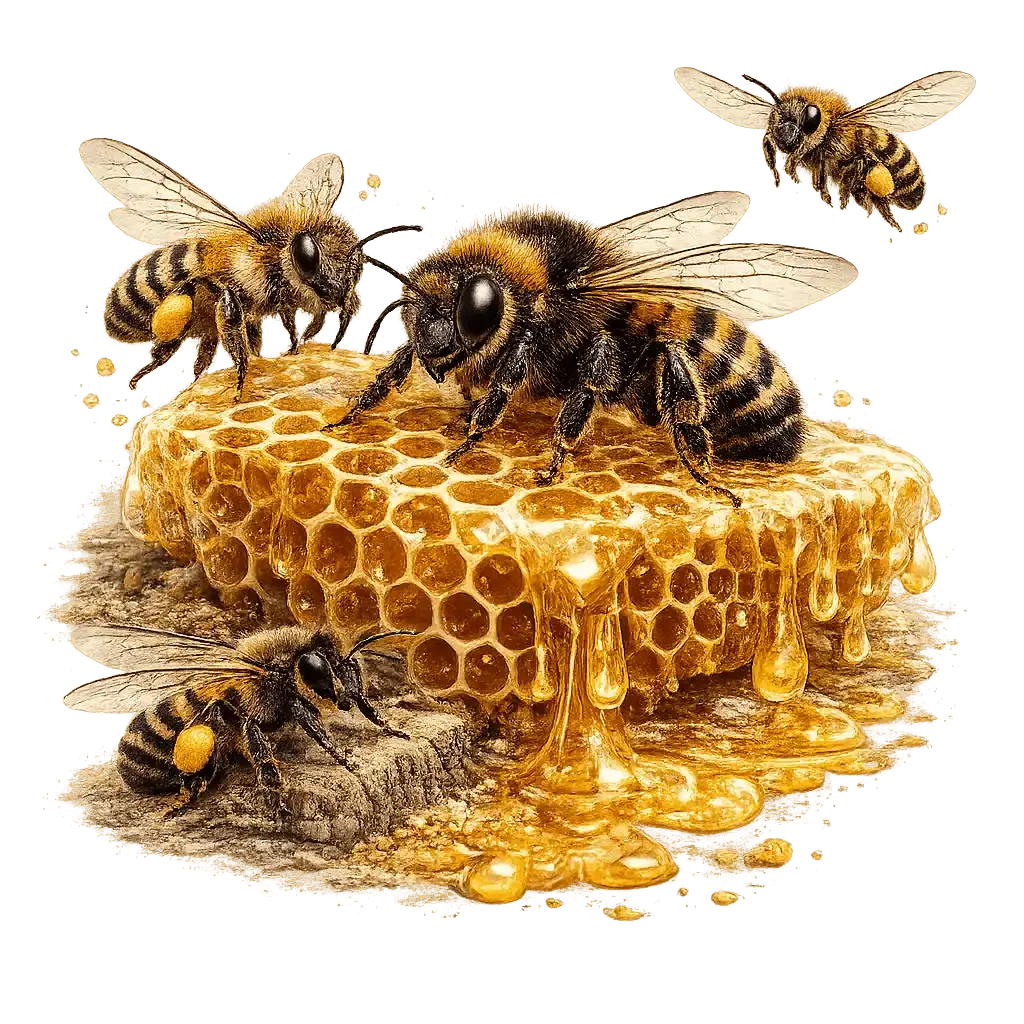
Honeybees (Apis mellifera) are the world's most famous and economically important pollinators, domesticated for thousands of years for their remarkable honey production, pollination services, and beeswax. Unlike solitary native bees, honeybees live in large, perennial colonies of 20,000-60,000 individuals with a sophisticated social structure, advanced communication systems, and the ability to survive harsh winters as a complete colony. Originally from Europe, Africa, and Asia, honeybees have been introduced worldwide and are now the backbone of commercial agriculture, pollinating one-third of the food crops humans consume. For homesteaders, honeybees offer unique opportunities not available with other bee species: harvestable honey and wax, manageable colonies, year-round presence, and the ability to provide targeted pollination services. However, beekeeping requires equipment, knowledge, regular management, and commitment that goes far beyond simply "supporting pollinators." This guide provides comprehensive information for homesteaders considering whether to keep honeybees, how to support wild honeybees, or how to understand their role in the broader pollinator ecosystem.
Flight Range & Foraging Distance
Honeybees have among the longest foraging ranges of any bee species, covering vast territories from their hives.
Typical Foraging Range: 1-2 miles (1.6-3.2 km) radius from hive when adequate forage is available nearby
Common Working Distance: 600-800 meters (0.4-0.5 miles) most frequent in studies
Extended Range: Can forage 3-5 miles (5-8 km) when necessary
Maximum Distance: Up to 6-10 miles (10-16 km) documented in extreme cases, though rare
Effective Range for Honey Production: 2-3 miles is optimal; beyond 4 miles, energy cost exceeds benefit
Mean Distance in Studies: Ranges from 534 meters to 5.5 km depending on forage availability
Median Distance: Often around 2.3 km in temperate forests
Coverage Area: A 2-mile radius covers approximately 8,000 acres (12.5 square miles)
Scout Bees: Small percentage fly longer distances (6+ miles) to locate new forage
Patchy Environment: Will fly much farther (6+ km median) when prime forage is distant but concentrated
Urban vs. Rural: Tend to forage shorter distances in urban areas (745-1,413 m) with diverse nearby resources
Floral Fidelity: Prefer large patches of single flower species; will fly farther for concentrated blooms than scattered ones
Flight Speed & Capabilities
Flight Speed: 15-20 mph (24-32 km/h) when flying to and from forage
Slower When Loaded: 12 mph when carrying full nectar/pollen loads
Wing Beats: 200-230 beats per second creating distinctive buzzing sound
Flight Height: Typically 15-115 feet for long distances; lower near flowers
Navigation: Use sun position, polarized light, landmarks, magnetic field, and scent for navigation
Waggle Dance: Communicate precise direction and distance to food sources through specialized dance
Homestead Implications: Honeybees can service a much larger area than bumblebees or carpenter bees. A single hive can effectively pollinate crops within a 2-mile radius, covering thousands of acres. This makes them ideal for larger homesteads but also means you cannot control exactly what they forage on (important for "organic honey" claims). Placement within 2 miles of target crops is critical for effective pollination.
What Honeybees Eat & Drink
Primary Diet: Nectar and pollen from flowering plants
Nectar Purpose: Source of carbohydrates (sugars); converted to honey for long-term storage
Pollen Purpose: Protein, fats, vitamins, and minerals; essential for brood rearing
Honey Production: Convert nectar to honey by evaporating water content from 70-80% down to 17-18%
Honey Storage: Store 60-100+ pounds of honey annually for winter survival and colony expansion
Pollen Storage: Collect and store pollen in comb cells as "bee bread" for feeding larvae
Water Collection: Bring 1-2 gallons of water daily to hive for cooling, humidity control, diluting honey
Propolis (Tree Resin): Collect sticky resins from trees to seal hive cracks and sterilize interior
Consumption Rates: Colony consumes 100-200 pounds honey per year; 50-100 pounds pollen per year
Forager Efficiency: Single bee visits 50-100 flowers per trip; makes 10+ trips per day
Nectar Load: Can carry 40 mg nectar (about half body weight) per trip
Pollen Load: Carries 10-30 mg pollen in specialized "pollen baskets" on hind legs
Favorite Nectar & Pollen Sources
Trees:
Fruit trees (apple, cherry, pear, plum, peach)
Maples, willows, poplars (early spring)
Black locust, tulip poplar, basswood/linden
Eucalyptus (in appropriate climates)
Crops:
Clover (white, red, alsike)
Alfalfa, buckwheat, sunflowers
Canola/rapeseed, soybeans
Cucumbers, squash, melons
Garden Flowers:
Lavender, borage, phacelia
Sunflowers, zinnias, cosmos
Asters, goldenrod, sedum
Salvia, catmint, bee balm
Avoid:
Pesticide-treated flowers
Flowers with no nectar (some hybrid ornamentals)
Toxic plants (rhododendron, oleander can harm bees)
Homestead Value: Honeybees are generalists and will forage on nearly any available flowers. They exhibit "floral fidelity," preferring to work large patches of the same flower species rather than scattered diverse plantings. This makes them excellent for monoculture crops but sometimes less effective in diverse pollinator gardens compared to native bees.
Temperature Tolerance & Weather Conditions
Honeybees have moderate temperature tolerance with colony-level thermoregulation abilities.
Cold Tolerance & Winter Survival
Minimum Foraging Temperature: 55°F (13°C) for initial activity; full foraging at 66°F (19°C)
Cold Weather Flight: Some foraging down to 50°F (10°C) on sunny days, but limited
Winter Cluster: Form tight ball maintaining 92-97°F (33-36°C) core temperature even when outside temperatures below freezing
Cluster Behavior: Bees on outside rotate to center; generate heat through muscle vibrations
Winter Survival: Can survive months of sub-zero temperatures if colony has sufficient honey stores and bee population
Overwintering Requirements: Need 60-90 pounds stored honey, strong population (10,000-20,000 bees)
Brood Temperature: Maintain brood nest at precise 93-95°F (34-35°C) for proper larval development
Heat Generation: "Heater bees" warm brood by inserting abdomens into empty cells and vibrating muscles
Heat Tolerance & Cooling
Maximum Tolerable: Colony can handle very high temperatures with proper cooling mechanisms
Foraging Limit: Typically reduce or cease foraging when temperatures exceed 95-100°F
Evaporative Cooling: Spread water droplets in hive; bees fan wings to evaporate water and cool interior
Fanning Behavior: Hundreds of workers fan at hive entrance to circulate air
Wing Fanning: Can reduce hive temperature by 10-15°F through evaporative cooling
Bearding: Bees cluster outside hive entrance during extreme heat to reduce internal heat load
Water Collection: Dramatically increase water foraging during heat waves for cooling
Weather Sensitivity
Rain: Generally won't forage in heavy rain; light drizzle may not deter them
Wind: Strong winds (20+ mph) significantly reduce or stop foraging
Overcast: Will forage in cloudy conditions though activity reduced
Storms: Return to hive when storms approach; can sense barometric pressure changes
Frost: Early morning frost doesn't prevent foraging once temperature rises
Homestead Consideration: Honeybees are less cold-tolerant than bumblebees (which forage at 43°F) but far better at surviving winter as a colony. They're more heat-sensitive than carpenter bees but have sophisticated colony-level cooling. Their moderate temperature tolerance means they work best in temperate climates with spring-summer-fall bloom periods, requiring beekeeper intervention (feeding, insulation) in extreme climates.
Honey & Wax Production: The Harvestable Products
Unlike all other bees in this guide series, honeybees produce substantial harvestable products.
Honey Production
Annual Production: A strong colony produces 60-100+ pounds of honey per year
Surplus for Harvest: Beekeepers can harvest 30-60 pounds while leaving 60-90 pounds for bees' winter survival
Conversion Rate: Bees visit 2 million flowers to make 1 pound of honey
Production Process: Collect nectar, add enzymes, evaporate water from 70% to 17%, cap with wax
Honey Composition: 17-18% water, 76-80% sugars (fructose, glucose), enzymes, vitamins, minerals
Storage: Honey stored in hexagonal wax comb cells, capped when water content low enough
Shelf Life: Properly stored honey never spoils (found in ancient Egyptian tombs still edible)
Varietal Honey: Color, flavor, texture vary by nectar source (clover, wildflower, buckwheat, orange blossom, etc.)
Honey Harvest Timing
First Year: Generally do NOT harvest from first-year colonies (need honey for winter establishment)
Established Colonies: Harvest late spring through fall depending on region
Multiple Harvests: May harvest 2-3 times per season in warm climates with long bloom periods
Regional Variation: Single late-summer harvest in cold climates; year-round in tropical areas
Beeswax Production
Annual Production: Colony produces 1-2 pounds of new wax per year
Wax Source: Young worker bees (12-18 days old) secrete wax from abdominal glands
Wax Uses: Building comb, capping honey cells, sealing cracks
Harvest Method: Collect cappings from honey extraction; melt down old comb
Beeswax Products: Candles, cosmetics, wood polish, waterproofing, art supplies
Wax Value: Worth $5-15 per pound; valuable byproduct of beekeeping
Other Products
Propolis: Sticky tree resin bees collect and use as hive sealant and antibacterial coating; harvested for medicinal tinctures
Bee Pollen: Can be collected in pollen traps; sold as nutritional supplement ($20-40/pound)
Royal Jelly: Special food for queen larvae; difficult to harvest; high-value product ($100+/pound)
Bees Themselves: Package bees, nucs, queens sold to other beekeepers
Homestead Value: Honey and wax production is THE primary reason most homesteaders keep honeybees. A modest 2-hive operation can produce 60-120 pounds of honey and 2-4 pounds of wax annually - worth $300-800 in products plus pollination services. However, reaching this production requires proper management, equipment, and avoiding common pitfalls that result in colony losses.
Pollination Services: Commercial & Homestead Value
Beyond honey, honeybees provide essential pollination - their original value to agriculture.
Pollination Advantages
Huge Numbers: 20,000-60,000 workers per colony means massive pollination force
Manageable: Can be moved to crops when needed (commercial pollination)
Predictable: Colonies can be purchased, split, maintained at desired population levels
Floral Fidelity: Work single crop intensively rather than flitting between species
Extended Season: Work from early spring through late fall in most climates
Commercial Value: $200+ billion global agricultural value from honeybee pollination
Almond Pollination: Almonds require 1.5-2 million honeybee colonies for pollination
Crop Diversity: Pollinate 1/3 of human food crops
Critical Crops Depending on Honeybee Pollination
Tree Fruits: Apples, cherries, almonds, apricots, plums, peaches
Berries: Blueberries, blackberries, raspberries, strawberries
Vine Crops: Cucumbers, melons, squash, pumpkins (though native bees also important)
Seed Crops: Alfalfa, clover, sunflower, canola
Orchard Nuts: Almonds (critically dependent), pecans, macadamia
Others: Avocados, kiwis, many vegetables
Limitations Compared to Native Bees
No Buzz Pollination: Cannot pollinate tomatoes, peppers, eggplants, blueberries as effectively as bumblebees/carpenter bees
Temperature: Less effective in very cold or very hot weather than specialists
Some Flower Types: Long-tongued bumblebees better at deep tubular flowers
Early Spring: Slower to build up than overwintered native bee queens
Evening Pollination: Cease foraging earlier than some native species
Homestead Value: For homesteaders with fruit trees, melons, cucumbers, berries, and seed crops, honeybees are exceptional pollinators. However, for vegetable gardens heavy on tomatoes, peppers, and eggplants, native bumblebees and carpenter bees may be more valuable. The ideal homestead has both honeybees AND native pollinator habitat for comprehensive coverage.
Social Structure: Complex Superorganism
Honeybees have the most sophisticated social organization of any bee species - a true superorganism.
Colony Structure
Perennial Colony: Unlike bumblebees, the colony persists year-round, surviving multiple years
Population: 20,000-60,000 workers in peak season; 10,000-20,000 in winter
Three Castes: Queen (1), workers (female, thousands), drones (male, hundreds during breeding season)
Division of Labor: Age-based task progression from house bees to foragers
Cooperative: No individual can survive alone; colony functions as single organism
The Queen
Single Reproductive Female: Only one mated queen per healthy colony
Lifespan: 2-5 years (some up to 7 years)
Egg Laying: Lays 1,500-2,000 eggs per day during peak season
Pheromone Production: Produces "queen substance" controlling worker behavior and suppressing reproduction
Mating: Mates once in lifetime during "mating flight" with 10-20 drones
Sperm Storage: Stores 5-7 million sperm for entire lifetime
Replacement: Colony raises new queen if old queen dies, fails, or during swarming
Size: Largest bee in hive; distinctive long abdomen
Workers (Non-Reproductive Females)
Population: 95-99% of colony
Lifespan: 5-7 weeks in summer (constantly replaced); 4-6 months in winter (overwinter bees)
Tasks by Age (typical progression):
Days 1-3: Cell cleaning
Days 3-12: Nurse bee (feed larvae)
Days 12-18: Wax production, comb building
Days 18-21: Guard duty at hive entrance
Days 21+: Forager (collect nectar, pollen, water, propolis)
Flexibility: Can switch tasks based on colony needs
Winter Bees: Fall-born workers live months longer, have different physiology
Sting: Can sting but die afterward (barbed stinger tears from abdomen)
Drones (Males)
Purpose: Mate with virgin queens from other colonies
Population: 300-3,000 during mating season (spring/summer)
Lifespan: 4-8 weeks
No Sting: Males cannot sting (no stinger)
No Foraging: Don't collect food; fed by workers
Mating Flight: Fly to drone congregation areas (DCAs) to mate with queens
Death After Mating: Die immediately after successful mating
Fall Eviction: Workers expel all drones before winter (consume resources without contributing)
Size: Larger, bulkier than workers; huge eyes
Communication & Decision-Making
Waggle Dance: Communicates direction and distance to food sources
Round Dance: Indicates food source within 50 meters of hive
Pheromones: Chemical signals coordinate colony behavior
Queen Pheromone: Signals queen's health and presence
Alarm Pheromone: Released when bee stings; recruits others to defend
Collective Intelligence: Colony makes decisions (swarming location, new forage) through consensus
Annual Cycle
Winter (December-February):
Cluster in tight ball; minimal activity
Queen stops laying; no brood present
Consume stored honey for energy and heat
Population: 10,000-20,000 bees
Spring (March-May):
Queen resumes laying as temperatures warm
Population explodes: 20,000-40,000 workers
Major nectar flows from fruit trees, dandelions, spring flowers
Swarming season (colony reproduces by splitting)
Summer (June-August):
Peak population: 40,000-60,000 workers
Maximum honey production
Continued foraging and brood rearing
Queen laying rate may slow in hot weather or nectar dearth
Fall (September-November):
Queen reduces laying; population declines
Drones expelled from hive
Workers evict drones, reduce brood
Colony prepares for winter; stores remaining nectar
Winter bees (long-lived workers) replace summer bees
Homestead Consideration: The perennial nature of honeybee colonies means continuity - your bees persist year after year if properly managed. However, this also means year-round responsibility including winter feeding if stores are low, spring management to prevent swarming, summer disease/pest monitoring, and fall preparation. You can't just "let them do their thing."
Distance from Cabin/Home: Safety & Placement
Honeybees require careful placement balancing convenience, safety, and bee health.
Recommended Distances
Minimum Safe Distance: 25-50 feet from high-traffic areas (patios, entry doors, children's play areas)
Ideal Distance: 50-100 feet from primary living spaces
Legal Requirements: Check local ordinances; some cities require 50-200 foot setbacks from property lines
Flight Path Consideration: Place hives so flight path doesn't cross walkways or driveways
Water Source Distance: Should have water within 100 feet to prevent bees visiting neighbors' pools
Neighbor Relations: Consider visibility from neighbors' properties; screened placement reduces conflicts
Hive Placement Best Practices
Entrance Orientation:
Face entrance south or southeast in northern climates (morning sun for early foraging)
Avoid due west (afternoon sun overheats hive)
Consider prevailing wind direction; entrance shouldn't face directly into winter winds
Site Characteristics:
Partial shade ideal (morning sun, afternoon shade)
Well-drained ground (avoid low spots where water pools)
Wind protection (fence, hedgerow) but not complete enclosure
Slight hive tilt forward so rain drains out entrance
Elevated 12-18 inches off ground (cinder blocks, hive stand) for moisture control and back protection
Access:
Enough space behind/beside hive for beekeeper to work (4+ feet)
Level ground for stable hive
Vehicable access if moving hives or heavy honey supers
Clear flight path in front of hive (10+ feet)
Safety Considerations
Sting Risk:
Foraging Bees: Very docile; rarely sting when on flowers
Near Hive: More defensive within 10-20 feet of hive
Guard Bees: Station at entrance; may investigate nearby movement
Defensive Triggers: Vibrations, loud noises, dark clothing, perfumes, quick movements, blocking entrance
Mass Stinging Rare: Unlike Africanized bees, European honeybees generally limited defensive zone
Children & Pets:
Educate children about bee safety before keeping bees
Create physical barriers (fencing) if young children present
Teach "freeze, don't swat" response to bees
Keep pets away from hive entrances
Scheduled hive inspections when children/pets away
Allergies:
Confirm no family members have severe bee sting allergies before keeping bees
Keep EpiPen on hand if anyone in household has any bee allergy
Wear protective gear even if not allergic (stings still hurt)
Inform neighbors you're keeping bees so they can prepare
Defensive Factors:
Genetics: Some strains (Italian, Carniolan) gentler than others
Season: More defensive during nectar dearth or in fall
Weather: More irritable before storms, in high heat, during cold snaps
Queenless: Colonies without queens become aggressive
Time of Day: More defensive late afternoon/evening than morning
Homestead Reality: Honeybees are generally docile but they ARE stinging insects living in colonies of 40,000+ individuals. Proper placement 50-100 feet from living areas with consideration for flight paths is essential. Unlike bumblebees (very gentle) or carpenter bees (males can't sting), honeybees require respect, proper handling, and understanding that stings will occasionally happen.
Advantages of Keeping Honeybees on Your Homestead
Honey Production: 30-60+ pounds harvestable honey per hive annually (worth $200-400)
Beeswax Production: 1-2 pounds per hive for candles, cosmetics, wood polish
Pollination Services: Massive pollination of fruit trees, berries, cucurbits, seed crops
Year-Round Colony: Perennial population provides continuous pollination spring through fall
Manageable Population: Can increase/decrease hive numbers through splits or combining
Predictable: Can count on having bees each year (unlike attracting wild natives)
Educational Value: Fascinating to observe and manage; excellent teaching tool for children
Propolis & Pollen: Valuable byproducts for health/medicinal use
Beekeeper Community: Join local bee clubs; supportive, knowledgeable community
Multiple Revenue Streams: Sell honey, wax, nucs, queens, pollination services
Food Security: Reliable sweetener and pollination without external inputs
Livestock Status: Some areas offer agricultural tax benefits for beekeeping
Relatively Low Space: 2-4 hives fit on small suburban lots
Intensive Pollination: Tens of thousands of workers pollinating simultaneously
Self-Sustaining: Established colonies can be split to create new colonies without purchasing
Disadvantages & Challenges of Beekeeping
Requires Equipment: $300-600 initial investment per hive (hive boxes, frames, protective gear, extractor)
Regular Time Commitment: Weekly inspections spring/summer; 2-3 hours per hive per month minimum
Learning Curve: Substantial knowledge required; mistakes costly (dead colonies)
Sting Risk: Will get stung; not suitable for those with severe allergies
Disease & Pests: Varroa mites, American foulbrood, small hive beetles, wax moths, viruses
Treatment Costs: Ongoing costs for mite treatments, medications, supplements
Colony Losses: 30-40% winter losses common even for experienced beekeepers
Swarming Management: Must prevent or manage swarms (colony reproduces by dividing)
Heavy Lifting: Full honey supers weigh 40-60 pounds; back strain risk
Seasonal Timing: Critical tasks must be done at specific times regardless of schedule
Neighbor Conflicts: Bees may visit neighbors' pools, gardens; can cause conflicts
Regulation: Some cities prohibit or heavily regulate beekeeping
Initial Costs: $150-300 per package or nuc to start colony
Feeding Costs: May need to feed sugar syrup during nectar dearths or winter ($30-50/hive/year)
Honey Extraction Mess: Sticky, time-consuming process requiring dedicated space
Storage Requirements: Need cool, dry space for storing honey supers, equipment
Not Set-and-Forget: Cannot ignore colonies for weeks; requires active management
Pesticide Sensitivity: Vulnerable to agricultural and home pesticide use in flight range
Winter Feeding: May need emergency feeding if stores run low
Queen Replacement: Must monitor queen performance; replace failing queens ($25-40 each)
How to Get Started with Beekeeping
Education First (6-12 Months Before Starting)
Learn Before You Buy:
Take beginner beekeeping class (local extension, bee club, community college)
Read books: "The Beekeeper's Handbook," "Beekeeping for Dummies," "The Backyard Beekeeper"
Watch videos: University of Guelph Honey Bee Research Centre, University of Montana bee lab
Join local beekeeping association (monthly meetings, mentorship programs)
Find mentor beekeeper willing to let you observe hive inspections
Subscribe to beekeeping magazines: "Bee Culture," "American Bee Journal"
Key Topics to Master:
Bee biology and colony lifecycle
Hive components and how they work
Seasonal management calendar
Disease and pest identification
Swarm prevention and management
Queen evaluation and replacement
Honey harvesting and extraction
Winter preparation and feeding
Equipment & Setup (3-6 Months Before Bees Arrive)
Essential Hive Equipment (per hive):
Bottom board ($20-30)
2 deep hive bodies ($50-80)
20 deep frames with foundation ($40-60)
2-3 medium honey supers ($30-50 each)
30 medium frames with foundation ($40-60)
Inner cover ($10-15)
Telescoping outer cover ($20-30)
Hive stand ($20-40) Total per hive: $300-500
Personal Protective Equipment:
Full bee suit with veil ($60-120)
Or jacket with veil + light-colored pants ($40-80)
Beekeeping gloves ($15-25)
Leather or ventilated gloves
Hive tool ($8-15)
Smoker ($25-40)
Fuel for smoker (pine needles, burlap, untreated wood shavings)
Optional But Useful:
Frame grip ($10)
Queen marking pen ($8)
Entrance reducer ($5)
Mouse guard ($5)
Feeders (various types, $10-30)
Acquiring Bees (Spring - April/May in Most Regions)
Option 1: Package Bees ($120-180):
3 pounds of bees (≈10,000 bees) + mated queen in screened box
Installed into empty hive
Pros: Affordable, available, predictable timing
Cons: No drawn comb, slower to build up, higher failure rate
Option 2: Nucleus Colony "Nuc" ($150-250):
5 frames of bees, brood, honey/pollen + mated queen
Transfer frames directly into hive
Pros: Faster buildup, established population, drawn comb
Cons: More expensive, limited availability
Option 3: Catching Swarms (Free but Unpredictable):
Capture wild swarms in spring
Pros: Free, locally adapted bees
Cons: Unreliable, unknown genetics/disease status, requires experience
Order Early:
Place orders in January-February for April-May delivery
Local suppliers often sell out
Consider bee genetics: Italian (gentle, productive), Carniolan (cold-hardy, gentle), Russian (mite-resistant)
First Year Management
Spring (Installation Day):
Install package or nuc in prepared hive
Feed sugar syrup (1:1 ratio) to help bees build comb
Minimize inspections first week (let them settle)
Weeks 2-8:
Weekly inspections to monitor queen laying, colony growth
Continue feeding until bees stop taking syrup
Watch for diseases (chalkbrood, etc.)
Add second deep box when first 7-8 frames drawn
Summer:
Add honey supers when deep boxes full
Monitor for swarming (if overcrowded, may split colony)
Check for mites using alcohol wash or sugar roll test
Treat for mites if levels high (multiple treatment options)
Fall:
DO NOT HARVEST HONEY first year (colony needs it for winter)
Ensure 60-90 pounds stored honey for winter
Treat for mites again
Reduce hive entrance (mouse guard)
Consider entrance reducer to keep warmth in
Winter:
Minimal disturbance; don't open hive in cold weather
Check weight by lifting back of hive (should feel heavy)
Emergency feed if hive feels light (hard candy board on top)
Ensure hive ventilated (moisture kills more bees than cold)
Second Year & Beyond
Harvest surplus honey (leave 60-90 pounds for bees)
Consider splits to increase hive numbers or prevent swarming
Replace failing queens
Upgrade equipment as needed
Refine management based on experience
Consider selling excess honey, wax, nucs
Homestead Reality: Beekeeping is genuine animal husbandry requiring real commitment. The learning curve is steep - expect mistakes and losses your first 1-2 years. However, once established, a modest 2-4 hive operation can produce substantial honey, wax, and pollination services while remaining manageable for homesteaders with other responsibilities.
Supporting Wild/Feral Honeybees (Without Keeping Them)
If beekeeping seems too involved, you can still support honeybees in these ways:
Plant Abundant Flowers:
Focus on large patches of single species (floral fidelity)
Include early spring (willow, maple, fruit trees)
Continuous bloom through fall (asters, goldenrod)
Provide Water:
Shallow birdbath with stones for landing
Running water (fountain) very attractive
Change stagnant water every 2-3 days
Eliminate Pesticides:
Never spray flowering plants
Avoid neonicotinoids completely
Use organic/mechanical pest controls
Don't Destroy Swarms:
If you find a swarm, contact local beekeepers
Beekeepers will collect swarms free (they want the bees)
Do NOT spray or destroy swarms
Protect Feral Colonies:
If you discover wild colony in tree/wall, consider leaving it
Only remove if genuine safety concern
Contact beekeeper for live removal if necessary
Legal & Regulatory Considerations
Before Starting:
Check city/county ordinances on beekeeping
Verify HOA rules if applicable
Some cities require permits, inspections, or setback distances
Some cities limit hive numbers
Register hives with state Department of Agriculture (usually free, tracks disease outbreaks)
Liability:
Check homeowners insurance coverage
Some policies exclude beekeeping
Consider additional liability insurance through beekeeping associations
Neighbors:
Inform close neighbors before starting
Provide jar of honey as goodwill gesture
Address concerns proactively
Keep colonies gentle (requeen if aggressive)
Common Mistakes to Avoid
Starting without education (read books, take classes first)
Beginning with one hive (start with 2 so you can compare, combine if one fails)
Buying cheap equipment (invest in quality; lasts decades)
Ignoring mites (Varroa mites are #1 colony killer; test and treat)
Harvesting too much honey (leave 60-90 pounds for winter)
Opening hive too often (weekly is plenty; excessive disrupts colony)
Not joining bee club (local knowledge invaluable; isolation leads to failure)
Expecting profit first year (focus on learning; profit comes years 2-3+)
Poor record keeping (track inspections, treatments, observations)
Giving up after losses (30-40% losses normal; persistence required)
Year-Round Management Calendar
January-February: Order bees/equipment; take classes; plan hive locations; build/repair equipment
March-April: Install packages/nucs; feed syrup; weekly inspections begin; watch for swarming signs
May-June: Add honey supers; continue monitoring; split colonies if needed; harvest first honey crop (established colonies)
July-August: Monitor mite levels; treat if necessary; harvest honey; ensure adequate stores
September-October: Final mite treatment; reduce entrances; ensure 60-90 pounds stored honey; feed if light
November-December: Wrap hives if cold climate; minimal disturbance; emergency feeding if light; plan for next year
Measuring Success
First Year:
Colony survives winter
Queen laying well
Colony builds to 2 deep boxes
Stores sufficient honey for winter
You learn to identify brood, honey, pollen, queen
Second Year:
Harvest 20-30 pounds surplus honey
Successfully prevent or manage swarms
Control mite levels through testing and treatment
Colony strong enough to split (optional)
Third Year+:
Consistent 30-60+ pound honey harvests per hive
Low winter losses (less than 20%)
Confident in disease identification and management
Able to raise own queens or make splits
Selling surplus honey to offset costs
Conclusion
Honeybees represent a fundamentally different proposition than the native bees covered in previous guides (bumblebees, carpenter bees). While native bees require only habitat creation and protection, honeybees require active management, equipment investment, regular time commitment, and substantial knowledge. The trade-off is harvestable products (honey, wax) and controllable pollination services not available from wild pollinators.
For homesteaders, the decision to keep honeybees should be based on realistic assessment of:
Time availability: 2-3 hours per hive per month during active season
Physical capability: Lifting 40-60 pound honey supers
Financial investment: $300-600 per hive setup + ongoing costs
Learning commitment: Substantial knowledge required before starting
Risk tolerance: Expect losses; 30-40% winter mortality common
Space appropriateness: Safe distances from living areas and neighbors
Honeybees are ideal for homesteaders who:
Want harvestable honey and wax
Have fruit trees, berries, or crops needing intensive pollination
Enjoy animal husbandry and hands-on management
Have time for regular inspections and seasonal tasks
Value continuous learning and problem-solving
Can commit to multi-year learning curve
Consider alternative approaches if you:
Just want pollination (support native bees instead)
Have limited time for regular management
Have severe bee allergies in household
Live in heavily regulated urban areas
Want "set and forget" livestock
Cannot invest in equipment
The most successful homesteads often combine both strategies: keep 2-4 managed honeybee hives for honey and intensive pollination of specific crops, PLUS create habitat for native bumblebees, carpenter bees, and solitary bees for comprehensive pollination coverage and ecosystem health.
Honeybees are magnificent creatures offering both tangible products and intangible rewards. A jar of honey from your own hives, extracted by your own hands, from flowers in your own landscape, is one of homesteading's sweetest achievements. The journey from beginning beekeeper to confident hive manager is challenging but deeply satisfying - connecting you to ancient agricultural traditions, natural cycles, and the intricate beauty of one of nature's most sophisticated social insects.
Start with education, invest in quality equipment, find a mentor, join your local bee club, and accept that losses and mistakes are part of the learning process. Within 2-3 years, you'll be producing substantial honey, managing healthy colonies, and experiencing the profound satisfaction of working in partnership with these remarkable insects to create abundance on your homestead.
Explore more Types of Bees & Pollinators