
Ayrshire
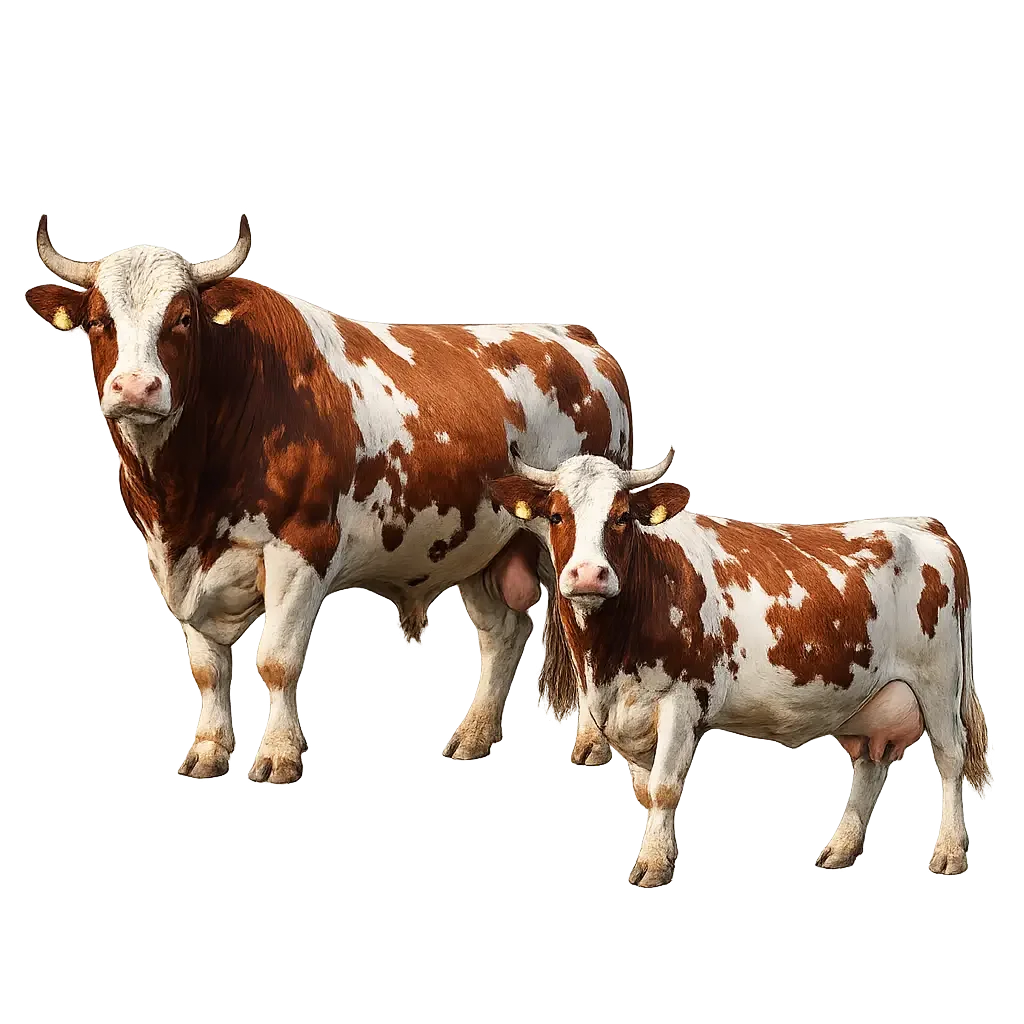
Overview
The Ayrshire is a distinctive and hardy dairy cattle breed originating from southwestern Scotland. Known for their striking red and white coloration, vigorous constitution, and exceptional adaptability, Ayrshires have become valued dairy cattle worldwide, particularly in regions with challenging climates and varied terrain.
Origin & History
Origin: Ayrshire county in southwestern Scotland
Development Period: 17th-18th centuries
Foundation Breeds: Developed from native Scottish cattle, possibly with influences from Channel Island and Dutch breeds
Introduction to US: 1822 (one of the earliest dairy breeds imported)
Recognition: Gained fame for hardy constitution, grazing ability, and quality milk production in challenging conditions
Physical Characteristics
Color: Red and white spotted pattern (can range from mostly white to mostly red)
Build: Medium-sized, angular dairy frame with notable vigor
Weight: Bulls 1,800-2,200 lbs; Cows 1,000-1,300 lbs
Height: Bulls ~5 feet at shoulder; Cows ~4.5 feet
Distinctive Features:
Striking red and white color pattern
Alert, refined head with slight dish to face
Upturned horns (though many are now dehorned)
Well-attached, balanced udder
Strong, sound legs and feet
Long, level back
Reproduction & Breeding
Gestation Period: Approximately 279 days (9 months)
Breeding Age: Heifers typically bred at 14-15 months
Calving: Generally easy calvers with moderate assistance needs
Calf Birth Weight: 60-80 lbs
Calving Interval: 12-13 months optimal
Fertility: Excellent heat detection and conception rates
Breeding Season: Year-round breeding capability
Lifespan & Productivity
Average Lifespan: 15-20 years
Productive Life: Cows can milk successfully for many lactations
Prime Production Years: 3-8 years of age
Longevity: Known for durability and extended productive life
Milk Production
Purpose: Dairy breed - designed for milk production
Annual Production: 15,000-20,000 lbs per lactation (moderate to high for dairy cattle)
Daily Production: 45-60 lbs per day at peak
Lactation Period: 305-day standard lactation
Butterfat Content: 3.9-4.2% (higher than Holstein)
Protein Content: 3.3-3.6%
Quality: Excellent cheese-making properties due to fat and protein levels
Grazing Efficiency: Superior ability to convert pasture to milk
Calf Growth & Development
Weaning Weight: 150-200 lbs at 8-10 weeks
Daily Gain: 1.5-2 lbs per day on good nutrition
Breeding Weight: 650-750 lbs for heifers
Growth Rate: Moderate, consistent development
Temperament
Ayrshires are known for their alert, vigorous, and spirited temperament. They are intelligent and active cattle with strong grazing instincts. While generally manageable, they tend to be more independent and assertive than some other dairy breeds. Cows demonstrate excellent maternal instincts and are protective of their calves. They adapt well to various handling systems and are particularly suited to farmers who appreciate their hardy, self-sufficient nature.
Meat Quality
Marbling: Moderate (dairy breed, not primarily for beef)
Flavor: Good flavor profile
Tenderness: Moderate tenderness
Grading: Select to Choice USDA grades typical
Dressing Percentage: 50-55%
Market Appeal: Primarily valued for dairy; bull calves and cull cows for beef market
Feeding & Nutrition
Grazing: Exceptional foragers, thrive on pasture-based systems
Feed Requirements: Efficient feed converters, especially on grass
Pasture Utilization: Will graze rough terrain and utilize varied forage
Water: 20-30 gallons per day when lactating
Mineral Needs: Standard dairy cattle mineral supplementation
Supplement: Grain supplementation during lactation for optimal production
Health & Care
Hardiness: Exceptionally hardy, disease-resistant
Common Issues: Generally healthy; fewer metabolic issues than high-production breeds
Vaccinations: Standard dairy cattle vaccination protocols
Parasite Control: Regular deworming recommended
Hoof Care: Regular trimming; naturally sound feet and legs
Climate Adaptation: Excellent in cool, wet climates; adapts well to varied conditions
Udder Health: Good natural resistance to mastitis
Advantages
Exceptional grazing ability and foraging efficiency
Hardy and disease-resistant constitution
Adapts to challenging climates and terrain
Excellent milk quality with high butterfat and protein
Superior feed efficiency on pasture
Strong legs and feet with natural soundness
Good longevity and extended productive life
Vigorous, easy-calving cattle
Efficient converters of forage to milk
Ideal for grazing-based dairy systems
Disadvantages
More spirited temperament than some dairy breeds
Lower total milk volume than Holstein
Less suitable for confinement dairy operations
May require more management in intensive systems
Limited beef value compared to beef breeds
Horns require attention if not bred polled
Best Suited For
Pasture-based dairy operations
Grazing dairy systems
Organic and grass-fed dairy production
Small to medium-scale dairy farms
Challenging climates and terrain
Artisan cheese production
Farmers valuing hardy, efficient cattle
Seasonal or low-input dairy systems
Cross-breeding programs for hybrid vigor
Economic Considerations
Initial Cost: Moderate (less expensive than top Holstein genetics)
Return on Investment: Good due to efficiency and longevity
Market Demand: Steady demand for quality milk components
Component Pricing: Benefits from butterfat and protein premiums
Maintenance Costs: Lower than high-production breeds
Resale Value: Good market for breeding stock
Fun Facts
Ayrshire cattle were one of the first dairy breeds imported to North America
The breed's red and white coloration is never uniform - each animal has a unique pattern
Ayrshires are known as "the breed of the beautiful udder" due to their well-attached, balanced udders
The breed flourishes in New Zealand's extensive grazing systems
Historic Ayrshire dairies in Scotland were known for exceptional cheese production
Ayrshires hold multiple world records for lifetime milk production relative to body size
The breed is particularly popular in Scandinavia, Finland, and parts of Canada
A sturdy breed that produces lean, high-quality meat across the 8 primal beef sections.