
The Complete Guide to Beef Cuts
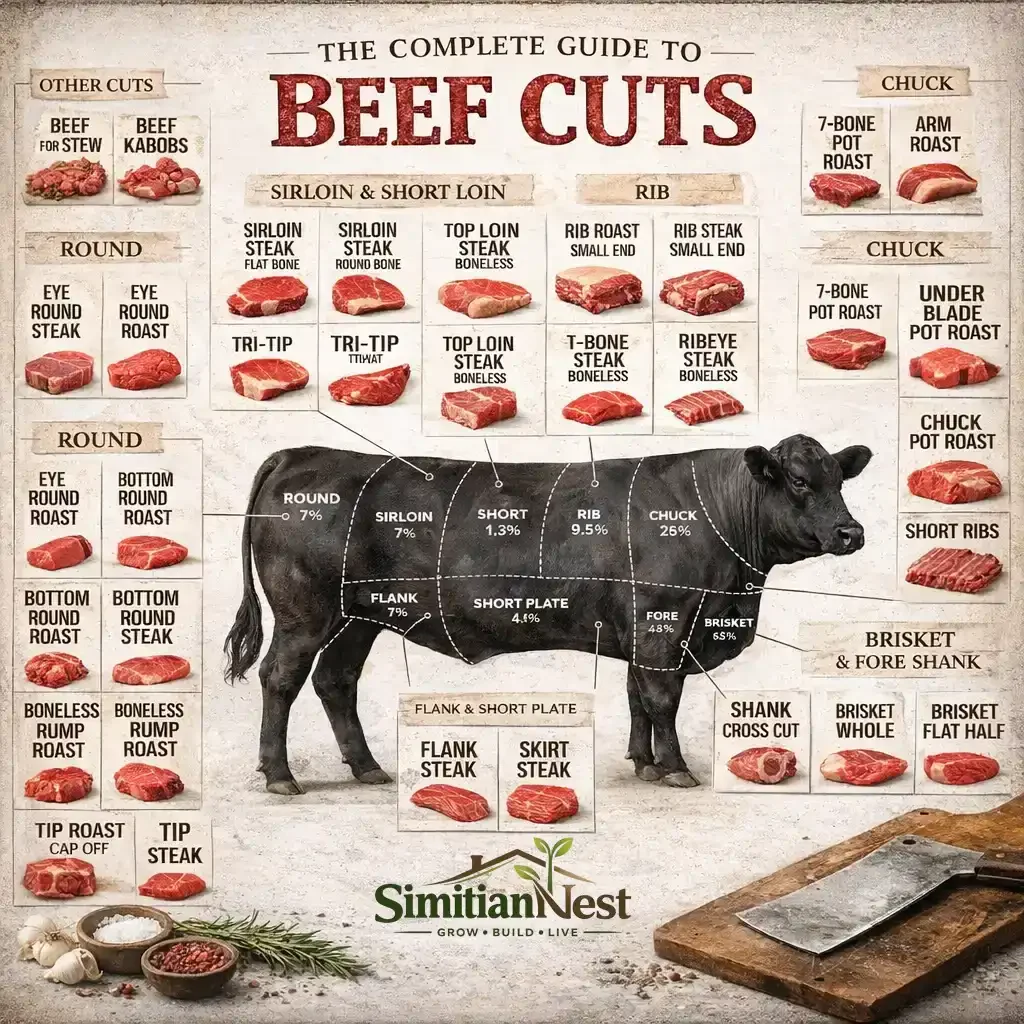
What to Cook & How to Grill Every Cut
Understanding beef cuts is essential for any home cook or grill master. Each cut comes from a specific part of the cow and has unique characteristics that determine the best cooking method. This comprehensive guide breaks down all major beef cuts by primal section, explaining what makes each cut special and exactly how to cook it to perfection.
Whether you're grilling a ribeye, slow-roasting a chuck roast, or pan-searing a filet mignon, knowing your cuts will elevate your cooking game and help you choose the right cut for any occasion.
Chuck (Shoulder) Cuts
The chuck comes from the shoulder and neck area. These cuts are flavorful but contain more connective tissue, making them ideal for slow cooking methods that break down collagen into tender, rich meat.
Chuck Roast
Characteristics: Well-marbled, rich beefy flavor, tougher texture | Best Methods: Braising, slow-roasting (275-325°F), pot roast | Perfect For: Pot roast, beef stew, shredded beef
Flat Iron Steak
Characteristics: Tender, well-marbled, distinctive flat rectangular shape | Best Methods: Grilling (medium-high heat), pan-searing, broiling | Perfect For: Steak dinners, fajitas, stir-fry
Denver Steak
Characteristics: Tender, juicy, rich marbling, slightly chewy | Best Methods: Grilling, pan-searing, sous vide | Perfect For: Steaks, sandwiches, salads
Chuck Short Ribs
Characteristics: Extremely flavorful, fatty, requires long cooking | Best Methods: Braising (3-4 hours), slow-cooking, smoking | Perfect For: Braised short ribs, Korean BBQ, stews
Rib Cuts
The rib section produces some of the most prized and flavorful cuts. Known for exceptional marbling and tenderness, rib cuts are perfect for special occasions and grilling.
Ribeye Steak
Characteristics: Heavily marbled, rich flavor, very juicy, tender | Best Methods: Grilling (high heat), pan-searing, broiling | Perfect For: Premium steaks, special dinners
Prime Rib Roast
Characteristics: Standing rib roast, tender, incredibly flavorful | Best Methods: Slow-roasting (325-350°F), reverse sear | Perfect For: Holiday roasts, special occasions
Cowboy Steak
Characteristics: Bone-in ribeye, extra thick-cut, impressive presentation | Best Methods: Grilling, reverse sear, smoking | Perfect For: Showpiece steaks, BBQ competitions
Back Ribs
Characteristics: Less meat than short ribs, good flavor | Best Methods: Smoking (225-250°F), slow-roasting, braising | Perfect For: BBQ ribs, tailgating
Loin Cuts (Most Tender)
The loin section runs along the back and produces the most tender cuts. These premium steaks are known for their buttery texture and are best cooked with high-heat methods to preserve their tenderness.
Filet Mignon
Characteristics: Extremely tender, mild flavor, lean, buttery texture | Best Methods: Pan-searing, grilling (medium-high), sous vide | Perfect For: Special occasions, elegant dinners
New York Strip
Characteristics: Tender with good marbling, rich beefy flavor | Best Methods: Grilling (high heat), pan-searing, broiling | Perfect For: Steakhouse dinners, grilling
T-Bone
Characteristics: Strip and small filet separated by T-bone, two textures | Best Methods: Grilling (high heat), pan-searing | Perfect For: Classic steaks, BBQ
Porterhouse
Characteristics: Like T-bone but with larger filet portion, premium | Best Methods: Grilling (high heat), pan-searing, reverse sear | Perfect For: Sharing steaks, special occasions
Tenderloin Roast
Characteristics: Whole filet, extremely tender, lean, mild | Best Methods: Roasting (425°F), grilling whole, sous vide | Perfect For: Beef Wellington, holiday roasts
Top Loin Roast
Characteristics: Strip loin roast, tender, flavorful | Best Methods: Roasting (350-375°F), grilling | Perfect For: Roasts, carved steaks
Sirloin Cuts
The sirloin sits between the loin and round sections. These cuts offer a good balance of flavor and tenderness at a more affordable price point than premium loin cuts.
Top Sirloin
Characteristics: Moderately tender, good flavor, leaner than ribeye | Best Methods: Grilling, pan-searing, broiling, stir-fry | Perfect For: Everyday steaks, kebabs, fajitas
Tri-Tip
Characteristics: Triangular cut, rich flavor, moderate tenderness | Best Methods: Grilling, smoking, roasting (350°F) | Perfect For: Santa Maria BBQ, sliced beef, sandwiches
Sirloin Tip
Characteristics: Lean, less tender, budget-friendly | Best Methods: Slow-roasting, braising, marinating then grilling | Perfect For: Roast beef, stew meat, kebabs
Picanha
Characteristics: Top sirloin cap, thick fat cap, Brazilian favorite | Best Methods: Grilling (rotisserie), smoking, roasting | Perfect For: Churrasco, Brazilian BBQ, special steaks
Round Cuts (Hindquarter)
The round section comes from the rear leg and rump. These are lean, economical cuts that work well with slow cooking or when thinly sliced.
Top Round
Characteristics: Very lean, minimal marbling, tougher | Best Methods: Braising, slow-roasting (275°F), marinating | Perfect For: Roast beef, deli meat, London broil
Bottom Round
Characteristics: Lean, tough, requires moist cooking | Best Methods: Braising, pot roast, slow-cooking | Perfect For: Pot roast, cube steak, ground beef
Eye of Round
Characteristics: Very lean, mild flavor, uniform shape | Best Methods: Slow-roasting (250°F), braising, sous vide | Perfect For: Deli roast beef, thinly sliced beef
Rump Roast
Characteristics: Lean, flavorful, benefits from slow cooking | Best Methods: Braising, pot roasting, slow-cooking | Perfect For: Pot roast, sliced beef, stews
Plate & Flank Cuts
These cuts come from the belly and side of the cow. They're lean, fibrous, and incredibly flavorful when prepared correctly with proper slicing against the grain.
Flank Steak
Characteristics: Lean, long grain, very flavorful, benefits from marinade | Best Methods: Grilling (high heat), stir-fry, broiling | Perfect For: Fajitas, stir-fry, London broil, tacos
Skirt Steak
Characteristics: Thin, loose grain, intensely beefy, more marbling than flank | Best Methods: Grilling (very high heat), pan-searing | Perfect For: Fajitas, tacos, carne asada, steak salads
Hanger Steak
Characteristics: Rich, beefy, tender, "butcher's steak" | Best Methods: Grilling (medium-high), pan-searing, sous vide | Perfect For: Steaks, bistro dishes, special meals
Plate Short Ribs
Characteristics: Meaty, rich, well-marbled, Korean BBQ favorite | Best Methods: Braising (3-4 hours), grilling (flanken-cut), smoking | Perfect For: Korean BBQ (galbi), braised ribs, stews
Brisket & Shank Cuts
These cuts come from the chest and leg areas and are packed with connective tissue. When cooked low and slow, they transform into incredibly tender, flavorful meat.
Whole Brisket
Characteristics: Tough, very fatty, develops incredible flavor when slow-cooked | Best Methods: Smoking (225-250°F, 10-14 hours), braising | Perfect For: Texas BBQ, corned beef, pastrami
Brisket Flat
Characteristics: Leaner half of brisket, uniform thickness | Best Methods: Smoking (225-250°F), slow-roasting, braising | Perfect For: Sliced BBQ brisket, sandwiches
Brisket Point
Characteristics: Fattier half, more marbling, triangular shape | Best Methods: Smoking (225-250°F), braising | Perfect For: Burnt ends, chopped beef
Beef Shank
Characteristics: Very tough, full of connective tissue, bone-in | Best Methods: Braising (3-4 hours), slow-cooking, stewing | Perfect For: Osso buco, beef stew, soup
Specialty & Variety Cuts
These unique cuts offer distinctive flavors and textures. While less common, they're prized by chefs and adventurous home cooks.
Oxtail
Characteristics: Gelatinous, rich, full of collagen | Best Methods: Braising (4-5 hours), slow-cooking, stewing | Perfect For: Oxtail soup, Jamaican stew, ragu
Beef Cheek
Characteristics: Incredibly tender when braised, rich flavor | Best Methods: Braising (3-4 hours), slow-cooking | Perfect For: Fine dining dishes, tacos, ragu
Beef Tongue
Characteristics: Rich, tender, requires peeling after cooking | Best Methods: Braising, simmering (2-3 hours), pressure cooking | Perfect For: Tacos de lengua, sandwiches, deli meat
Beef Heart
Characteristics: Lean muscle, firm texture, mild organ flavor | Best Methods: Grilling, braising, stir-frying | Perfect For: Anticuchos (Peruvian skewers), stews
Sweetbreads
Characteristics: Thymus/pancreas glands, creamy, delicate | Best Methods: Pan-searing, frying, sautéing |Perfect For: Fine dining, French cuisine
Beef Liver
Characteristics: Strong flavor, nutrient-dense, soft texture | Best Methods: Pan-frying, sautéing with onions | Perfect For: Liver and onions, pâté
Essential Cooking Tips by Method
Grilling (High Heat)
Best for: Ribeye, NY Strip, T-Bone, Porterhouse, Filet Mignon, Sirloin, Flank, Skirt, Tri-Tip
• Bring meat to room temperature before grilling (30-60 minutes)
• Pat dry and season generously with salt and pepper
• Preheat grill to high heat (450-550°F)
• Use the two-zone method: sear over direct heat, finish over indirect
• Let steaks rest 5-10 minutes after cooking
• Always slice flank and skirt against the grain
Braising (Low & Slow)
Best for: Chuck Roast, Short Ribs, Brisket, Shank, Oxtail, Round Cuts
• Sear the meat first to develop a crust
• Use liquid (stock, wine, beer) to cover 1/2 to 2/3 of the meat
• Cook covered at 275-325°F for 2-5 hours
• Meat is done when fork-tender
• Let rest in cooking liquid for maximum tenderness
Smoking (BBQ)
Best for: Brisket, Ribs, Tri-Tip, Chuck Roast
• Maintain consistent temperature (225-275°F)
• Use a water pan for moisture
• Apply rub 4-12 hours before smoking
• Brisket takes 1-1.5 hours per pound
• Wrap in butcher paper or foil during the stall (around 165°F)
• Rest brisket for at least 1 hour before slicing
Roasting
Best for: Prime Rib, Tenderloin Roast, Top Loin, Tri-Tip
• Season generously and bring to room temperature
• For reverse sear: roast at 250°F until 10-15°F below target, then sear
• For traditional: sear first, then roast at 325-350°F
• Use a meat thermometer (medium-rare = 130-135°F)
• Rest for 15-20 minutes before carving
Internal Temperature Guide
Rare: 120-125°F (49-52°C) - Cool red center, very soft
Medium-Rare: 130-135°F (54-57°C) - Warm red center, ideal for most steaks
Medium: 135-145°F (57-63°C) - Warm pink center, firm texture
Medium-Well: 145-155°F (63-68°C) - Slightly pink center
Well-Done: 155°F+ (68°C+) - No pink, fully cooked through
Final Tips for Success
1. Choose the right cut for your cooking method: Match tender cuts with quick cooking (grilling, pan-searing) and tough cuts with slow cooking (braising, smoking).
2. Don't skip the salt: Season steaks generously with salt at least 40 minutes before cooking (or just before). This enhances flavor and creates a better crust.
3. Use a meat thermometer: Take the guesswork out of cooking. Remember that meat continues to cook (carryover cooking) after removing from heat, so pull it 5°F below your target.
4. Always rest your meat: Resting allows juices to redistribute. Rest steaks for 5-10 minutes, roasts for 15-30 minutes.
5. Slice against the grain: For cuts like flank, skirt, and brisket, always slice perpendicular to the muscle fibers. This shortens the fibers and makes the meat much more tender.
Master these cuts and techniques, and you'll be able to cook any beef cut to perfection!