
Belgian Blue
Overview
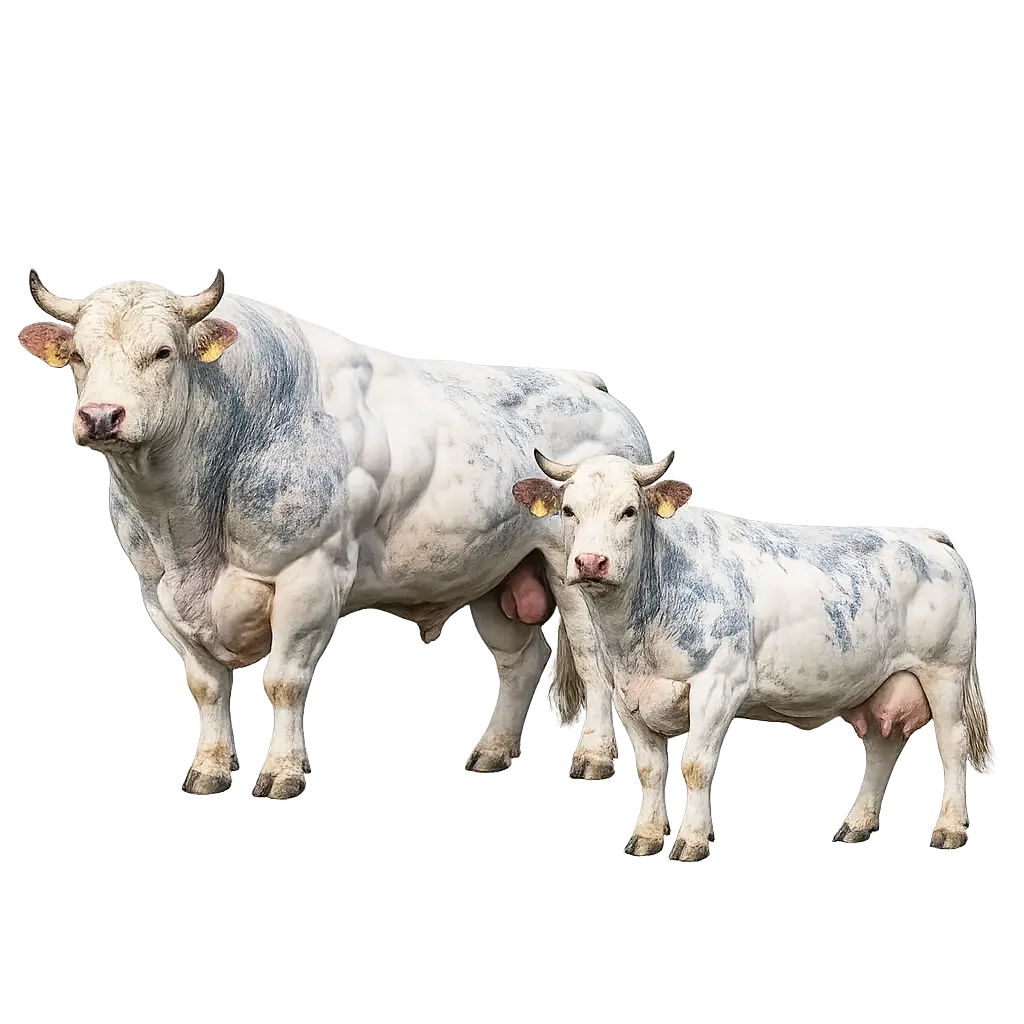
The Belgian Blue is one of the most distinctive and heavily muscled beef cattle breeds in the world. Originating in central Belgium, this breed is immediately recognizable by its extreme muscular development, known as "double-muscling," which is caused by a mutation in the myostatin gene. Belgian Blues are prized for their exceptional meat yield and lean beef production, making them a unique option in the beef industry.
Origin & History
Origin: Central and upper Belgium
Development Period: 18th-20th centuries
Foundation Breeds: Developed from native Belgian cattle crossed with Shorthorn and later Charolais
Genetic Mutation: Double-muscling trait selectively bred starting in the 1950s-1960s
Introduction to US: 1970s-1980s
Recognition: Known worldwide for extraordinary muscle mass and lean beef production
Physical Characteristics
Color: White, blue-roan, black, or combinations (white with black is common)
Build: Large frame with extreme muscular development
Weight: Bulls 2,400-3,000 lbs; Cows 1,500-2,000 lbs
Height: Bulls ~5-5.5 feet at shoulder; Cows ~4.5-5 feet
Distinctive Features:
Extreme double-muscling throughout body
Prominent muscle definition visible through skin
Fine, smooth hair coat
Broad, heavily muscled hindquarters
Rounded body shape
Light bone structure relative to muscle mass
Often naturally polled or with small horns
Reproduction & Breeding
Gestation Period: Approximately 285 days (slightly longer than average)
Breeding Age: Heifers typically bred at 16-18 months
Calving: High rate of calving difficulty - often requires cesarean section (60-90% of first-calf heifers)
Calf Birth Weight: Relatively light at 75-95 lbs despite size potential
Calving Interval: 12-14 months
Fertility: Moderate fertility rates
Breeding Considerations: Often used as terminal sires in crossbreeding; Belgian Blue bulls bred to other breed cows reduces calving difficulty
Breeding Season: Year-round capability
Lifespan & Productivity
Average Lifespan: 12-15 years
Productive Life: Cows can calve successfully for 7-10 years with proper management
Prime Production Years: 3-8 years of age
Longevity: Good durability when properly managed
Milk Production
Purpose: Beef breed - milk primarily for calf rearing
Daily Production: 8-15 lbs per day (moderate to low for beef cattle)
Lactation Period: 6-8 months
Maternal Ability: Adequate mothers; calves may need supplementation
Butterfat Content: Higher concentration typical of beef breeds
Note: Not used for commercial dairy production; some cows may require milk supplementation for calves
Calf Growth & Development
Weaning Weight: 500-700 lbs at 7-8 months
Daily Gain: 3-4.5 lbs per day on good feed (exceptional growth rates)
Market Weight: 1,200-1,500 lbs at 14-16 months
Feed Efficiency: Excellent conversion ratio with high lean meat production
Muscle Development: Rapid muscle gain with minimal fat deposition
Temperament
Belgian Blues are generally calm and docile despite their imposing appearance. They are typically gentle and easy to handle, making them suitable for various management systems. Bulls are generally manageable but require respect due to their size. Cows show good maternal instincts once calves are born, though they require careful monitoring during calving. Their temperament makes them popular for operations concerned about handler safety.
Meat Quality
Marbling: Minimal intramuscular fat (very lean meat)
Flavor: Mild, lean beef flavor
Tenderness: Good tenderness despite leanness due to fine muscle fiber structure
Grading: Select grade typical; valued for leanness rather than marbling
Dressing Percentage: 70-80% (exceptional - highest of all beef breeds)
Lean-to-Fat Ratio: Approximately 80% lean meat
Market Appeal: Premium market for lean, high-yield beef; popular in health-conscious markets
Feeding & Nutrition
Grazing: Good foragers but benefit from supplementation
Feed Requirements: Efficient converters - high feed-to-muscle conversion
Finishing: Can be grass-finished but grain-finishing optimizes growth
Water: 12-20 gallons per day (less than many breeds due to lean composition)
Mineral Needs: Standard beef cattle mineral supplementation
Protein Requirements: Higher protein needs to support muscle development
Health & Care
Hardiness: Moderate hardiness; require attentive management
Common Issues: Calving difficulties, respiratory sensitivity, heat stress in extreme conditions
Vaccinations: Standard cattle vaccination protocols plus attention to respiratory health
Parasite Control: Regular deworming recommended
Hoof Care: Regular trimming needed; fine bone structure requires attention
Climate Adaptation: Best in temperate climates; sensitive to extreme heat and cold
Calving Management: Requires experienced management and veterinary support
Shelter: Adequate shelter important due to fine hair coat
Advantages
Exceptional meat yield (highest dressing percentage)
Extremely lean, high-quality beef
Outstanding feed efficiency and growth rates
Docile, manageable temperament
High cutability with minimal waste
Fast growth rates
Excellent for terminal crossbreeding programs
Premium prices for lean beef markets
Impressive muscular development
Efficient conversion of feed to muscle
Disadvantages
Very high rate of calving difficulty requiring cesarean sections
Higher veterinary costs due to calving management
Requires experienced management
Less marbling than traditional beef preferences in some markets
Moderate maternal milk production
Sensitive to extreme weather conditions
Not suitable for extensive range operations
Higher labor requirements at calving
Fine bone structure requires careful handling
Best Suited For
Terminal crossbreeding programs
Operations focused on lean beef production
Health-conscious, premium beef markets
Farmers with veterinary support readily available
Intensive management systems
Breeding purebred bulls for crossbreeding
Operations seeking maximum meat yield
Not recommended for: Beginning cattle farmers, extensive range operations, or operations without veterinary access
Economic Considerations
Initial Cost: Moderate to high for quality breeding stock
Return on Investment: Excellent due to exceptional meat yield and growth rates
Market Demand: Growing demand for lean beef
Veterinary Costs: Higher than average due to calving management
Feed Costs: Efficient feed conversion offsets costs
Premium Markets: Can command premiums in health-focused beef markets
Resale Value: Good market for breeding bulls as terminal sires
Fun Facts
Belgian Blues have up to 40% more muscle mass than conventional cattle
The double-muscling trait is caused by a natural mutation in the myostatin gene
They have the highest dressing percentage of any beef breed (70-80%)
Despite their extreme muscularity, they are known for docile temperaments
Belgian Blue beef is popular in health-conscious European markets
The breed can produce steaks that are up to 5% leaner than conventional beef
Their unique physique has made them a subject of scientific research into muscle development
Belgian Blue genetics are used worldwide in terminal crossbreeding programs
Because this breed is incredibly lean, understanding the 'Tenderness Rule' in our Complete Guide to Beef Cuts is vital for cooking success.