
Brown Swiss
Overview
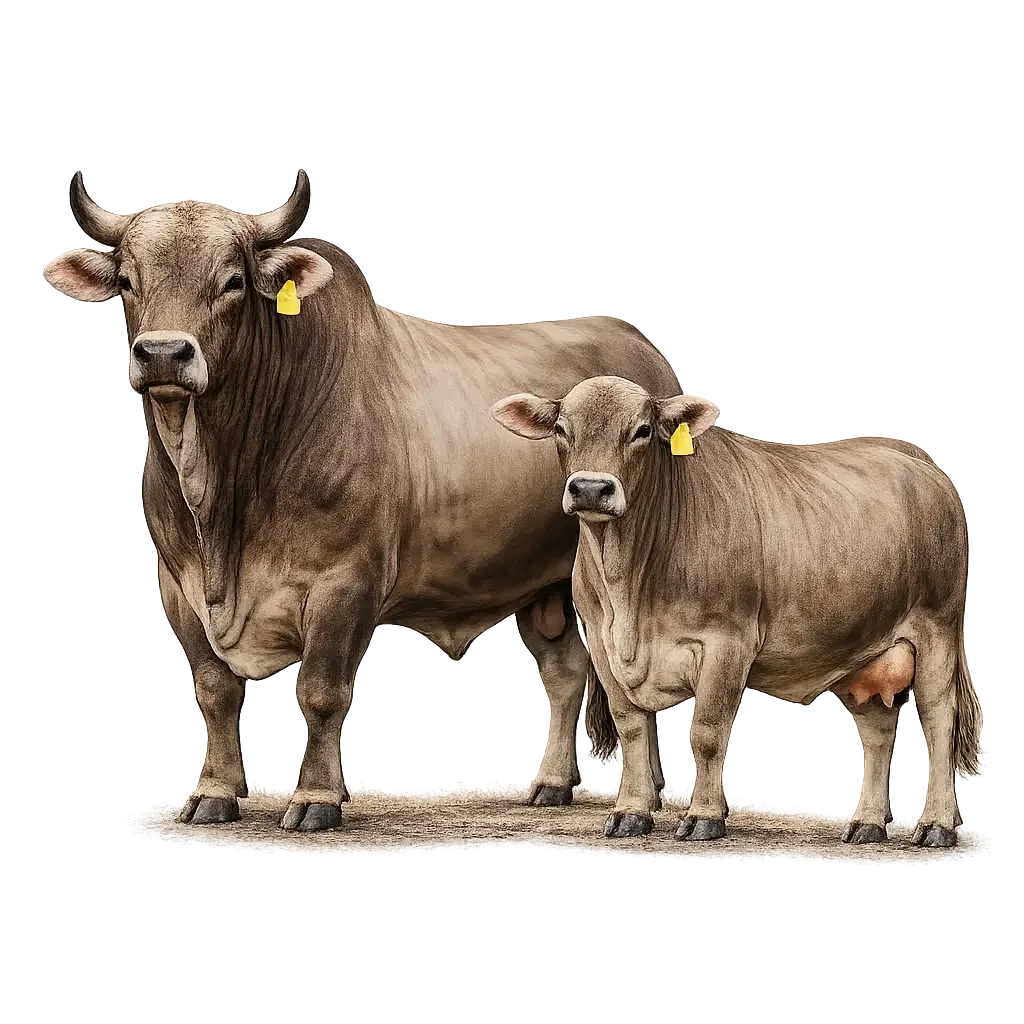
Brown Swiss cattle are one of the oldest and most versatile dairy breeds in the world, originating in the Swiss Alps over 1,000 years ago. Known for their distinctive solid brown coloring, large frame, and gentle disposition, Brown Swiss are prized for their exceptional milk quality, particularly high protein and butterfat content ideal for cheese production. While primarily a dairy breed, Brown Swiss also have excellent beef characteristics, making them valuable dual-purpose cattle. Their hardiness, longevity, and adaptability to various climates have made them popular worldwide.
Origin & History
Origin: Swiss Alps, Switzerland
Development Period: Over 1,000 years of selective breeding
Ancient Breed: One of the oldest dairy breeds, dating to before 1000 AD
Original Use: Triple-purpose for milk, meat, and draft work in Alpine regions
U.S. Introduction: First imported to United States in 1869
Recognition: Brown Swiss Cattle Breeders' Association formed in 1880
Modern Development: Split into dairy and beef strains in various countries
Global Presence: Now raised in over 60 countries on all continents
Physical Characteristics
Color: Solid light to dark brown (mouse-gray to dark brown); no white markings except occasional white switch
Build: Large-framed, strong, and angular with excellent dairy character
Weight: Bulls 2,000-2,500 lbs; Cows 1,200-1,500 lbs
Height: Bulls 5.5-6 feet at shoulder; Cows 5-5.5 feet
Distinctive Features:
Solid brown color ranging from light silver to dark chocolate
Black nose with light "mealy" ring around muzzle
Black hooves providing excellent hoof hardness
Dark blue to black tongue and switch (tail)
Large, well-attached udders with excellent capacity
Strong, straight topline and deep body
Large frame with impressive stature
Gentle, docile expression with large eyes
Reproduction & Breeding
Gestation Period: Approximately 290 days (slightly longer than other dairy breeds)
Breeding Age: Heifers typically bred at 14-16 months
Calving: Generally easy calving with low assistance rates
Calf Birth Weight: 85-100 lbs (moderate for large breed)
Calving Interval: 12-13 months optimal
Fertility: Good fertility and heat detection
Breeding Season: Year-round breeding capability
Sexual Maturity: Bulls mature at 12-15 months
Lifespan & Productivity
Average Lifespan: 12-18 years
Productive Life: Cows often produce 6-10+ lactations
Prime Production Years: 3rd-6th lactations typically peak production
Longevity: Excellent longevity - among the longest-lived dairy breeds
Durability: Maintain production efficiency across multiple lactations
Milk Production
Purpose: Dual-purpose dairy and beef breed
Daily Production: 60-90 lbs per day at peak (mature cows)
Annual Production: 18,000-24,000 lbs per lactation (305 days)
Lactation Period: 305 days standard; many milk longer
Butterfat Content: 4.0-5.0% (high for dairy cattle)
Protein Content: 3.5-4.0% (highest among major dairy breeds)
Milk Solids: Excellent total solids for cheese production
Cheese Yield: Superior - 10-12% higher cheese yield than Holstein milk
Milk Quality: Ideal for specialty cheese, particularly Swiss-type cheeses
Calf Growth & Development
Weaning Weight: 500-650 lbs at 6-8 months
Daily Gain: 2.0-2.8 lbs per day on good nutrition
Market Weight: Steers 1,100-1,400 lbs at 14-18 months
Feed Efficiency: Good efficiency on quality feed
Vigor: Calves are hardy and vigorous from birth
Beef Potential: Good beef conformation for dairy breed
Temperament
Brown Swiss cattle are renowned for their gentle, docile temperament, making them one of the easiest dairy breeds to handle. They are calm, patient, and cooperative during milking and handling procedures. Their quiet nature makes them ideal for family farms, educational facilities, and operations where multiple people work with the cattle.
The breed shows good maternal instincts without excessive protectiveness. Cows are attentive mothers that accept human interaction readily. Bulls are generally manageable with proper respect and facilities, notably calmer than many dairy breed bulls. Brown Swiss adapt well to various management systems and handling techniques, tolerating close confinement or extensive grazing equally well.
Meat Quality
Marbling: Moderate marbling for dairy breed
Flavor: Good beef flavor, mild and pleasant
Tenderness: Tender when properly finished
Grading: Typically grades Select to low Choice
Dressing Percentage: 55-60% (good for dairy breed)
Cutability: Good yield of retail cuts
Dual Purpose: Better beef quality than most dairy breeds
Cull Cows: Higher value than typical dairy cull cows
Feeding & Nutrition
Grazing: Excellent grazers, efficient on quality pasture
Feed Requirements: 3-4% of body weight daily in dry matter
Concentrate Needs: High-producing cows need 1:1.5 forage to concentrate ratio
Water: 30-50 gallons per day for lactating cows
Mineral Needs: Require balanced dairy mineral program
Pasture Performance: Excel in grass-based dairy systems
Feed Efficiency: Very efficient converters of feed to milk
Health & Care
Hardiness: Exceptionally hardy and disease-resistant
Common Issues: Fewer health problems than high-producing Holstein
Vaccinations: Standard dairy cattle vaccination protocols
Parasite Control: Standard dairy parasite management
Hoof Care: Excellent hoof quality; black hooves resist problems
Climate Adaptation: Adapt to wide range of climates and altitudes
Heat Tolerance: Good heat tolerance for large dairy breed
Cold Tolerance: Excellent cold hardiness from Alpine heritage
Udder Health: Good udder health with lower somatic cell counts
Dairy Performance
Component Production: Highest protein percentage among major dairy breeds
Cheese Making: Ideal for cheese - higher protein and casein content
Milk Value: Premium prices for high-component milk
Somatic Cell Count: Typically lower than breed average, indicating good udder health
Persistency: Excellent lactation persistency - maintain production well
Grazing Dairy: Excellent choice for pasture-based systems
Advantages
Highest protein and butterfat content among major dairy breeds
Superior milk for cheese production (10-12% higher yield)
Exceptionally gentle and easy to handle
Excellent longevity and productive life
Good fertility and reproductive efficiency
Hardy and adaptable to various climates
Better beef characteristics than most dairy breeds
Excellent hoof quality with minimal lameness
Lower somatic cell counts and good udder health
Efficient grazers ideal for grass-based dairies
Calm temperament suitable for family farms
Dual-purpose capability for milk and beef
Disadvantages
Lower total milk volume than Holstein
Larger frame size requires more feed for maintenance
Slower milking speed than some breeds
Limited availability compared to Holstein in some regions
Higher initial purchase cost than commercial dairy cattle
May not suit operations optimizing for volume alone
Larger calves at birth may challenge some first-calf heifers
Best Suited For
Cheese production operations (ideal for specialty cheese)
Component-based dairy pricing systems
Grass-based and organic dairy farms
Family farms wanting gentle, manageable cattle
Operations prioritizing longevity and durability
Grazing dairies in varied climates
Small to medium-sized dairy operations
Educational and demonstration farms
Dual-purpose operations wanting milk and beef value
Mountainous or challenging terrain operations
Economic Considerations
Initial Cost: Moderate to high for quality breeding stock
Return on Investment: Excellent due to longevity and component premiums
Market Demand: Strong demand in specialty dairy and cheese markets
Milk Premiums: Higher component payments increase milk value
Maintenance Costs: Moderate - larger frame needs more feed
Veterinary Costs: Lower than high-production breeds due to hardiness
Cull Value: Higher cull cow value than typical dairy breeds
Longevity Value: Extended productive life reduces replacement costs
Grazing and Pasture Systems
Grazing Efficiency: Excellent foragers on quality pasture
Pasture-Based Dairy: Ideal breed for rotational grazing systems
Grass-Fed Production: Maintain good components on grass-only diets
Organic Production: Well-suited to organic dairy requirements
Mountainous Terrain: Adapted to steep slopes and rough country from Alpine heritage
Seasonal Dairying: Work well in seasonal milk production systems
Fun Facts
Brown Swiss are one of the oldest dairy breeds, with records dating back over 1,000 years
The black nose with light "mealy" ring is a distinctive breed characteristic
Brown Swiss milk produces 10-12% more cheese per pound than Holstein milk
They were originally triple-purpose cattle used for milk, meat, and pulling loads in Swiss Alps
Brown Swiss cattle appear in ancient Swiss cave paintings and historical documents
The breed's protein content is highest among all major dairy breeds
Famous Swiss cheeses like Emmental and Gruyère were traditionally made from Brown Swiss milk
Brown Swiss are the second most popular dairy breed worldwide after Holstein
They adapt to altitudes from sea level to over 10,000 feet
The solid brown color ranges from very light (almost gray) to very dark (almost black)
Brown Swiss consistently rank at the top for longevity among dairy breeds
Though a dairy giant, its beef quality is robust; see how these large cuts are divided into standard primals.