
Chianina
Overview
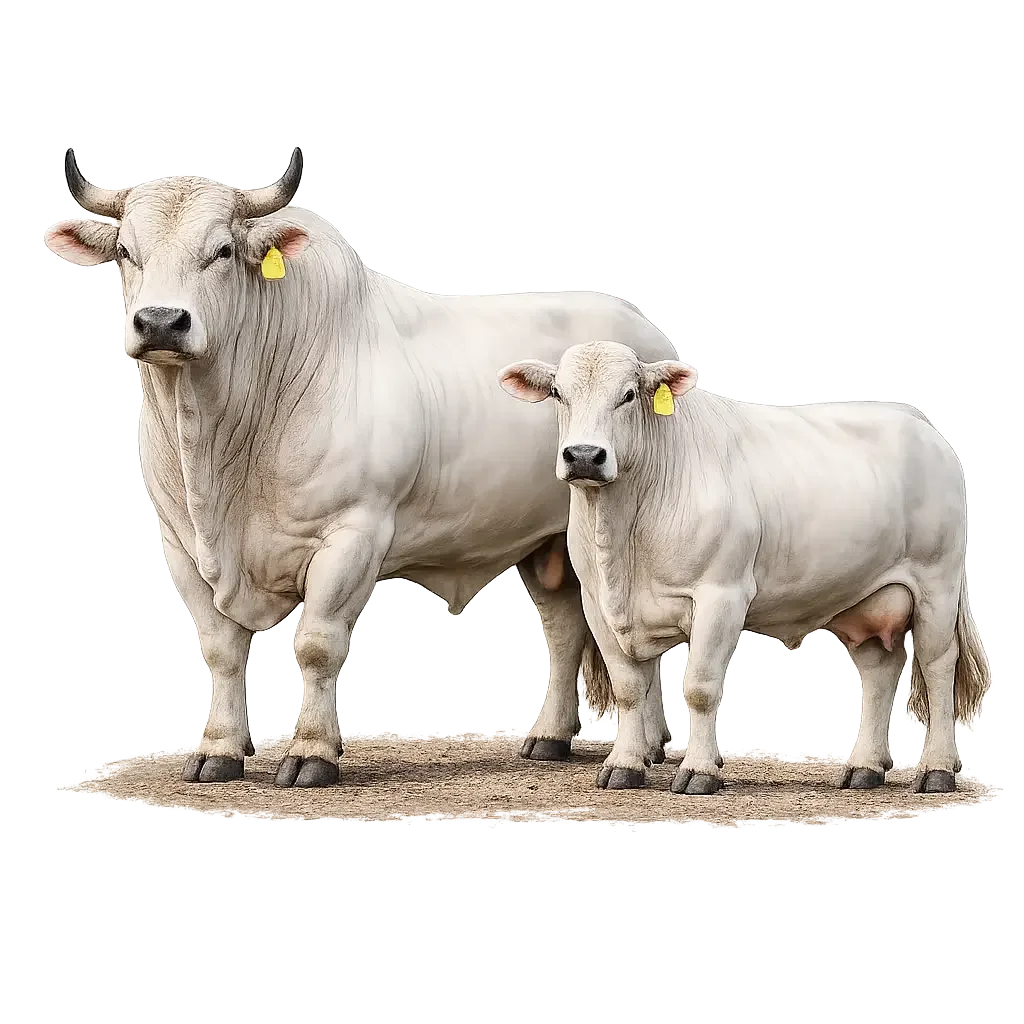
Chianina cattle are one of the oldest and largest cattle breeds in the world, tracing their lineage back over 2,000 years to the pastoral valleys of central Italy. These majestic white giants are renowned for their exceptional size, lean muscle development, and impressive growth rates. Originally bred as draft animals in the Valdichiana region of Tuscany, Chianina have evolved into a premier beef breed celebrated for producing the famous Florentine bistecca (T-bone steak). Their distinctive porcelain-white coat, towering stature, and gentle disposition make them instantly recognizable. Chianina excel in crossbreeding programs, contributing size, muscling, and efficiency while producing some of the finest quality beef in the world.
Origin & History
Origin: Val di Chiana (Chiana Valley), Tuscany and Umbria, central Italy
Development Period: Over 2,000 years - one of the oldest breeds in existence
Original Use: Triple-purpose for draft work, meat, and limited milk production
Historical Significance: Used by Roman farmers; mentioned in ancient texts
Modern Development: Transitioned to beef production in mid-1900s with mechanization
U.S. Introduction: First imported to North America in 1971
Recognition: American Chianina Association established 1972
Cultural Heritage: Protected by Italian government as genetic treasure
Famous Connection: The only breed approved for authentic Bistecca alla Fiorentina
Global Presence: Now raised in over 30 countries worldwide
Physical Characteristics
Color: Pure white or porcelain white; calves born reddish-brown, lighten with age
Build: Extremely large-framed with long, muscular body and exceptional depth
Weight: Bulls 3,000-4,000 lbs (world's tallest and heaviest cattle breed); Cows 1,600-2,400 lbs
Height: Bulls can exceed 6 feet at shoulder; Cows 5-5.5 feet
Distinctive Features:
Porcelain white coat with black pigmented skin underneath
Tallest cattle breed in the world
Extremely long body with exceptional depth and capacity
Black pigmentation on nose, tongue, palate, eye rims, and switch
Refined head with straight profile and alert expression
Very long, muscular neck
Exceptional muscling throughout, particularly in hindquarters
Fine-boned despite massive size
Short, dark horns (though polled genetics being developed)
Black hooves
Loose, pliable skin
Reproduction & Breeding
Gestation Period: Approximately 285-290 days
Breeding Age: Heifers bred at 16-20 months with adequate development
Calving: Generally calve easily despite large size due to refined bone structure
Calf Birth Weight: 75-95 lbs (moderate considering mature size)
Calving Interval: 365-385 days typical
Fertility: Excellent fertility and reproductive longevity
Calving Ease: One of the easiest-calving large breeds
Breeding Season: Year-round breeding capability
Maternal Instinct: Strong protective instincts but gentle with handlers
Longevity: Cows frequently productive into their teens
Lifespan & Productivity
Average Lifespan: 15-20 years
Productive Life: Cows typically produce 10-15 calves in lifetime
Prime Production Years: 3-12 years of age
Longevity: Exceptional longevity compared to other large breeds
Bull Longevity: Bulls remain productive 10-15 years with proper care
Late Maturity: Continue developing muscle and frame until 5-6 years
Milk Production
Purpose: Beef breed - milk primarily for calf rearing
Daily Production: 12-18 lbs per day (adequate for large, fast-growing calves)
Lactation Period: 7-10 months
Maternal Ability: Excellent mothers with strong maternal instincts
Milking Ease: Good udder structure and adequate milk production
Note: Not used for commercial dairy production, though historical use existed
Calf Growth & Development
Weaning Weight: 550-700 lbs at 205 days (excellent for large-framed breed)
Daily Gain: 3.5-5.0 lbs per day on good feed (exceptional)
Market Weight: 1,300-1,700 lbs at 14-18 months
Feed Efficiency: Outstanding feed conversion to lean muscle
Growth Rate: Among the fastest-growing beef breeds worldwide
Vigor: Calves extremely vigorous and healthy from birth
Frame Development: Extended growth period allows for exceptional size
Temperament
Chianina cattle are renowned for their docile, gentle temperament despite their imposing size. They are often described as "gentle giants" and are considered one of the most manageable large breeds. Their centuries of close association with humans as draft animals has selected for tractability and willingness to work with people. Chianina are intelligent, curious, and respond well to patient, consistent handling.
Bulls are notably calm and manageable compared to other large Continental breeds, though their size always requires respect and proper facilities. Cows are excellent mothers with strong protective instincts during calving but remain approachable and easy to work with. Chianina adapt well to various management systems and handle stress better than many breeds. Their gentle nature combined with their size makes them ideal for experienced cattle operators seeking large-framed genetics without temperament challenges.
Meat Quality
Marbling: Moderate marbling with excellent flavor
Flavor: Exceptional beef flavor - considered among world's finest
Tenderness: Very tender meat with fine-grained texture
Grading: Typically grades Choice to Prime when finished properly
Dressing Percentage: 63-68% (excellent for large-framed breed)
Cutability: Exceptional - high percentage of premium retail cuts
Lean Meat Yield: Outstanding lean-to-bone ratio due to fine bones
Fat Coverage: External fat kept minimal; ideal for health-conscious markets
Market Appeal: Premium prices for Chianina beef in specialty markets
Cultural Significance: The authentic beef for Bistecca alla Fiorentina
Feeding & Nutrition
Grazing: Excellent grazers with efficient forage conversion
Feed Requirements: Moderate maintenance requirements despite large size
Finishing: Finish efficiently at heavier weights than most breeds
Water: 15-25 gallons per day depending on size, climate, and production
Mineral Needs: Standard beef cattle mineral program
Grain Efficiency: Excellent grain-to-lean-muscle conversion
Forage Quality: Thrive on moderate to high-quality forage
Adaptability: Utilize various feedstuffs efficiently
Health & Care
Hardiness: Very hardy and adaptable to diverse climates
Common Issues: Minimal health problems; generally robust breed
Vaccinations: Standard cattle vaccination protocols
Parasite Control: Standard beef cattle parasite management
Hoof Care: Regular trimming on soft ground; black hooves very durable
Climate Adaptation: Black skin protects from sunburn; white coat reflects heat
Sun Protection: Black pigmentation around eyes prevents cancer eye
Disease Resistance: Good natural resistance to common cattle diseases
Heat Tolerance: Excellent in hot climates due to color and loose skin
Growth and Performance
Frame Score: Very large frame (8-9 on scale of 1-9)
Muscling: Exceptional muscle development throughout body
Bone Structure: Fine, refined bone relative to body size
Post-Weaning Gain: Excel with 4-5+ lbs daily gain in optimal conditions
Efficiency: Superior lean tissue growth per unit of feed consumed
Mature Size: Continue filling out and muscling until 5-6 years
Feed Conversion: Among the most efficient converters of feed to meat
Advantages
World's largest and tallest cattle breed - exceptional size potential
Outstanding growth rates and feed efficiency
Remarkably easy calving despite mature size
Exceptional docility and gentle temperament
Fine bone structure maximizes meat-to-bone ratio
Produces premium, lean, flavorful beef
Black pigmentation prevents sunburn and eye problems
Excellent hybrid vigor in crossbreeding programs
Heat tolerant due to white coat and black skin
Exceptional longevity and reproductive life
Low maintenance despite large size
Strong maternal abilities
Good disease resistance
Premium market prices for purebred and crossbred calves
Cultural heritage and recognition value
Disadvantages
Very large size may be intimidating for inexperienced handlers
Require sturdy facilities due to size and strength
Extended growth period before reaching full size
Large frame requires adequate space
May be too large for some smaller operation scales
Limited availability outside specialized breeders
Higher initial investment for quality breeding stock
Need high-quality nutrition for optimal development
May finish at heavier weights than some markets prefer
Best Suited For
Large-scale ranching operations with adequate space
Premium beef production for specialty markets
Terminal sire programs seeking size and efficiency
Grass-fed beef programs with excellent pasture
Experienced cattle operators comfortable with large cattle
Crossbreeding programs to add size, growth, and docility
Operations marketing to health-conscious consumers
Heritage breed preservation programs
Show cattle operations
Educational farms showcasing livestock diversity
Operations with strong facilities and handling systems
Economic Considerations
Initial Cost: High for quality breeding stock due to rarity
Return on Investment: Excellent due to growth rates, efficiency, and premium prices
Market Demand: Strong demand for breeding stock and specialty beef
Carcass Value: Premium prices in specialty and heritage beef markets
Maintenance Costs: Moderate despite size due to efficiency
Feedlot Performance: Exceptional gains and feed conversion
Terminal Sire Value: Growing market for Chianina genetics
Niche Markets: Command premium in Italian restaurants and specialty beef programs
Crossbreeding Applications
Terminal Sire: Excellent on Angus, Hereford, and other British breeds
Hybrid Vigor: Crossbreds show outstanding growth, efficiency, and docility
Popular Crosses: Chianina x Angus (ChiAngus), Chianina x Hereford highly valued
Heterosis: 15-20% improvement in growth and efficiency in F1 crosses
Balancing Traits: Add size and growth while maintaining carcass quality
Calving Ease: Unlike other large breeds, Chianina cross calves birth easily
Market Acceptance: Growing recognition and demand for Chianina-cross cattle
Maternal Enhancement: F1 females make excellent commercial cows
Fun Facts
Chianina are the oldest recorded cattle breed, with history dating back to Roman times
They hold the Guinness World Record for the tallest and heaviest cattle
A Chianina bull named Donetto stood 6 feet 2 inches at the shoulder
The breed was depicted in Roman artwork and described by ancient agricultural writers
Chianina were the oxen that pulled ancient Roman plows and carts
The famous Bistecca alla Fiorentina must by tradition be made only from Chianina beef
Their white coat was prized in Renaissance Italy as a symbol of purity and nobility
Despite their size, Chianina have among the finest bone structure of any cattle breed
The black pigmentation is a breed requirement to protect against sun damage
Calves are born with a reddish-fawn coat that gradually turns pure white
Some Chianina bulls exceed 4,000 pounds at maturity
The breed was near extinction in the 1970s but has been successfully preserved
Chianina beef is prized for having excellent marbling while remaining very lean
The breed's name is pronounced "key-ah-NEE-nah"
In Italy, Chianina cattle are still used in traditional agricultural festivals
As a large-framed breed, it yields substantial cuts from the Rib and Loin; learn more in our Complete Guide to Beef Cuts