
Devon
Overview
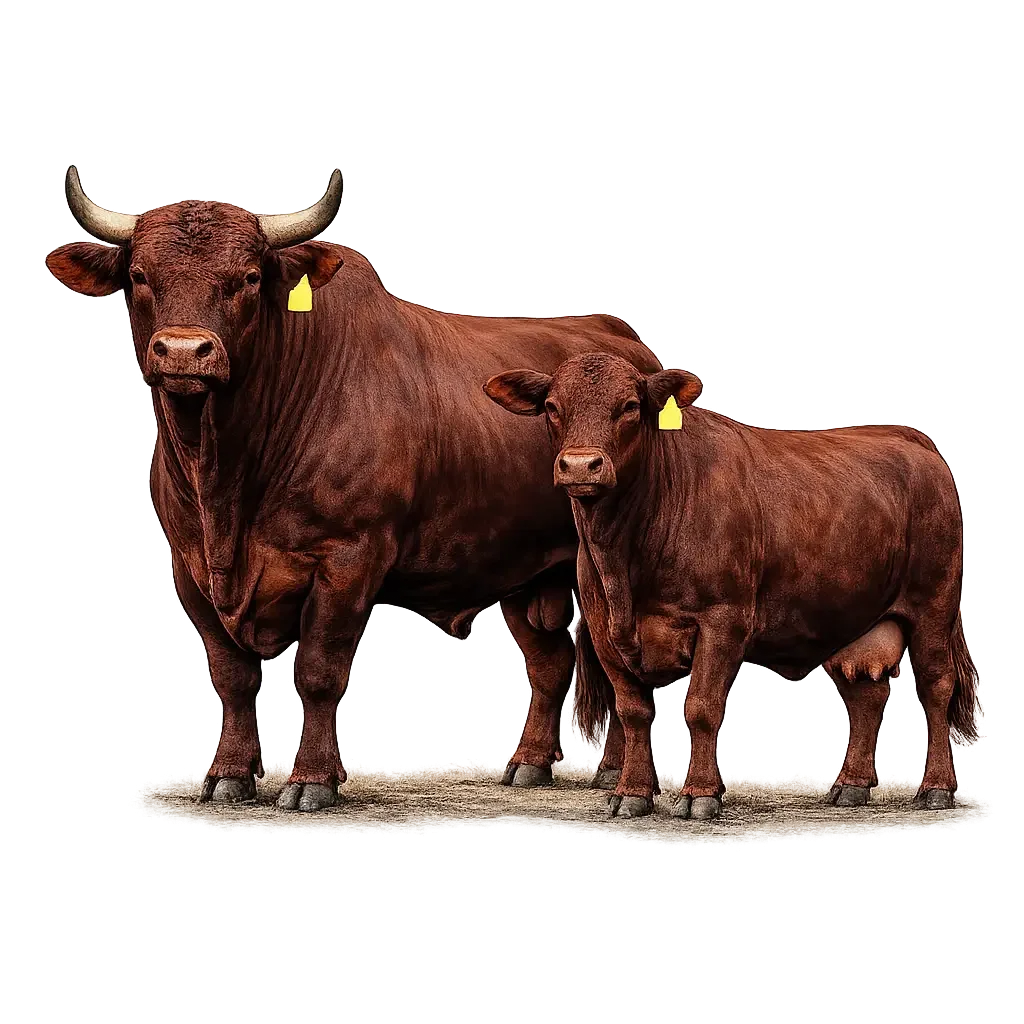
Devon cattle, also known as Red Ruby Devon or North Devon, are one of the oldest and purest British beef breeds, with a heritage stretching back over 400 years. Originating from southwestern England, these striking ruby-red cattle are renowned for their exceptional grazing ability, maternal qualities, and production of high-quality grass-fed beef. Devons represent heritage cattle at their finest - hardy, efficient, and well-suited to sustainable, pasture-based beef production. Their beautiful coloring, docile temperament, and historical significance make them increasingly popular among grass-fed beef producers and heritage livestock enthusiasts.
Origin & History
Origin: Devon and Somerset counties, southwestern England
Development Period: Developed over 400+ years, documented since 1600s
Ancient Breed: One of Britain's oldest pure breeds
Original Use: Triple-purpose for beef, milk, and draft work (oxen)
U.S. Introduction: Among first cattle brought to America by colonists in 1623
Historical Significance: Played major role in early American agriculture
Recognition: Devon Cattle Association (USA) formed 1978
Modern Status: Rare heritage breed, gaining popularity in grass-fed beef movement
Physical Characteristics
Color: Rich ruby red to deep red; uniform color throughout
Build: Moderate frame with balanced, muscular conformation
Weight: Bulls 1,800-2,200 lbs; Cows 1,100-1,400 lbs
Height: Bulls 5-5.5 feet at shoulder; Cows 4.5-5 feet
Distinctive Features:
Beautiful ruby-red color, sometimes called "Red Rubies"
Medium-sized, upswept white horns (polled genetics also available)
Alert, intelligent expression
Fine-boned with quality muscle
Compact, well-balanced body structure
White tail switch in most animals
Skin pigmentation matching hair color
Moderate frame size - neither extreme nor small
Reproduction & Breeding
Gestation Period: Approximately 283-285 days
Breeding Age: Heifers bred at 14-16 months with proper development
Calving: Excellent calving ease with minimal assistance
Calf Birth Weight: 65-85 lbs (moderate and manageable)
Calving Interval: 365 days achievable with good management
Fertility: Very good fertility and conception rates
Breeding Season: Year-round breeding capability
Sexual Maturity: Bulls mature at 12-14 months
Lifespan & Productivity
Average Lifespan: 12-18 years
Productive Life: Cows typically produce 10-14 calves in lifetime
Prime Production Years: 3-12 years of age
Longevity: Excellent longevity and reproductive persistence
Stayability: Cows remain productive well into teens
Milk Production
Purpose: Beef breed - milk primarily for calf rearing
Daily Production: 10-14 lbs per day (good for beef cattle)
Lactation Period: 8-10 months
Maternal Ability: Excellent mothers with strong milk production
Milk Quality: Rich milk with good butterfat for calf growth
Historical Use: Originally milked for family dairy needs
Calf Growth & Development
Weaning Weight: 500-600 lbs at 205 days
Daily Gain: 2.0-2.8 lbs per day on grass
Market Weight: 1,000-1,200 lbs at 18-24 months on grass
Feed Efficiency: Excellent grass-to-beef conversion
Grass-Fed Performance: Excel on pasture-only programs
Vigor: Calves are hardy and thrive on mother's milk
Temperament
Devon cattle are renowned for their gentle, docile temperament, making them ideal for family farms and beginning cattle operations. They are intelligent and easily trained, historically valued as oxen for their willingness to work and learn. Devons are calm and easy to handle with minimal stress, responding well to patient, quiet handling.
The breed demonstrates excellent maternal instincts with protective but not aggressive behavior toward calves. Cows are attentive mothers that allow human interaction readily. Bulls are generally manageable and less aggressive than many breeds, though all bulls require proper respect and handling. Devon cattle's docility, combined with their moderate size, makes them suitable for farms where cattle will be handled frequently or by less experienced operators.
Meat Quality
Marbling: Excellent marbling on grass-fed diets
Flavor: Outstanding grass-fed beef flavor, rich and complex
Tenderness: Very tender, ranks among top grass-fed breeds
Grading: Typically grades Choice on grass alone
Dressing Percentage: 60-63% (good for moderate-framed breed)
Grass-Fed Quality: Exceptional - finish well on grass without grain
Market Appeal: Premium prices in grass-fed and heritage beef markets
Consistency: Uniform quality across animals
Feeding & Nutrition
Grazing: Exceptional grazers, highly efficient on pasture
Feed Requirements: Lower maintenance requirements than larger breeds
Grass-Finishing: Excel at finishing on grass without grain supplementation
Water: 10-15 gallons per day
Mineral Needs: Standard beef cattle mineral program
Forage Utilization: Utilize wide variety of forages efficiently
Browse: Will browse brush and weeds, good for pasture improvement
Health & Care
Hardiness: Very hardy and disease-resistant
Common Issues: Minimal health problems; one of healthiest breeds
Vaccinations: Standard cattle vaccination protocols
Parasite Control: Good natural resistance, standard management
Hoof Care: Excellent hoof quality, minimal trimming needed
Climate Adaptation: Adapt to various climates, excel in temperate regions
Heat Tolerance: Good for moderate climates; red color requires shade in extreme heat
Cold Tolerance: Excellent cold hardiness
Grazing Efficiency
Forage Conversion: Among most efficient grass-to-beef converters
Pasture Management: Improve pastures through selective grazing
Grass-Fed Systems: Ideal for rotational grazing programs
Sustainability: Lower environmental impact than grain-fed systems
Moderate Frame: Optimal size for grass-based production
Year-Round Grazing: Can extend grazing season with stockpiled forage
Advantages
Exceptional grass-fed beef quality with superior marbling on pasture
Outstanding grazing efficiency and forage conversion
Gentle, docile temperament ideal for family farms
Easy calving with low birth weights
Excellent maternal ability and milk production
Hardy and disease-resistant
Long productive life and longevity
Moderate frame size reduces feed costs
Beautiful ruby-red coloring
Heritage breed with historical significance
Premium prices in grass-fed and specialty markets
Can be trained as oxen for draft work
Disadvantages
Slower growth rate than Continental breeds
Moderate frame may not suit operations wanting maximum size
Limited availability compared to mainstream breeds
Higher initial purchase cost as heritage breed
Smaller finished weights than large-frame breeds
Take longer to finish than fast-growing breeds
Red color may be less marketable in some regions
Best Suited For
Grass-fed and pasture-based beef operations
Organic and sustainable agriculture
Small to medium family farms
Heritage livestock and rare breed conservation
Direct-to-consumer marketing operations
Rotational grazing systems
Beginning cattle farmers wanting gentle cattle
Operations prioritizing beef quality over quantity
Farms interested in oxen or draft work
Premium grass-fed beef markets
Economic Considerations
Initial Cost: Moderate to high as heritage breed
Return on Investment: Excellent in grass-fed and specialty markets
Market Demand: Strong demand for grass-fed Devon beef
Premium Pricing: Commands premium prices for heritage, grass-fed beef
Maintenance Costs: Lower than large-frame breeds
Feed Costs: Minimal with good pasture; no grain needed
Veterinary Costs: Lower due to hardiness and disease resistance
Longevity Value: Extended productive life reduces replacement costs
Heritage and Conservation
Conservation Status: Rare breed requiring conservation support
Historical Importance: One of America's first cattle breeds
Genetic Purity: One of purest British breeds
Preservation: Breeders committed to maintaining breed integrity
Living History: Represent colonial-era American agriculture
Cultural Value: Important agricultural heritage resource
Fun Facts
Devon cattle arrived in America in 1623 aboard the ship Charity, just three years after the Mayflower
They were the predominant cattle in colonial New England for over 200 years
Devons were called "Red Rubies" for their beautiful ruby-red color
The breed was historically valued as the finest oxen in America
Devon oxen helped settle the American frontier, pulling wagons westward
George Washington raised Devon cattle at Mount Vernon
They can finish to Choice grade on grass alone without grain feeding
The breed is one of the purest in terms of genetic heritage
Devon cattle were used to create several American breeds including Texas Longhorn
Their moderate frame size is considered optimal for grass-fed beef production
Young Devon steers can be trained as working oxen even today
One of the oldest beef breeds, it provides a classic flavor profile across all 8 primal sections.