
Bilberry
Complete Homestead Growing Guide
The bilberry (Vaccinium myrtillus) is the wild blueberry of Europe, a small, intensely flavored berry that has been gathered from heathlands, mountain slopes, and forest floors across northern Europe and into Asia for thousands of years. Often called whortleberry, huckleberry (in British dialect), or blaeberry depending on the region, bilberry is a close relative of the American blueberry but remains distinctly its own plant with its own character. While cultivated blueberries have been bred for size, firmness, and commercial shelf life, bilberry has stayed wild, retaining a depth of color and intensity of flavor that no domesticated blueberry can match. The flesh of a bilberry is deep purple-red throughout, staining everything it touches, compared to the pale greenish-white interior of a typical highbush blueberry. That difference tells you everything about the concentration of anthocyanins packed inside.
Bilberry grows as a low, creeping, deciduous shrub, typically reaching just 6 to 18 inches in height, occasionally up to 24 inches in favorable conditions. It spreads slowly by underground rhizomes to form dense, ground-hugging colonies. The leaves are small, bright green, finely toothed, and turn attractive shades of red and purple in autumn. The plant is remarkably cold-hardy, thriving in USDA Zones 3 through 7, and performing best in cool, humid climates with acidic soils and moderate summers. It grows naturally at elevations from sea level to above 9,000 feet in alpine environments, which gives some indication of its toughness.
For homesteaders, bilberry occupies a unique niche. It is not a high-volume production crop in the way that cultivated blueberry or blackberry is. You will never harvest 20 pounds from a single plant. But what bilberry offers is something no other berry can: an extraordinarily nutrient-dense fruit with documented medicinal properties, grown as a self-sustaining groundcover that requires virtually zero maintenance once established. It fills the understory of food forests, carpets shady slopes, and produces a steady supply of intensely flavored berries year after year with no pruning, no trellising, no spraying, and no fussing. For homesteaders building long-term, resilient, low-input food systems, bilberry is a quiet powerhouse.
How Long Does It Take to Grow?
Bilberry is a slow-establishing plant that rewards patience with decades of effortless production. This is not a crop for the homesteader who wants berries next summer. It is a crop for the homesteader who is building a permanent landscape.
Year 1: Newly planted bilberry, whether from small container stock, divisions, or plugs, will focus entirely on root establishment and rhizome development. Expect minimal visible top growth of 1 to 3 inches. The plant is building its underground network during this period. Keep the soil consistently moist and well-mulched with acidic organic matter. No fruit.
Year 2: Plants begin to show modest expansion as rhizomes spread outward. New shoots appear at the edges of the original planting. Top growth is still measured in inches. You may see a scattering of flowers on the most vigorous plants, but meaningful fruit production is still ahead. Patience.
Year 3 to 4: The colony is now visibly spreading, with plants filling in gaps and beginning to form a continuous groundcover. Flower production increases, and you will harvest your first small quantities of berries. Expect a few ounces to perhaps half a pound per square yard of established colony. The berries are small but the flavor is extraordinary.
Years 5 to 7: Production increases as the colony matures and thickens. Expect 1/2 to 1 pound per square yard of well-established bilberry carpet. The plants are now 8 to 18 inches tall and forming a dense, weed-suppressing mat.
Years 8 to 10: Full production from a mature colony. Established bilberry patches produce 1 to 2 pounds per square yard per year under good conditions. Wild bilberry stands in Scotland and Scandinavia that have been harvested for generations continue producing at this level indefinitely.
Years 10 and beyond: Bilberry colonies are extraordinarily long-lived. Individual plants may live 20 to 30 years, but the colony perpetuates itself through rhizome spreading, making the planting essentially permanent. Well-established bilberry groundcovers can produce for many decades with no intervention whatsoever.
Berry Shelf Life
Bilberries are small, soft, and thin-skinned, making them more perishable than their cultivated blueberry cousins. However, their high acidity and dense flesh help compensate.
Fresh: Unwashed bilberries stored in shallow containers in the refrigerator at 34 to 38 degrees Fahrenheit will keep for 5 to 7 days. This is shorter than cultivated blueberries due to the thinner skin and softer flesh. Handle gently and store in single or double layers to prevent crushing.
Frozen: Bilberries freeze exceptionally well, and freezing is the preferred storage method for most homesteaders and wild harvesters. Spread clean, dry berries on a parchment-lined sheet pan in a single layer, freeze for 2 to 3 hours, then transfer to freezer bags with air removed. At 0 degrees Fahrenheit, frozen bilberries maintain excellent quality for 12 to 18 months. The concentrated flavor survives freezing beautifully.
Dried: Dehydrate at 135 degrees Fahrenheit for 10 to 16 hours until berries are shriveled and leathery. Dried bilberries are intensely flavored and store in airtight containers for 12 to 18 months. They are outstanding in baking, granola, and as a nutritional supplement (dried bilberries can be ground into powder).
Jams and Preserves: Water-bath canned bilberry jam keeps 12 to 18 months and captures the berry's incredible depth of flavor. Bilberry's natural pectin is moderate, so most recipes benefit from added pectin for a reliable set.
Homestead Storage Tip: Bilberry's intense pigmentation means that frozen bilberries bleed heavily when thawed. This is actually an advantage in many applications: toss frozen bilberries directly into muffin batter, pancake batter, or smoothies without thawing, and they distribute their deep purple color and flavor throughout the dish as they warm. If you need intact berries for a tart or garnish, use them straight from the freezer.
Berry Color and Appearance
Bilberry is a subtle, understated plant in the landscape but produces berries with unmatched visual intensity once cut open.
Flowers appear in mid to late spring (May to June in most zones) as small, solitary or paired, bell-shaped blossoms hanging from the leaf axils. Each flower is about 1/4 inch long, pinkish-green to pinkish-red, and waxy in appearance. The flowers are inconspicuous individually but charming up close, and they are attractive to bees and other small pollinators. Unlike cultivated blueberries that flower in showy clusters, bilberry flowers appear singly or in pairs along the stems.
Unripe berries are tiny, hard, and green, gradually swelling and transitioning through reddish-purple stages over several weeks before reaching full maturity.
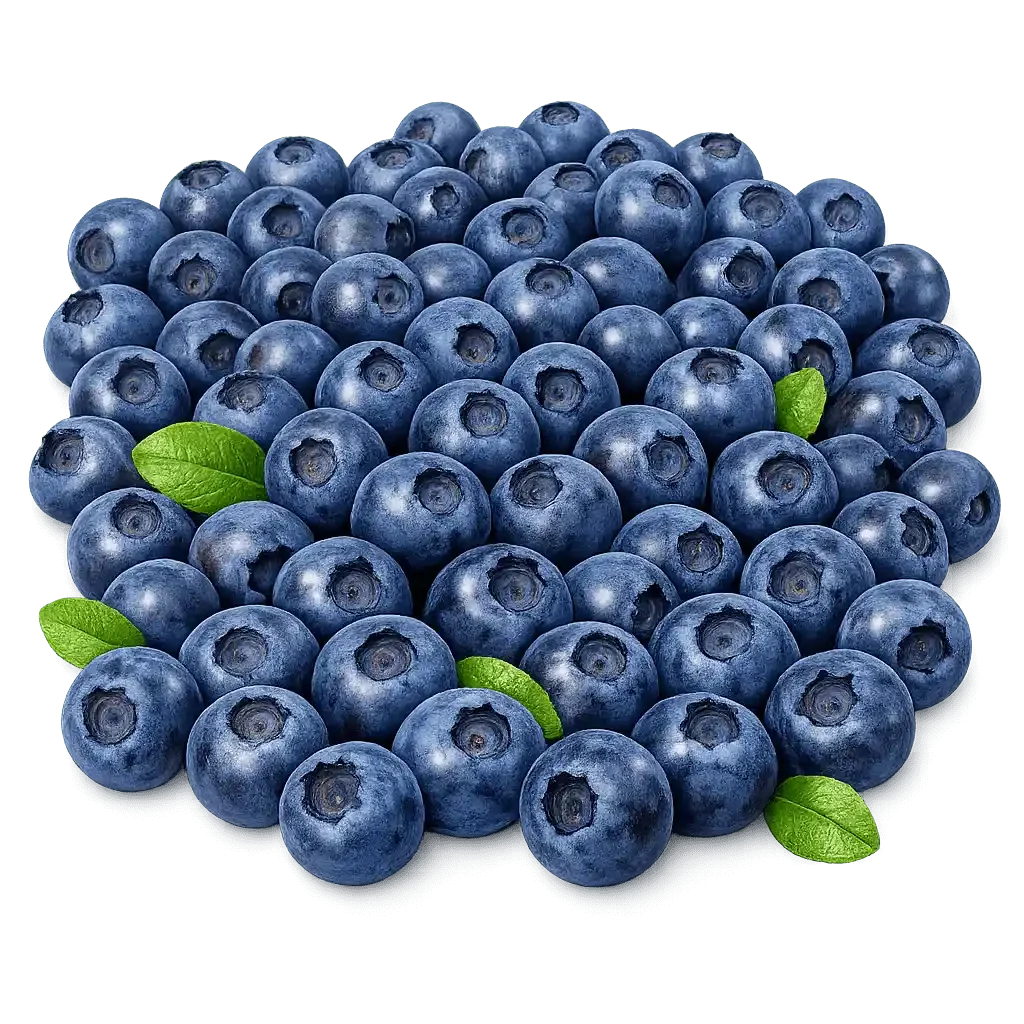
Ripe berries are round, approximately 1/4 to 3/8 inch in diameter (noticeably smaller than cultivated blueberries), and ripen to a deep blue-black color with a light dusty bloom similar to blueberries. The critical distinction is inside: cut a bilberry open and the flesh is deep purple-red throughout, saturated with pigment from skin to center. A cultivated blueberry, by contrast, has pale greenish-white flesh with color only at the skin. This difference in internal pigmentation reflects the dramatically higher anthocyanin concentration in bilberry. Each berry contains several tiny seeds that are barely perceptible when eating.
Ripening time runs from mid-July through September, depending on altitude, latitude, and local conditions. In most Zone 4 through 6 locations, the main harvest occurs in August. Berries within a colony ripen over a 3 to 5 week window, providing a gradual, extended pick rather than a concentrated burst.
Visual appeal is quiet but genuine. Bilberry makes an attractive, low groundcover with bright green summer foliage, small nodding flowers, scattered dark berries, and warm red-purple fall color. It is not a showy ornamental, but it brings a refined, natural beauty to woodland gardens, food forest floors, and shady borders.
How Much Berry Can You Collect?
Bilberry yields must be understood in terms of area coverage rather than individual plant production, since the plant grows as a spreading colony rather than a discrete bush.
Young colonies (years 3 to 5): Expect scattered production of a few ounces to 1/2 pound per square yard as the planting fills in. These early harvests are precious and best enjoyed fresh or in tiny batches of jam.
Mature colonies (years 7 and beyond): Well-established bilberry patches produce 1 to 2 pounds per square yard per season under favorable conditions. Some exceptionally productive wild stands in Europe have been documented at up to 3 pounds per square yard in peak years.
Scaled estimates: A 10-by-10-foot (approximately 11 square yards) mature bilberry patch will yield roughly 10 to 20 pounds of berries per season. A 20-by-20-foot planting (approximately 44 square yards) can produce 40 to 80 pounds. These are meaningful quantities for a homestead, especially given that bilberry requires essentially zero maintenance once established.
Harvest season spans 3 to 5 weeks in most locations, typically August into early September. The gradual ripening pattern means you will visit the patch several times, picking ripe berries every 3 to 5 days.
Ease of harvest is the primary challenge with bilberry. The berries are small and grow individually or in pairs rather than in convenient clusters. Hand-picking is slow, yielding only about 1 to 2 pounds per hour for a patient picker. Traditional Scandinavian and Finnish berry rakes (hand-held combs with tines that strip berries from the stems) increase harvest rates to 3 to 5 pounds per hour. These rakes are widely available online and are a worthwhile investment if you are growing bilberry seriously. The low growth habit means harvesting is done from a kneeling or crouching position, which can be tiring over extended sessions.
Homestead reality: Bilberry is not going to compete with blackberry or blueberry for raw volume. A mature 200-square-foot patch producing 20 to 40 pounds per year is a realistic and valuable goal. That amount is enough for a family's annual supply of jam, dried berries, frozen stores, and medicinal preparations. The key advantage is that bilberry delivers this yield from a permanent, self-maintaining groundcover that requires no pruning, no trellising, no spraying, and no annual replanting. It is free food from a living mulch.
Why Bilberry Berries Are Good for You
Bilberry is one of the most intensively studied medicinal fruits in the world, and its health profile is exceptional. The deep-purple-throughout flesh is not just visually distinctive; it signals an anthocyanin concentration that leaves cultivated blueberries far behind.
Key vitamins and minerals: Bilberries provide approximately 15 to 20 milligrams of vitamin C per 100 grams of fresh fruit, along with meaningful amounts of vitamin E, vitamin K, manganese, potassium, and chromium. The dietary fiber content is approximately 3 to 4 grams per 100 grams. The mineral chromium is particularly noteworthy, as it plays a role in glucose metabolism.
Antioxidants: This is where bilberry separates itself from virtually every other berry. The anthocyanin content of bilberry is approximately 300 to 700 milligrams per 100 grams of fresh fruit, which is 2 to 4 times higher than cultivated highbush blueberry. The dominant anthocyanins are delphinidin, cyanidin, petunidin, peonidin, and malvidin glycosides, present in 15 distinct compounds. Bilberry also contains high concentrations of proanthocyanidins, quercetin, catechins, and chlorogenic acid. The total phenolic content ranks bilberry among the top 5 antioxidant fruits globally.
Research-backed health benefits: Bilberry has an unusually robust body of clinical research behind it, much of it originating from European medical institutions. Published studies have demonstrated that bilberry extract improves night vision and visual acuity (research dating to WWII-era British RAF studies and confirmed by modern clinical trials), supports retinal health and may slow progression of age-related macular degeneration, improves blood vessel integrity and microcirculation (bilberry is used as a pharmaceutical-grade treatment for chronic venous insufficiency in several European countries), reduces inflammation markers and oxidative stress, improves blood sugar regulation and insulin sensitivity in type 2 diabetes patients (documented in the Journal of Nutrition), and supports cardiovascular health through improved cholesterol profiles and blood pressure reduction. Bilberry extract is sold as a standardized pharmaceutical product (not just a supplement) in France, Germany, and Italy for circulatory and eye conditions.
Traditional medicinal uses: Bilberry has one of the longest documented medicinal histories of any European berry. Medieval herbalists used bilberry preparations for digestive complaints, diarrhea, and scurvy. Bilberry leaf tea has been used across Northern Europe for centuries as a traditional remedy for blood sugar management, predating the modern research that has validated this use. Scandinavian folk medicine employed bilberry for urinary tract infections, mouth and throat inflammation, and as a general tonic. During World War II, British Royal Air Force pilots were given bilberry jam before night bombing missions, based on the belief (later supported by research) that the berries improved night vision and dark adaptation.
What You Can Make with Bilberry Berries
Bilberry's concentrated flavor and intense pigmentation make it one of the most distinctive berries in the kitchen. The taste is richer, more complex, and more "winey" than cultivated blueberry, with a depth that comes through in every preparation.
Bilberry Jam: An absolute treasure. The deep purple, almost black color and the complex, wine-like flavor produce a jam that is leagues beyond standard blueberry jam. Bilberry jam is a prized product across Scandinavia, Britain, and Central Europe. Spread it on fresh bread and you will understand why.
Bilberry Pie and Tarts: The intense color creates a dramatic, deep purple filling that stains everything gloriously. Use 3 to 4 cups of berries, 1/2 to 2/3 cup sugar, 2 tablespoons cornstarch, and 1 tablespoon lemon juice for a standard tart or pie. The flavor is concentrated enough that bilberry pies need less sugar than blueberry pies.
Bilberry Syrup: Simmer strained juice with sugar for a deep purple syrup with extraordinary flavor. Drizzle over pancakes, yogurt, porridge, or ice cream. A little goes a long way due to the concentration of flavor.
Bilberry Wine: A traditional Scandinavian and British country wine with deep garnet-purple color and complex, fruity character. Bilberry wine ages beautifully and has been made in European farmhouses for centuries. A 5-gallon batch requires approximately 8 to 12 pounds of fruit.
Bilberry Liqueur: Steep macerated bilberries in vodka or brandy for 4 to 6 weeks, strain, and sweeten. The resulting liqueur is deeply colored and richly flavored, similar in concept to cassis but with bilberry's unique character.
Dried Bilberry and Powder: Dehydrate and grind dried berries into a fine powder. Bilberry powder is a concentrated nutritional supplement that can be stirred into smoothies, oatmeal, yogurt, or baked goods. Commercial bilberry powder commands premium prices; home-dried is far more economical.
Bilberry Sauce: Combine cooked berries with sugar and a splash of lemon juice for a sauce that pairs beautifully with game, duck, pork, and soft cheeses. The deep color makes a stunning plate presentation.
Homestead tip: Because bilberry yields are lower than cultivated blueberries, many homesteaders blend bilberries with highbush blueberries in recipes. A 50/50 blend gives you the volume and convenience of cultivated blueberries with the dramatically enhanced color and flavor intensity of bilberry. This stretch-the-harvest approach works especially well in jam, pie, and muffins.
Best Ways to Store, Can, or Make Jam
Bilberry's small size and soft texture make it well-suited to most preservation methods, and the intense flavor concentration means it preserves with outstanding results.
Freezing: The best all-purpose storage method. Spread clean, dry berries on parchment-lined sheet pans, freeze for 2 to 3 hours, then transfer to freezer bags with air removed. Store at 0 degrees Fahrenheit for 12 to 18 months. Do not wash before freezing. Bilberries freeze into loose, free-flowing individual berries that are easy to scoop in measured quantities.
Canning Bilberry Jam (Recipe):
Ingredients: 4 cups crushed bilberries (approximately 1.5 to 2 pounds fresh) 1 package (1.75 ounces) powdered pectin 5 cups granulated sugar 2 tablespoons lemon juice
Method:
Wash and gently crush bilberries in a large pot using a potato masher. The berries will release deeply colored juice immediately.
Stir in pectin and lemon juice. Bring to a full rolling boil over high heat, stirring constantly.
Add sugar all at once. Return to a full rolling boil and boil hard for exactly 1 minute, stirring constantly.
Remove from heat and skim any foam. Ladle into hot, sterilized half-pint jars, leaving 1/4 inch headspace.
Wipe rims clean (staining is inevitable; wipe thoroughly), apply lids and bands fingertip-tight, and process in a boiling water bath for 10 minutes (adjust for altitude: add 5 minutes above 6,000 feet).
Yield: approximately 6 to 7 half-pint jars.
Bilberry Syrup: Combine 3 cups strained bilberry juice with 1 1/2 cups sugar in a heavy saucepan. Bring to a boil, stir until dissolved, and simmer for 8 to 10 minutes. Ladle into hot jars with 1/4 inch headspace and process in a boiling water bath for 10 minutes.
Drying: Spread berries on lined dehydrator trays in a single layer. Dry at 135 degrees Fahrenheit for 10 to 16 hours until fully shriveled. Store in airtight glass jars or vacuum-sealed bags for 12 to 18 months. Grind dried berries in a spice grinder or blender for bilberry powder.
Bilberry tincture: For medicinal use, pack a glass jar halfway with fresh or frozen bilberries, fill with 80-proof vodka, seal, and store in a cool, dark place for 4 to 6 weeks, shaking occasionally. Strain and bottle. A bilberry tincture concentrates the anthocyanins and other beneficial compounds into a shelf-stable form that keeps for 2 to 3 years.
Pros of Growing Bilberry
Highest anthocyanin content of any common berry. At 300 to 700 milligrams per 100 grams, bilberry contains 2 to 4 times the anthocyanin levels of cultivated blueberry. For homesteaders prioritizing nutrient density, no other berry comes close.
Documented medicinal value. Bilberry is one of the few fruits with pharmaceutical-grade clinical evidence supporting its use for eye health, circulatory function, and blood sugar management. Growing your own is far more economical than purchasing bilberry supplements.
Permanent, self-maintaining groundcover. Once established, bilberry spreads slowly into a dense, weed-suppressing mat that produces fruit indefinitely with no pruning, no trellising, and no annual replanting. It is the ultimate low-input fruit crop.
Exceptional cold hardiness. Hardy to Zone 3 and naturally adapted to alpine environments, bilberry thrives in cold climates that challenge many other fruit crops.
Shade tolerance. Bilberry grows naturally in partial shade beneath forest canopies and on north-facing slopes. It produces reasonable crops with as little as 3 to 4 hours of direct sunlight, making it one of the most shade-tolerant fruiting plants available.
Intense, superior flavor. Bilberry's taste is richer, deeper, and more complex than cultivated blueberry. Every product made from bilberry, from jam to wine to dried berries, has a depth of flavor that cultivated varieties simply cannot replicate.
Long lifespan. Bilberry colonies are essentially permanent. Individual plants live 20 to 30 years, but the colony regenerates continuously through rhizome spreading. A well-established bilberry groundcover will produce for your lifetime and beyond.
Dual-purpose planting. Bilberry serves simultaneously as a food crop and an attractive, functional groundcover that suppresses weeds, prevents erosion, and builds organic matter in the soil.
Cons of Growing Bilberry
Slow establishment. Bilberry takes 5 to 7 years to reach meaningful production levels. This is significantly slower than cultivated blueberry, blackberry, or most other homestead fruit crops. You are planting for the long term, not for next year's harvest.
Low per-plant yields. Individual bilberry plants are small and produce far less fruit per plant than a highbush blueberry bush. Yields are measured per square yard of colony rather than per plant, and total harvests are modest compared to larger fruit shrubs.
Labor-intensive harvest. Small berries, low growth habit, and individual berry production (rather than clusters) make picking slow and physically demanding. Berry rakes help but are still slower than harvesting larger fruits. Kneeling or crouching for extended periods is hard on the body.
Strict soil requirements. Bilberry demands acidic soil (pH 4.0 to 5.5) rich in organic matter. It will not tolerate alkaline or heavy clay soils. Like its blueberry relatives, getting the soil right is non-negotiable.
Difficult to source. Bilberry plants are far less commercially available than cultivated blueberry varieties. Finding true Vaccinium myrtillus stock in North American nurseries requires effort. Some specialty native plant nurseries and European suppliers carry it, but you may need to search and possibly pay premium prices.
Easily confused with other species. Bilberry is sometimes confused with huckleberry (Gaylussacia spp.), lowbush blueberry (Vaccinium angustifolium), and bog bilberry (Vaccinium uliginosum). Ensure you are sourcing true Vaccinium myrtillus if bilberry's specific medicinal properties are your goal.
Modest visual impact. At 6 to 18 inches tall, bilberry is not a showy landscape plant. It contributes quietly to a food forest or woodland garden but does not provide the visual drama of blueberry's fall color or the ornamental presence of larger fruiting shrubs.
Staining. Bilberry stains more aggressively than any cultivated blueberry. The deep purple juice penetrates skin, clothing, and surfaces readily. Gloves, old clothes, and stainless steel equipment are recommended during harvest and processing.
Growing Tips for Homesteaders
Site selection: Bilberry naturally inhabits acidic, humus-rich soils in cool, partially shaded environments. Replicate these conditions on your homestead. The ideal site has dappled shade or morning sun with afternoon shade, cool air movement, and moist (but not waterlogged) acidic soil. North-facing slopes, the understory of deciduous trees, and the edges of conifer plantings are all excellent locations. Bilberry will grow in full sun in cool climates (Zones 3 to 5) but appreciates shade in warmer zones (6 to 7) where summer heat can stress the plants. Soil pH of 4.0 to 5.5 is essential. Test your soil before planting and amend with elemental sulfur and peat moss if needed. Bilberry performs best in soils with high organic matter content (above 5 percent).
Planting: Source plants from reputable nurseries specializing in native or European species. Small container-grown plants (plugs or 4-inch pots) are the most commonly available and the most economical for establishing large areas. Plant in spring after the last frost, spacing plants 12 to 18 inches apart in all directions for groundcover establishment. This spacing seems dense, but bilberry is slow to fill in and close spacing reduces the years to full coverage. Set plants at the same depth they were growing in the container. Mulch the entire planting area with 2 to 3 inches of pine needles, shredded oak leaves, or acidic wood chips to conserve moisture, suppress weeds, and maintain soil acidity. Water thoroughly after planting.
Maintenance: Keep soil consistently moist during the first two growing seasons. Once established, bilberry is reasonably drought-tolerant in cool, shaded conditions but benefits from supplemental watering during dry spells, particularly during fruit development. Maintain the acidic mulch layer by topping up annually with 1 to 2 inches of fresh pine needles or acidic organic matter. No pruning is required under normal circumstances. If portions of the colony become woody and unproductive after many years, mowing or cutting back to ground level in late winter will stimulate fresh new growth. Test soil pH every 2 to 3 years and apply elemental sulfur if pH drifts above 5.5. Bilberry is a light feeder and generally does not need fertilization if the soil is rich in organic matter. A light annual topdressing of composted pine bark or leaf mold provides sufficient nutrition.
Variety selection and sourcing: True bilberry (Vaccinium myrtillus) does not have named cultivars in the way that highbush blueberry does. You are essentially growing the wild species. Source plants labeled specifically as Vaccinium myrtillus from nurseries like Raintree Nursery, One Green World, or European specialty suppliers. Be wary of plants labeled simply "bilberry" without a botanical name, as they may be lowbush blueberry, bog bilberry, or huckleberry instead. If true bilberry is unavailable, lowbush blueberry (Vaccinium angustifolium) is the closest functional substitute for North American growers, offering similar growth habit and higher anthocyanin content than highbush types, though still not matching true bilberry's concentration.
Companion planting and integration: Bilberry is a natural fit for the ground layer of food forests and permaculture systems. Plant it beneath acid-loving trees and shrubs like blueberry, hazelnut, pine, oak, and birch. It pairs beautifully with other shade-tolerant edible groundcovers like lingonberry (Vaccinium vitis-idaea), wintergreen (Gaultheria procumbens), and wild strawberry. In a forest garden design, bilberry fills the ground layer while highbush blueberry occupies the shrub layer above it, creating a multi-story berry-producing system that maximizes the use of space and light. Companion plantings of ferns, mosses, and native woodland wildflowers create a naturalistic aesthetic while maintaining the acidic, humus-rich soil conditions bilberry thrives in.
Conclusion
Bilberry is not for every homesteader, and it would be dishonest to pretend otherwise. If you need high-volume berry production next year, plant blackberry. If you want a large, fast-growing bush with reliable commercial-scale yields, plant cultivated blueberry. Bilberry does not compete on those terms, and it is not trying to. What bilberry offers is something different: the most medicinally potent and flavor-intense berry in the Vaccinium family, grown as a permanent, self-maintaining groundcover that produces for decades with virtually no input.
For homesteaders building layered food forests, woodland gardens, or long-term perennial landscapes, bilberry fills the ground layer in a way that no other fruiting plant can. It carpets the floor beneath taller shrubs and trees, suppresses weeds, builds soil organic matter, and quietly produces handfuls of berries with anthocyanin concentrations that make cultivated blueberries look pale in comparison. Every jar of bilberry jam, every bag of frozen bilberries, every bottle of bilberry tincture represents a concentration of nutrients and flavor that would cost a small fortune to purchase commercially.
Plant a 10-by-10-foot patch of bilberry in the shadiest, most acidic corner of your property. Mulch it with pine needles, water it through the first two summers, and then leave it alone. In five years you will have a living carpet of deep green foliage producing berries that taste like the wild essence of the northern forest. In ten years you will have a permanent, self-renewing food source that your grandchildren will still be picking from. That is not a fast return. It is a forever return. And on a homestead built to last, that is exactly what matters.
Explore more guides on different types of berries